





About this worksheet
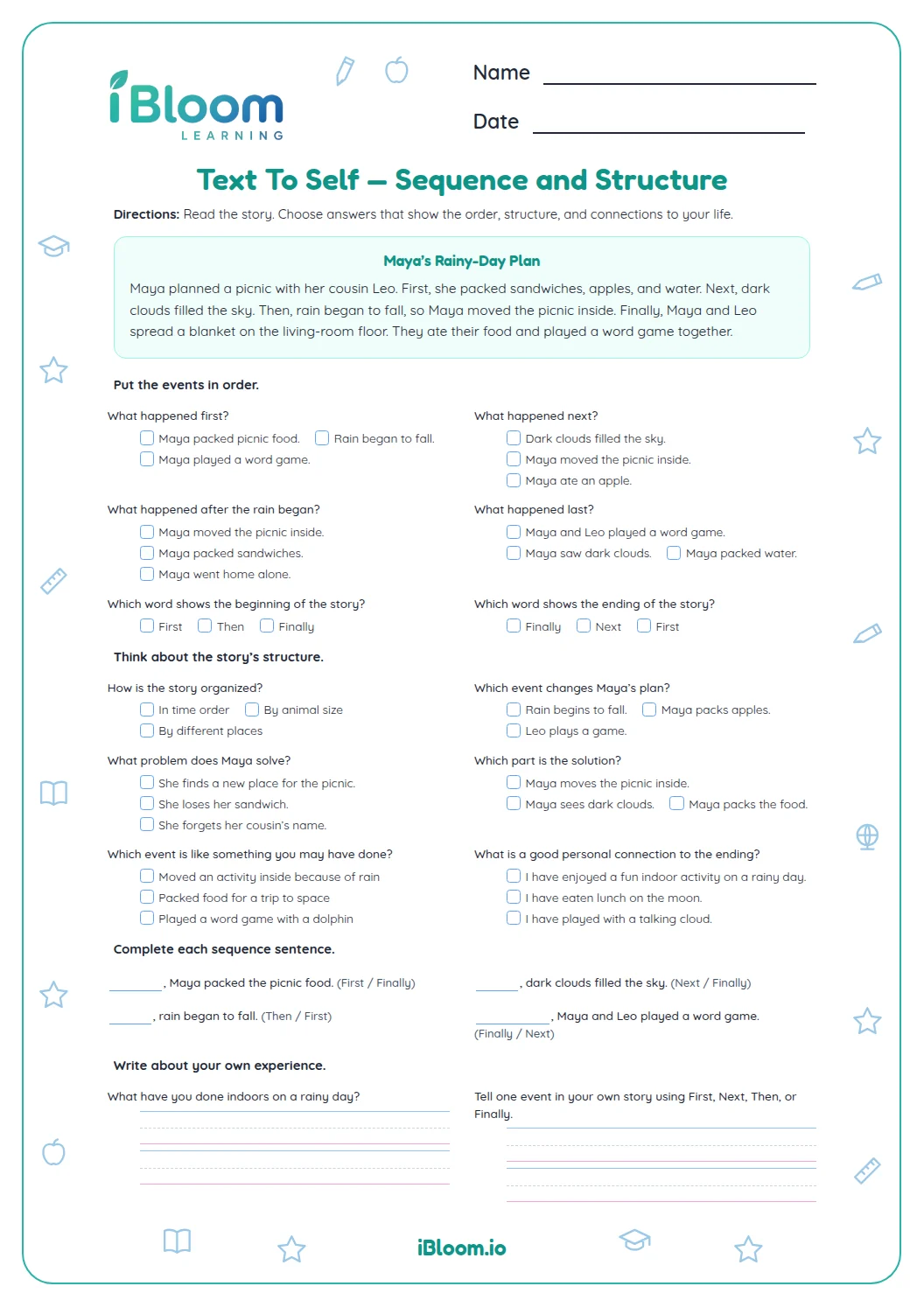
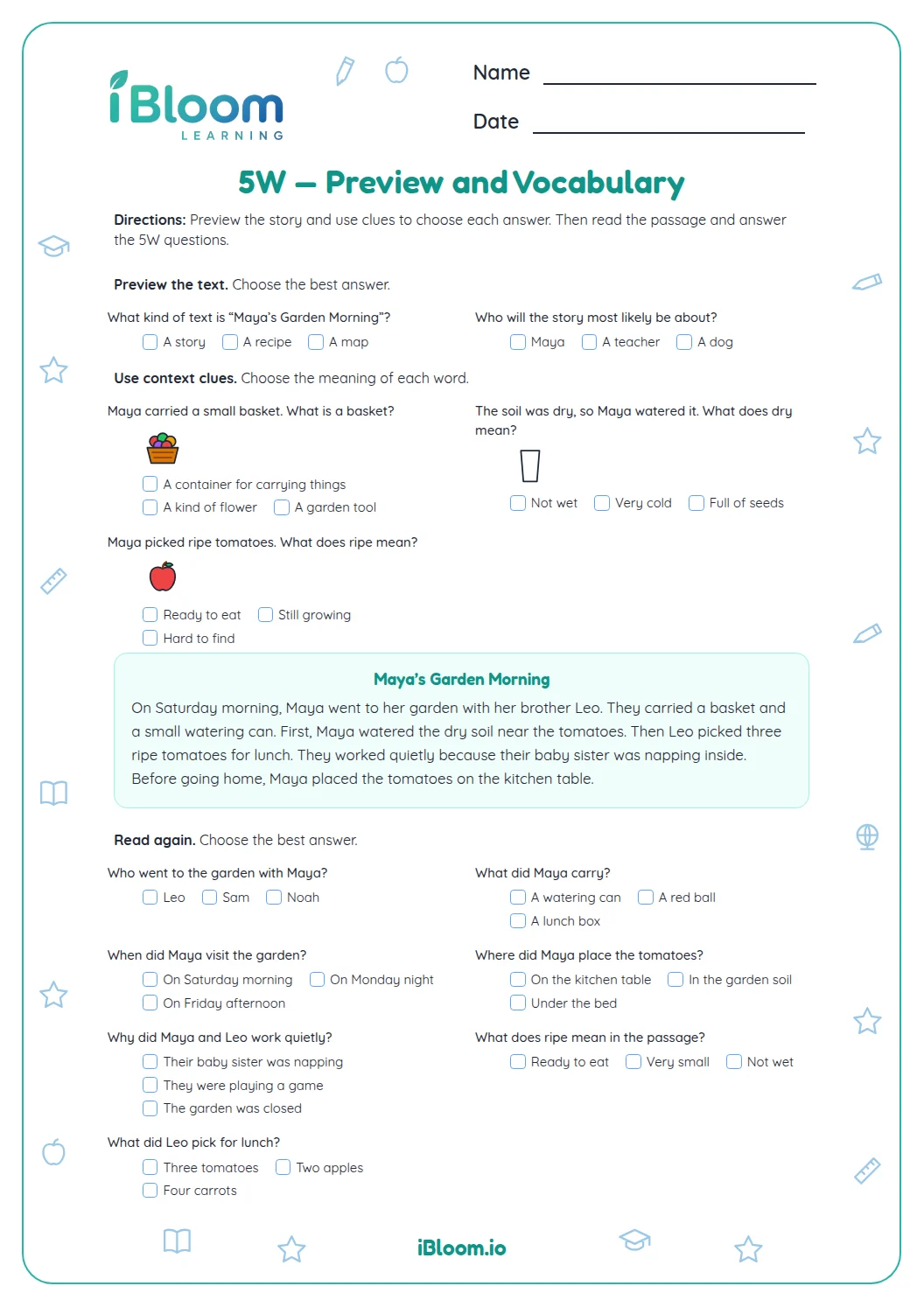
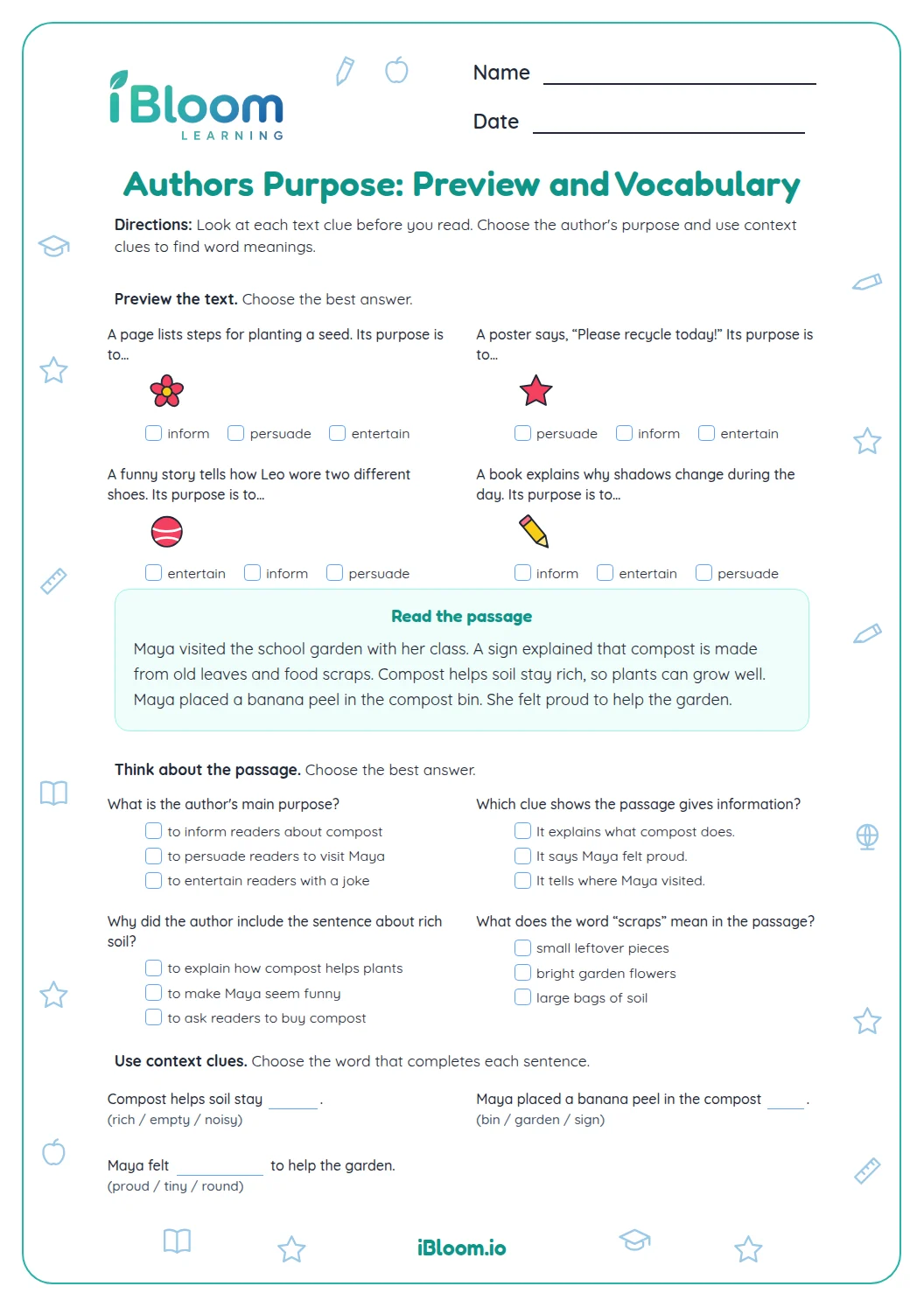
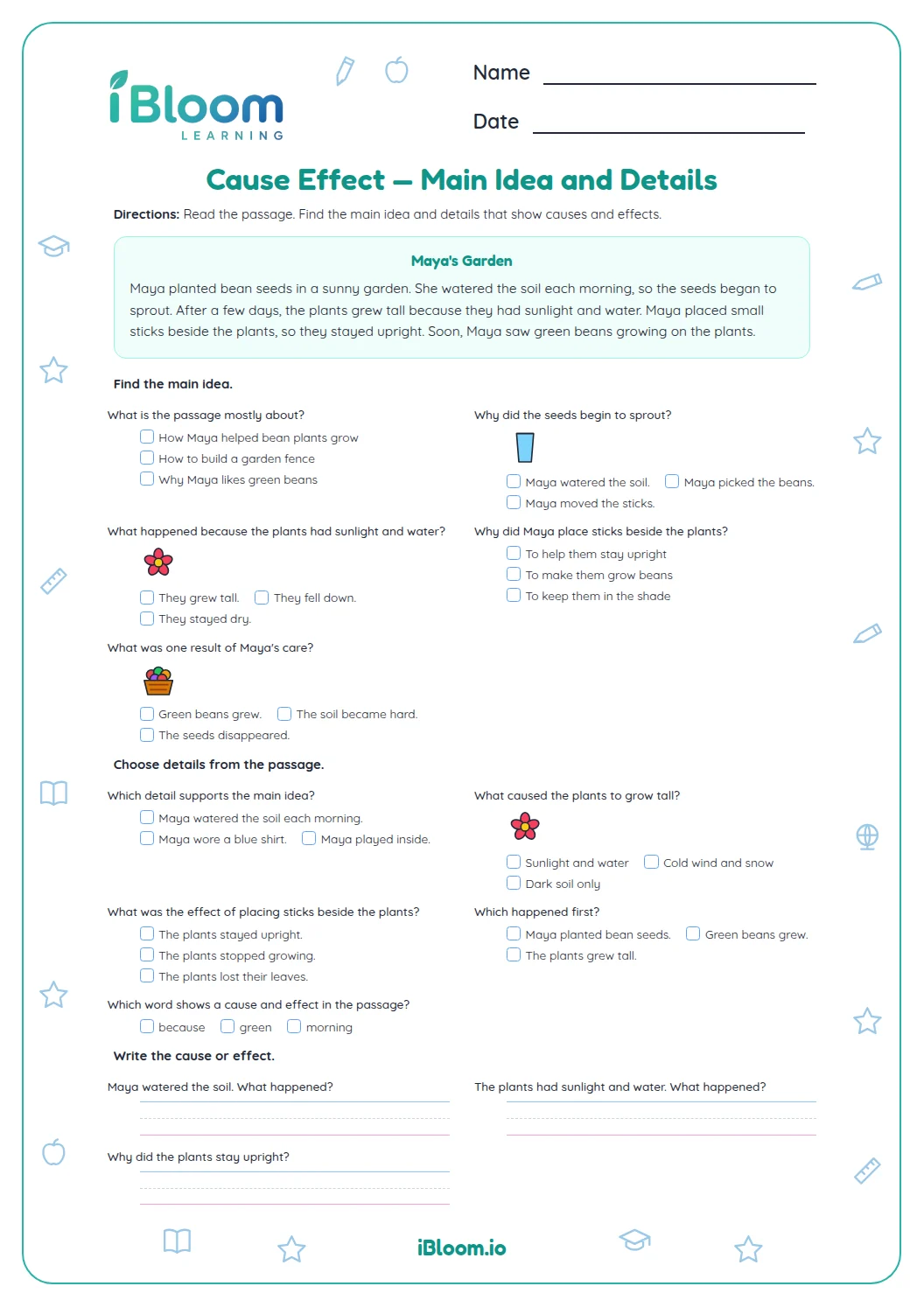
This Grade 2 text-to-self worksheet starts with a short story about Eli noticing a loose bench board and helping in a school garden. Children answer questions about the story, then connect its events to their own experiences in short written responses. It practices reading key details and recalling personal experiences to answer questions. The key includes sample responses; children may give different truthful examples.
Aligned to RL.2.1 and W.2.8
What details should readers find first?
The first questions check details in Eli’s story: the bench location, the person he tells, and what the class plants. Finding those facts gives children a solid starting point for a personal connection.
How does a reader connect a story to life?
A useful connection names something from the story and a related personal experience. It can be similar or different, as long as the child explains the link.
- 1Eli tells Ms. Chen about a loose bench board.
- 2Connect that detail to a time you noticed something that needed fixing.
- 3A sample response names what happened and what you did.
What makes a response clear?
A clear response includes one concrete detail. “I helped” is hard to picture; “I watered the tomato plant with my dad” gives the reader a specific memory.
How to use this worksheet
- 1Read the story and name the main people and place.
- 2Answer the first questions by finding the matching sentence.
- 3For each personal prompt, think of one real moment.
- 4Write one or two sentences with a specific detail.
- 5Check that each response links back to Eli or the garden.
Common mistakes and quick fixes
The mistake
Retelling the story instead of sharing a personal experience.
The fix
Add a detail from your own life and say how it connects.
The mistake
Writing only “me too.”
The fix
Name what happened, where, or who was there.
The mistake
Making a connection without a story clue.
The fix
Include the part of Eli’s story that brought the memory to mind.
Common Core alignment
Children answer story-detail questions and recall personal experiences to make connections.
Answer who, what, where, when, why, and how questions about story details.
On this sheet: Children answer questions about specific details in the passage.
Show the official wordingHide the official wording
Ask and answer such questions as who, what, where, when, why, and how to demonstrate understanding of key details in a text.
Recall a personal experience to answer a question connected to a story.
On this sheet: Children connect a story situation with an experience of their own.
Show the official wordingHide the official wording
Recall information from experiences or gather information from provided sources to answer a question.
What to practice next
Make more practice
Further reading
Questions parents and teachers ask
What is a text-to-self connection?
A text-to-self connection links something in a story to an experience in your own life. This page asks children to connect Eli’s actions and the school garden to something they have seen or done. Each prompt is tied to the story and invites a specific response.
What happens in the story?
Eli reports a loose bench board, helps plant marigolds, and shares a planting tip with classmates. After the bench is repaired, the class sits there to read. Each prompt is tied to the story and invites a specific response.
Do personal answers have to match the key?
No. The key provides sample responses. A different answer works when it describes a real experience and clearly explains how it connects to a detail in Eli’s story. Each prompt is tied to the story and invites a specific response.
How much should a child write?
The five personal prompts ask for brief written responses. One or two clear sentences can name what happened and explain the connection to Eli, the bench, or the garden. Each prompt is tied to the story and invites a specific response.
Can we discuss answers before writing?
Yes. Talking about a memory can help a child decide which detail to include. Ask the child to connect that memory to a specific event, such as Eli telling Ms. Chen about the loose board. Each prompt is tied to the story and invites a specific response.