


About this worksheet
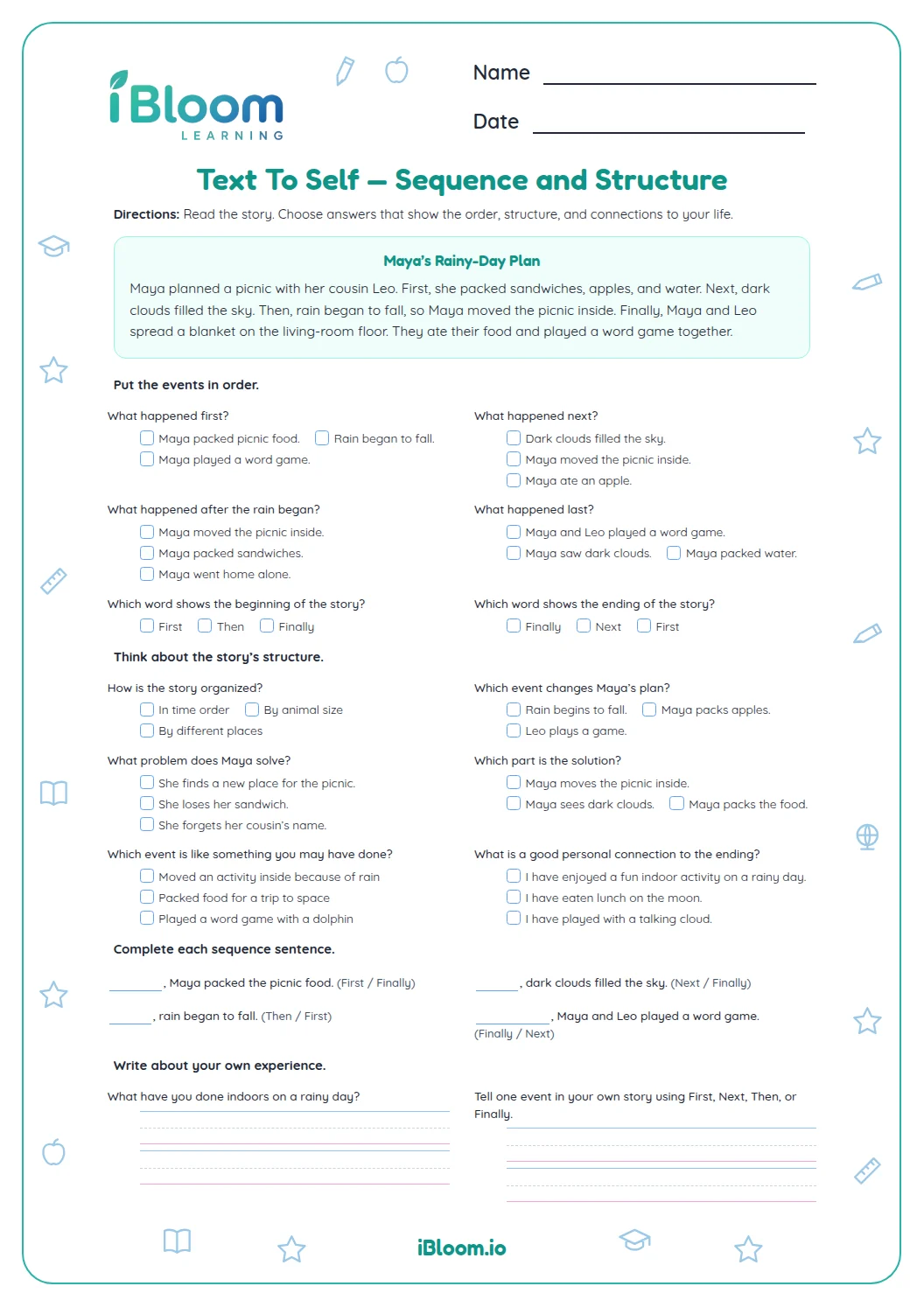
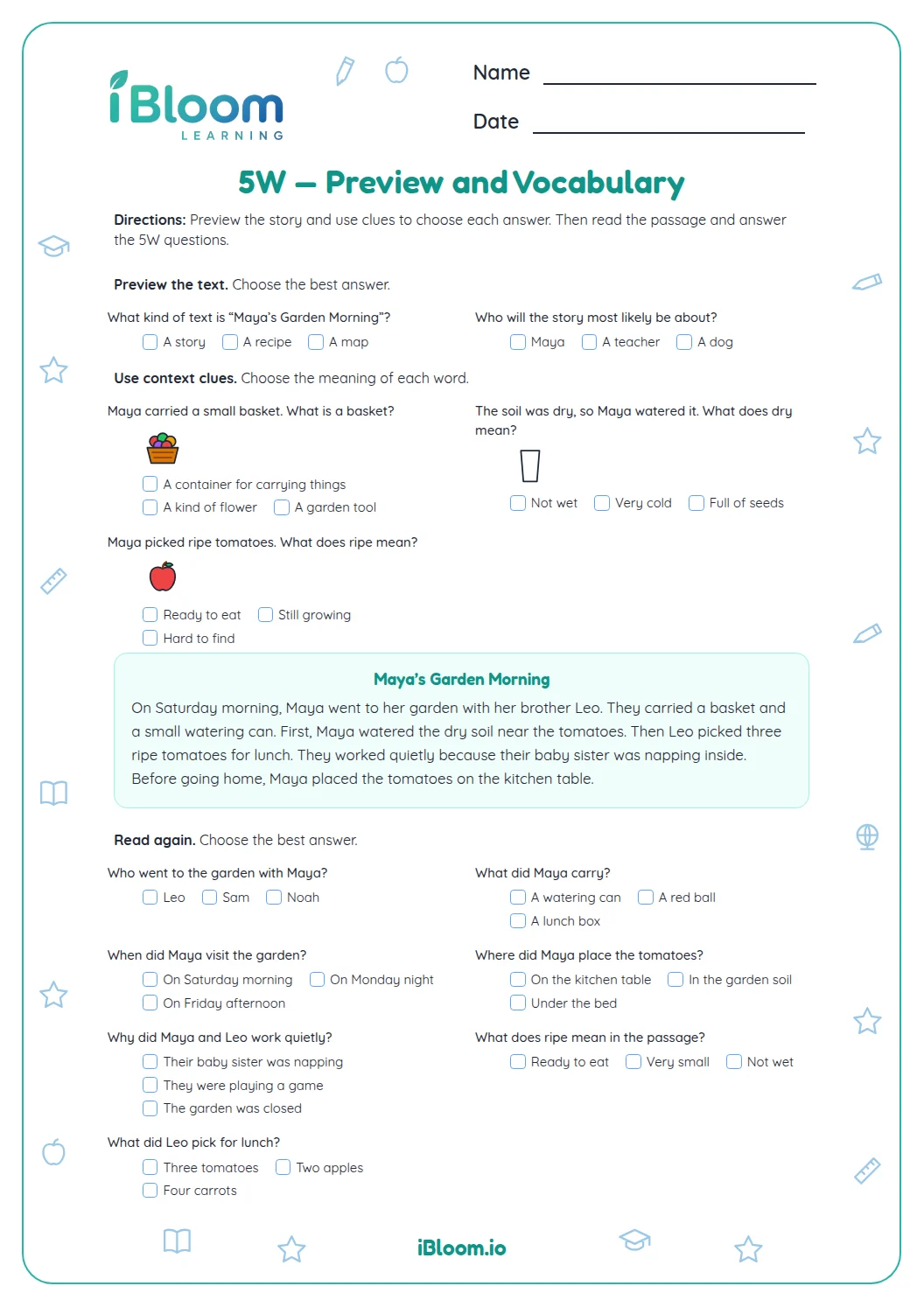
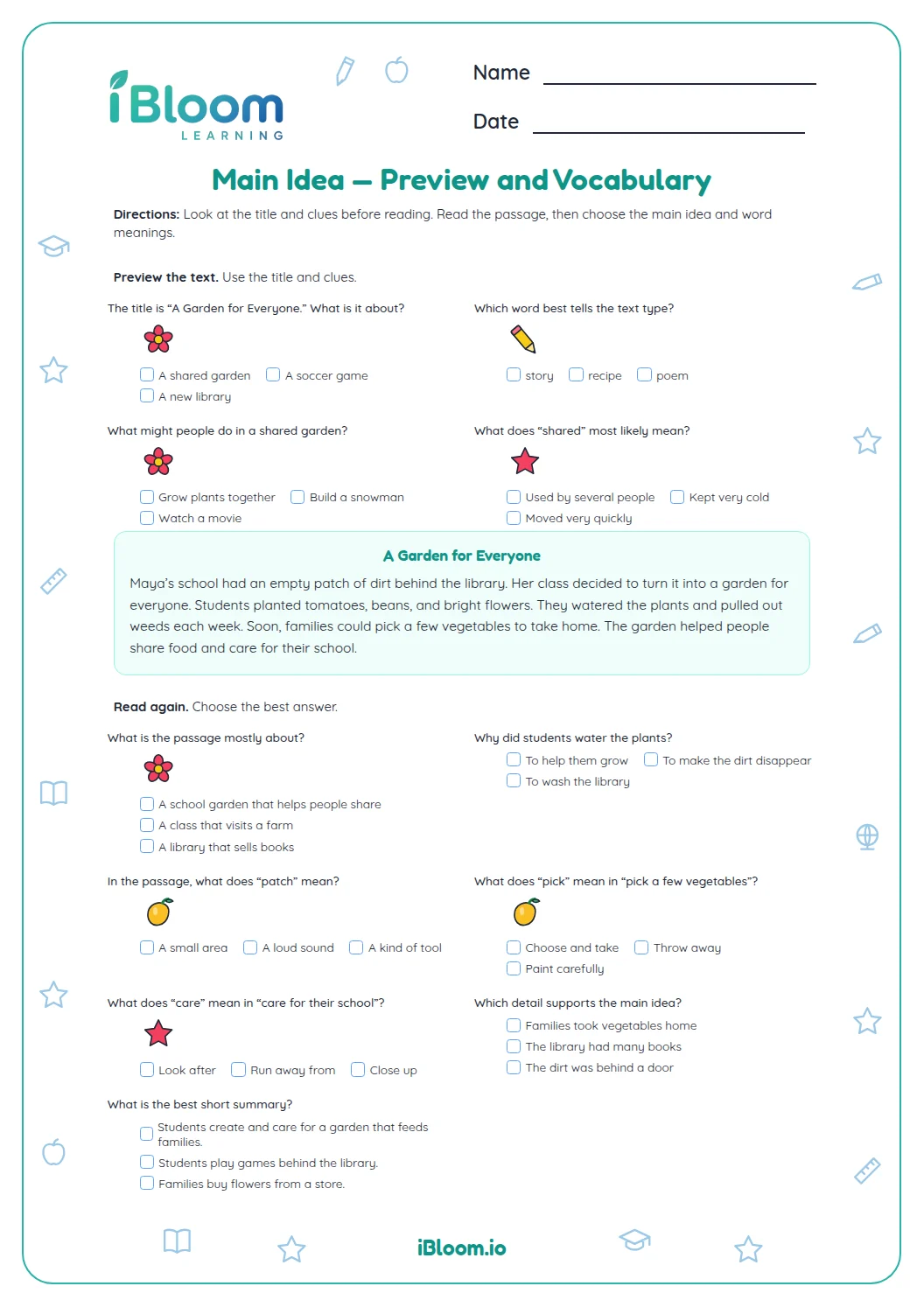
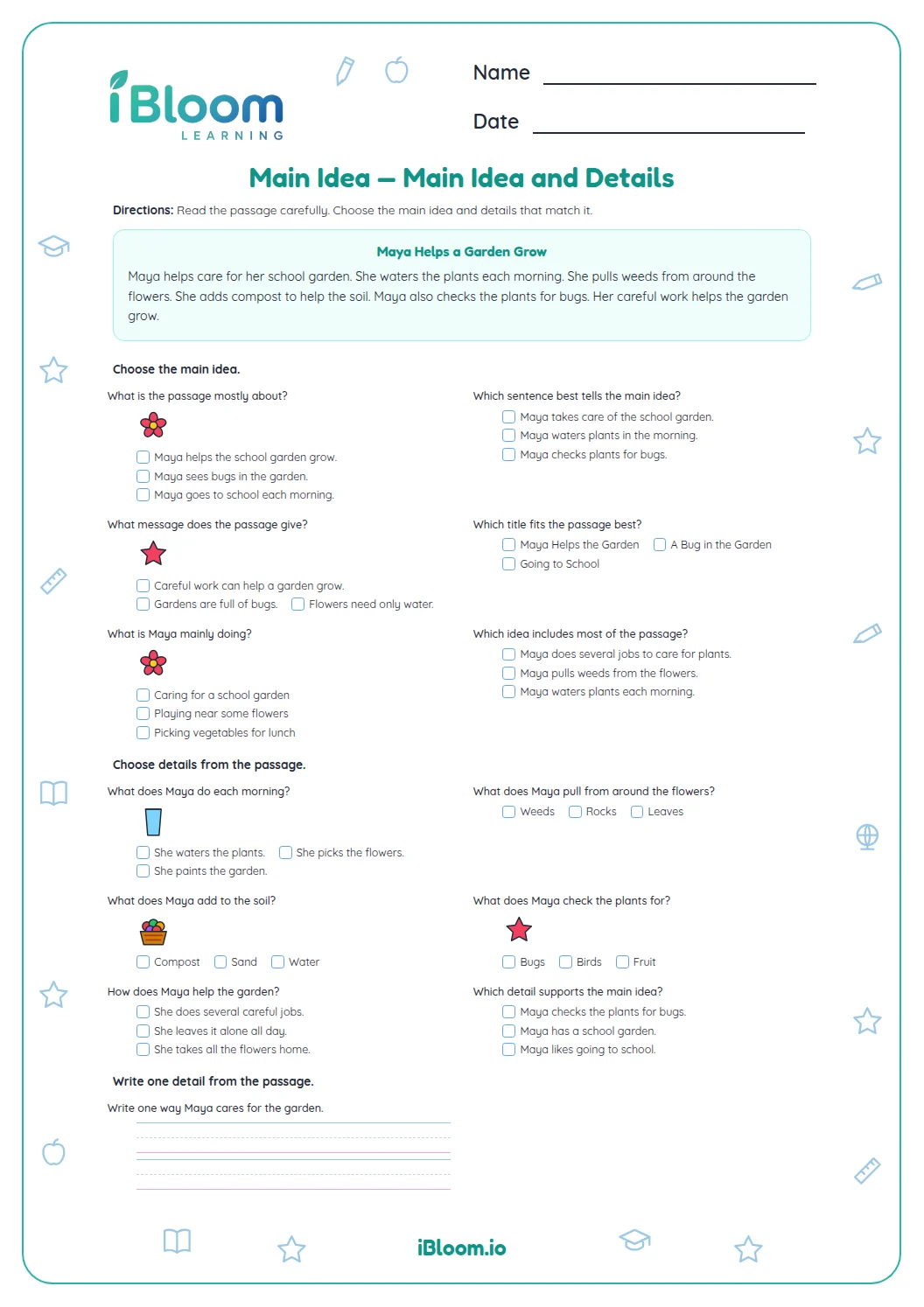
This Grade 2 worksheet pairs an original story about Elena helping Sam on a rainy trip to the library with 15 comprehension questions. Students recall events and connect Elena’s choices to their own experiences. The answer key includes direct answers and sample responses for personal connections.
Aligned to RL.2.1
What happened to Elena and Sam?
Elena notices Sam carrying library books in the rain. She shields the books with her umbrella, then walks with him to get a reading log he left at home. They return to the library before it closes.
- 1What had Sam left at home?
- 2He had left his reading log at home.
How can a reader connect to Elena’s choice?
Name the story detail first, then relate it to an experience of helping someone or keeping an item safe. The answer key models the kind of connection a response can make.
- 1Have you helped someone keep something safe?
- 2Sample: I covered my friend’s book with my jacket when it started to rain.
How can a detail support an answer?
Return to the sentence that tells what Elena did or said. For a personal response, state that event first, then explain how it connects to your own life.
- 1What detail shows Elena wanted to help Sam?
- 2Sample: She held her umbrella over his books.
How to use this worksheet
- 1Read the passage once to understand what happens.
- 2For story questions, look back for names, actions, and time clues.
- 3For personal connections, name one story detail and one real experience.
Check your work
The mistake
Giving a personal story without naming the text detail.
The fix
Start with the story event, then explain how it reminds you of something.
Curriculum alignment
Answer who, what, where, when, why, and how questions about story details.
On this sheet: The questions ask students to recall and discuss the characters’ actions and reasons.
Show the official wordingHide the official wording
Ask and answer such questions as who, what, where, when, why, and how to demonstrate understanding of key details in a text.
What to practice next
Make more practice
Further reading
Questions parents and teachers ask
What is a text-to-self connection?
It links a story detail to your life. Elena helps Sam protect his books from rain and retrieve his reading log; a reader may remember helping a friend keep schoolwork dry or walking with someone to finish an important task.
How many questions are included?
Fifteen questions follow the passage: ten ask about story actions, and five invite a personal connection to Elena’s choices or to helping a friend. The answer key provides direct responses and samples for open-ended items. Children can look back at the story while they answer.
What should a personal response include?
Name the story event first, then explain your connection. A response can differ from the key’s sample if it fits the story and describes a real experience, such as helping a friend carry or protect something. Use a specific event from the passage to keep the link clear.
Can children look back at the passage?
Rereading is useful for questions about Sam’s books, the umbrella, or where Elena walked with him. Find a sentence that supports each answer, then use the detail as a starting point for a personal connection. This helps separate what the text says from what the reader remembers.
What is the story about?
Elena notices Sam carrying library books in the rain, protects them with her umbrella, and walks with him to retrieve his reading log. They return before the library closes, and Sam thanks her for helping. The questions also connect Elena’s actions with helping a friend.