



About this worksheet
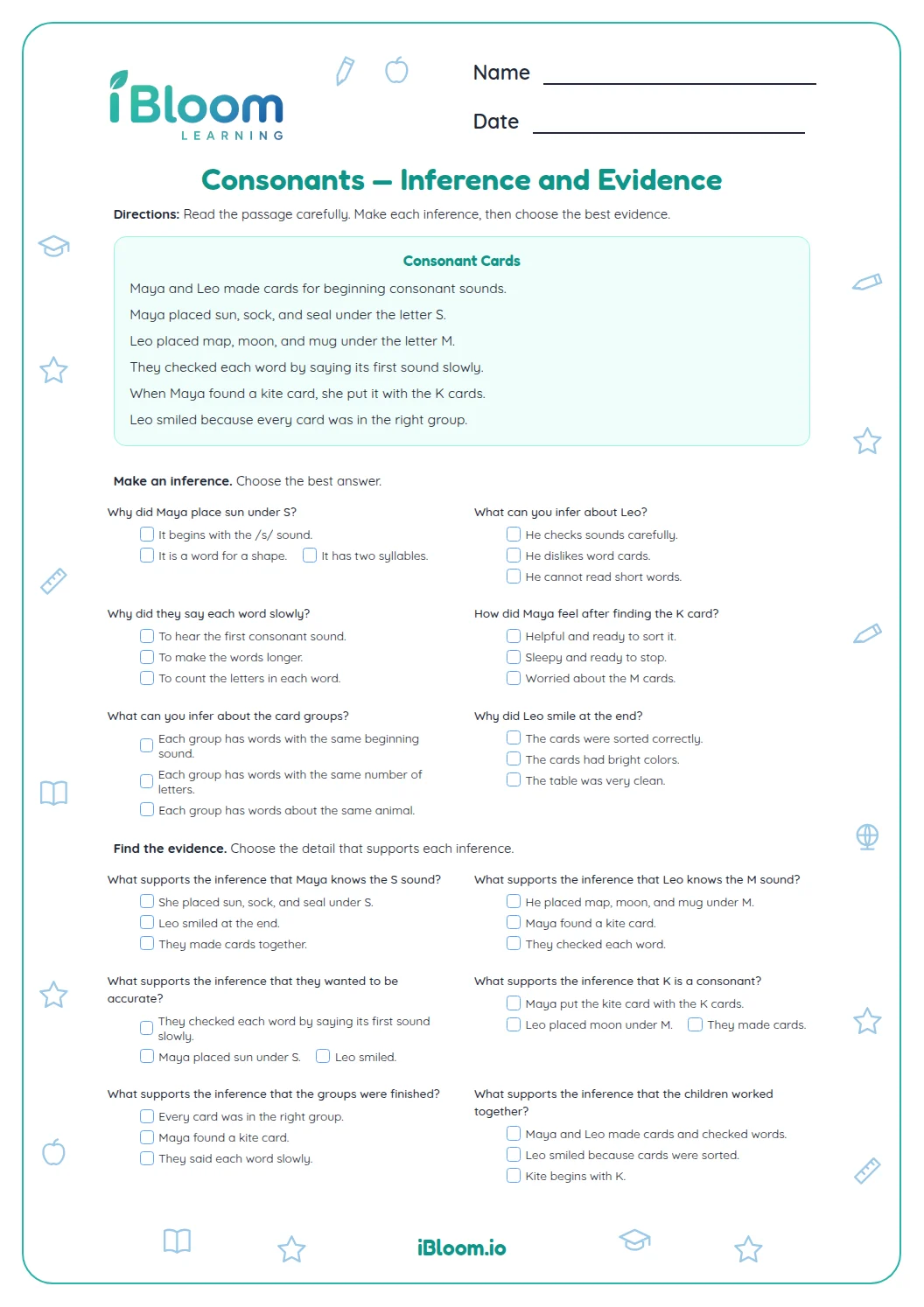
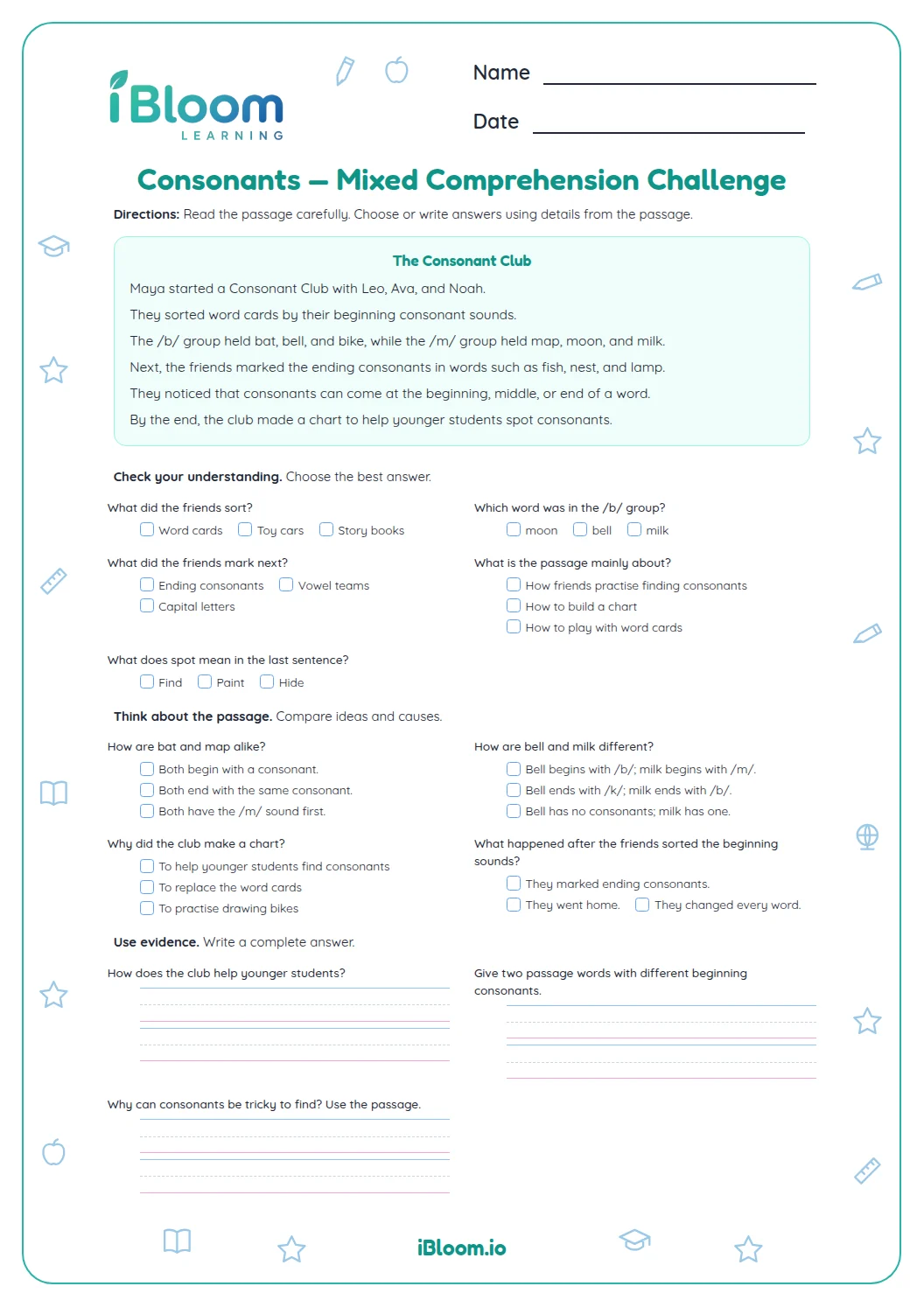
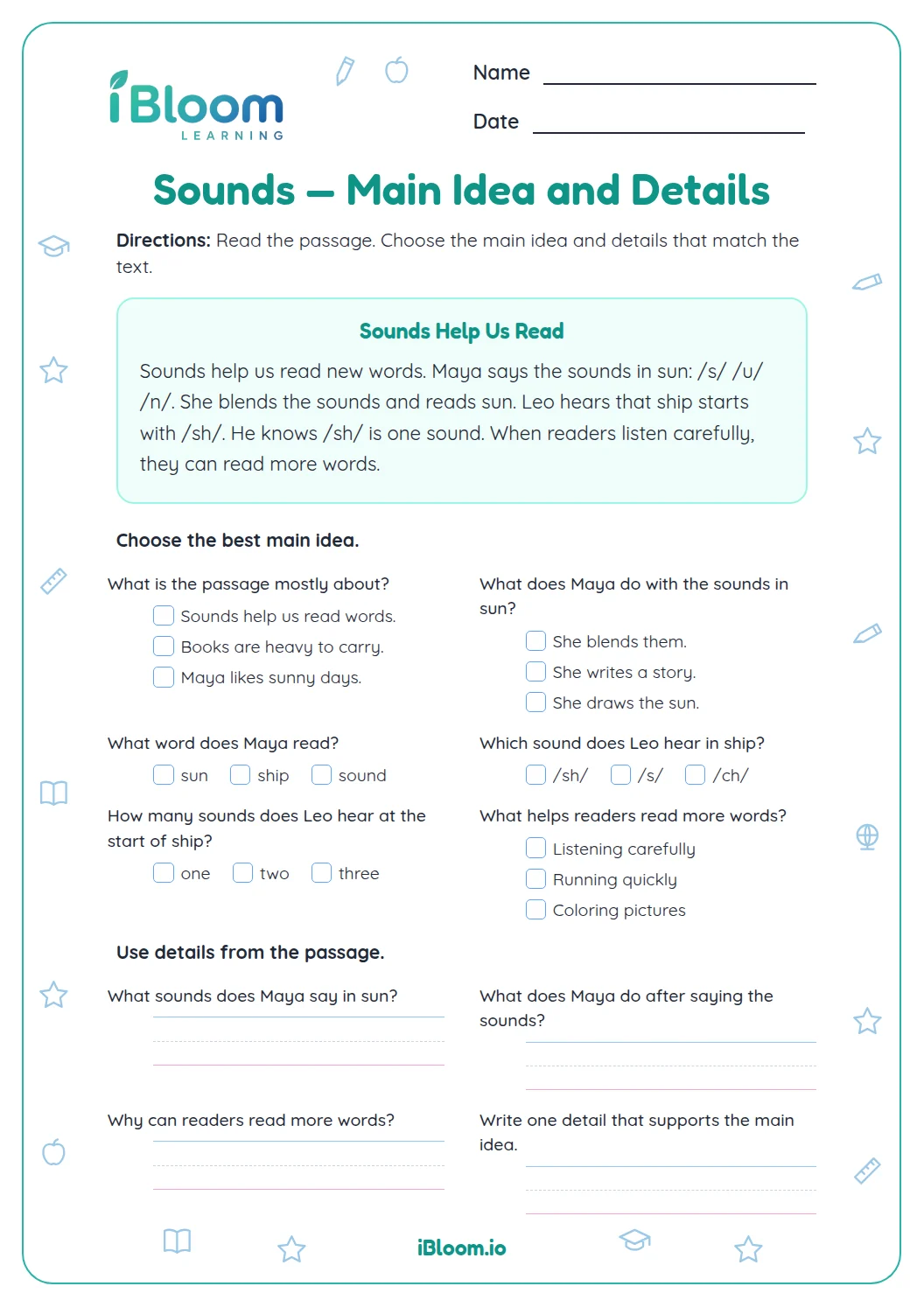
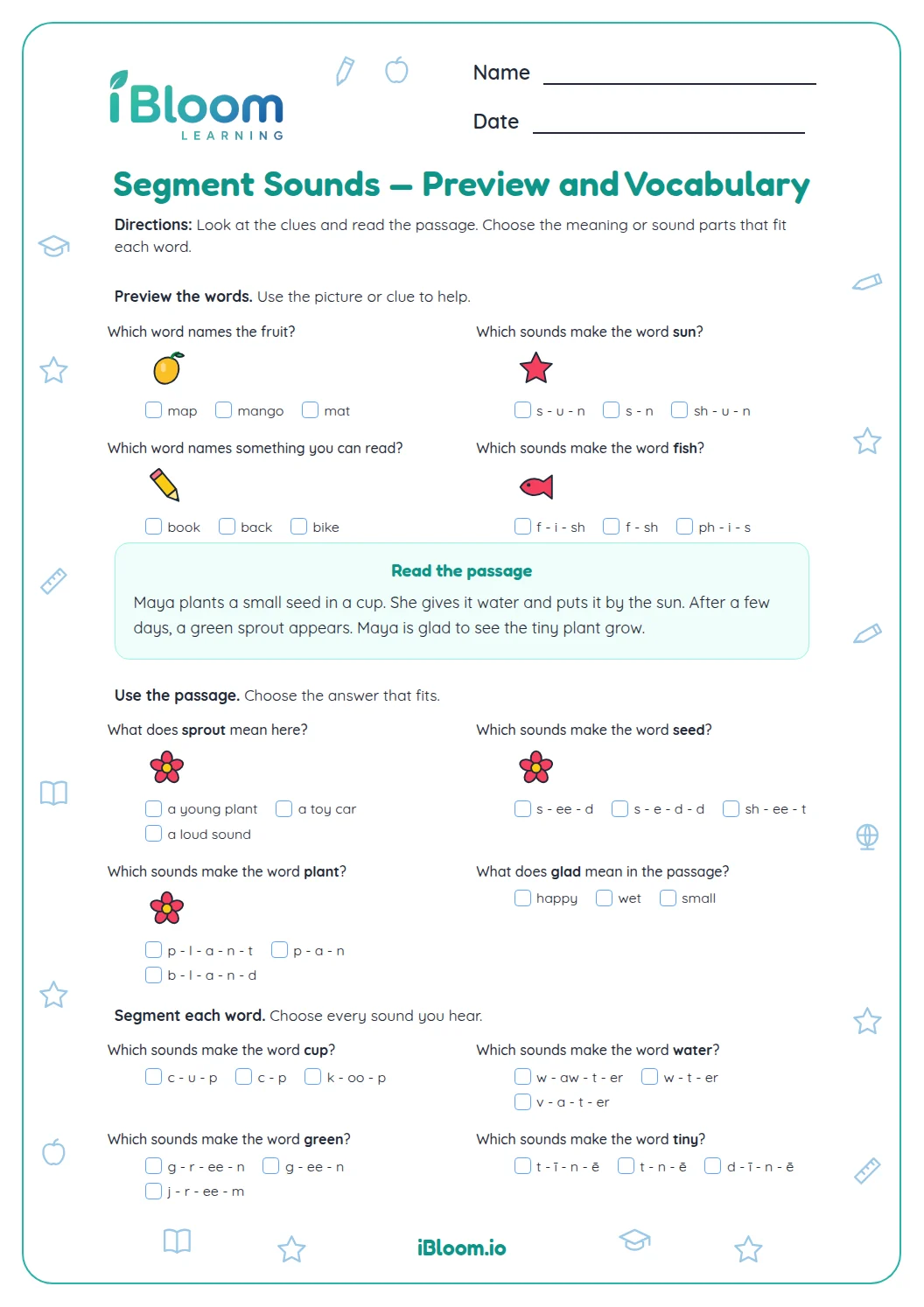
This Grade 2 printable pairs a short original story with questions about details and consonants in the words Ben reads. Students first find who, what, and why information, then notice beginning and ending consonants and the blend in frog. Two final prompts ask them to explain a sound pattern in a complete sentence. The work supports CCSS RF.2.3, applying phonics and word analysis while reading words. A separate answer key includes sample responses.
Aligned to RF.2.3
What is in the passage?
Ben and his sister visit a pond and watch a frog. Students use details from the story before looking closely at the sounds and letters in its words. The passage is short enough to reread while answering.
- Part A is the story passage.
- Part B checks details and one simple inference.
- Part C focuses on consonants in passage words.
- Part D asks for two explanations.
How can students find a detail in the story?
Reread the sentence that matches the question, then answer with the important words. For question 2, the passage says Ben spotted a frog near the reeds. That detail is more exact than answering only “an animal.”
- 1Question 2: What did Ben spot near the reeds?
- 2Passage detail: “a frog”
- 3Answer: Ben spotted a frog.
How do consonants make a blend?
A consonant is a letter other than a, e, i, o, or u. In frog, f and r are both consonants, and each sound can be heard at the beginning. In pond, n and d are the two ending consonants. Students can say the word slowly and listen for each sound.
How can families use the answer key?
Check word identification directly against the key. The last two items allow different wording, so compare the idea rather than expecting one exact sentence. Invite the student to point to the word in the passage and say each consonant sound aloud.
How to use this worksheet
- 1Read the passage aloud once, then let the student reread it quietly.
- 2Answer Part B by pointing to the line that gives each detail.
- 3Say each target word slowly before naming its consonants.
- 4For the written responses, include the word and explain the sound or letter pattern.
- 5Use the key to check facts and accept equivalent complete sentences.
Common consonant mix-ups
The mistake
Calling the vowel o in pond a consonant.
The fix
Name the five vowels first; the other letters are consonants.
The mistake
Naming only f in frog and missing r.
The fix
Stretch the beginning sound slowly: /f/ then /r/.
The mistake
Giving a general answer such as “an animal” when a question asks what Ben saw.
The fix
Reread the passage and include the exact detail, “a frog.”
Common Core alignment
This passage gives students a chance to apply phonics knowledge as they read and inspect familiar words.
Apply phonics and word analysis skills while reading the passage words.
On this sheet: Students read the passage and identify consonant sounds and a beginning blend in its words.
Show the official wordingHide the official wording
Know and apply grade-level phonics and word analysis skills in decoding words.
What to practice next
Make more practice
Further reading
Questions parents and teachers ask
How many questions are on the worksheet?
There are 14 questions in three parts after the passage. Students answer story-detail questions, identify consonants and a consonant blend, and write two short explanations. The answer key is separate and includes sample wording for questions where a complete sentence can be phrased in more than one way.
What is a consonant blend in this story?
A consonant blend has two consonant sounds next to each other, and both sounds can still be heard. In frog, the first two letters are f and r. Students say the beginning slowly to hear both sounds rather than treating them as one new sound.
Should students answer in complete sentences?
The two explanation prompts ask for a complete sentence, and the key gives sample responses. Short identification questions can be answered with a word or letter pair. If a student writes a different sentence, check whether it correctly names the consonant pattern from the passage.
Can an adult read the passage aloud?
Yes. An adult can read it aloud first, then invite the student to read it again and locate the details. The questions still ask students to inspect words and identify consonants, so point back to the printed text when discussing an answer.
What does the answer key accept for written answers?
The key provides sample answers rather than a single required sentence. Accept a response that states the same accurate detail or sound pattern in the student’s own words. For question 14, the response should identify both f and r as consonants at the beginning of frog.