

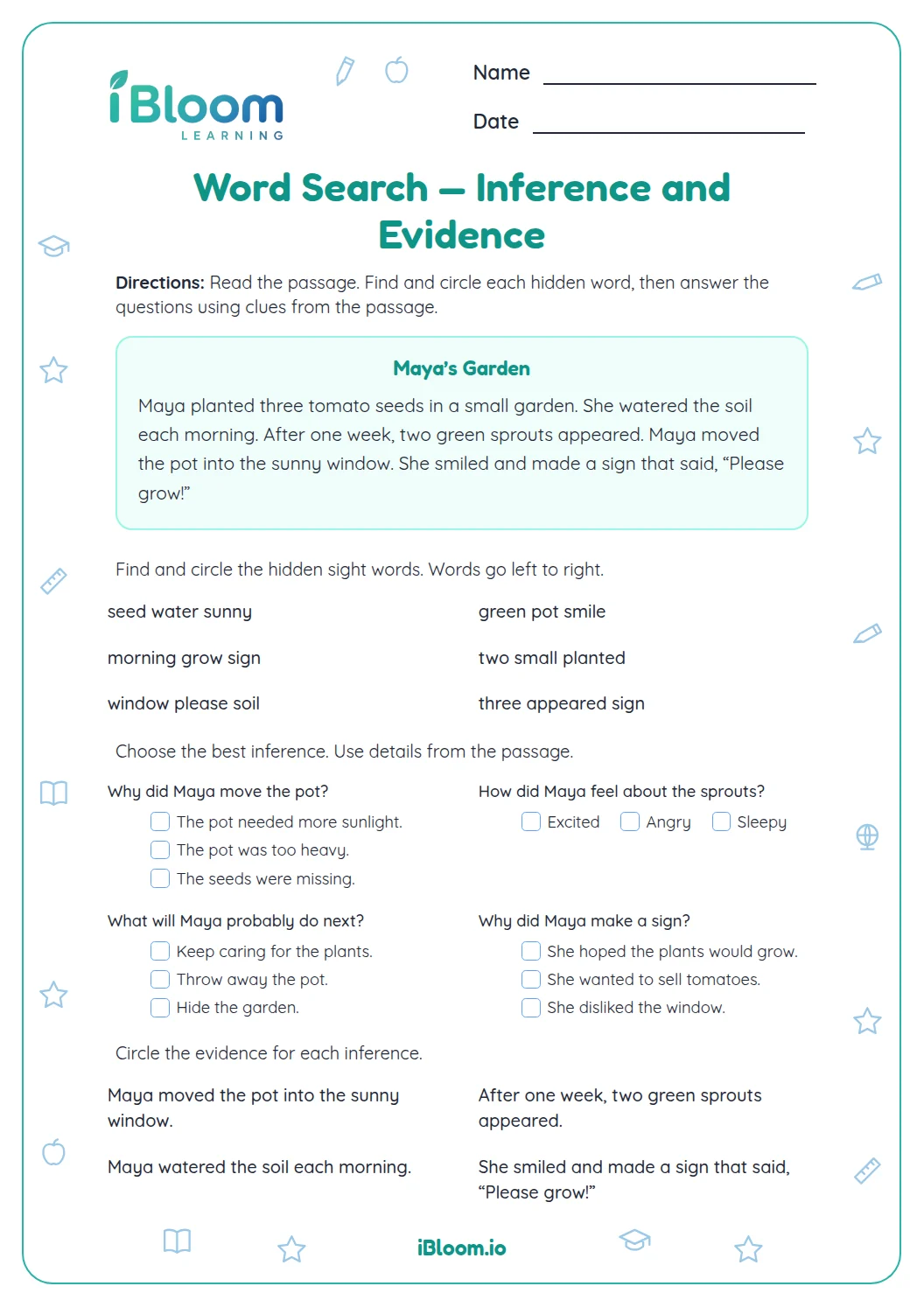
About this worksheet
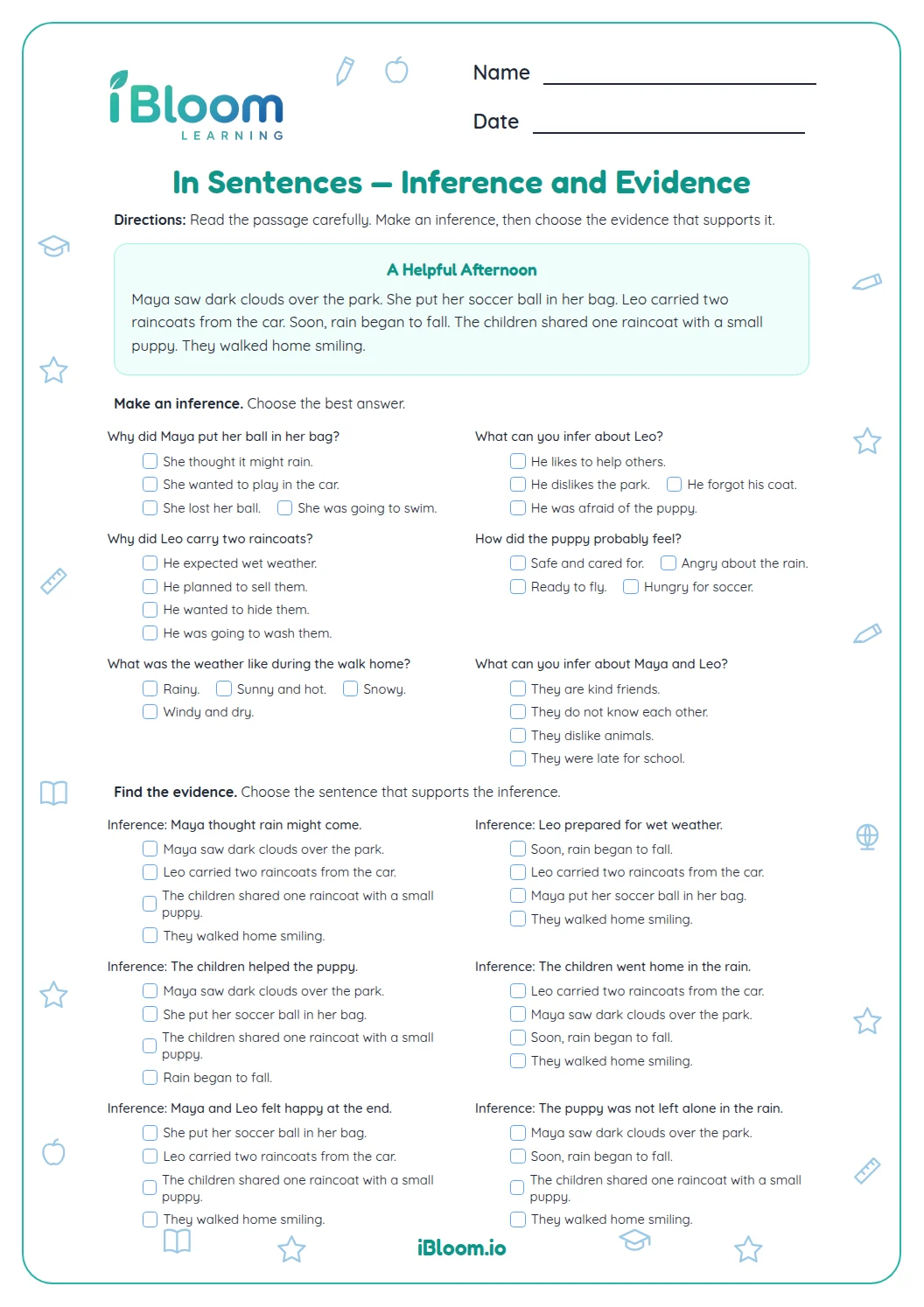
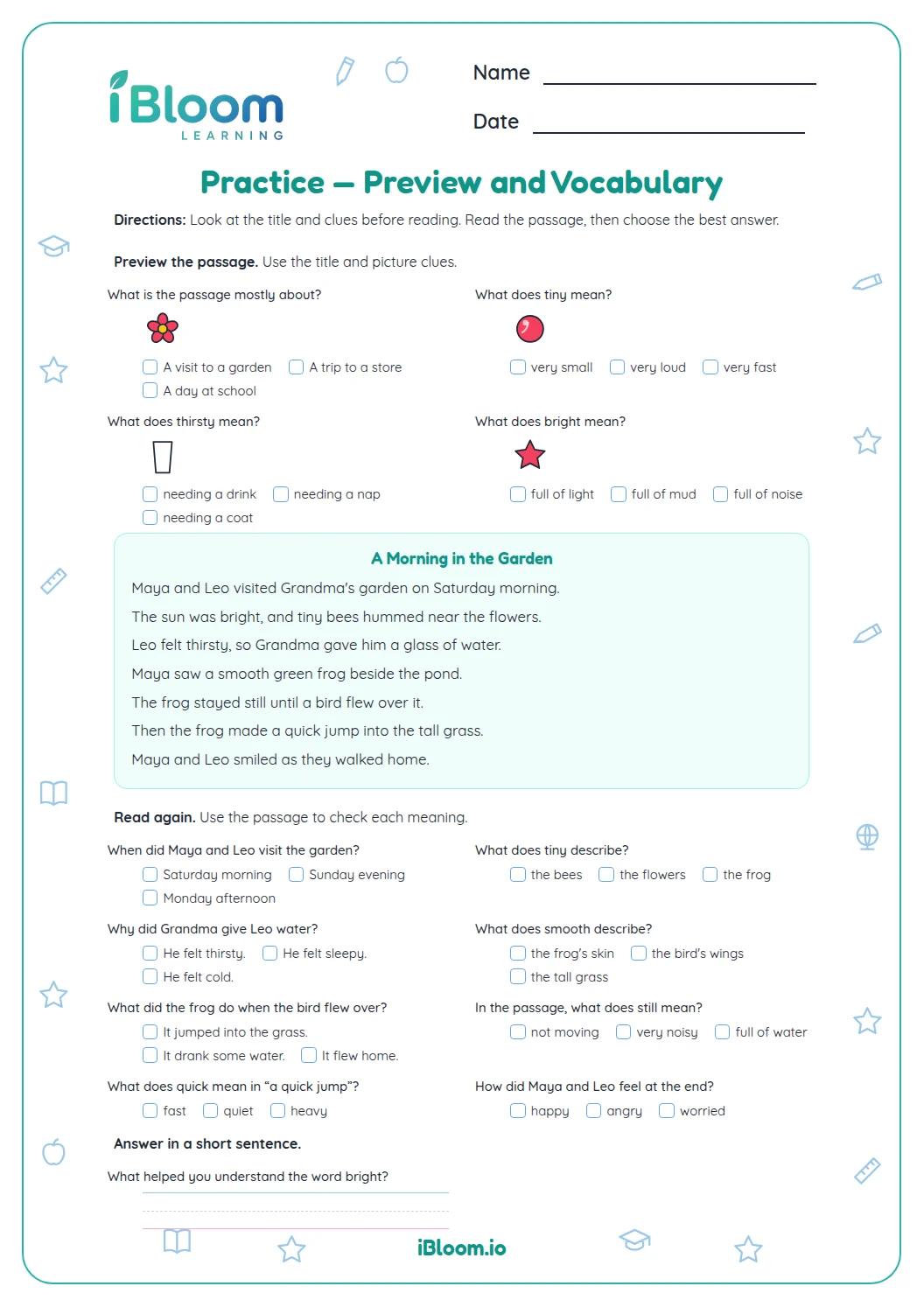
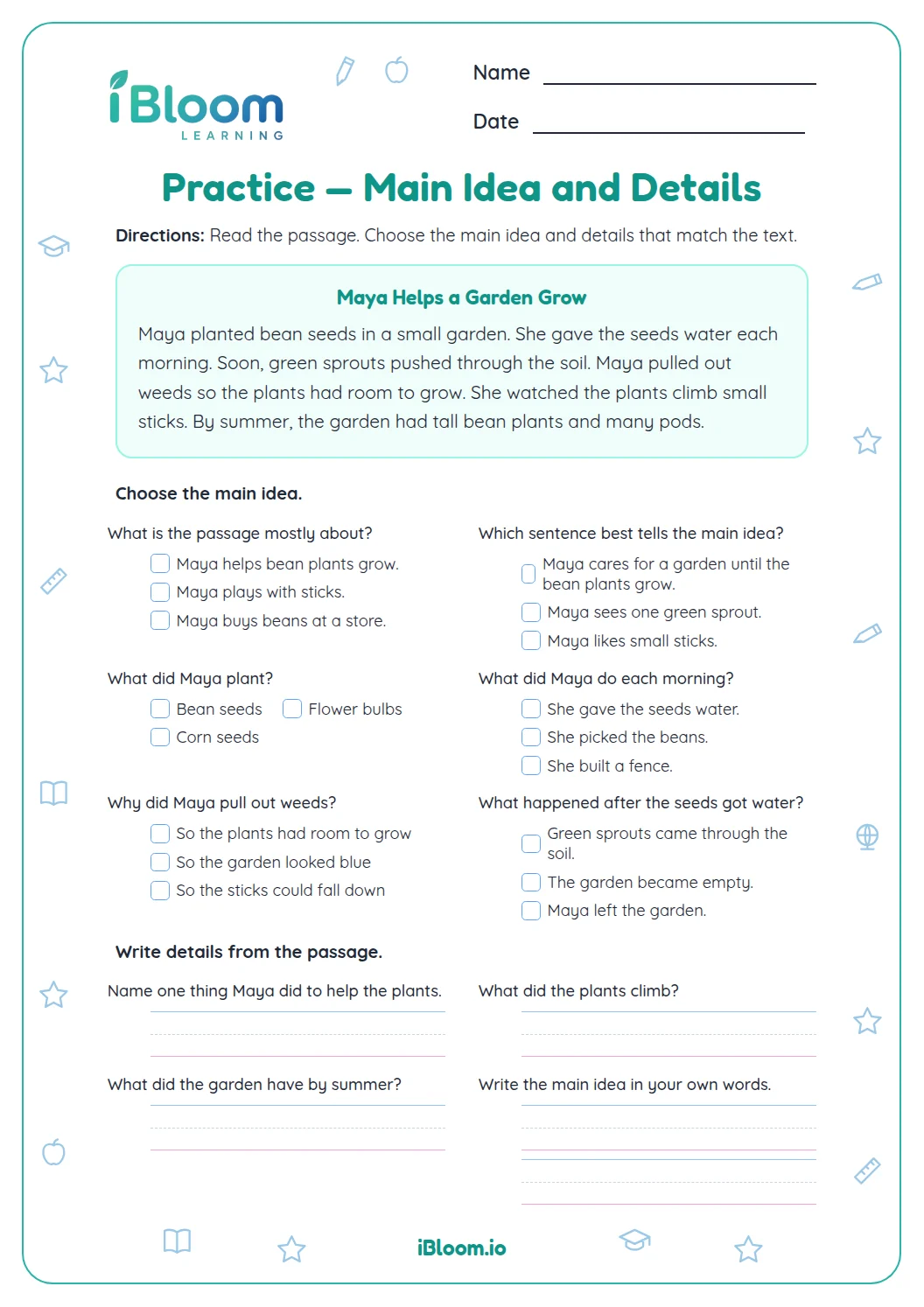
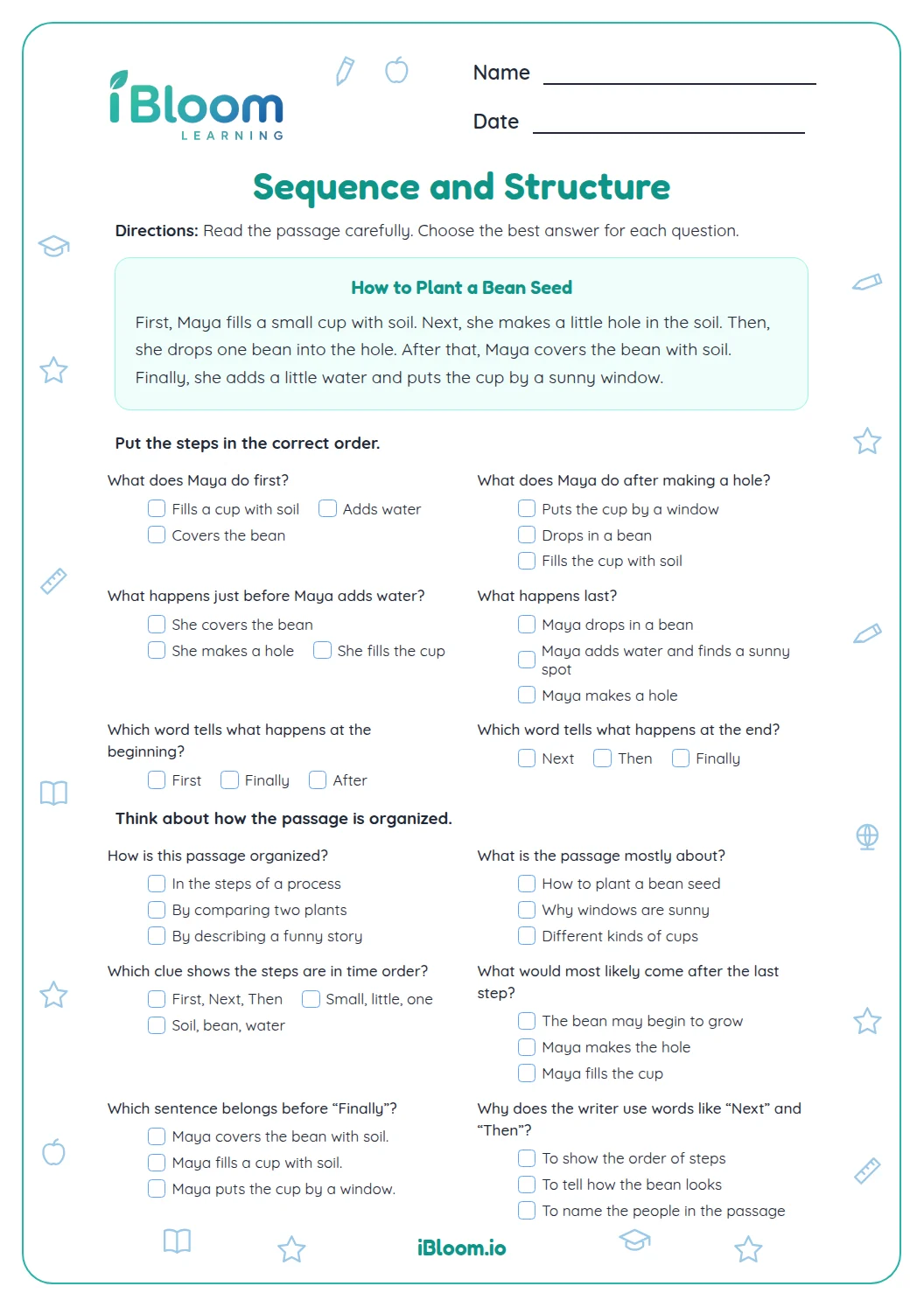
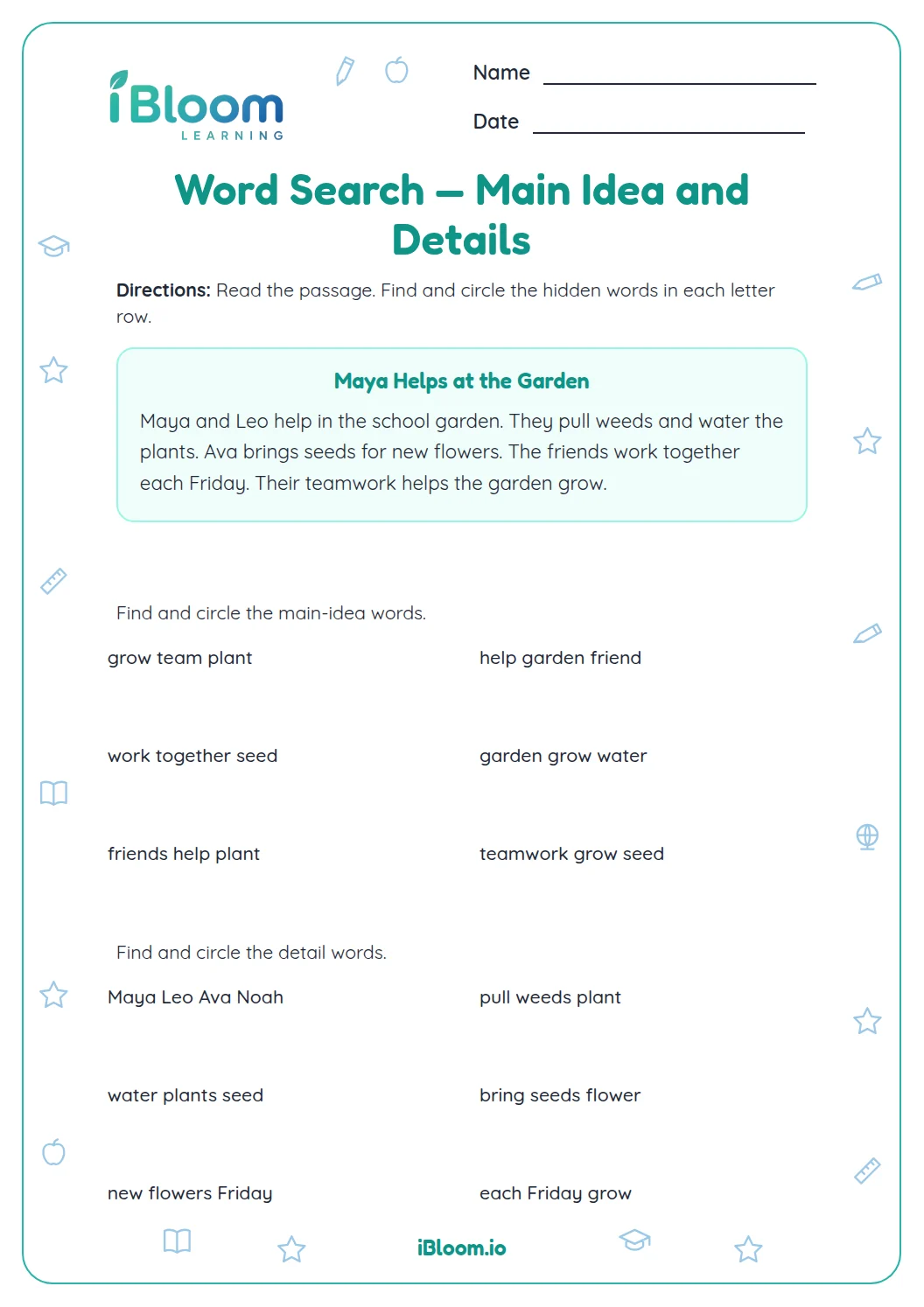
This Grade 2 reading-comprehension worksheet uses an original story about Lena and Jay flying a kite after a rainy morning. Students answer 14 multiple-choice questions: they infer feelings, reasons, and likely events, then find details that support those ideas. The passage and questions practice CCSS RL.2.1 by answering questions about key details. A separate answer key is included.
Aligned to RL.2.1
How do readers make an inference?
An inference is a reasonable idea built from clues in a text. A reader combines what the story says with what those details suggest. Lena folds her kite when dark clouds gather; that action and the first drops of rain support the idea that she expects rain.
- 1Clue: Lena sees dark clouds and folds her kite.
- 2Inference: She expects rain.
- 3Check: The story says the first drops fell soon after.
How do you find evidence for an inference?
Look back at the story for the sentence that most directly supports the idea. A detail should be in the text, not a guess about what might have happened. Questions in this set pair an inference with a detail that helps prove it.
What reading skills appear on the sheet?
The passage follows Lena and Jay as they decide when and where to fly a kite. Students infer feelings, reasons, and likely conditions, then identify the exact story clues that support those ideas.
How can you use this worksheet?
- 1Read the passage once to understand what happens.
- 2Read each question and decide whether it asks for an inference or a text detail.
- 3Return to the passage and point to the clue before choosing an answer.
- 4Check that the evidence choice supports the inference rather than merely mentioning the same character.
- 5Review the key and discuss any answer that came from a guess outside the text.
Common mistakes and quick fixes
The mistake
Choosing a guess that the story never supports.
The fix
Ask, “Which sentence makes you think that?” and use a printed clue.
The mistake
Confusing a detail with an inference.
The fix
A detail is stated; an inference is the idea supported by that detail.
The mistake
Selecting a sentence that mentions the topic but does not prove the answer.
The fix
Compare the exact meaning of the clue with the idea in the question.
Common Core alignment
The passage and questions ask students to reason from details in a story.
Answer questions about a story using its key details.
On this sheet: Students answer questions about a fictional passage and select details that support their inferences.
Show the official wordingHide the official wording
Ask and answer such questions as who, what, where, when, why, and how to demonstrate understanding of key details in a text.
What to practice next
Make more practice
Further reading
Questions parents and teachers ask
What is an inference?
An inference is a reasonable idea a reader reaches by combining story clues with what those clues suggest. Lena folds her kite after seeing dark clouds, so a reader can infer that she expects rain. The story then confirms the idea when raindrops tap the windows.
How is evidence different from an inference?
Evidence is a detail stated in the story; an inference is the idea you draw from one or more details. “Lena smiled” is evidence. “Lena feels pleased that the kite is flying” is an inference supported by that action.
Can more than one detail support an answer?
Yes. A passage can include several clues, but each question asks for the best support among its choices. For question 1, Lena folds the kite before the first drops fall; the next sentence says rain did fall, which supports the inference that she expected it.
Should children use what they know about kites?
A child may use background knowledge to understand the story, but each answer should be grounded in its words. For example, the phrase “open field” supports the idea that Lena and Jay had room to fly a kite. Ask the child to point to the clue before choosing.
What is the passage about?
Lena and Jay wait for the rain to pass before flying Lena’s kite in a nearby field. As students read, they can track the weather clues, where the kite is kept, and how the children take turns guiding it.
How can an adult help without giving away an answer?
Ask the child to point to the sentence that made the answer seem reasonable. Then ask whether the sentence states the answer directly or provides a clue. This helps distinguish the text detail from the inference built from it.