

About this worksheet
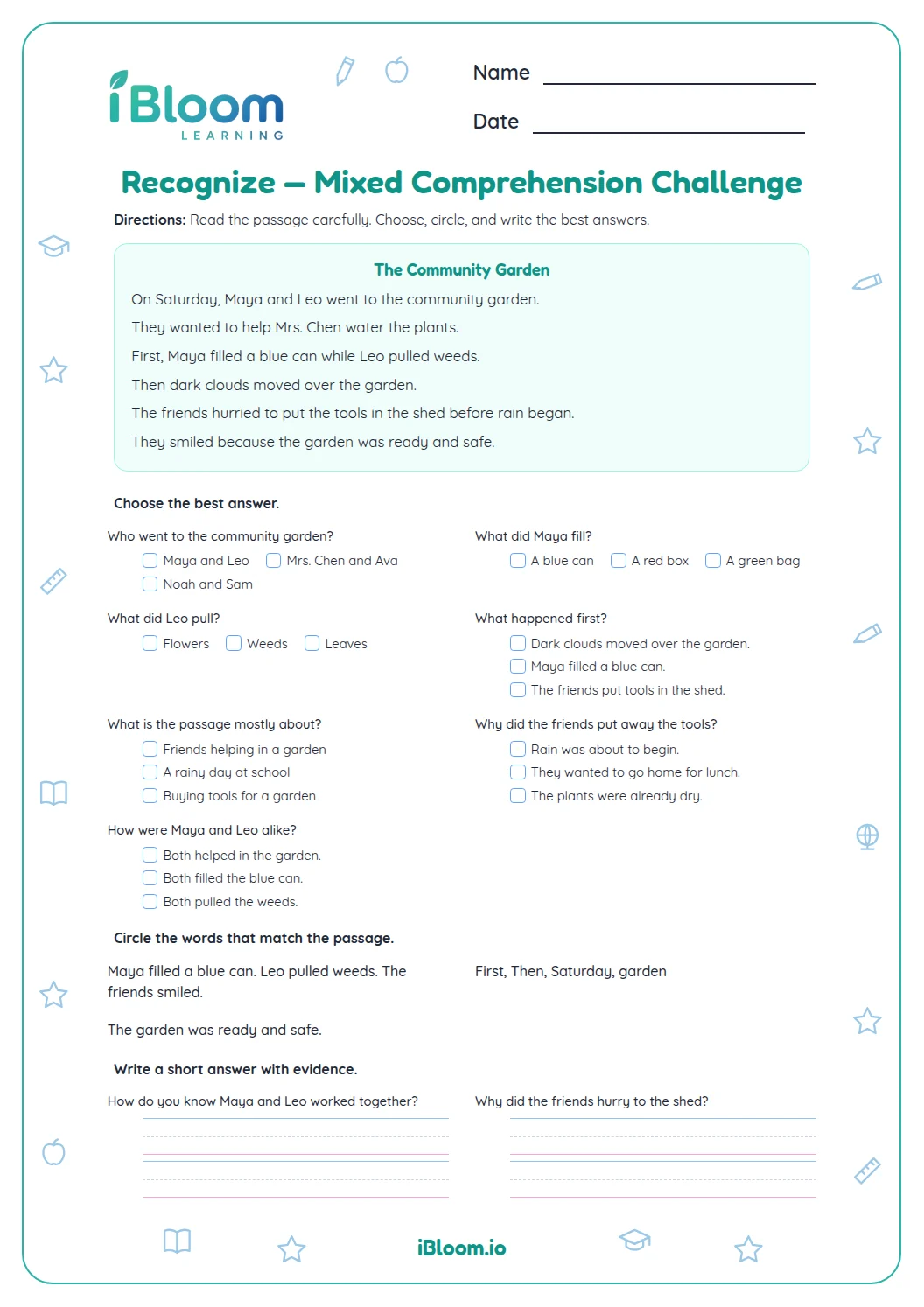
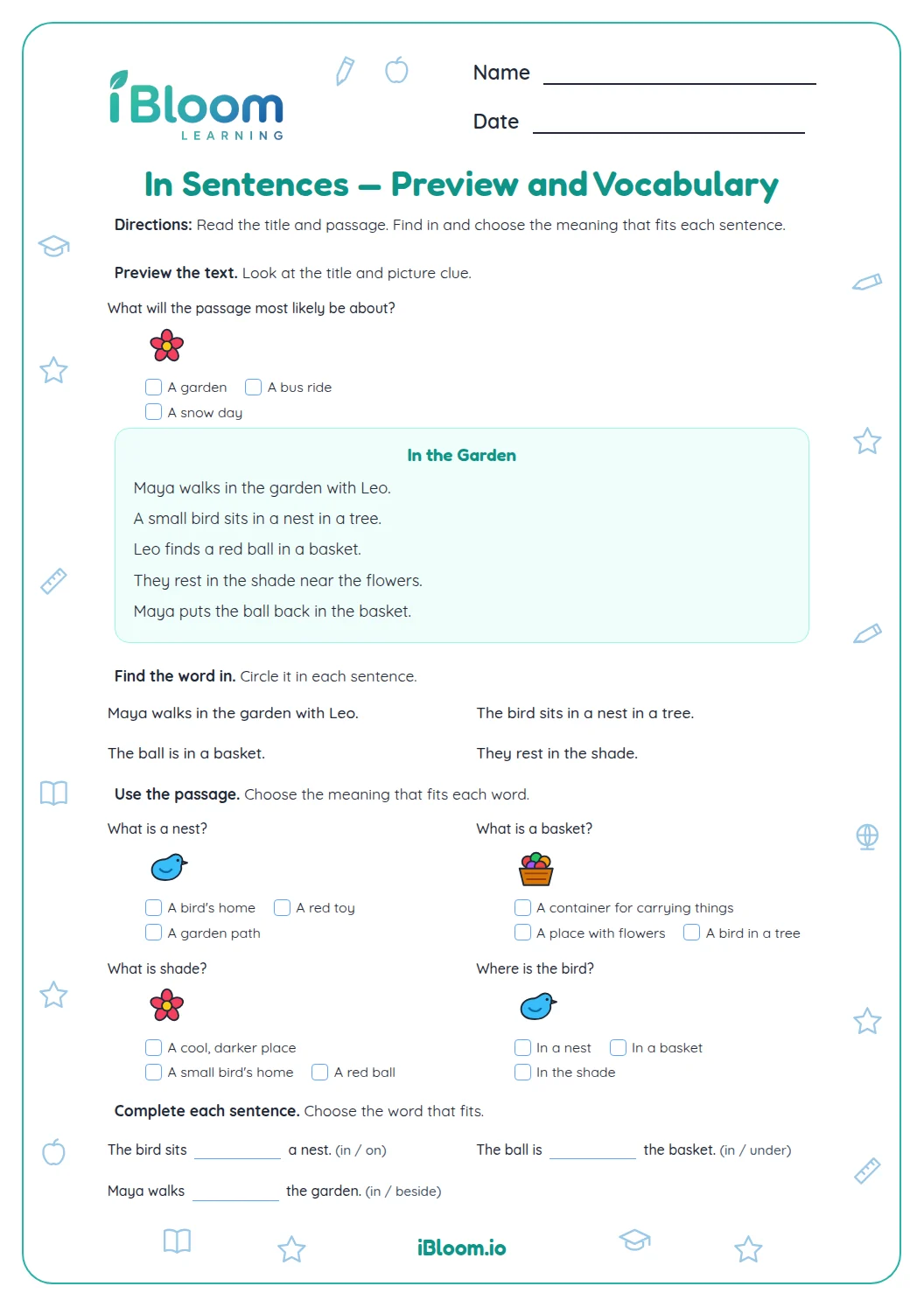
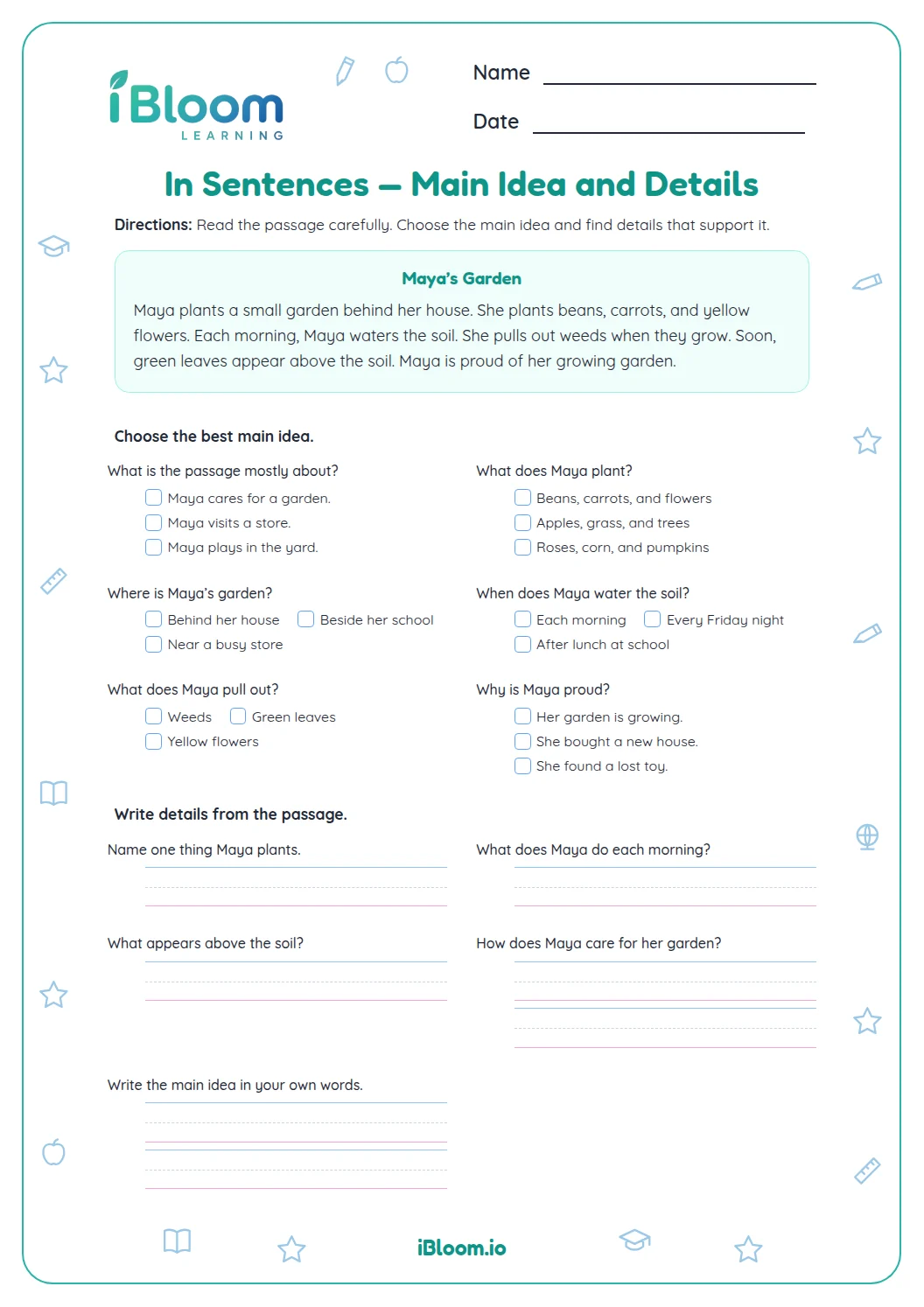
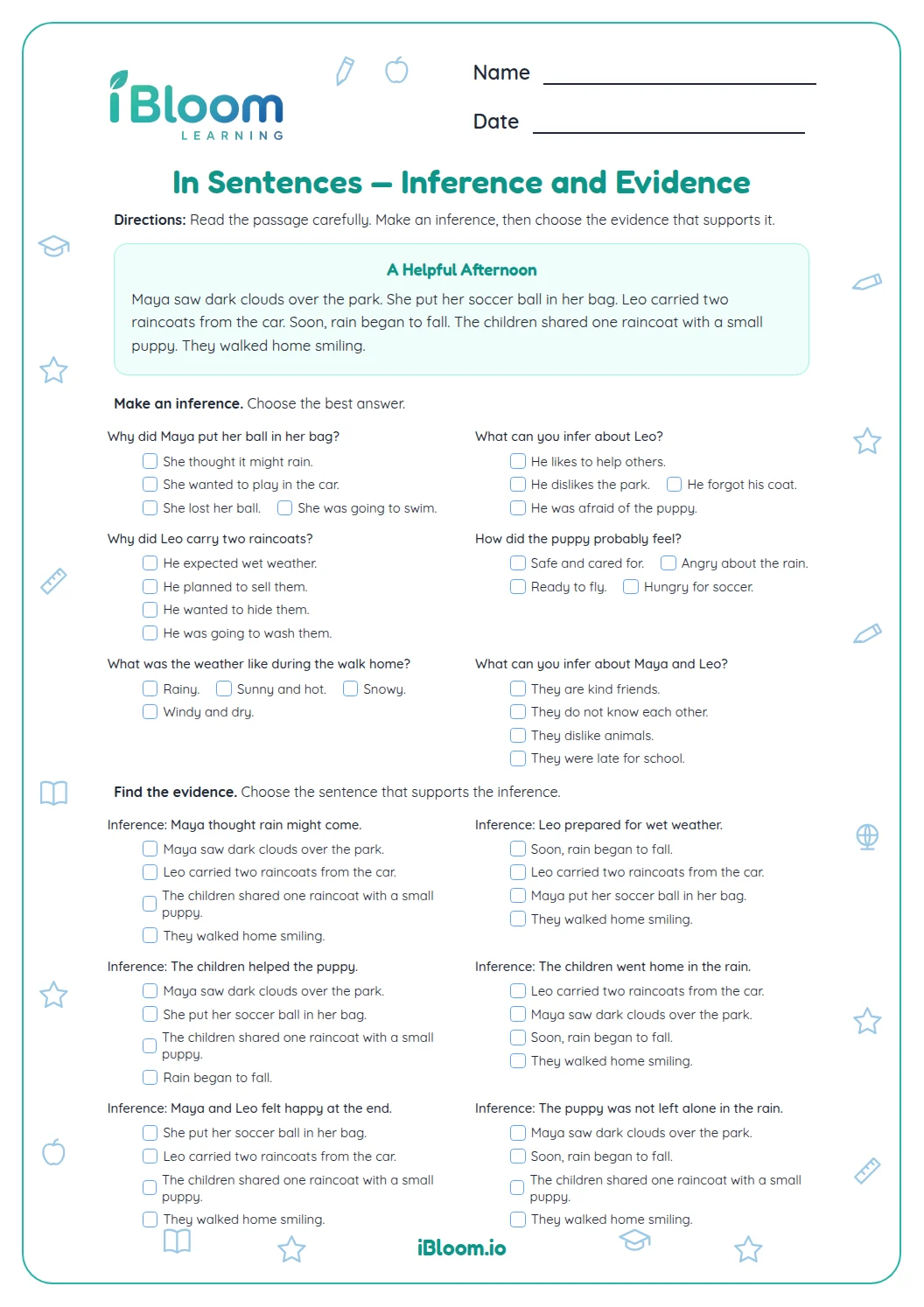
This free Grade 2 printable uses a short passage about Nia and her brother walking to the park. Learners find common sight words in the text, use context to work out word meanings, and choose words that complete sentences. The 15 questions follow the same passage-based recognition and vocabulary approach as the original sheet, with a separate answer key.
How does the passage support sight-word practice?
The questions point learners back to the park story to spot familiar words such as and, they, after, and under. Other items use a short sentence so children can test which word makes sense in context.
How can a learner use context?
Read the whole sentence, then check what the target word contributes. The passage gives enough information to identify the word without guessing from a list.
- 1The hat was “under the bench.”
- 2Under tells where Nia found the hat.
- 3Choose “under” for the location word.
What is in each part?
Part A is the passage. Part B asks learners to find specific words in it. Part C uses context for word meanings and sentence completion.
How to use this worksheet
- 1Read the passage once to understand what happens.
- 2Reread the sentence named in each question.
- 3Check the words around the target word for clues.
- 4Choose the word that fits both the meaning and sentence.
- 5Use the separate key to check all 15 answers.
Common mistakes and quick fixes
The mistake
Choosing a word because it appears in the passage.
The fix
Check whether it answers the question about meaning or sentence role.
The mistake
Reading only the target word.
The fix
Read the full sentence and use its surrounding clues.
The mistake
Mixing up a word’s meaning and its job.
The fix
Ask whether the question asks what the word means or how it works in the sentence.
What to practice next
Make more practice
Further reading
Questions parents and teachers ask
How many questions are on this sight words worksheet?
The worksheet has 15 multiple-choice questions in three parts, plus a short passage about Nia and her brother. Learners find words in the text, use context to choose meanings, and complete sentences. The separate answer key lists all 15 answers.
Does the worksheet include a passage?
Yes. The passage is about a walk to the park, where Nia and her brother see a bird and later find a hat. Several questions ask learners to return to its sentences to recognize familiar words and understand how they are used.
What does “sight word” practice mean here?
Here, learners recognize familiar words as they read a sentence or passage. They also use nearby words to understand meaning and choose a word that completes a sentence. The questions keep the practice connected to the text rather than asking children to memorize a detached list.
Can I read the passage aloud?
Yes. An adult may read the passage or directions aloud, then ask the learner to find the word or clue in the text. The learner can still make each choice independently. Rereading a sentence is useful when a word’s meaning depends on its context.
Is there a separate answer key?
Yes. The printable includes a separate answer key page with the correct choice for each of the 15 questions. Have the learner finish first, then use the key to check responses and revisit any sentence that was difficult. Read the printed question again, explain the choice or calculation, and then use the separate key to confirm the result.