

About this worksheet
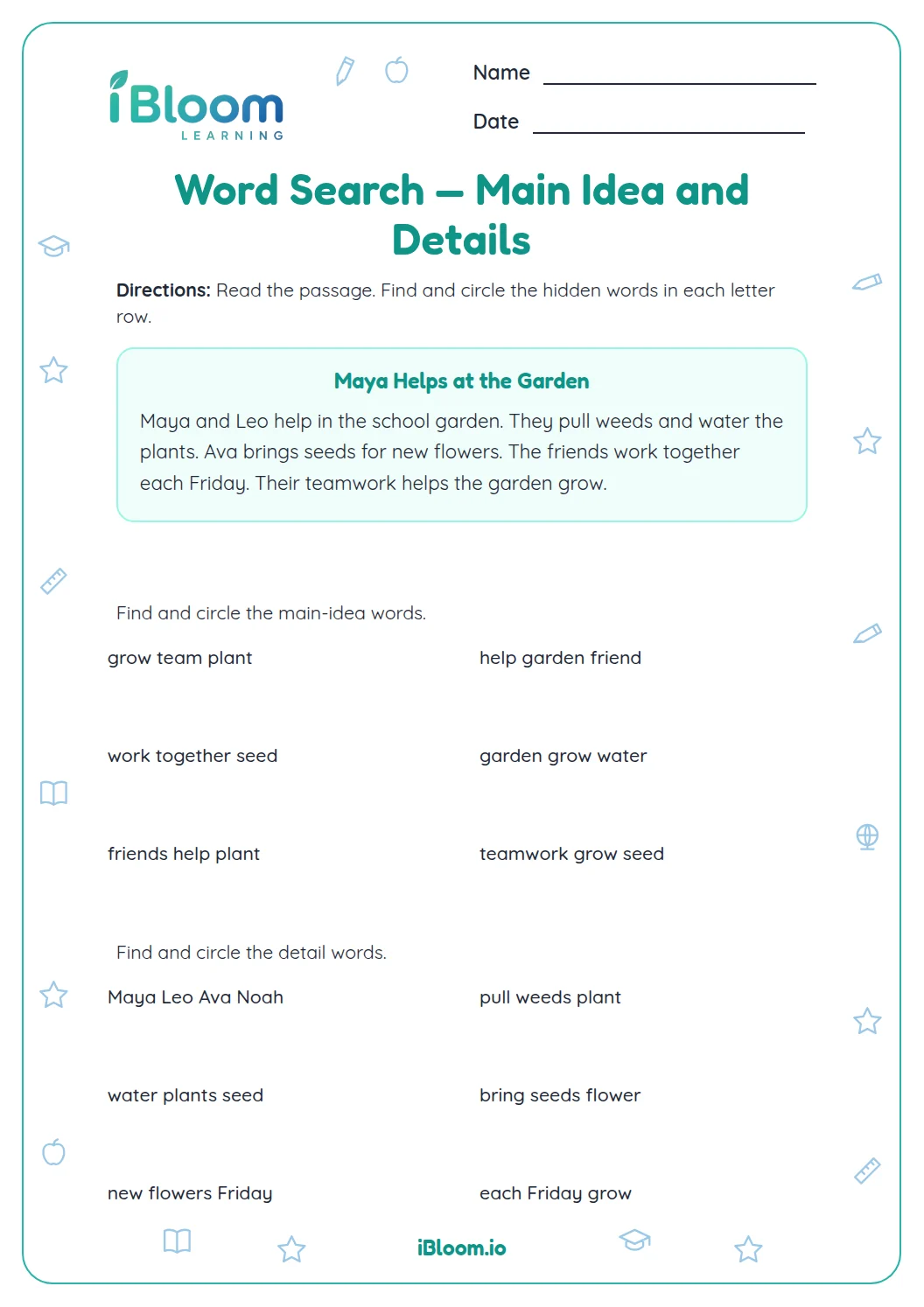
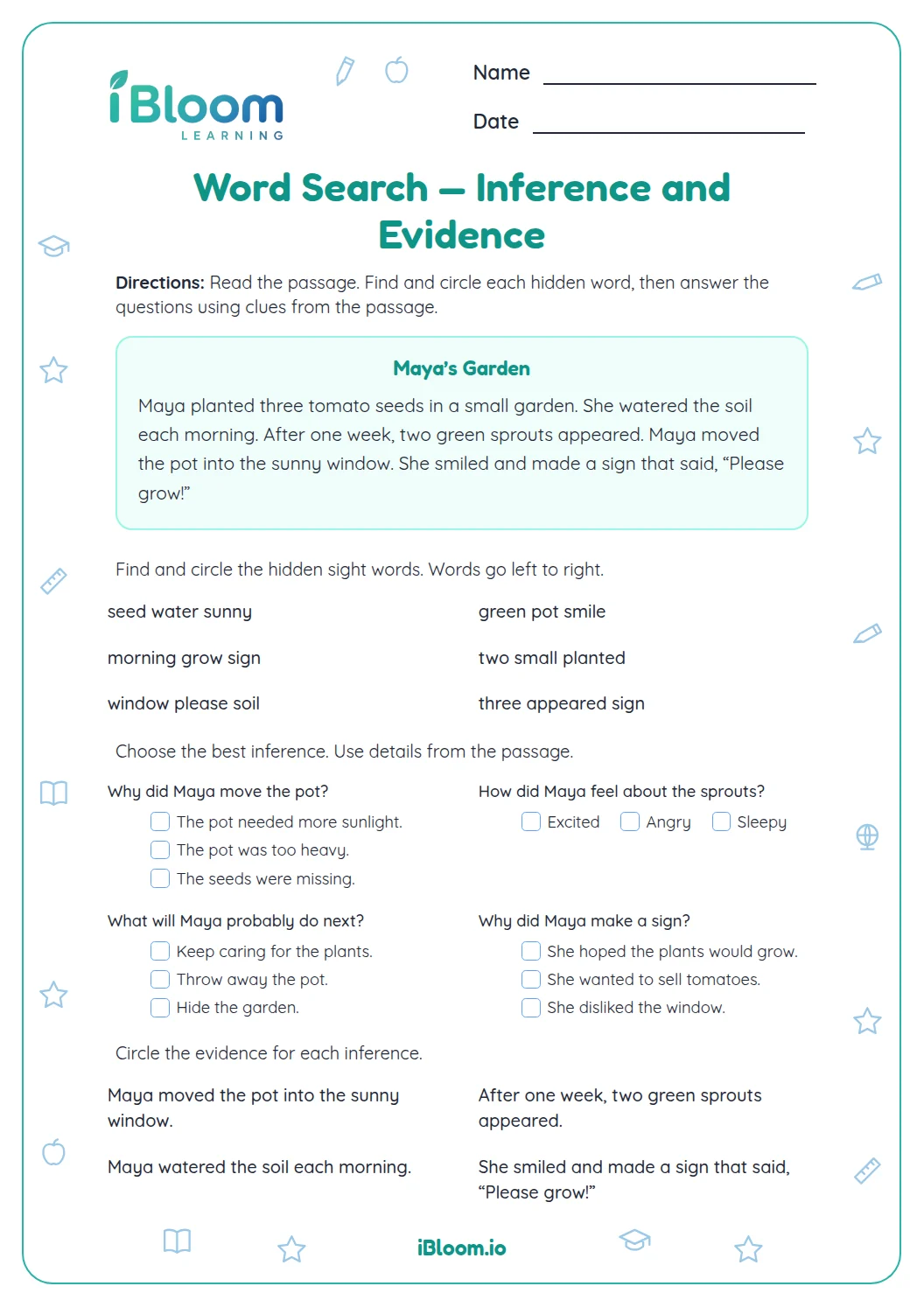
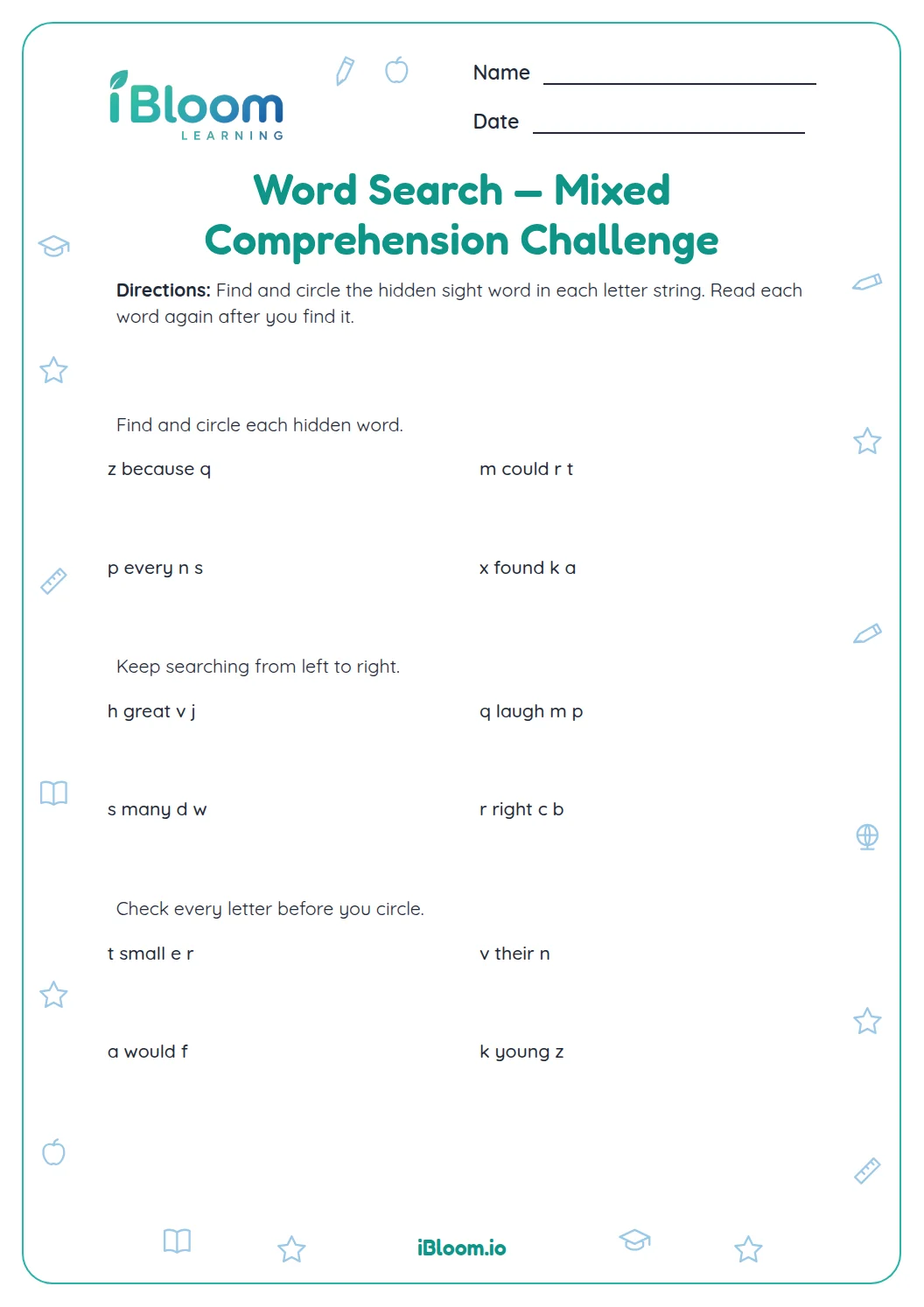
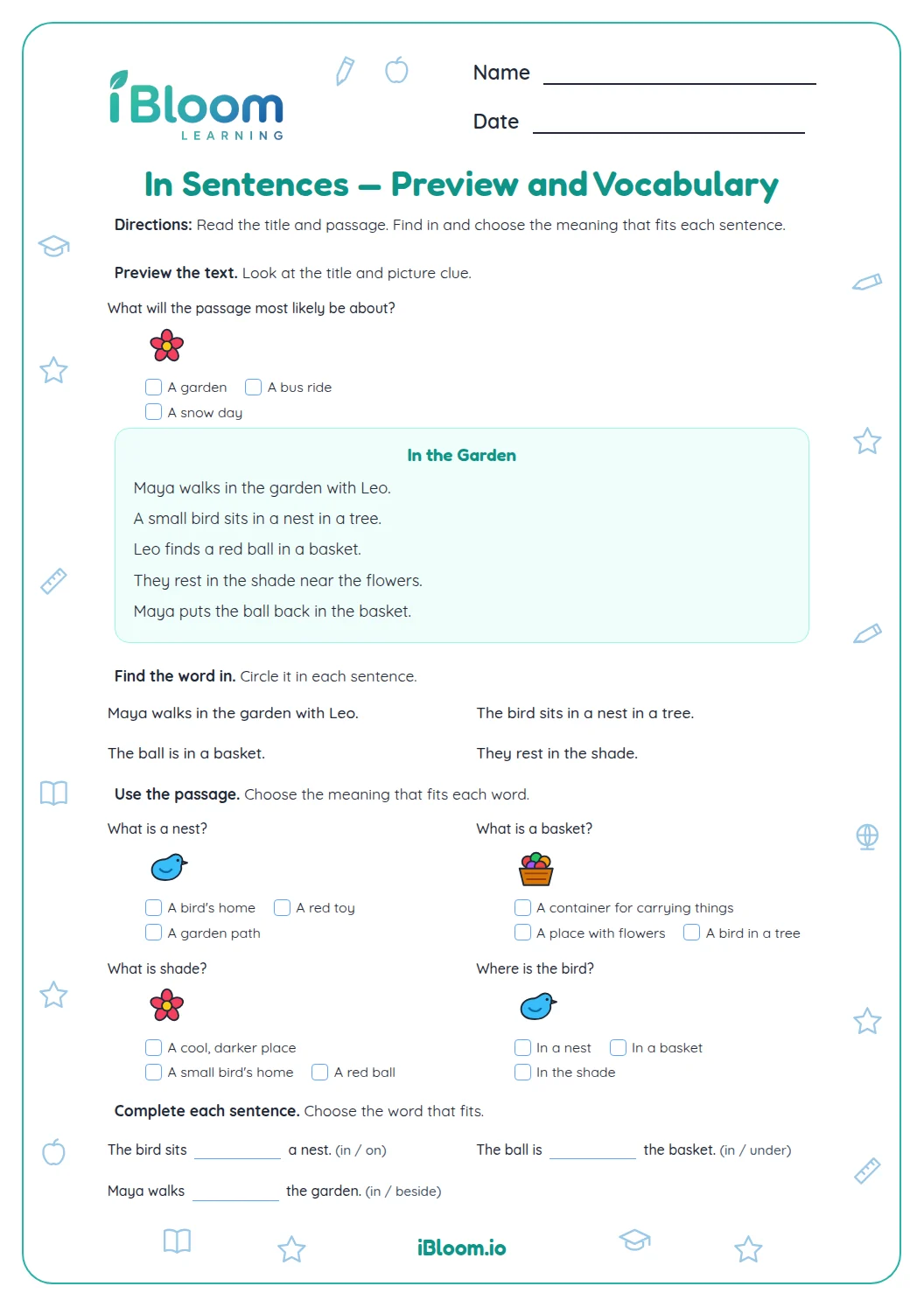
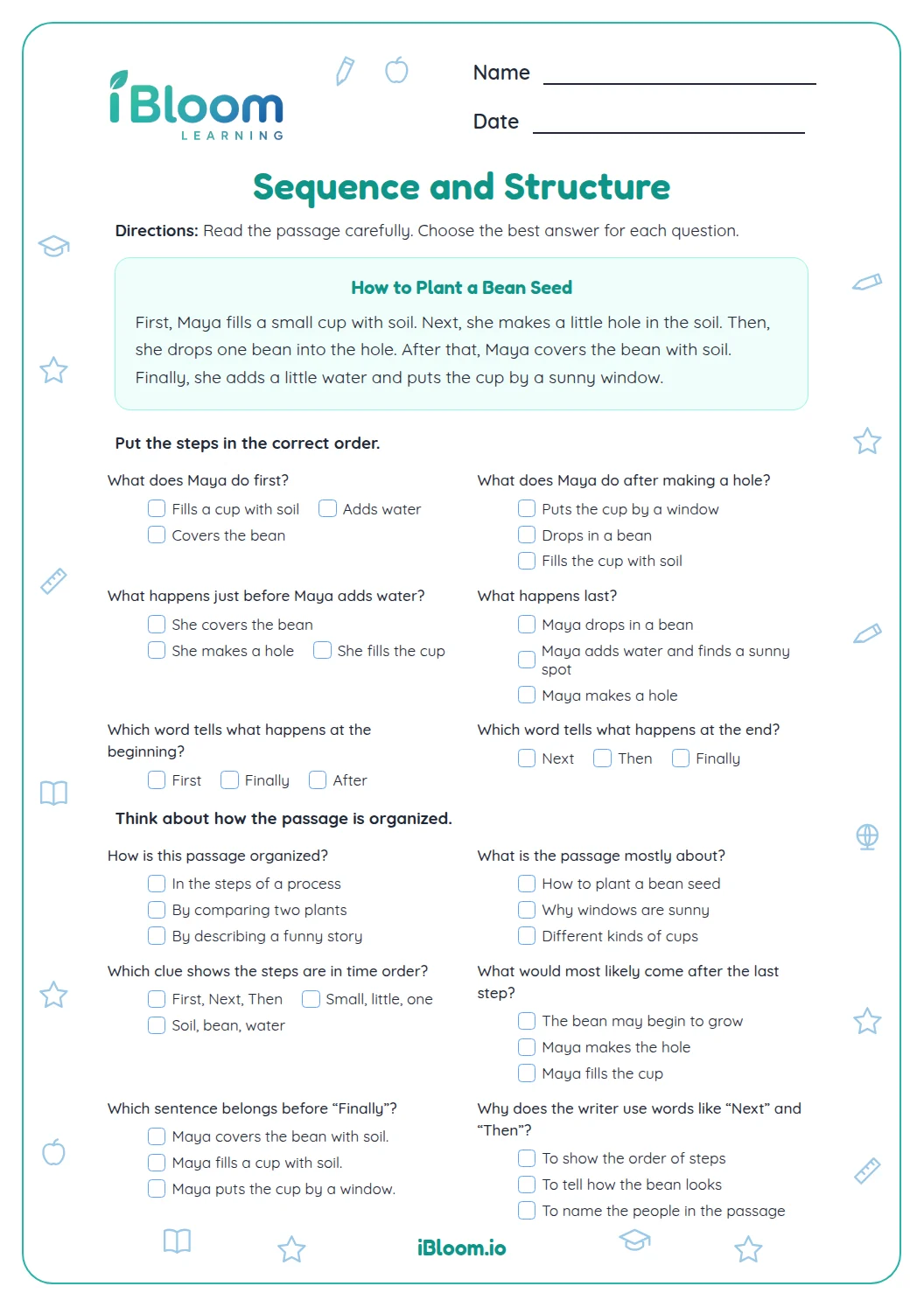
This Grade 2 worksheet pairs word searches with practice reading sequence and structure words. Students locate words such as first, next, before, beginning, and end, then decide how those words help a reader follow steps or recognize parts of a text. The 14 questions use short contexts rather than a long passage, keeping attention on the signal words. A separate answer key supports checking. The practice connects to CCSS RL.2.5, which asks students to describe how a text’s beginning introduces the topic and the ending concludes it.
Aligned to RL.2.5
How do sequence words help a reader?
Words such as first, next, before, and finally signal when events happen. Use them to put steps or story events in order.
- 1“First, pack a bag. Next, fill the bottle.” Packing comes before filling the bottle.
What do structure words name?
Beginning, middle, end, part, and section name places within a text. They help a reader talk about how a text is organized.
- 1A story has a beginning, middle, and end. “End” names the story’s closing part.
How to use this worksheet
- 1Search the grid for each listed sequence and structure word.
- 2Cross off a word when you find it so you can track the list.
- 3For each sentence, use its clue word to decide what happens earlier or later.
- 4For text-part questions, choose the word that names the opening, middle, or ending.
- 5Check that each answer completes the sentence and matches the clue.
Common mistakes and quick fixes
The mistake
Mixing up a word that signals time with a word that names a text part.
The fix
First and after signal order; beginning and middle name parts of a text.
The mistake
Choosing “next” when a sentence asks what happened earlier.
The fix
Read the whole clue and compare the events before filling in the blank.
The mistake
Searching only across the grid.
The fix
Check each row and look down as well as across for listed words.
Common Core alignment
The story questions ask students to answer about key details and explain how events unfold.
Describe how a story’s beginning introduces the topic and its ending concludes the action.
On this sheet: Students recognize words that name text parts and use sequence clues to follow events.
Show the official wordingHide the official wording
Describe the overall structure of a story, including describing how the beginning introduces the story and the ending concludes the action.
What to practice next
Make more practice
Further reading
Questions parents and teachers ask
What is a sequence word?
A sequence word signals when an event or step happens. The word search includes first, next, and then. Context questions also use before, after, and last to help readers decide which action happens earlier or later. Students can cross off words as they find them.
How is a sequence word different from a structure word?
Sequence words show order or timing between events. Structure words such as beginning, middle, end, part, and section name places within a text. The word search includes examples from both groups for readers to find. Later questions ask students to tell how each clue works in a context.
How can a reader use before and after?
Compare the timing of the actions connected by the clue word. “Before” points to an earlier action, while “after” points to a later action. In question 4, mixing the flour happens after the reader sees the recipe. This gives students a concrete example to revisit while checking their work.
What does middle mean in a text?
The middle is the part between a text’s beginning and end. It often develops a topic or tells what happens after the opening. The search includes middle with other words that name parts of a text. This gives students a concrete example to revisit while checking their work.
How can students practice these words again?
Ask students to explain familiar routines using first, next, then, and finally. They can also describe a story’s beginning, middle, and end. The word search and context choices provide a model for using these terms aloud. This gives students a concrete example to revisit while checking their work.