

About this worksheet
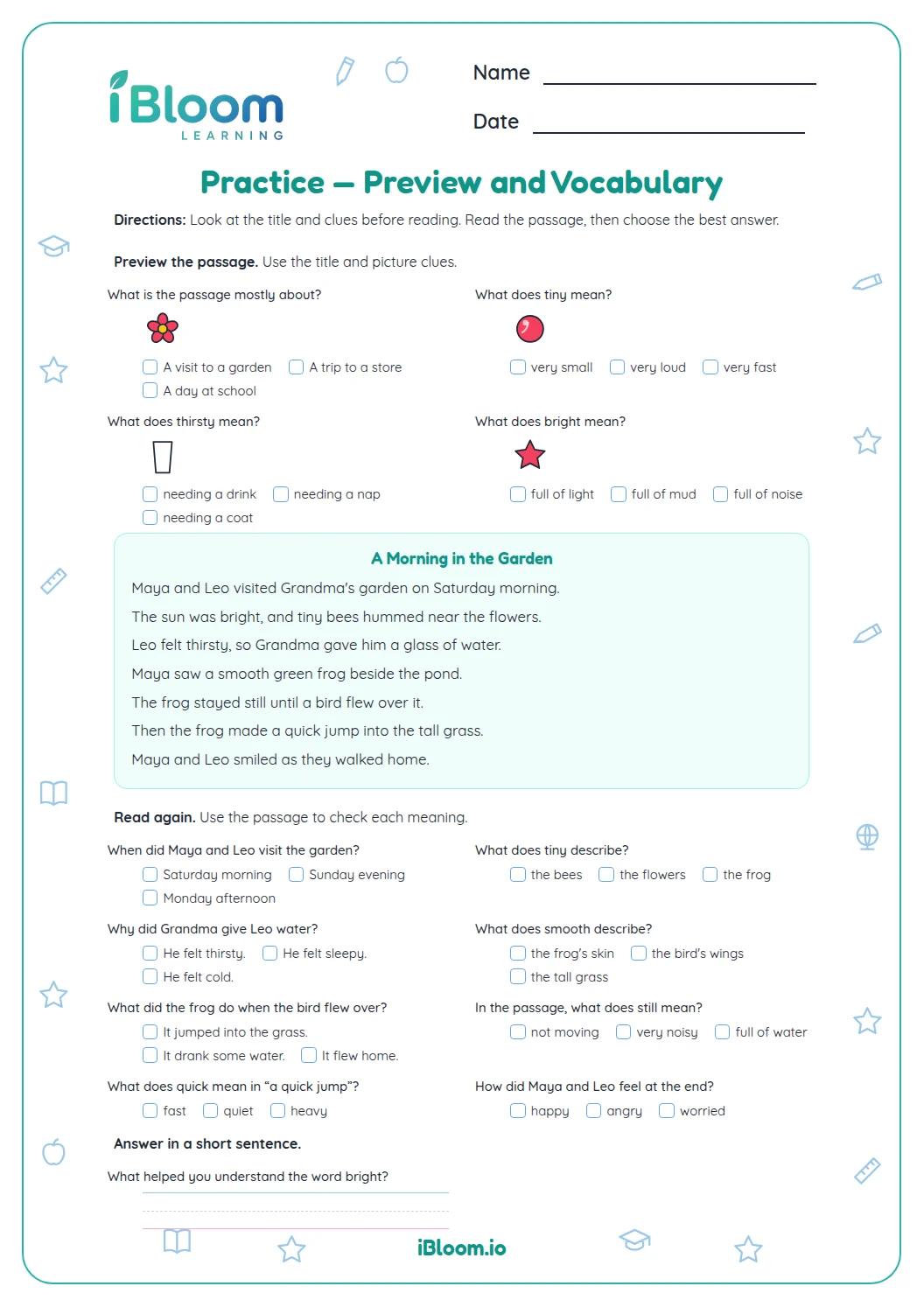
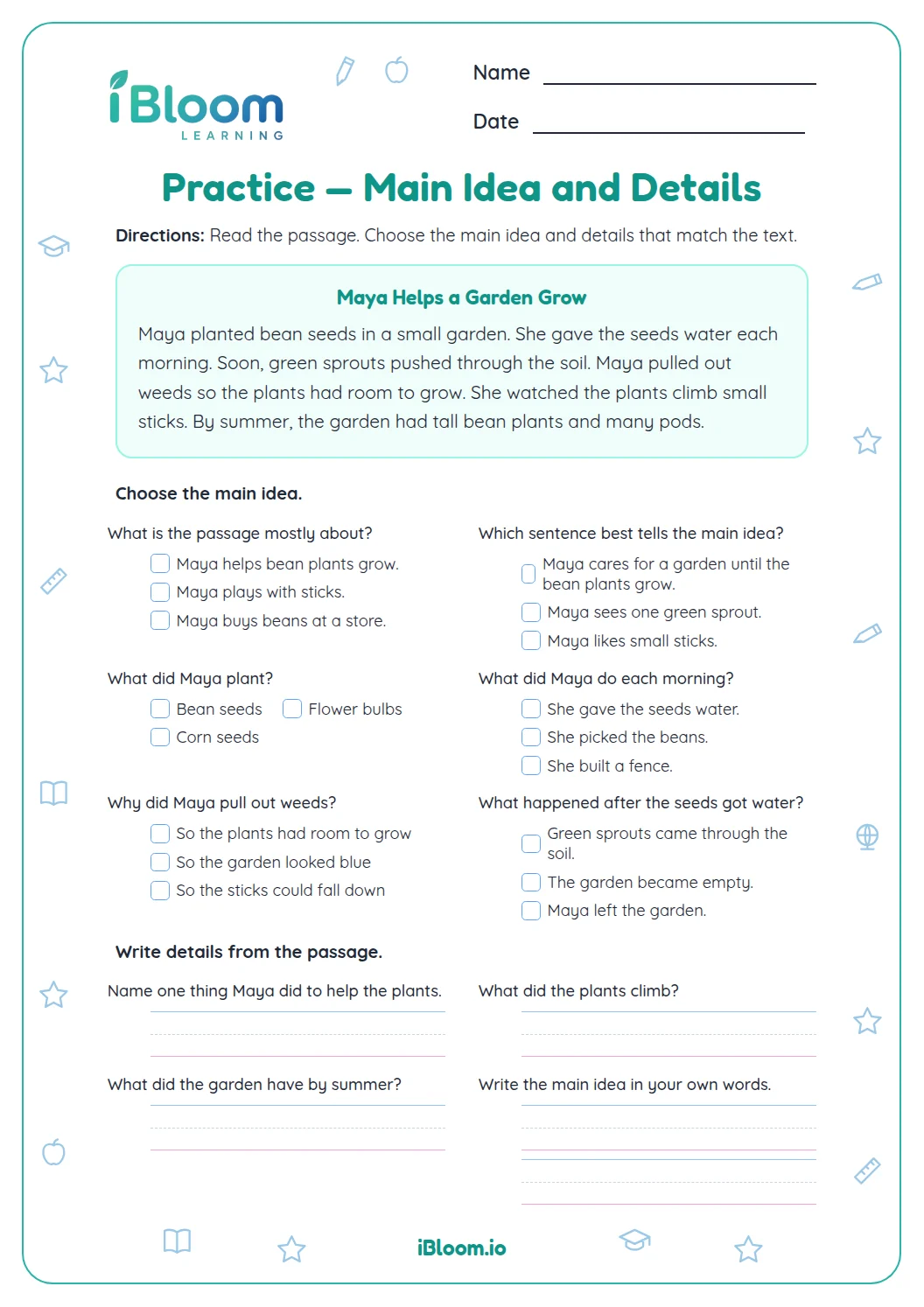
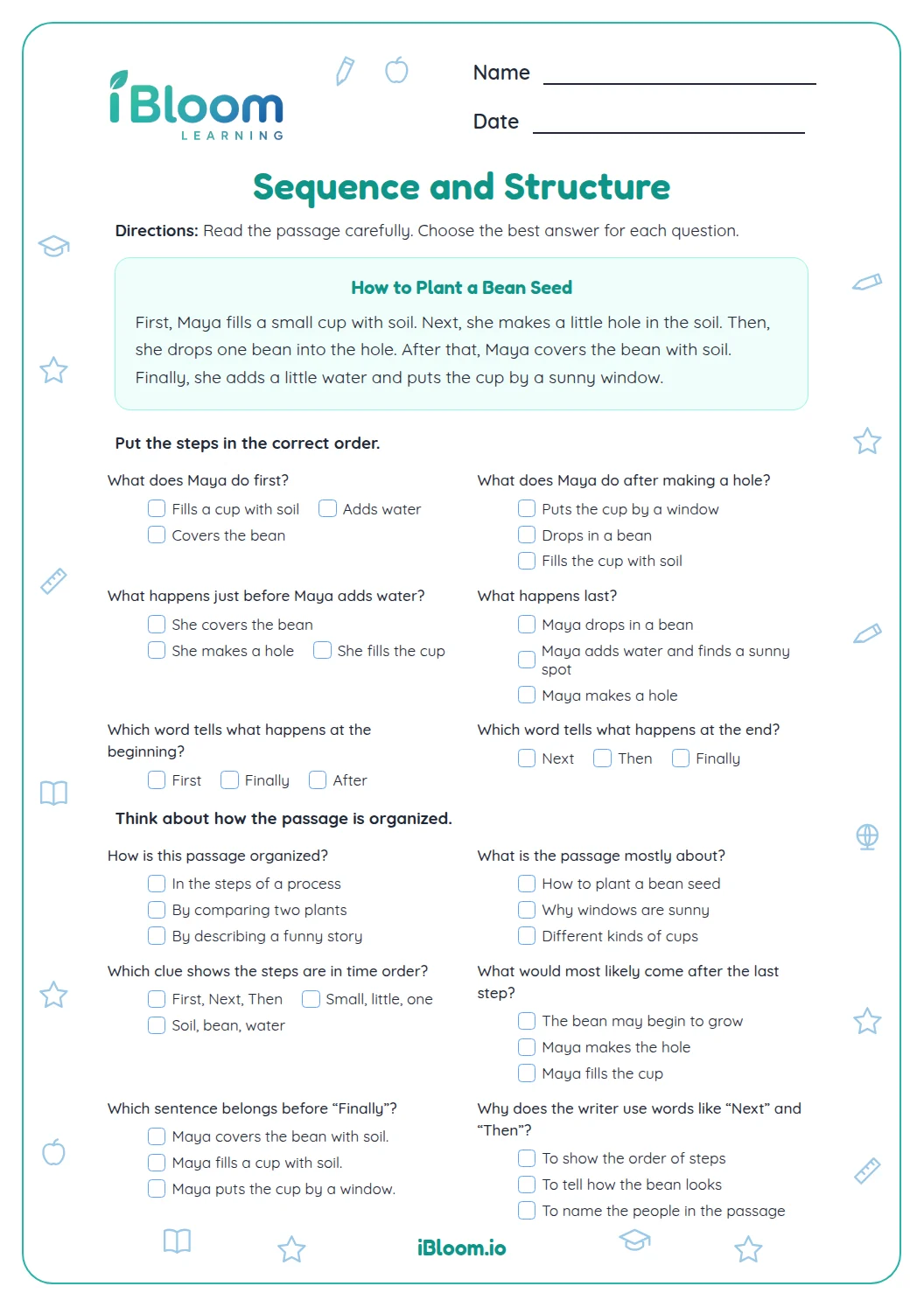
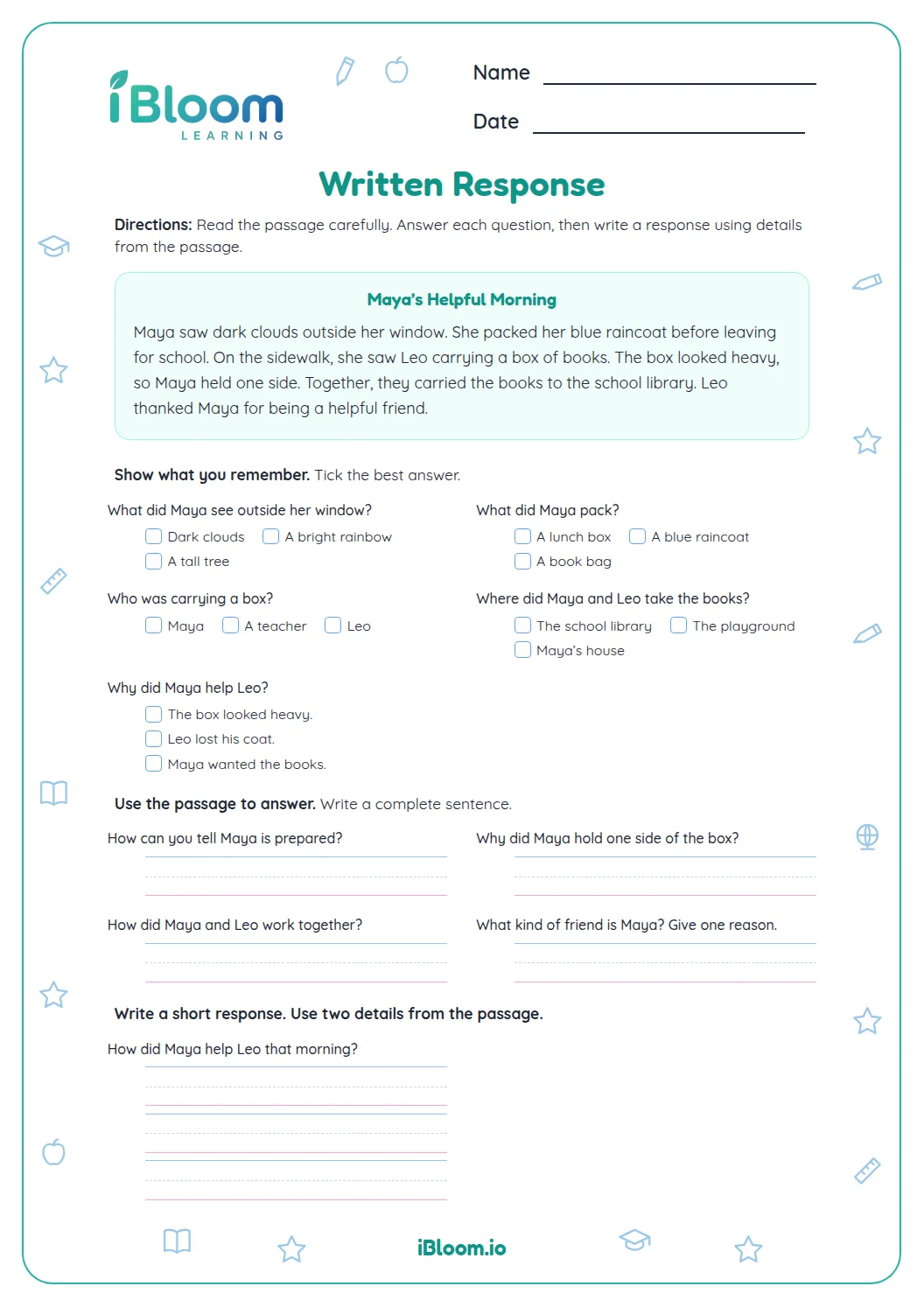
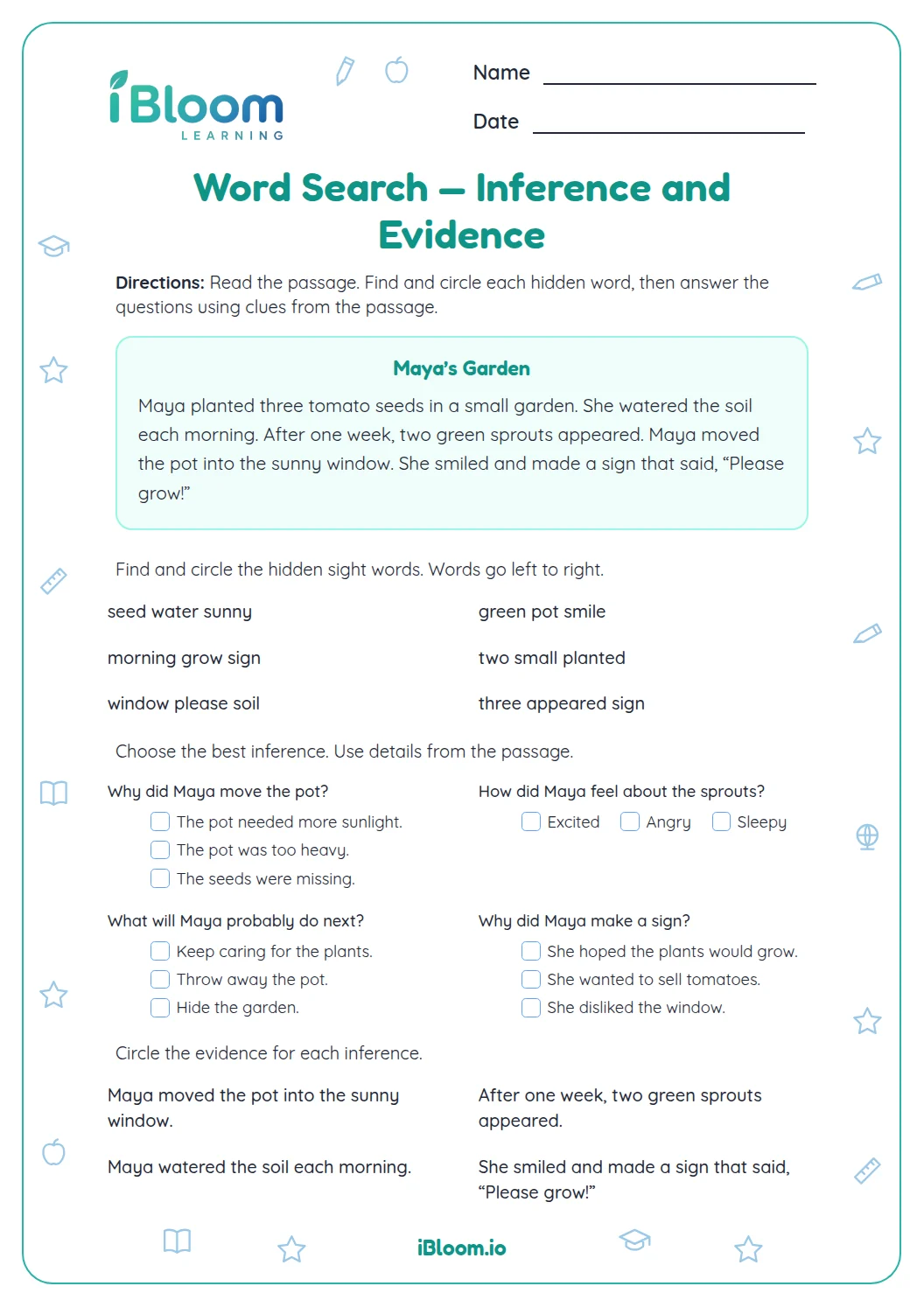
This Grade 2 worksheet uses the original story “Ready for the Picnic.” Lena notices dark clouds, packs a raincoat and food, and waits for Grandpa. Students answer 12 questions that ask what clues suggest, why characters act, and which details support an answer. Parts A and B move from selected responses to short answers. A separate answer key is included.
Aligned to RL.2.1
What clues appear in the picnic story?
The story gives concrete details: dark clouds, a raincoat, food in a basket, and Grandpa arriving with drops on his hat. Students use these clues to infer what may happen and explain characters’ choices.
- Questions 1–6: choose an inference or supporting clue
- Questions 7–12: answer in a phrase or sentence from the story
- Answer key provides sample wording for an open response
How do readers make a reasonable inference?
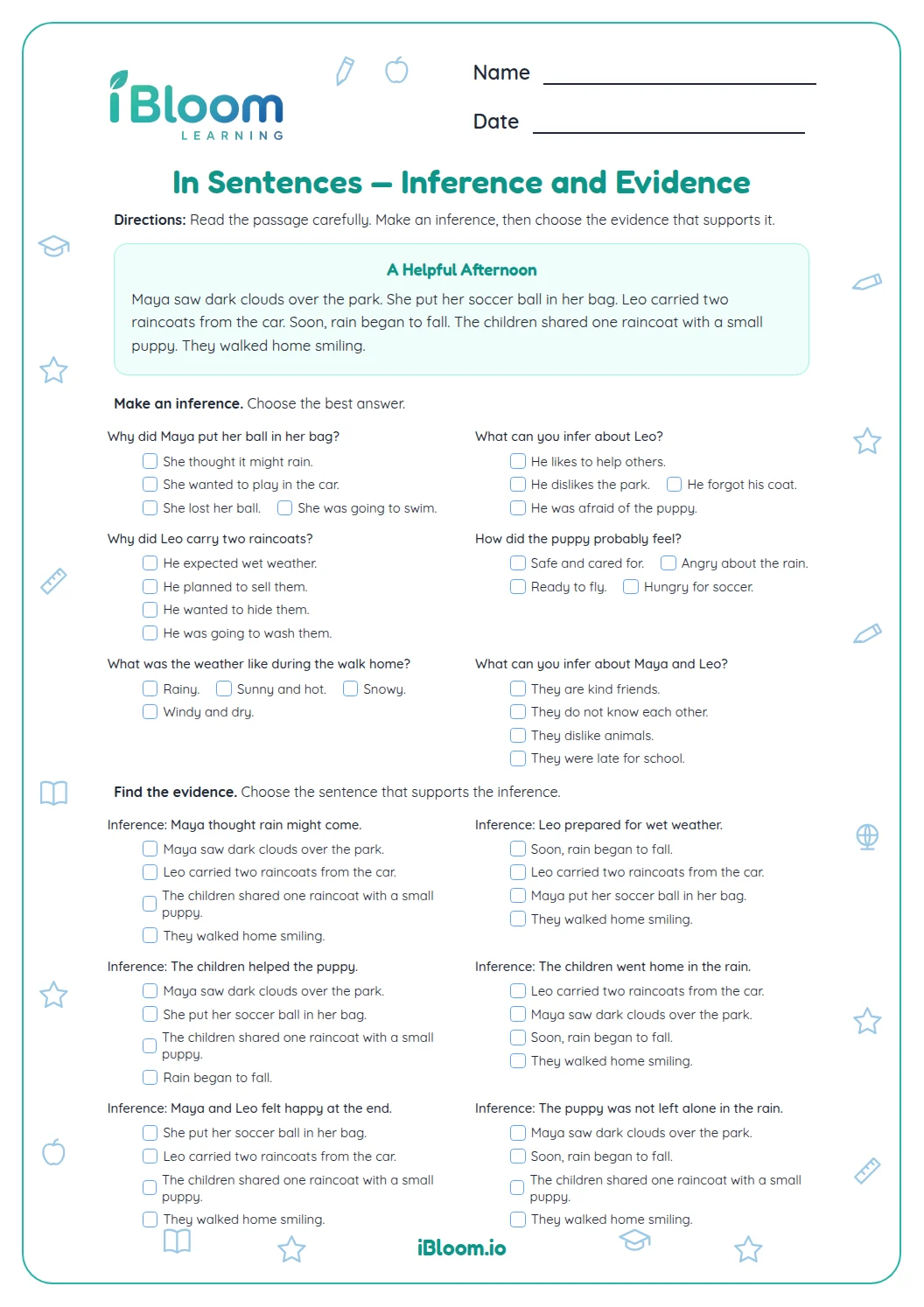
An inference connects a story clue with what the reader already knows. Dark clouds can suggest rain, but the passage does not say that rain has started. Keep the answer close to what the clues support.
- 1Clue: Dark clouds covered the sky.
- 2Inference: It may rain. The clue supports a possibility, not certainty.
How can students find evidence?
Reread the relevant sentence and choose or quote the detail that supports the answer. The evidence may be in a nearby sentence rather than the sentence with the question’s exact words.
Use a clue and check it
- 1Read the short story all the way through.
- 2Underline a detail connected to the question.
- 3State what that clue suggests without adding unsupported events.
- 4For a “which clue” question, choose the detail that most directly supports the inference.
- 5Check short answers against the passage and the key.
Common inference slips
The mistake
Saying it is definitely raining when the story only gives dark clouds.
The fix
Use “may” or “might” when the clue suggests a possibility.
The mistake
Choosing a true passage detail that does not support the answer.
The fix
Explain how the detail connects to the inference.
The mistake
Adding a reason the story never gives.
The fix
Use a stated action or clue, such as Lena placing food away from the dog.
Common Core alignment
Students ask and answer questions about details in a literary text.
Ask and answer questions using key details and clues in the story.
On this sheet: Questions ask why characters act and what story details support the answers.
Show the official wordingHide the official wording
Ask and answer such questions as who, what, where, when, why, and how to demonstrate understanding of key details in a text.
What to practice next
Make more practice
Further reading
Questions parents and teachers ask
What is an inference?
An inference is a reasonable idea supported by clues and what a reader already knows. In this story, dark clouds suggest that rain may come, so Lena brings a raincoat. Students should explain the clue behind an inference rather than guess beyond the story.
How many questions are on the worksheet?
The worksheet has 12 questions. The first six are multiple choice, and the next six ask for short written responses. Students use the same original picnic story throughout, and a separate answer key provides answers and a sample response. Ask the student to point to the matching question or passage detail as they explain the choice.
Can more than one inference make sense?
A short story can support more than one reasonable inference, but each response should use relevant clues. The multiple-choice questions identify a best supported answer. For open responses, the key gives a sample; equivalent answers grounded in the story can also work.
What does the evidence section ask students to do?
The later questions ask students to find details such as what Lena packed, why she took a raincoat, and what the family carried. Students should use the passage itself and explain how a detail supports an answer when asked. Ask the student to point to the matching question or passage detail as they explain the choice.
How can an adult help without giving the answer?
Ask the child to reread the sentence that seems important and say what it suggests. Then ask whether another detail supports the same idea. This keeps the student focused on evidence while leaving the inference to them. Ask the student to point to the matching question or passage detail as they explain the choice.