
About this worksheet
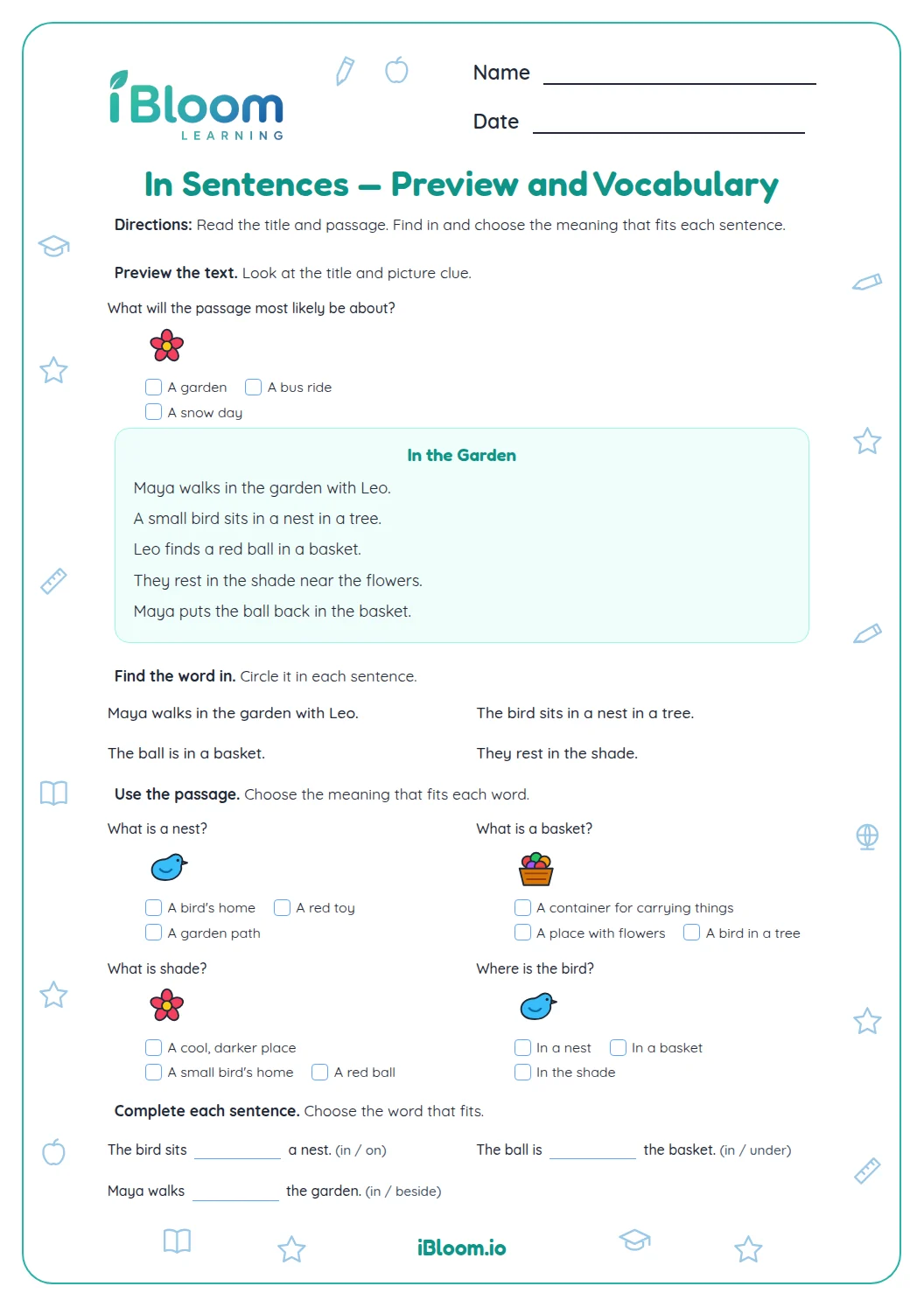
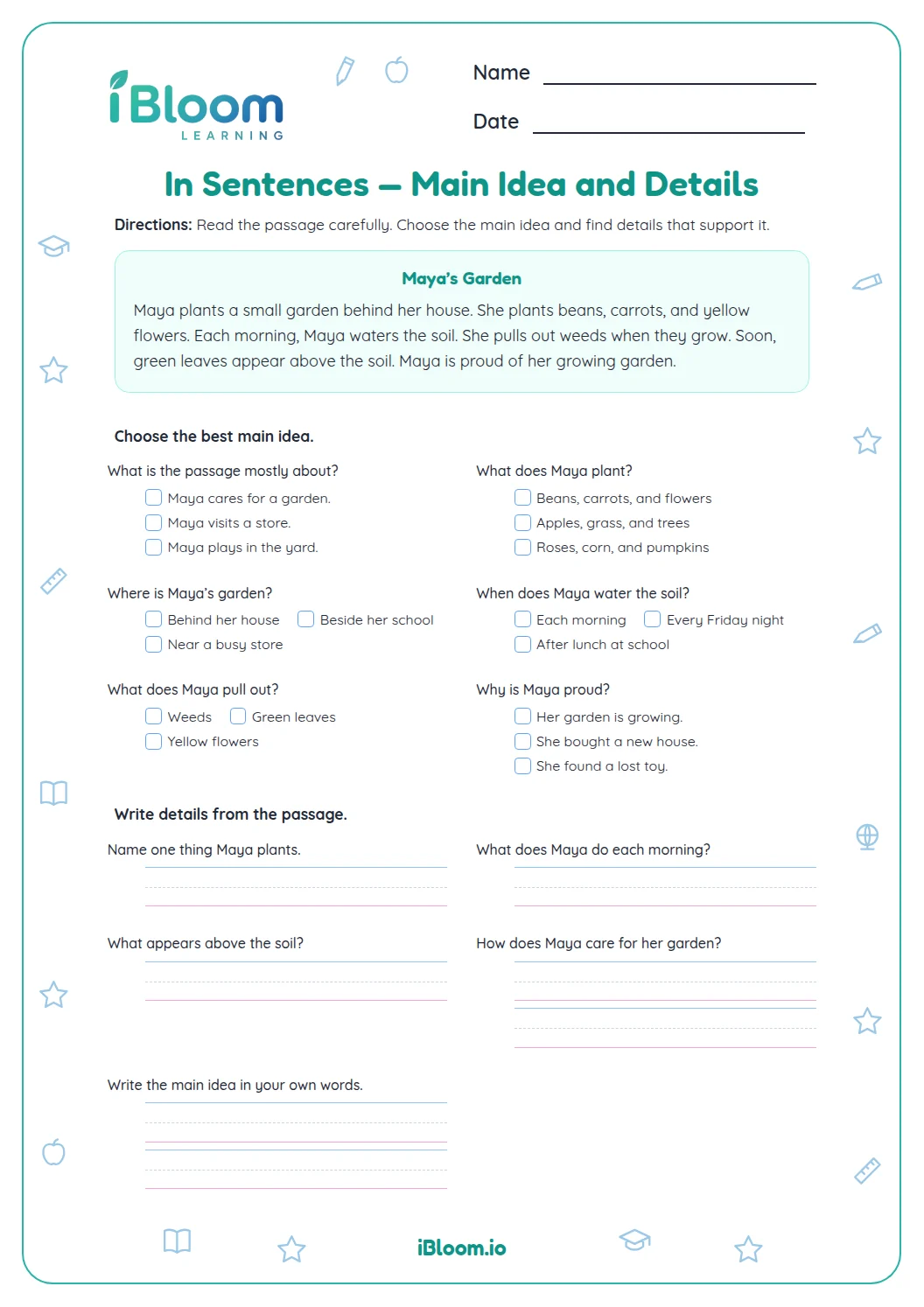
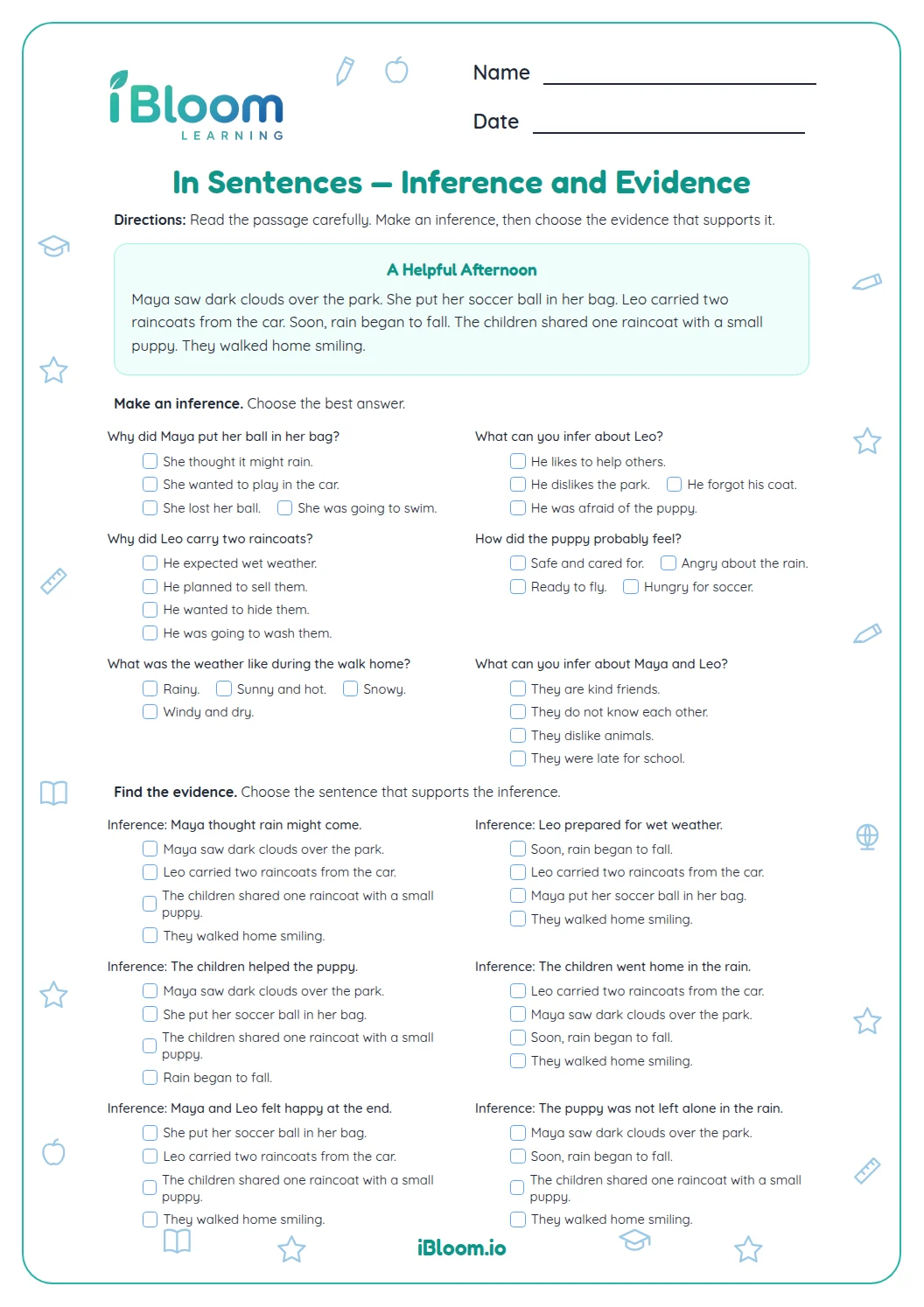
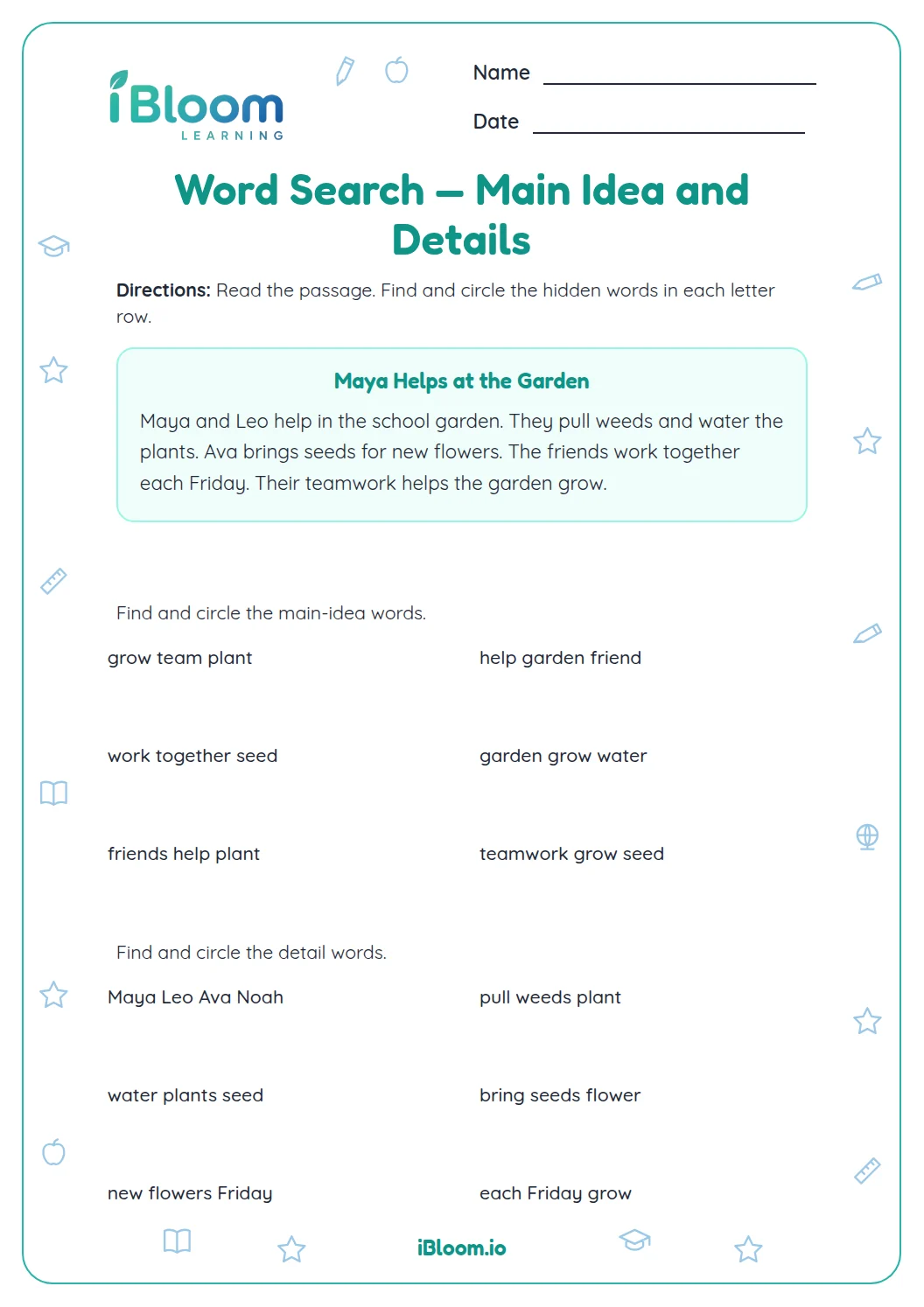
The short passage gives learners a connected story to read for details, sequence, vocabulary, and a simple inference. A final word hunt asks them to notice a familiar sight word in context.
Aligned to RL.2.1
How does this practice build sight words and comprehension?
The short passage gives learners a connected story to read for details, sequence, vocabulary, and a simple inference. A final word hunt asks them to notice a familiar sight word in context.
Use this sheet in order: the first part focuses on one skill, and later parts ask learners to apply it in a different way. Check the separate key after the learner has tried each item.
What is on the worksheet?
Read an original park story, answer detail and inference questions, and find sight words in context. Includes a separate answer key.
- Part A: Read a short park story
- Part B: Answer detail and inference questions
- Part C: Use evidence and find a sight word
- Part D: Find another sight word
How to use the worksheet
- 1Read the direction for the part before starting.
- 2Complete each item and use the provided response space.
- 3For reading or vocabulary items, return to the passage, clue, or word list.
- 4Check the separate answer key after finishing and revisit any missed item.
Check your work
The mistake
Answering a story question from memory instead of checking the passage.
The fix
Reread the sentence that gives the requested detail.
The mistake
Confusing what happened first with what happened later.
The fix
Put the story events in order before answering.
The mistake
Writing a response that is not supported by a passage detail.
The fix
Point to the sentence that supports the answer.
Curriculum alignment
This practice supports the grade-level skill named below.
Ask and answer questions about story details, using the passage as evidence.
On this sheet:
Show the official wordingHide the official wording
Ask and answer such questions as who, what, where, when, why, and how to demonstrate understanding of key details in a text.
What to practice next
Further reading
Questions parents and teachers ask
What story do learners read?
The passage “The Note by the Path” follows Maya and her brother Eli as they find a bag at the park and ask a park worker to help locate its owner. Learners use details from the story to answer questions about events, meaning, sequence, and Maya’s choices.
How does the page practice sight words?
The passage gives sight words a meaningful reading context, and the final part asks learners to complete “___ asked a park worker for help” with “They.” It also asks learners to circle “They” in a story sentence and “and” in another short sentence, so the word work practices three familiar words.
What should a strong written response include?
For the evidence item, a learner can cite that Maya and Eli asked a park worker for help or found the girl who owned the bag. For the title item, any title that fits the events works. Encourage the learner to point back to a sentence in the passage when explaining an answer.
How many questions and pages are included?
There are 16 numbered questions: twelve selection questions in Part B, one evidence response, one missing-word item, and two sight-word circling tasks. The passage and first questions start on the first practice page; the separate key follows the practice sheet.
Can a learner answer from memory?
The questions are designed for close reading, so keep the passage visible while the learner works. Looking back helps distinguish details such as where Maya found the note, what it asked the children to do, and what they saw before leaving the park.