

About this worksheet
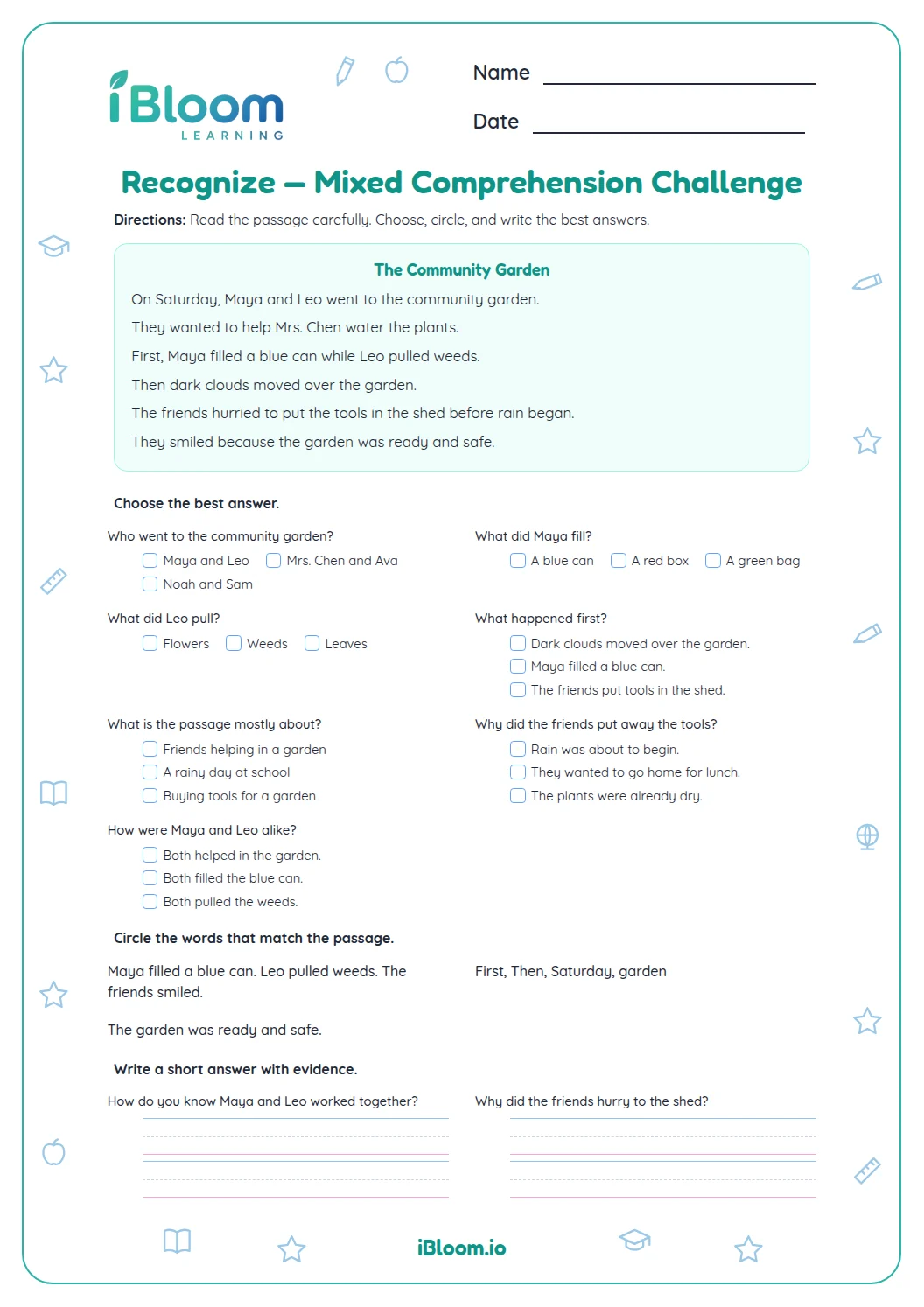
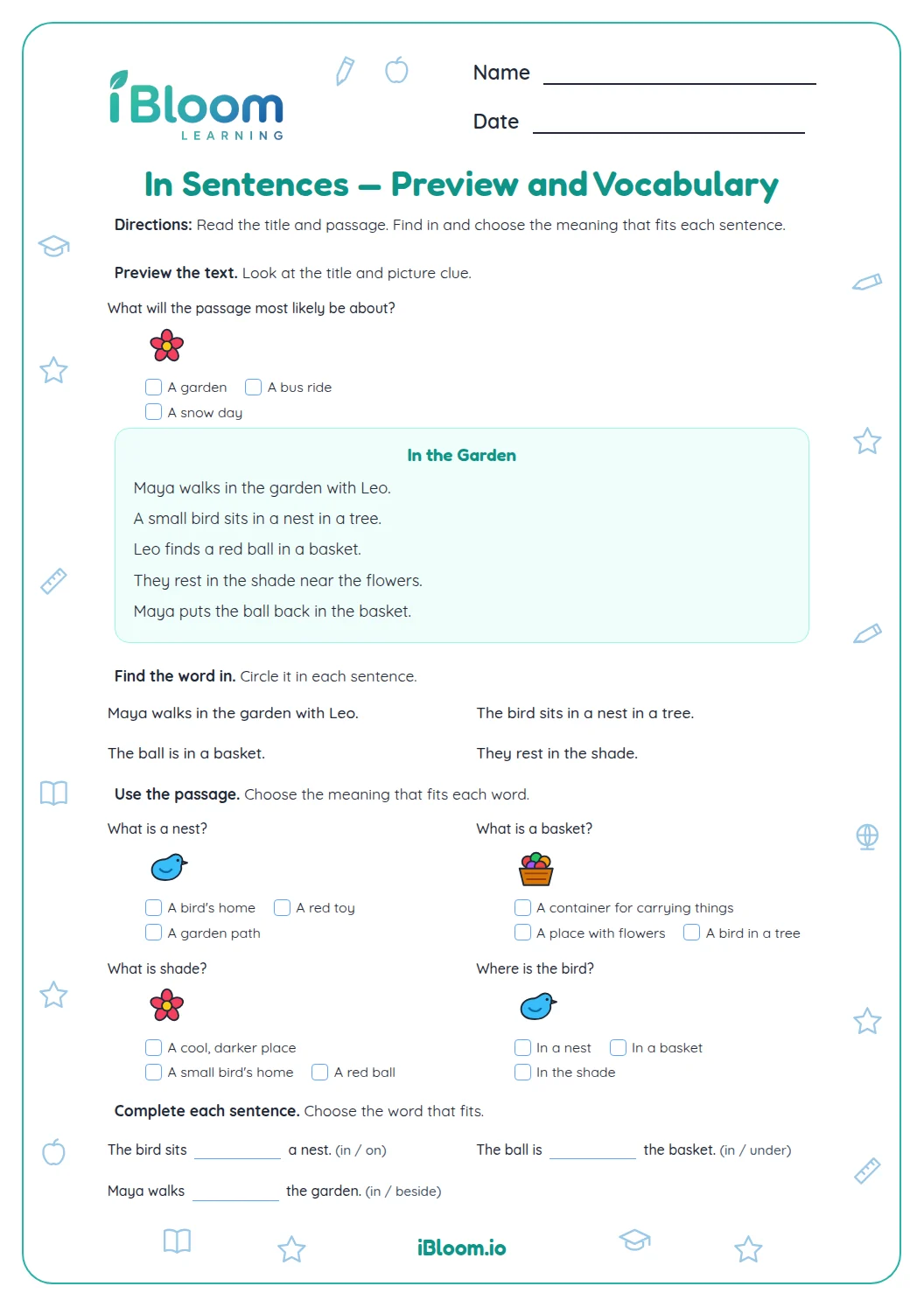
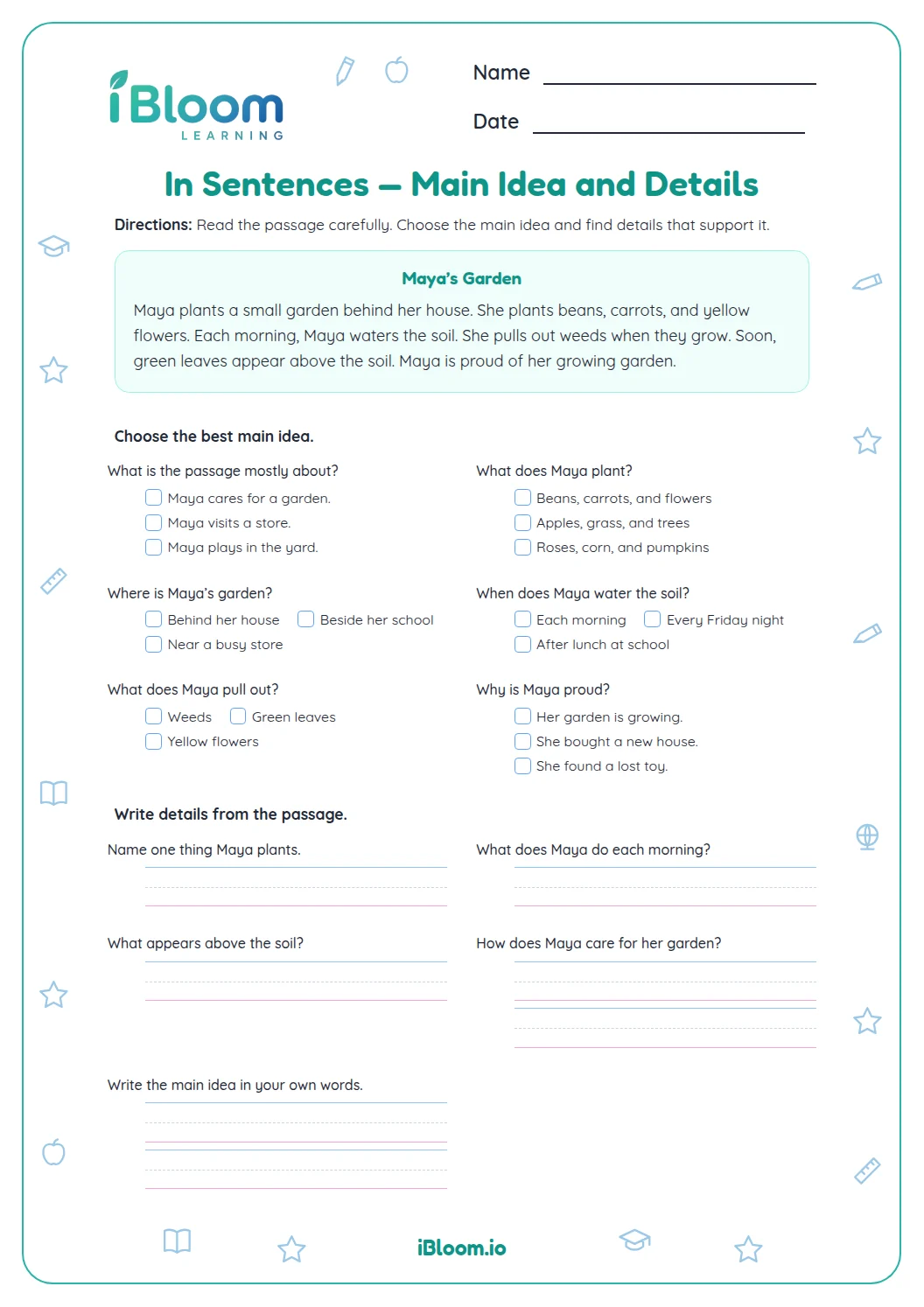
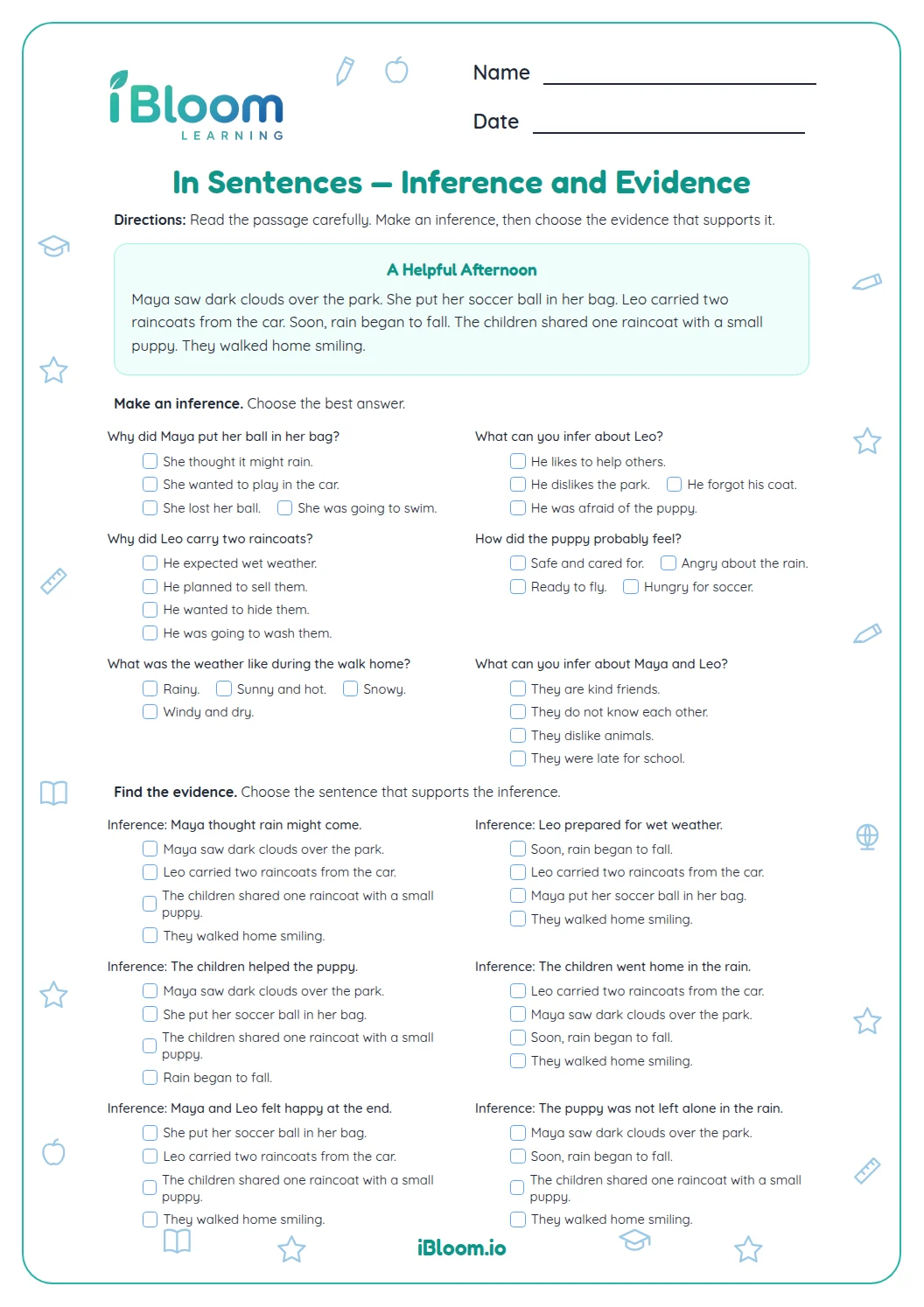
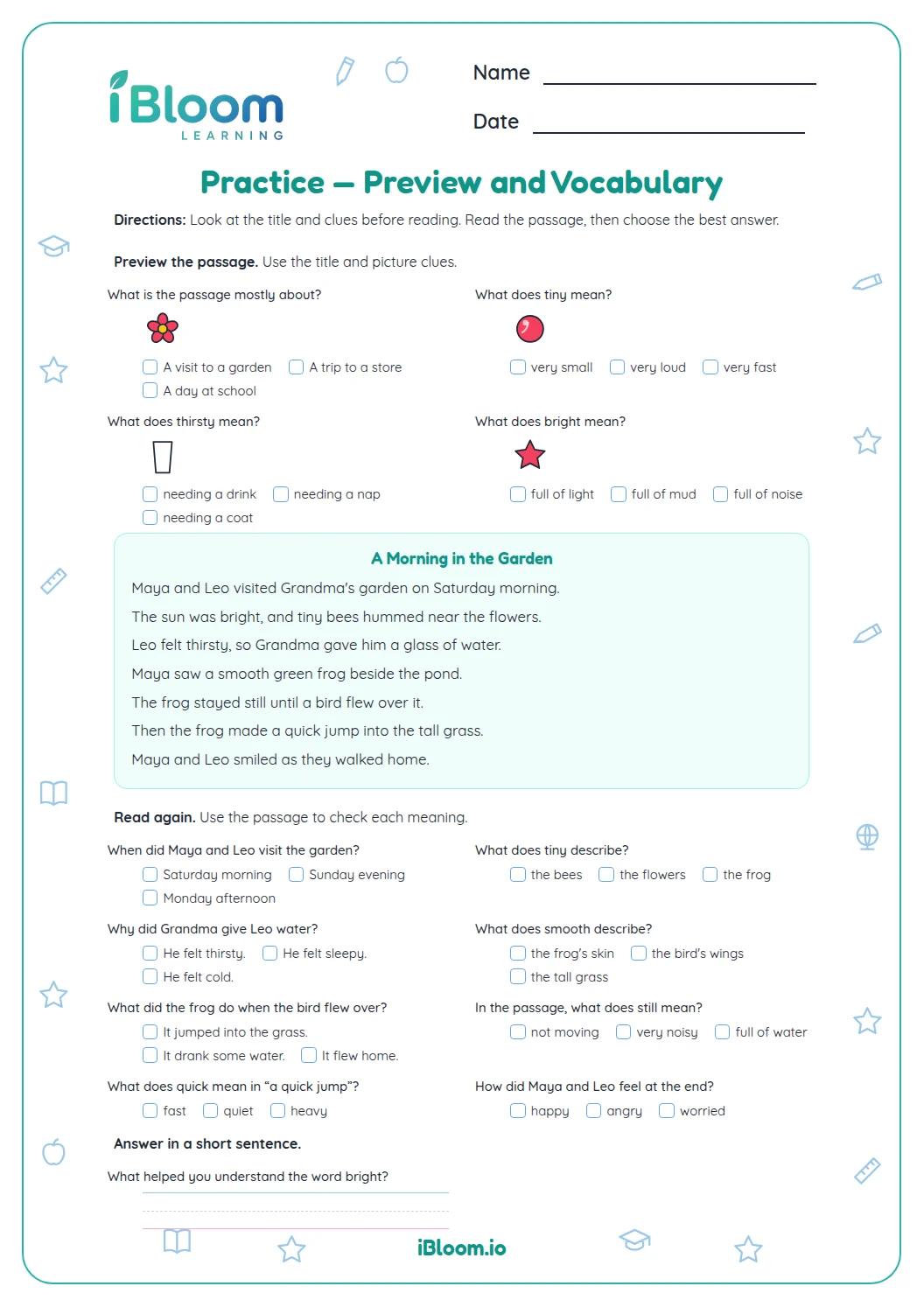
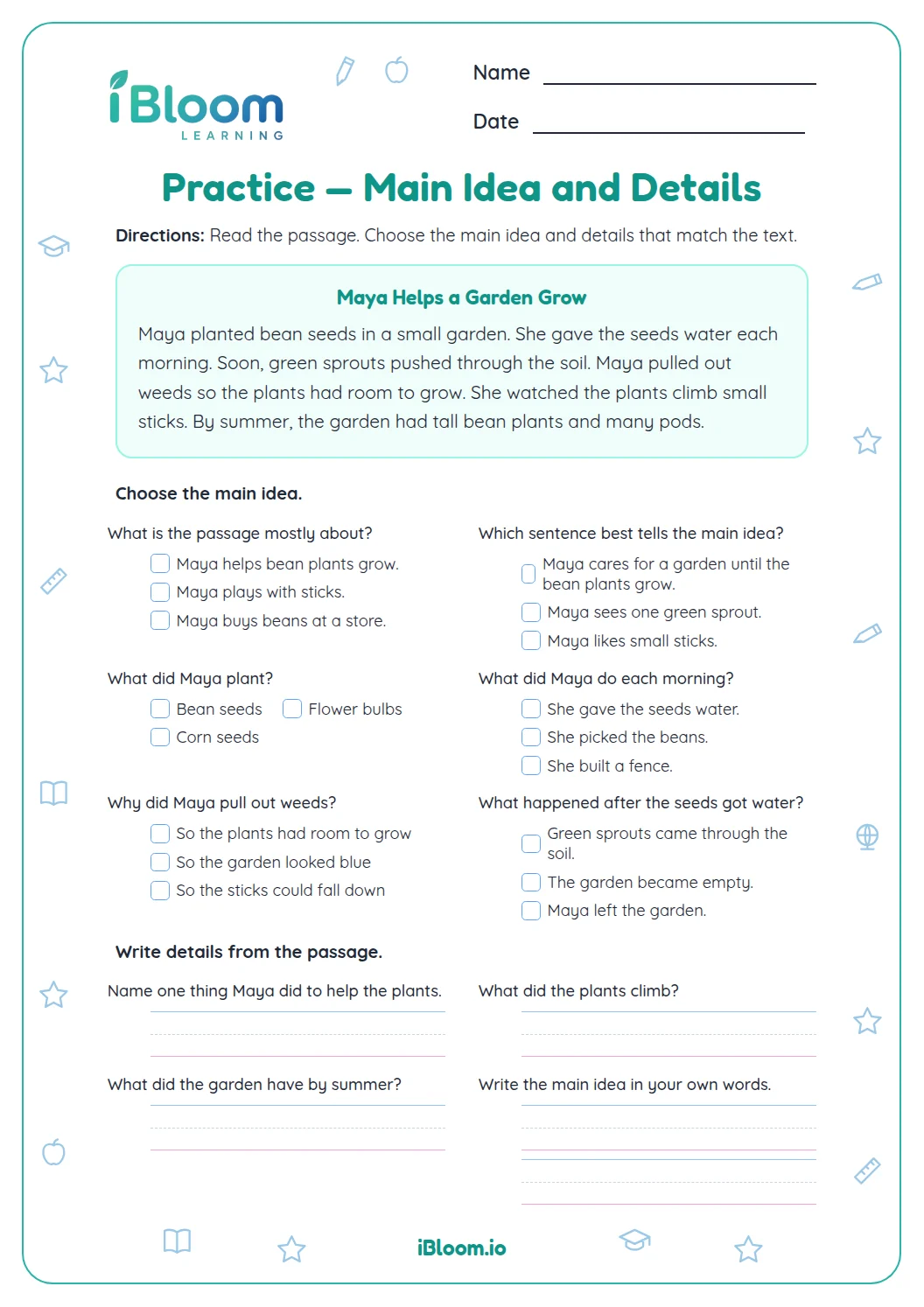
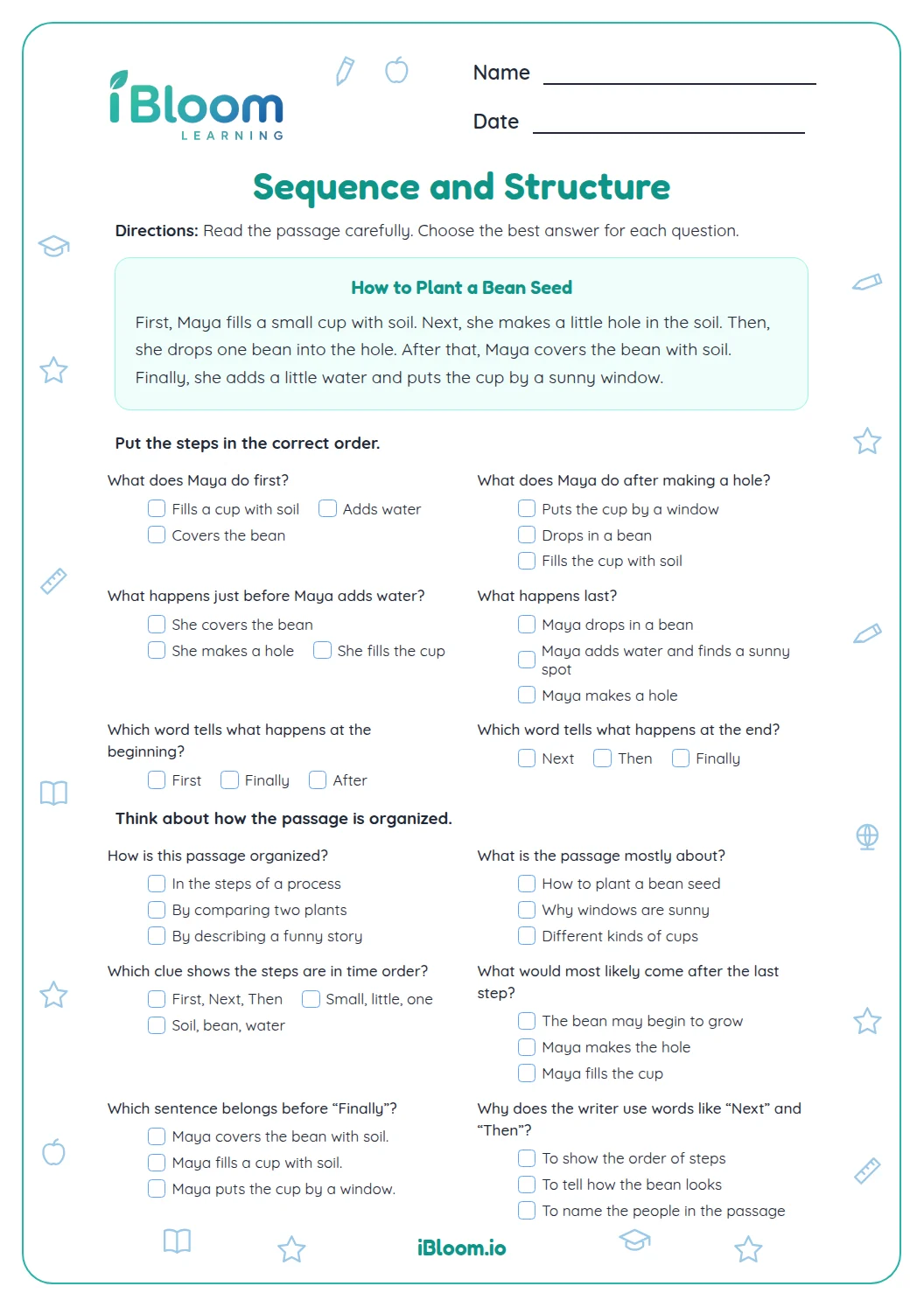
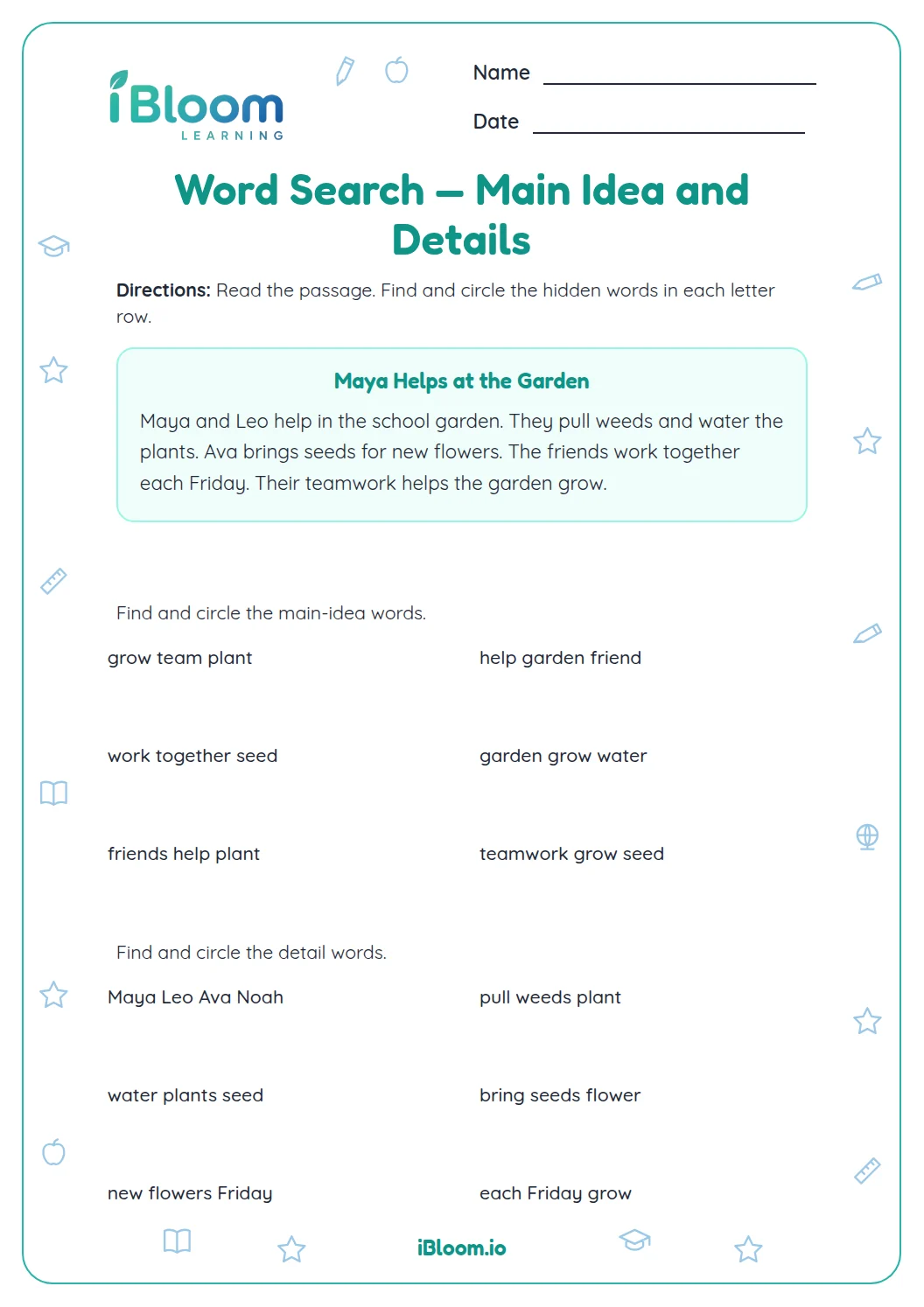
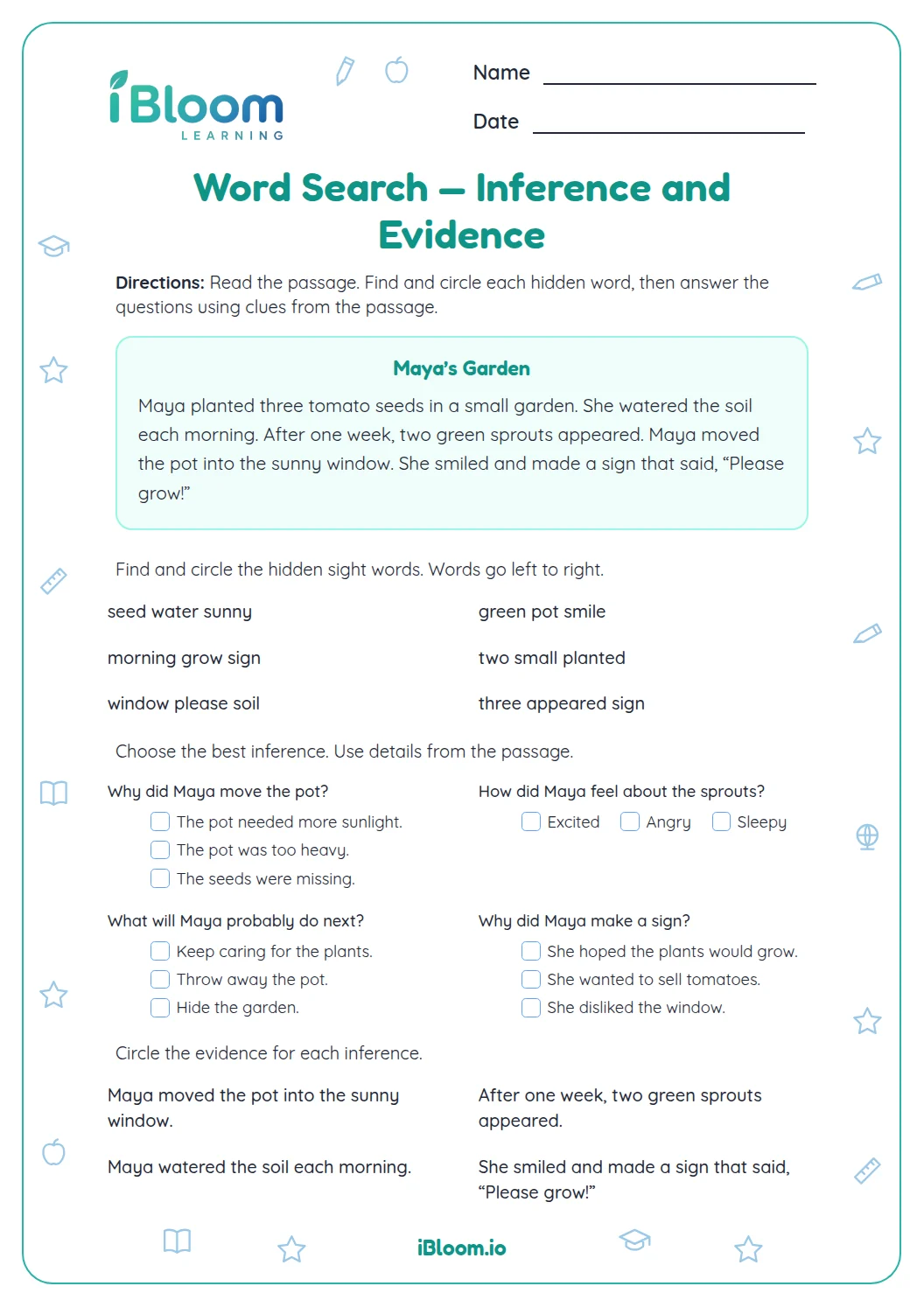
This free printable is for Grade 2 readers working with familiar sight words, event order, and story structure. A short original passage follows Mia and her class as they plant and care for a seed. Students identify a familiar word in context, track details, notice time-order clues, and choose the passage’s main idea across 15 questions.
Aligned to 2.RF.3.f and 2.RL.1
How does the practice build?
Work through the parts in order. Each group uses the same core skill in a different way, and the answer key gives a quick check after the student has tried each item.
- Read the part direction first.
- Use the passage, model, or sentence clues.
- Check answers after finishing each part.
How can you check one answer?
For example, q1 asks students to find “said,” a familiar word with an unexpected ai spelling. The passage uses the word when the class makes a sign, so readers can connect the spelling clue with its context.
How to use this worksheet
- 1Read the passage once to understand what Mia and her class do.
- 2Return to the passage when a question asks for a detail.
- 3Notice time words such as “First,” “Then,” and “By the end.”
- 4Choose the answer supported by the passage and check the key.
Reading checks to remember
The mistake
Choosing an event because it sounds likely.
The fix
Find the sentence in the passage that confirms it.
The mistake
Mixing up the order of two events.
The fix
Use time words and retell the actions in sequence.
The mistake
Selecting a detail instead of the main idea.
The fix
Ask what the whole passage is mostly about.
Curriculum alignment
This worksheet gives students practice with the skills named in the standards below.
Students recognize a familiar high-frequency word in a passage.
On this sheet: Students recognize the familiar irregularly spelled word “said” in the passage.
Show the official wordingHide the official wording
Recognize and read grade-appropriate irregularly spelled words.
Students answer questions about events and details in a story.
On this sheet: Students answer who, what, where, and when questions using the passage.
Show the official wordingHide the official wording
Ask and answer such questions as who, what, where, when, why, and how to demonstrate understanding of key details in a text.
What to practice next
Make more practice
Further reading
Questions parents and teachers ask
What is in the passage?
“The Garden Sign” follows Mia and her class as they prepare a garden, plant a seed, and care for its shoot. The passage gives the details students need for the event-order and comprehension questions. Ask the student to point to the matching clue before checking the answer key.
How does the worksheet practice sight words?
Question 1 asks students to identify “First,” a familiar word that signals when the story begins. Students also meet time-order phrases in the passage and use them to follow the sequence of events. Ask the student to point to the matching clue before checking the answer key.
How many questions and pages are included?
There are 15 questions on three worksheet pages, plus a separate answer-key page. The passage appears with the questions so students can reread details as they work. Ask the student to point to the matching clue before checking the answer key.
How can students answer sequence questions?
Have the student look for time clues such as “First,” “Then,” “Every morning,” and “By the end.” These phrases help locate when an event happened, while the surrounding sentences identify the action. Ask the student to point to the matching clue before checking the answer key.
What does the final written question require?
Question 15 asks for one event that happened after Mia planted her seed. Answers vary; the key gives watering the seed as one acceptable example. A different accurate event from later in the passage can also work. Ask the student to point to the matching clue before checking the answer key.