

About this worksheet
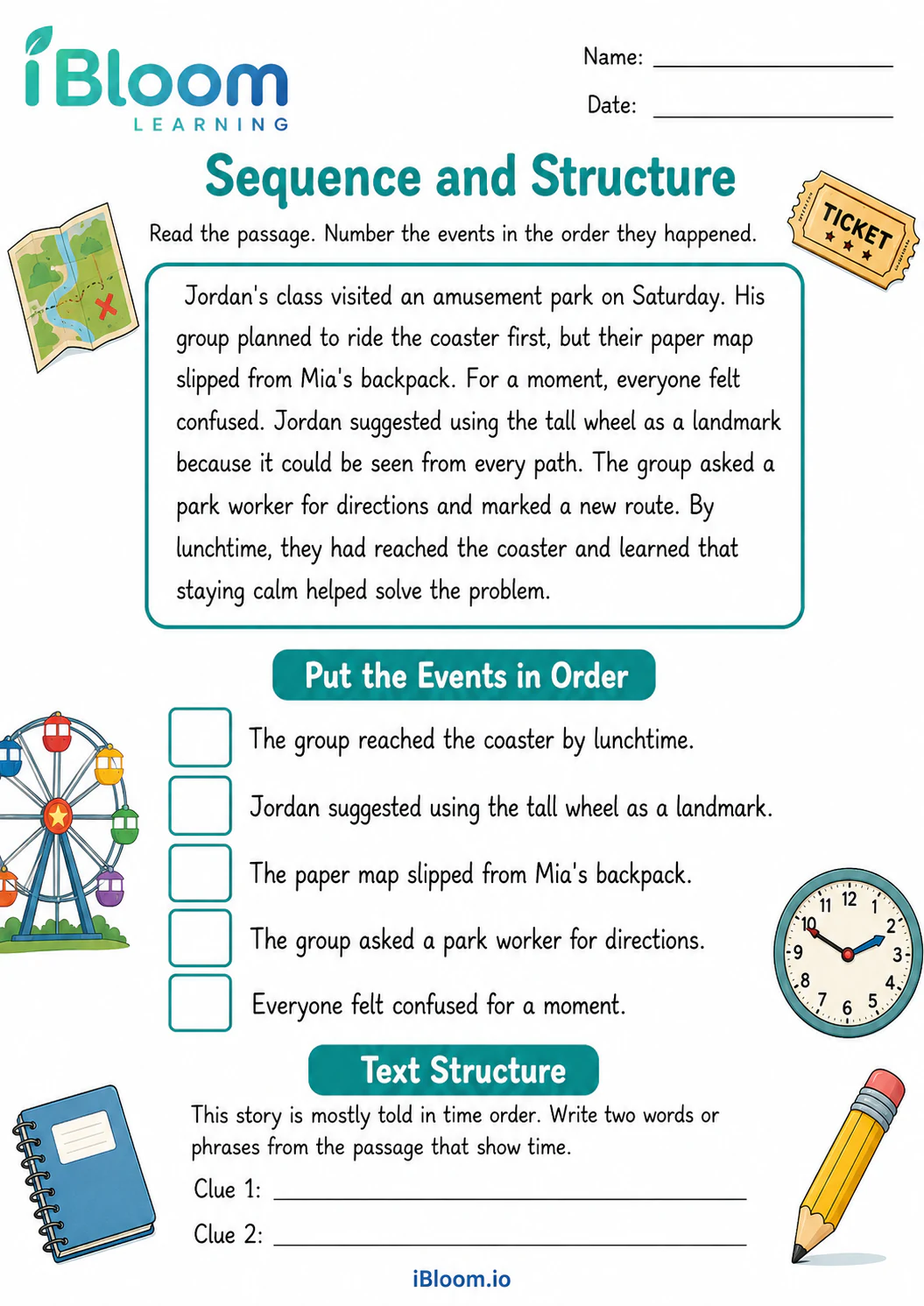
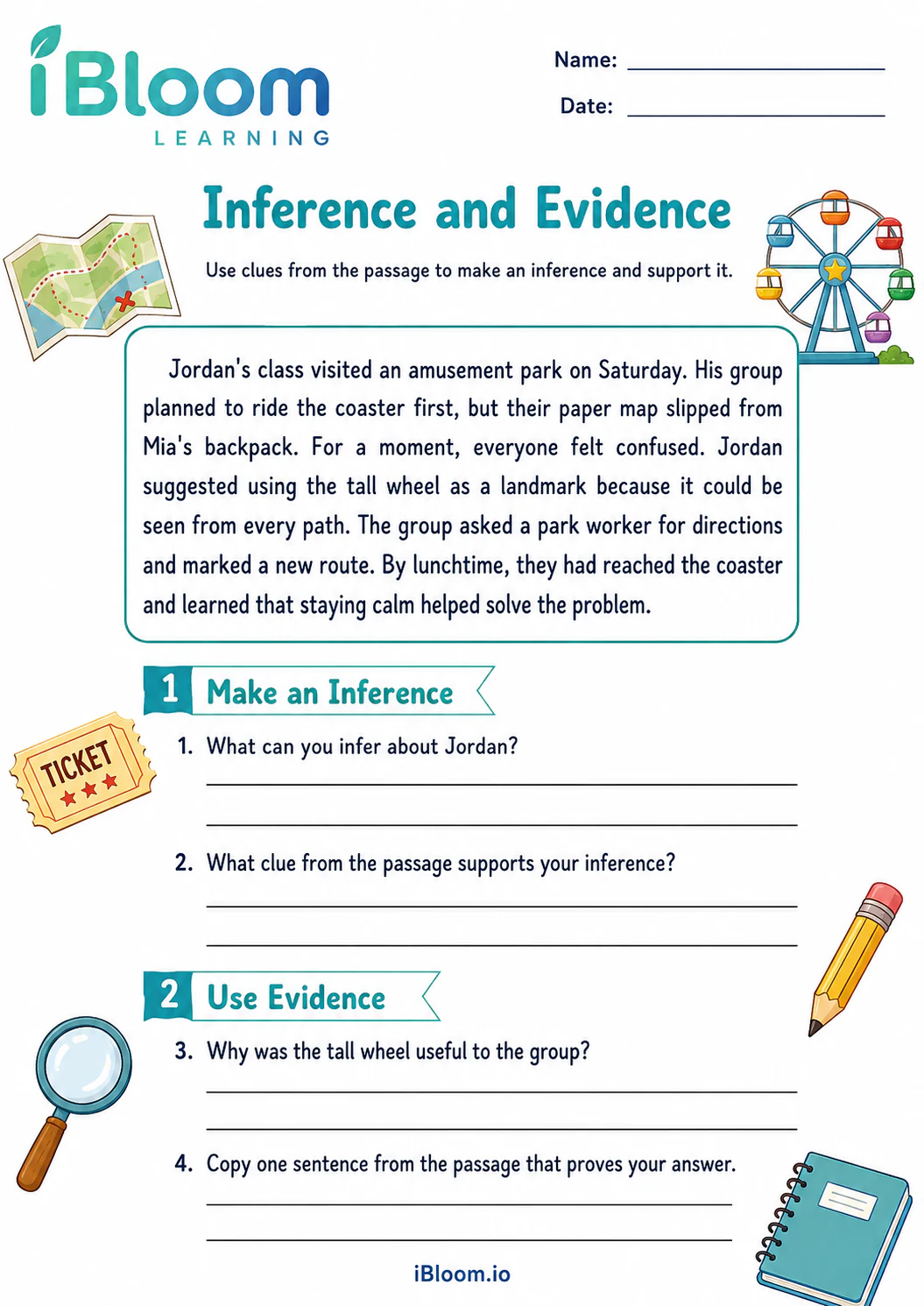
This free Grade 3 reading worksheet pairs the story Helping Hally with ten questions about event order, problem and solution, and character actions. Maya finds Hally worried behind a stuck stall door and asks Mr. Reed for help. Part A presents the story, Part B has eight multiple-choice questions, and Part C asks for two written explanations. Students practice Common Core RL.3.3 by connecting Maya’s choices to later events and describing how Hally changes. The answer key marks the choices and gives sample responses supported by the passage.
Aligned to RL.3.3
What happens in Helping Hally?
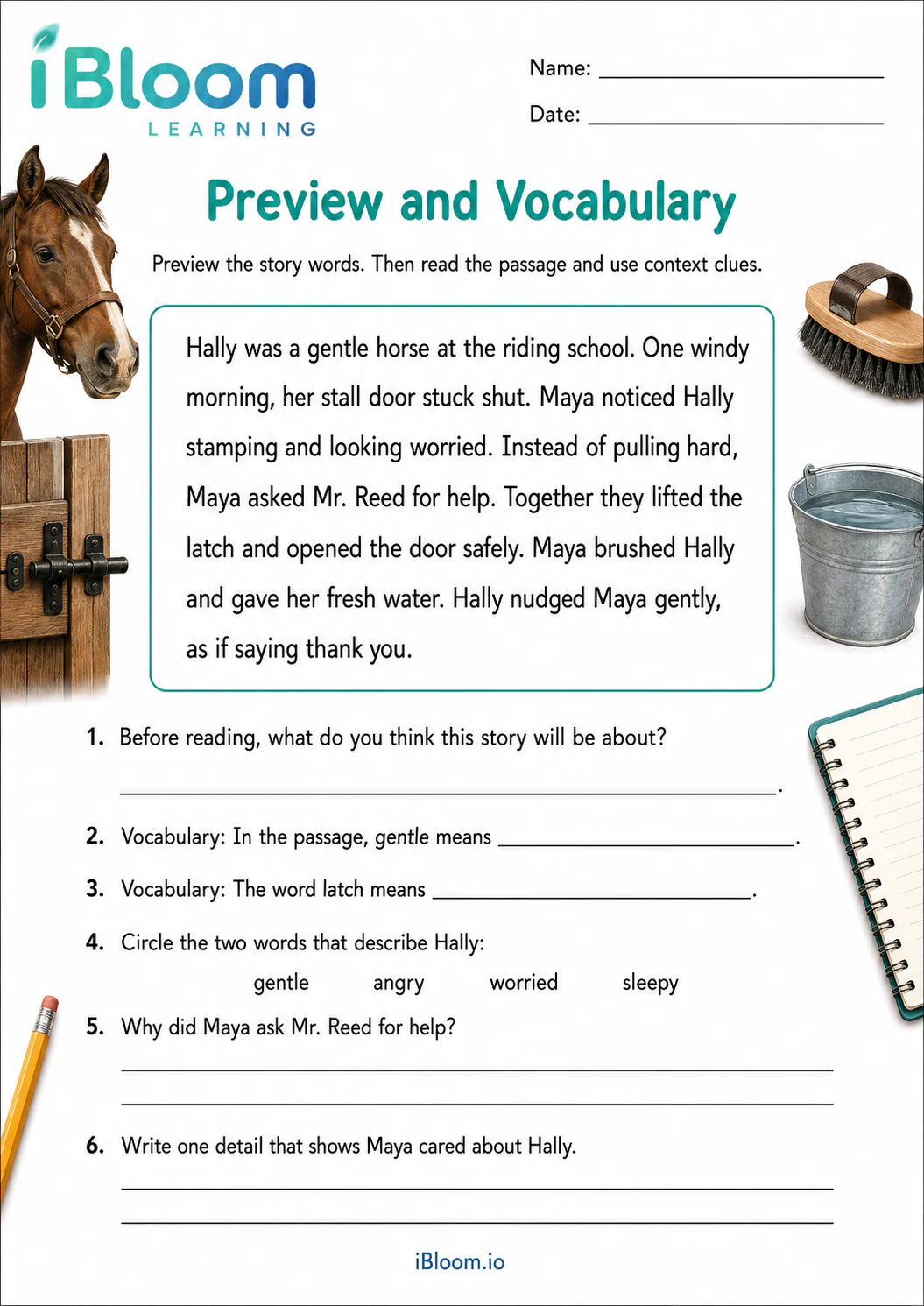
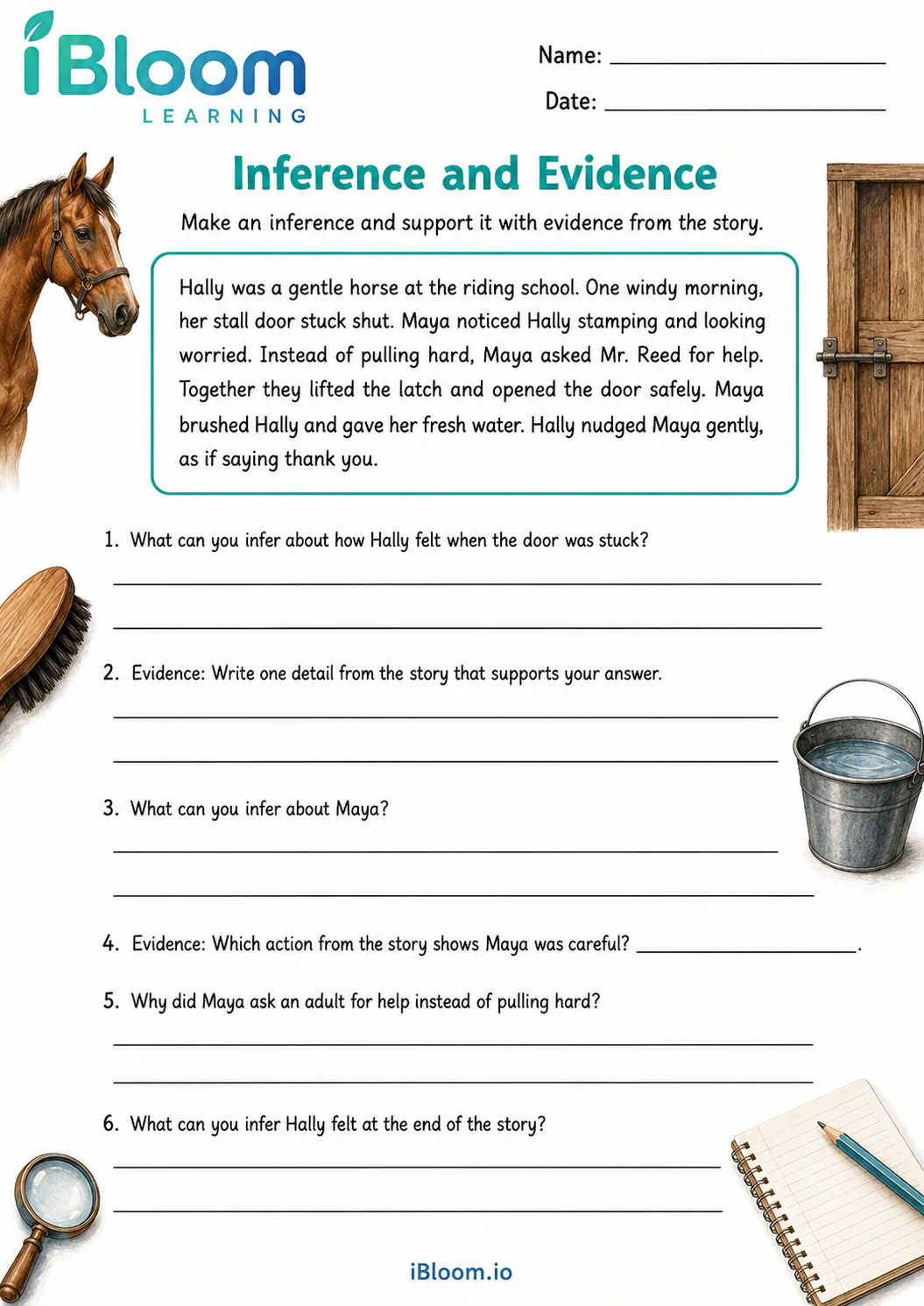
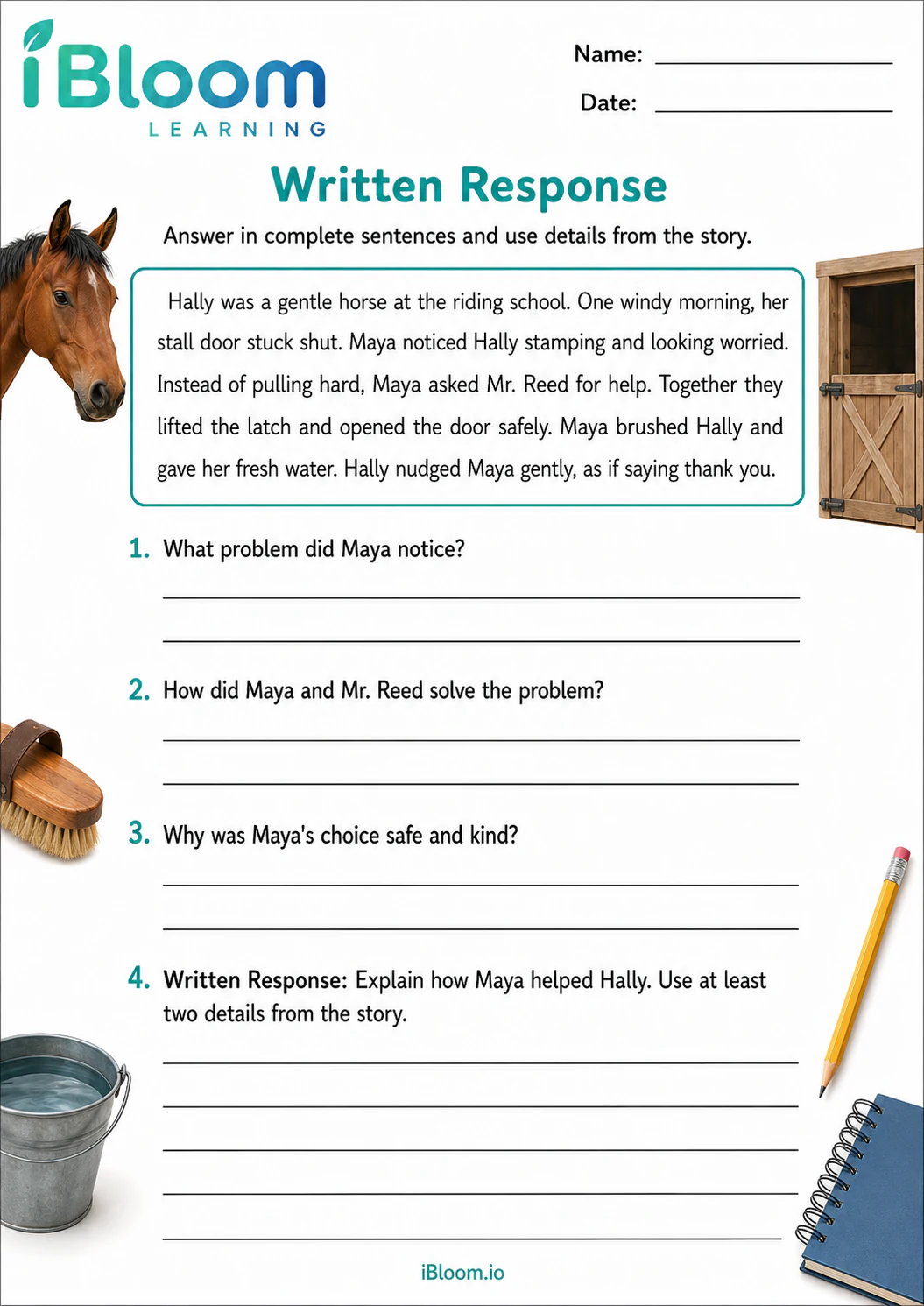
Maya arrives at the riding school to brush Hally. When the stall door sticks, pulling makes a noise and Hally steps back. Maya stops, speaks softly, and finds Mr. Reed. They work together to open the door before Maya brushes Hally and fills her water bucket.
The four paragraphs follow Hally, Maya, Mr. Reed, and the stuck-door problem in one clear sequence. Children can point to each event in the passage as they check an answer.
How can students tell which event comes next?
Ask students to find the named event in the passage first, then read the sentences around it. Words such as then, afterward, and before mark changes in order, but the actions themselves also show what must happen next.
Question 7 asks for the order of Maya’s actions: get help, open the door, and brush Hally. Students choose the sequence that matches the passage, linking the solution to the care that follows it.
- 1Question: What comes before seeking help?
- 2The passage says she spoke softly to Hally, then went to find him.
- 3Answer: Maya speaks to Hally.
- 4Then links the speaking to the next action.
How do the beginning and ending fit together?
The beginning introduces a worried horse and a door that will not open. The middle shows Maya changing her approach and getting help. The ending shows the result through ordinary care and Hally’s gentle nudge.
Part C asks children to connect actions rather than merely name them. For question 9, a complete answer explains both jobs: Maya lifts the latch while Mr. Reed steadies the door. Question 10 uses Hally’s behavior to show a change in feelings.
How to use this worksheet
- 1Read Part A once to understand who needs help and why.
- 2Reread the paragraph about the latch and follow Maya’s actions in order.
- 3Answer Part B by locating the sentence that supports each choice.
- 4For Part C, say an answer aloud and identify a detail before writing.
- 5Compare with the key and accept different wording that keeps the events accurate.
Mistakes to check and ways to help
The mistake
Choosing a later event when the question asks what comes next.
The fix
Find the named action, then read the sentence immediately after it to identify the next event.
The mistake
Calling brushing Hally the solution to the stuck door.
The fix
Separate solving the problem from caring for Hally afterward: lifting the latch opens the door.
The mistake
Saying Hally feels better without giving any evidence.
The fix
Use her stamping and worried look at the start, then her gentle nudge at the end.
Common Core alignment
Explain how Maya’s actions shape the events and describe Hally’s changing behavior.
On this sheet: Students follow Maya’s decisions, explain the joint solution, and support Hally’s change with details.
Show the official wordingHide the official wording
Describe characters in a story (e.g., their traits, motivations, or feelings) and explain how their actions contribute to the sequence of events
What to practice next
Make more practice
Further reading
Questions parents and teachers ask
Is the story included with the questions?
Yes, Helping Hally appears as Part A of the worksheet. Students can return to its four paragraphs while answering the questions. Part B checks event order, story structure, and Maya’s choice with options, and Part C asks for explanations about the solution and Hally’s changing behavior.
Who are the characters in Helping Hally?
The characters are Hally, a gentle horse; Maya, who comes to brush her; and Mr. Reed, the riding teacher. Their roles matter to the sequence. Hally’s worried behavior makes Maya pause, and Mr. Reed’s help lets Maya open the stuck stall door safely with him.
What is the main problem and its solution?
The main problem is a stuck stall door that worries Hally. Maya stops pulling and asks Mr. Reed for help. He holds the door steady while she lifts the latch, allowing them to open it safely. Brushing Hally and filling her bucket happen after the door problem is solved.
What should a written answer about Hally’s feelings include?
A strong answer names the change and supports it with behavior from both parts of the story. At first, Hally stamps and looks worried. At the end, she nudges Maya gently. Students may describe her as calmer or more relaxed when they connect that description to those details.
Can my child use different wording from the answer key?
Yes, the two written responses may use different wording if they preserve the story’s events and give relevant details. The key provides samples. For question 9, check that the response includes the lifted latch and the steady door, showing how the two characters solve the problem together.