
About this worksheet
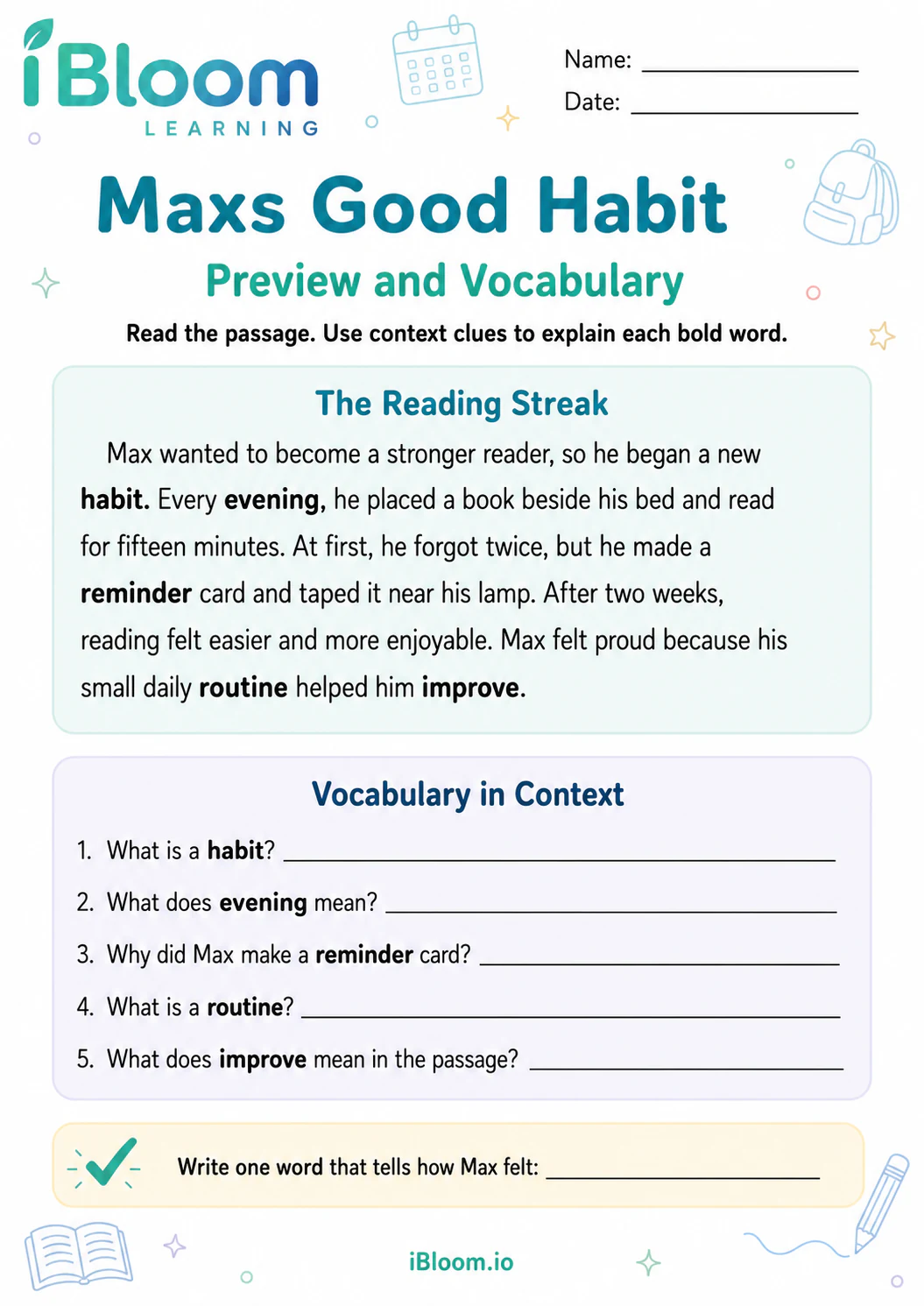
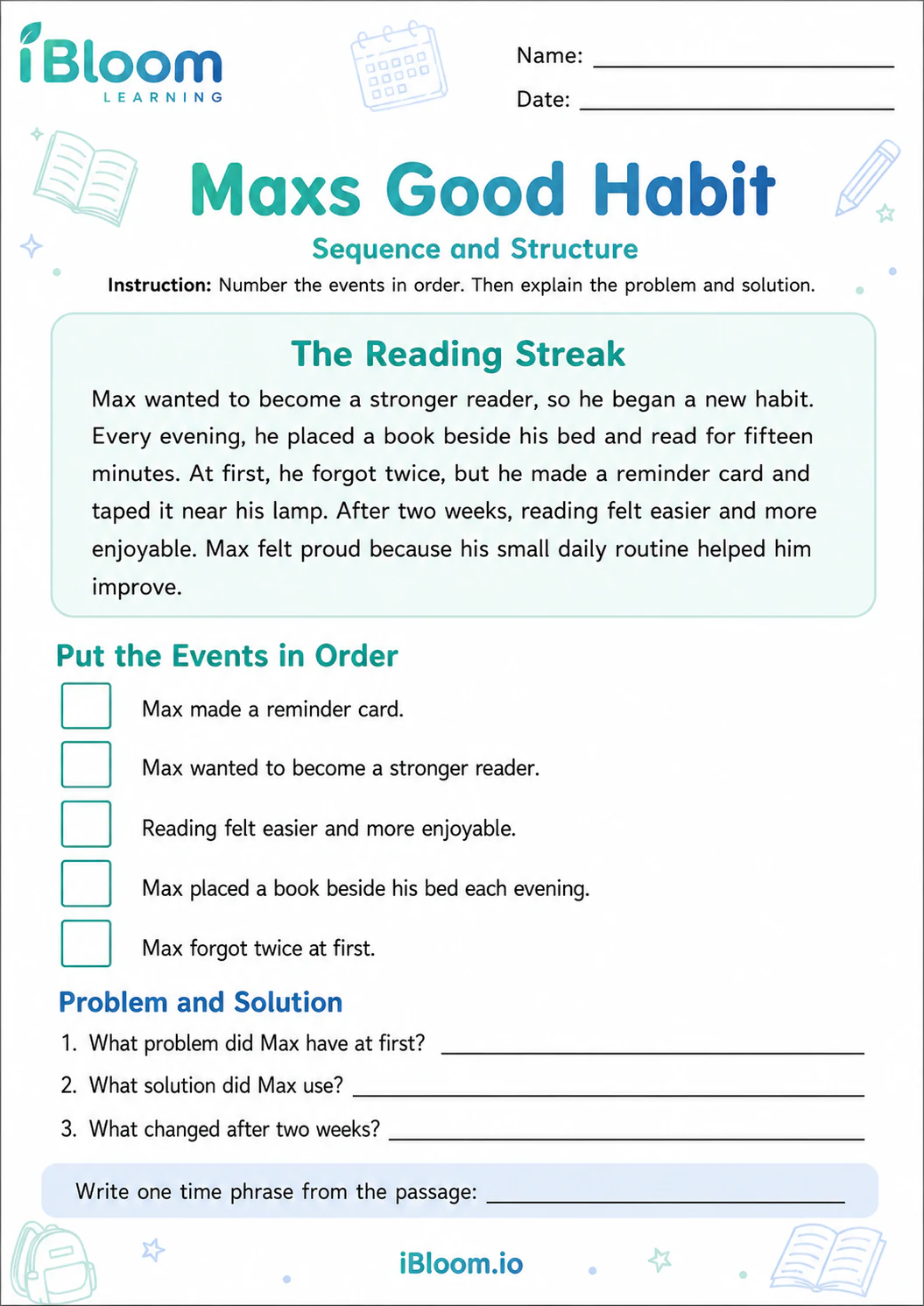
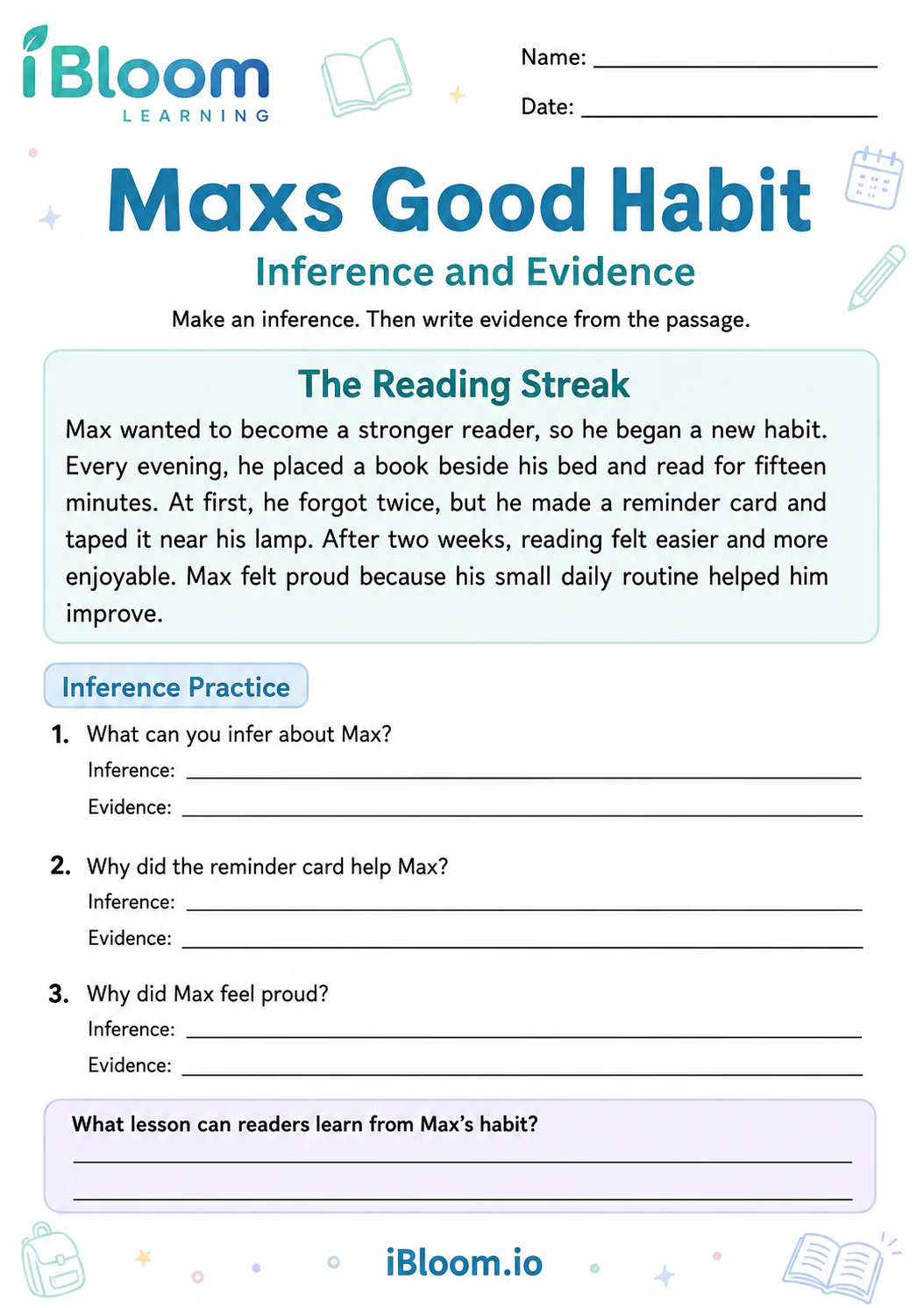
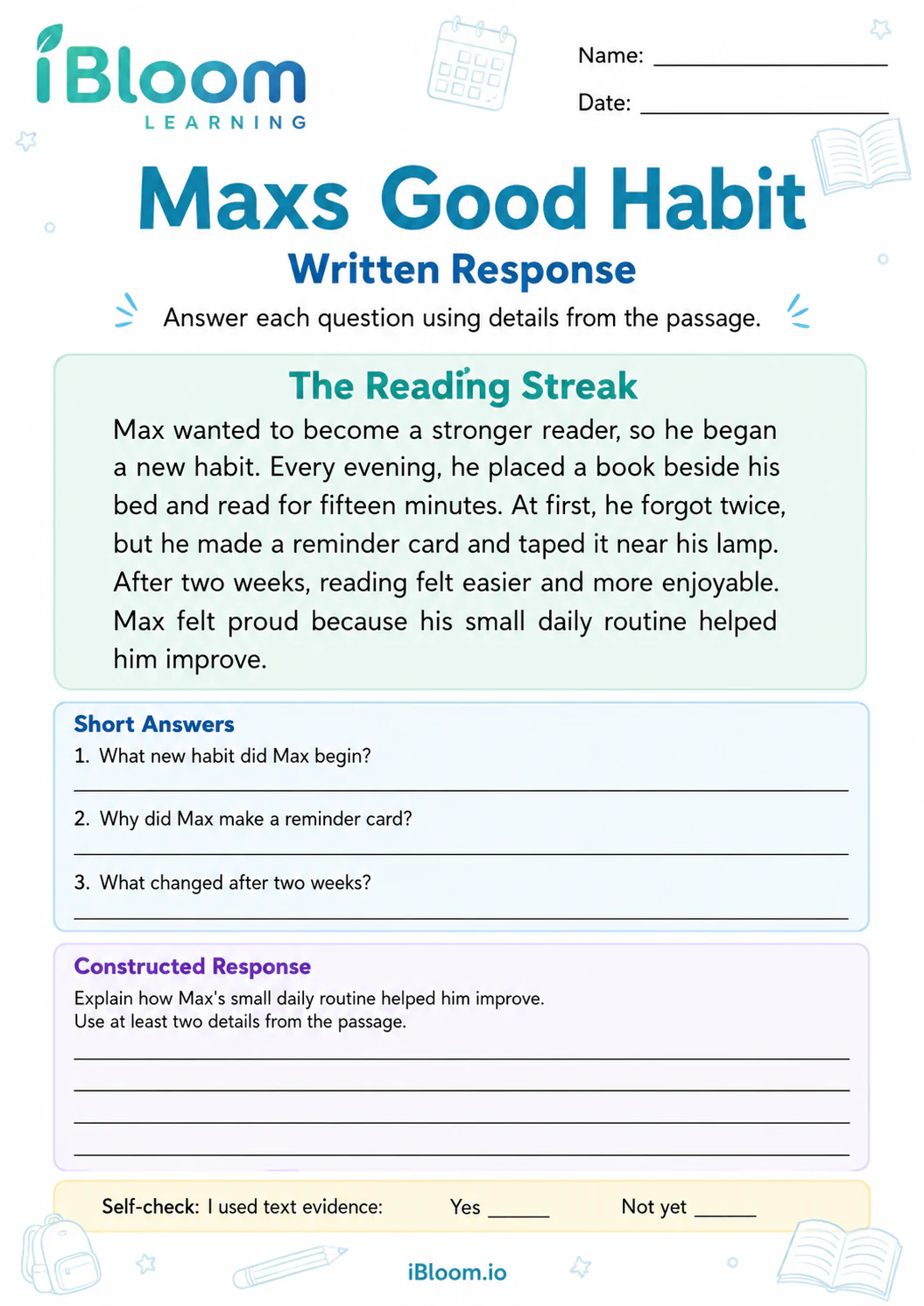
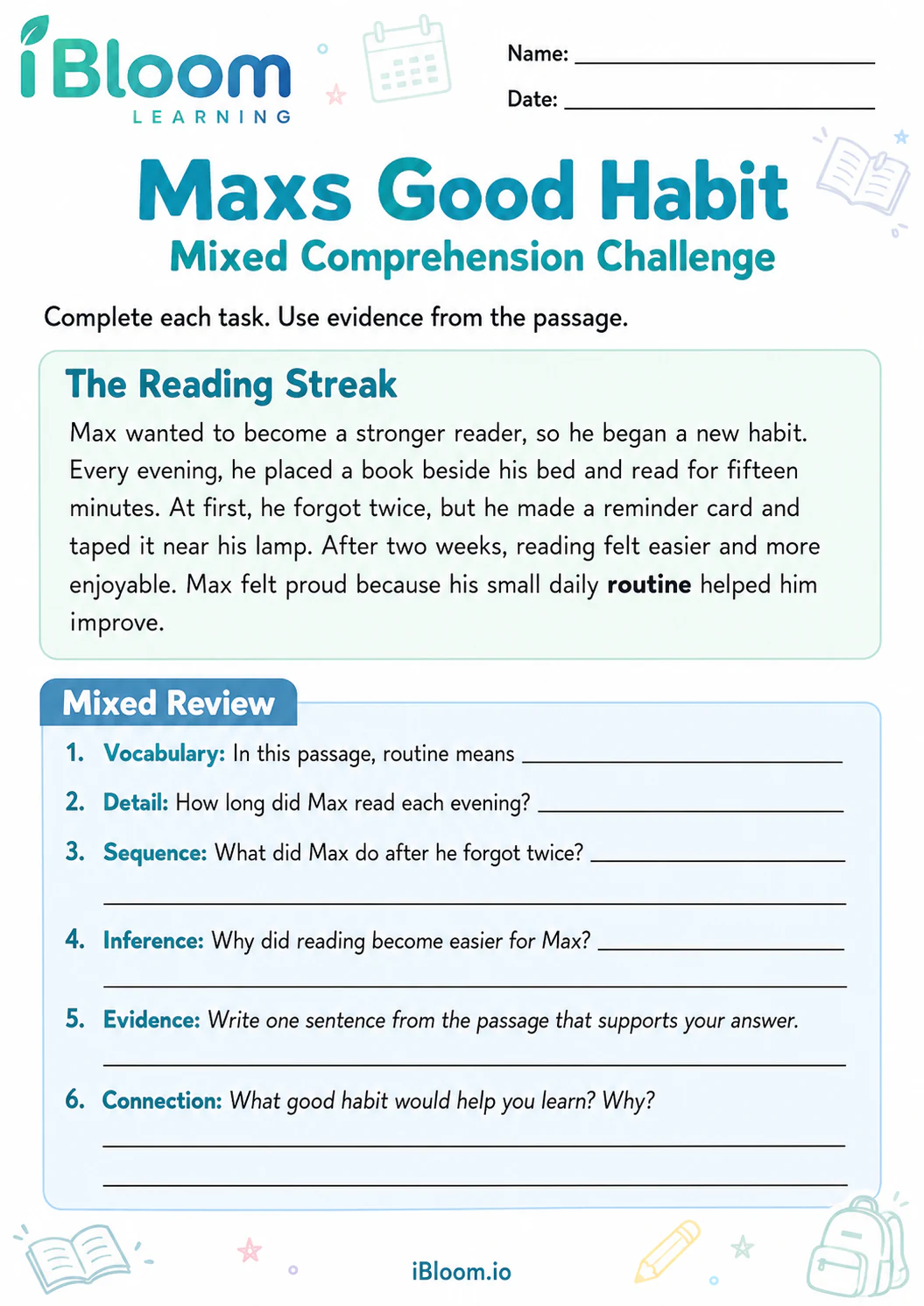
Max’s story shows how a small reminder and steady evening reading help him keep a goal. The questions ask readers to identify the main idea, select supporting details, follow events, and infer the meaning of “streak.” The worksheet has 14 questions, and the answer key includes sample written responses.
What skill does this worksheet build?
Max’s story shows how a small reminder and steady evening reading help him keep a goal. The questions ask readers to identify the main idea, select supporting details, follow events, and infer the meaning of “streak.” The answer key gives a check for every item.
How can a learner solve one?
Consider the whole story, then choose the answer that covers its beginning, middle, and ending.
- 1What is the passage mostly about?
- 2Look across the story: Max plans to read regularly and follows through.
- 3Answer: Max builds a routine to read each evening
What is included on the pages?
The worksheet has 14 questions across 2 activity parts. The answer key gives a check for every response.
How to use this worksheet
- 1Read the whole story once to follow Max’s problem and solution.
- 2For the main idea, ask what the story is mostly about.
- 3For a detail question, return to the sentence that gives evidence.
- 4Use the nearby sentences to work out a word’s meaning.
- 5Check each response against the passage and answer key.
Common mistakes and quick fixes
The mistake
Choosing an interesting detail as the main idea.
The fix
Ask what the story is mostly about from beginning to end.
The mistake
Picking a detail that is true but does not support the main idea.
The fix
Connect the detail directly to Max’s routine.
The mistake
Guessing a word meaning without its sentence.
The fix
Reread the sentence and use the surrounding action as a clue.
What to practice next
Make more practice
Further reading
Questions parents and teachers ask
What is the main idea of Max’s story?
Max creates a routine that helps him read every evening and keep going on busy days. Details such as the reminder card, calendar stars, and short reading option support that central idea. Ask the learner to point to the clue in the question and explain how it supports the answer.
How many questions are on the worksheet?
There are 14 questions: 12 multiple-choice questions and two written responses. Each question refers to the original story about Max building an evening reading habit, printed on the worksheet. Ask the learner to point to the clue in the question and explain how it supports the answer.
Which detail supports the main idea?
Max reading a few pages each evening and marking the calendar with a star is strong evidence. It shows him following the plan regularly, which supports the story’s main idea. Ask the learner to point to the clue in the question and explain how it supports the answer.
What does streak mean in the story?
It means a series of days doing something. Max reads each evening for two weeks and marks the calendar, so the surrounding details show what his reading streak is. Ask the learner to point to the clue in the question and explain how it supports the answer.
Can an adult read the story aloud?
Yes. An adult can read it aloud and invite the child to point to a sentence that supports each answer. The questions focus on the story’s main idea, supporting details, events, and word meaning. Ask the learner to point to the clue in the question and explain how it supports the answer.