




About this worksheet
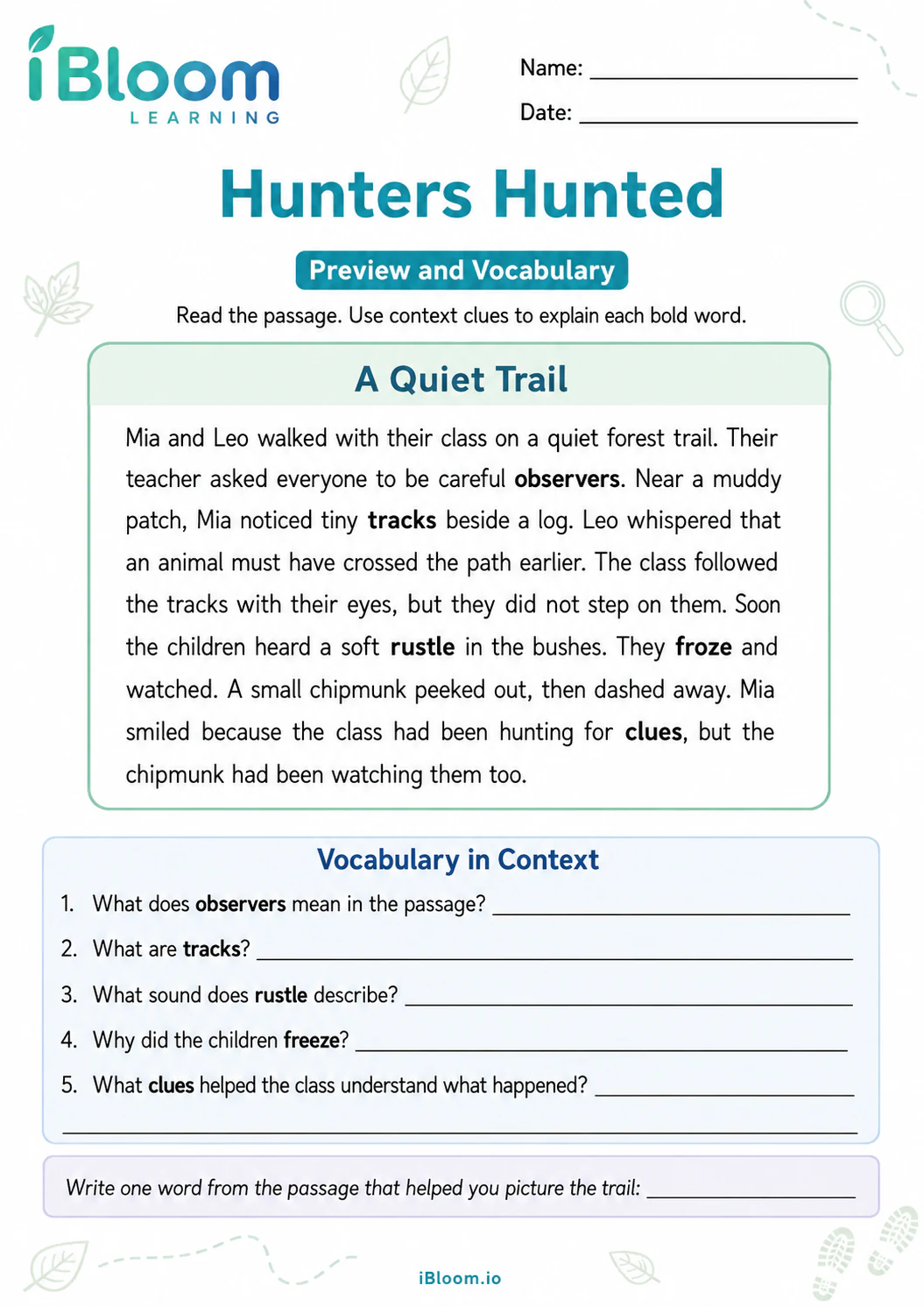
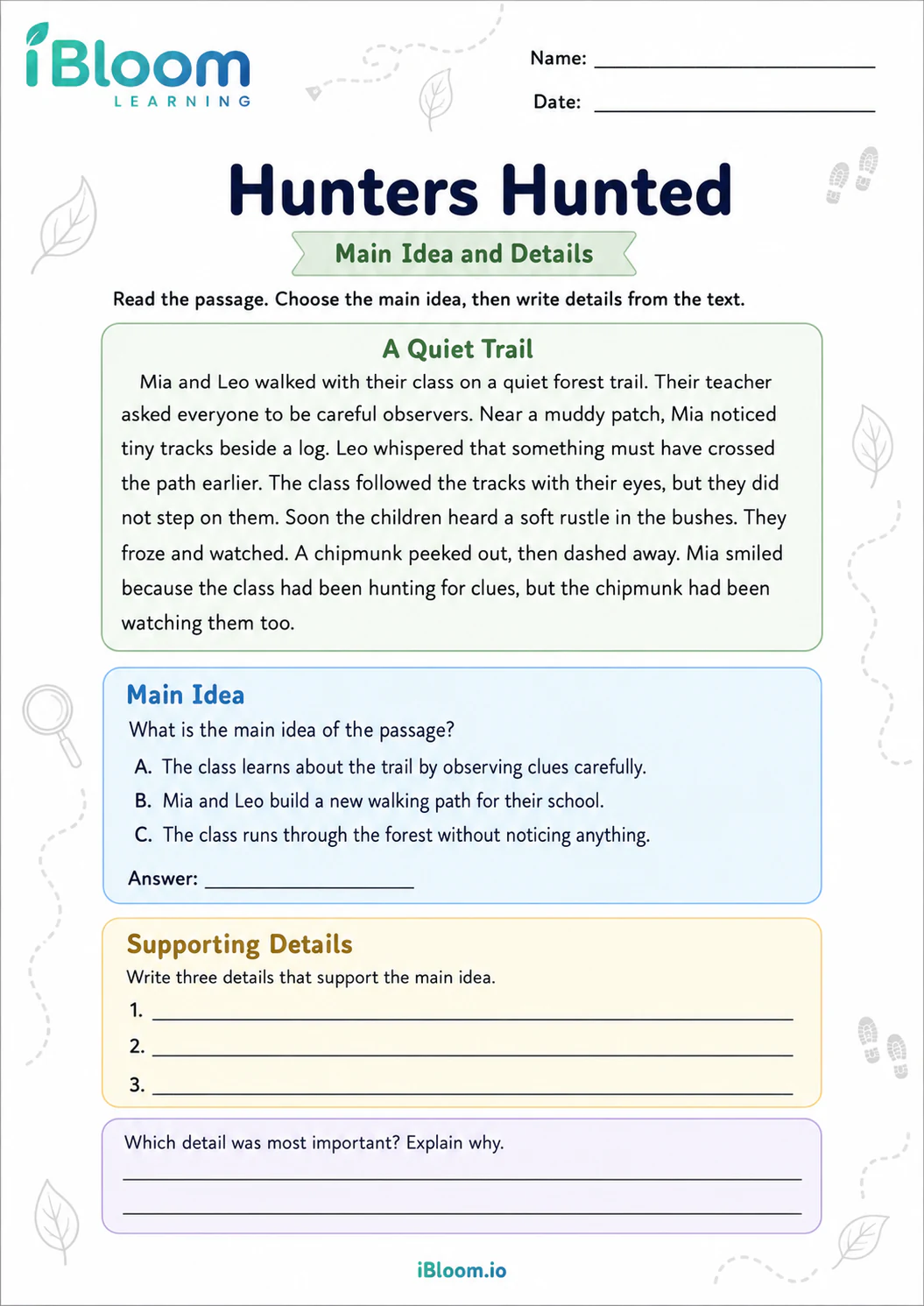
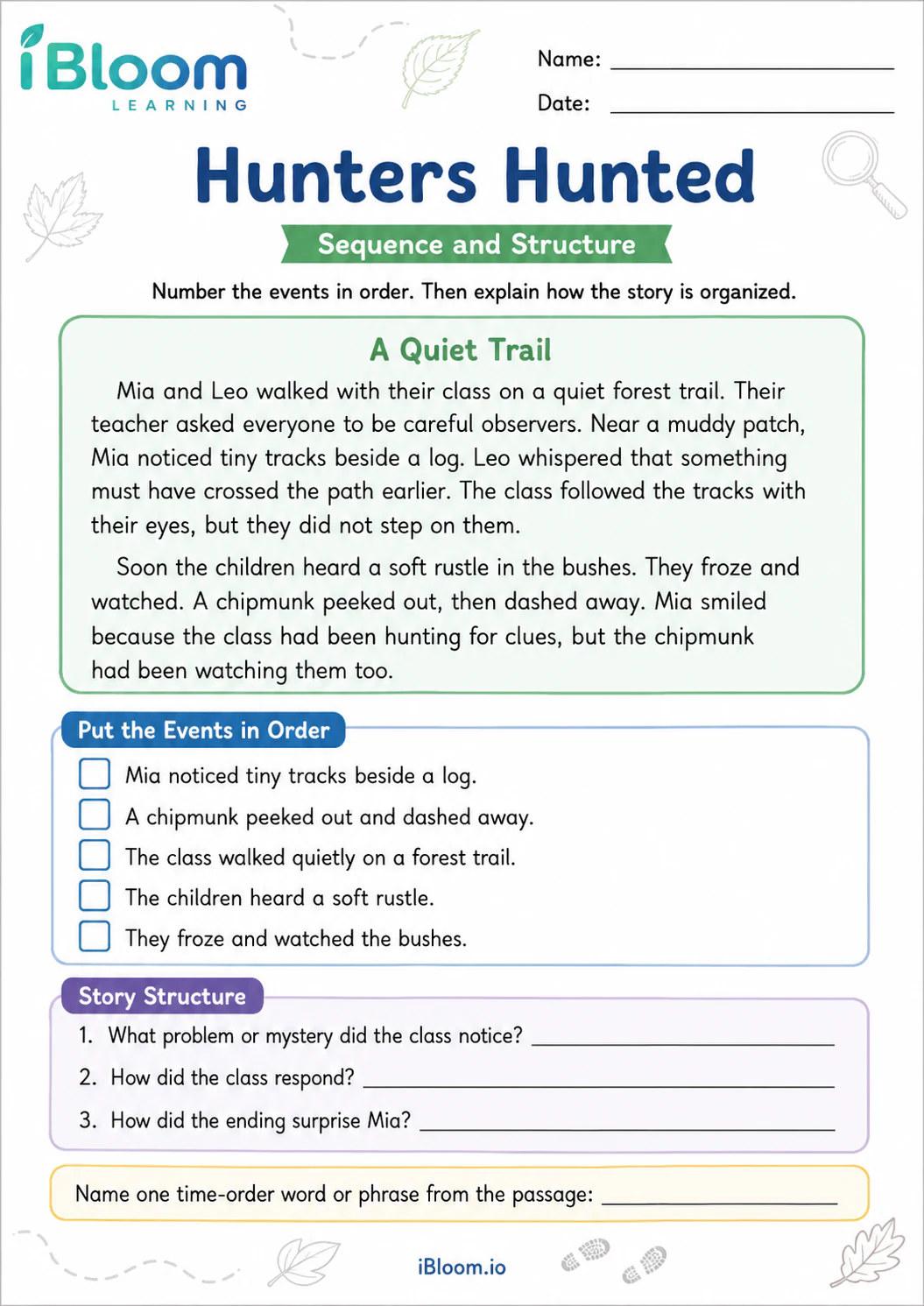
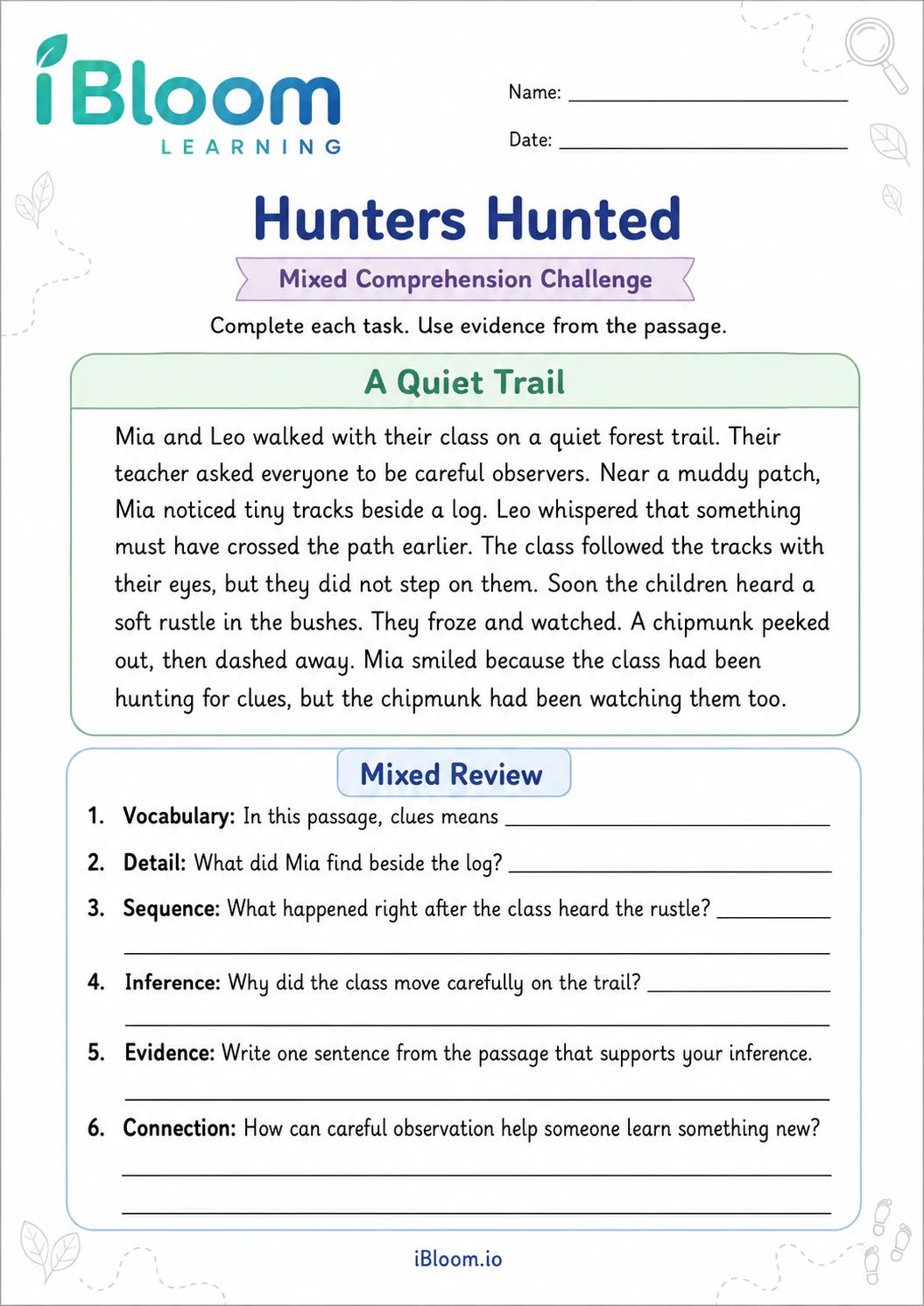
This free Grade 3 printable uses an original 165-word Hunters Hunted story about Mia and Leo’s class observing tiny tracks and a chipmunk. Students answer detail questions, infer what the chipmunk is doing, and choose the evidence that supports an idea. The 14 multiple-choice questions move from stated details to inference and evidence. The worksheet practices Common Core RL.3.1, answering questions using the text as a basis. A separate answer key lists each answer.
Aligned to RL.3.1
How does this story practice inference and evidence?
The story gives readers clues before it names what happened. Mia notices tiny tracks beside a log, and the class hears a rustle before a chipmunk appears. Readers use details like these to infer what the animal did and how the class responded.
Part B checks stated details. Part C asks students to infer from clues and choose evidence that supports an idea.
- 1Question 9 asks what the details suggest about Mia and Leo.
- 2They step around the tracks and watch quietly.
- 3Those actions support the inference that they are careful observers.
What clues should a reader look for?
Notice details that change what the characters know: the tiny tracks beside the log, the rustle in the bushes, and the chipmunk watching the class pass. Those details help readers infer what is happening.
A strong answer names the clue and then explains what it suggests. For example, the tracks beside a log are evidence; the chipmunk had crossed the path earlier is an inference.
How can students choose the best evidence?
For each inference, compare the answer choices with details in the story. The strongest choice points to something Mia, Leo or the class actually saw or did. Question 14 asks which detail best shows the class was careful.
Students can reread the passage and find a sentence that matches the choice. A detail is evidence; the idea it supports is an inference.
How to use this worksheet
- 1Read the passage once to follow the class on the trail.
- 2Answer Part B by finding details stated in the story.
- 3For Part C, compare each idea with the clues in the passage.
- 4Reread the sentence or event that supports your choice.
- 5Check the key and explain one inference aloud.
Common mistakes and quick fixes
The mistake
Guessing that the chipmunk was watching before any clue appears.
The fix
Wait for the chipmunk to peek out and later watch the class; those details support the inference.
The mistake
Copying a detail without explaining what it suggests.
The fix
Add a sentence that connects the clue to the answer.
The mistake
Treating every reasonable guess as text evidence.
The fix
Point to an event or phrase from the passage that supports the inference.
Common Core alignment
The questions ask readers to understand the story and point to details that support their answers.
Use story details as evidence when answering questions.
On this sheet: Parts B–D ask children to answer from the passage and explain which details support an inference.
Show the official wordingHide the official wording
Ask and answer questions to demonstrate understanding of a text, referring explicitly to the text as the basis for the answers.
What to practice next
Make more practice
Further reading
Questions parents and teachers ask
What is the difference between an inference and evidence?
Evidence is a detail stated in the story, such as the tiny tracks beside the log. An inference is an idea readers reach from that detail, such as the chipmunk crossing the trail before the class saw it. The worksheet asks students to connect both parts so each answer is grounded in the passage.
How long is the Hunters Hunted passage?
The original passage has 165 words and follows Mia and Leo as their class studies tiny tracks on a forest trail. A chipmunk appears, and students use what the class sees to infer how people and animals observe one another.
How many questions are on this worksheet?
There are 14 multiple-choice questions after the passage: seven detail and inference questions, followed by seven questions about clues and evidence. Readers can return to the story for support as they work and point to a detail that helps explain each choice.
What should count as a correct written answer?
Choose an answer that fits the passage and, when asked, points to a story detail. The key lists the intended choice. For question 14, the class stepping around the tracks supports the idea that the children were careful observers. The passage gives the evidence for each answer.
How can I help without giving away the answer?
Ask the child to point to a sentence or event that made an answer seem right, then ask what that detail suggests. This keeps the student making the inference while distinguishing a story clue from a guess without support. Students can point to the exact passage detail.
What can we practice next?
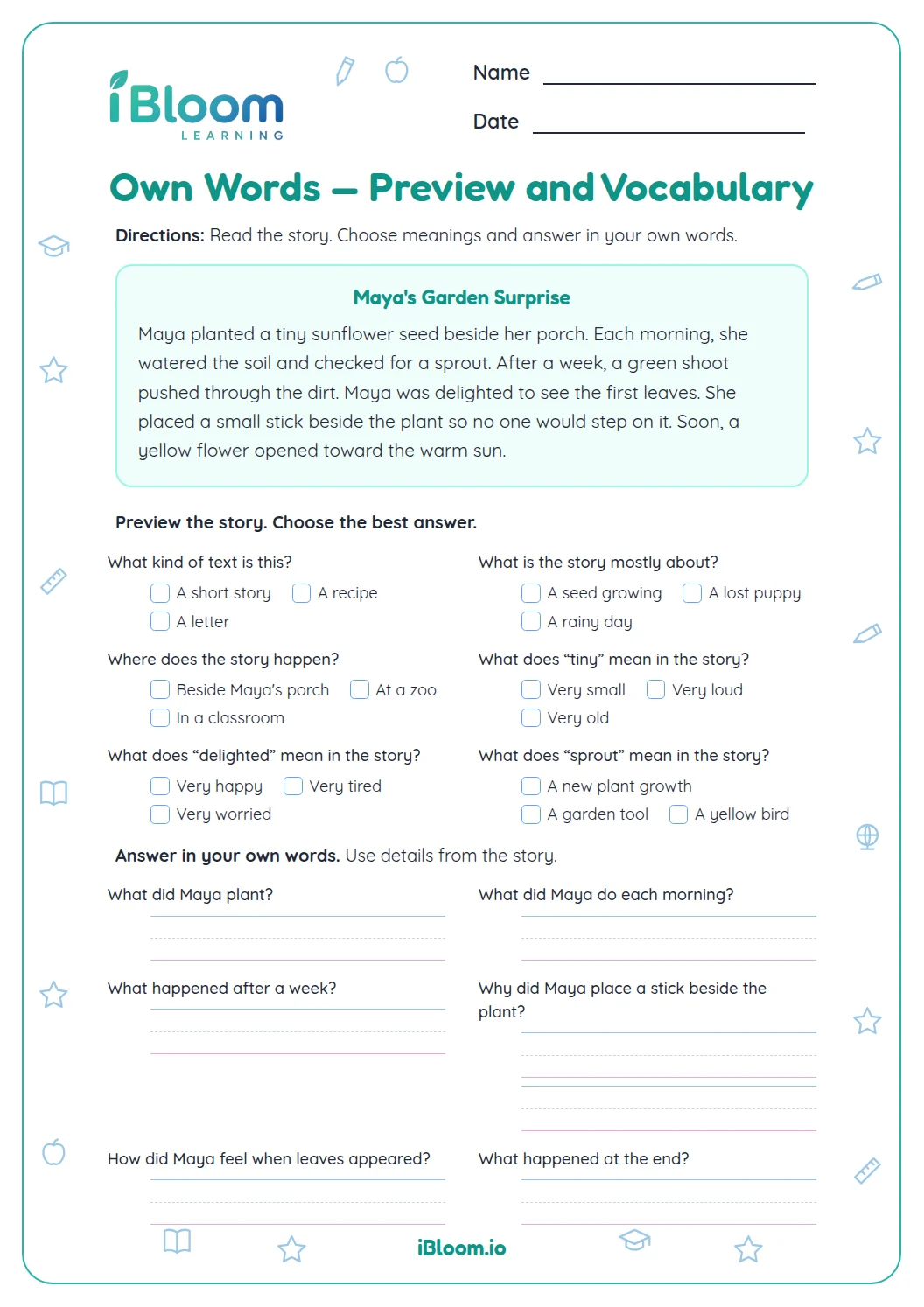
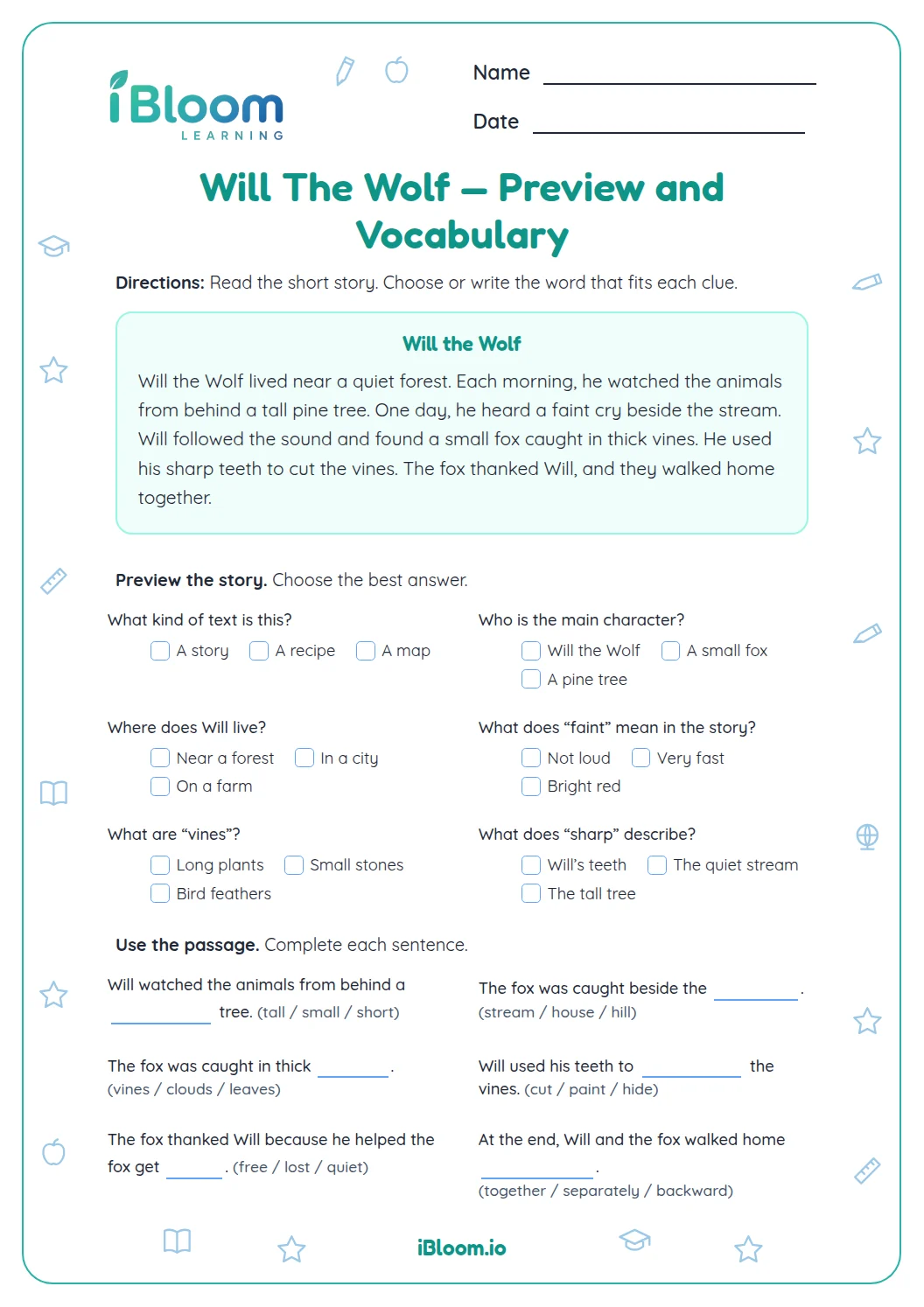
Try another Grade 3 story and ask the same two questions: “What detail do you notice?” and “What does it suggest?” The linked Own Words and Will the Wolf pages offer more story reading practice, while the Text Evidence article gives families another way to talk through supported answers.