




About this worksheet
This Grade 3 reading comprehension worksheet uses a short original story about Eli helping at a town greenhouse. Learners identify where and when events happen, distinguish a main idea from supporting details, and answer questions using evidence from the passage. The passage and 13 questions are followed by a separate answer key.
Aligned to RL.3.1
How can you find a story’s setting?
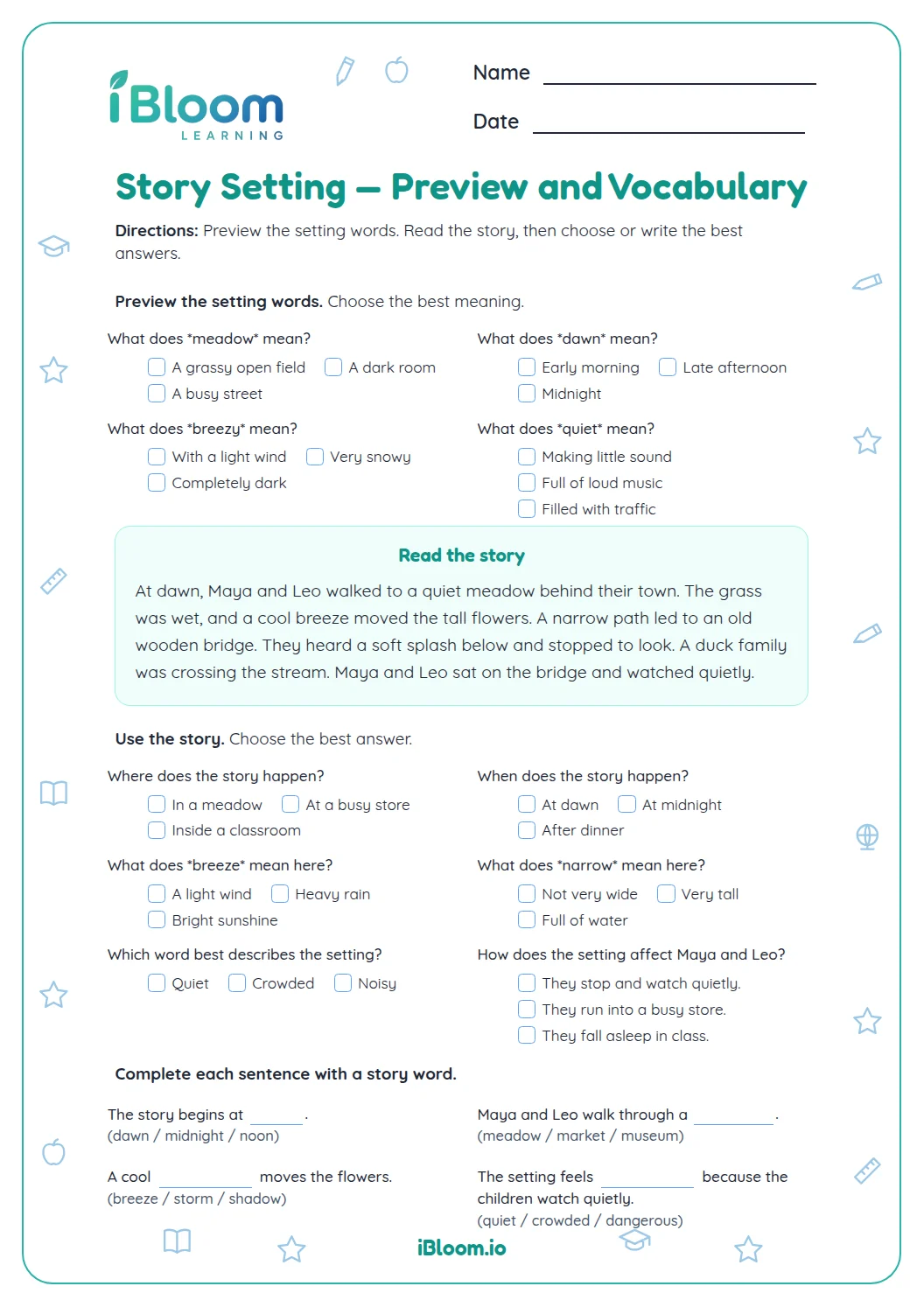
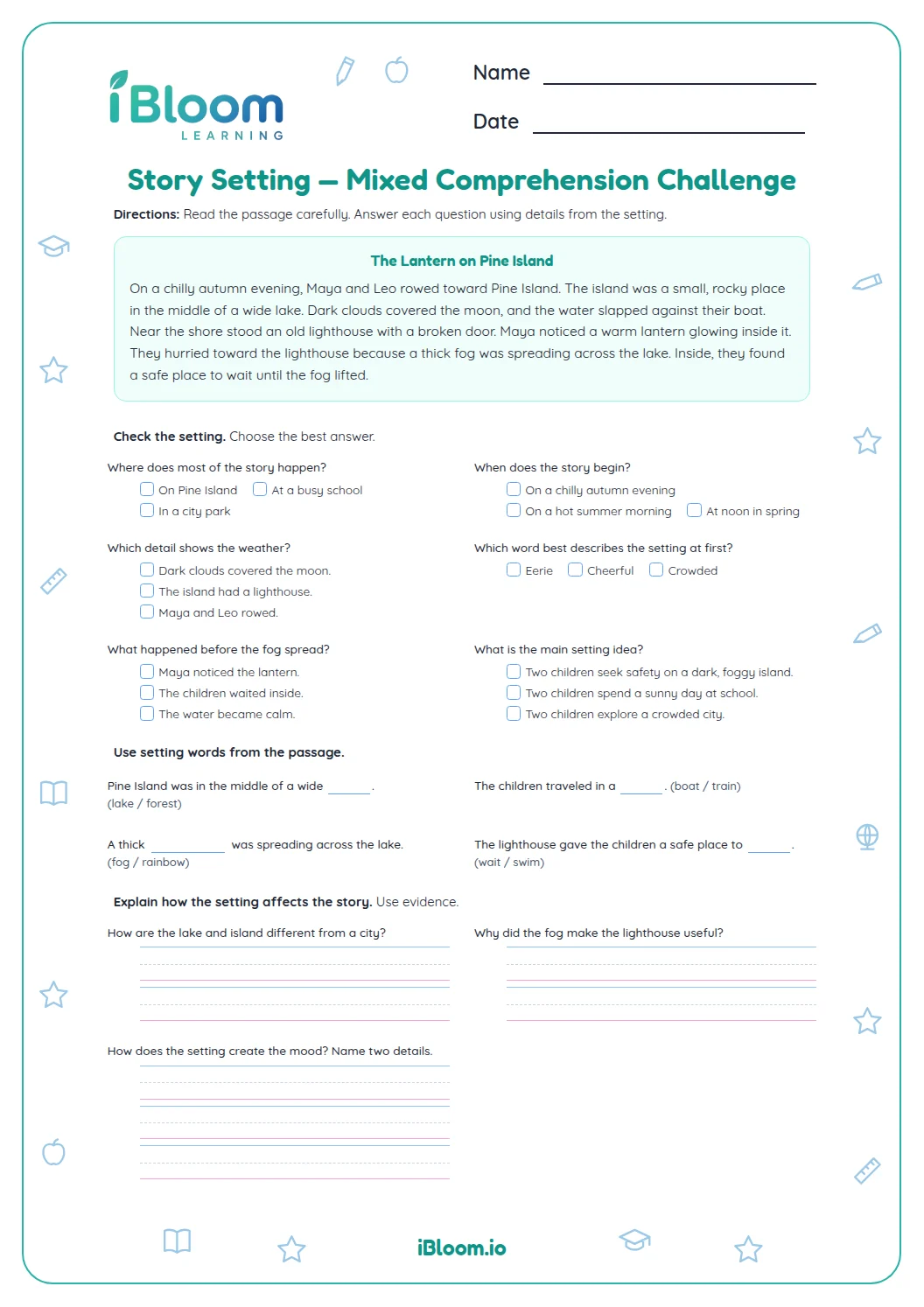
A setting is where and when a story happens. Look for place names and details about the surroundings. In this story, the town greenhouse is the place, and Saturday morning is the time.
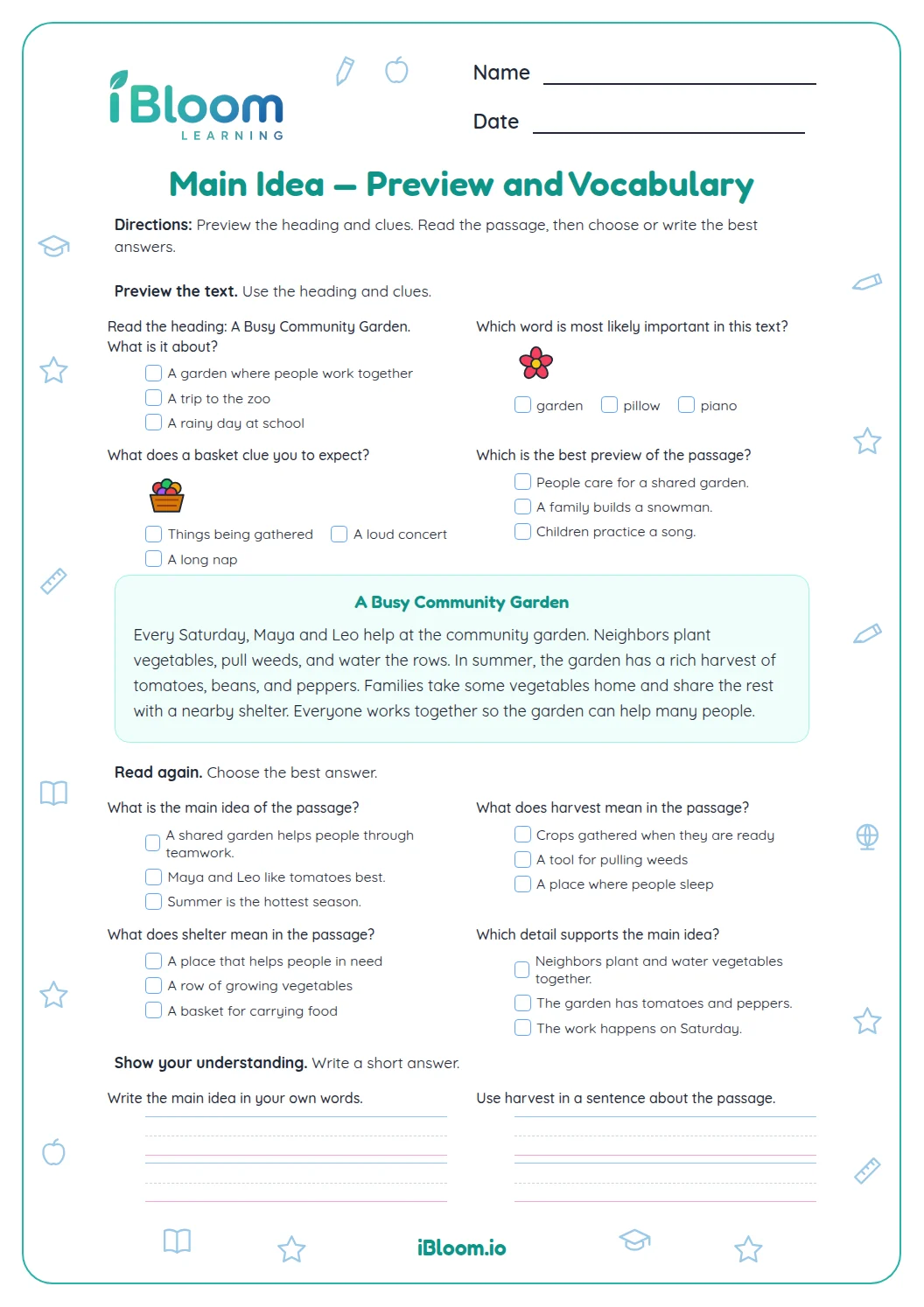
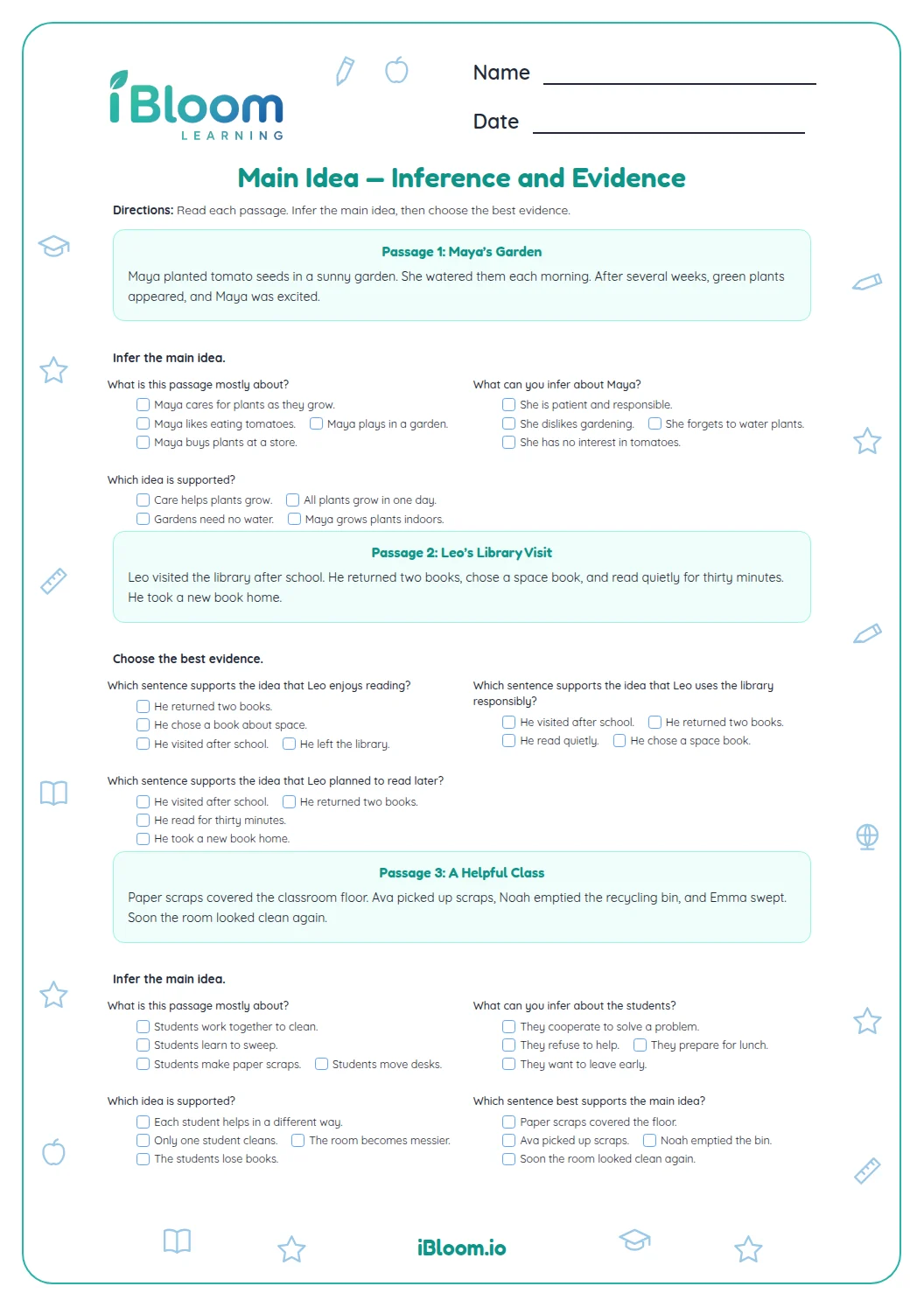
What is the main idea?
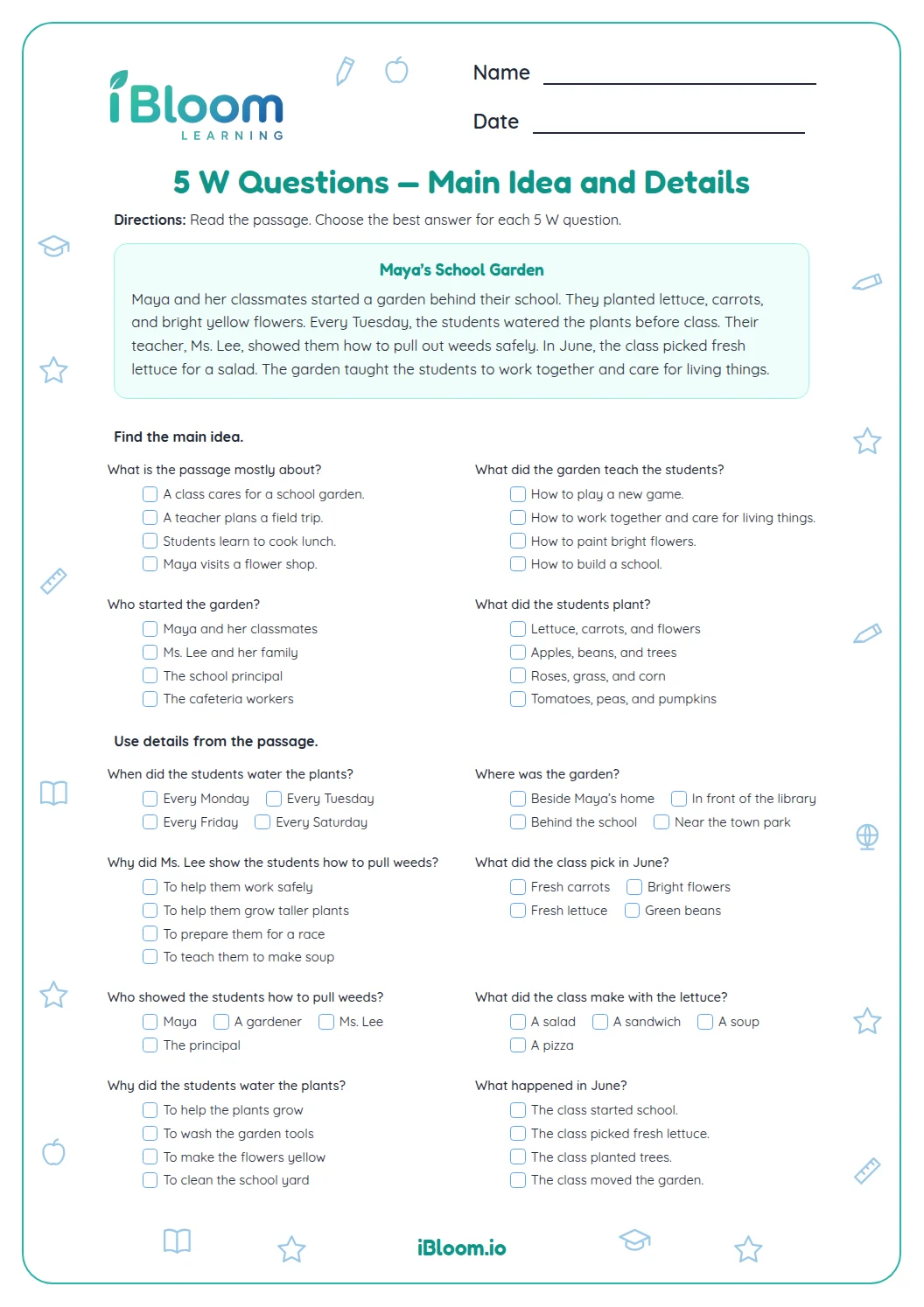
The main idea tells what the whole passage is mostly about. It should include the important events without getting lost in one small detail. Eli helps at the greenhouse and takes home basil is broader than “rain taps the roof.”
- 1Ask what connects the visit, the spilled soil, and the basil plant.
- 2Those events show Eli helping at the greenhouse and taking home basil.
- 3Answer: Eli helps at the greenhouse and takes home basil.
How do details support an answer?
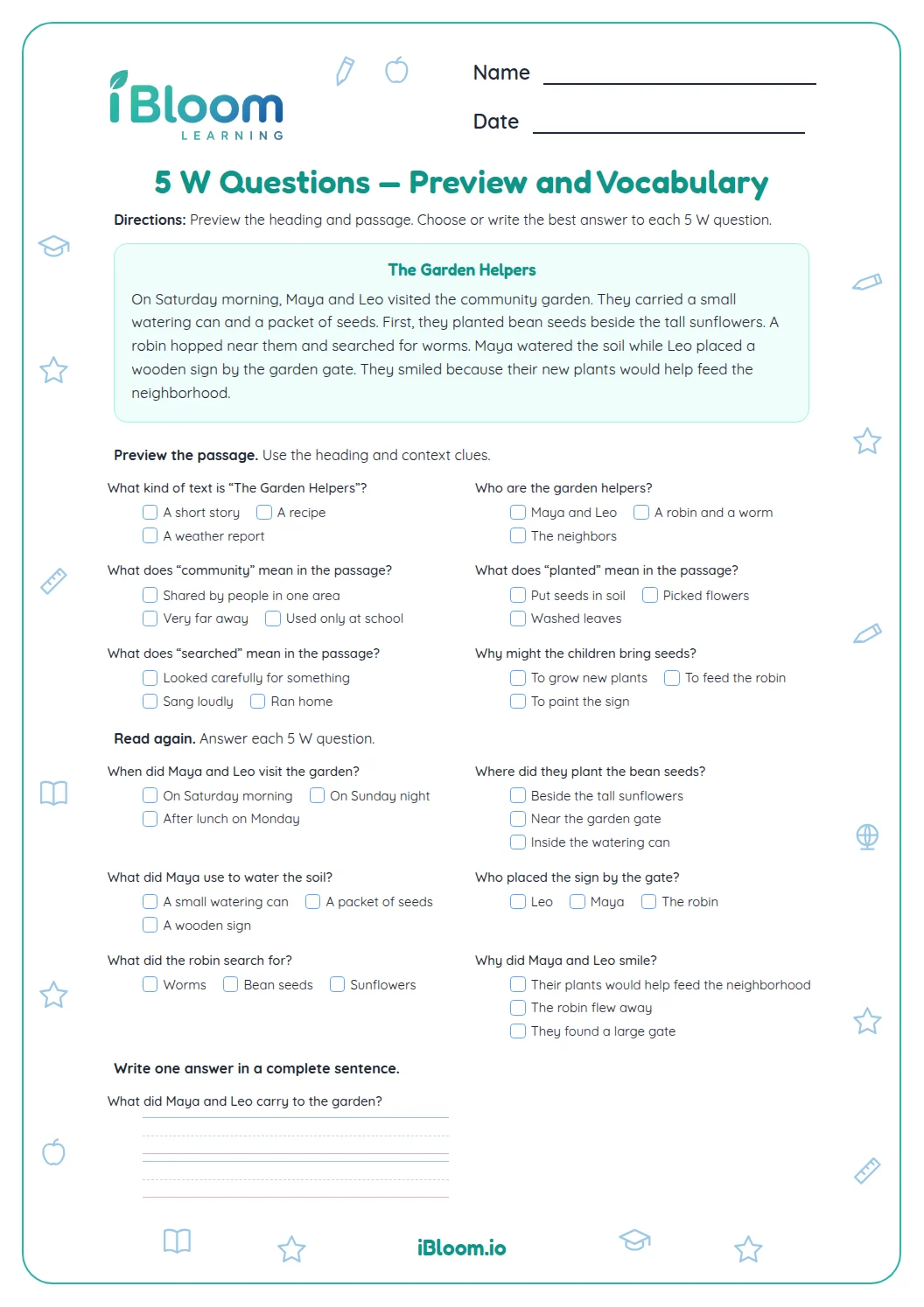
A supporting detail is a specific fact from the passage. Part B asks learners to locate details and explain how the setting shapes what happens.
How can you use this worksheet?
- 1Read the title and passage once to understand the whole event.
- 2Underline or remember words that tell where and when.
- 3For the main idea, connect several important events rather than choosing one detail.
- 4Return to the passage to check evidence for each answer.
- 5Use a complete sentence for the written response.
What mistakes should learners watch for?
The mistake
Choosing a detail as the main idea.
The fix
Check whether the answer explains the whole passage or only one moment.
The mistake
Naming only the place and missing when.
The fix
Look for both place clues and time clues.
The mistake
Answering from memory when evidence is needed.
The fix
Find the sentence that supports the answer.
Common Core alignment
This passage practices Grade 3 reading comprehension and evidence-based responses.
Answer questions about a story and refer to details in the text.
On this sheet: Questions ask learners to answer from story details.
Show the official wordingHide the official wording
Ask and answer questions to demonstrate understanding of a text, referring explicitly to the text as the basis for the answers.
What to practice next
Make more practice
Further reading
Questions parents and teachers ask
What is the setting of the greenhouse story?
The setting is the town greenhouse on Saturday morning. The story gives a place and a time clue in its first sentence, then adds details such as the glass roof, damp air, and rows of seedlings. Learners can point to those clues when explaining where and when the visit happens.
What is the main idea of this passage?
Eli helps at a greenhouse and takes home a basil plant. That idea connects the visit, his help with the spilled soil, and his plan for the plant. The story details give evidence for each response. The passage includes clues about place, time, and Eli’s actions.
How long is the passage?
The original passage is about 150 words, giving Grade 3 readers context for setting, main idea, and details. Learners can reread the passage to locate evidence for their answers. The passage includes clues about place, time, and Eli’s actions. A complete response can quote or restate a specific clue from the passage.
Should learners look back at the passage?
Yes. Returning to the passage helps learners confirm details and point to evidence. For a written response, encourage a complete sentence that names a specific story clue. A complete response can quote or restate a specific clue from the passage.
How many questions and pages are included?
The worksheet has 13 questions across three worksheet pages, followed by a separate three-page answer key. Learners answer eight multiple-choice questions and five short or written-response questions about setting, main idea, and passage details. Families can print both sections for practice and checking.