



About this worksheet
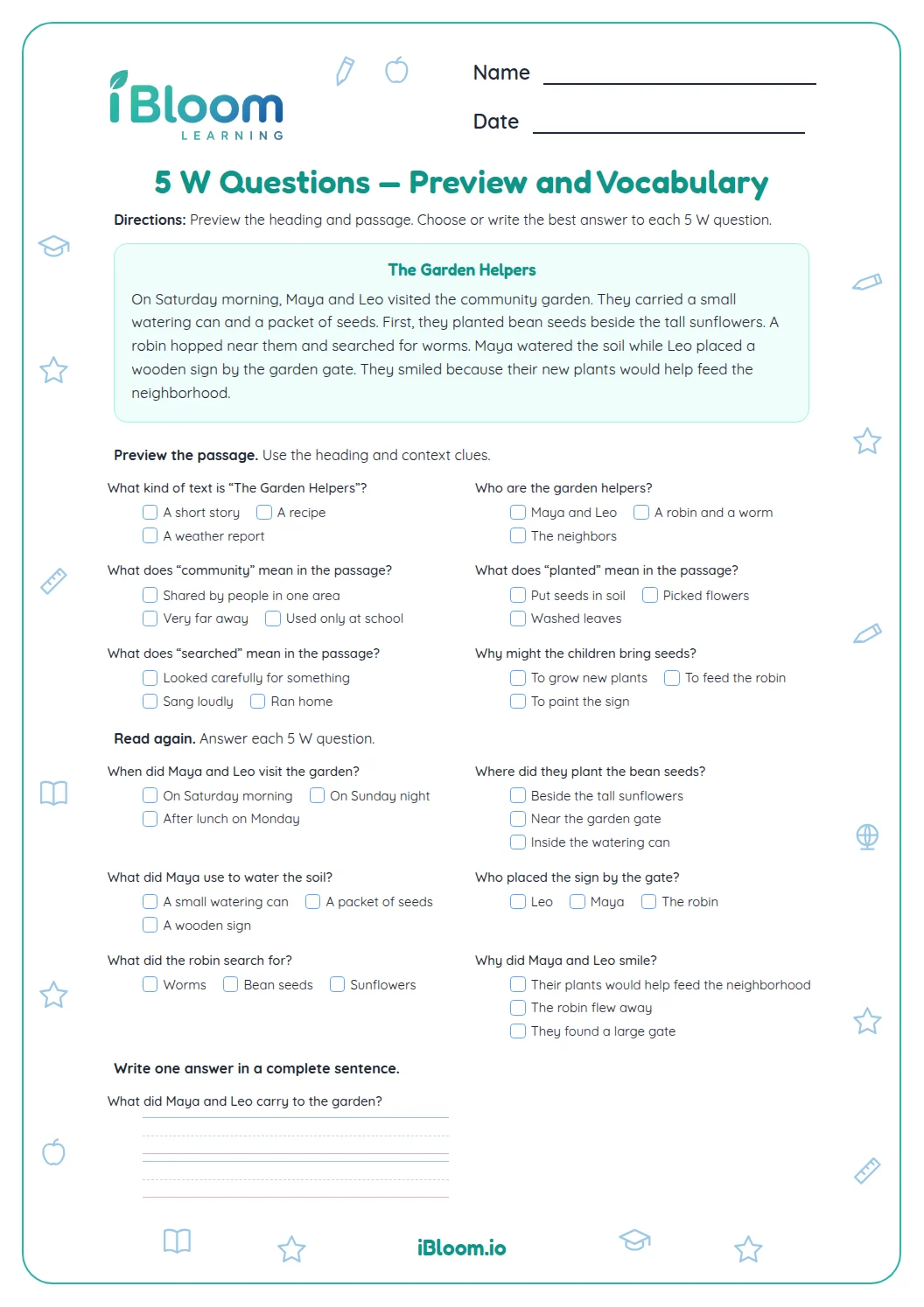
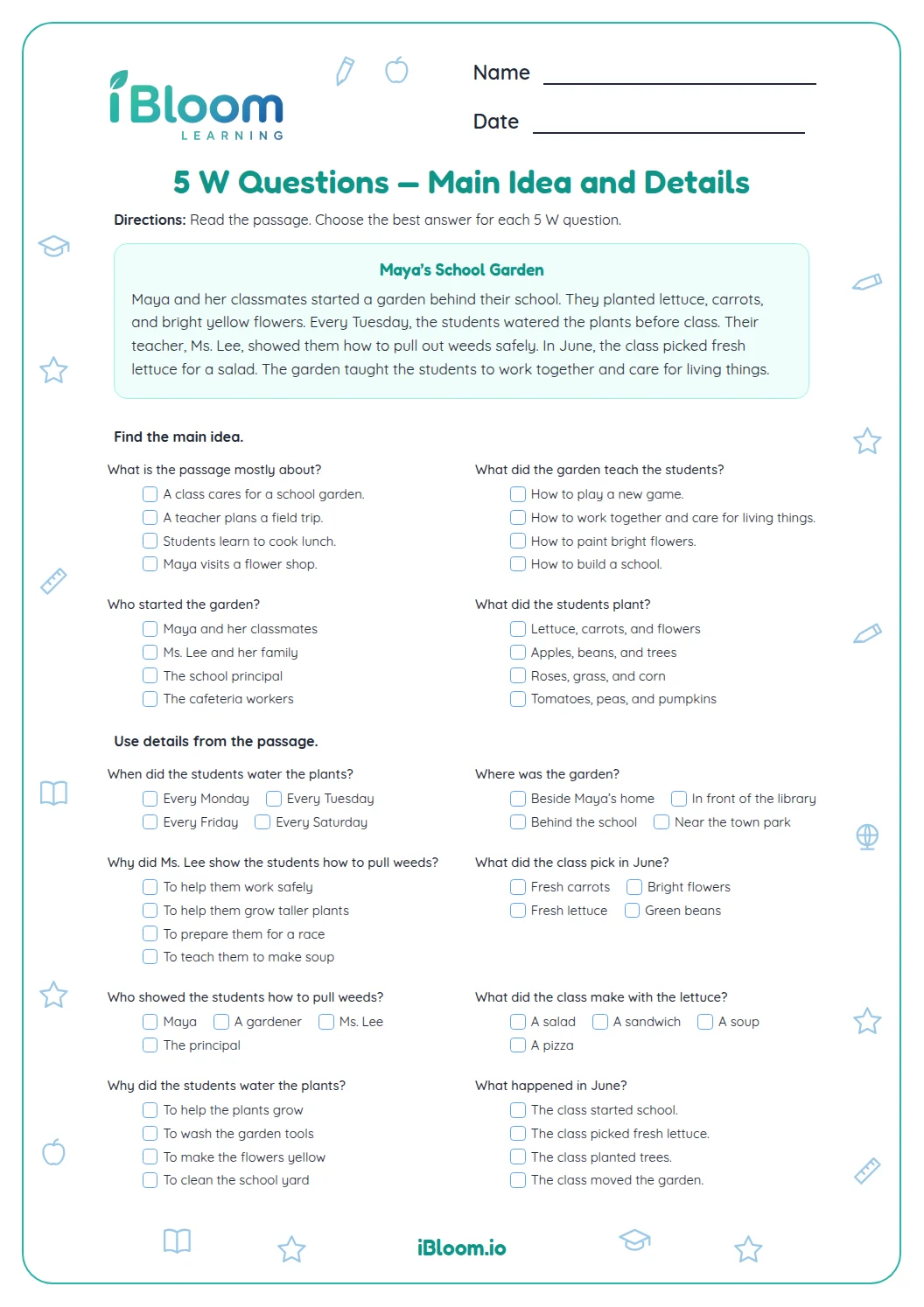
This free Grade 3 reading worksheet uses an original story about Lena’s library gardening activity. Students identify where, when, and in what weather events happen, then follow the sequence from a rainy morning to a sunflower’s first shoot. Fourteen multiple-choice questions ask readers to connect the opening, middle, and ending. The passage and a separate answer key are included.
Aligned to RL.3.5
What clues show a story’s setting?
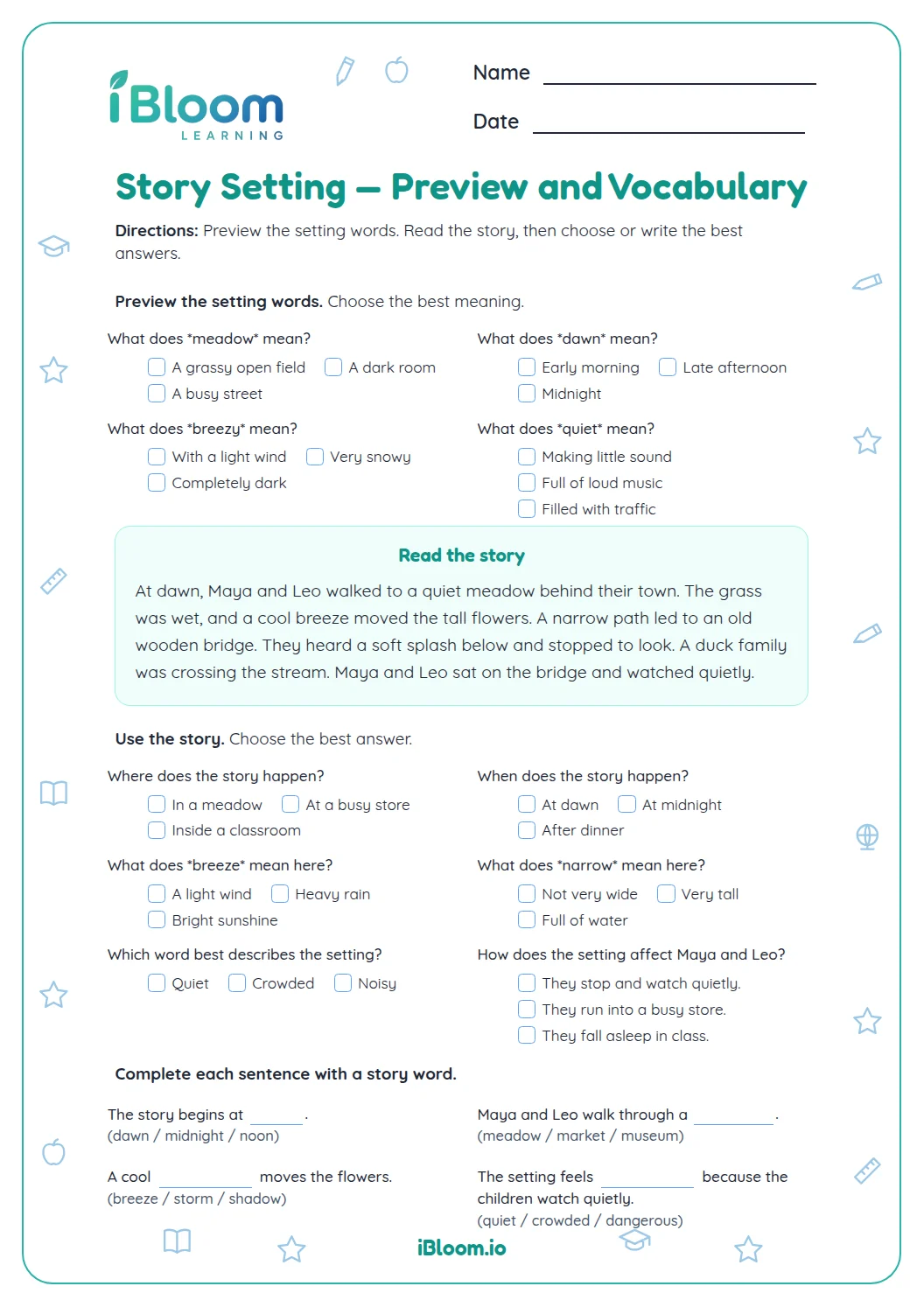
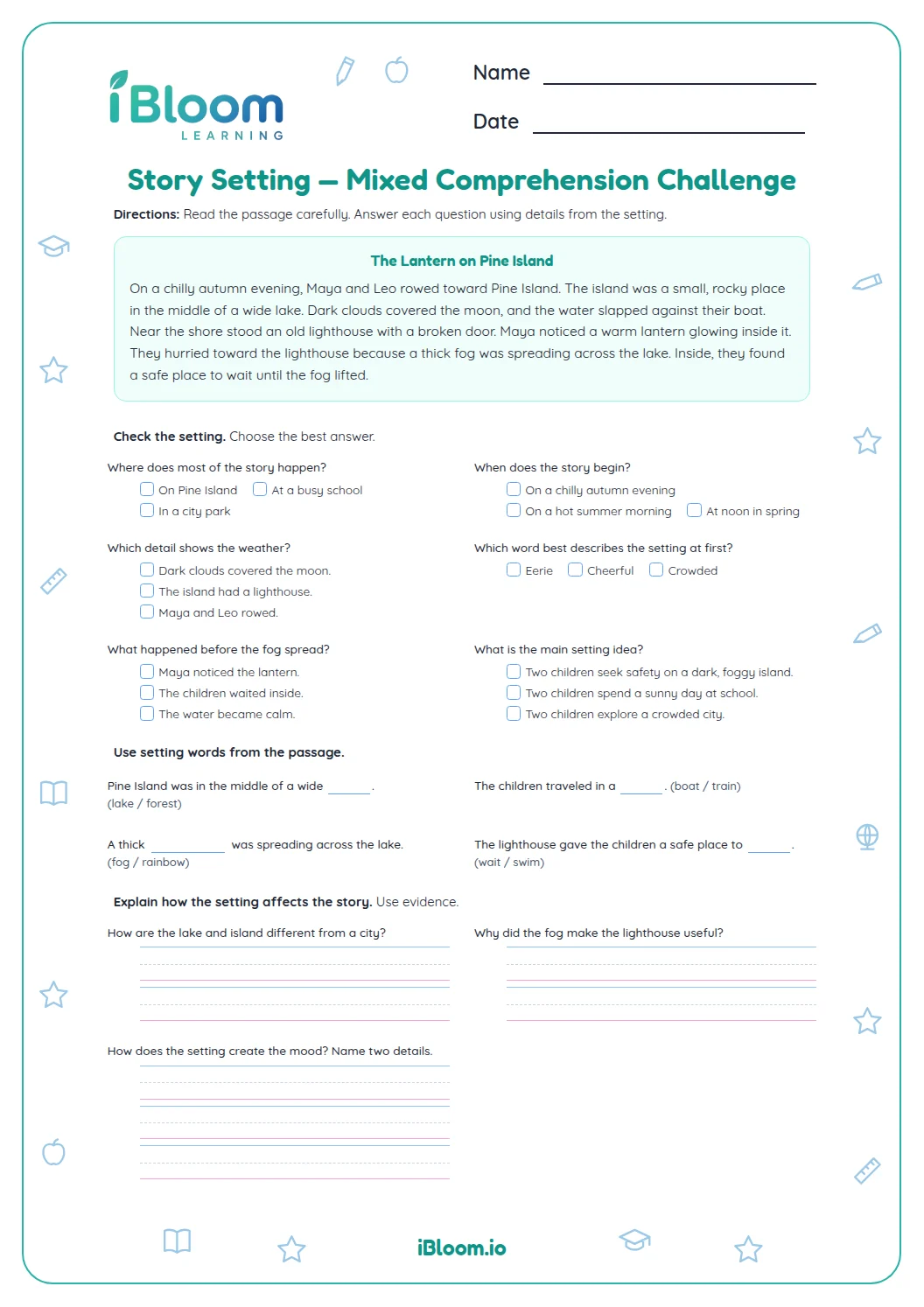
Setting includes where and when a story happens. Look for place names, weather, time words and details about the surroundings.
The opening places Lena at the town library on Saturday morning. Rain and the sign on the door explain why the story hour moves inside.
- 1“On Saturday morning” gives the time.
- 2“Town library” gives the place.
How do events build from one part to the next?
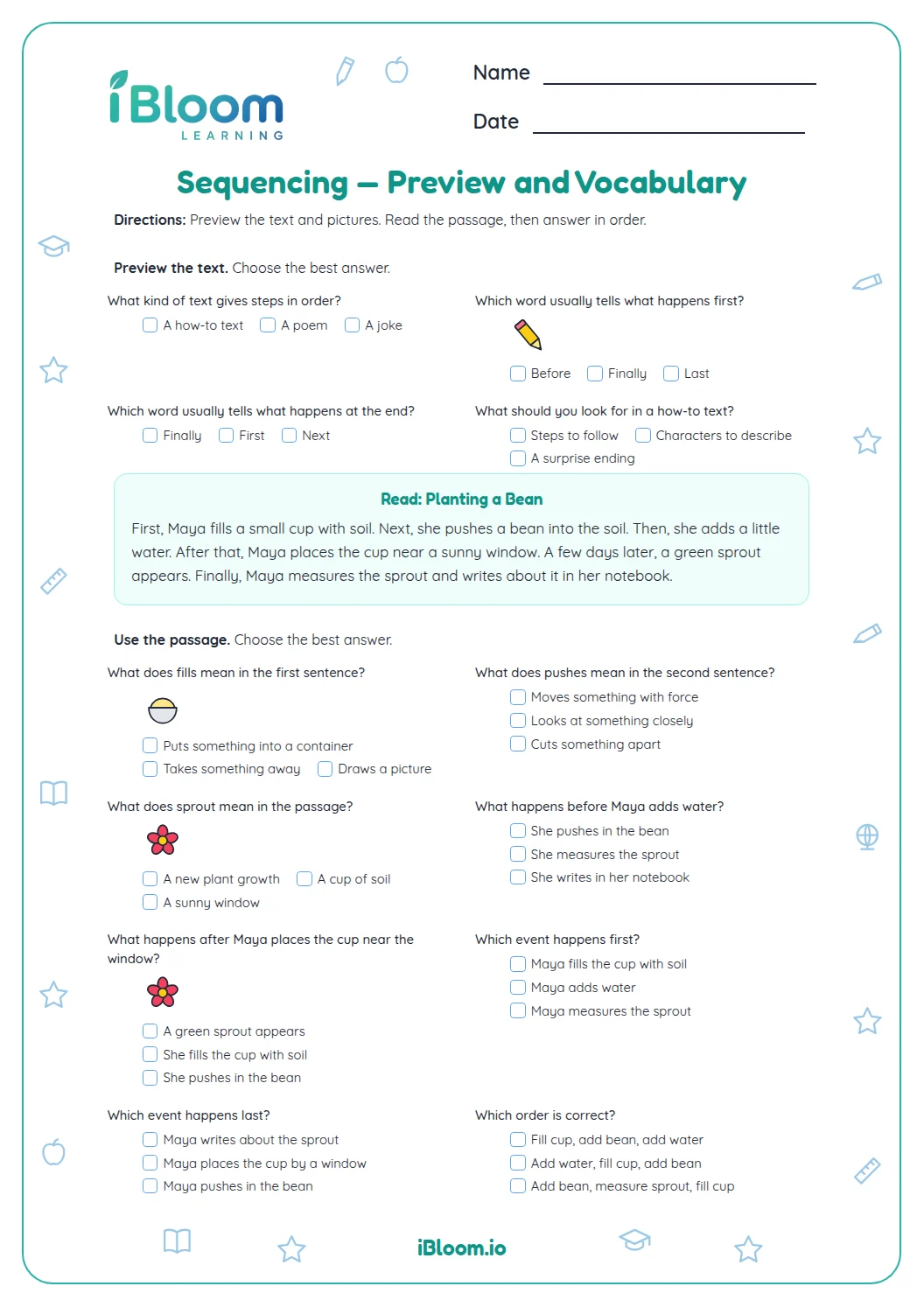
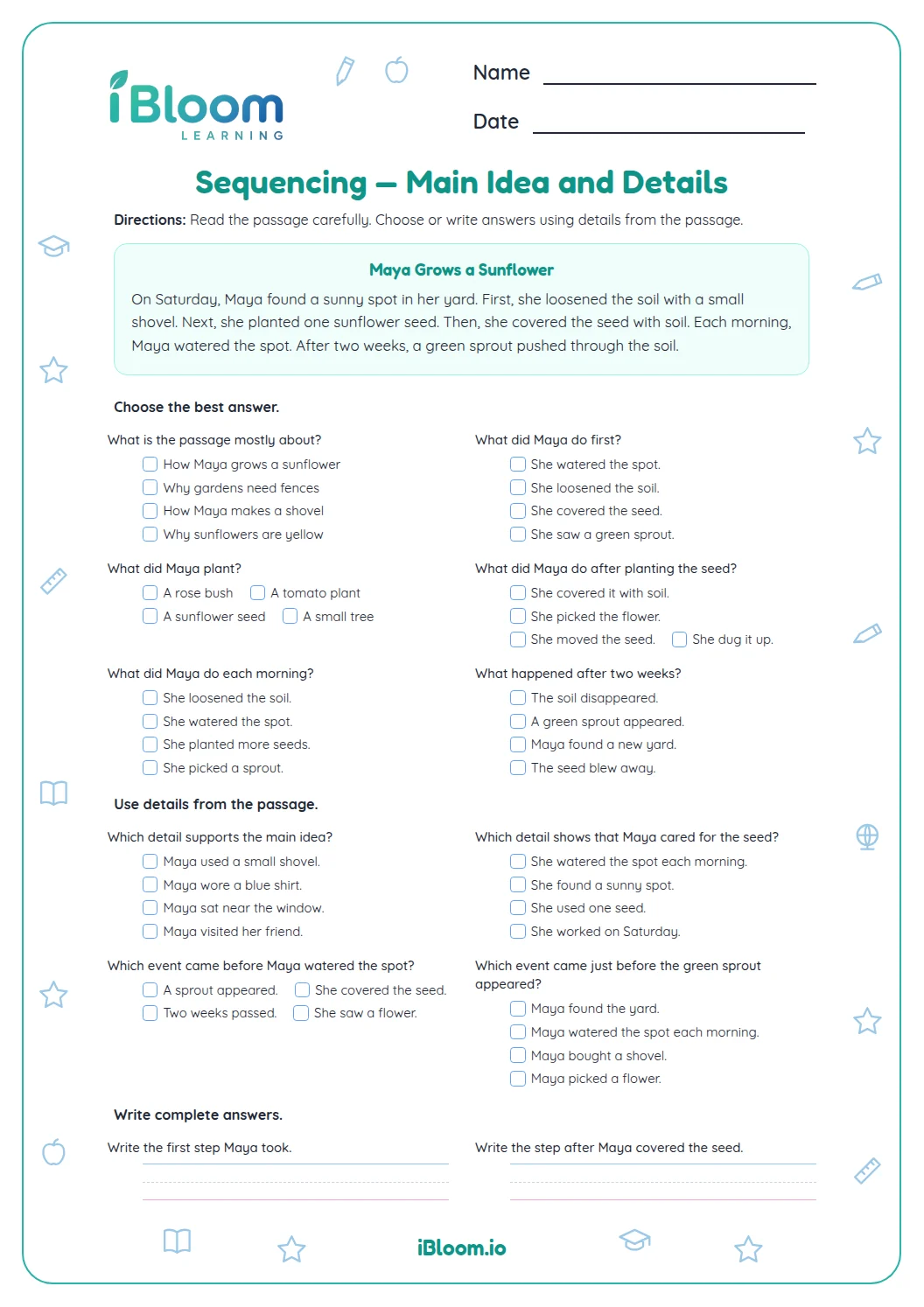
Track what changes in each part. The opening introduces seeds and a rainy-day plan; the middle shows Lena planting them indoors; the ending returns to the growing sunflower and a plan for the community garden.
Question 12 asks how the middle builds on the opening: Lena plants the seeds she brought. Question 14 asks how the ending connects to that earlier action.
- 1The opening introduces Lena’s seeds. The meeting-room part shows her planting them.
How to use this worksheet
- 1Read the passage once to understand the whole event.
- 2Underline clues for place, time and weather.
- 3Notice words such as first, next and later.
- 4For sequence questions, return to the sentence that gives the event.
- 5Check how each event leads to the next.
Common mistakes and quick fixes
The mistake
Mixing up where the story happens with where Lena hopes to plant later.
The fix
Use the opening for the starting setting; the garden is a future destination.
The mistake
Putting the sprout before the seed is planted.
The fix
Trace the cause: Lena plants seeds, then a shoot appears two weeks later.
The mistake
Choosing an answer from memory without checking the passage.
The fix
Find the detail in the paragraph and match it to the question.
Common Core alignment
This page practices the reading and language skills named below.
Explain how a later story part builds on details from an earlier part.
On this sheet: Questions connect the story’s opening, middle events and ending.
Show the official wordingHide the official wording
Refer to parts of stories, dramas, and poems when writing or speaking about a text, using terms such as chapter, scene, and stanza; describe how each successive part builds on earlier sections.
What to practice next
Make more practice
Further reading
Questions parents and teachers ask
What does this story setting and sequence worksheet practice?
This Grade 3 reading page includes an original passage and 14 multiple-choice questions. Students identify setting clues, put events in order, and explain how the middle builds on the opening and how the ending connects to earlier events. The story details support each answer directly.
How should we use the answer key?
Use the key after answering each part, and return to the passage when a choice is uncertain. For example, the opening says Lena brought sunflower seeds; the middle explains how she plants them indoors. The key lists the correct choice for each question.
Can I print the worksheet for a classroom?
Yes. The student worksheet spans three pages because it includes the reading passage and 14 questions. A separate answer key gives the correct multiple-choice answer for every question so students can review their choices. The pages keep the passage and practice together for printing.
What comes after story setting and sequence practice?
Students can continue with sequencing or other story-element practice. The links below include Grade 3 reading activities that ask readers to track events, explain connections, and use details from a passage to support their answers. Students can revisit the passage as they move to those related skills.
How long will this worksheet take?
Plan for about 15 minutes, including time to read the passage and look back for details. Students may take longer if they discuss how the setting changes the plan or how one story part leads to the next. The questions are untimed and can be completed in one sitting.