



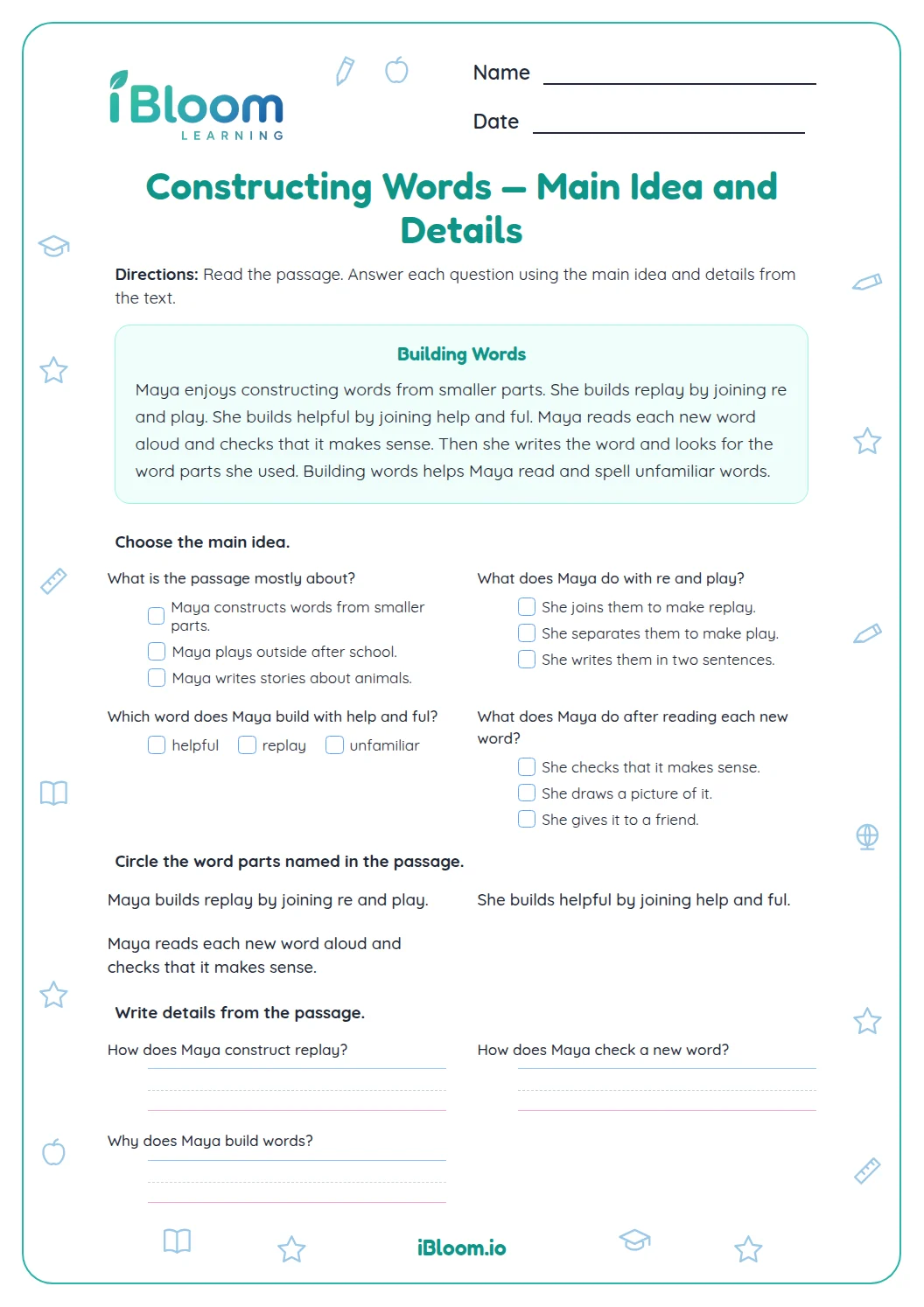
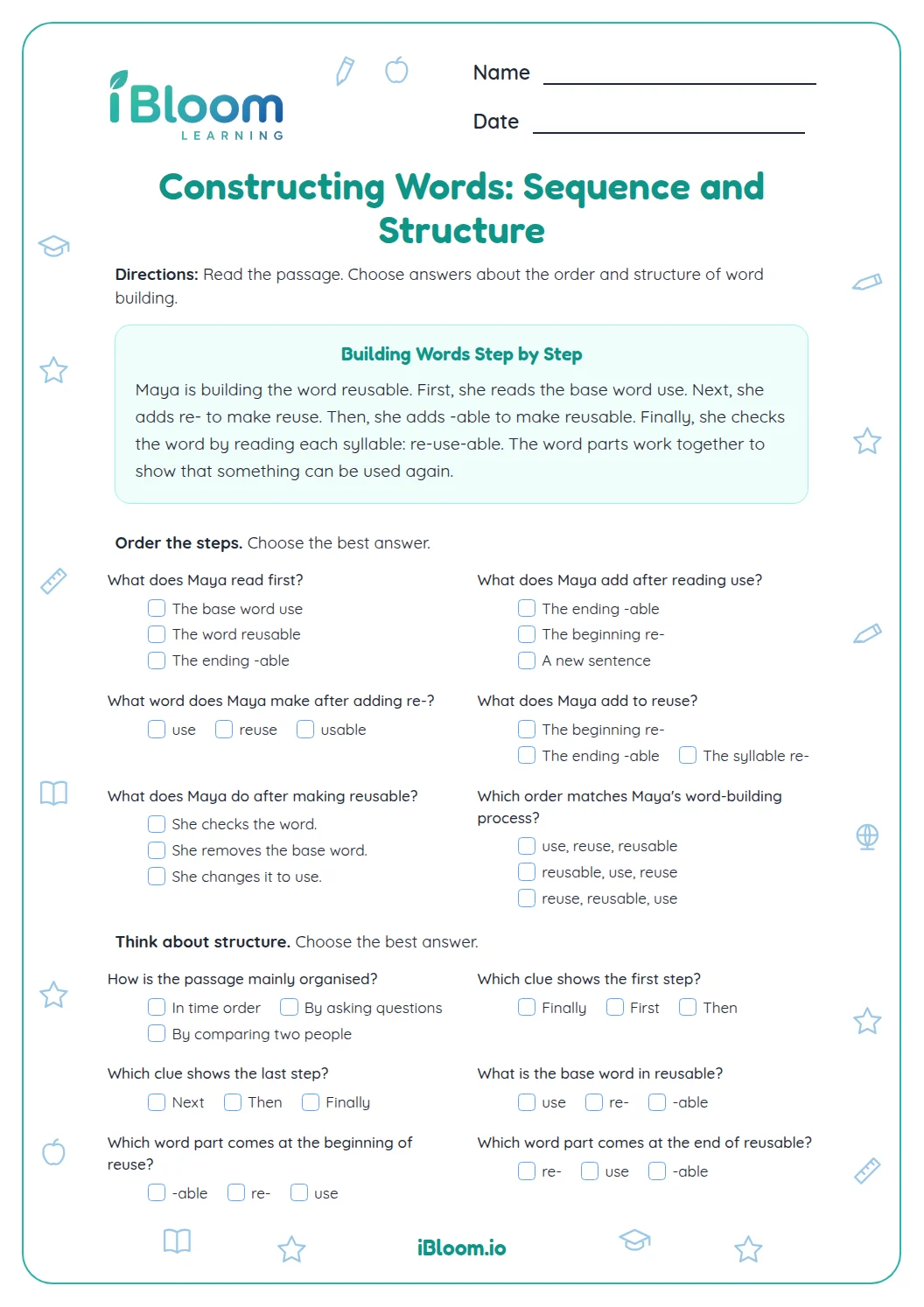

About this worksheet
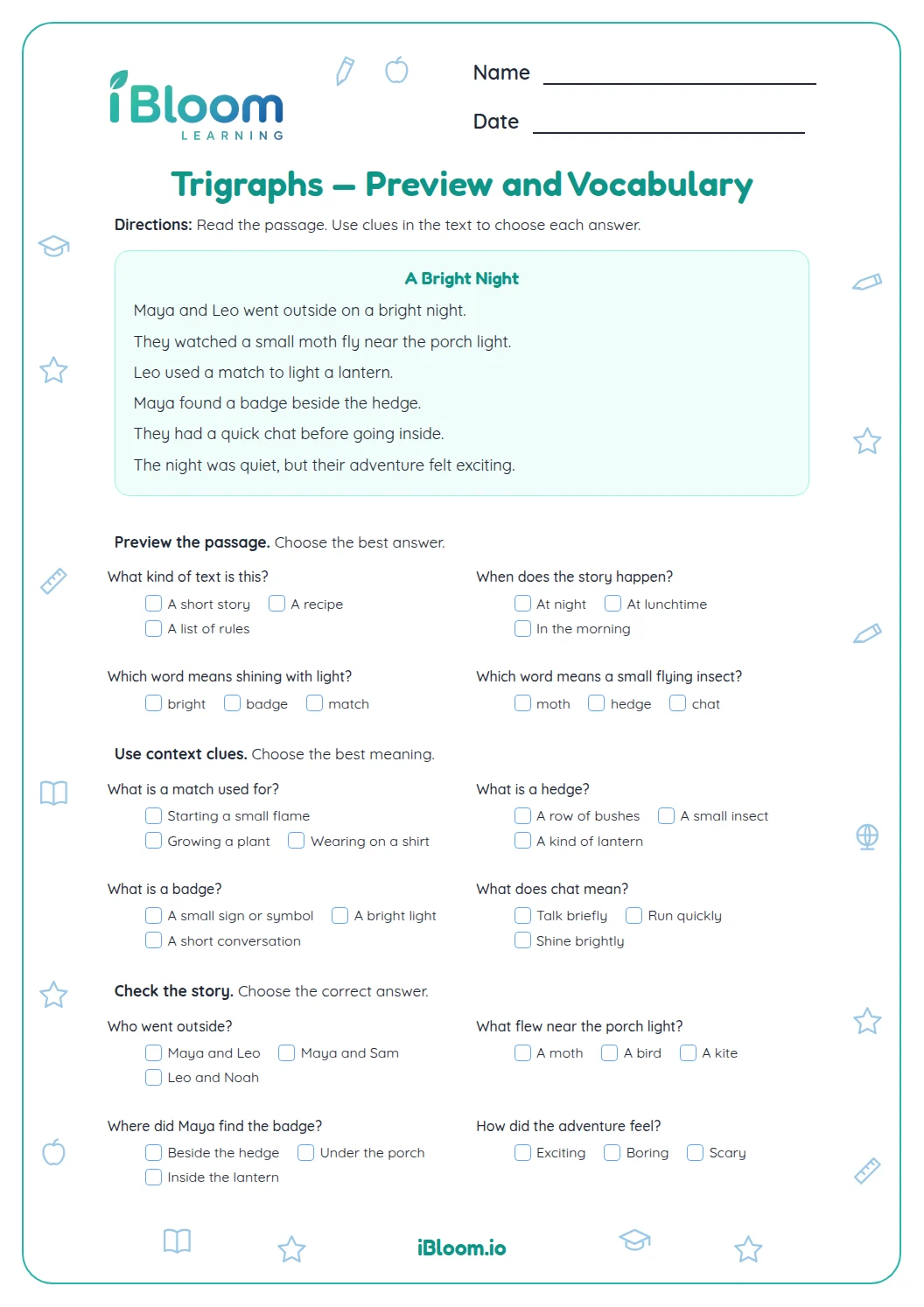
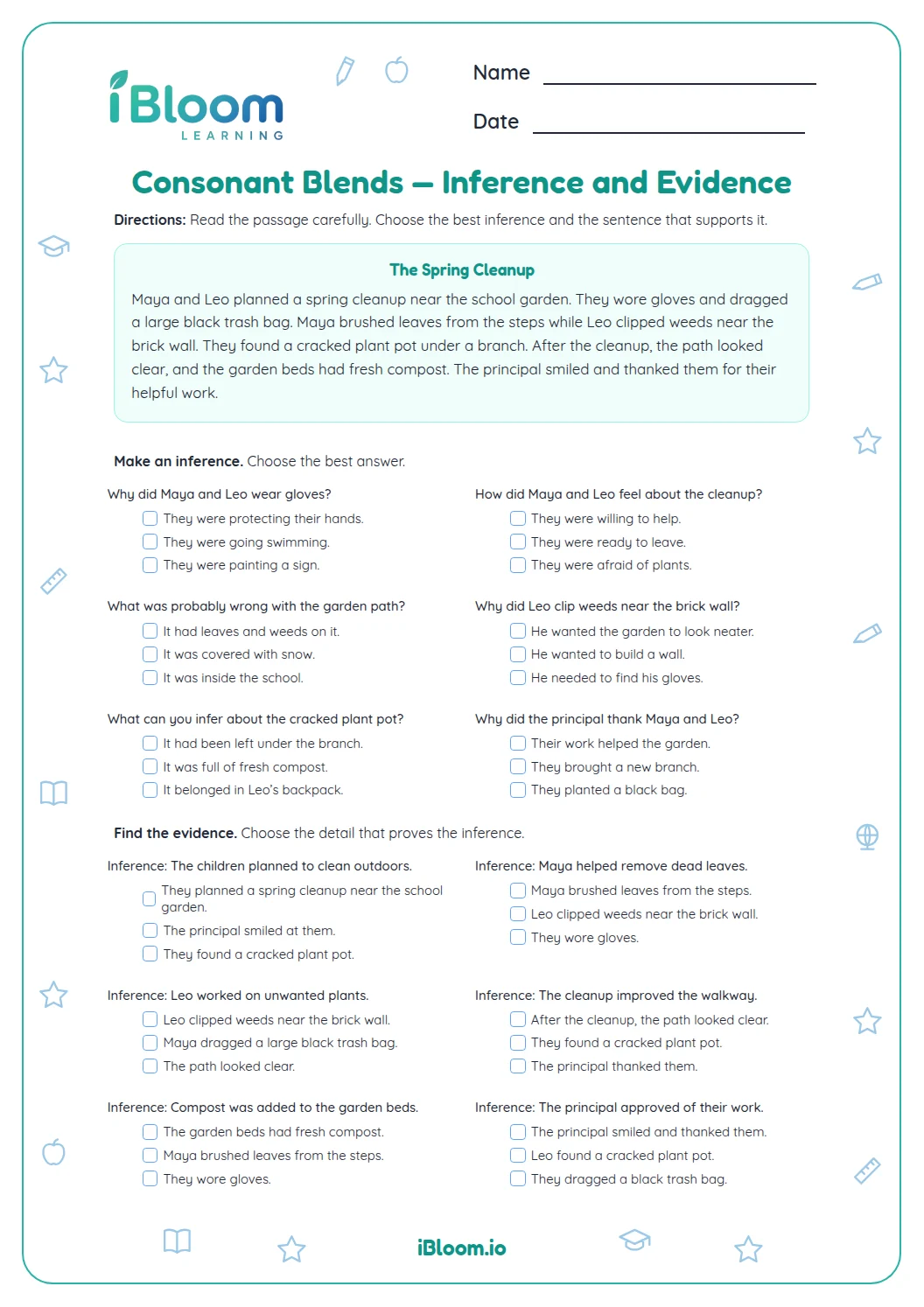
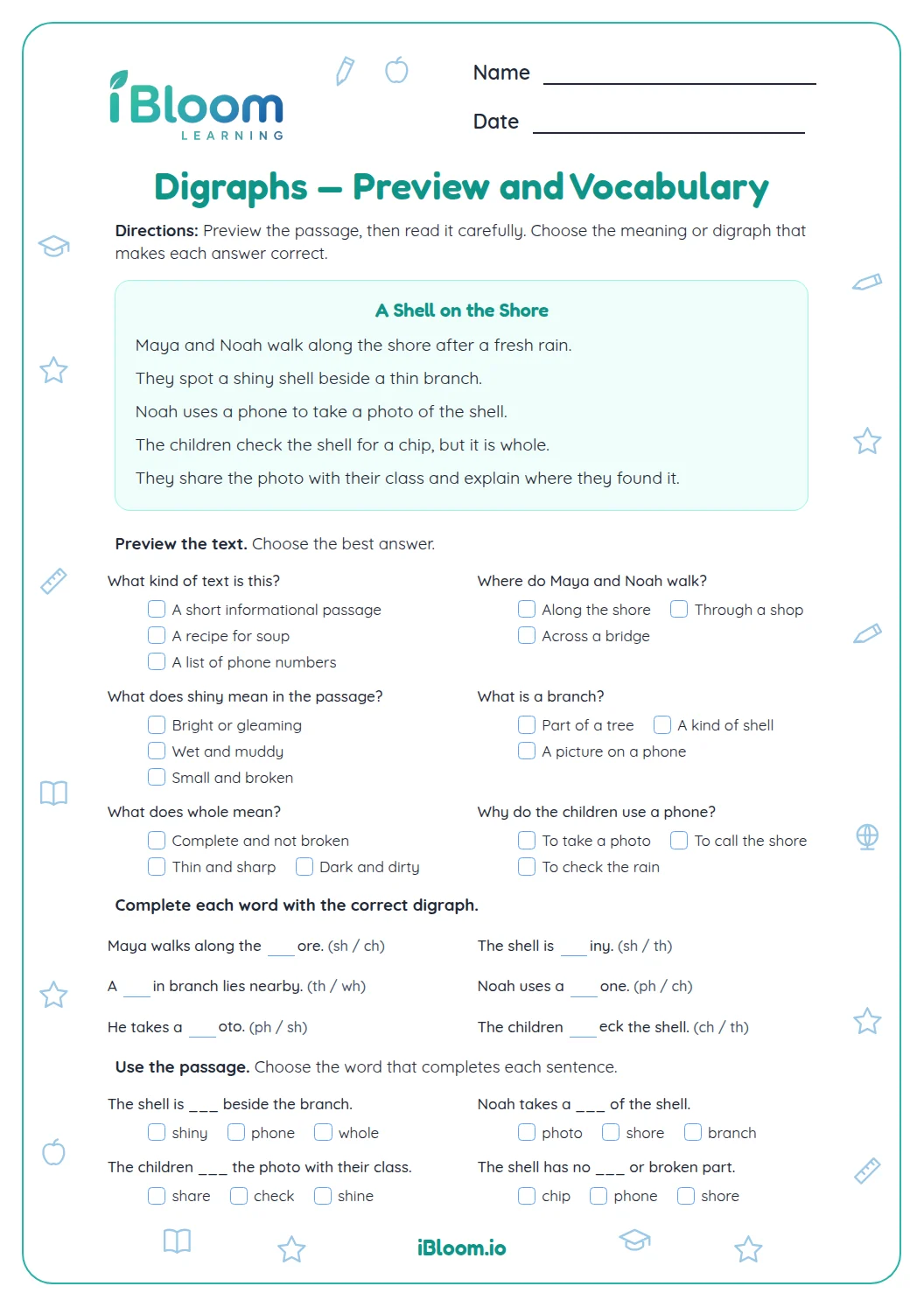
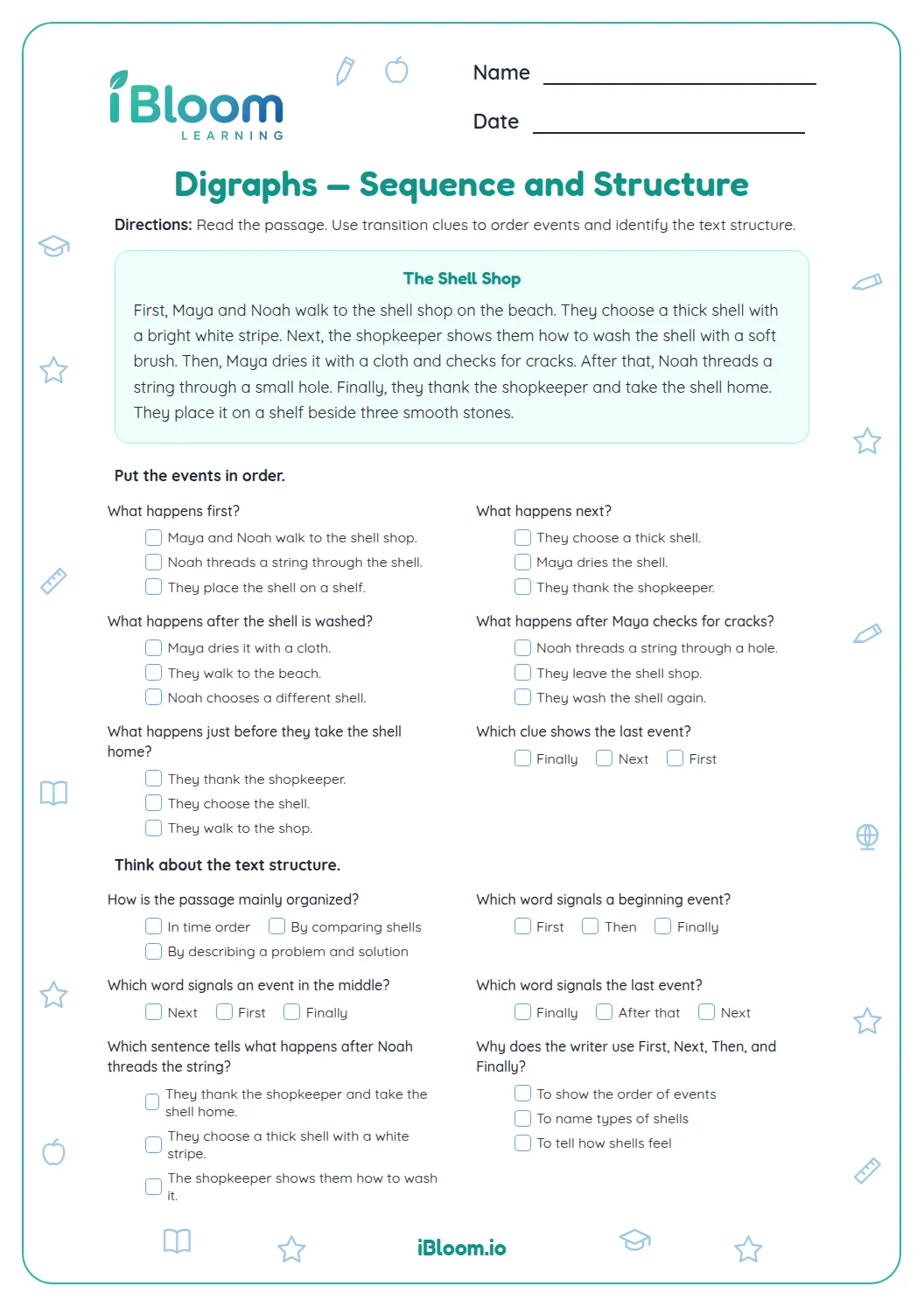
This printable Grade 3 worksheet combines trigraph practice with reading comprehension. Children read an original passage about Theo and Thalia exploring a school garden, identify words with scr, thr, and spl, and answer questions about details, main idea, and character actions. The 14 multiple-choice questions practice phonics and text-based comprehension under Common Core RL.3.1, with an answer key on its own pages.
Aligned to RL.3.1
What is a trigraph?
A trigraph is a sequence of three letters that represents one sound. Examples in the passage include scr in scratch, thr in thread, and str in stretched. Looking at each word in a sentence helps children connect the pattern to a real word.
How does the passage support comprehension?
The garden story gives each word a meaningful setting. Details about the signs, beetle, silk, and blossoms help readers answer questions by returning to the text instead of guessing.
- 1Question: What do beetles help break down?
- 2The passage says the garden guide explains that beetles help break down old leaves.
- 3Answer: old leaves.
How can children support an answer?
For a detail question, point to the sentence that gives the answer. For a main-idea question, think about what happens across the whole passage, not one interesting detail.
How to use this worksheet
- 1Read the passage once for the story.
- 2Reread and mark words that begin with scr, thr, or str.
- 3For detail questions, find the matching sentence in the passage.
- 4For the main idea, think about what the children do throughout the visit.
- 5Use one clear text detail in the written response.
Common mistakes and quick fixes
The mistake
Choosing a word because it looks similar.
The fix
Check all three letters in the trigraph and reread the word.
The mistake
Answering from memory without returning to the passage.
The fix
Point to the sentence that supports the answer.
The mistake
Choosing one small event as the main idea.
The fix
Ask what the whole passage is mostly about, including its beginning and ending.
Common Core alignment
This page connects the worksheet practice to a specific Common Core skill.
Answer questions by referring to details in the passage.
On this sheet: The comprehension questions ask for explicit details and a detail-based response.
Show the official wordingHide the official wording
Ask and answer questions to demonstrate understanding of a text, referring explicitly to the text as the basis for the answers.
What to practice next
Make more practice
Further reading
Questions parents and teachers ask
What trigraph patterns appear in the passage?
The questions focus on scr, thr, and str. Readers see them in words such as scratch, thread, and stretched. They can reread the passage to find the three-letter group and say the whole word aloud. Children can underline the line in the passage that supports a response.
How long is the reading passage?
The original passage is about 150 words, with three short paragraphs. It tells how Theo and Thalia explore a school garden and notice a spider thread, a beetle, and blossoms. The questions encourage careful rereading of the original garden story.
What kinds of questions are included?
There are 14 questions: 14 multiple-choice items and multiple-choice items. Some check trigraph patterns, while others ask about explicit details, the main idea, and why characters act as they do. The answer key gives a model for the open response; accurate text details also work.
How can I help a child find evidence?
Ask the child to point to the sentence that answers the question before choosing an option. If the question asks about the main idea, have them describe what the children do across the whole passage. Reading each option in the sentence context helps children compare it with the passage.
What is the answer to the written response?
Answers vary because the question asks for one detail noticed on the trail. The key gives a sample about spider silk stretching between stems. Other accurate details from the passage also answer the prompt. Children can underline the line in the passage that supports a response.
Does this worksheet include an answer key?
Yes. The answer key is separate from the worksheet and lists the answers to the trigraph and comprehension questions, along with a sample response for the final written item. The questions encourage careful rereading of the original garden story. The questions encourage careful rereading of the original garden story.