

About this worksheet
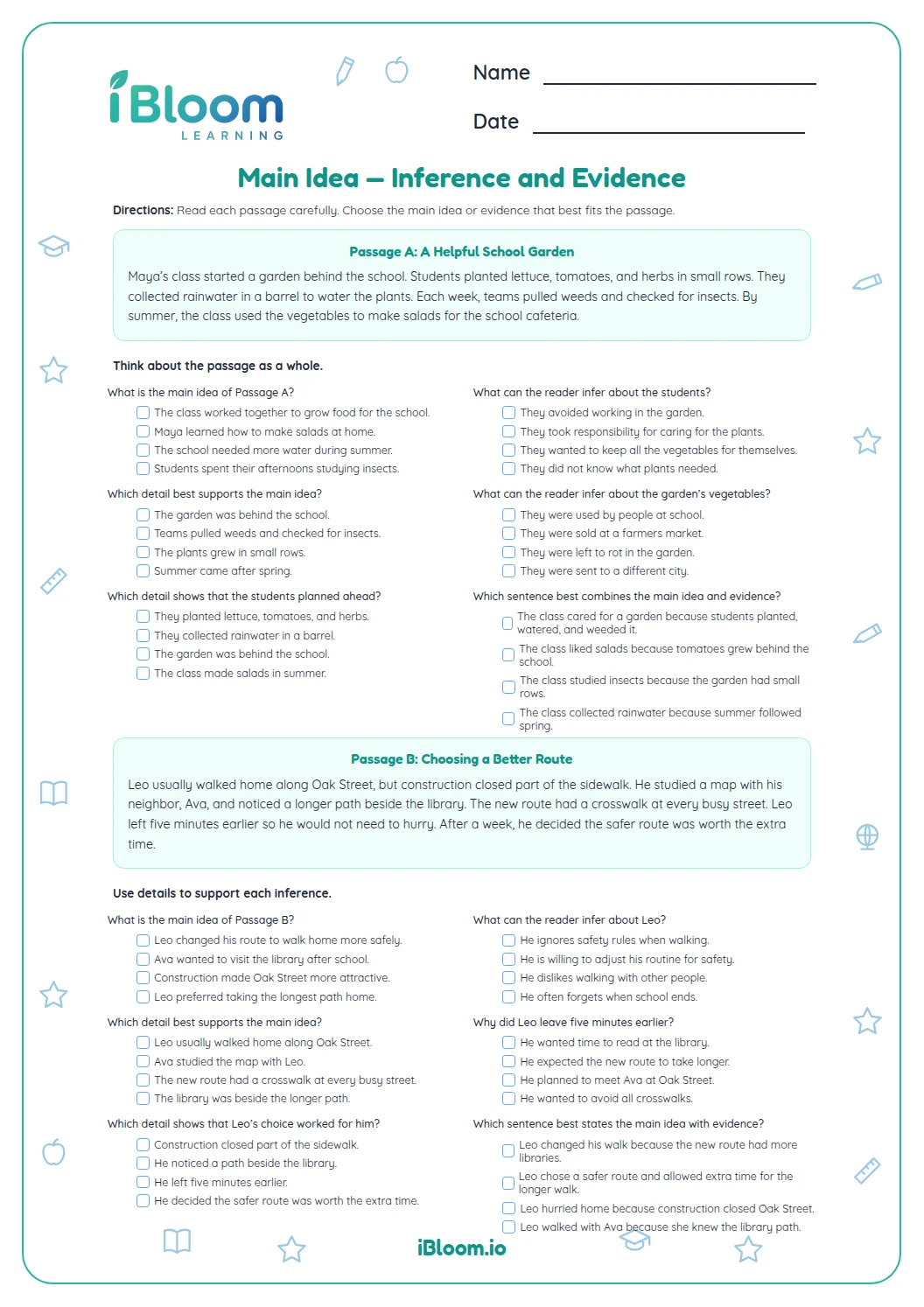
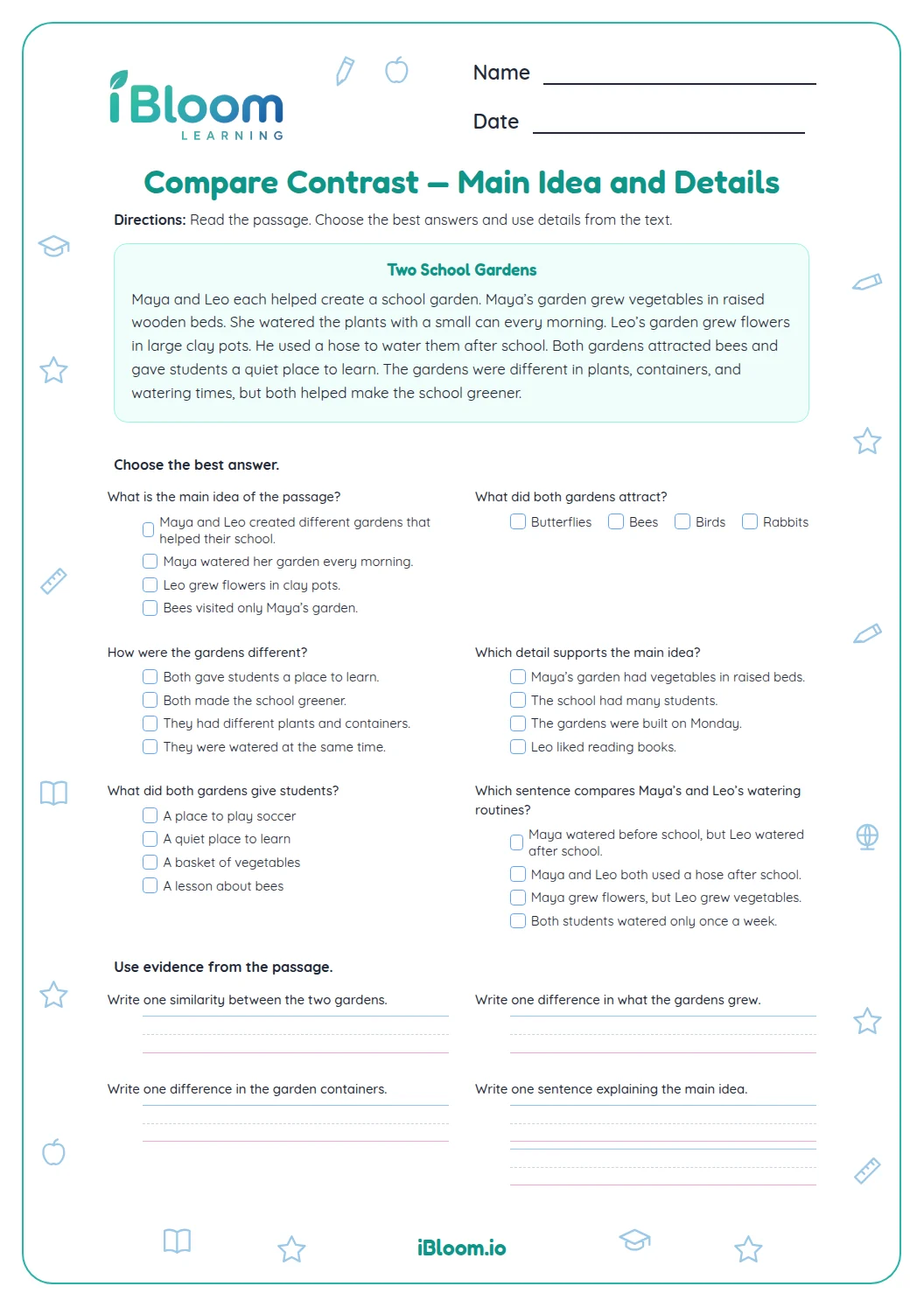
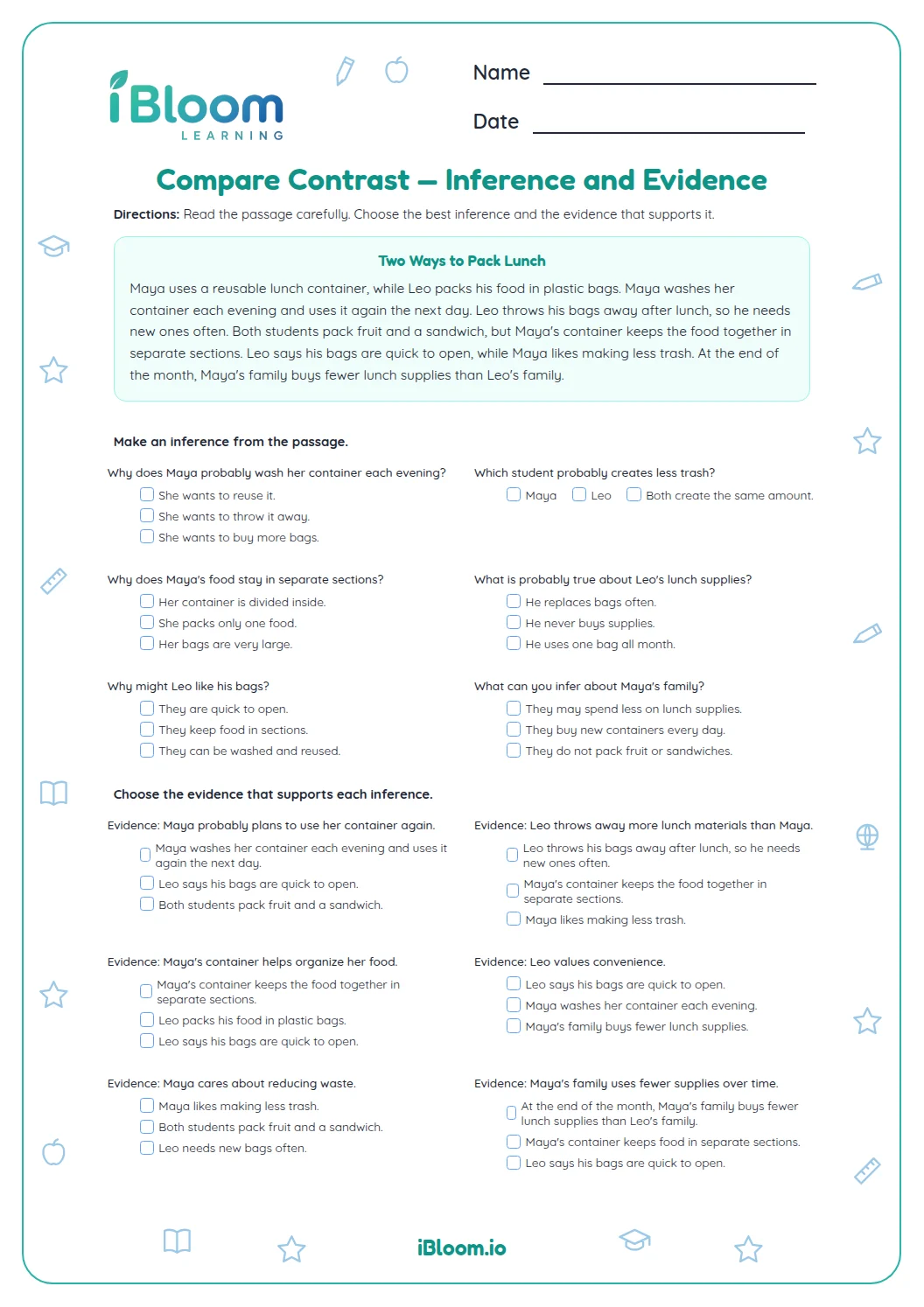
This Grade 5 reading comprehension worksheet uses an original informational passage about students improving a schoolyard. The 16 questions ask readers to locate stated facts, distinguish fact from opinion, draw reasonable inferences, and identify supporting evidence. Short written responses model how to connect an inference to a detail in the passage. An answer key is included. The work aligns with Common Core Reading Informational Text standard RI.5.1: quote accurately when explaining explicit information and drawing inferences.
Aligned to RI.5.1
What is the passage about?
In “A Cooler Schoolyard,” Cedar Grove students plan trees and raised beds after discussing what the schoolyard needs. The information gives readers details to cite and ideas to infer.
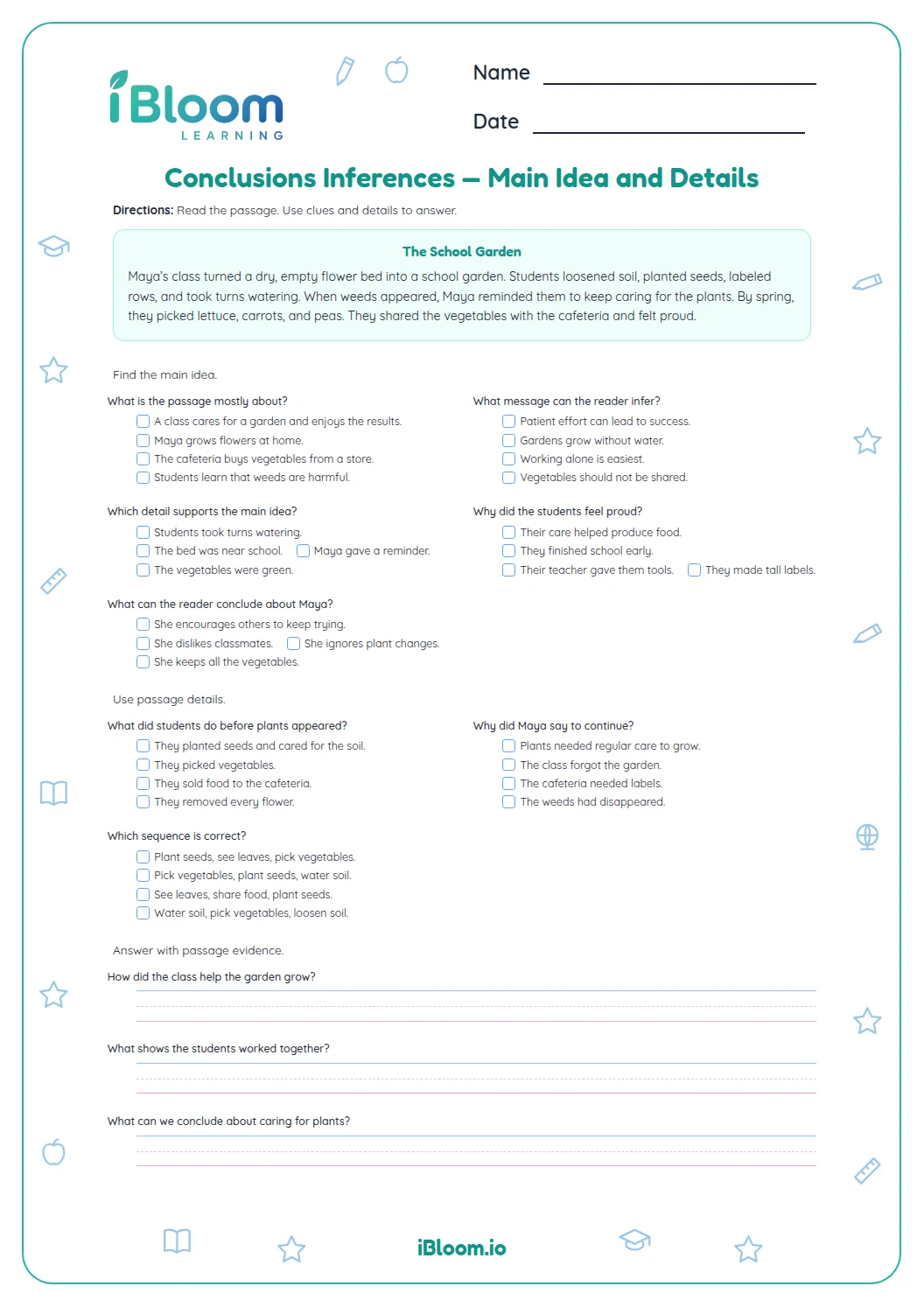
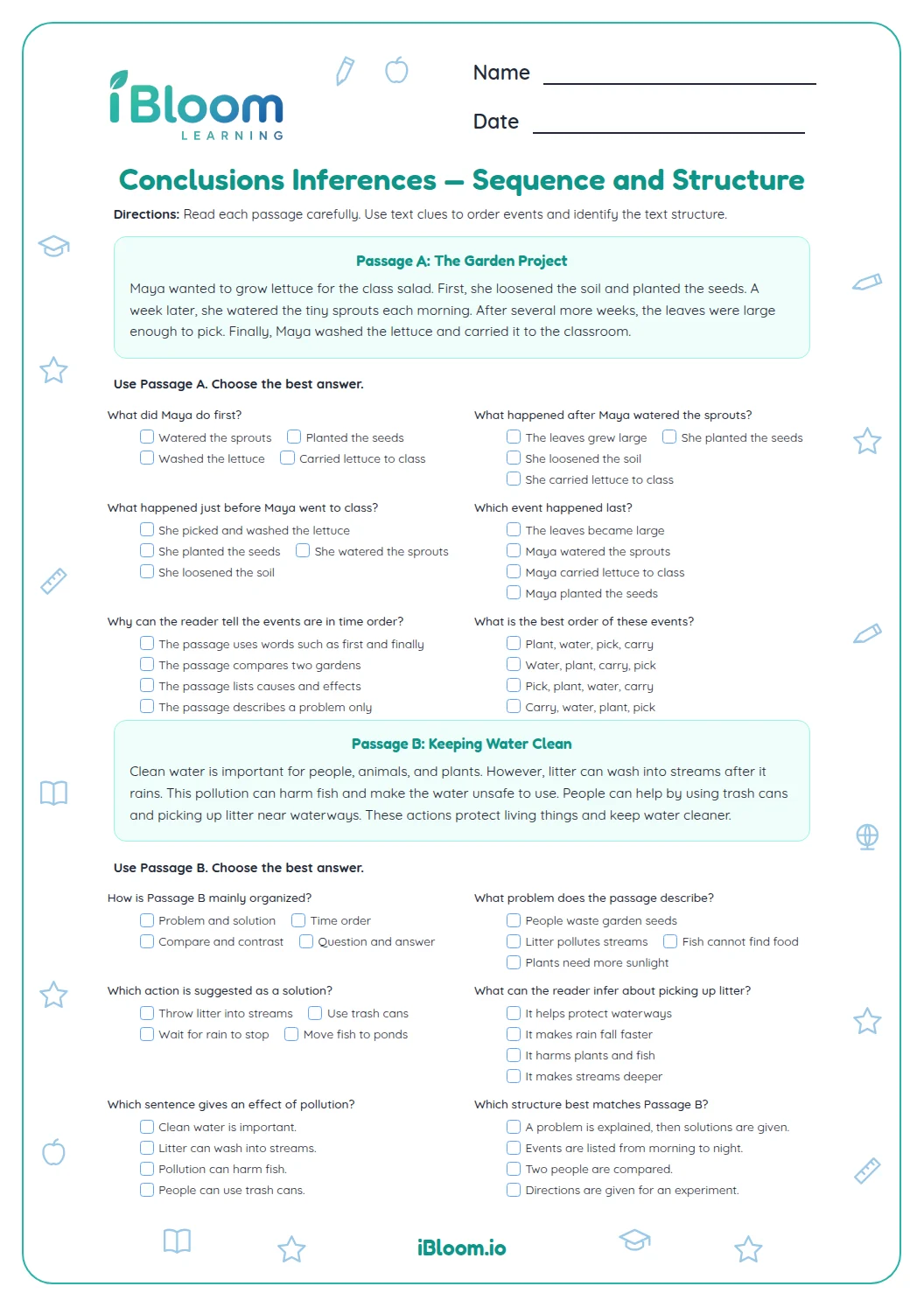
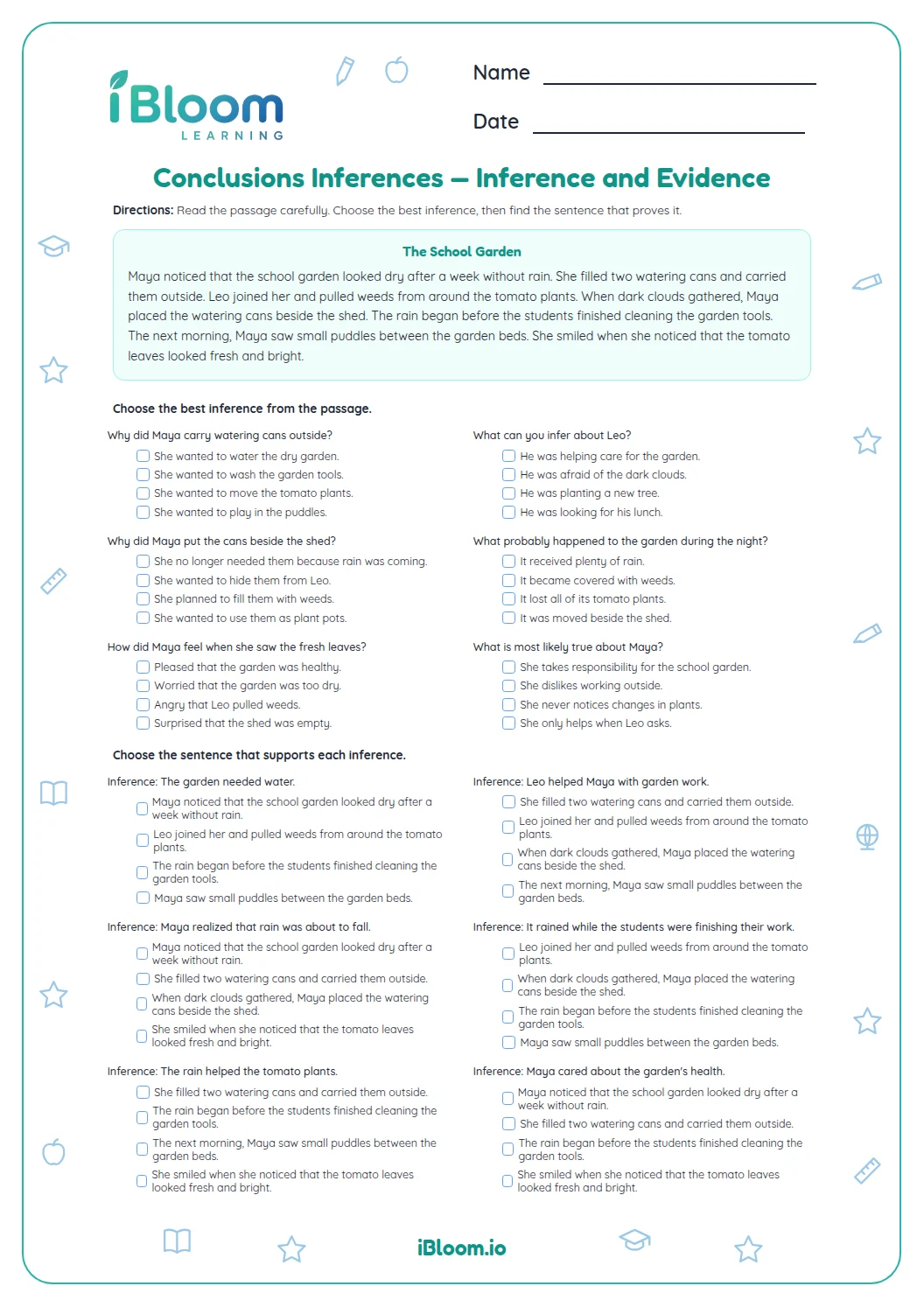
- 1Question: What can a reader infer about the blacktop on warm afternoons?
- 2Text detail: It held heat long after the last bell.
- 3Inference: It stays warm after school.
- 4The answer connects a reasonable idea to the passage evidence.
How do fact and opinion questions differ?
Part C asks students to infer from details and identify evidence that supports an idea.
- Part A: 3 explicit-detail choices
- Part B: 6 fact-or-opinion statements
- Part C: 5 inference and evidence questions
How should a student support an inference?
State a reasonable conclusion, then point to the sentence or detail that supports it. A useful response explains the connection instead of copying an unrelated sentence.
How to use this worksheet
- 1Read the passage once for the main situation.
- 2Return to the passage for names, numbers, and other stated details.
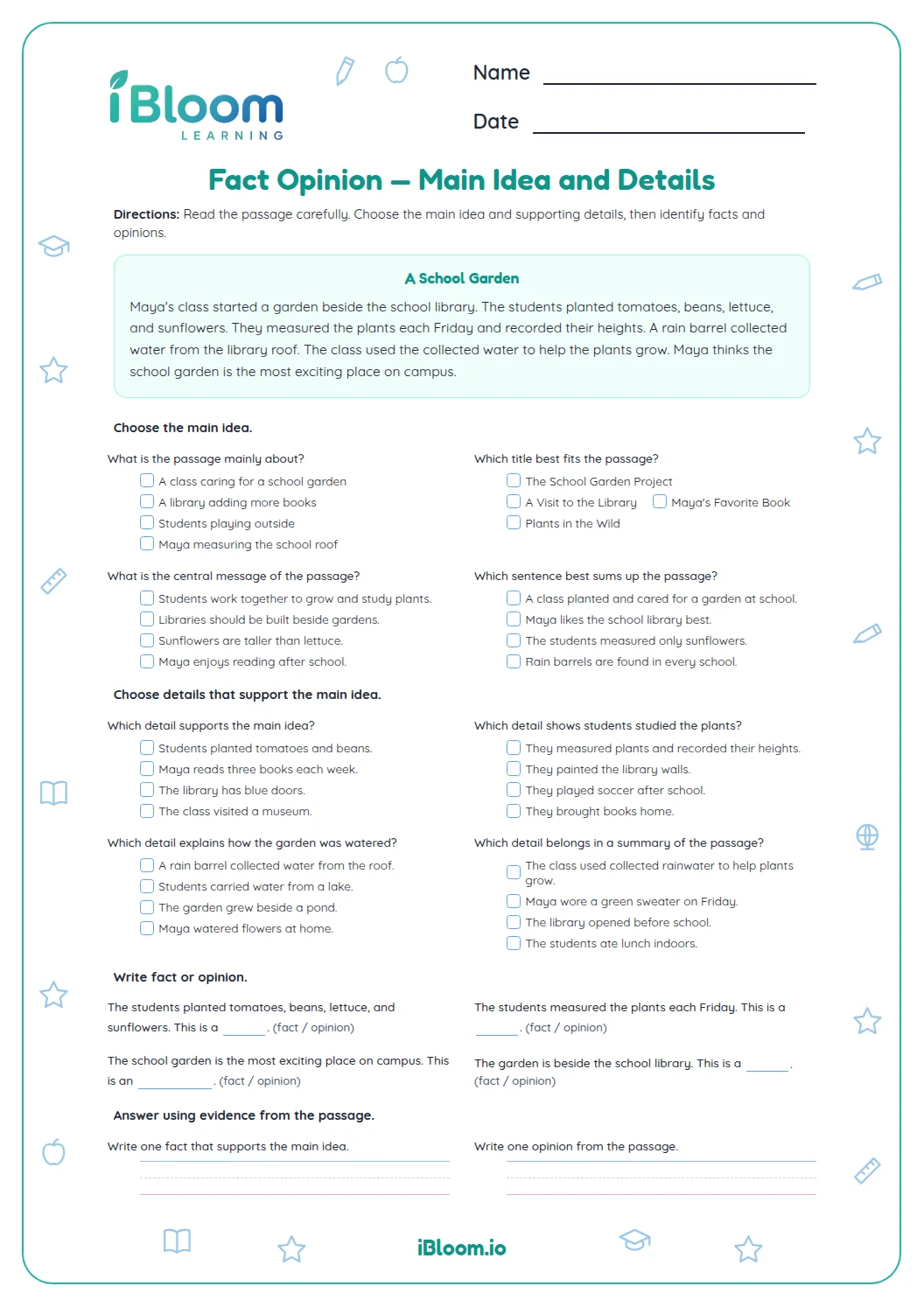
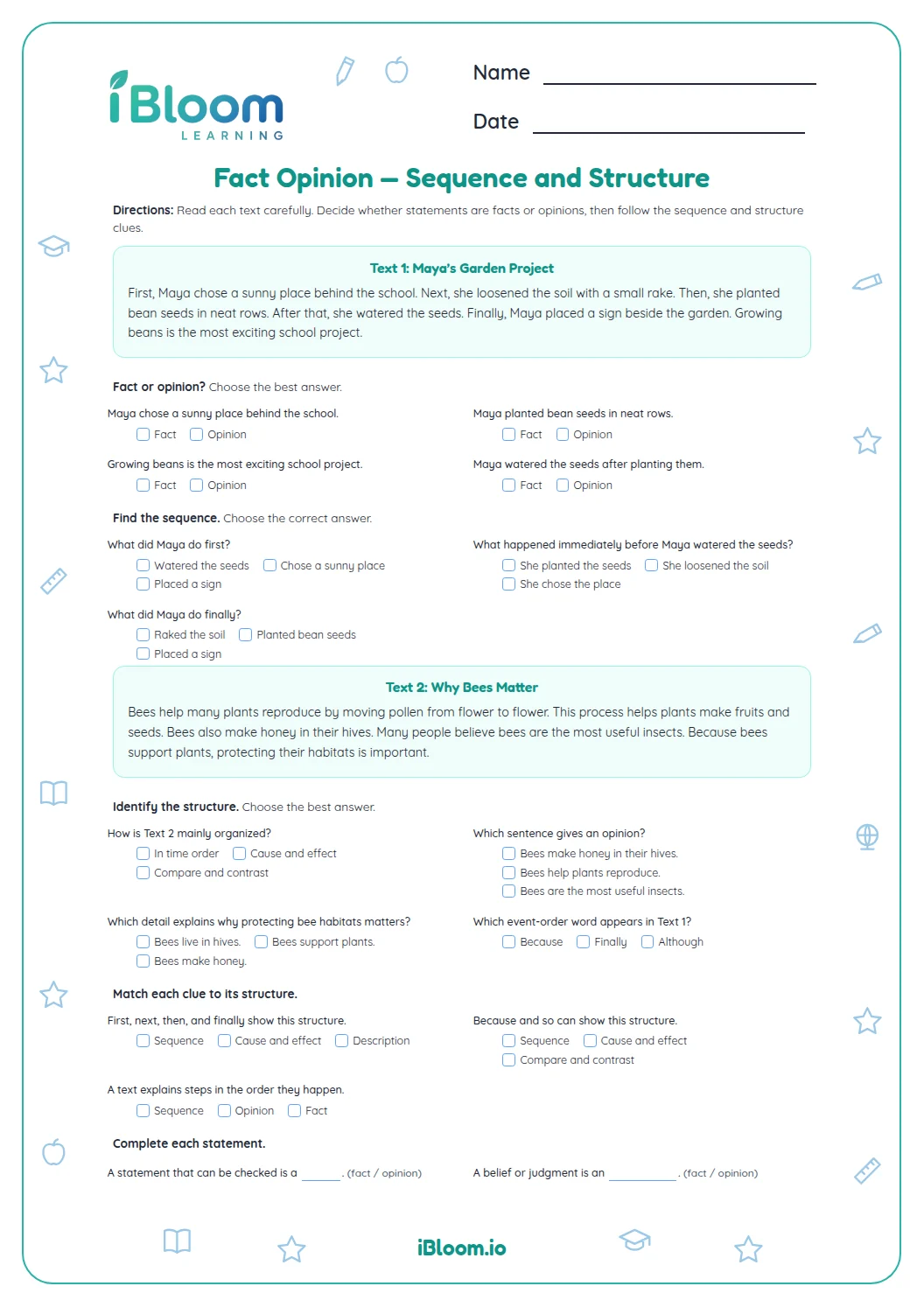
- 3For fact/opinion items, ask whether the statement can be checked or expresses a judgment.
- 4For inferences, connect a likely conclusion to one or more details.
- 5Check the key and compare evidence, not just wording.
Common mistakes and quick fixes
The mistake
Treating every sentence in the passage as an opinion because it is written by an author.
The fix
Check whether the statement gives a verifiable detail or a personal judgment.
The mistake
Making an inference that the passage does not support.
The fix
Point to a specific detail and explain how it supports the conclusion.
The mistake
Copying a detail without answering the question.
The fix
Write the conclusion first, then add the relevant evidence.
Common Core alignment
This worksheet gives students direct practice with a grade-level Common Core skill.
Quote accurately to explain explicit information and support inferences.
On this sheet: Students locate facts and use accurate details from an informational passage to support inferences.
Show the official wordingHide the official wording
Quote accurately from a text when explaining what the text says explicitly and when drawing inferences from the text.
What to practice next
Make more practice
Further reading
Questions parents and teachers ask
What is the passage about?
The passage describes how Cedar Grove students planned trees and garden beds for an unused strip of the schoolyard. It provides details about a student survey, the planning process, supplies, planting day, and the first green shoots. Students can return to the passage to locate the survey, planning details, and events after planting day.
How can a student tell a fact from an opinion?
A fact is a detail that can be checked, such as how many students wanted shade. An opinion expresses a preference or judgment, such as calling the garden the most exciting idea. Students classify the statements by considering what kind of claim each makes.
What counts as evidence for an inference?
Evidence is a detail from the passage that supports the conclusion. For example, the passage says the blacktop held heat after the last bell, which supports the inference that it stayed warm after school. A strong response explains that connection.
Are written answers expected to use the exact same words as the key?
No. The key gives sample responses for open-ended items. A student may phrase an answer differently if it answers the question and uses accurate information from the passage as support. A response can use different wording while still earning credit when the inference is reasonable and supported by a relevant passage detail.
How many worksheet pages are included?
The passage and 14 questions are laid out across three worksheet pages, followed by three answer-key pages. The layout leaves room to read the passage and write responses. The answer key has three pages as well, so written sample responses and passage details have room to remain readable.