


About this worksheet
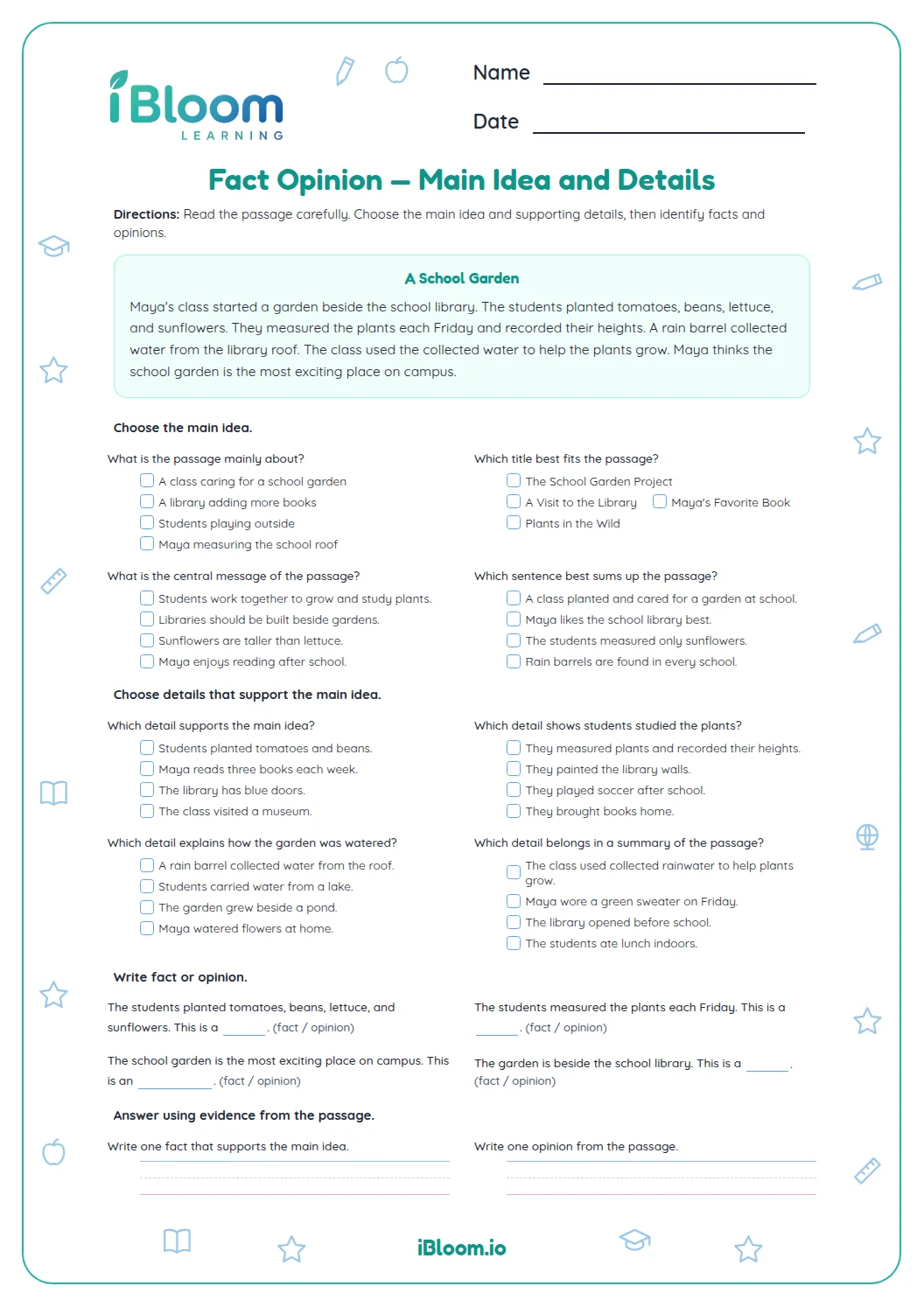
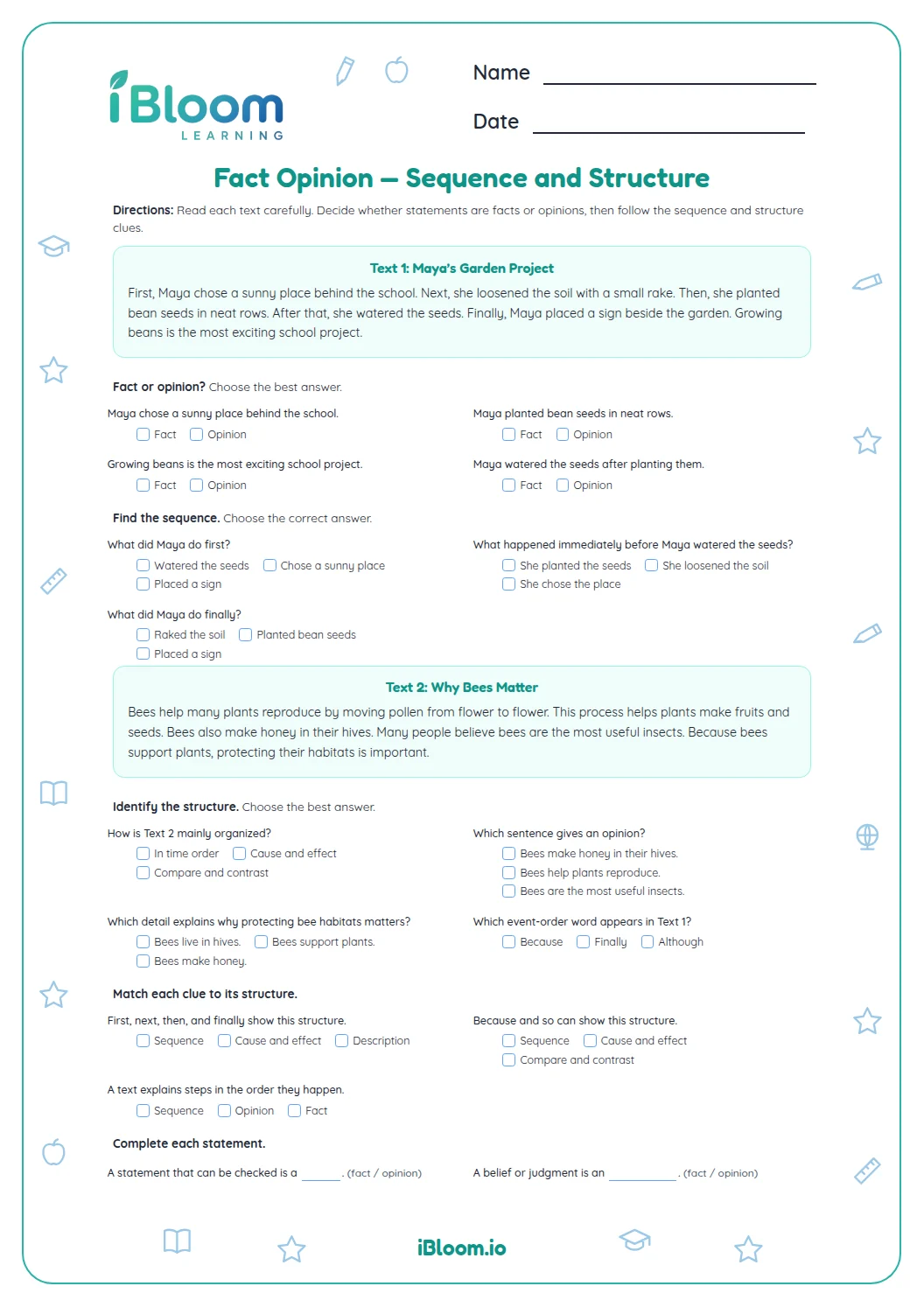
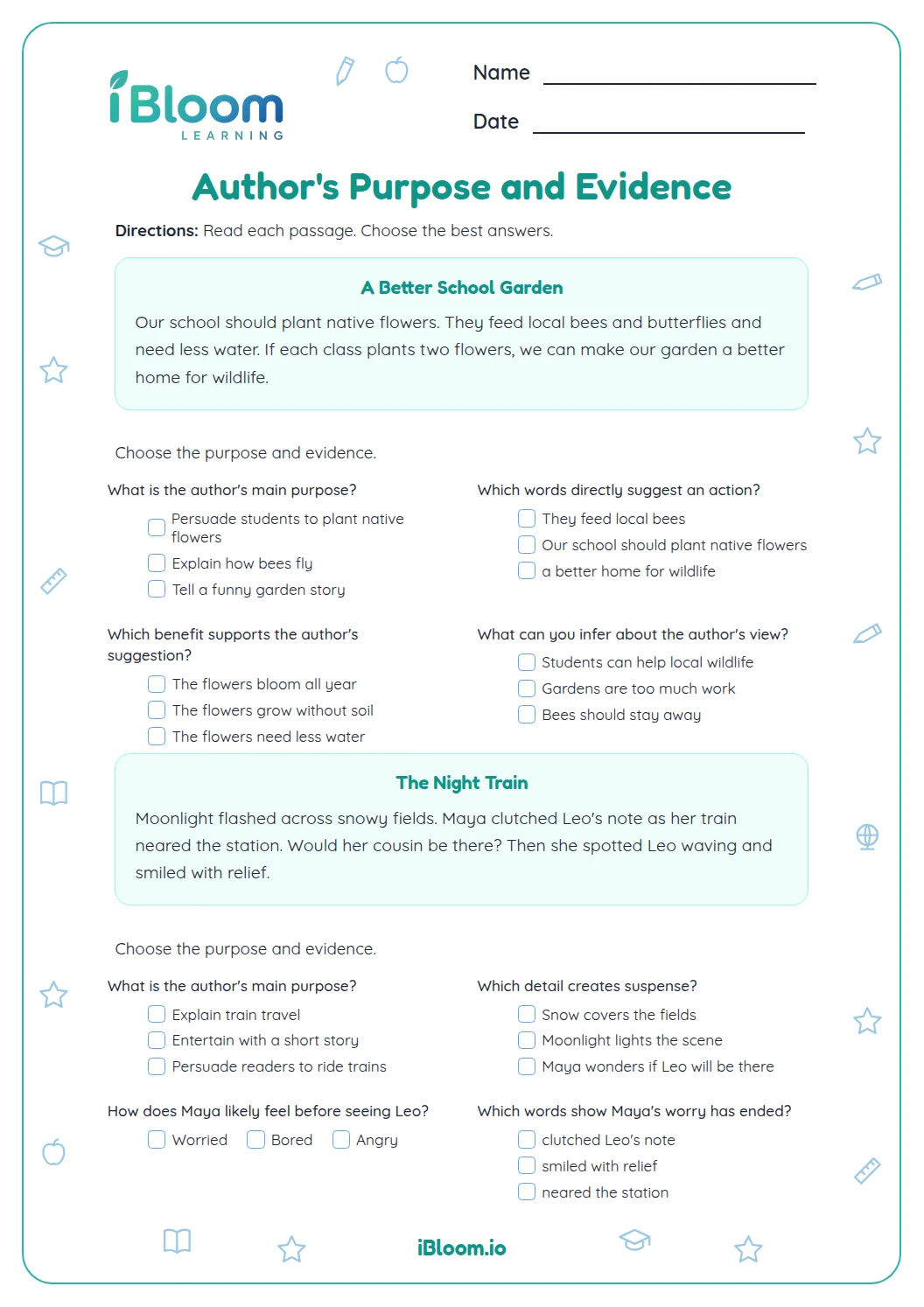
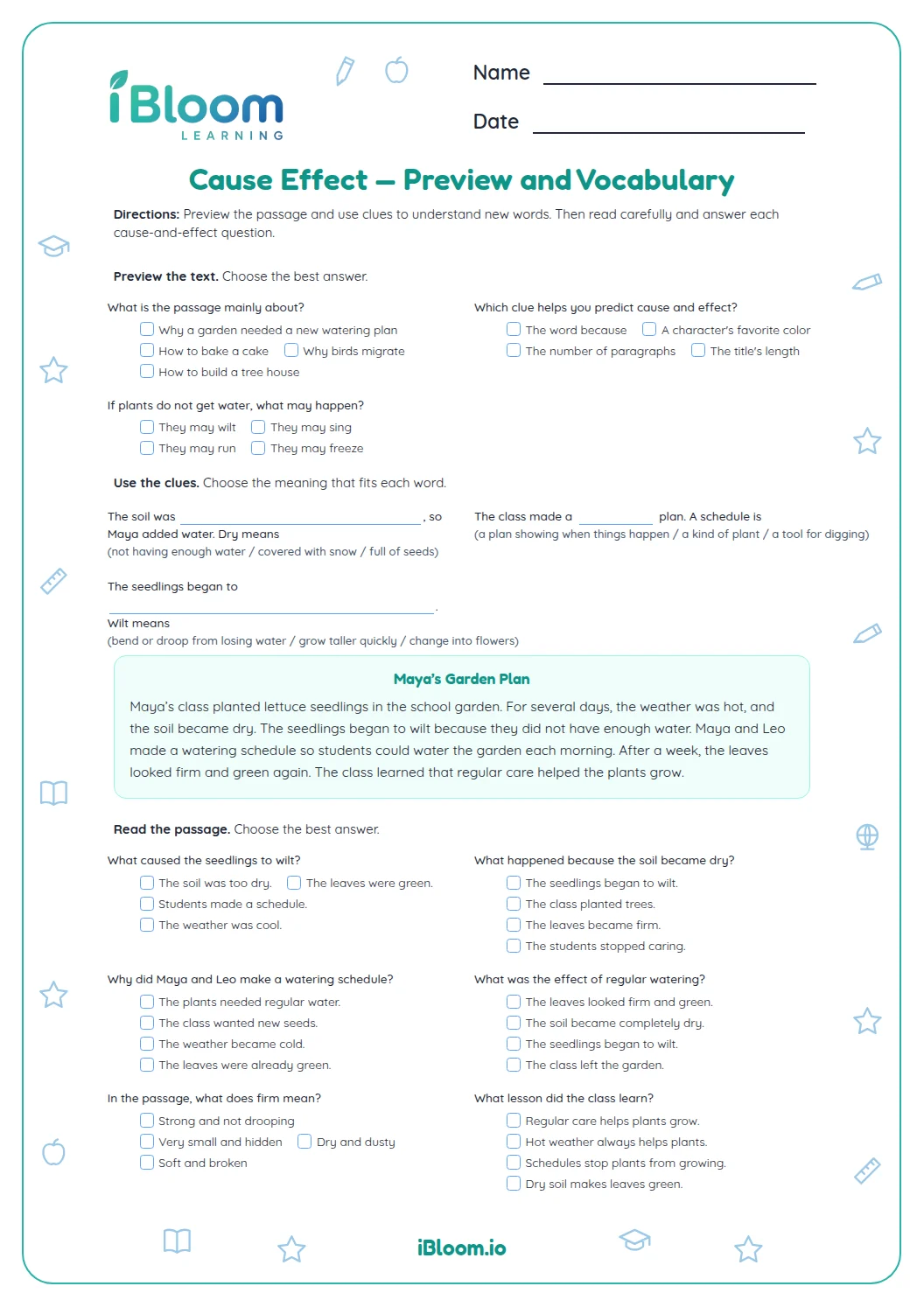
This free Grade 5 reading-comprehension worksheet uses an original informational passage about a school garden. Students distinguish checkable details from opinions, answer questions about the passage, quote evidence, and write a brief opinion supported by a text detail. The evidence questions practice CCSS RI.5.1. The passage and 14 questions span three worksheet pages, with a separate answer key.
Aligned to RI.5.1
What does the passage say about the garden?
Maple School students plant vegetables and flowers in raised beds. The passage gives details that a reader can verify, such as the club’s meeting day and how often the cafeteria served garden lettuce. It also reports different opinions about the garden and recess.
- 13 multiple-choice questions
- 1 written response supported by a passage detail
- A separate key with sample evidence-based response
How can you tell a fact from an opinion?
Ask whether records, observation, or another source could check the statement. “The club meets each Tuesday” can be checked against a schedule. “Fresh food tastes better” expresses a preference, so readers may disagree.
- 1Question: Why might some students object to adding garden beds?
- 2Find the passage detail: “Some students say the beds take space from recess.”
- 3That sentence explains the objection.
- 4Answer: The beds take space from recess.
How should students use passage evidence?
Answer the question first, then find the sentence that supports the answer. For a fact, copy the detail accurately. For an opinion response, say what you think and connect it to a relevant fact from the passage.
What makes a strong written response?
A complete response states a clear view and includes evidence that relates to it. The answer key provides a sample, but students may support a different view with a correct detail from the passage.
How to read and respond
- 1Read the passage once to understand the school’s garden and the decision it faces.
- 2For each fact question, look for a detail that a record or observation could confirm.
- 3For opinion questions, find language that shows a preference or judgment.
- 4Return to the passage before answering short-response questions.
- 5Quote a relevant detail in the final response, then compare your reasoning with the sample key.
Fact-and-opinion checks
The mistake
Calling a statement an opinion because it is about a person.
The fix
Ask whether evidence could verify it; a meeting schedule is still a fact.
The mistake
Treating a preference as true for everyone.
The fix
Words such as better or wonderful often signal a judgment people can disagree about.
The mistake
Giving an opinion without passage support.
The fix
State your view, then quote or accurately name one detail that relates to it.
Common Core alignment
Students return to the passage to explain what it states and support their responses with accurate details.
Quote accurately from the passage when explaining stated details and responses.
On this sheet: Questions 9–14 ask students to quote or use accurate passage details in their explanations and written response.
Show the official wordingHide the official wording
Quote accurately from a text when explaining what the text says explicitly and when drawing inferences from the text.
What to practice next
Further reading
Questions parents and teachers ask
What is the difference between a fact and an opinion?
A fact is a statement that can be checked with evidence, such as the garden club meeting each Tuesday. An opinion expresses a judgment or preference, such as saying fresh food tastes better. This passage includes both, and several questions ask students to explain which details can be verified.
What passage does the worksheet use?
The worksheet includes an original informational passage about fifth graders at Maple School growing vegetables and flowers. It describes the garden club, cafeteria salads, and a possible plan to add two beds. Students use those details to answer 14 questions across three worksheet pages.
How should a student answer a fact question?
Return to the passage and locate the sentence that gives the detail. Copy the words accurately when a question asks for a quotation. This sheet uses multiple choice for the fact and opinion checks and ends with a short written response; the key supplies its sample answer.
Can students have different answers to the last question?
Yes. Students may support either view about adding beds if they clearly state an opinion and connect it to a relevant detail from the passage. For example, they could refer to students recording plant growth or to the field’s use for recess. The key shows one sample response.
Does this page include an answer key?
Yes. The answer key follows the worksheet pages and marks each correct choice. It also gives a sample for the final written response, which asks students to state an opinion and quote a passage detail. A teacher or parent can compare the detail with the passage.