


About this worksheet
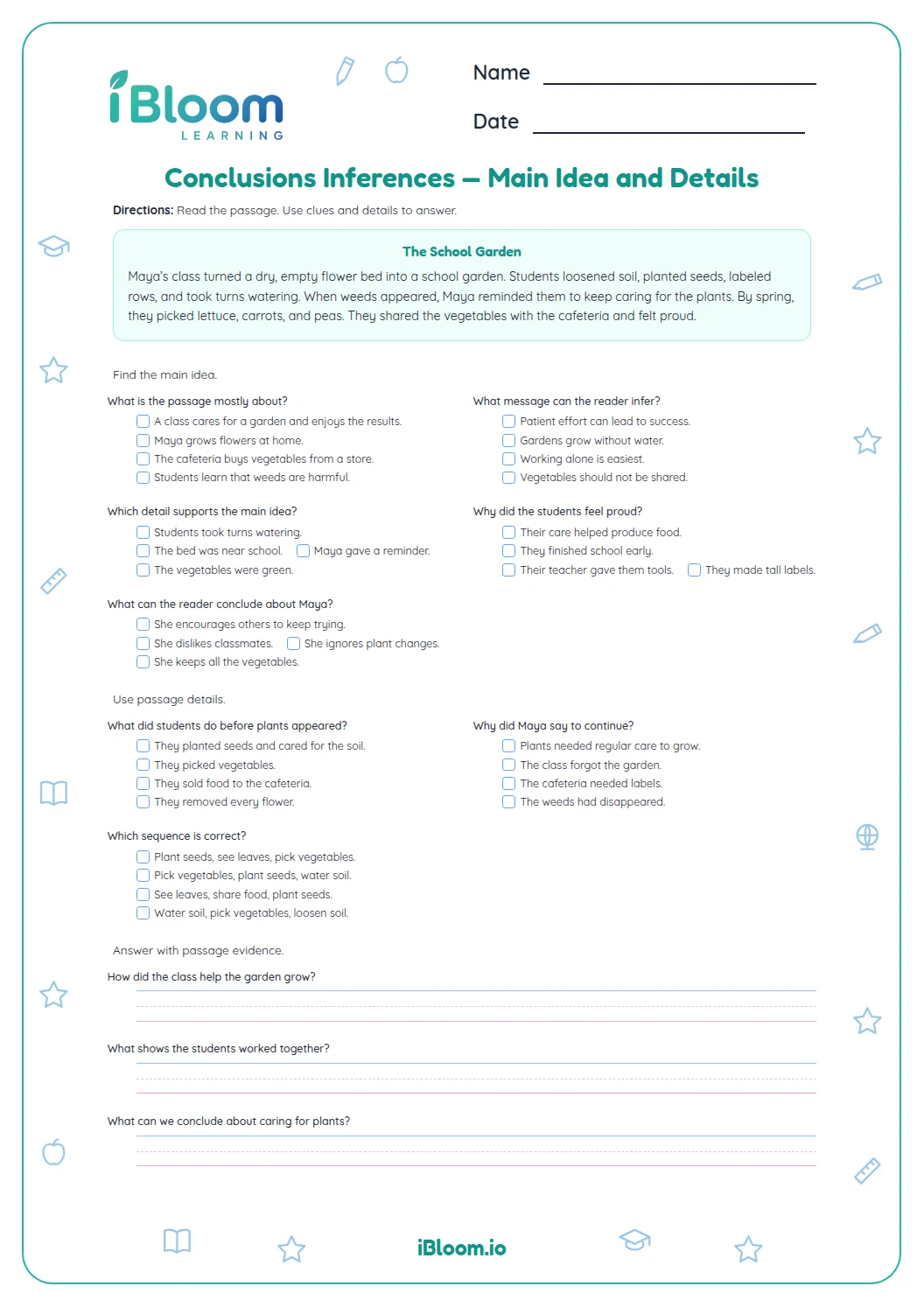
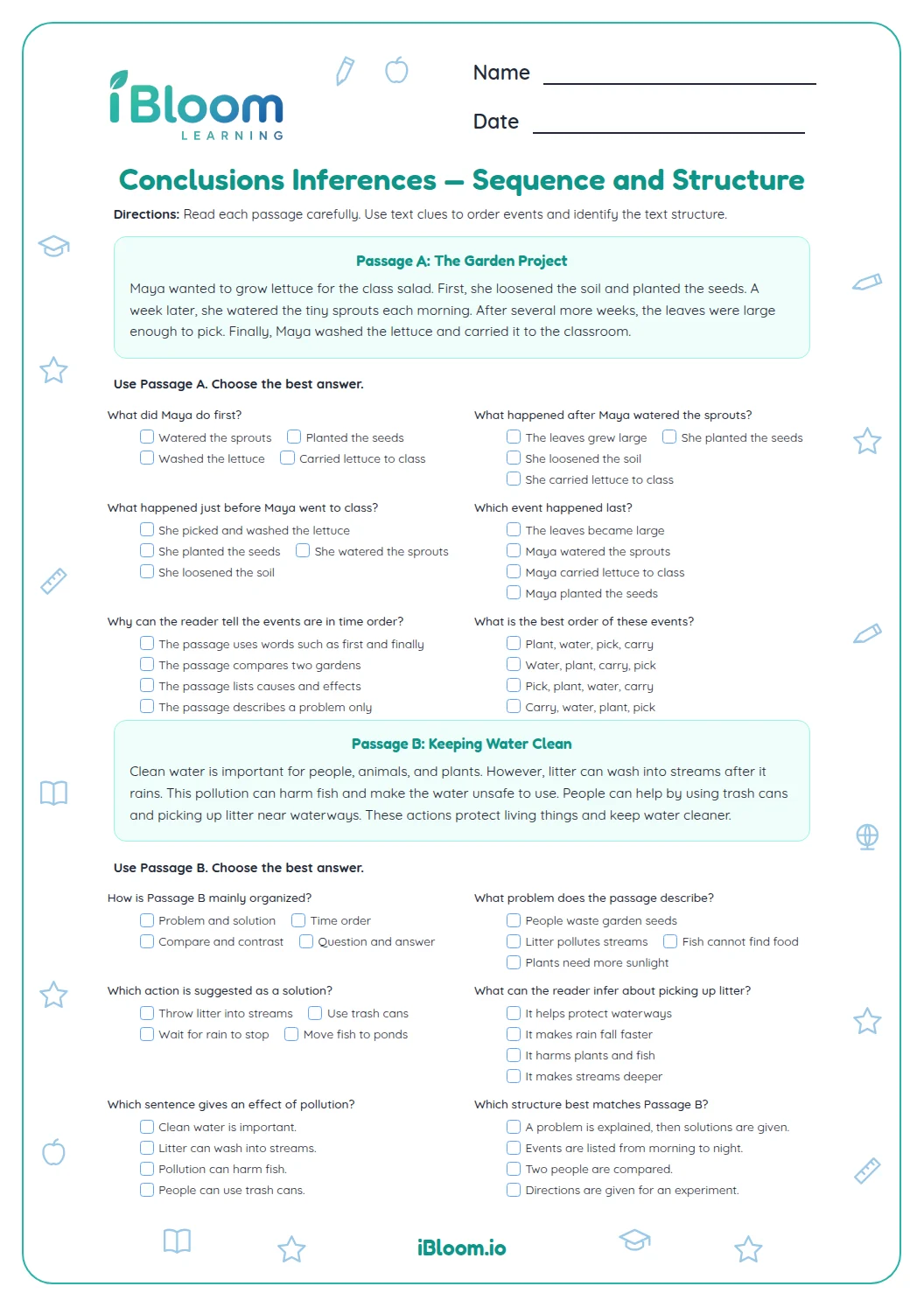
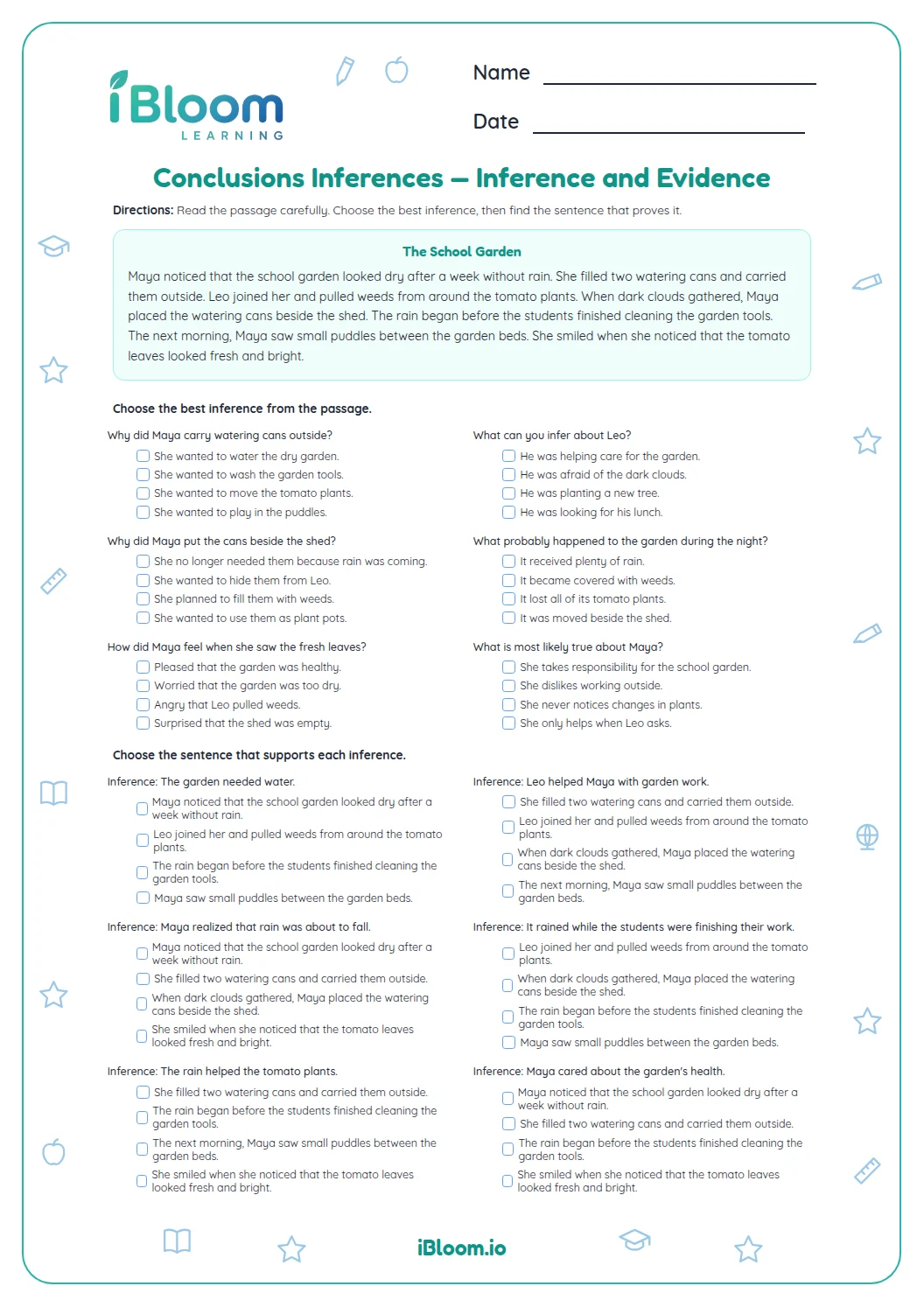
This Grade 5 reading-comprehension worksheet pairs an original passage about a library rooftop garden with questions on main ideas, supporting details, similes, and metaphors. Students choose text evidence, interpret comparisons, and identify a concise summary. The 14 questions practice CCSS RI.5.2 and L.5.5.a and come with a separate answer key.
Aligned to RI.5.2 and L.5.5.a
How do details support a main idea?
A main idea describes an important point across a passage. Look for several details that fit it, rather than choosing a fact that appears only once. In this passage, families’ watering turns and volunteers’ work support the idea that the project brought people together.
How can a comparison add meaning?
A simile uses “like” or “as” to compare; a metaphor describes one thing as another. Readers use the surrounding sentences to infer the intended meaning, as when Lena’s sketch “planted an idea.”
What belongs in a short summary?
Include Lena’s proposal, the community’s work, and the results. Leave out details that are interesting but not needed to understand the passage’s main ideas. Question 12 asks students to choose the sentence that best summarizes those events.
How to use this worksheet
- 1Read the passage once for the overall topic.
- 2Reread and mark details that support a central idea.
- 3Use nearby sentences to interpret each comparison.
- 4Answer with evidence from the passage when asked.
- 5Choose a summary that includes the proposal, action, and result.
Mistakes to catch and correct
The mistake
Choosing a detail as the main idea
The fix
Ask which answer explains the passage as a whole.
The mistake
Taking a metaphor literally
The fix
Use the surrounding sentences to infer the intended comparison.
The mistake
Listing details without summarizing
The fix
Connect the details in one sentence about the central events and result.
Common Core alignment
This worksheet gives focused practice with the skill named in each standard.
Identify main ideas and explain how details support them in the passage.
On this sheet: Questions ask readers to identify two main ideas, select evidence, and summarize the text.
Show the official wordingHide the official wording
Determine two or more main ideas of a text and explain how they are supported by key details; summarize the text.
Interpret similes and metaphors using clues in the passage.
On this sheet: Questions ask readers to identify and interpret comparisons in context.
Show the official wordingHide the official wording
Interpret figurative language, including similes and metaphors, in context.
What to practice next
Make more practice
Further reading
Questions parents and teachers ask
What does this worksheet practice?
It combines main-idea and detail questions with simile and metaphor questions. Students read an original passage about a town library roof garden, identify ideas and supporting evidence, interpret comparisons, and select a short summary. The separate answer key lists the correct choice for every question.
How does a reader find a main idea?
A reader asks what the passage says overall, then checks whether several details support that idea. Question 1 asks about Lena’s proposal, while question 3 focuses on the garden’s community benefits. The best choice fits the whole passage rather than one isolated sentence.
What is the difference between a simile and a metaphor?
A simile compares using a word such as “like” or “as.” A metaphor describes one thing as another to suggest a shared quality. The passage uses both, and students identify a comparison and choose what it means in context. Use the key after the student has answered independently.
How many questions are on the worksheet?
There are 14 questions after one original reading passage. They cover main ideas, supporting details, contextual meaning, similes, metaphors, and a summary choice. All 14 use multiple choice, and the answer key lists the correct response for every item. Use the key after the student has answered independently.
What should students include in a summary?
A useful summary names Lena’s proposal, the community’s work to create the garden, and its results. It captures the central ideas and leaves out small details such as the specific plants. Question 12 asks students to select one sentence that captures the central events.
Is there an answer key?
Yes. The answer key lists the correct choices for all questions, including the main-idea, comparison, and summary items. Review the passage together if a student chooses an unexpected detail. Have the learner attempt the questions before using the key to check.