


About this worksheet
This Grade 5 comprehension worksheet uses an original passage about a class invention showcase interrupted by rain. Students identify metaphors and similes, interpret comparisons such as “the floor became a mirror,” and explain how figurative language shapes mood and meaning. The final responses connect details from the story with the author’s images. A separate answer key includes sample explanations.
Aligned to RL.5.4
How do metaphors and similes work?
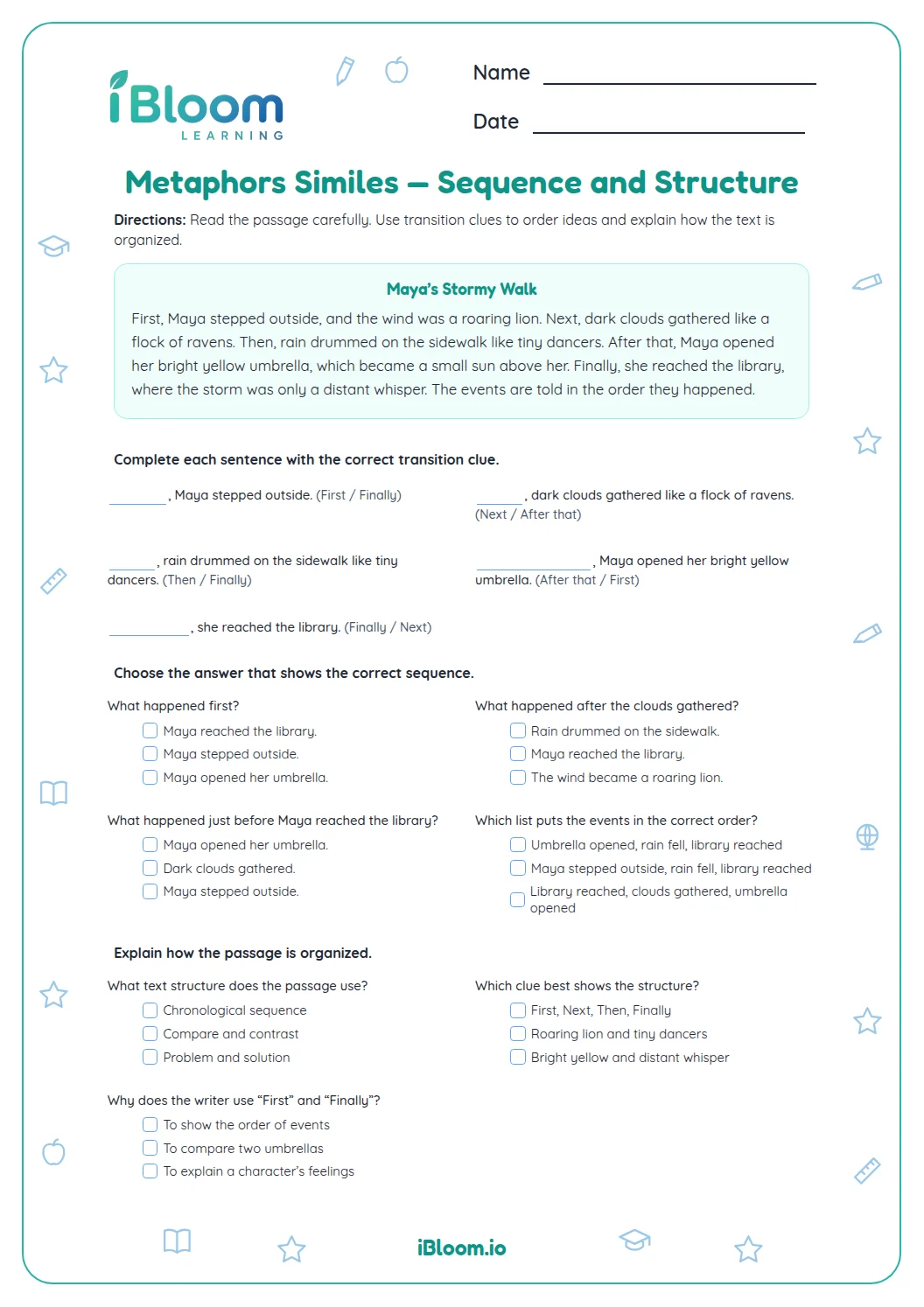
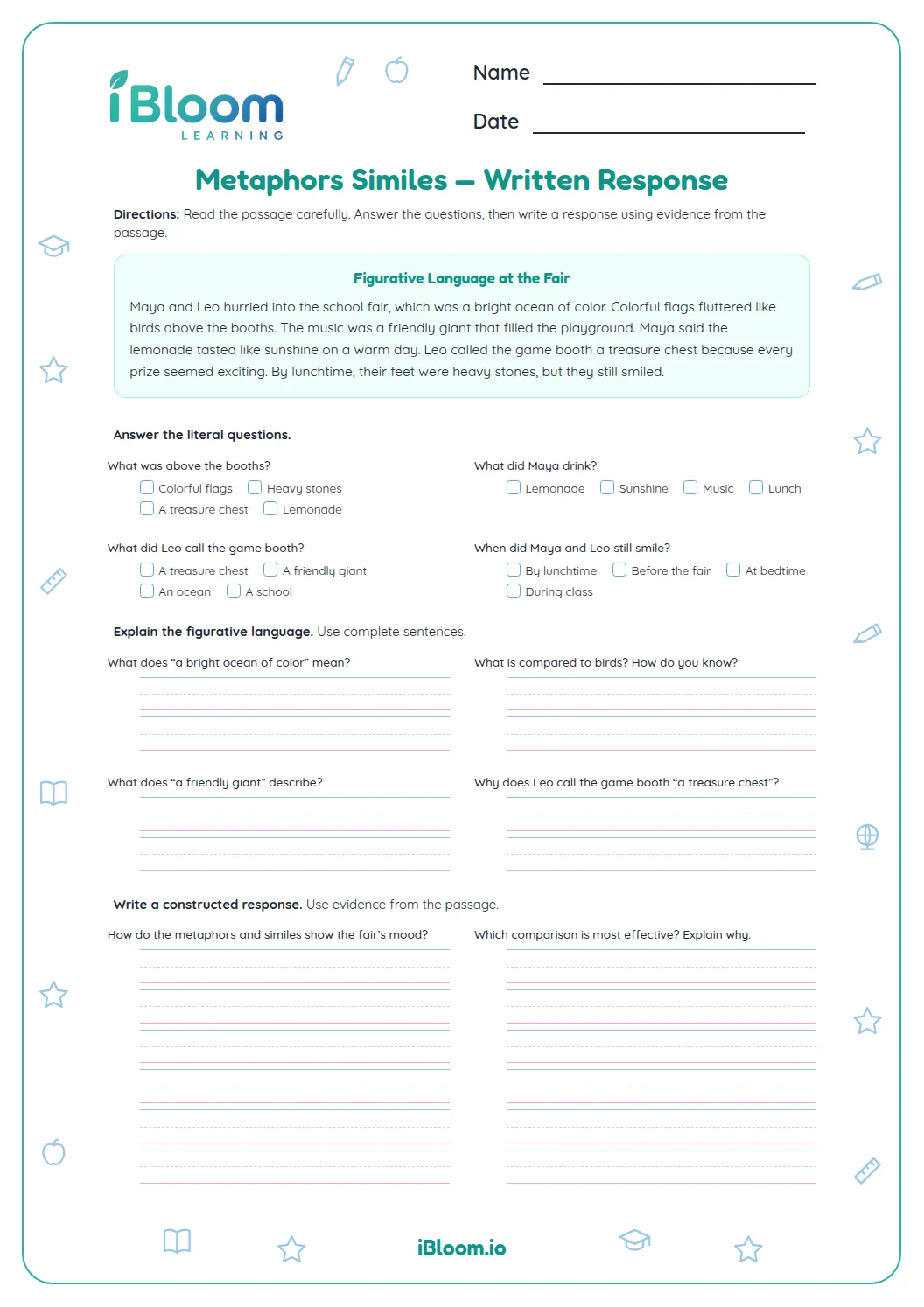
A simile compares using like or as. A metaphor makes the comparison directly.
- 1“The rain tapped ... like impatient fingers” is a simile.
What does a comparison help you imagine?
Use the details around the comparison to explain what it suggests, rather than reading it literally.
- 1“The floor became a mirror” means the wet floor reflected the room.
How does figurative language affect mood?
Images can help readers feel a scene shift from worry to relief. Connect the words to what the characters do.
How to use this worksheet
- 1Read the passage and underline comparison phrases.
- 2Check for like or as when identifying similes.
- 3Ask what two things a metaphor connects.
- 4Use nearby events to infer the intended meaning.
- 5In written responses, quote a brief phrase and explain its effect.
Common mistakes and fixes
The mistake
Taking a metaphor literally
The fix
Explain what quality the comparison shares, such as reflection or growth.
The mistake
Calling every comparison a simile
The fix
Look for like or as; a direct comparison is a metaphor.
The mistake
Naming a device without explaining it
The fix
Add what the image helps the reader picture or understand.
Common Core alignment
The passage asks readers to interpret figurative language and word choices in context.
Interpret figurative language and explain how word choice affects meaning.
On this sheet: The worksheet gives direct practice with this skill.
Show the official wordingHide the official wording
Determine the meaning of words and phrases as they are used in a text, including figurative language such as metaphors and similes.
What to practice next
Make more practice
Further reading
Questions parents and teachers ask
What is a metaphor in this passage?
“The clouds were a gray blanket” is a metaphor. It describes clouds as a blanket to show that they cover the sky. The wet floor is called a mirror because it reflects the room. Readers can explain that the clouds cover the sky just as a blanket covers a bed.
What is a simile in this passage?
“The rain tapped the gym windows like impatient fingers” is a simile because like compares raindrops with fingers. The paper boat racing like a silver fish is another simile. The comparison helps readers imagine the rain tapping quickly and impatiently on the windows.
What does the seed comparison mean?
Jules compares an idea with a seed that needs time and care. The image suggests an invention can develop and improve, just as a seed grows when cared for. Jules’s image links growth and care to developing the invention idea over time.
How does the mood change in the passage?
At first, students hurry and worry when rain enters the gym. They work together to protect the projects, and their nervous whispers turn into laughter and relief. The change in the students’ words mirrors their shift from worry to teamwork and relief.
How many questions are included?
There are 14 questions: six identification choices, seven interpretation items and one evidence-based response. The answer key provides sample explanations for responses that can vary. Use a quoted phrase from the story, then explain what it suggests beyond its literal meaning.