


About this worksheet
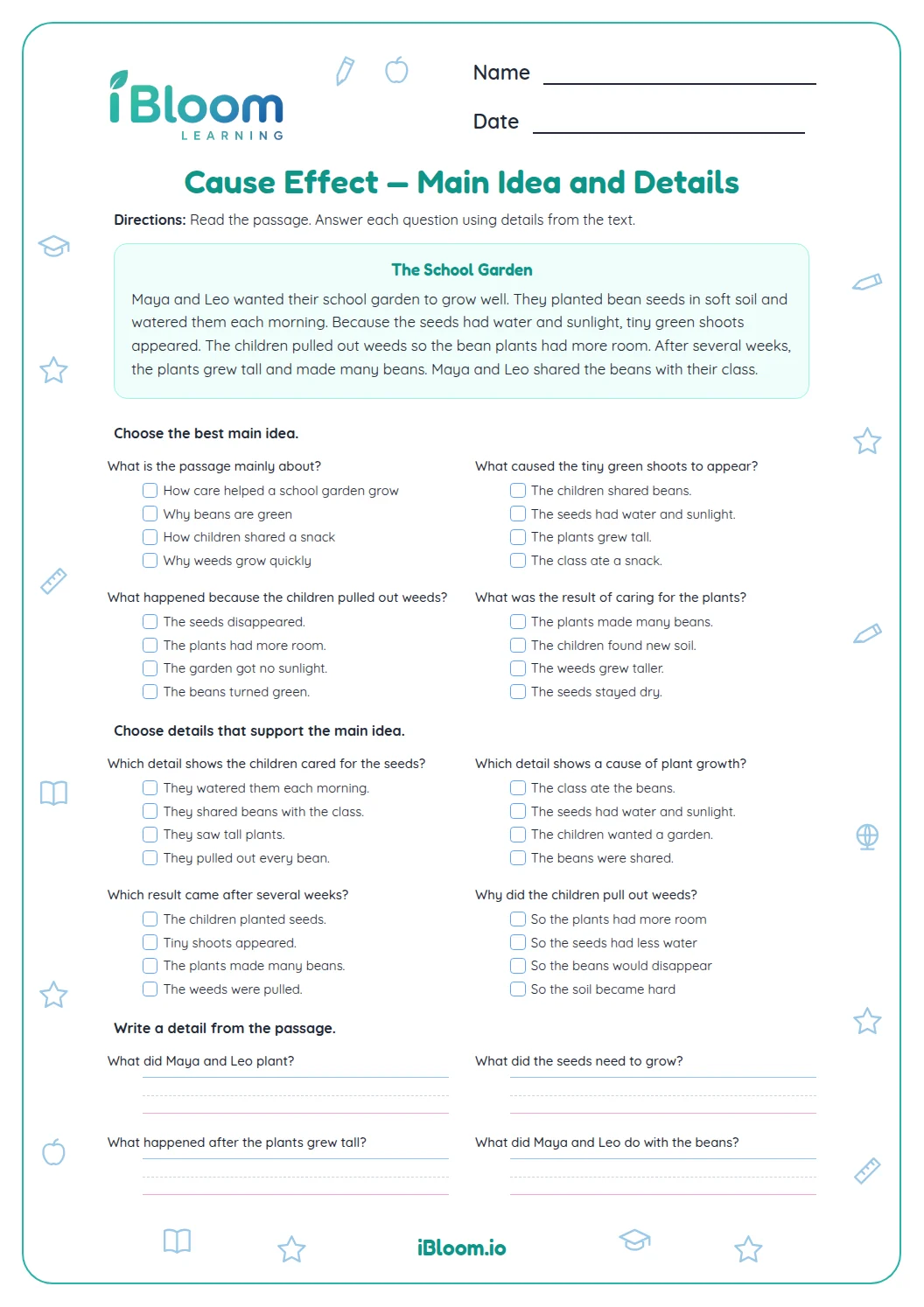
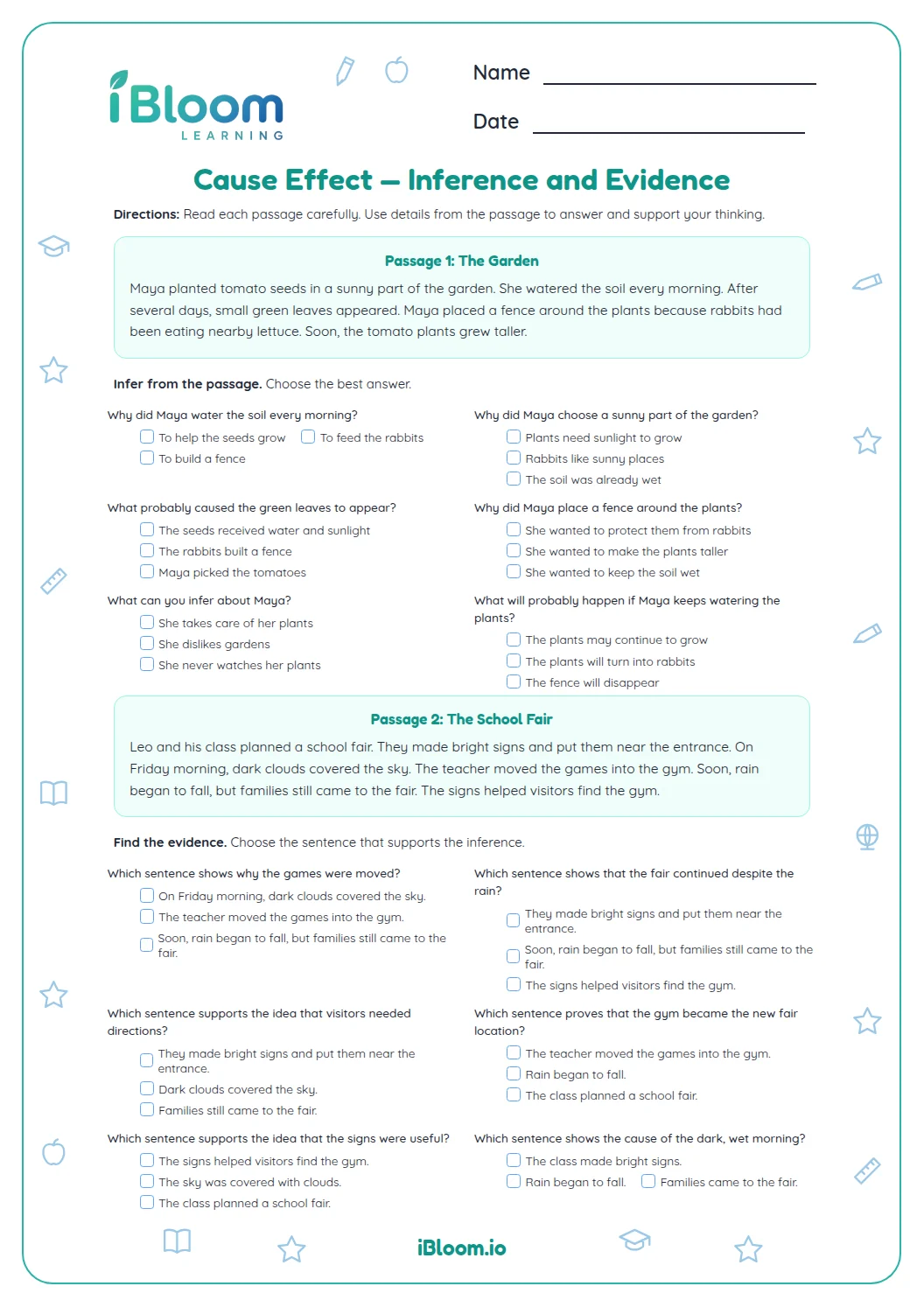
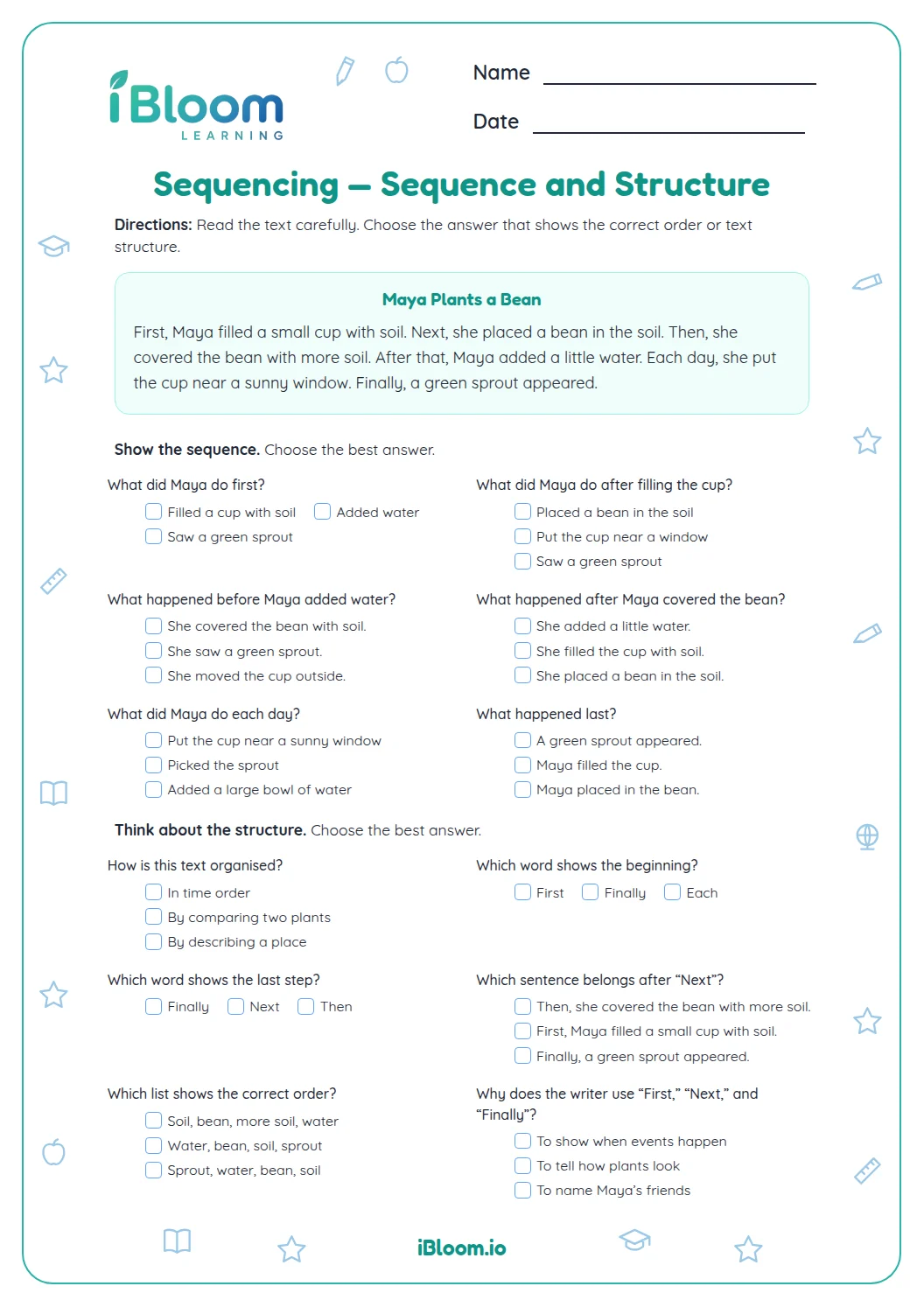
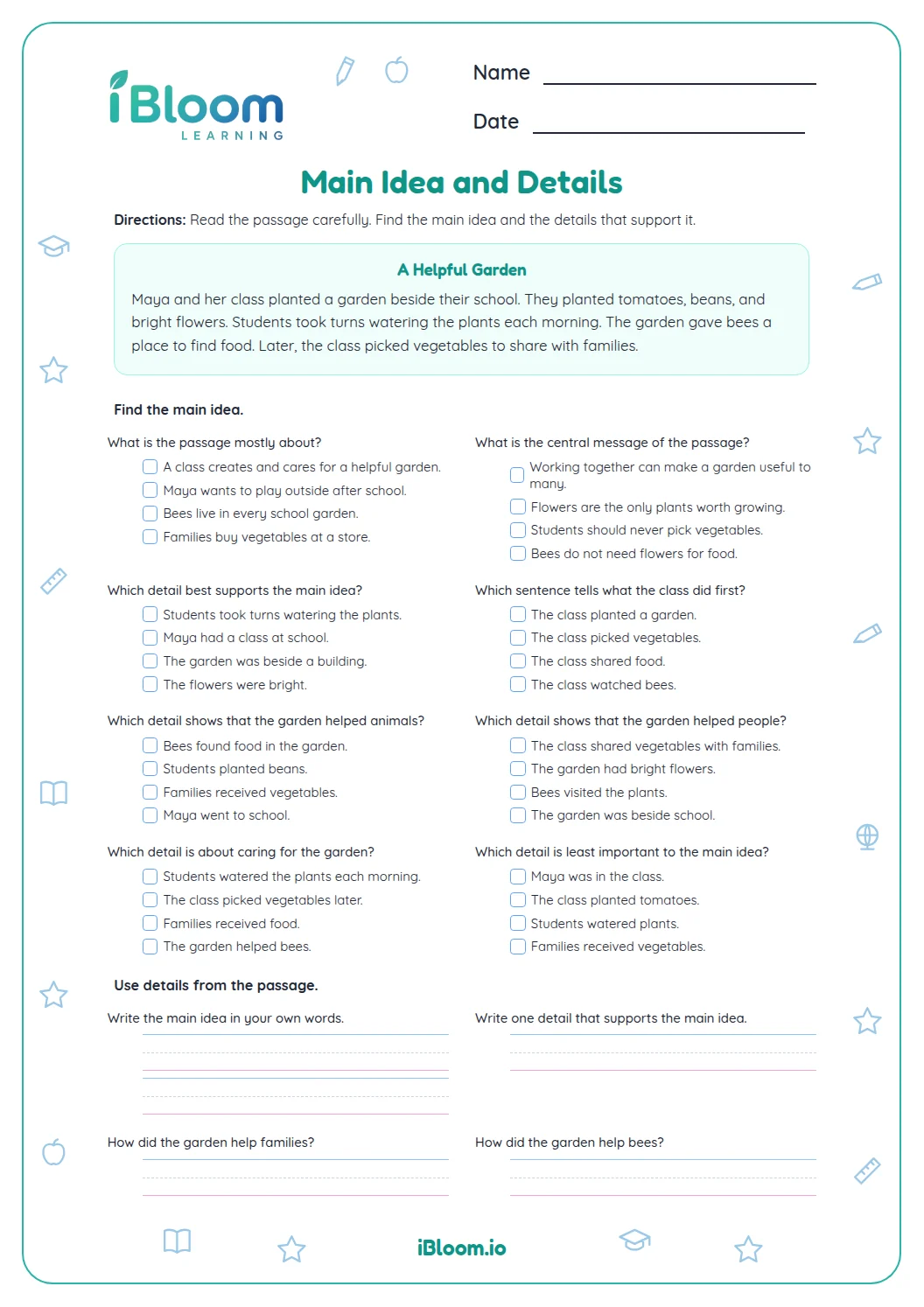
This printable uses an original informational passage about a school garden to practice cause and effect. Children follow how dry soil, watering, wind, weeds, and careful harvesting shape what happens next. The 14 questions include questions about passage details, causes, effects, and event order. A separate answer key offers sample responses for open questions. The work aligns with Common Core RI.3.3, which asks readers to describe relationships among events and ideas using cause-and-effect language.
Aligned to RI.3.3
How do readers find cause and effect?
A cause explains why something happens. An effect is the result. Words such as because, so, after, and as a result can signal a connection, but readers should also check what the passage actually says.
Question 2 asks why compost was added. The passage says the soil needed more nutrients, so that need is the cause of mixing in compost.
- 1Cause: The soil needed more nutrients.
- 2Action: Students mixed compost into the soil.
- 3The need for nutrients explains the action.
How does sequence help explain a result?
Events often build on earlier events. Seeds were planted and watered before shoots appeared. Later, the club checked the soil because sunny days made it dry faster. Keeping the events in order helps children avoid assigning an effect to the wrong cause.
When a question asks what happened next, look for the sentence that follows the event. When it asks why, locate the detail that explains the action.
What is included on this reading page?
The school garden passage follows the club from preparing soil to harvesting lettuce. Thirteen questions are multiple choice, and the final question asks children to explain the plants’ growth with two details from the passage.
- Part A: read the garden passage.
- Parts B and C: connect details with causes, effects, and sequence.
- Part D: explain why the plants were strong using two passage details.
How to use this worksheet
- 1Read the passage once to understand the garden project.
- 2Reread the sentence named by a question and the sentence around it.
- 3Underline the cause or action and the result it explains.
- 4Answer in your own words, using a passage detail.
- 5Use the answer key to check ideas, not only exact wording.
Common mistakes and quick fixes
The mistake
Naming an event but not explaining why it happened.
The fix
Add a because statement that connects the detail to the result.
The mistake
Mixing up which event came first.
The fix
Use sequence words and retell the events in order before answering.
The mistake
Adding a cause that the passage does not support.
The fix
Point to a sentence that gives evidence for the explanation.
Common Core alignment
This passage asks readers to explain relationships among events and ideas using cause-and-effect language.
Trace how events and conditions in the garden lead to later results.
On this sheet: Trace how events and conditions in the garden lead to later results.
Show the official wordingHide the official wording
Describe the relationship between a series of historical events, scientific ideas or concepts, or steps in technical procedures in a text, using language that pertains to time, sequence, and cause/effect.
What to practice next
Make more practice
Further reading
Questions parents and teachers ask
What is the difference between a cause and an effect?
A cause is a reason or event that makes something happen. An effect is the result. In the passage, sunny days cause the soil to dry faster, so the students check it before watering. Questions 7 and 8 ask children to connect those linked details.
Does the passage have one right answer for every question?
Each question has one correct option. Children can return to the passage and find the detail that supports that choice. This check helps them distinguish a cause, an effect, and an event that simply happened nearby. Question 13 asks which garden event happened first.
How can I help my child answer “why” questions?
Ask your child to find the sentence that explains the action, then restate it with because. For question 2, the text says students mixed compost in because the soil needed more nutrients. This keeps the response tied to evidence instead of a guess.
What does the garden passage teach about sequence?
The club prepares the soil, plants and waters seeds, protects them from wind, cares for shoots, then harvests lettuce. Later actions depend on earlier ones. Question 13 asks children to identify the first event, and question 4 checks what happened after watering.
Is this worksheet printable with an answer key?
Yes. The final question asks children to explain why the lettuce plants grew strong using two details from the passage. The key gives a sample response, and other accurate details from the text can also support the explanation. The other 13 questions use multiple-choice answers.