Free printable practice
Sun Patterns Practice Activities
Grade 1 science worksheets that help children observe the Sun’s daily pattern, connect it to daylight, and describe changes in shadows.
Free printable worksheet PDFs
Preview every available page, then download the free worksheet PDF for home, homeschool, tutoring, or classroom practice.
Preview the exact activity before downloading it.
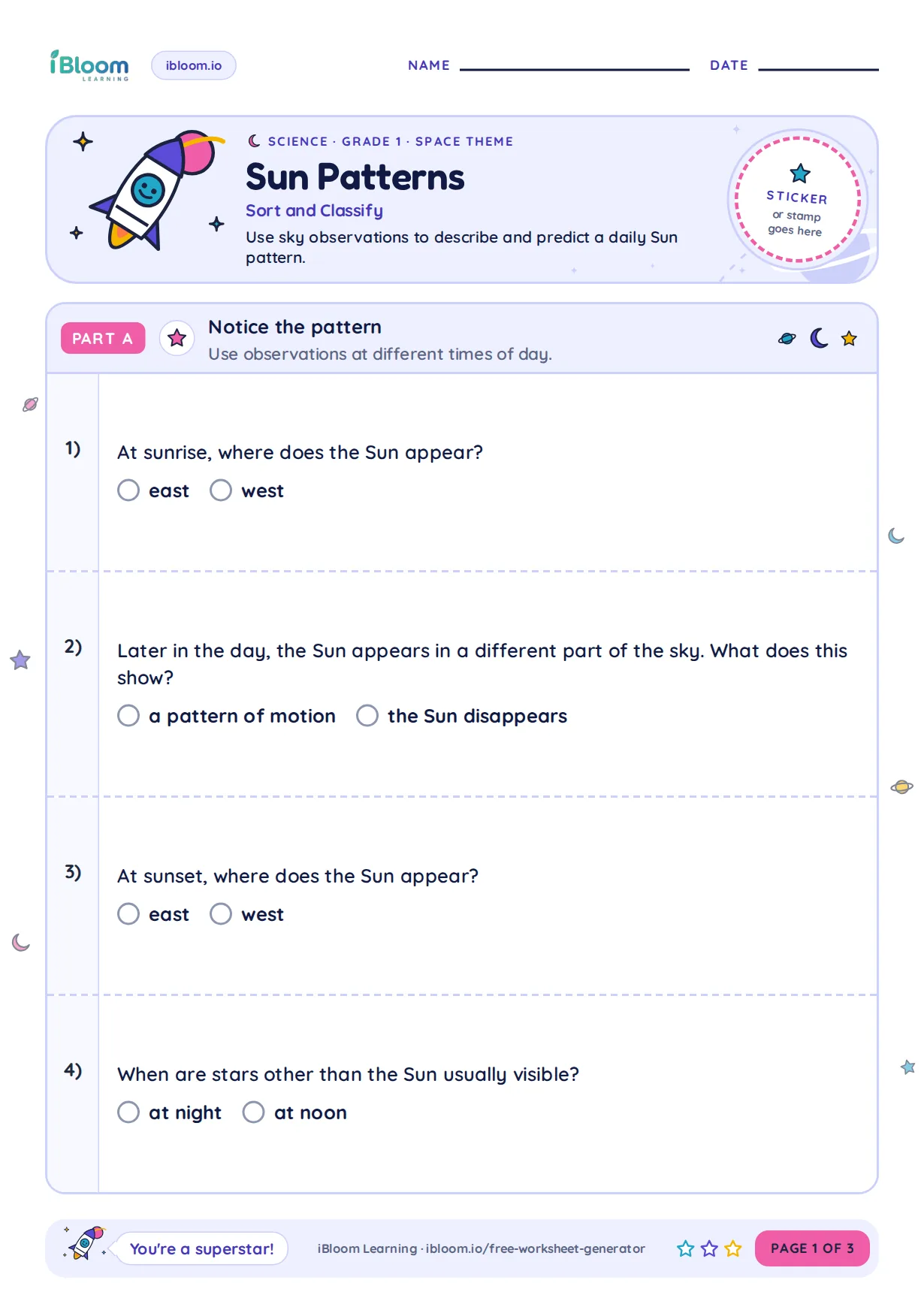 Sun Patterns — Sort and ClassifyGrade 1 science worksheets that help children observe the Sun’s daily pattern, connect it to daylight, and describe changes in shadows. This sort and classify worksheet provides a distinct, age-appropriate way to practise the same lesson.Grade 1Free PDF preview4 pages
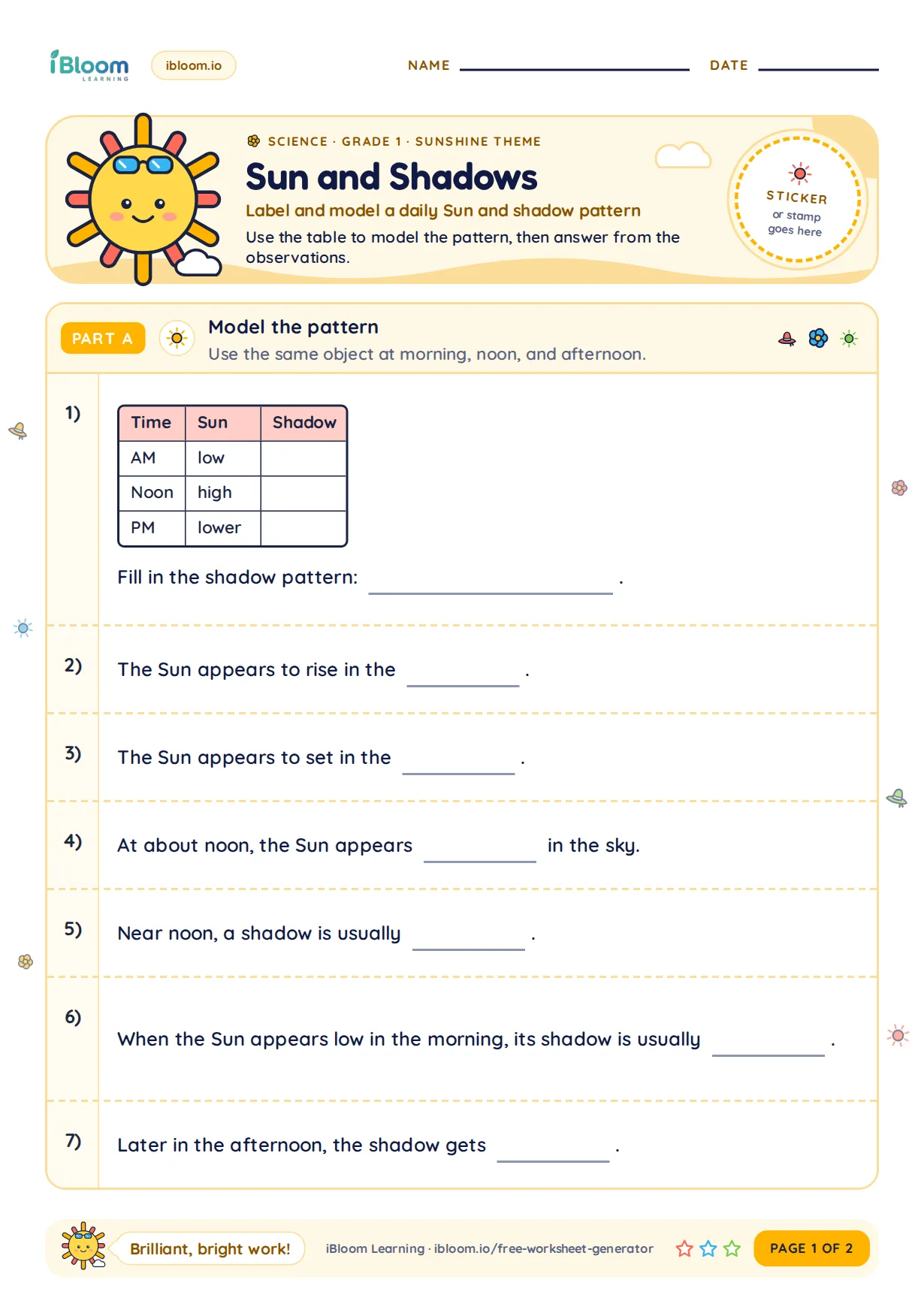 Sun Patterns — Label and ModelGrade 1 science worksheets that help children observe the Sun’s daily pattern, connect it to daylight, and describe changes in shadows. This label and model worksheet provides a distinct, age-appropriate way to practise the same lesson.Grade 1Free PDF preview4 pages
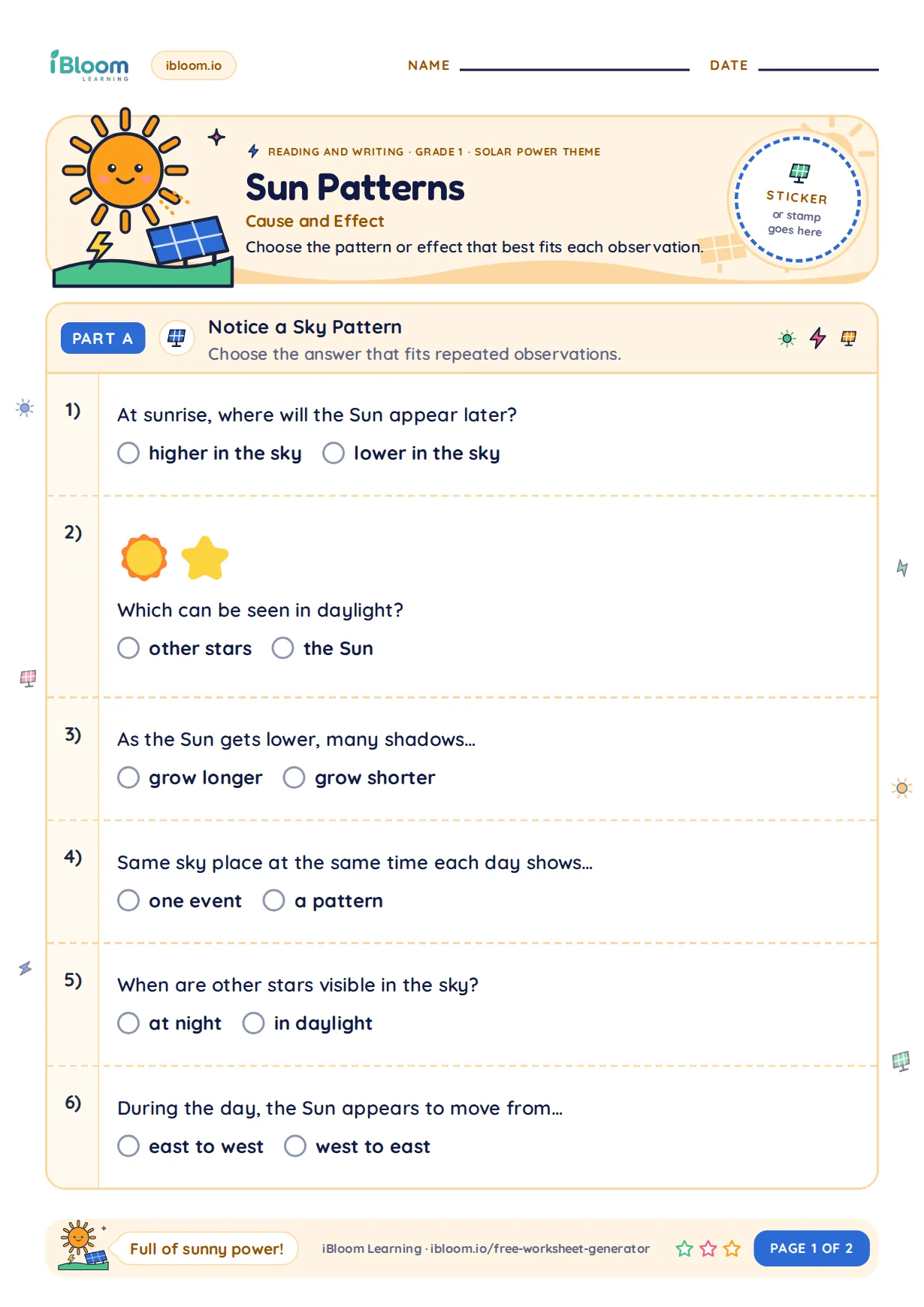 Sun Patterns — Explain Cause and EffectGrade 1 science worksheets that help children observe the Sun’s daily pattern, connect it to daylight, and describe changes in shadows. This explain cause and effect worksheet provides a distinct, age-appropriate way to practise the same lesson.Grade 1Free PDF preview4 pages
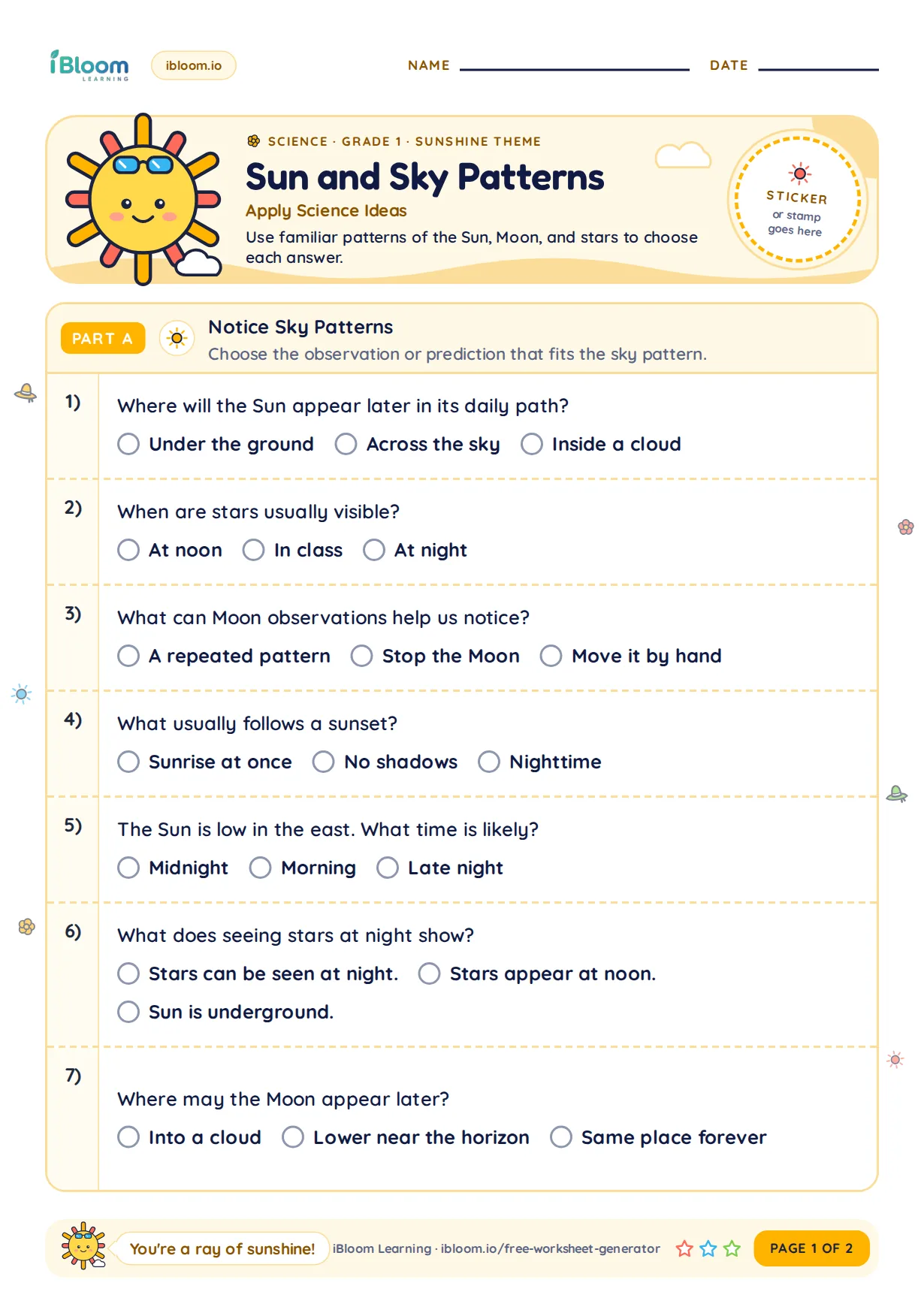 Sun Patterns — Apply Science IdeasGrade 1 science worksheets that help children observe the Sun’s daily pattern, connect it to daylight, and describe changes in shadows. This apply science ideas worksheet provides a distinct, age-appropriate way to practise the same lesson.Grade 1Free PDF preview4 pages
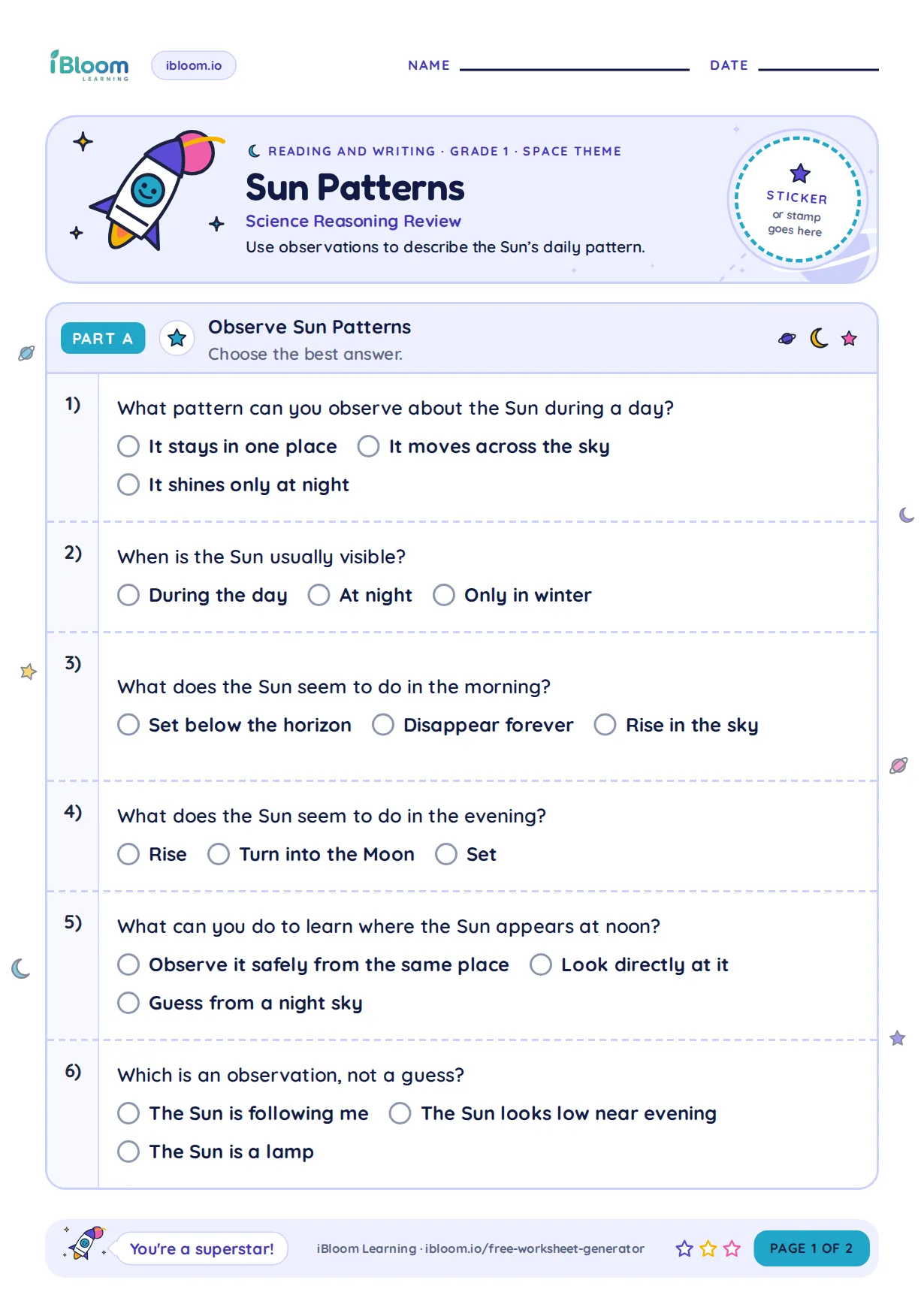 Sun Patterns — Science Reasoning ReviewGrade 1 science worksheets that help children observe the Sun’s daily pattern, connect it to daylight, and describe changes in shadows. This science reasoning review worksheet provides a distinct, age-appropriate way to practise the same lesson.Grade 1Free PDF preview
Practice that builds confidence
What children learn
These Grade 1 Sun Patterns worksheets help children notice that the Sun appears in different places in the sky during the day. Students practise using words such as morning, noon, afternoon, sky, shadow, sunrise, and sunset while building careful observation habits.
The printable activities include picture sequencing, simple observation charts, shadow matching, drawing prompts, and short questions about daylight. Each page connects the Earth, Sun, and Moon unit to real things children can see outside, while reminding them never to look directly at the Sun.
Sun pattern practice begins with what children can observe: daytime is when sunlight is present, shadows change during the day, and the Sun seems to move across the sky. These worksheets keep the ideas concrete, using scenes such as a playground, house, tree, or child standing outside.

From observations to explanations
The pages move from naming parts of the day to comparing pictures and explaining what changed. A child may place morning, noon, and afternoon pictures in order, circle the scene with the longer shadow, or draw where the Sun might be in the sky. The goal is not memorizing astronomy facts, but describing patterns with evidence: “The shadow is shorter when the Sun is high.”
Parent routine
Choose one sunny day and look at the same outdoor object in the morning and later in the afternoon. Ask your child to point to the shadow, describe its length, and sketch it on a worksheet. Keep the routine simple: observe, draw, say one sentence, and compare. Use safe language every time: “We look at shadows and the sky around us, not directly at the Sun.”

Classroom uses
Teachers can use these printables after a class discussion, during science centers, or as a follow-up to an outdoor shadow walk. Picture-based tasks support early readers, while short response items let students practise explaining observations. The worksheets also work well in science notebooks because children can add dates, weather notes, or a quick drawing from the schoolyard.

Common errors to watch for
Some children think the Sun actually disappears at sunset or that shadows always stay on the same side. Others may match “hotter” with “closer to the Sun” instead of noticing the Sun’s position in the sky. Encourage them to compare one object at two times of day and use position words such as higher, lower, longer, shorter, left, and right.
Free printable PDF download
Use this grade 1 sun patterns worksheet page to preview the activity, print it, or download it as a PDF for quick practice. It works well for homework, homeschool lessons, tutoring, morning work, revision, and classroom centers.
Answers and answer key support
After the child completes the worksheet independently, parents and teachers can use the answer support or answer key information to check the work, review mistakes, and choose the next practice step.
Why iBloom worksheets help
The iBloom activities give Grade 1 learners repeated chances to observe, sort, draw, and explain the Sun’s daily pattern. A child-friendly strategy is: “Look for the light, find the shadow, tell what changed.” This simple routine helps students turn everyday sky watching into clear science thinking.
Helpful answers
Frequently asked questions
What Sun patterns should a Grade 1 child be able to describe?
A Grade 1 child should be able to describe that the Sun is seen during the day, appears to change position in the sky, and makes shadows that can look different at different times.
Do these worksheets teach children to look at the Sun?
No. The activities focus on safe observations such as shadows, daylight, pictures, and the sky around us. Children should be reminded not to look directly at the Sun.
How do shadow activities support Sun pattern learning?
Shadows give children visible evidence that the Sun’s position appears to change. Comparing a shadow in the morning and afternoon helps them notice length and direction changes.
Can these printables be used without doing an outdoor observation?
Yes. Many pages use pictures, sequencing, and matching tasks. Outdoor observation makes the learning stronger, but the worksheets can still introduce and review the concept indoors.
What vocabulary is useful for this topic?
Helpful words include Sun, sky, daylight, morning, noon, afternoon, sunrise, sunset, shadow, higher, lower, longer, and shorter.
Is this grade 1 sun patterns worksheet free?
Yes. You can preview it for free and use the printable worksheet for home or classroom practice.
Can I download this grade 1 sun patterns worksheet as a PDF?
Yes. Use the worksheet download option to save a printable PDF, or print the worksheet directly from the page.
Does this grade 1 sun patterns worksheet include answers or an answer key?
When the activity has fixed answers, iBloom includes answer support so parents and teachers can check the completed worksheet.