
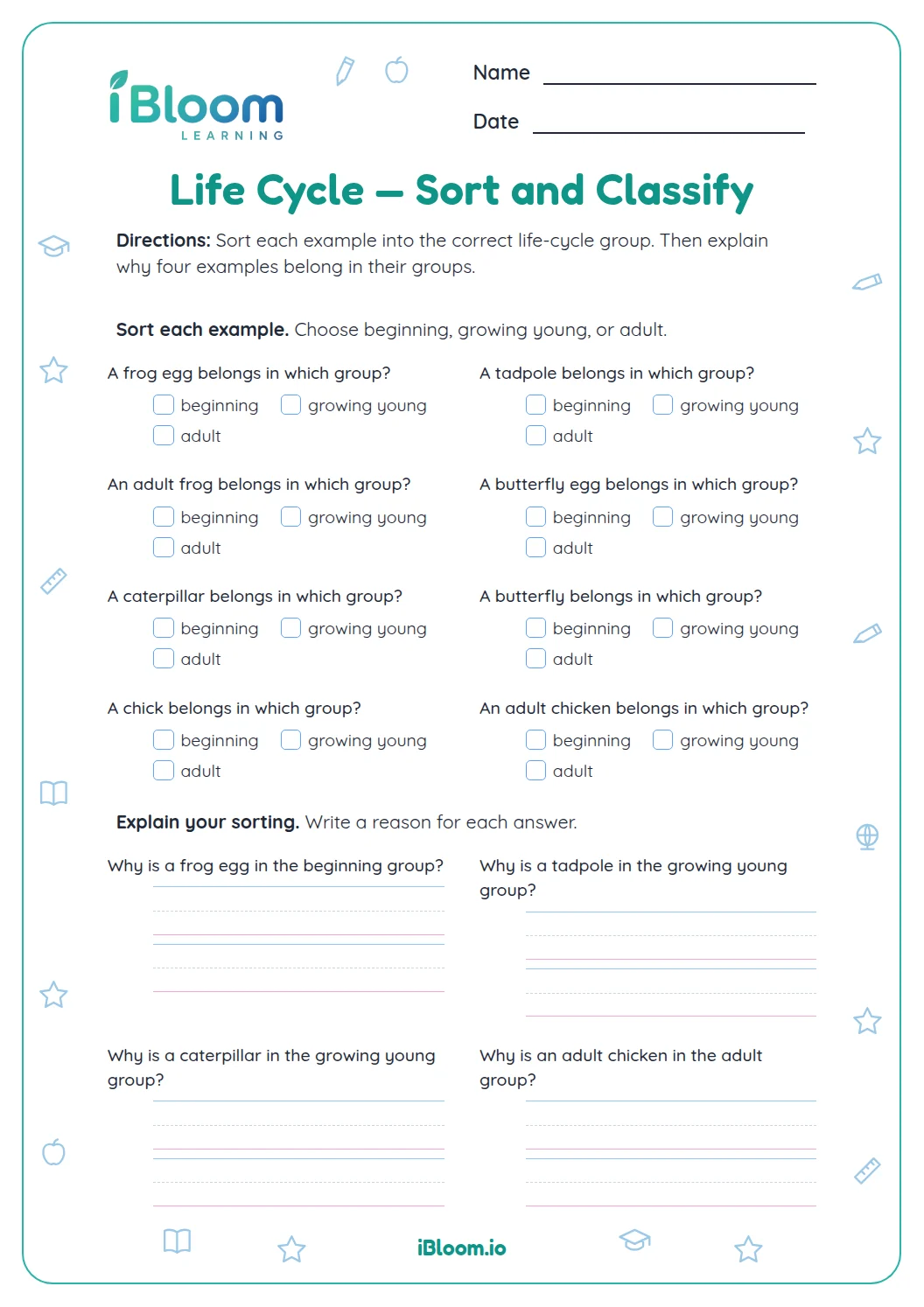
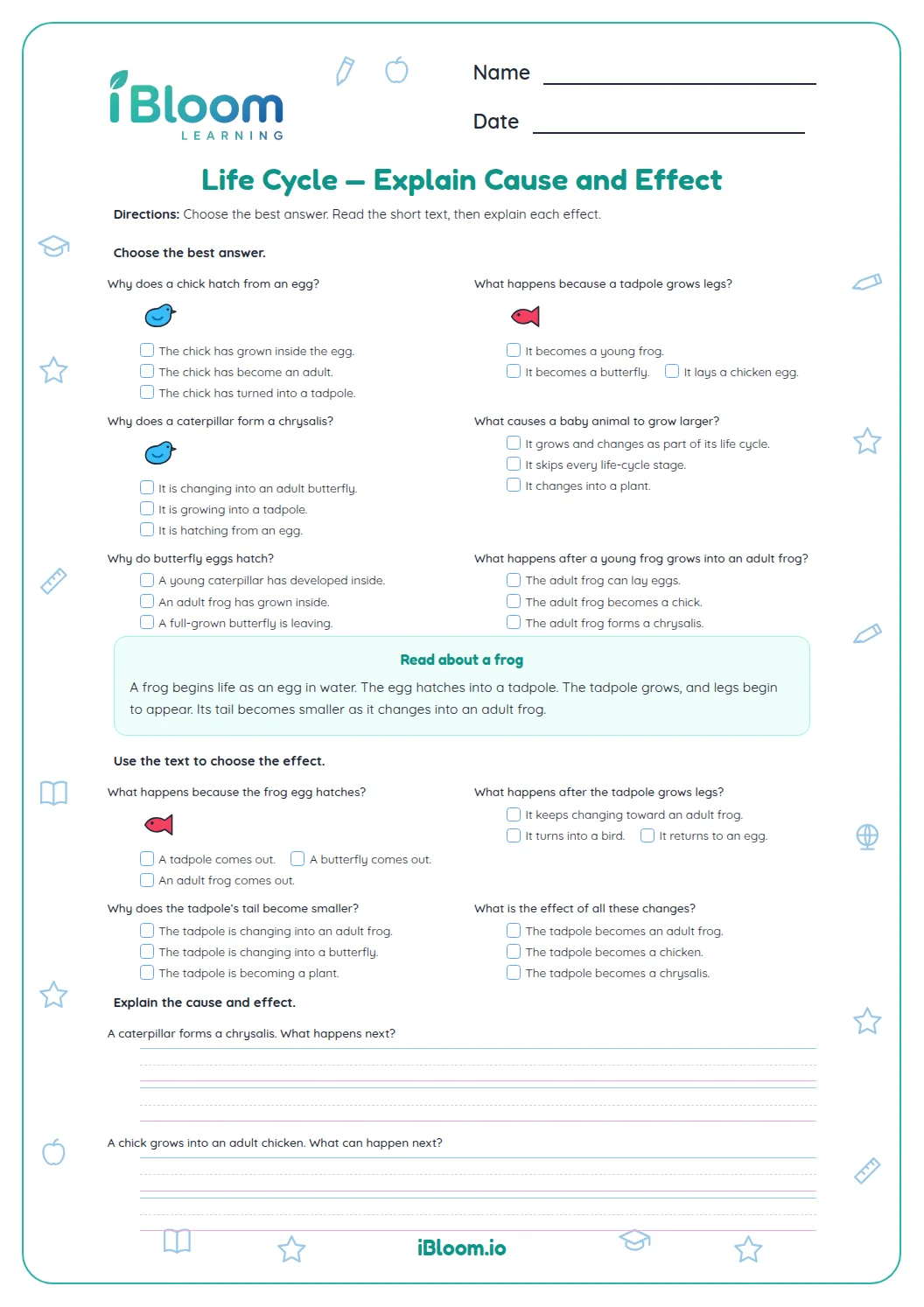
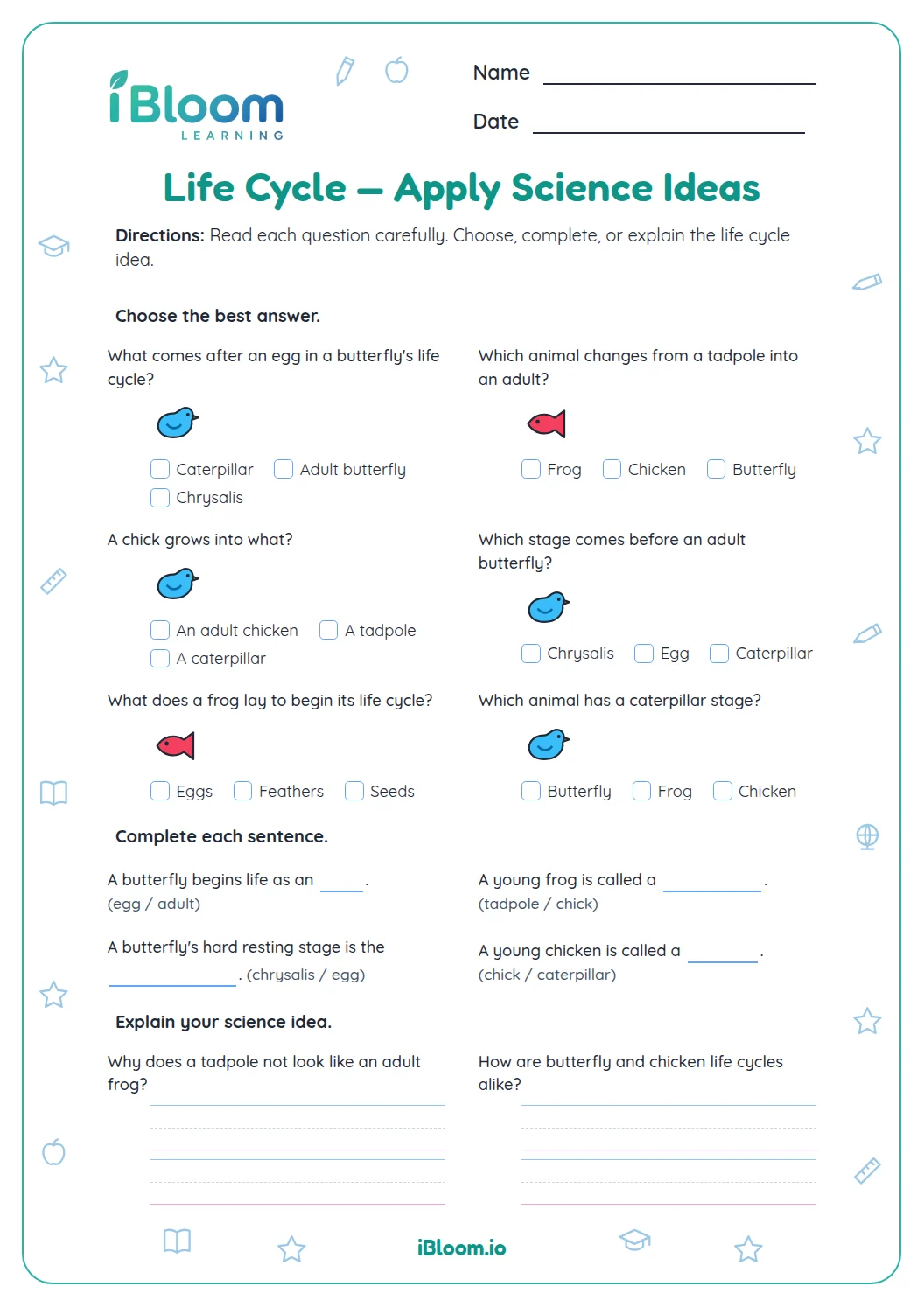
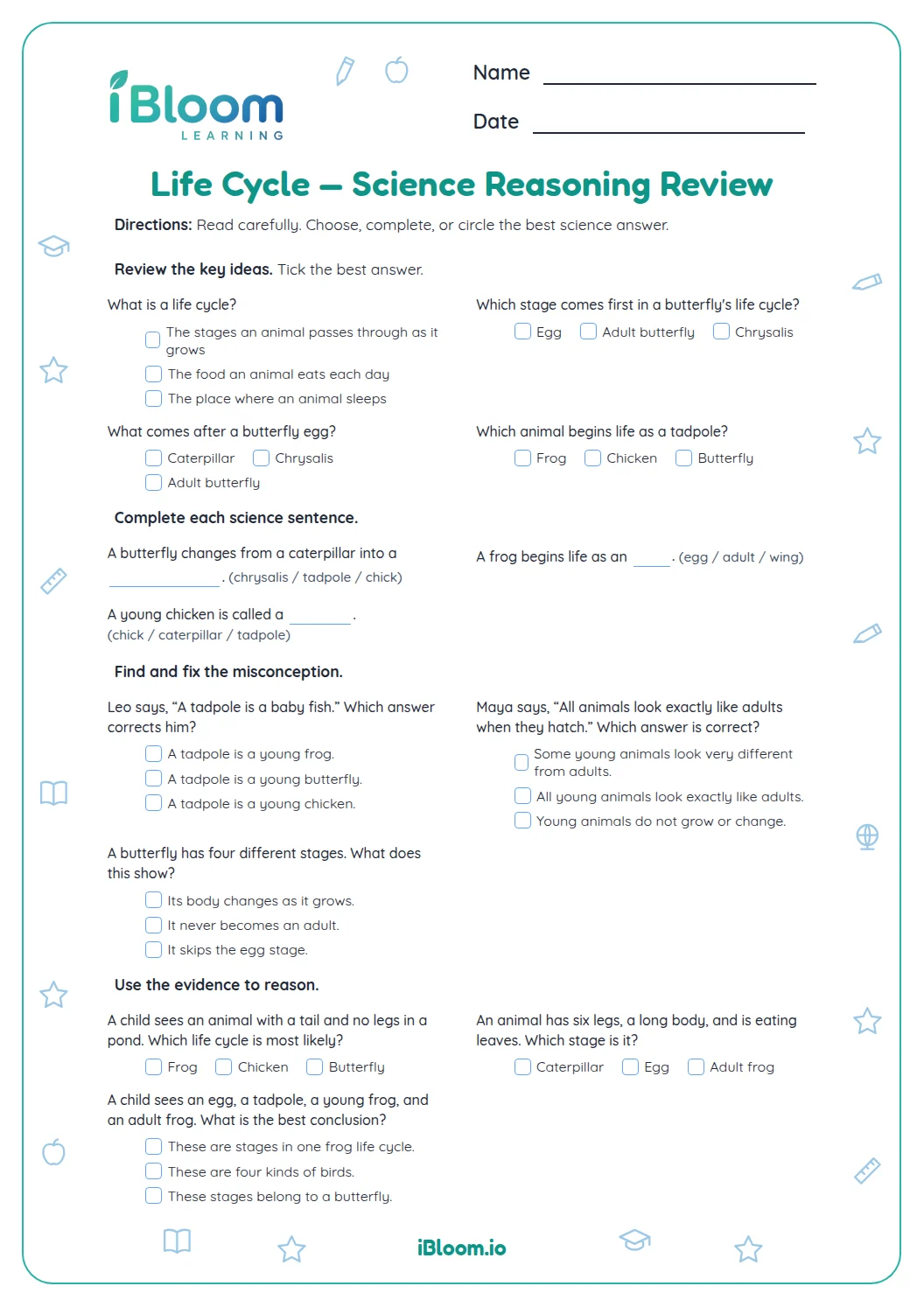


About this worksheet
This Grade 2 science worksheet helps children name the butterfly’s egg, caterpillar, chrysalis, and adult stages. Learners complete short life-cycle statements, fill in an ordered sequence, and explain how the adult stage begins the cycle again. It includes 15 questions and a separate answer key.
Aligned to 3-LS1-1
What are the butterfly life-cycle stages?
A butterfly begins as an egg. A caterpillar hatches and eats as it grows. It becomes a pupa inside a chrysalis, then an adult butterfly emerges. The adult can lay eggs, beginning another cycle.
- 1egg → ___ → chrysalis → adult butterfly
- 2The missing stage is caterpillar.
How does the model show a cycle?
An ordered sequence shows how each stage leads to the next. The adult lays eggs, and the cycle begins again.
What will children practice?
Fifteen fill-in items move from naming stages to completing an ordered sequence and explaining why the life cycle repeats.
How can I use this worksheet?
- 1Name the four stages aloud before beginning.
- 2Use question 7 to check that each stage is in the right position.
- 3For the missing-stage item, say the stages from egg onward.
- 4Use the written response to explain how the adult starts the cycle again.
- 5Check each answer with the key.
What can children check as they work?
The mistake
Putting the chrysalis before the caterpillar.
The fix
Say the growth sequence aloud: egg hatches into a caterpillar, which forms a chrysalis.
The mistake
Calling the chrysalis an egg.
The fix
An egg is the first stage; the chrysalis holds the pupa after the caterpillar stage.
The mistake
Treating the adult as the end of the cycle.
The fix
Connect the adult to eggs it lays; those eggs begin the next round.
Next Generation Science Standards
Model the ordered stages shared by a butterfly life cycle.
On this sheet: Children use an ordered model to describe the butterfly’s growth and reproduction.
Show the official wordingHide the official wording
Develop models to describe that organisms have unique and diverse life cycles but all have in common birth, growth, reproduction, and death.
What to practice next
Make more practice
Further reading
Questions parents and teachers ask
What are the four butterfly life-cycle stages?
A butterfly develops through egg, caterpillar, chrysalis, and adult stages. The caterpillar hatches from the egg, grows, and forms a chrysalis before an adult emerges. The worksheet asks children to name stages and complete a sequence, then the key lets them check each response.
Why is a butterfly life cycle a cycle?
An adult butterfly can lay eggs, which begin the sequence again. That return from adult to egg is why the stages form a cycle. Children complete an ordered sequence and answer questions about the connection between stages. The key provides the expected stage names.
What is a chrysalis?
A chrysalis is the protective case around a developing butterfly during the pupa stage. The caterpillar forms it before an adult butterfly emerges. On this sheet, children identify what follows the caterpillar and what comes out of the chrysalis. The answer key confirms those stage relationships.
What kinds of questions are included?
The 15 questions ask children to name stages, complete the life-cycle sequence, and identify relationships among the stages. They use short fill-in responses. The last items revisit how the sequence repeats, giving children a chance to check the life-cycle idea in words.
How can a child check the sequence?
Read the stages in order: egg, caterpillar, chrysalis, adult butterfly. Then check that the adult stage connects back to eggs. The worksheet includes sequence and stage questions, and its answer key gives the expected word or phrase for each response.