







About this worksheet
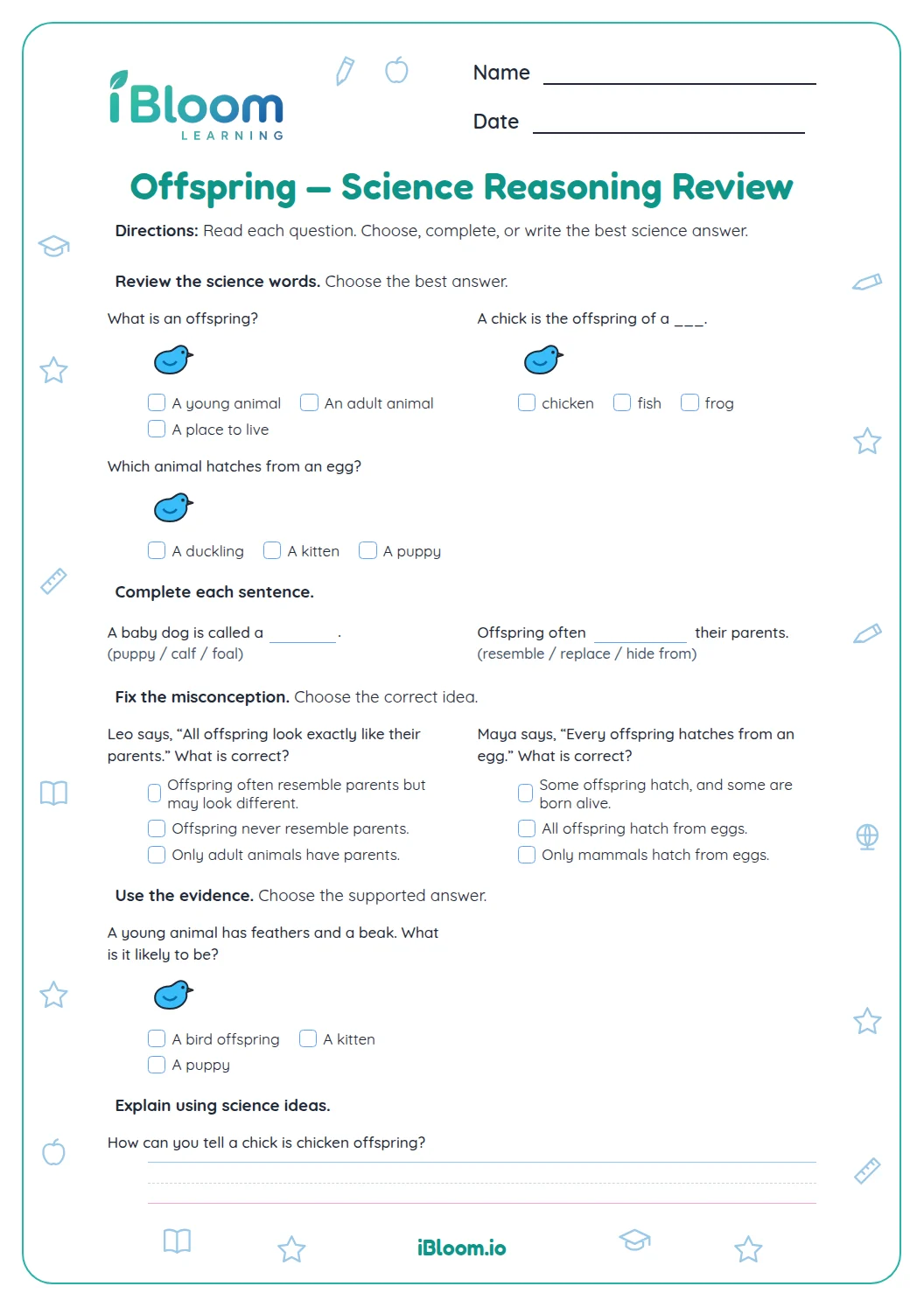
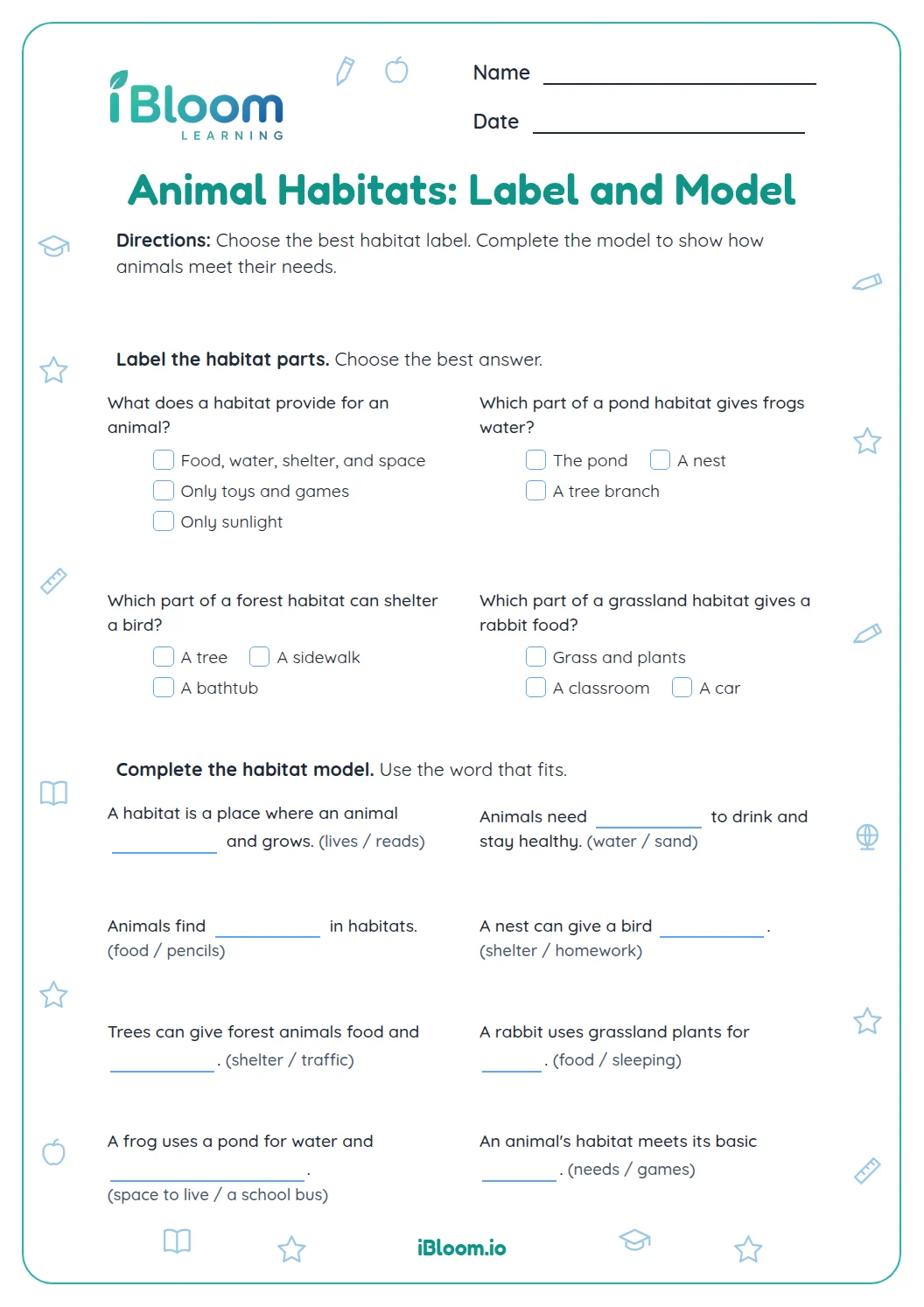
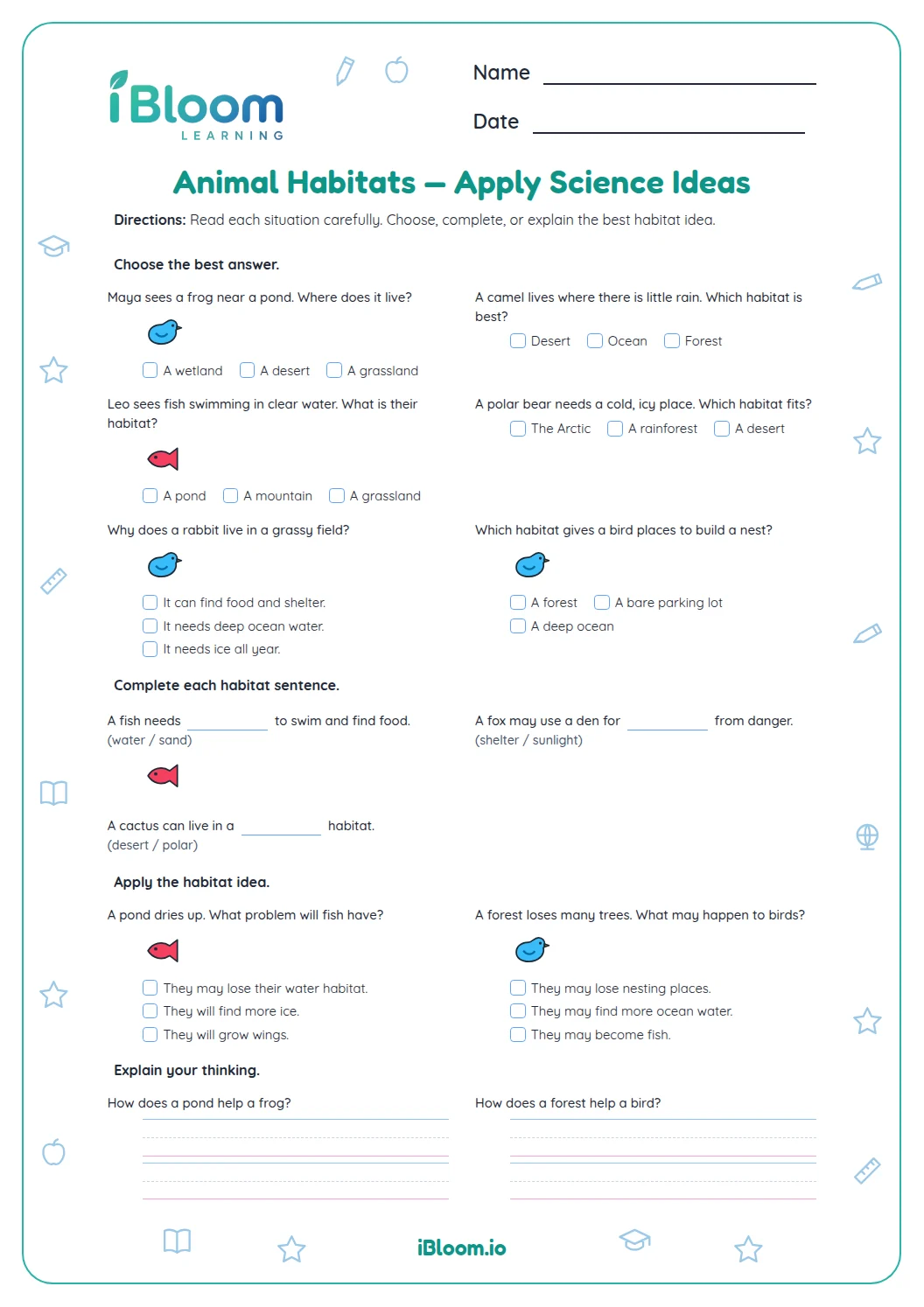
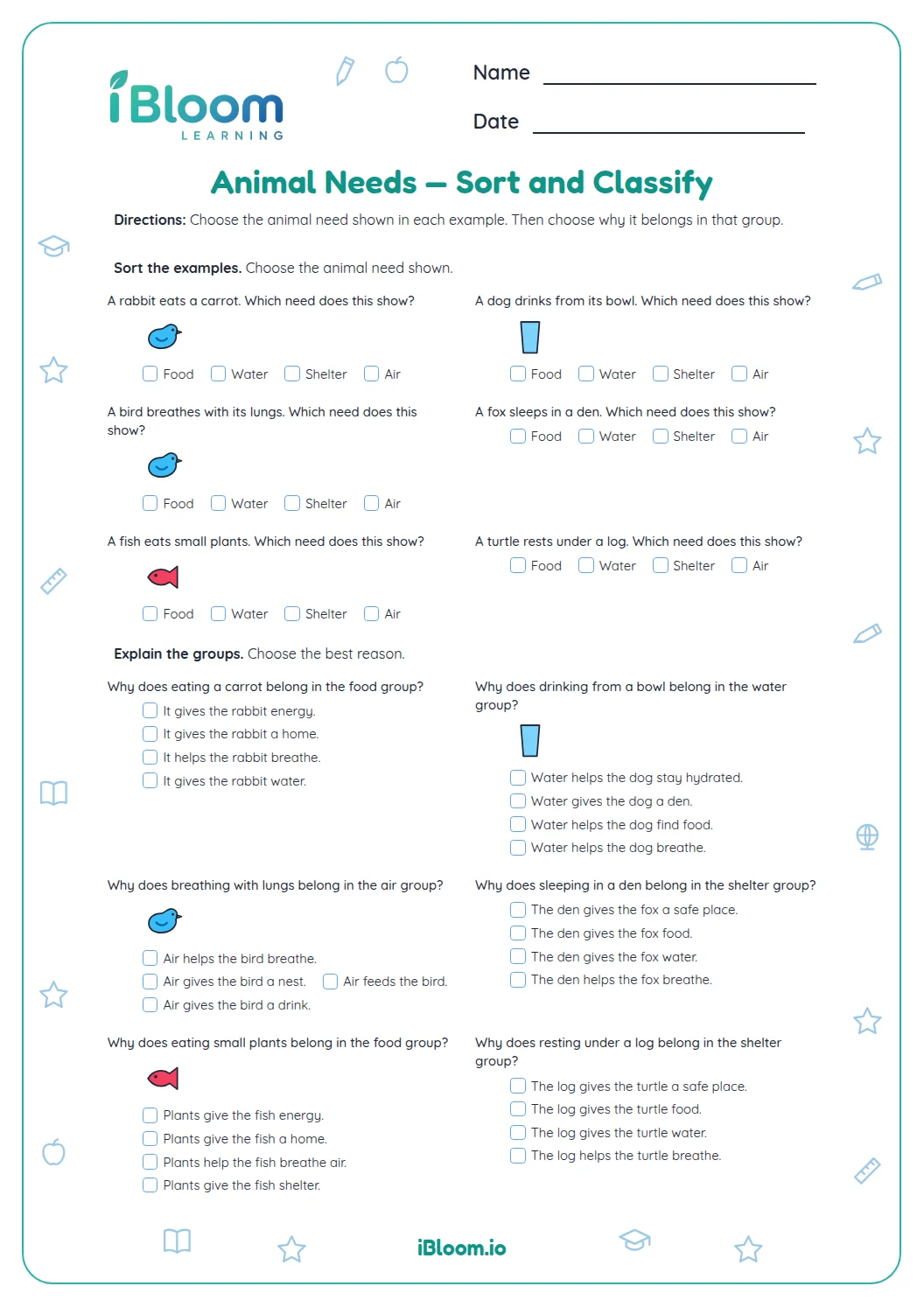
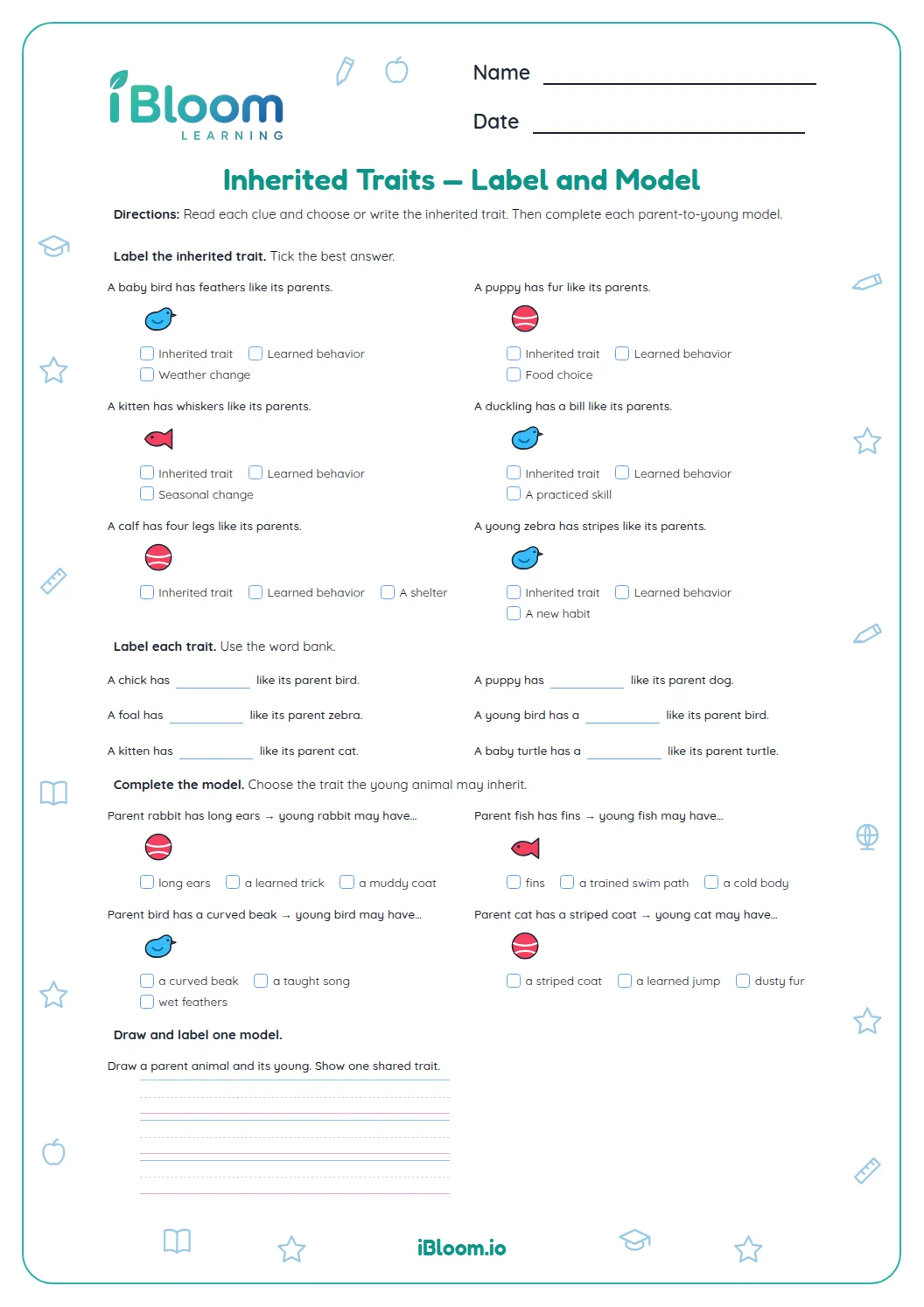
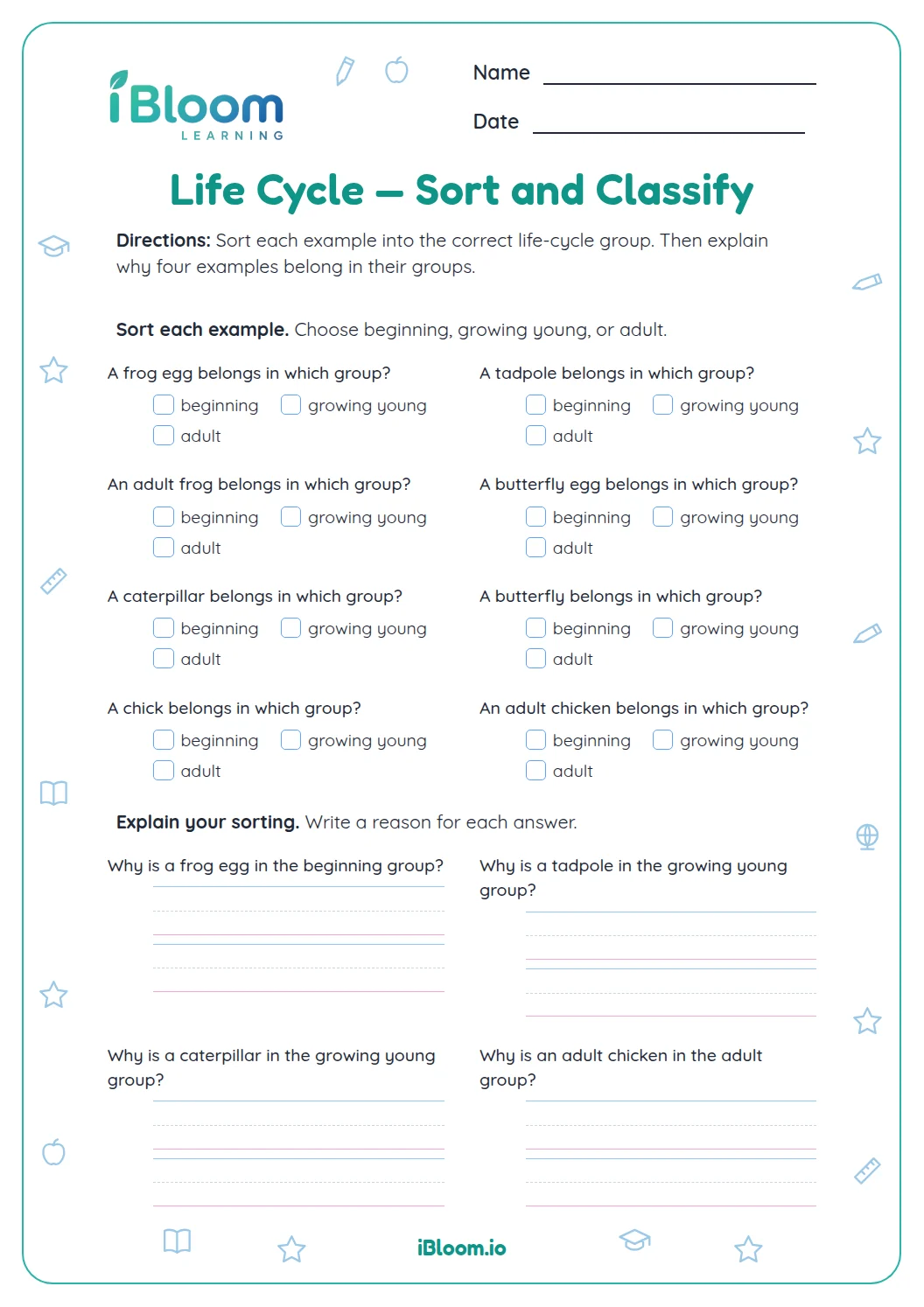
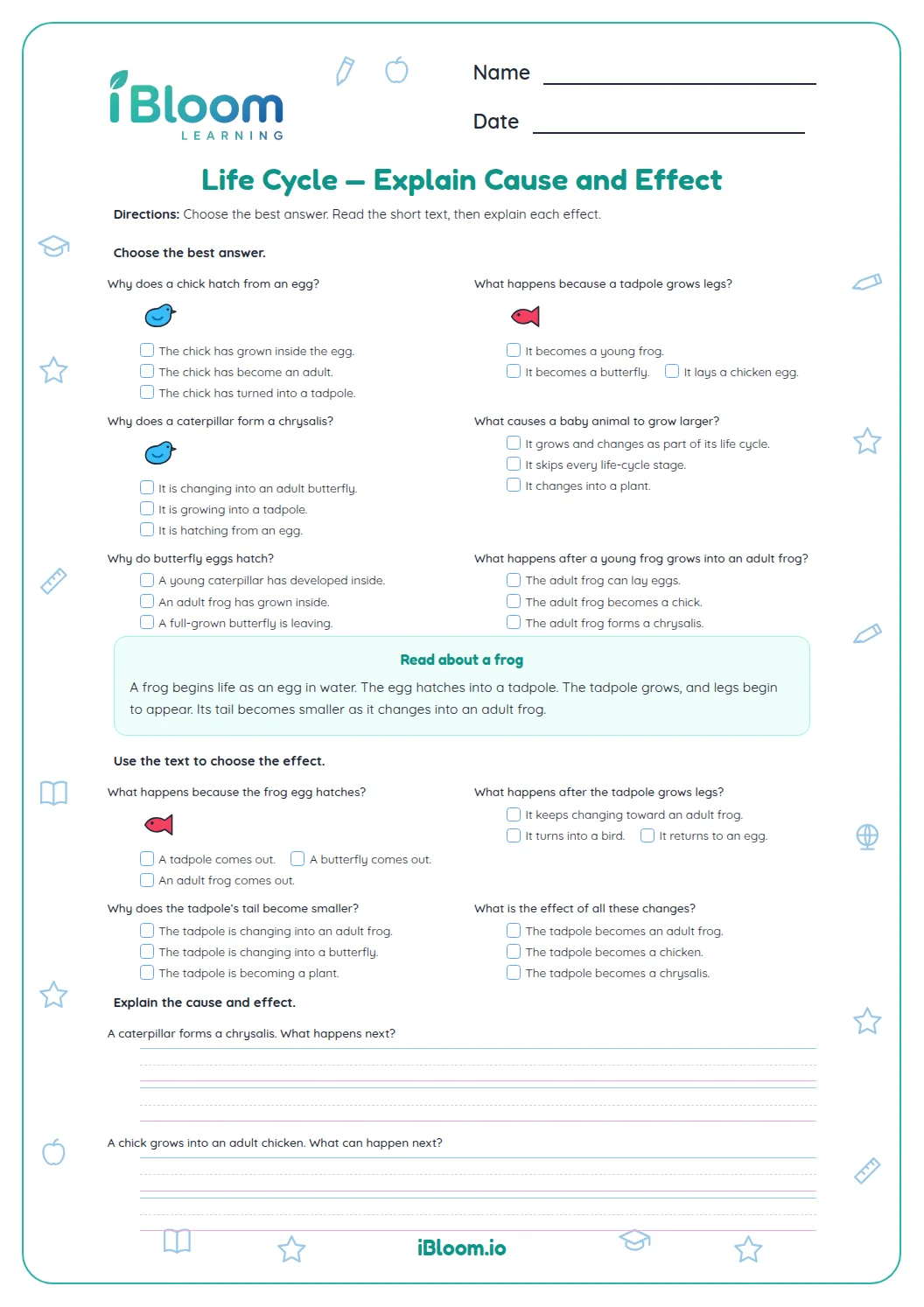
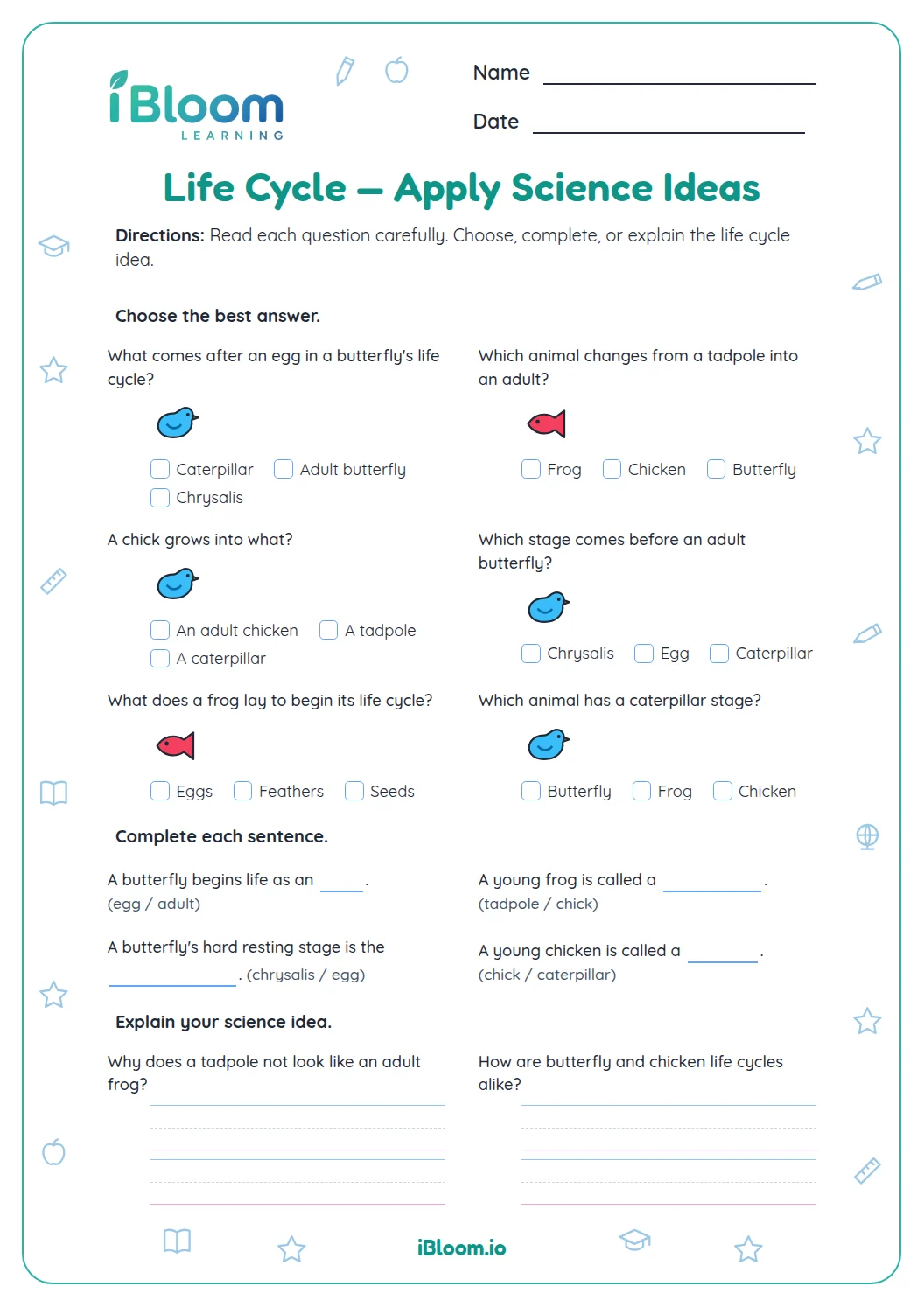
This free printable Grade 2 science worksheet asks learners to compare young plants and animals with adult forms. Across 16 questions in 3 parts, they identify shared traits, notice how offspring can vary, and use observations as evidence. A separate answer key includes sample ideas for the written responses. The practice connects to NGSS 1-LS3-1.
Aligned to 1-LS3-1
How can a learner work through animal offspring and traits?
Learners compare offspring with parent organisms, notice traits they share, and recognize that offspring can vary. The questions include animal and plant examples.
If two puppy siblings have different coat colors, both can still be offspring of the same kind of animal. Similarities and differences are both observations.
- 1Observe each animal trait.
- 2Compare the young animal with its parent.
- 3Use a shared trait as evidence of resemblance.
- 4Notice differences without assuming the young is a different species.
What will the worksheet ask the learner to do?
The printable has 16 questions in 3 parts: choosing science ideas, writing about evidence, and interpreting a plant observation. A separate answer key includes sample responses for the written items.
How can an adult support this practice?
Read the direction for each part, then ask the learner to explain one choice or calculation. Use the answer key to discuss the method as well as the final answer.
How to use this worksheet
- 1Read the whole question before choosing.
- 2Name the trait you can observe.
- 3Compare the young organism with its parent or adult form.
- 4For a written answer, make one clear observation.
- 5Check the key and explain the evidence.
Common mistakes and quick fixes
The mistake
Assuming every sibling looks exactly alike.
The fix
Compare traits one at a time; offspring may vary.
The mistake
Naming a habitat instead of a trait.
The fix
A trait is a feature such as fur, feathers, or a bill.
The mistake
Calling a young form a different species because it changes.
The fix
Connect the young organism to the adult it grows into.
Standards alignment
This page connects the worksheet practice to the standards listed below.
Observe evidence that young plants and animals resemble, but are not exactly like, their parents.
On this sheet: Learners use observations of shared traits and differences among offspring and parents.
Show the official wordingHide the official wording
Make observations to construct an evidence-based account that young plants and animals are like, but not exactly like, their parents.
What to practice next
Further reading
Questions parents and teachers ask
Do all offspring look exactly like their parents?
No. Young plants and animals can share traits with their parents and still differ in some ways. The worksheet asks learners to compare observable features, such as coat color or leaf shape, and recognize that siblings of the same kind do not have to look exactly alike.
What counts as evidence of resemblance?
An observable shared feature can be evidence, such as fur and whiskers in a kitten and cat. Learners should name the feature they notice rather than relying only on where the animals live or what they eat. The prompt asks for one clear comparison.
Why does a tadpole count as a frog’s young form?
A tadpole develops into a frog as it grows. The question asks learners to connect a changing young form with the adult organism, instead of treating each life stage as a different species. This is one example of how young organisms grow.
Is there a separate answer key?
Yes. The separate answer key gives answers for all 16 questions, including sample responses where wording can vary. Check it after the learner completes the worksheet, then revisit any item where the reasoning needs another look. After checking, ask the learner to explain one choice aloud.
How can I help a learner answer the written questions?
Ask the learner to name one feature they can observe and then say how it compares with a parent or adult form. A short sentence about feathers, fur, color, or growth is enough when it directly answers the question. Keep the example focused on an observable feature.