Free printable practice
Animals Practice Activities
Grade 2 animal worksheets help children compare animal types, traits, habitats, life cycles, needs, coverings, foods, and food chains.
Explore Animals
Free printable worksheet PDFs
Preview every available page, then download the free worksheet PDF for home, homeschool, tutoring, or classroom practice.
Preview the exact activity before downloading it.
 Adapting Habitats — Sort and ClassifyGrade 2 science worksheets that help children connect animal body parts and behaviors to the habitats where they survive. This sort and classify worksheet provides a distinct, age-appropriate way to practise the same lesson.Grade 2Free PDF preview8 pages
 Anatomy — Sort and ClassifyGrade 2 animal anatomy worksheets help children label body parts, connect structures to functions, and compare how animals move, eat, sense, and stay safe. This sort and classify worksheet provides a distinct, age-appropriate way to practise the same lesson.Grade 2Free PDF preview4 pages
 Animal Habitats — Sort and ClassifyGrade 2 science worksheets that help children identify animal habitats and explain how animals meet their needs where they live. This sort and classify worksheet provides a distinct, age-appropriate way to practise the same lesson.Grade 2Free PDF preview
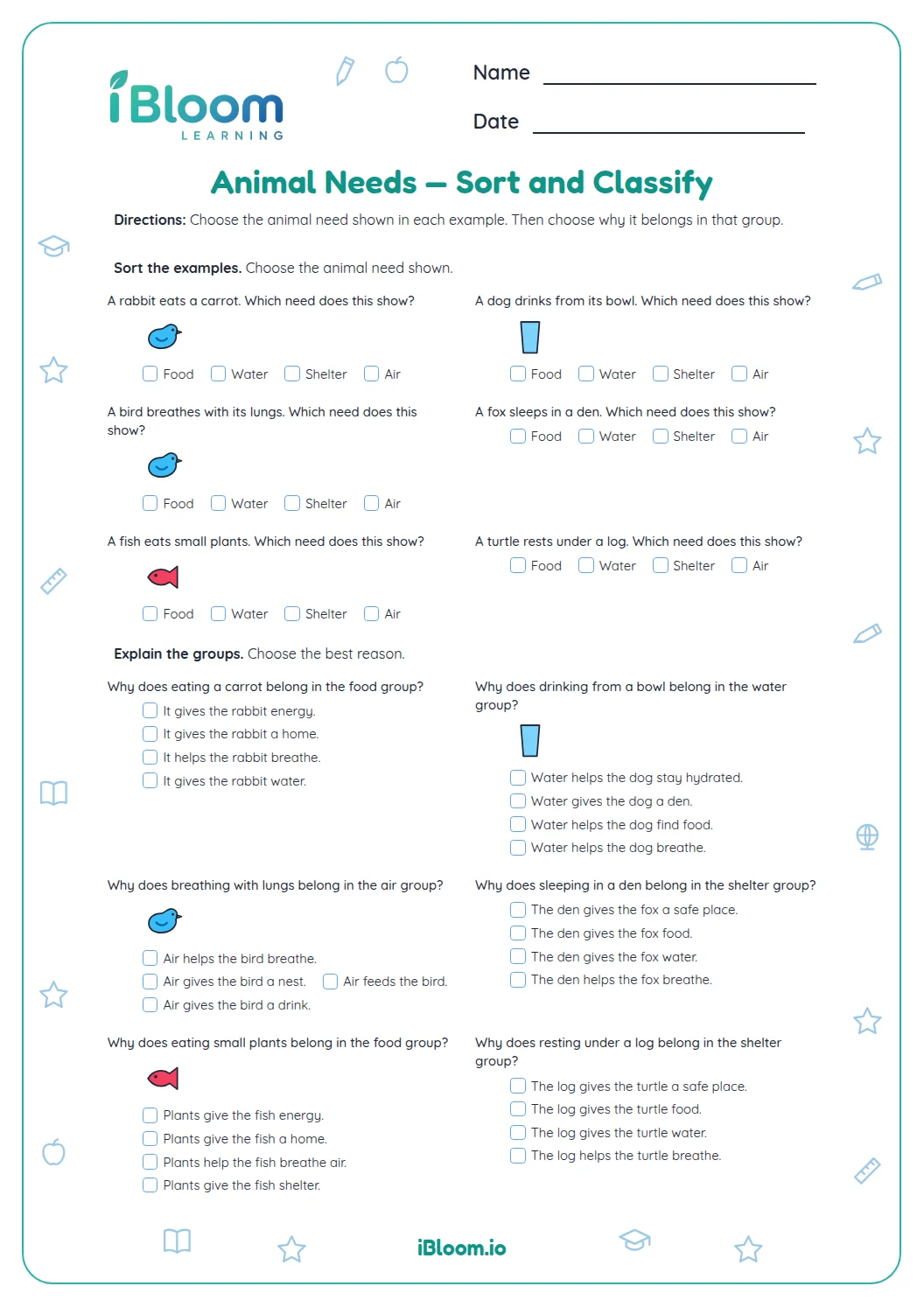 Animal Needs — Sort and ClassifyPrintable Grade 2 science activities that help children identify the basic needs animals must meet to live, grow, and stay healthy. This sort and classify worksheet provides a distinct, age-appropriate way to practise the same lesson.Grade 2Free PDF preview8 pages
 Animal Types — Sort and ClassifyGrade 2 science printables for sorting animals by type using visible features such as body covering, movement, habitat, and life needs. This sort and classify worksheet provides a distinct, age-appropriate way to practise the same lesson.Grade 2Free PDF preview4 pages
 Animals Foods — Sort and ClassifyExplore animals foods practice activities within Animals Practice Activities, organised so children, families, and elementary teachers can move from broad learning areas to focused printable practice. This sort and classify worksheet provides a distinct, age-appropriate way to practise the same lesson.Grade 2Free PDF preview
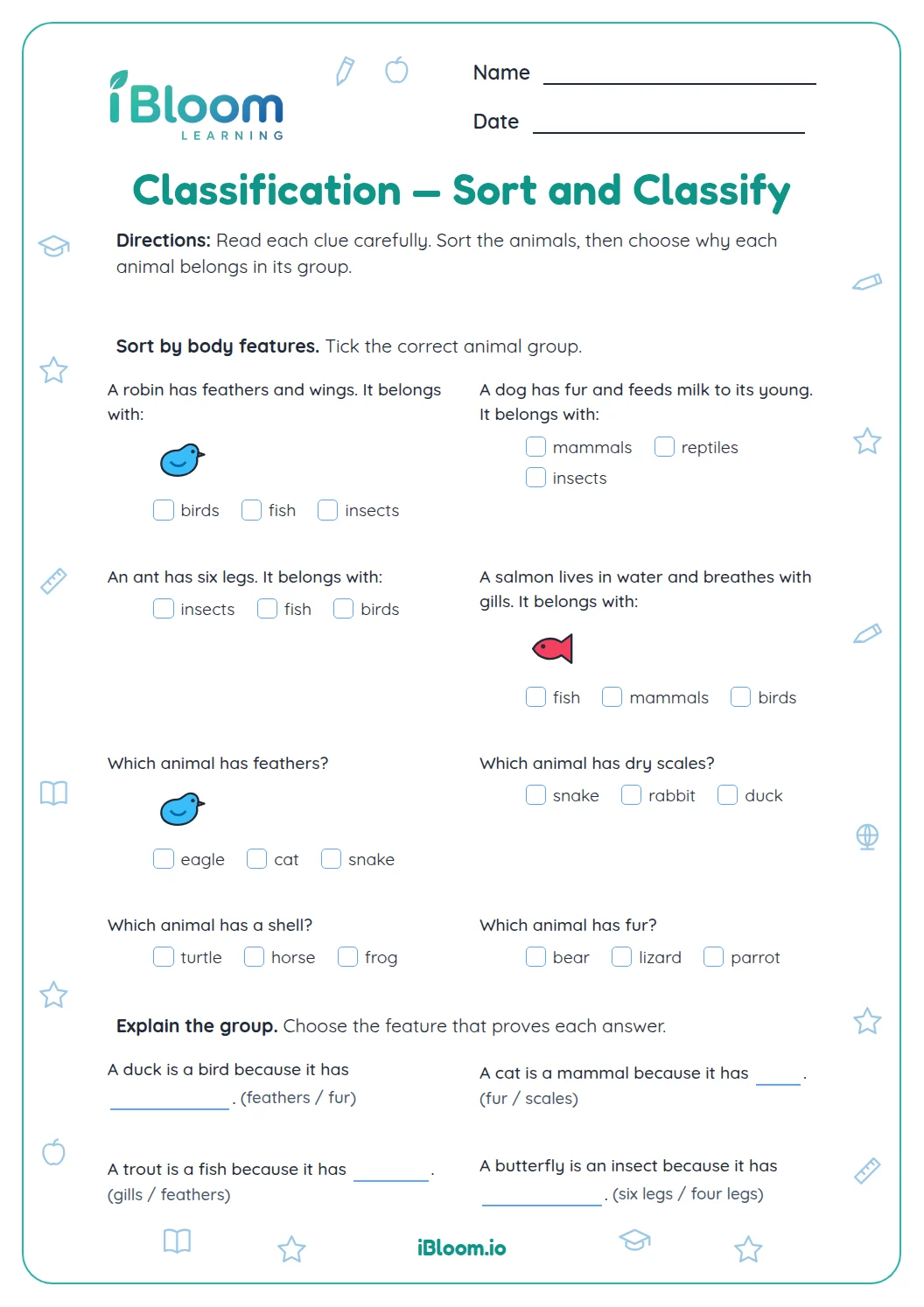 Classification — Sort and ClassifyGrade 2 animal classification worksheets that build careful observation, sorting, and science vocabulary through clear printable practice. This sort and classify worksheet provides a distinct, age-appropriate way to practise the same lesson.Grade 2Free PDF preview
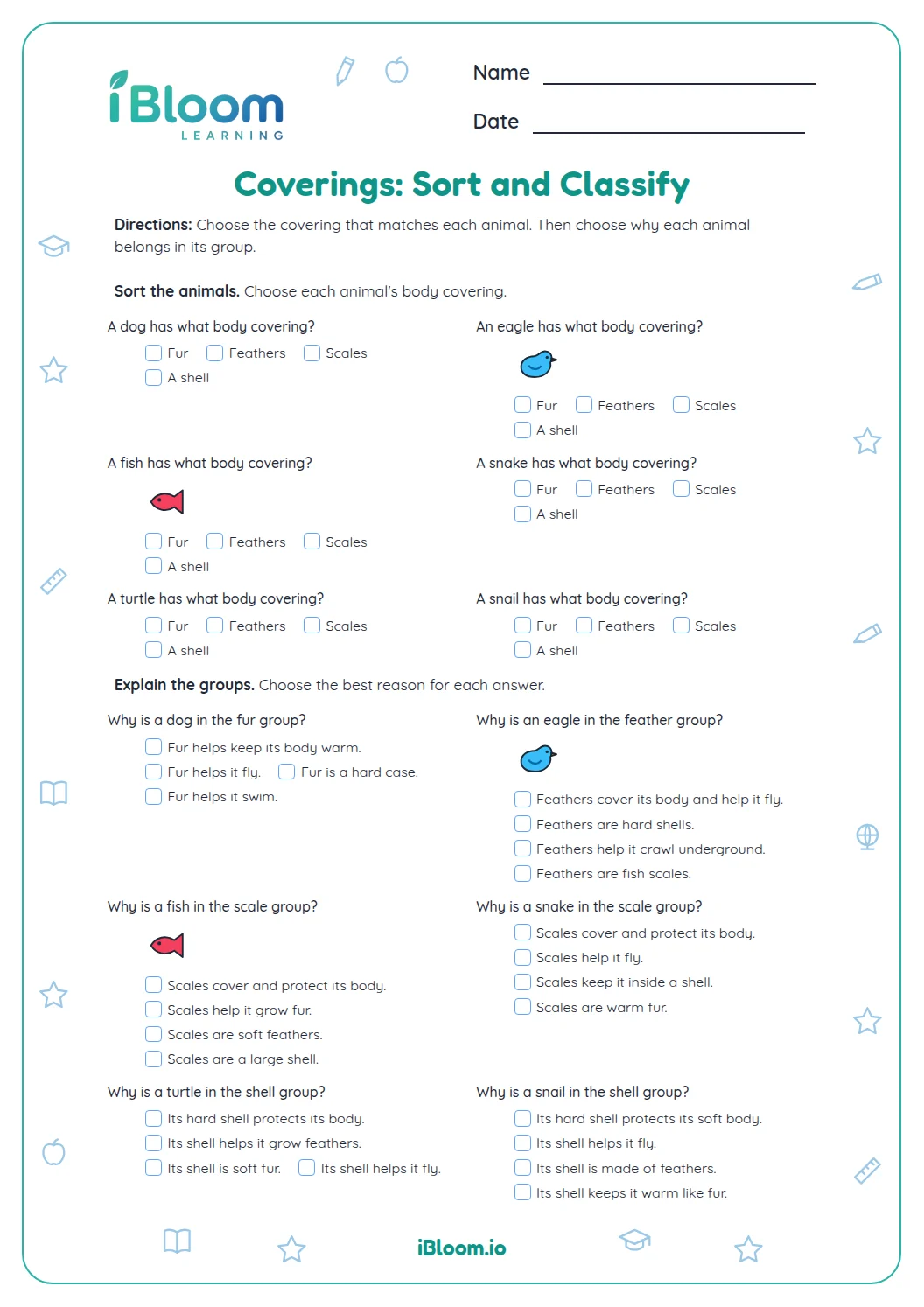 Coverings — Sort and ClassifyExplore coverings practice activities within Animals Practice Activities, organised so children, families, and elementary teachers can move from broad learning areas to focused printable practice. This sort and classify worksheet provides a distinct, age-appropriate way to practise the same lesson.Grade 2Free PDF preview
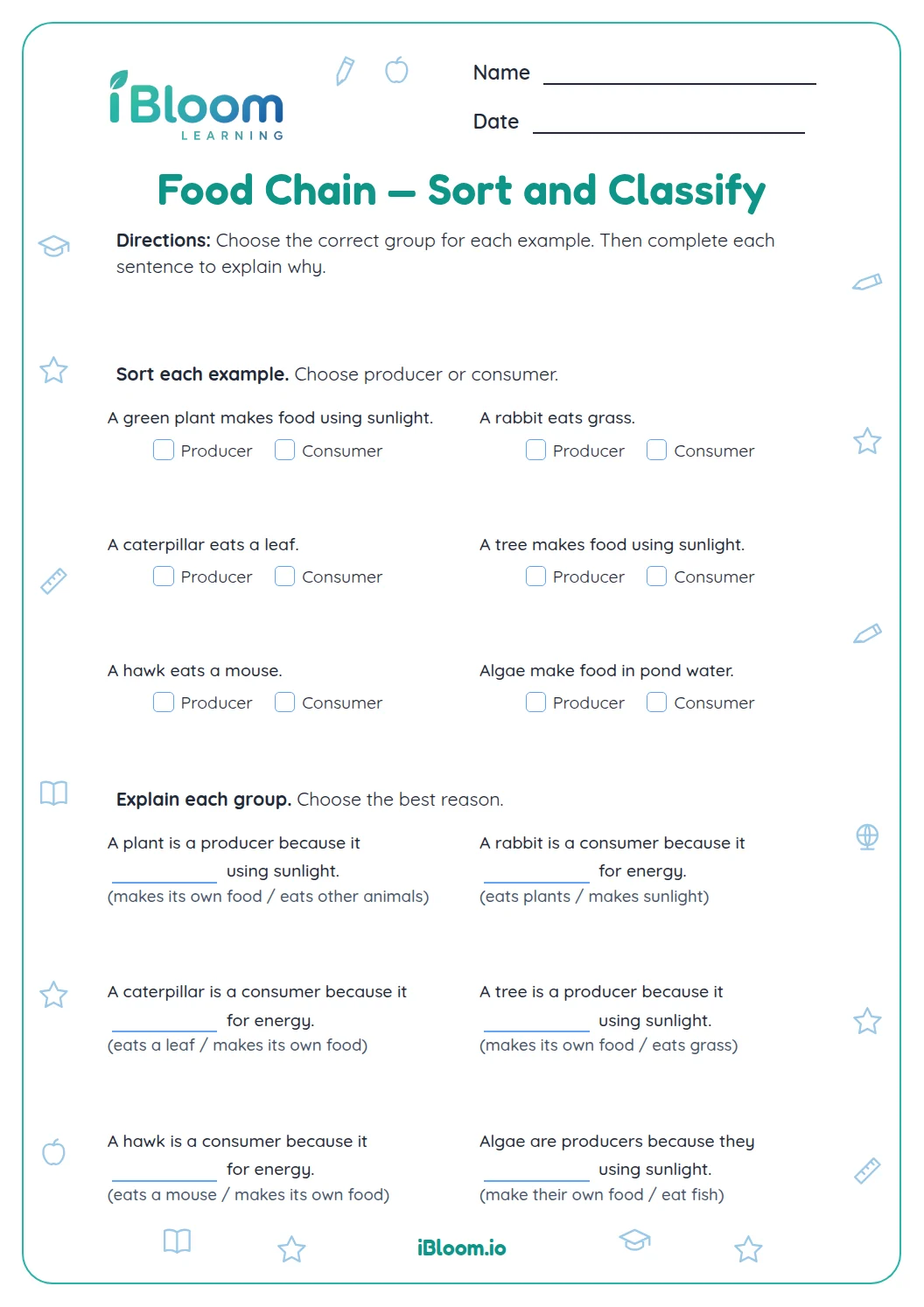 Food Chain — Sort and ClassifyPrintable Grade 2 science worksheets that help children trace how energy moves from plants to animals in simple food chains. This sort and classify worksheet provides a distinct, age-appropriate way to practise the same lesson.Grade 2Free PDF preview
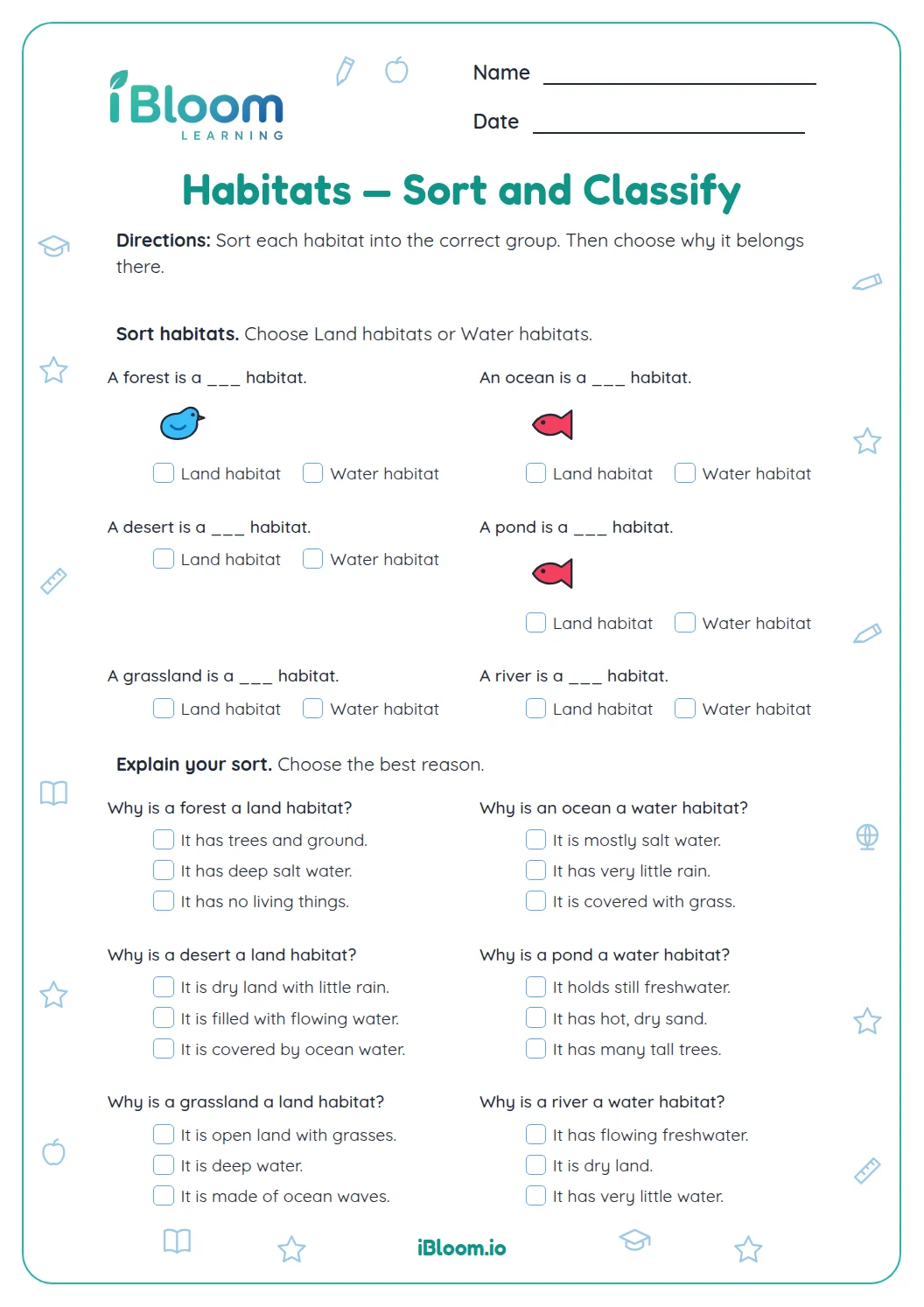 Habitats — Sort and ClassifyGrade 2 science worksheets help children identify animal habitats and connect living things with the places that meet their needs. This sort and classify worksheet provides a distinct, age-appropriate way to practise the same lesson.Grade 2Free PDF preview
 Inherited Traits — Sort and ClassifyPrintable Grade 2 science activities help children identify inherited animal traits and distinguish them from learned behaviors or environmental changes. This sort and classify worksheet provides a distinct, age-appropriate way to practise the same lesson.Grade 2Free PDF preview
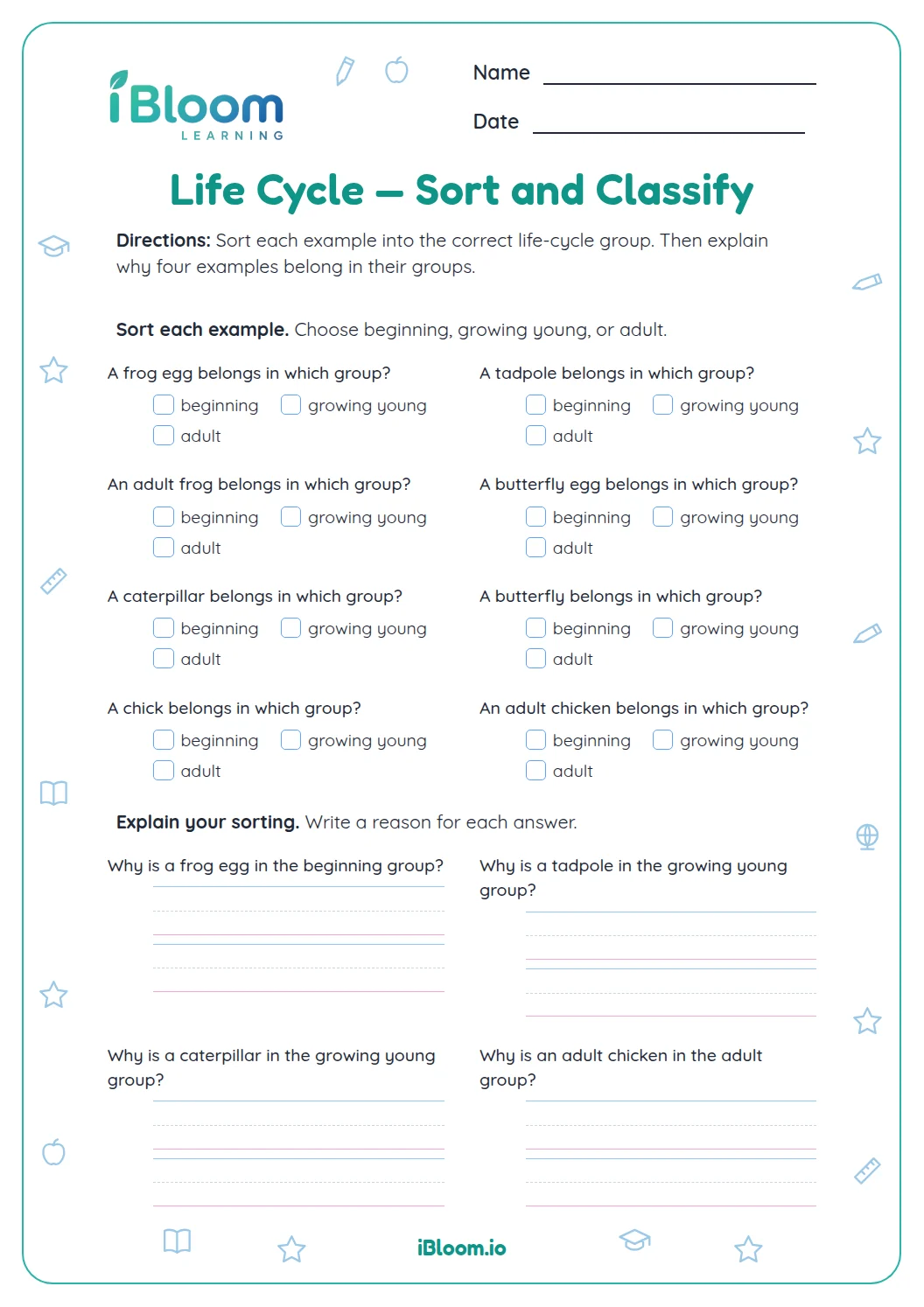 Life Cycle — Sort and ClassifyPrintable Grade 2 science worksheets that help children observe, sequence, and explain animal life cycles using clear vocabulary and pictures. This sort and classify worksheet provides a distinct, age-appropriate way to practise the same lesson.Grade 2Free PDF preview
 Offspring — Sort and ClassifyExplore offspring practice activities within Animals Practice Activities, organised so children, families, and elementary teachers can move from broad learning areas to focused printable practice. This sort and classify worksheet provides a distinct, age-appropriate way to practise the same lesson.Grade 2Free PDF preview
 Sounds — Sort and ClassifyGrade 2 science worksheets that help children explore how animals make sounds and use them to communicate, warn, find mates, and care for young. This sort and classify worksheet provides a distinct, age-appropriate way to practise the same lesson.Grade 2Free PDF preview
 Adapting Habitats — Label and ModelGrade 2 science worksheets that help children connect animal body parts and behaviors to the habitats where they survive. This label and model worksheet provides a distinct, age-appropriate way to practise the same lesson.Grade 2Free PDF preview8 pages
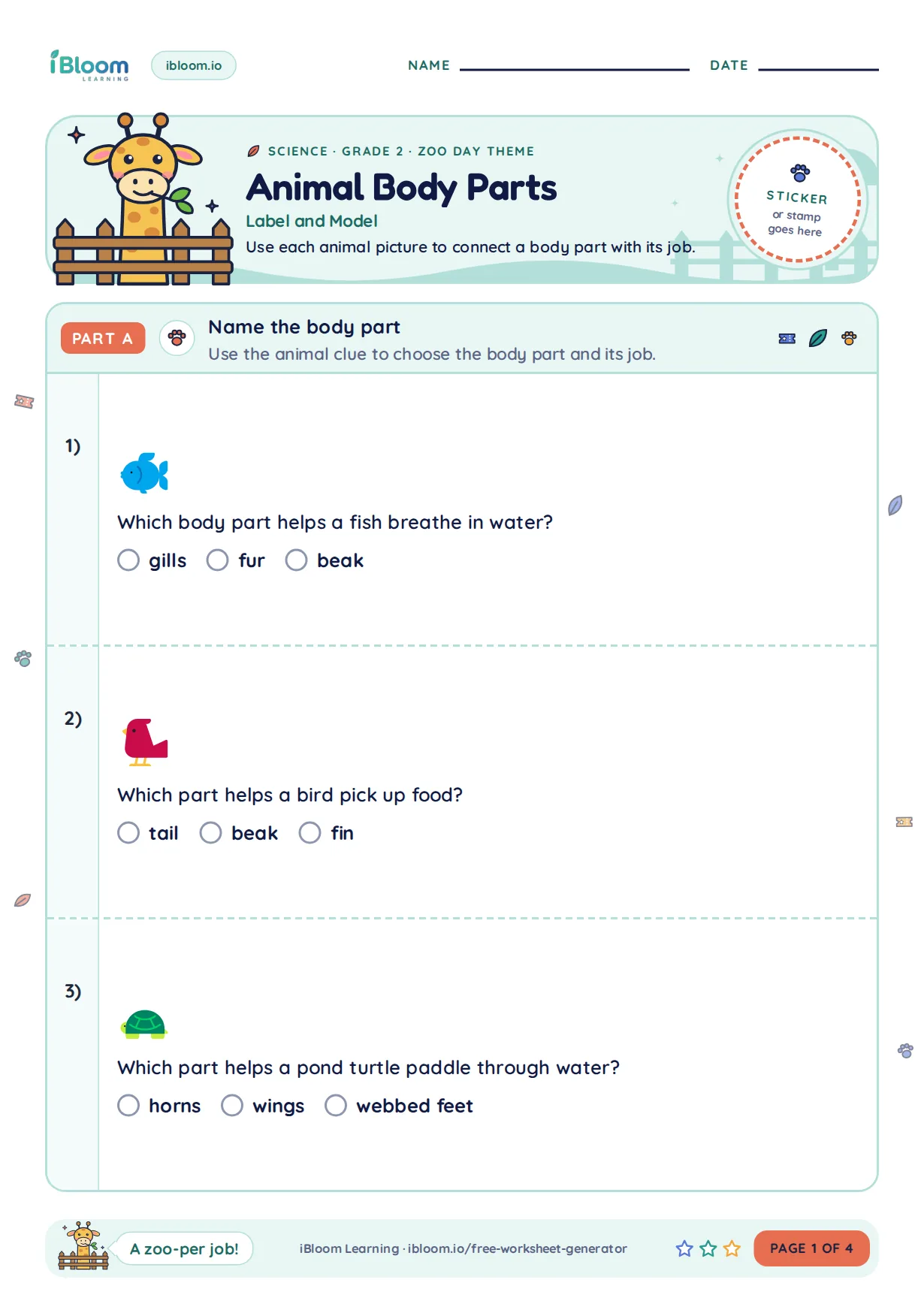 Anatomy — Label and ModelGrade 2 animal anatomy worksheets help children label body parts, connect structures to functions, and compare how animals move, eat, sense, and stay safe. This label and model worksheet provides a distinct, age-appropriate way to practise the same lesson.Grade 2Free PDF preview
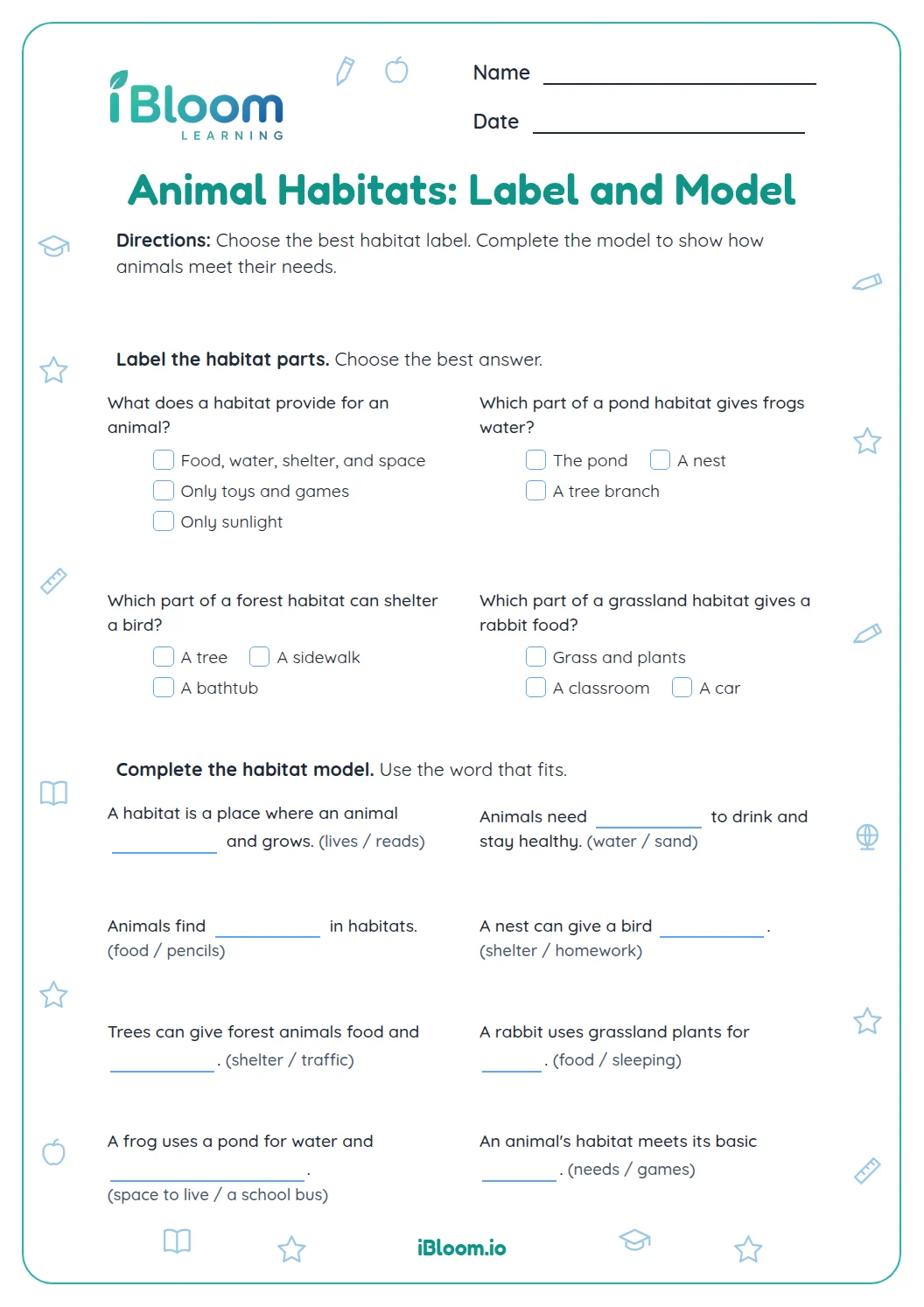 Animal Habitats — Label and ModelGrade 2 science worksheets that help children identify animal habitats and explain how animals meet their needs where they live. This label and model worksheet provides a distinct, age-appropriate way to practise the same lesson.Grade 2Free PDF preview
 Animal Needs — Label and ModelPrintable Grade 2 science activities that help children identify the basic needs animals must meet to live, grow, and stay healthy. This label and model worksheet provides a distinct, age-appropriate way to practise the same lesson.Grade 2Free PDF preview
 Animal Types — Label and ModelGrade 2 science printables for sorting animals by type using visible features such as body covering, movement, habitat, and life needs. This label and model worksheet provides a distinct, age-appropriate way to practise the same lesson.Grade 2Free PDF preview
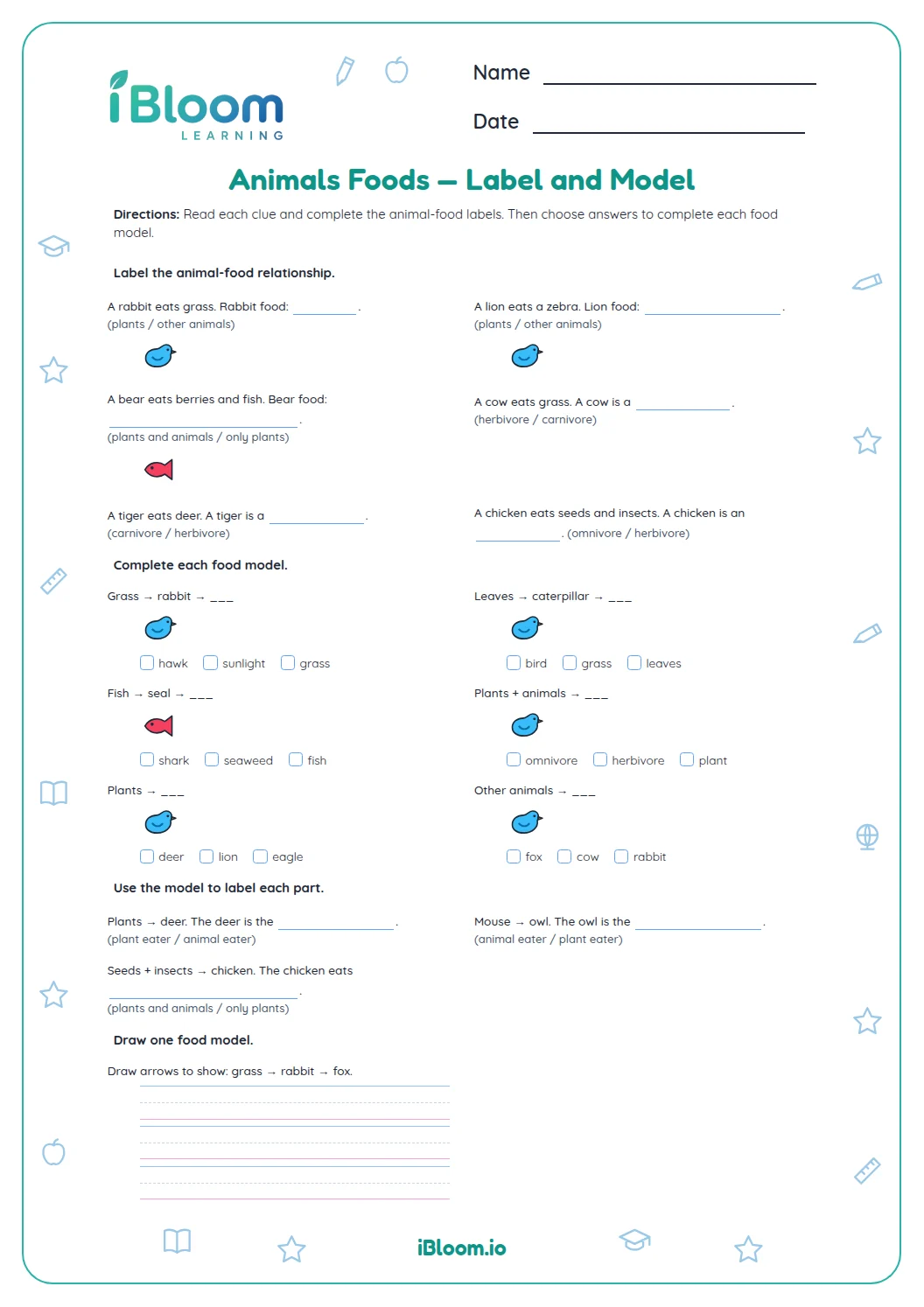 Animals Foods — Label and ModelExplore animals foods practice activities within Animals Practice Activities, organised so children, families, and elementary teachers can move from broad learning areas to focused printable practice. This label and model worksheet provides a distinct, age-appropriate way to practise the same lesson.Grade 2Free PDF preview
Practice that builds confidence
What Grade 2 learners explore
These Grade 2 science worksheets help children study animals by looking closely at how they are grouped, how they grow, where they live, and what they need to survive. Students practise using words such as inherited traits, offspring, habitat, adaptation, anatomy, covering, life cycle, and food chain in meaningful contexts.
The printable activities include sorting tasks, labeling pages, matching exercises, short reading prompts, food chain sequences, habitat questions, animal sound activities, and observation-style practice. Children compare animal types, identify body parts and coverings, connect animals to foods and habitats, and notice how young animals resemble their parents.
This animal practice collection moves from familiar observations to clearer science ideas. Children identify animal types, compare mammals, birds, fish, reptiles, amphibians, and insects when appropriate, and use visible clues such as body covering, body parts, movement, and where the animal lives. They also practise distinguishing an animal’s home from its needs, such as food, water, air, shelter, and space.

Traits, offspring, and life cycles
Worksheets on inherited traits and offspring help children notice that young animals often look like their parents but are not exact copies. A calf, chick, cub, or tadpole can be discussed through simple evidence: shape, covering, color patterns, or body parts. Life cycle pages support sequencing language such as first, next, then, and adult, helping students describe growth without memorizing isolated facts.
Habitats, adaptations, and food chains
Animal habitat activities ask children to connect animals with places they can survive, such as forests, oceans, ponds, grasslands, deserts, or polar regions. Adapting habitats practice focuses on useful features: webbed feet, thick fur, claws, beaks, shells, or camouflage. Food chain pages build the idea that animals get energy from food, using simple links between plants, plant-eaters, and meat-eaters.
A simple parent routine
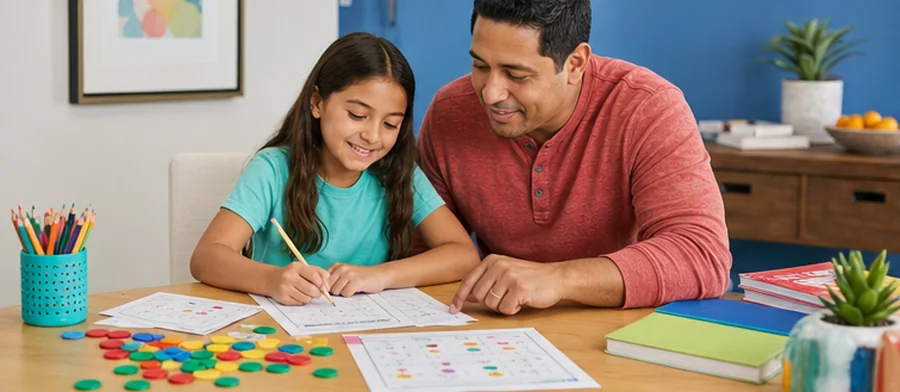
At home, choose one animal and ask three questions: What does it look like? Where does it live? What does it eat? Then have your child point to evidence in the worksheet, such as a covering, body part, habitat picture, or food choice. End with one spoken sentence: “A duck has feathers, lives near water, and eats small plants or animals.” This keeps science vocabulary connected to real examples.
Classroom uses for teachers
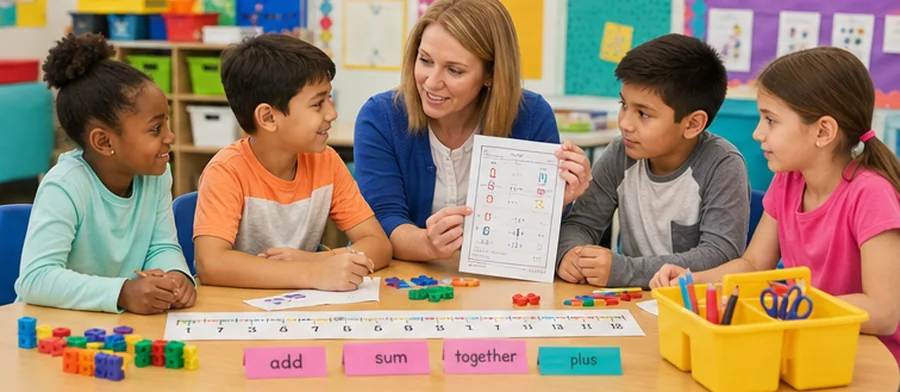
Teachers can use these printables for science centers, early finisher tasks, small-group review, or notebook pages during an animals unit. Sorting cards and classification pages work well for partner talk, while life cycle and food chain sheets support sequencing and explanation. Habitat and anatomy pages can also be paired with read-alouds or classroom animal research.
Free printable PDF download
Use this grade 2 animals worksheet page to preview the activity, print it, or download it as a PDF for quick practice. It works well for homework, homeschool lessons, tutoring, morning work, revision, and classroom centers.
Answers and answer key support
After the child completes the worksheet independently, parents and teachers can use the answer support or answer key information to check the work, review mistakes, and choose the next practice step.
Why iBloom worksheets help
The activities give Grade 2 students repeated, varied practice instead of one kind of question. Children classify, match, label, sequence, compare, and explain, which helps them build flexible understanding. Watch for common errors such as calling every animal habitat a “nest,” mixing up inherited traits with learned behaviors, or placing animals in habitats only because they “like” them. A child-friendly strategy is: look for clues, name the feature, then explain how it helps the animal.
Helpful answers
Frequently asked questions
What animal science skills do these Grade 2 worksheets cover?
They cover animal types, classification, inherited traits, offspring, life cycles, habitats, adaptations, needs, body parts, coverings, foods, sounds, and simple food chains.
How do these worksheets help children understand animal habitats?
Children match animals to suitable places to live and think about what each habitat provides, such as food, water, shelter, space, and conditions the animal can survive in.
Do the activities include animal life cycles?
Yes. Students practise sequencing and describing how animals grow and change from young to adult, using age-appropriate examples and vocabulary.
What is the difference between inherited traits and learned behaviors for Grade 2?
Inherited traits are features passed from parents to offspring, such as body shape, coverings, or color patterns. Learned behaviors are actions an animal picks up through experience.
Can teachers use these animal worksheets in science centers?
Yes. The sorting, labeling, matching, sequencing, and short-response formats work well for centers, partner work, small groups, review, or science notebook practice.
Is this grade 2 animals worksheet free?
Yes. You can preview it for free and use the printable worksheet for home or classroom practice.
Can I download this grade 2 animals worksheet as a PDF?
Yes. Use the worksheet download option to save a printable PDF, or print the worksheet directly from the page.
Does this grade 2 animals worksheet include answers or an answer key?
When the activity has fixed answers, iBloom includes answer support so parents and teachers can check the completed worksheet.