




About this worksheet
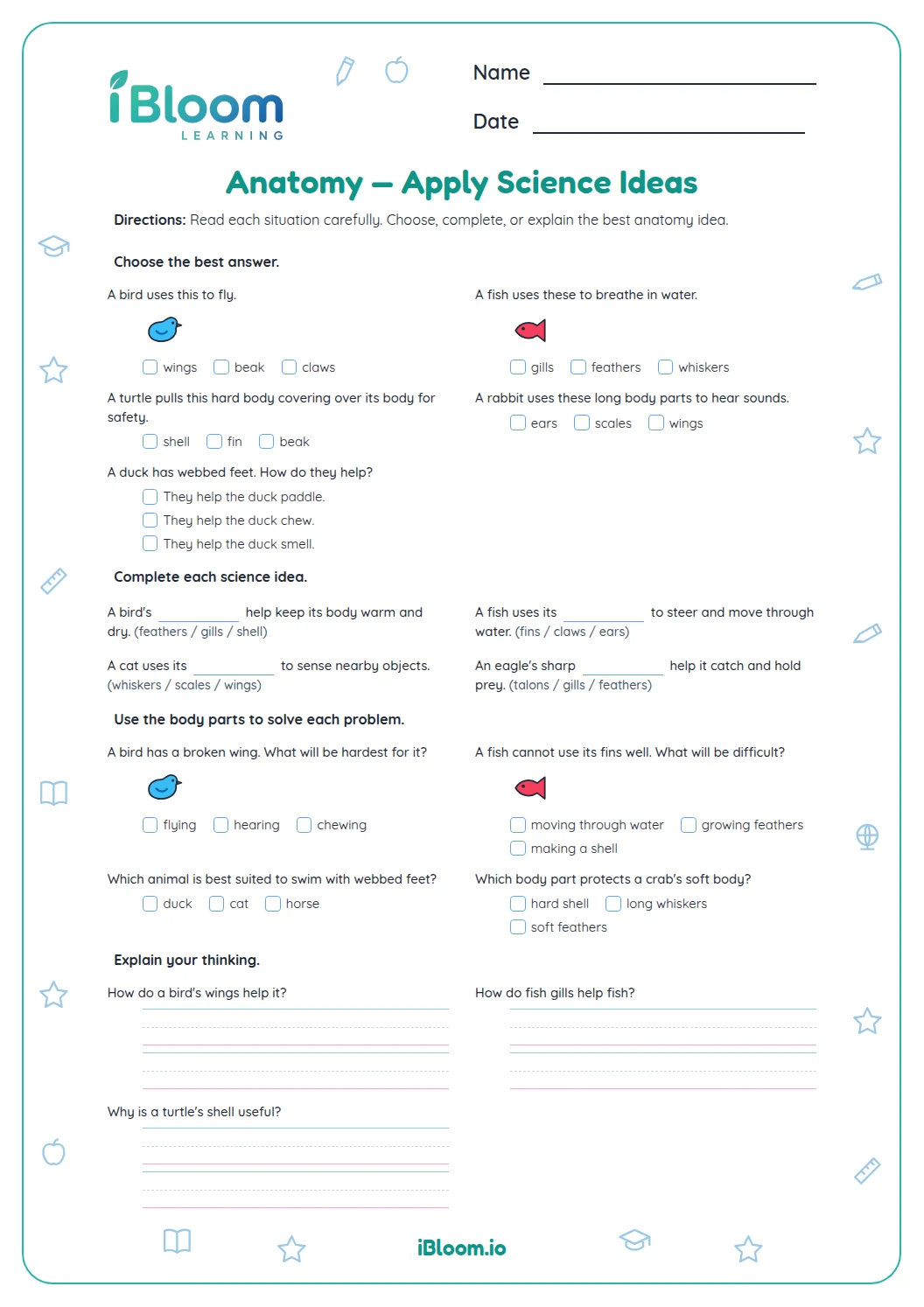
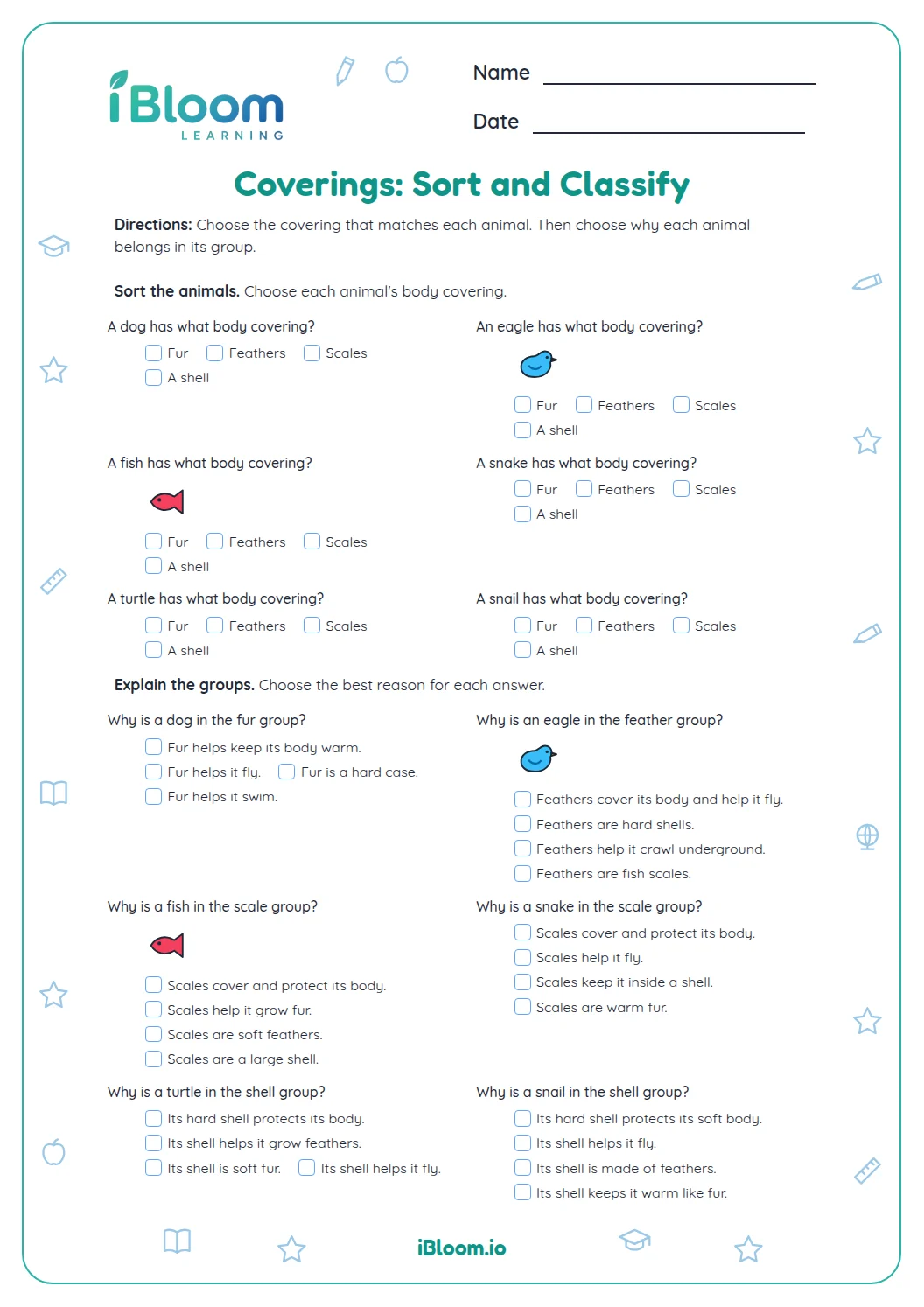
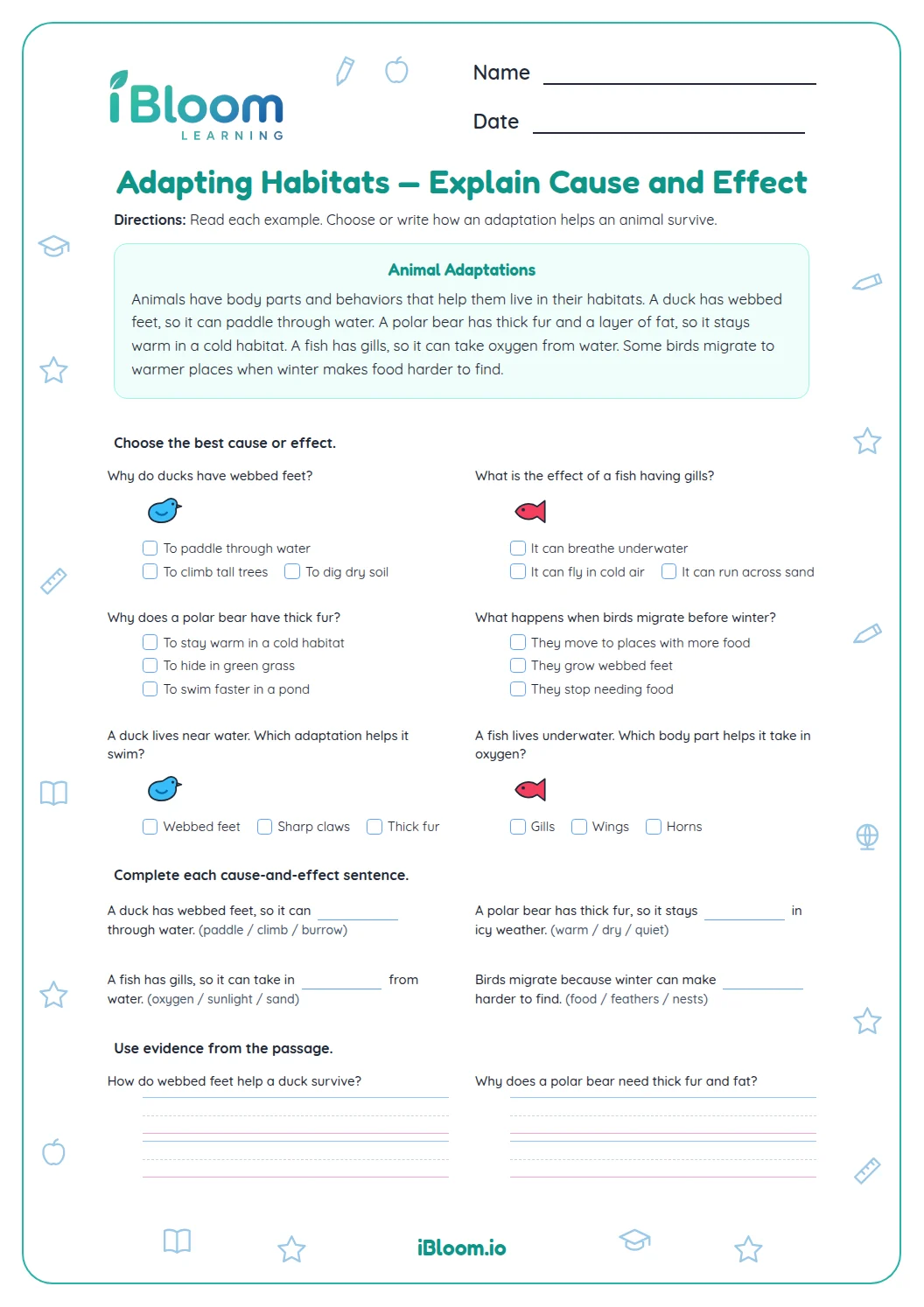
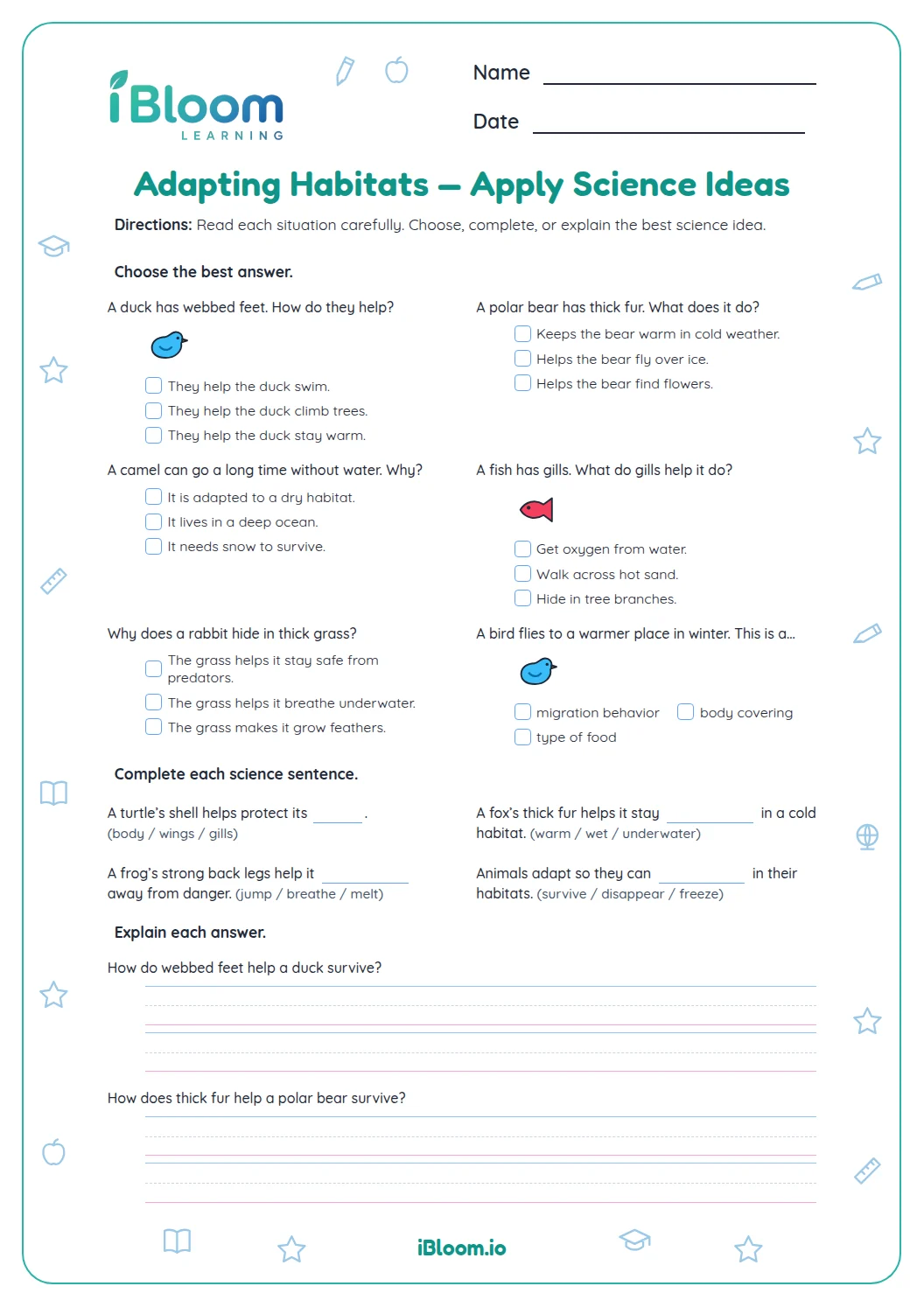
This Grade 2 animal science worksheet uses familiar animal pictures to practice naming body parts and explaining their jobs. Students connect fins with movement in water, shells with protection, and beaks or teeth with getting food. The final question asks students to name an animal, one body part, and the job it does. A separate answer key gives the correct choices and a sample response. Students connect each external part to an animal need or action.
Which parts do students identify?
The animal pictures cue parts such as fins, beaks, shells, noses, and webbed feet. Students identify each part and connect it with a familiar job.
How do parts help animals meet needs?
Questions connect body structures to movement, protection, sensing, and eating. The examples use familiar animals such as fish, birds, and turtles.
What is one part-and-job model?
Students make a simple model by naming an animal, one body part, and the job it does. A fish, fins, and moving through water form one example.
- 1Animal: fish
- 2Body part: fins
- 3Job: help it move and steer in water
How to use this worksheet
- 1Look at the animal name or picture clue.
- 2Read each body-part choice aloud if needed.
- 3Connect the part to a job the animal does.
- 4For the final item, name an animal, one part, and its job.
- 5Compare answers with the key and explain the connection in your own words.
Mistakes to watch for
The mistake
Naming a body part without its job.
The fix
Say what the part helps the animal do.
The mistake
Assuming every animal uses a part in the same way.
The fix
Use the animal and situation in the question to guide the answer.
The mistake
Confusing a body covering with a body part that moves the animal.
The fix
Ask whether the feature protects, senses, gets food, or helps with movement.
What to practice next
Make more practice
Questions parents and teachers ask
What does animal anatomy mean on this page?
Animal anatomy means the parts of an animal’s body. This worksheet focuses on visible parts such as fins, beaks, shells, noses, and webbed feet, then connects each part with a job such as moving, getting food, sensing, or protection. The included pictures support each identification.
Do students label a detailed diagram?
Students use animal pictures as clues to identify body parts, then connect those parts with their functions. The final response asks them to record an animal, a body part, and its job as a simple model. It is a short written model rather than a diagram-labeling task.
Why are fins useful to fish?
Fins help fish move and steer through water. Students use this familiar example to connect a body structure with its function. When discussing the answer, invite the student to explain how the part helps the fish interact with its watery surroundings.
What can a turtle’s shell do?
A turtle’s shell protects its body. The worksheet asks students to connect that external body part with protection, while other questions focus on movement, sensing, and getting food. The answer should describe a job the part helps the animal do.
How many questions are included?
There are 14 picture-supported questions. Most are multiple-choice items about body parts and their functions, and the final question asks students to write a simple animal-part-job model. A separate answer key includes the correct choices and a sample model. Students can complete the items one part at a time.
What science idea does this activity practice?
Students connect an animal’s external body parts with functions such as movement, protection, sensing, and getting food. The examples use familiar animals, including a fish, bird, turtle, and rabbit, so students can discuss how a structure helps an animal. Students can use each example to explain their choice.