






About this worksheet
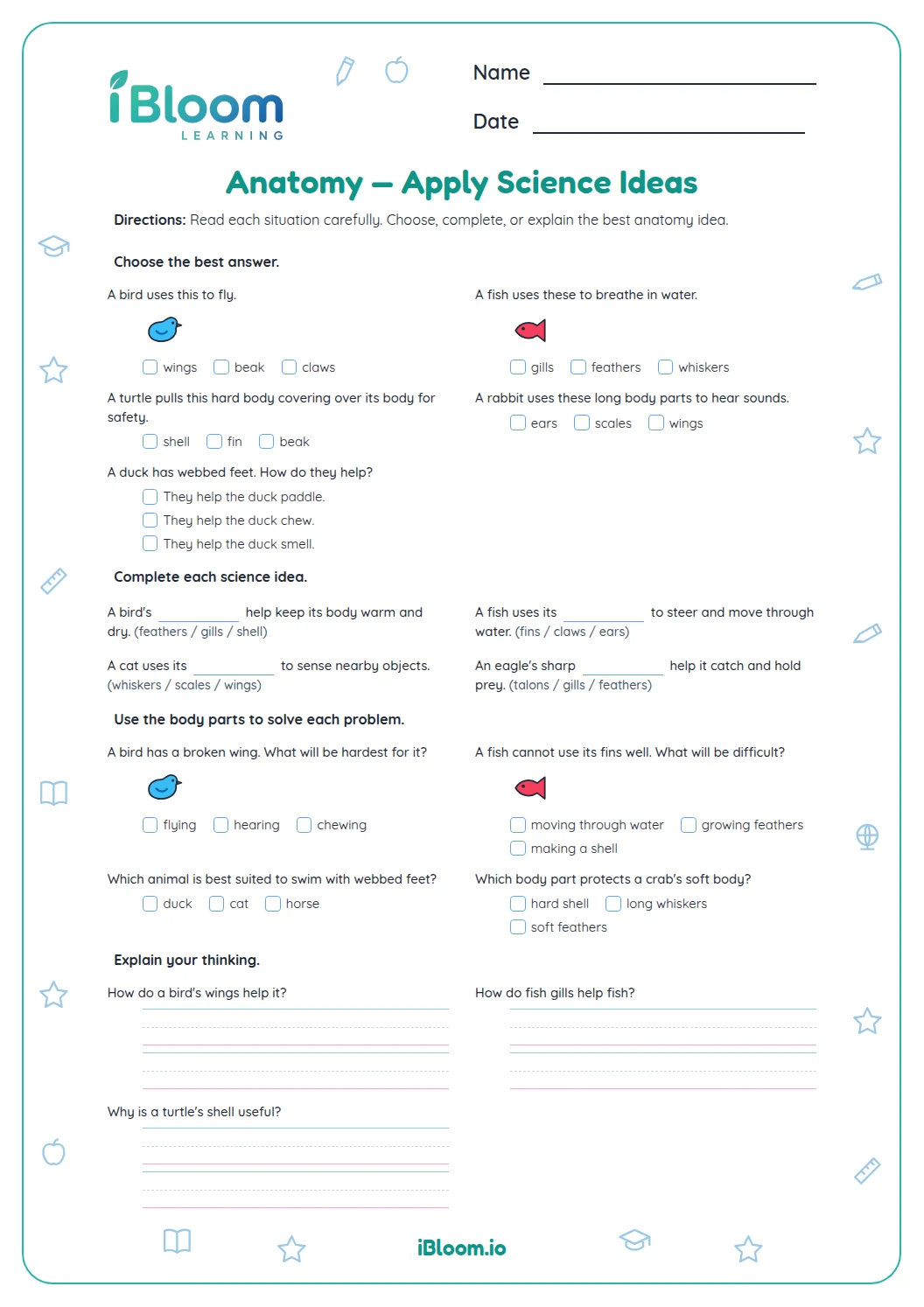
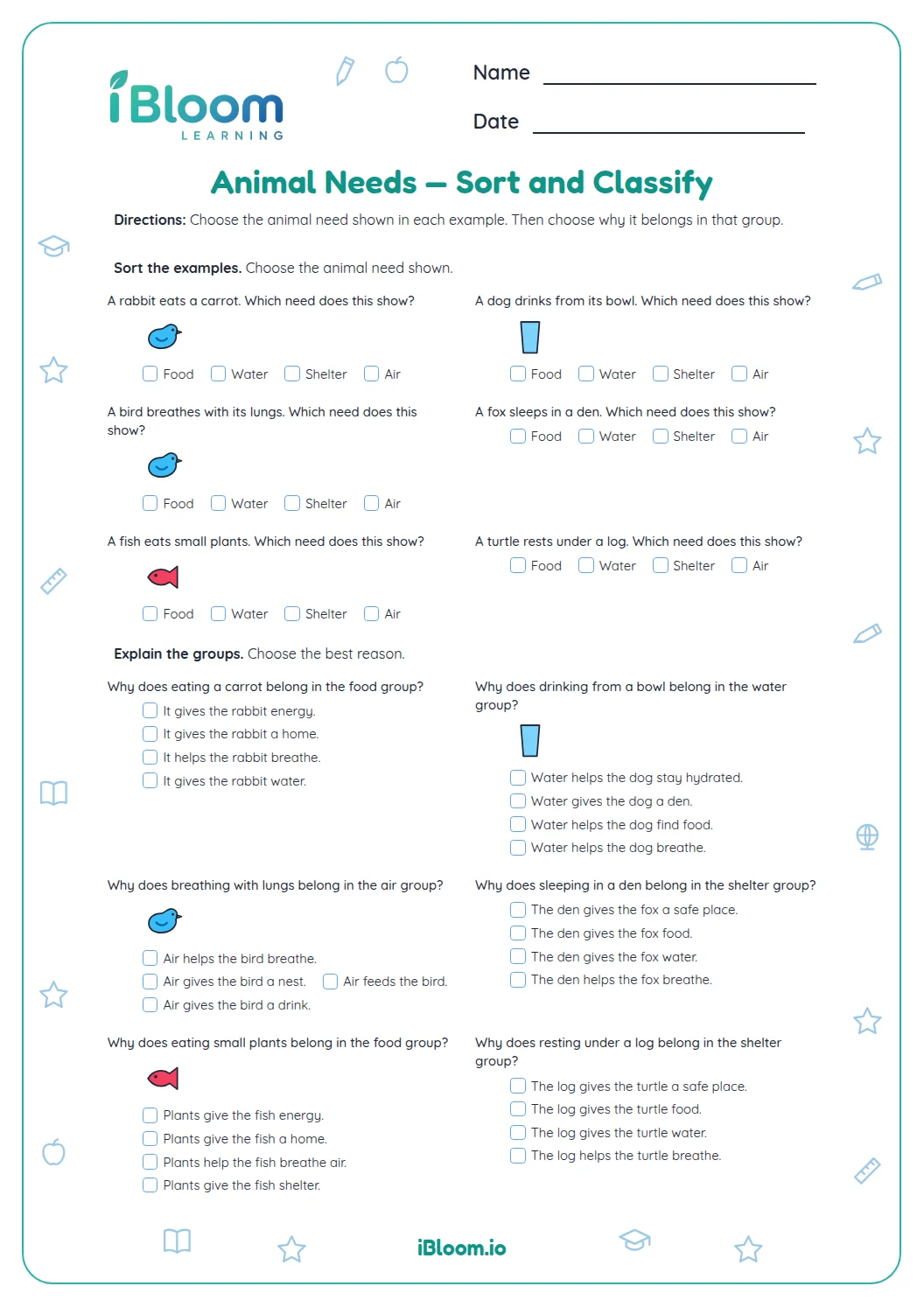
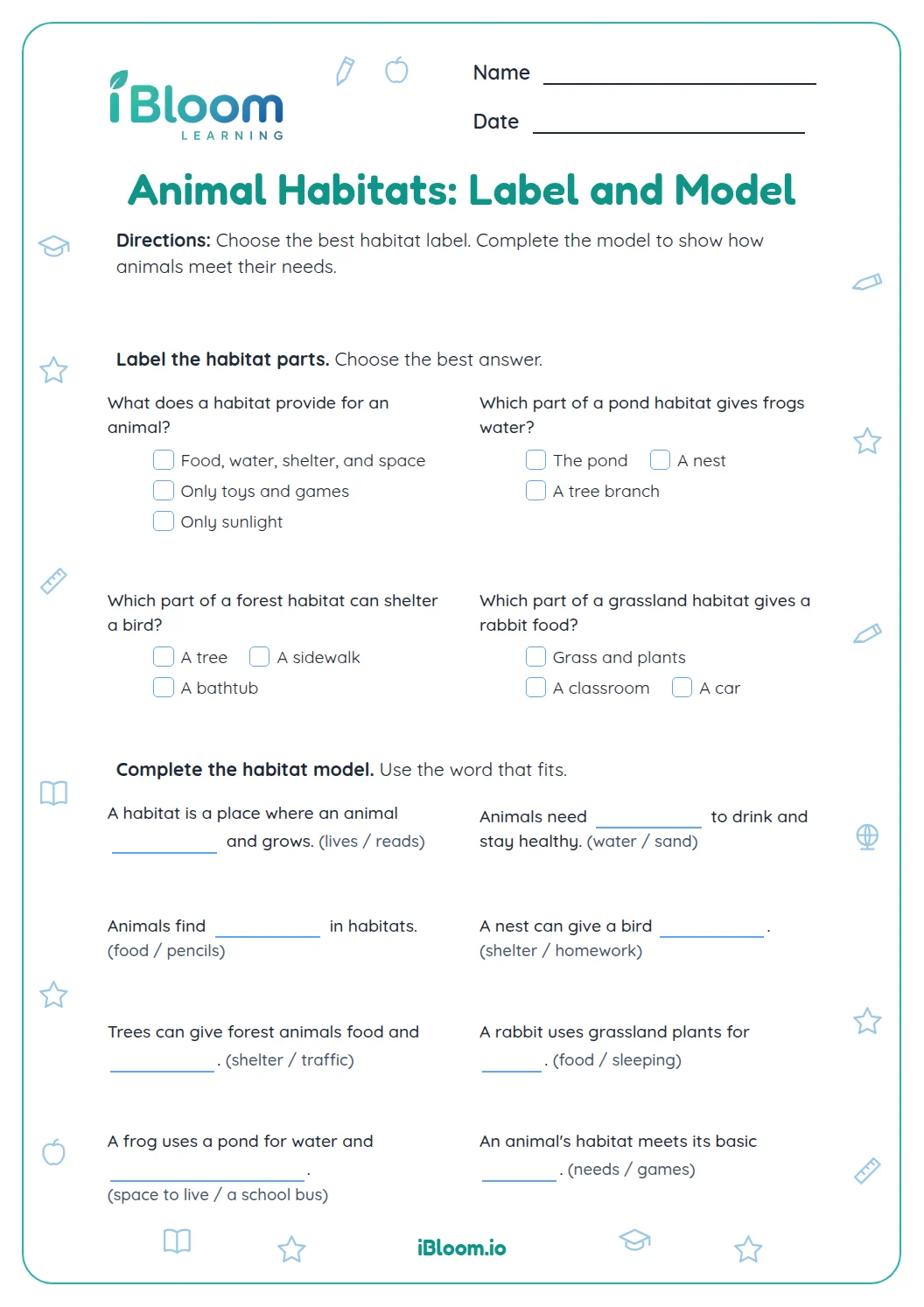
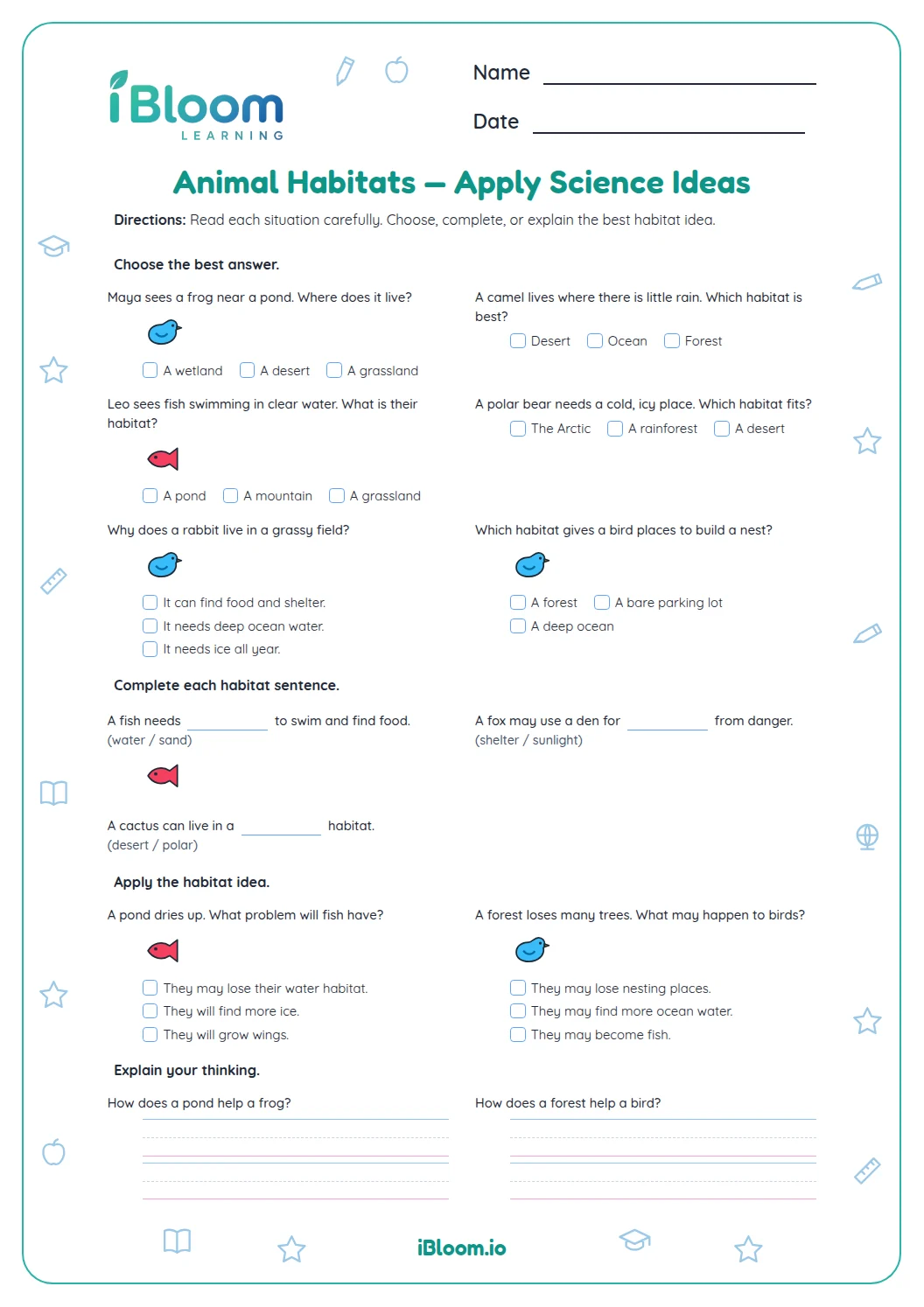
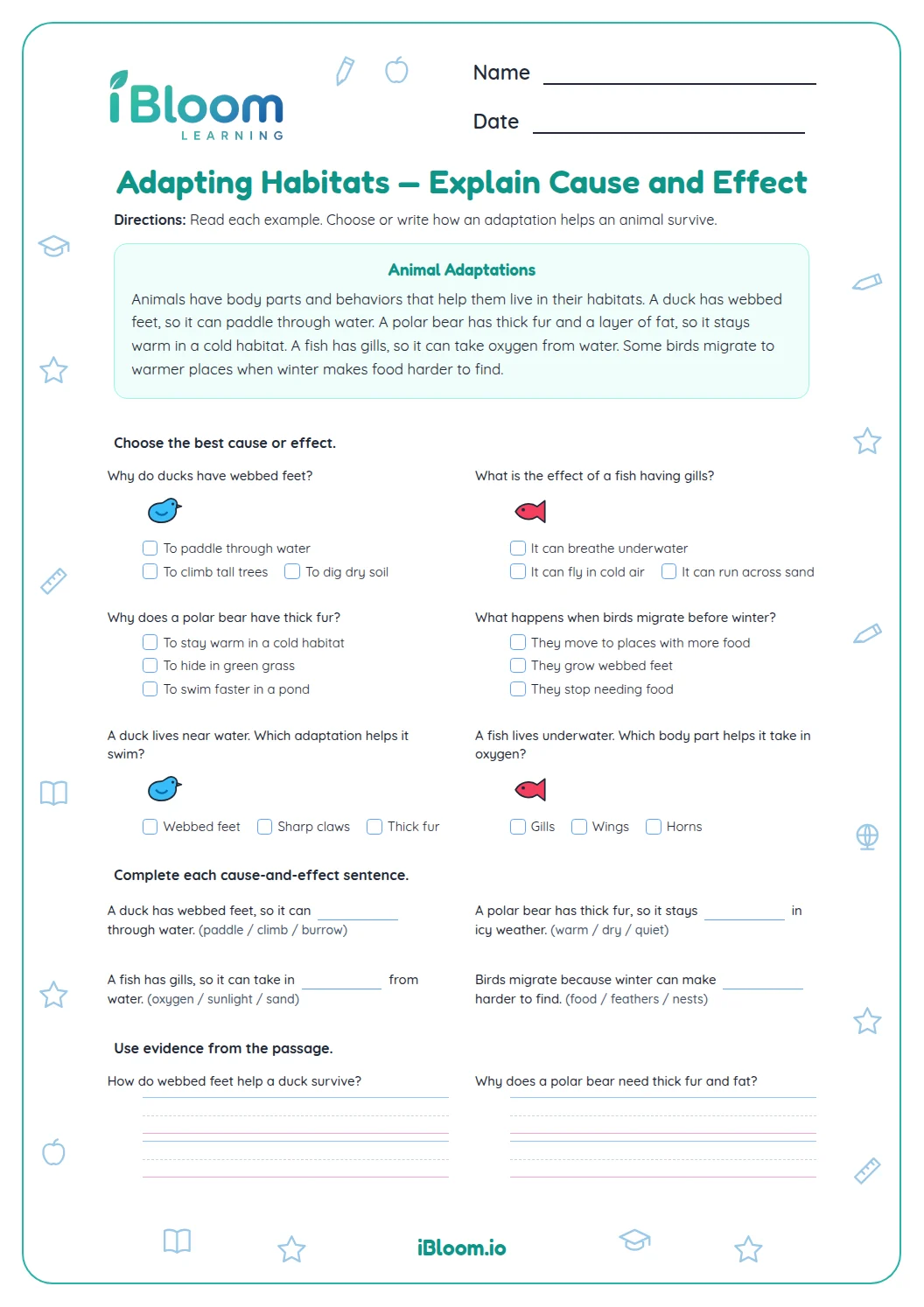
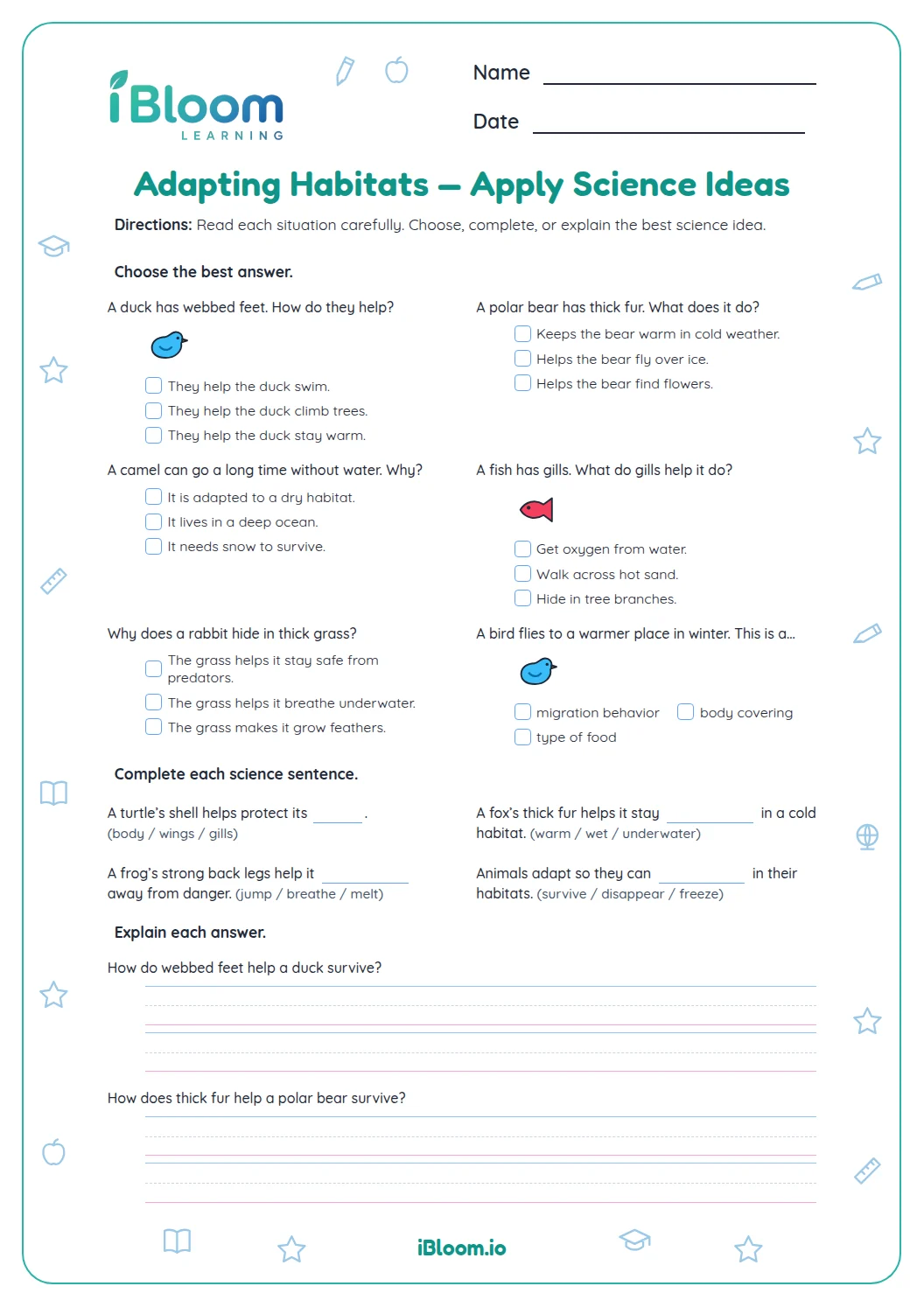
This free two-page worksheet helps Grade 2 learners connect animal body parts with what those parts do. Children answer 10 multiple-choice questions, write 2 short explanations, and apply a turtle shell idea in 2 design questions. The practice connects to NGSS 1-LS1-1 through its shell-inspired protective design.
Aligned to 1-LS1-1
How do animal parts help animals?
A body part is a structure; its job is its function. Webbed feet help a duck paddle, a beak helps a bird pick up food, and a shell protects a turtle. On this sheet, children connect each part to an action or need.
How can a child explain a body part’s job?
Name the part, describe what it does, and connect that action to the animal’s need.
- 1A duck uses its webbed feet to push through water.
- 2The broad toes push against the water as the duck paddles.
What will children practice?
Part A matches parts to functions. Part B asks how a duck’s bill and a squirrel’s claws help. Part C uses the turtle-shell idea to plan a protective bike guard.
How to use this worksheet
- 1Read the whole question before choosing.
- 2Name the body part in your mind.
- 3Ask what action the part helps the animal do.
- 4For a written response, name the part and its job.
- 5Use the answer key to discuss any different reasonable explanation.
Common mistakes and quick fixes
The mistake
Saying a part’s name without describing its job.
The fix
Add an action: fins help a fish move through water.
The mistake
Mixing up a body part with what it senses or does.
The fix
Ask whether the part helps the animal move, sense, get food, or stay safe.
The mistake
Assuming every animal uses a part in the same way.
The fix
Use the animal and its habitat as clues before choosing a function.
NGSS alignment
The design questions apply the structure-and-function idea in NGSS 1-LS1-1.
Connect an animal structure with its job and use that idea in a protective design.
On this sheet: Questions connect animal structures with their jobs and apply a turtle shell idea to plan a simple protective guard.
Show the official wordingHide the official wording
Use materials to design a solution to a human problem by mimicking how plants and/or animals use their external parts to help them survive, grow, and meet their needs.
What to practice next
Make more practice
Further reading
Questions parents and teachers ask
What is animal anatomy?
Animal anatomy is the study of an animal’s body structures. This worksheet focuses on external parts such as fins, beaks, ears, claws, and shells, then asks children to connect each part with a job. The answer key gives a concise check for every multiple-choice and written response.
What does this worksheet ask children to do?
Children answer ten multiple-choice questions about familiar animal structures, then write four short answers about what a part helps an animal do. Examples include ducks, birds, fish, turtles, and rabbits. They can point to a structure, name it, and explain the action it supports.
What is one example of structure and function?
A fish’s fins help it move through water. The structure is the fin, and its function is helping the fish move. On the worksheet, children use the same reasoning to connect parts such as a duck’s feet, a bird’s beak, and an owl’s ears with useful actions.
How can I help if my child is unsure?
Ask what the animal needs to do and which body part could help. For example, if an animal needs to climb, consider which part can grip a surface. Let the child explain the choice in a short sentence before checking the answer key.
How many pages are included?
The plan is two worksheet pages followed by two answer-key pages. The worksheet has ten multiple-choice questions and four short answers about animal body parts and their jobs, including a simple protective-design idea. The key includes sample responses, and each page is laid out for clear printing.
Which standard does this sheet connect to?
The page lists NGSS 1-LS1-1, which focuses on using materials to design a solution by mimicking how plants or animals use external parts to meet needs. The printed questions connect animal structures to movement, protection, sensing, and food, then apply a turtle shell idea to a bike guard. The key includes sample responses.