








About this worksheet
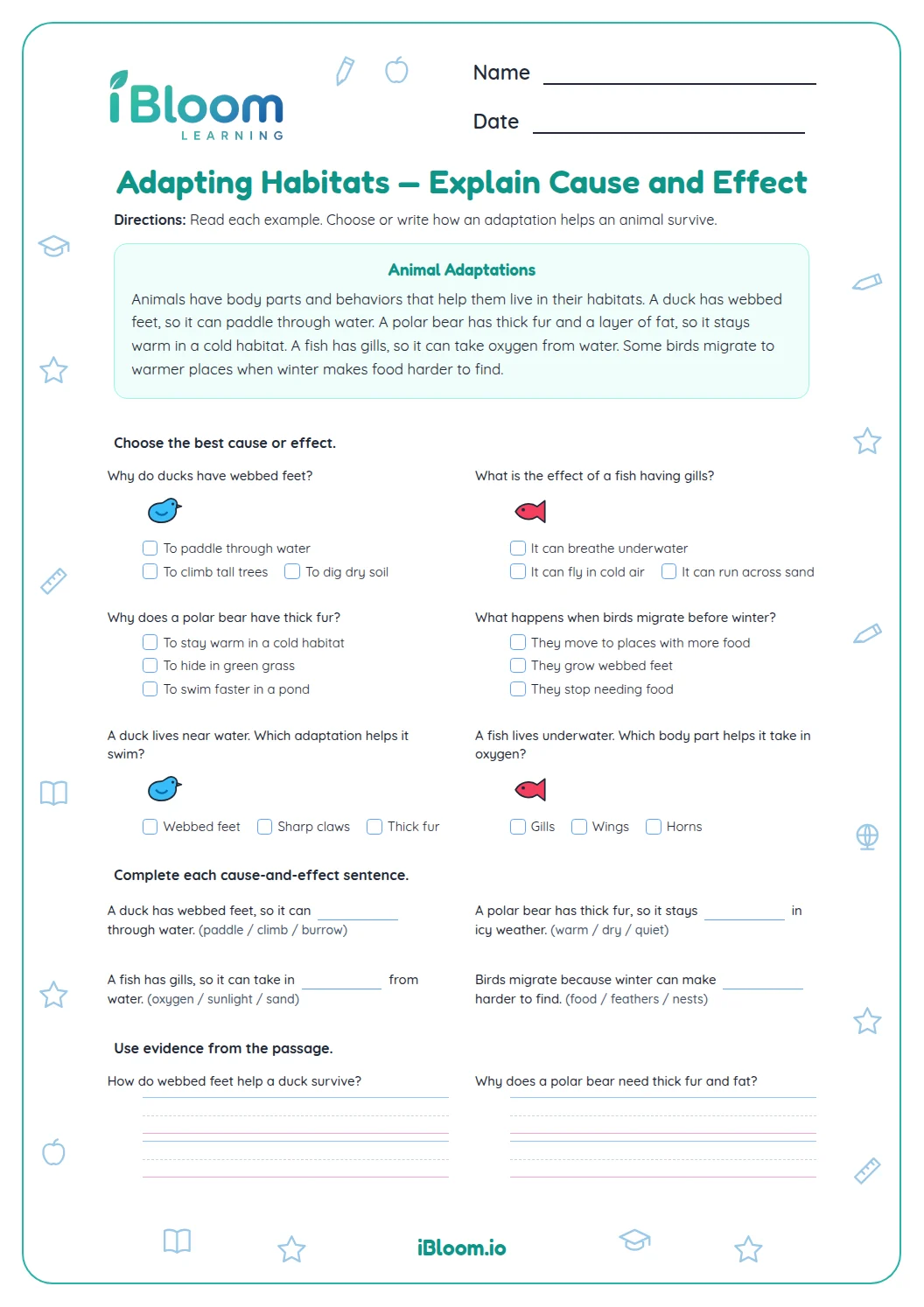
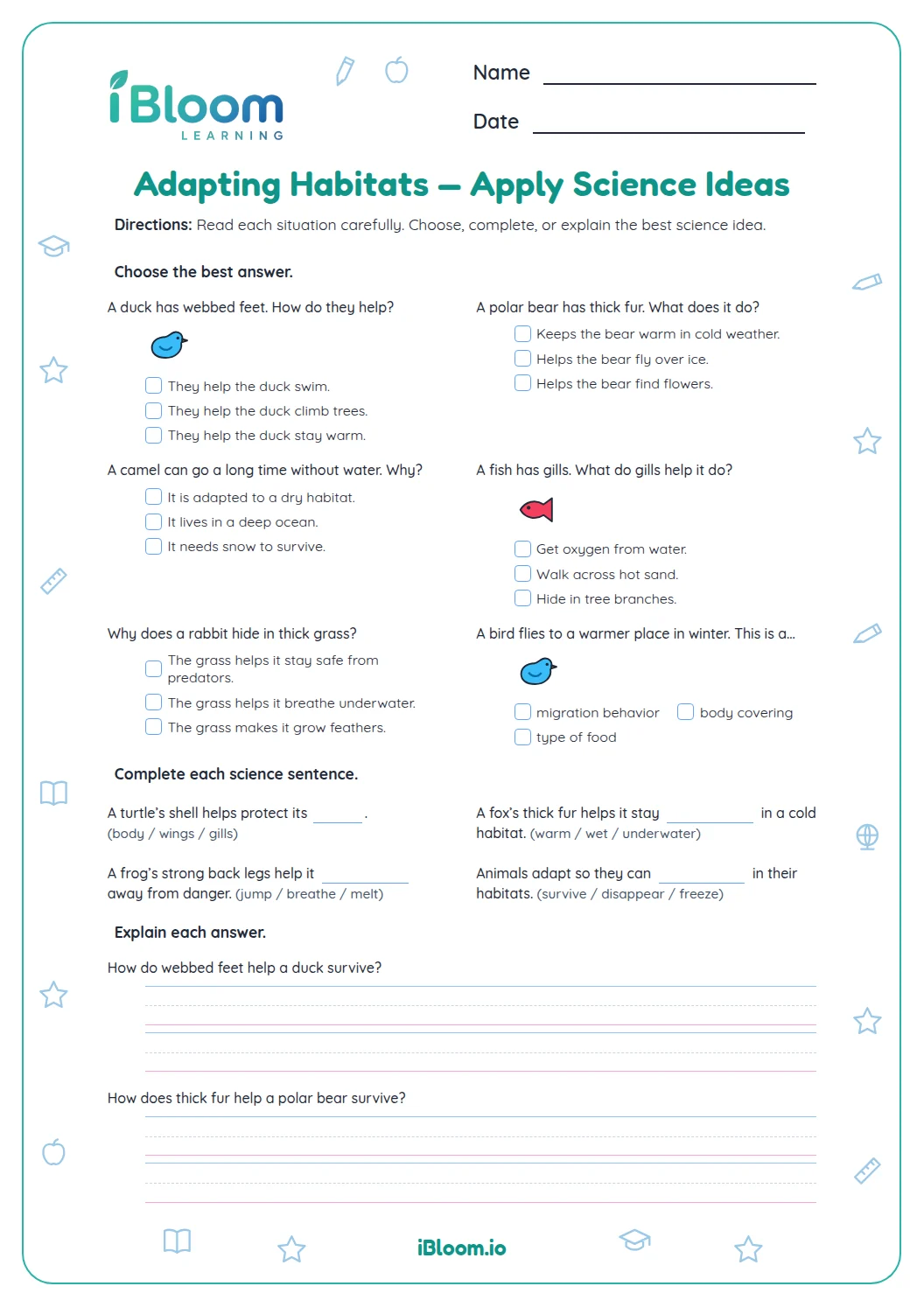
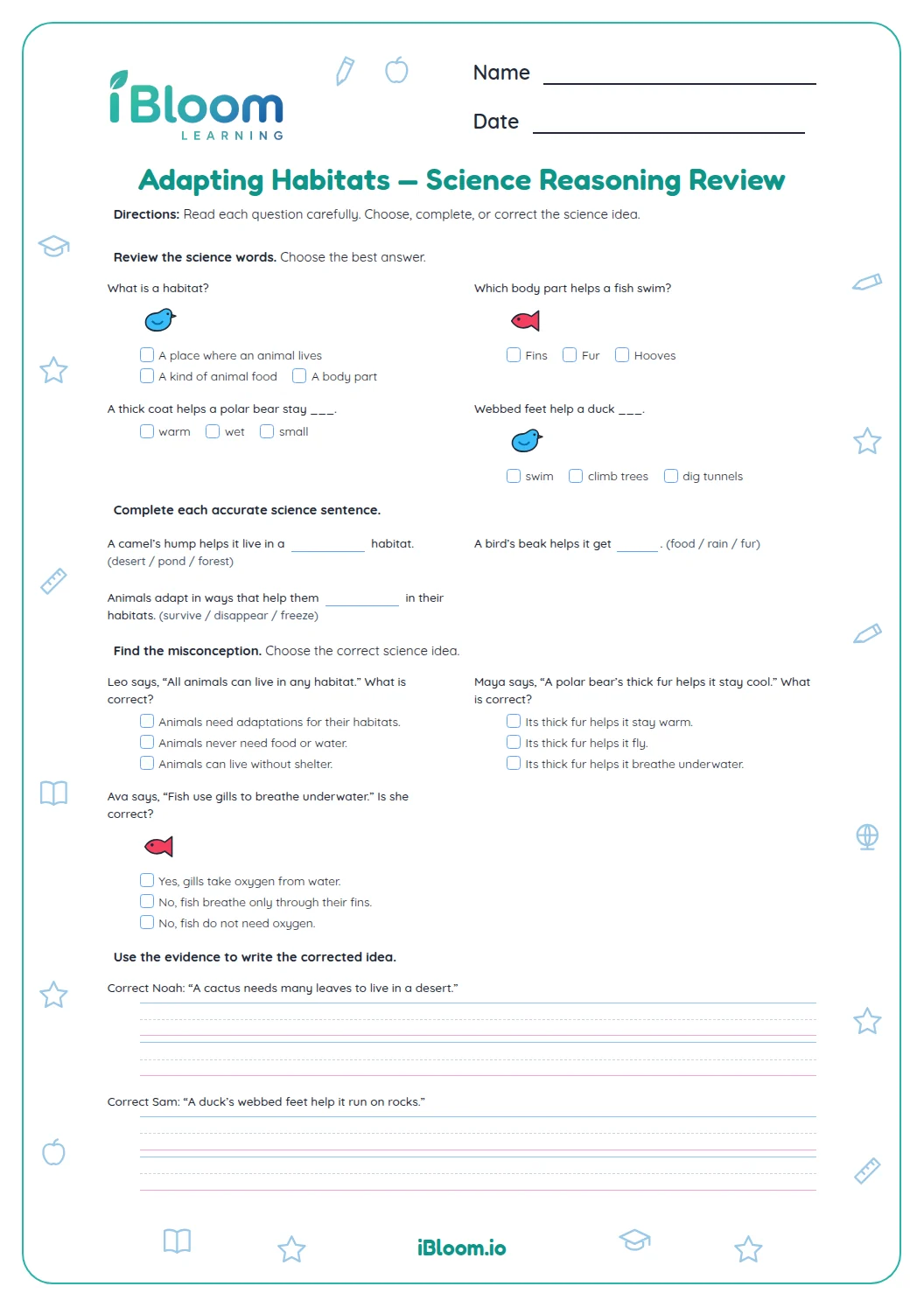
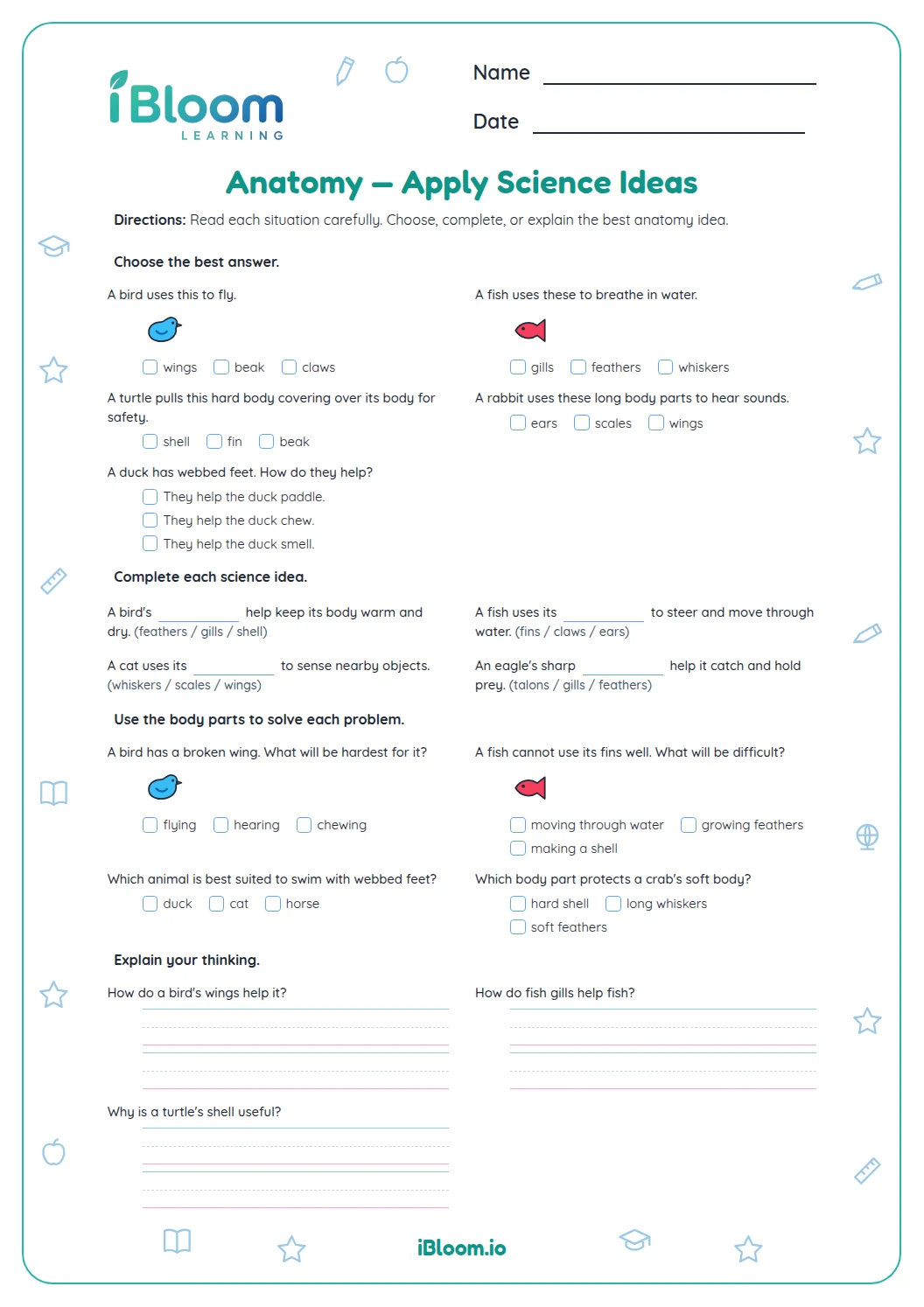
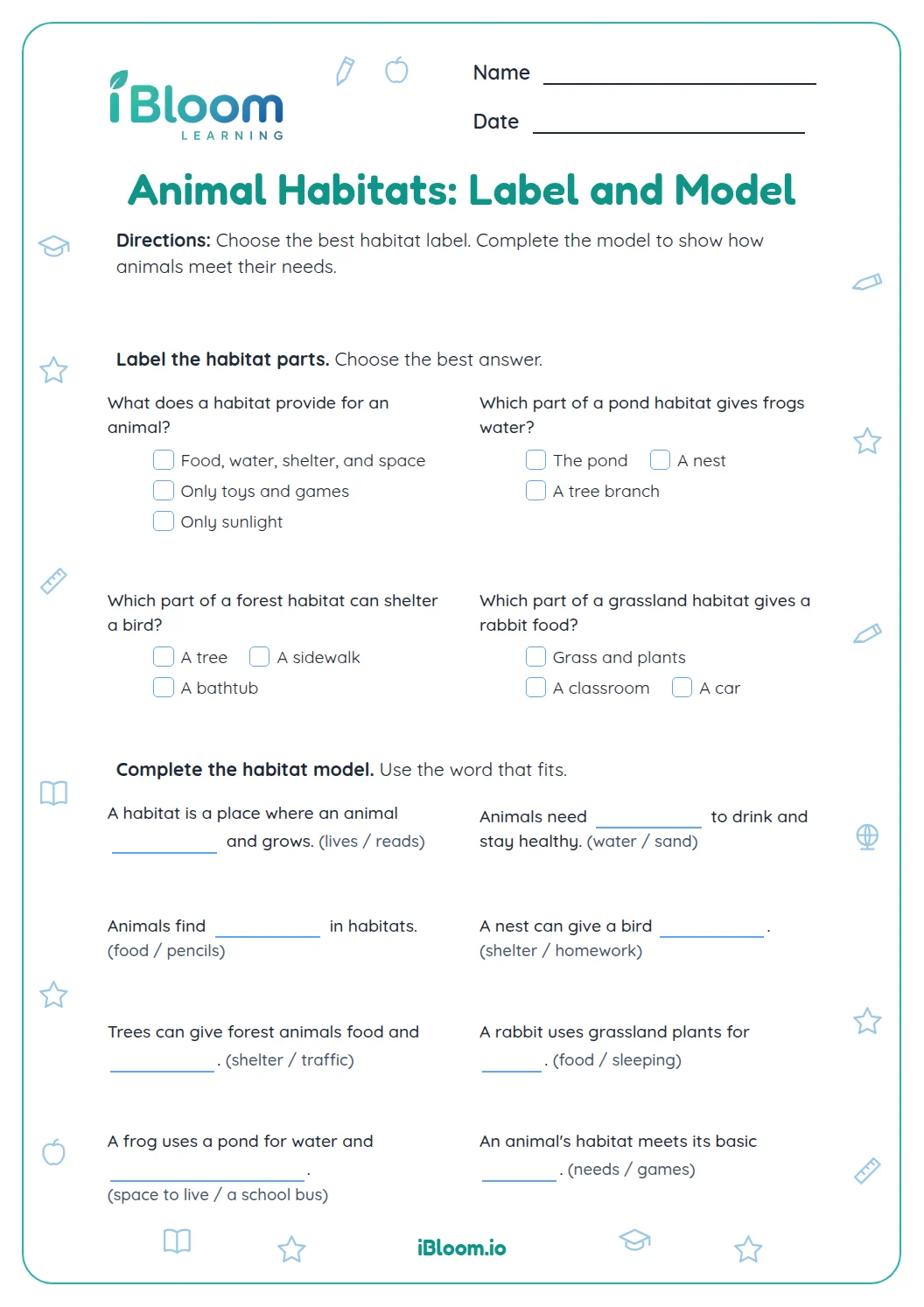
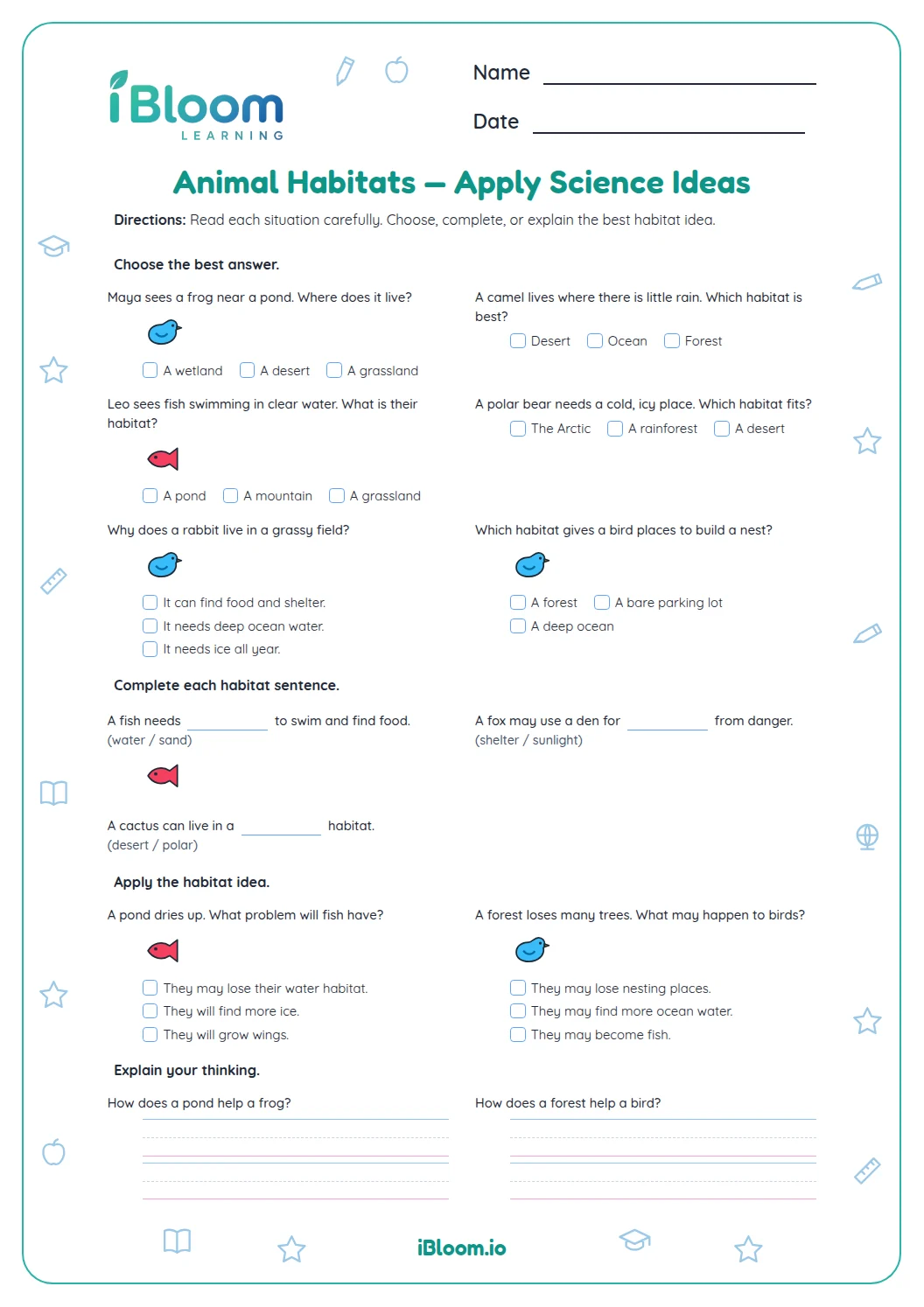
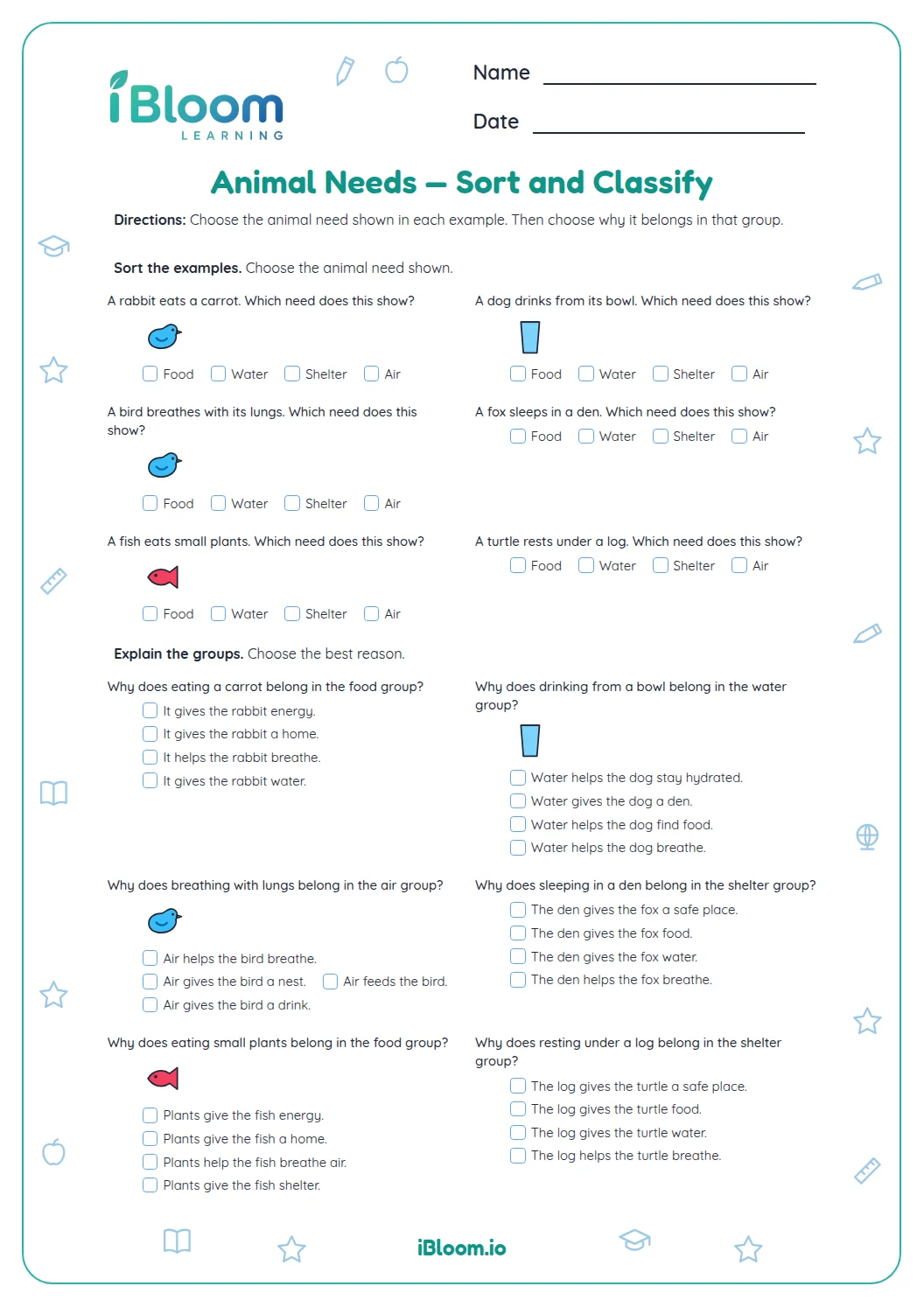
This Grade 2 science worksheet asks students to classify organisms using habitat clues, then connect additional features with their jobs. The first seven questions include pictures and ask students to name a suitable habitat. The next seven focus on effects such as moving, finding food, or staying warm. A separate answer key follows.
How does the worksheet connect features with habitats?
The first seven questions show an organism and ask students to complete a suitable habitat name from a clue about a feature. The next seven ask what a feature helps a living thing do. This moves from sorting by habitat to connecting features with their jobs.
- Part A: classify seven pictured organisms by habitat
- Part B: complete seven feature-and-job sentences
- Picture cues match the organisms in Part A
How do features help living things in a habitat?
A habitat provides the conditions and resources a living thing needs. A feature is useful when it helps that organism live there or meet a need. The same feature does not do every job: gills help a fish take oxygen from water, while fur can help an animal stay warm.
- 1A small, still freshwater body with muddy banks is a ___.
- 2Complete the habitat name: pond.
How can children connect a feature to its job?
Name the feature, then connect it to a specific effect. Thick fur helps an animal stay warm, while a cactus stem can store water where rain is scarce. A complete response names the habitat or job that fits the clue.
How to use this worksheet
- 1Look at each organism picture and read the habitat clue.
- 2Complete the habitat name in Part A.
- 3In Part B, complete each sentence with the feature’s effect.
- 4Use the answer key to review missed items.
Common mix-ups
The mistake
Choosing a habitat from the animal name alone.
The fix
Use the feature in the prompt and say how it helps the organism there.
The mistake
Mixing up a body part with its job.
The fix
Name both: for example, gills are the feature and taking oxygen from water is their job.
The mistake
Assuming every adaptation is a body covering.
The fix
Features can include body parts, structures, or other traits, such as a plant stem that stores water.
What to practice next
Make more practice
Questions parents and teachers ask
How many questions are included?
The worksheet has 14 fill-in questions in two parts. Part A has seven habitat clues with matching organism pictures, and Part B has seven feature-and-job sentences. A separate answer key follows the two practice pages. The pictures support the habitat sorting activity.
What is an adaptation in this worksheet?
Here, an adaptation is a feature that helps a living thing do something useful or live in a particular place. Examples include gills for taking oxygen from water, webbed feet for paddling, and thick fur for warmth in a cold habitat.
Do students need to write explanations?
Part A asks students to complete a habitat name from the organism and feature clue. Part B asks them to complete one short sentence with an effect. An adult can invite a longer explanation after each answer, using the key to check the main connection.
Why are plants included with animals?
One question uses a cactus stem to show that plants also have features that help them meet needs. The other examples focus on animals. Students connect the stem with storing water, which can help a plant in a dry habitat where rain is scarce.
How can I help a child who is unsure?
Ask the child to name the body part or plant feature first, then reread the clue. In Part A, look for a habitat that matches the feature. In Part B, complete the sentence with what the feature helps the organism do.