Free printable practice
Anatomy Practice Activities
Grade 2 animal anatomy worksheets help children label body parts, connect structures to functions, and compare how animals move, eat, sense, and stay safe.
Free printable worksheet PDFs
Preview every available page, then download the free worksheet PDF for home, homeschool, tutoring, or classroom practice.
Preview the exact activity before downloading it.
 Anatomy — Sort and ClassifyGrade 2 animal anatomy worksheets help children label body parts, connect structures to functions, and compare how animals move, eat, sense, and stay safe. This sort and classify worksheet provides a distinct, age-appropriate way to practise the same lesson.Grade 2Free PDF preview8 pages
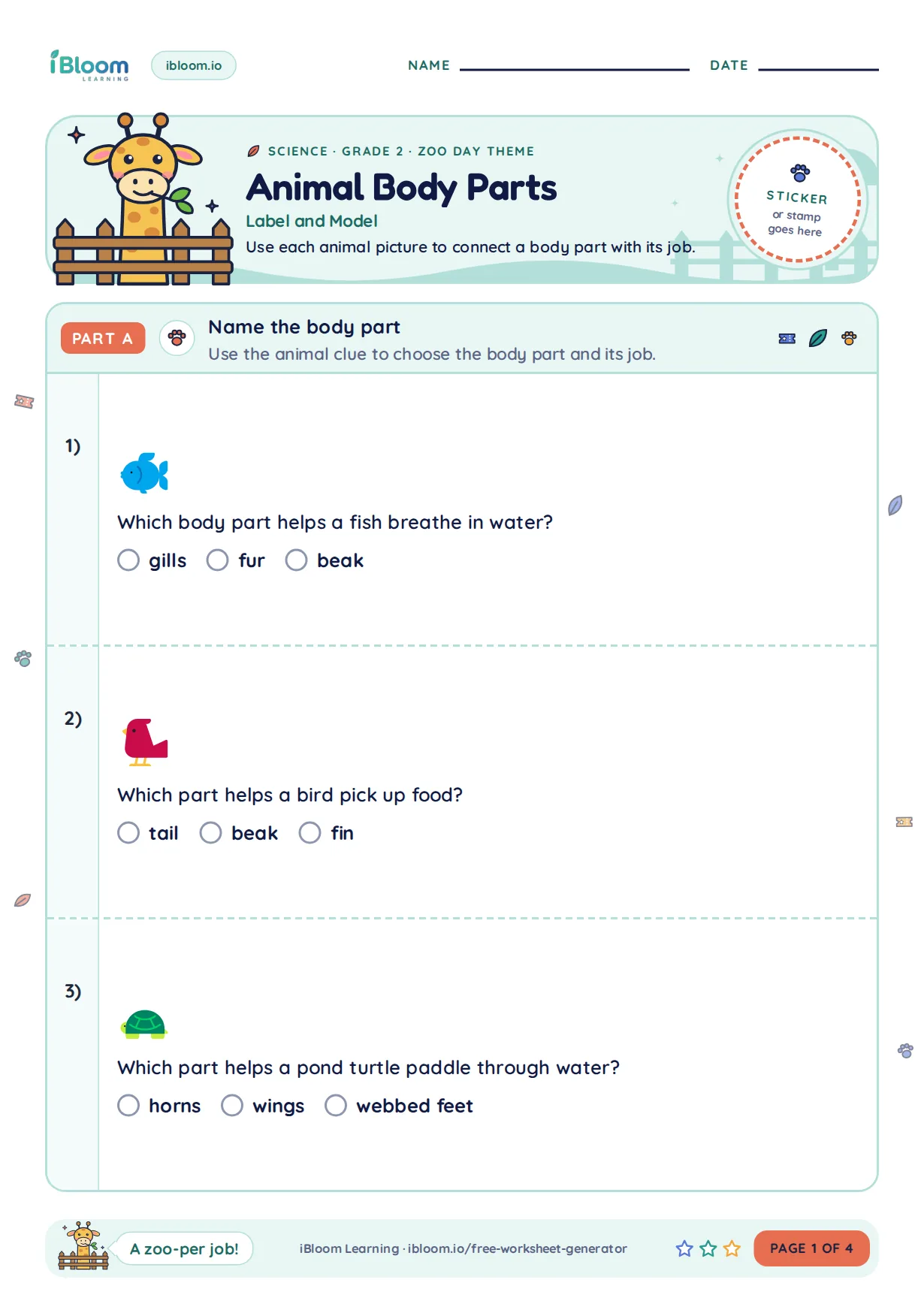 Anatomy — Label and ModelGrade 2 animal anatomy worksheets help children label body parts, connect structures to functions, and compare how animals move, eat, sense, and stay safe. This label and model worksheet provides a distinct, age-appropriate way to practise the same lesson.Grade 2Free PDF preview6 pages
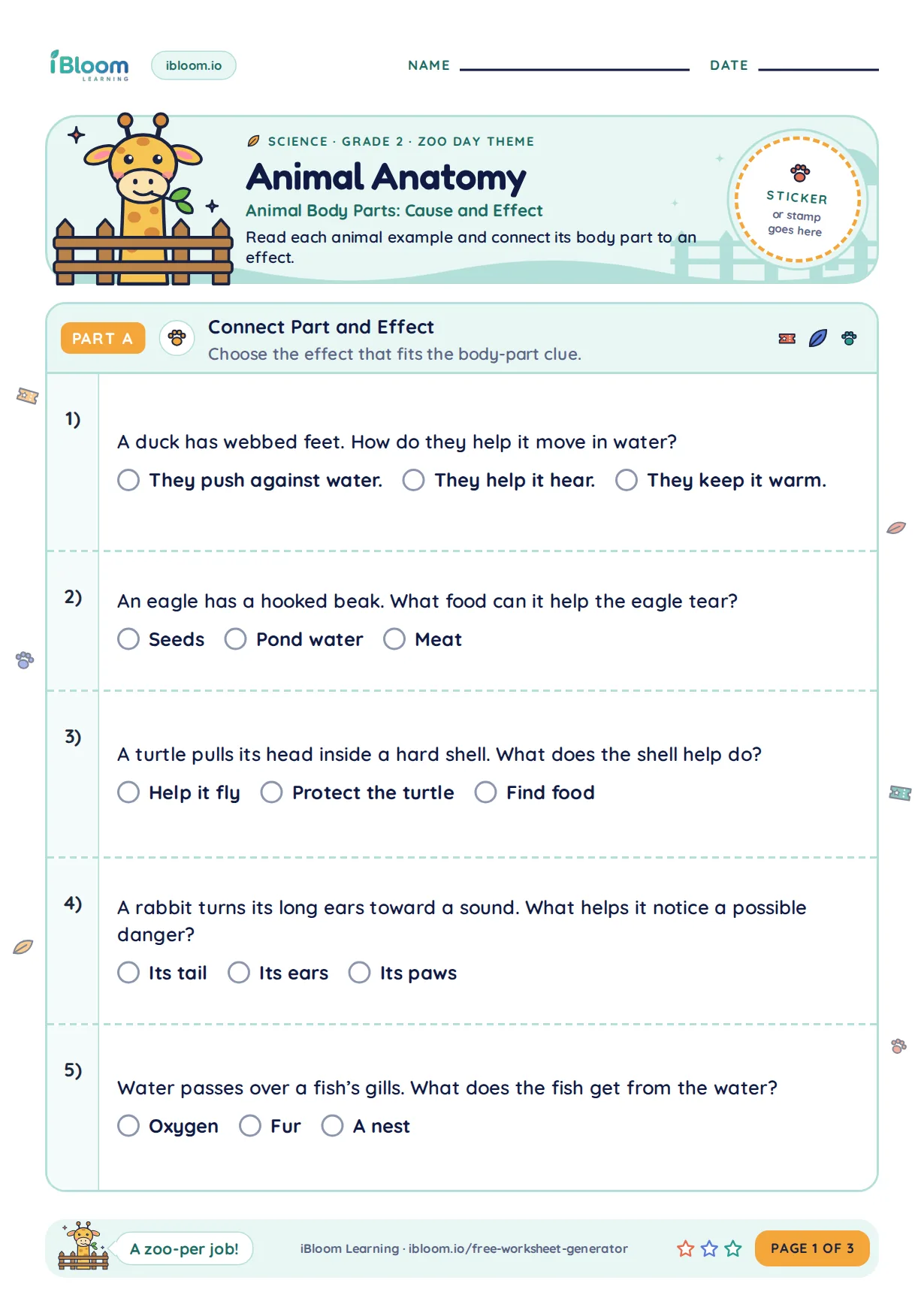 Anatomy — Explain Cause and EffectGrade 2 animal anatomy worksheets help children label body parts, connect structures to functions, and compare how animals move, eat, sense, and stay safe. This explain cause and effect worksheet provides a distinct, age-appropriate way to practise the same lesson.Grade 2Free PDF preview
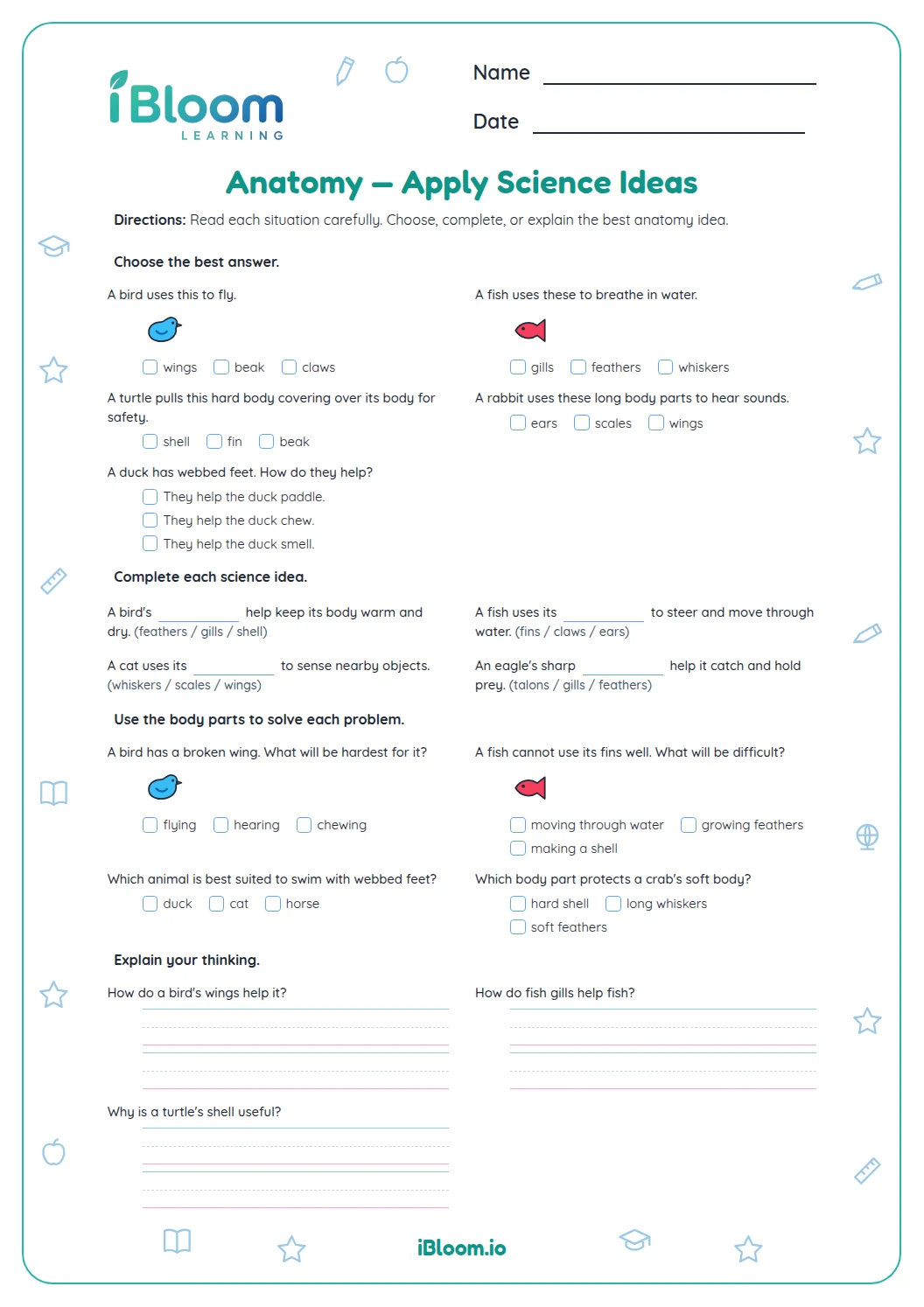 Anatomy — Apply Science IdeasGrade 2 animal anatomy worksheets help children label body parts, connect structures to functions, and compare how animals move, eat, sense, and stay safe. This apply science ideas worksheet provides a distinct, age-appropriate way to practise the same lesson.Grade 2Free PDF preview4 pages
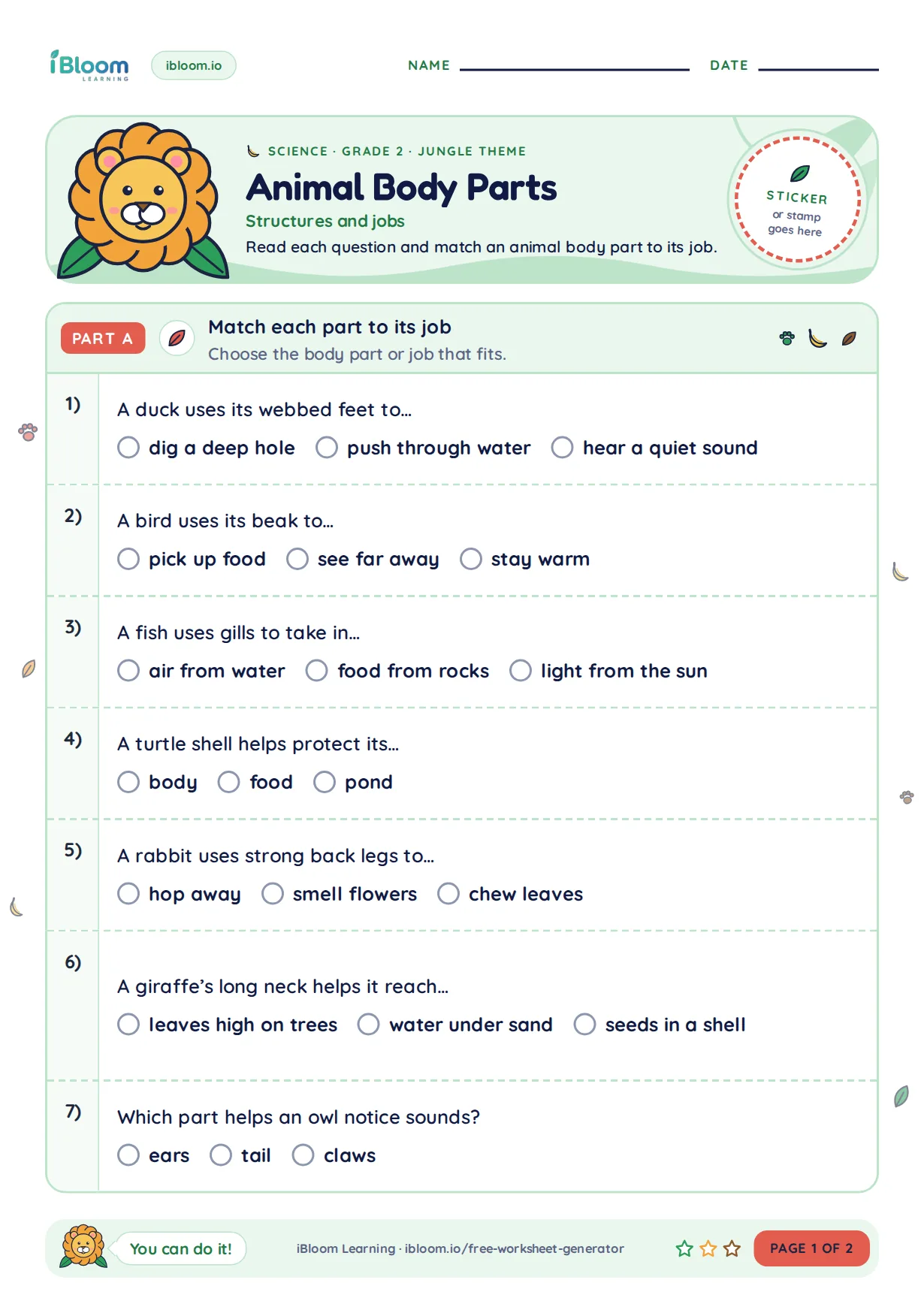 Anatomy — Science Reasoning ReviewGrade 2 animal anatomy worksheets help children label body parts, connect structures to functions, and compare how animals move, eat, sense, and stay safe. This science reasoning review worksheet provides a distinct, age-appropriate way to practise the same lesson.Grade 2Free PDF preview
Practice that builds confidence
What Grade 2 students learn
These Grade 2 science worksheets focus on animal anatomy in the Animals unit. Children practise naming and labeling body parts such as wings, fins, beaks, claws, tails, shells, legs, eyes, ears, and mouths, then think about what each part helps the animal do.
The printable activities include diagrams, matching tasks, comparison prompts, and simple explanations of structure and function. Students learn to observe carefully, use science vocabulary, and explain how different animals are built for moving, feeding, sensing, and protection.
Animal anatomy at this level is about noticing visible body parts and connecting them to everyday animal needs. A bird’s wings help it fly, a fish’s fins help it swim, a turtle’s shell helps protect it, and a rabbit’s long ears can help it hear. These worksheets keep the focus concrete so children can describe what they see before making a science claim.

Building from labels to functions
The activities move from identifying body parts on clear animal pictures to explaining how those parts are useful. Students may label a beak, match claws to digging or gripping, compare fins and legs, or sort animals by the parts they have. This progression helps children move beyond memorizing names and toward understanding the idea of structure and function.
A simple parent routine
At home, choose one worksheet and one familiar animal. Ask, “What body parts do you notice?” Then have your child point, label, and say what each part helps the animal do. For example: “The duck has webbed feet. They help it paddle in water.” Finish by asking your child to compare that animal with a pet, backyard animal, or animal from a book.

Classroom uses for teachers
Teachers can use these pages during an Animals unit, in science centers, for early finisher work, or as a follow-up to reading nonfiction animal texts. The worksheets also work well before a class discussion because they give students a visual reference and vocabulary to use when describing adaptations in age-appropriate language.

Common errors to watch for
Some children may name a body part but not explain its job, or they may assume every animal uses a part in the same way. For instance, wings do not always mean strong flight, and tails can help with balance, swimming, communication, or protection depending on the animal. Encourage students to use evidence from the picture and the animal’s habitat.
Free printable PDF download
Use this grade 2 animal anatomy worksheet page to preview the activity, print it, or download it as a PDF for quick practice. It works well for homework, homeschool lessons, tutoring, morning work, revision, and classroom centers.
Answers and answer key support
After the child completes the worksheet independently, parents and teachers can use the answer support or answer key information to check the work, review mistakes, and choose the next practice step.
Why iBloom worksheets help
iBloom worksheets give second graders repeated, varied practice with clear animal images, simple prompts, and useful science words. A child-friendly strategy is: Look, name, tell why. Look closely at the animal, name the part, then tell why that part helps the animal live.
Helpful answers
Frequently asked questions
What animal anatomy skills do these Grade 2 worksheets cover?
They help students identify and label visible animal body parts, connect parts to their functions, and compare how different animals use structures such as wings, fins, claws, beaks, tails, and shells.
Are these worksheets about internal organs?
No. These pages are designed for Grade 2 and focus mainly on observable animal structures and what those parts help animals do, rather than detailed internal anatomy.
How can I help my child explain body part functions?
Use the sentence frame: “The animal has ___, and it helps the animal ___.” For example, “The fish has fins, and they help the fish swim.”
Can these worksheets be used with a classroom animal research project?
Yes. Students can complete a worksheet for one animal, then use the labels and function words to write or present a short description of how that animal’s body helps it live.
What is a common misconception in animal anatomy for second graders?
A common misconception is thinking that the same body part always has one purpose. For example, tails may help with balance, movement, communication, or defense depending on the animal.
Is this grade 2 animal anatomy worksheet free?
Yes. You can preview it for free and use the printable worksheet for home or classroom practice.
Can I download this grade 2 animal anatomy worksheet as a PDF?
Yes. Use the worksheet download option to save a printable PDF, or print the worksheet directly from the page.
Does this grade 2 animal anatomy worksheet include answers or an answer key?
When the activity has fixed answers, iBloom includes answer support so parents and teachers can check the completed worksheet.