Free printable practice
Food Chain Practice Activities
Printable Grade 2 science worksheets that help children trace how energy moves from plants to animals in simple food chains.
Free printable worksheet PDFs
Preview every available page, then download the free worksheet PDF for home, homeschool, tutoring, or classroom practice.
Preview the exact activity before downloading it.
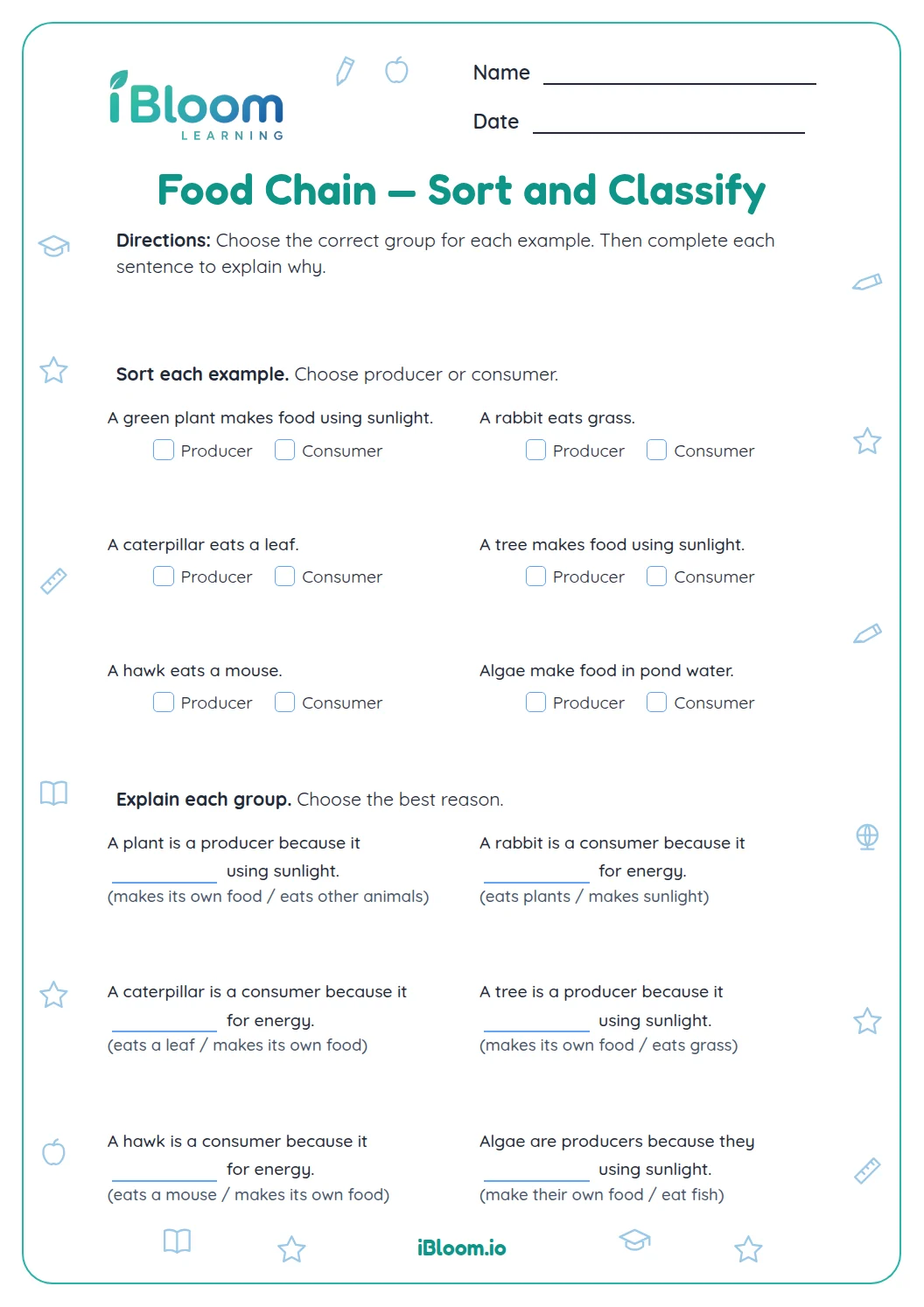 Food Chain — Sort and ClassifyPrintable Grade 2 science worksheets that help children trace how energy moves from plants to animals in simple food chains. This sort and classify worksheet provides a distinct, age-appropriate way to practise the same lesson.Grade 2Free PDF preview4 pages
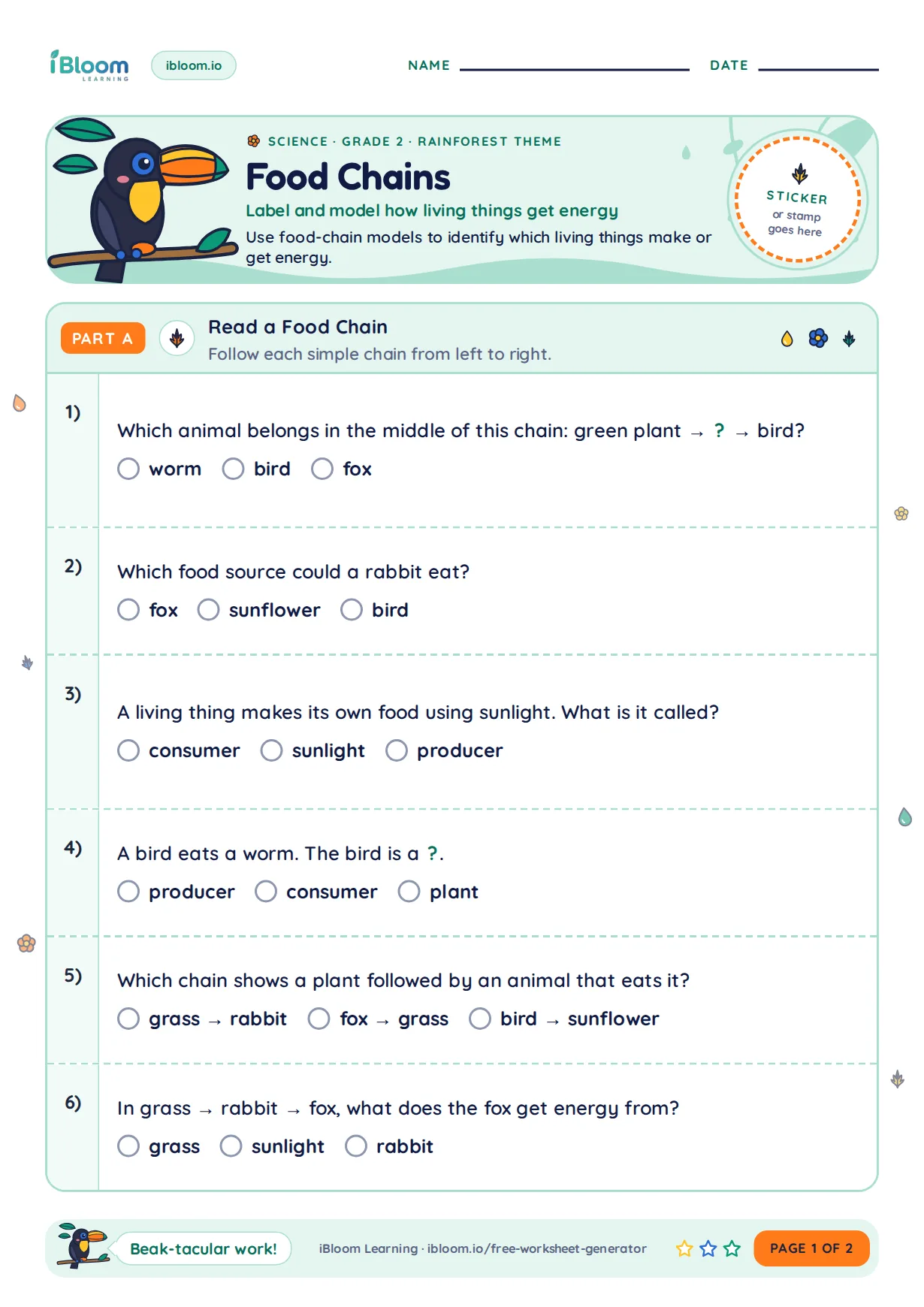 Food Chain — Label and ModelPrintable Grade 2 science worksheets that help children trace how energy moves from plants to animals in simple food chains. This label and model worksheet provides a distinct, age-appropriate way to practise the same lesson.Grade 2Free PDF preview
 Food Chain — Explain Cause and EffectPrintable Grade 2 science worksheets that help children trace how energy moves from plants to animals in simple food chains. This explain cause and effect worksheet provides a distinct, age-appropriate way to practise the same lesson.Grade 2Free PDF preview6 pages
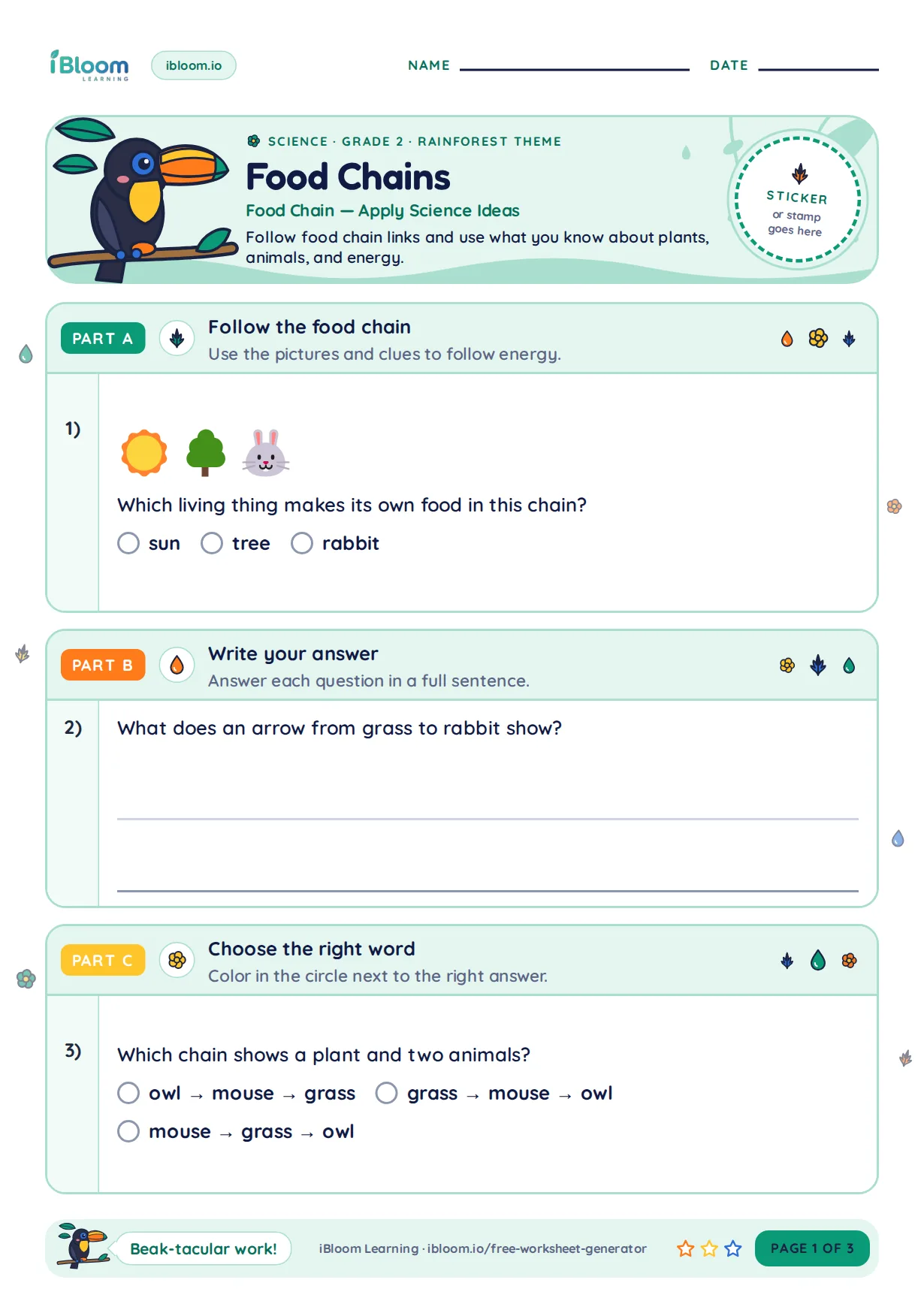 Food Chain — Apply Science IdeasPrintable Grade 2 science worksheets that help children trace how energy moves from plants to animals in simple food chains. This apply science ideas worksheet provides a distinct, age-appropriate way to practise the same lesson.Grade 2Free PDF preview
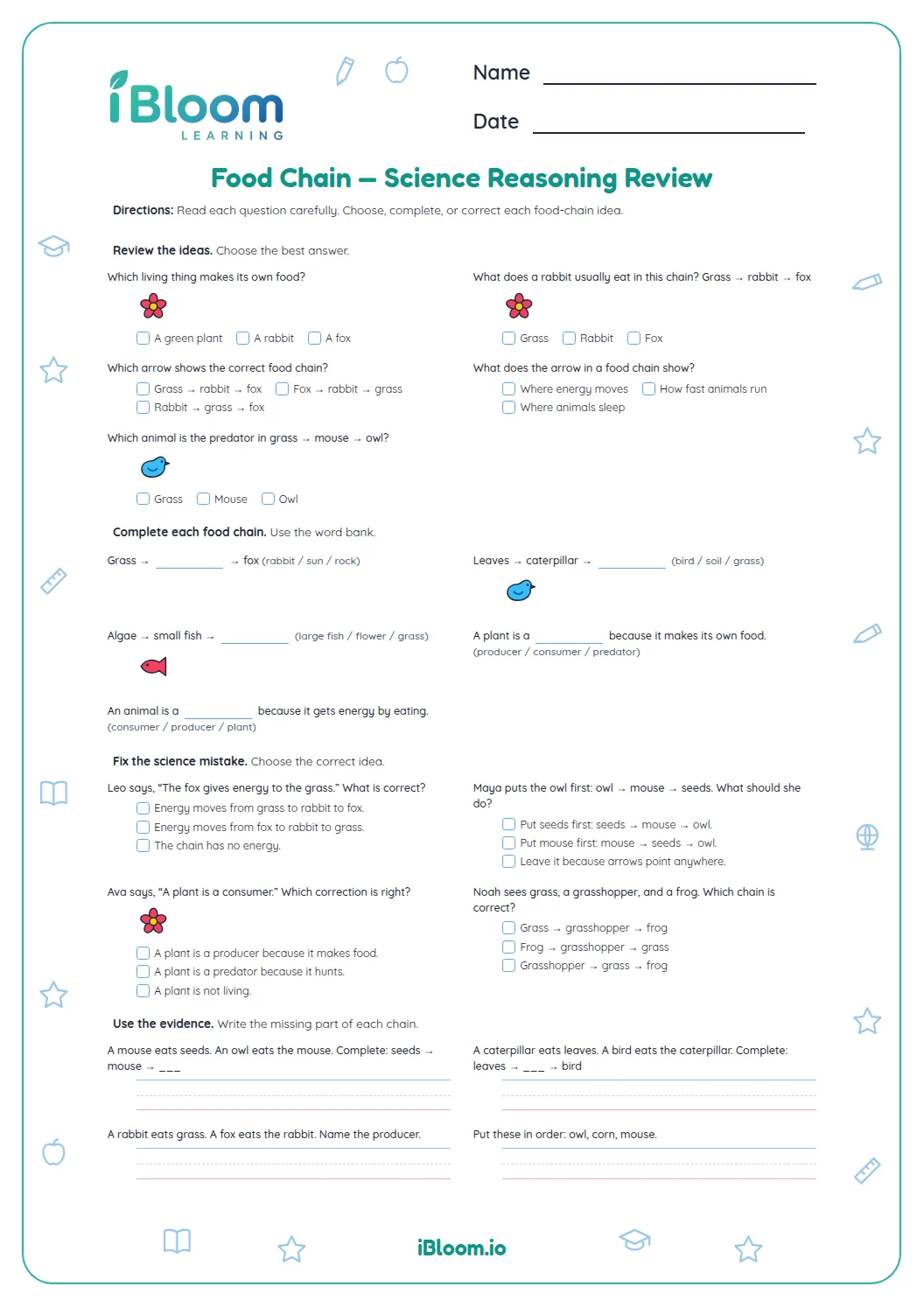 Food Chain — Science Reasoning ReviewPrintable Grade 2 science worksheets that help children trace how energy moves from plants to animals in simple food chains. This science reasoning review worksheet provides a distinct, age-appropriate way to practise the same lesson.Grade 2Free PDF preview
Practice that builds confidence
What a food chain shows
These Grade 2 food chain worksheets help children understand how living things depend on one another for food. Students practise identifying producers and consumers, following arrows, and explaining simple chains such as sun, grass, rabbit, and fox.
The printable activities include picture-based sorting, matching, sequencing, labeling, and short-response tasks. Each page keeps the animal science focus clear so children can connect vocabulary with real examples from familiar habitats.
A food chain is a simple model that shows how energy moves from one living thing to another. In Grade 2, children do not need a complex food web; they need to see that plants make food using sunlight, plant-eating animals eat plants, and some animals eat other animals. Arrows are important because they show the direction of energy, not which animal is chasing which.

Concepts children build step by step
The worksheets begin with clear pictures and short chains so students can name a producer, such as grass or a leafy plant, and consumers, such as a caterpillar, bird, rabbit, or fox. Activities then ask children to put organisms in order, choose what an animal might eat, complete missing links, and describe who gets energy from whom. Vocabulary such as producer, consumer, predator, prey, herbivore, and carnivore is introduced only in practical contexts.
A simple parent routine
At home, start with one page and ask your child to point to the plant first. Say, “Where does the energy begin?” Then have the child trace each arrow with a finger and use a sentence frame: “The ___ gets energy from the ___.” After the worksheet, look out a window or at a book picture and make a tiny chain together, such as grass to grasshopper to bird.

Classroom uses for animal science lessons
Teachers can use these printables for science centers, small-group review, early finisher tasks, or a notebook page after a lesson on animals and habitats. Picture cards can be discussed before writing answers, which helps English learners and students who need oral rehearsal. Completed sheets also make useful evidence of whether students understand the arrow direction and the roles of plants and animals.

Common errors to watch for
Many children reverse arrows because they think the arrow points to the animal that is doing the eating. Others may label every animal as a predator or forget that plants are living things too. Encourage students to read each arrow as “gives energy to.” If a chain seems wrong, ask whether each living thing could really get food from the one before it.
Free printable PDF download
Use this grade 2 food chain worksheet page to preview the activity, print it, or download it as a PDF for quick practice. It works well for homework, homeschool lessons, tutoring, morning work, revision, and classroom centers.
Answers and answer key support
After the child completes the worksheet independently, parents and teachers can use the answer support or answer key information to check the work, review mistakes, and choose the next practice step.
Why iBloom worksheets help
The pages move from visual recognition to explanation, so children are not just memorizing terms. They see repeated examples, practise with different animals, and use short written answers to show understanding. A child-friendly strategy is: start with the sun or plant, follow the arrows, and tell the energy story in order.
Helpful answers
Frequently asked questions
What should a Grade 2 student understand about a food chain?
A Grade 2 student should understand that a food chain shows how living things get energy from food, usually beginning with sunlight and plants, then moving to animals that eat plants or other animals.
Why do food chain arrows confuse children?
Children often think arrows point to the animal that is eating. In a food chain, the arrow shows where energy goes, so it can be read as “gives energy to.”
Do these worksheets include producers and consumers?
Yes. The activities help children identify plants as producers and animals as consumers, then use those roles to complete and explain simple food chains.
Can these pages be used before teaching food webs?
Yes. These worksheets focus on single, simple chains, which is the right foundation before students compare many connected chains in a food web later on.
How can I make food chain practice more hands-on?
After a worksheet, ask children to draw or arrange three picture cards in order, such as plant, rabbit, and fox, then explain the chain aloud using the words “gets energy from.”
Is this grade 2 food chain worksheet free?
Yes. You can preview it for free and use the printable worksheet for home or classroom practice.
Can I download this grade 2 food chain worksheet as a PDF?
Yes. Use the worksheet download option to save a printable PDF, or print the worksheet directly from the page.
Does this grade 2 food chain worksheet include answers or an answer key?
When the activity has fixed answers, iBloom includes answer support so parents and teachers can check the completed worksheet.