







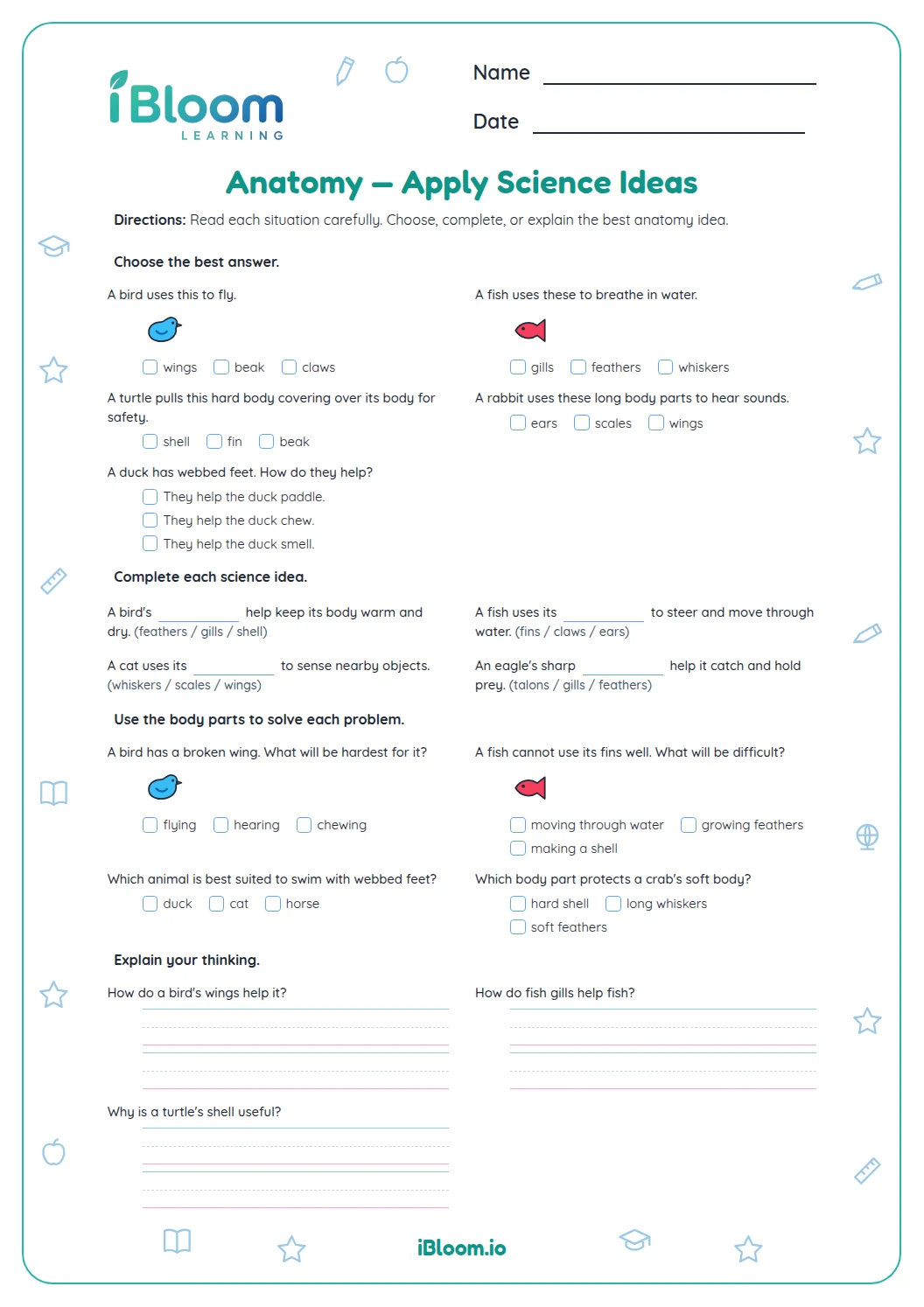


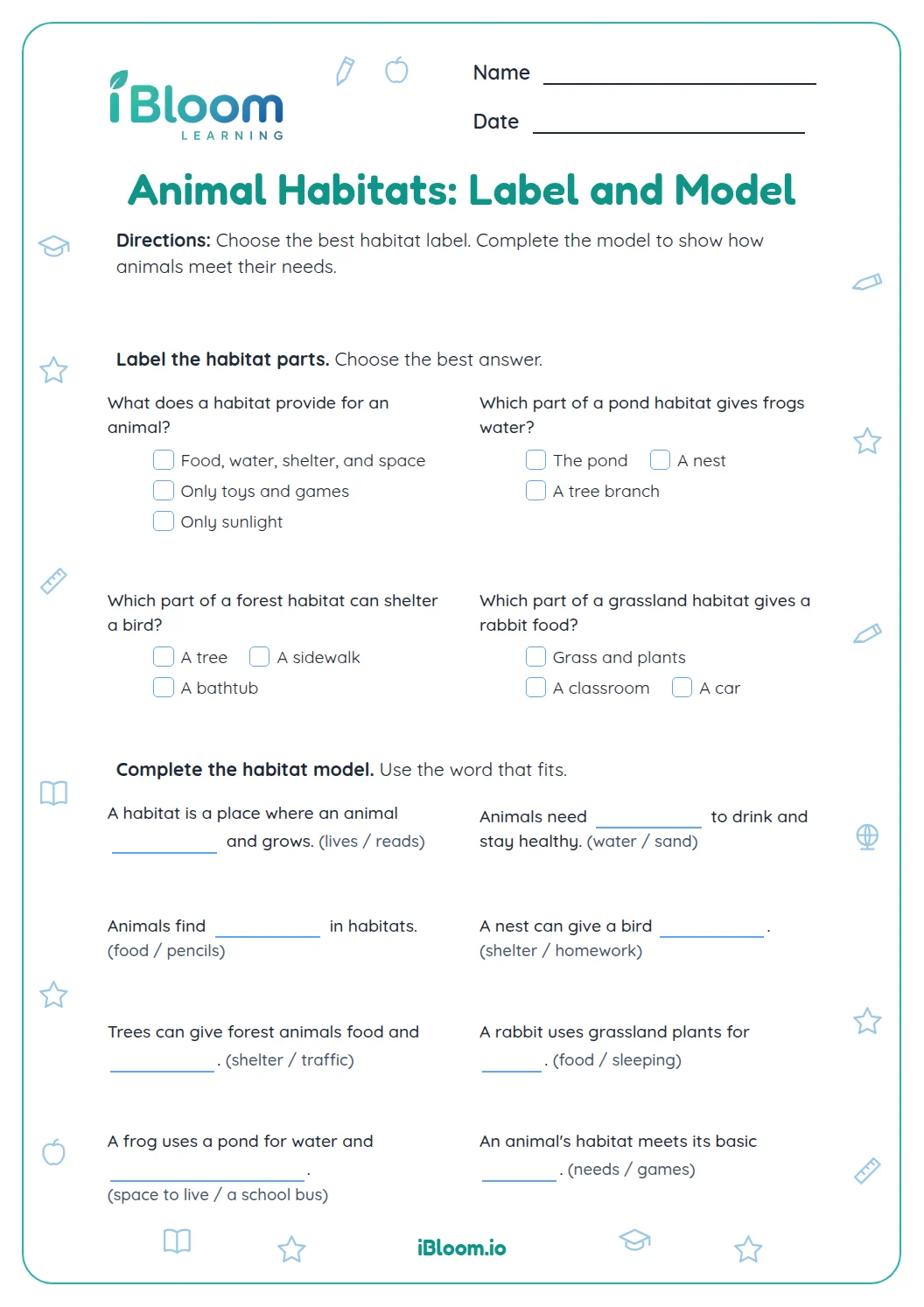
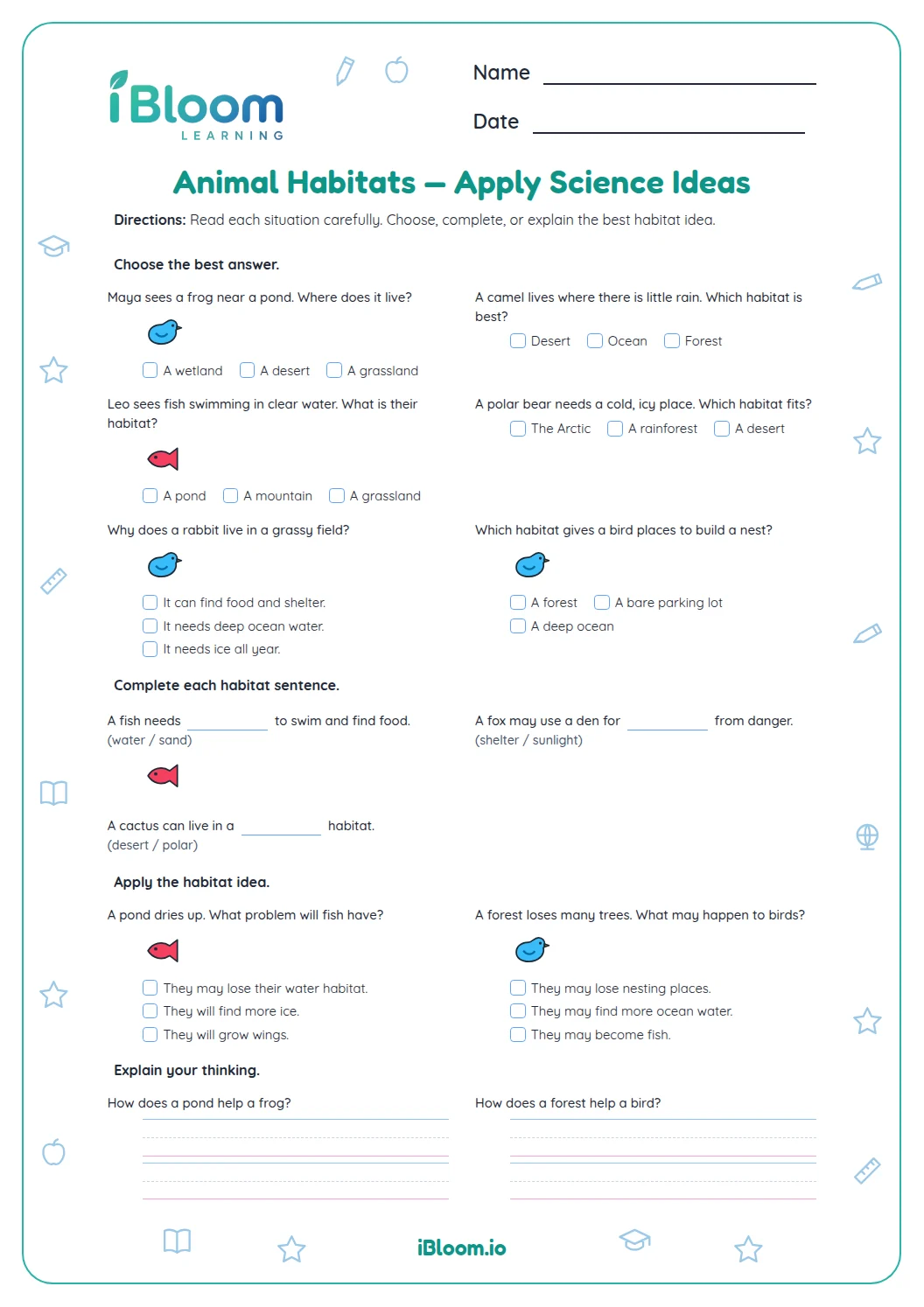
About this worksheet
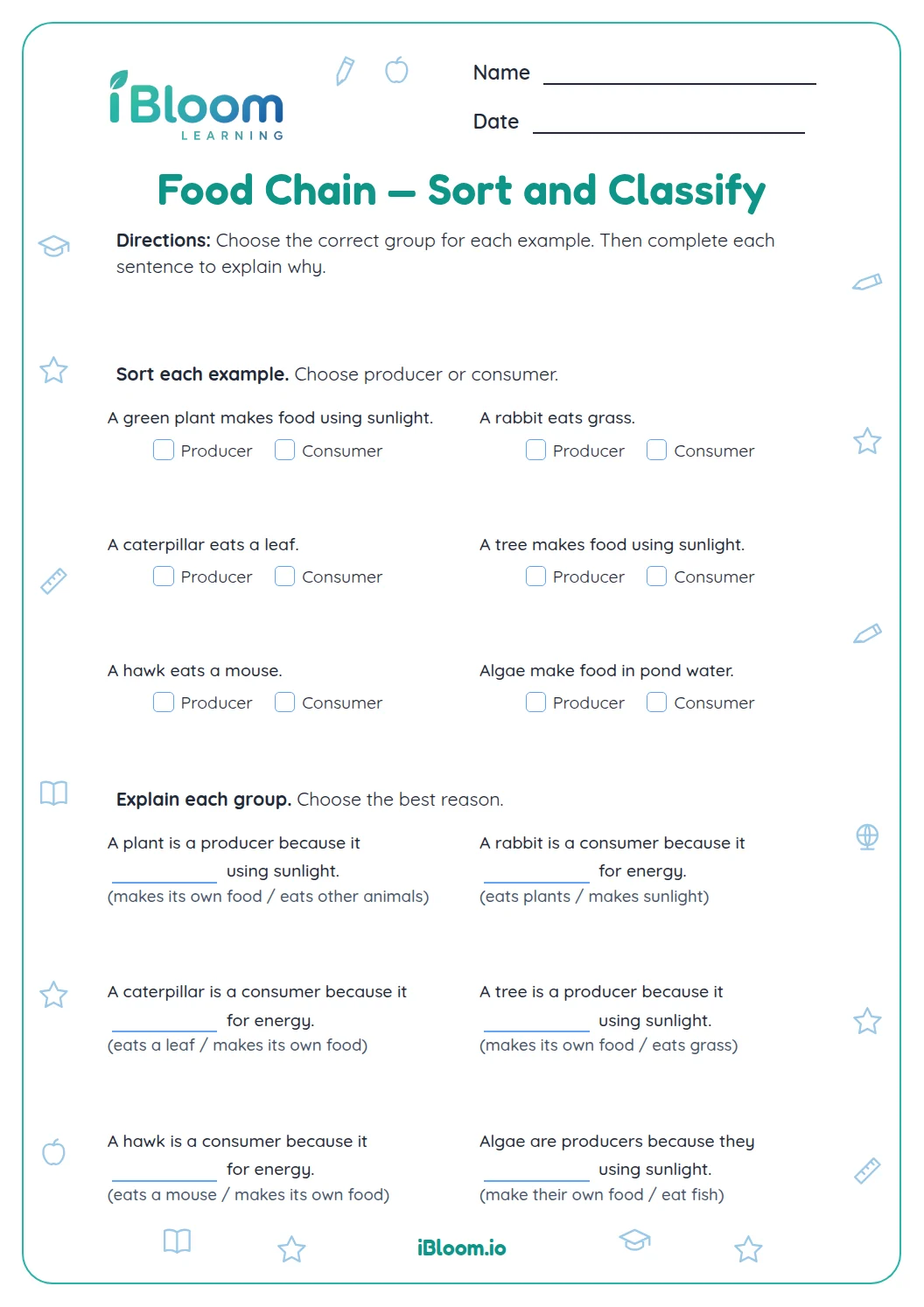
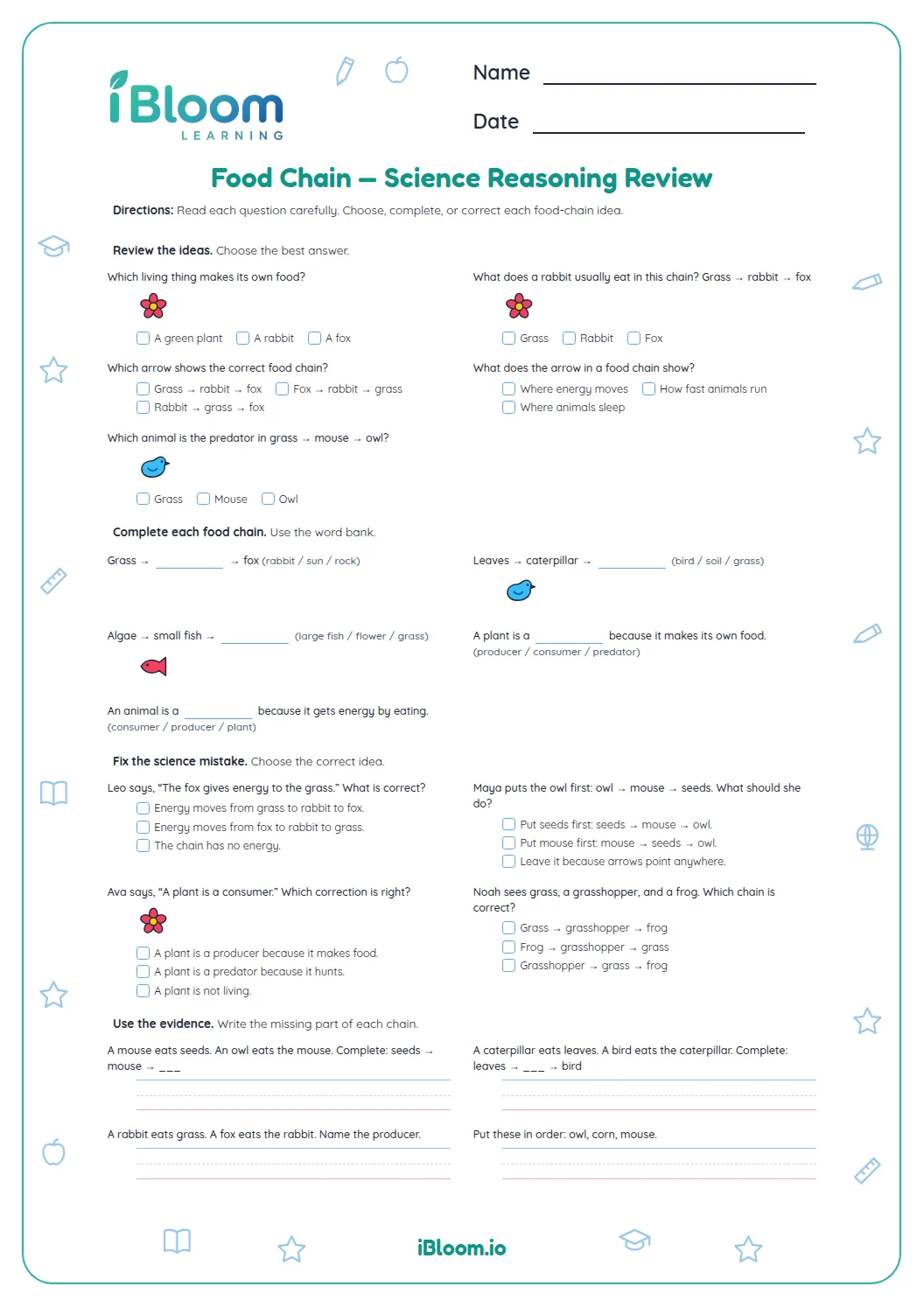
This Grade 2 science worksheet uses familiar food chains to explore how energy moves from plants to animals. Twelve questions ask learners to identify a producer, follow arrows from food to eater, and predict what may happen when food becomes scarce. A separate answer key is included.
Aligned to 2-LS4-1
Where does a food chain begin?
Plants make their own food, so they can support animals that eat plants. The arrows in a chain point from the food toward the organism that gets energy from it.
- 1grass → mouse → owl
- 2The mouse gets energy from grass; the owl gets energy from the mouse.
What happens when one link changes?
If a plant or animal becomes scarce, organisms that depend on it may have less food. Use “may” when predicting, because a food chain model does not tell exactly what every animal will do.
- Identify what is food and what is eater.
- Read each arrow from food to eater.
- Use the changed link to make a careful prediction.
How can an adult support the science thinking?
Ask the learner to explain what each organism eats before predicting a change. Check that the answer describes a possible effect, rather than an impossible change such as an animal turning into another organism.
How can children follow the chain?
- 1Find the plant or producer in the chain.
- 2Read each arrow from food to eater.
- 3Name which organism receives energy.
- 4When a link changes, predict a possible effect.
- 5Check explanations with the answer key.
What should children check?
The mistake
Reading an arrow from eater to food.
The fix
Start at the food and follow the arrow toward the eater.
The mistake
Calling an animal a producer.
The fix
A producer is a plant that makes its own food.
The mistake
Predicting an impossible change.
The fix
Describe a likely food effect, such as less food for an eater.
Next Generation Science Standards
Learners use food chain examples to reason about how living things depend on plants and other animals.
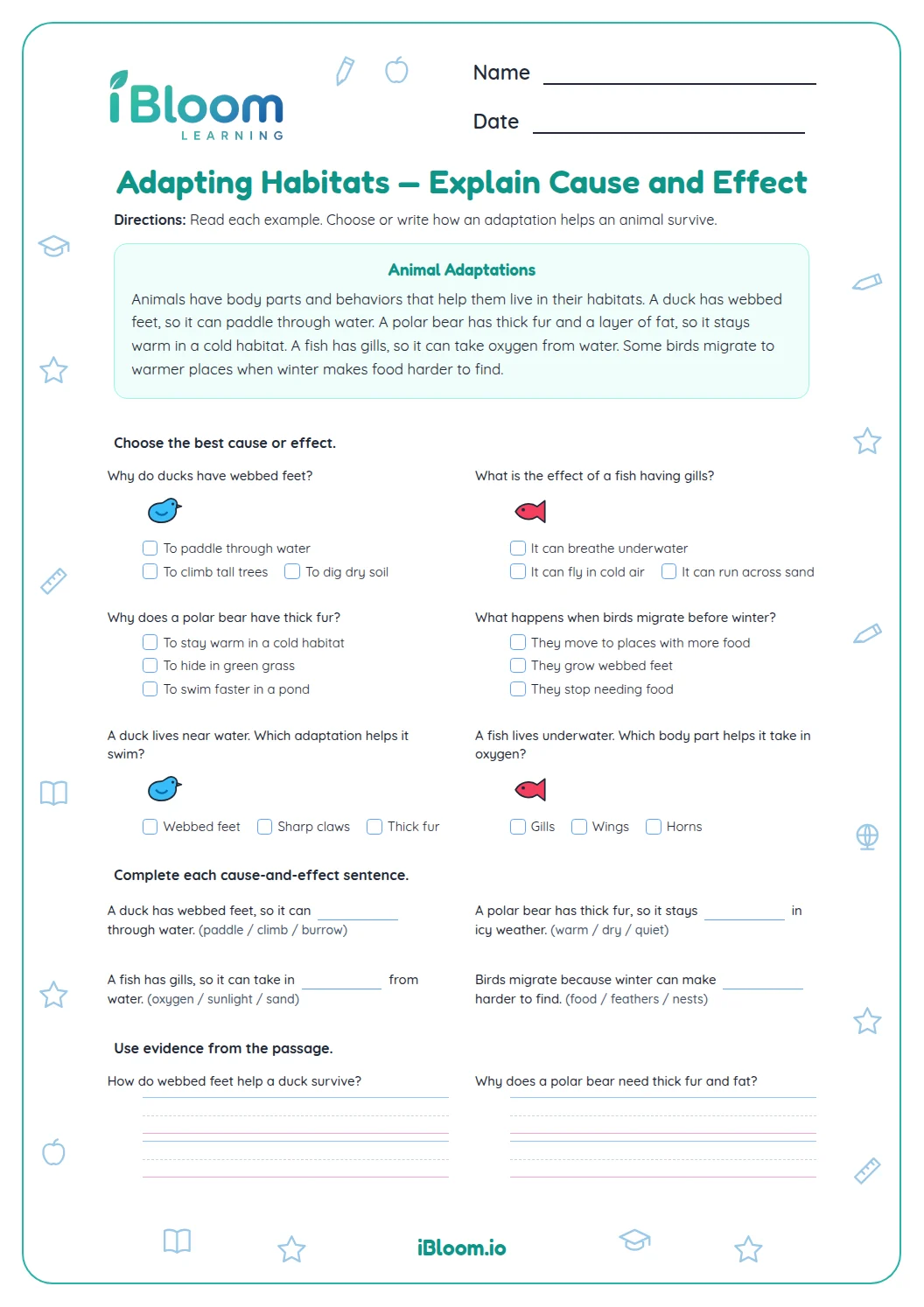
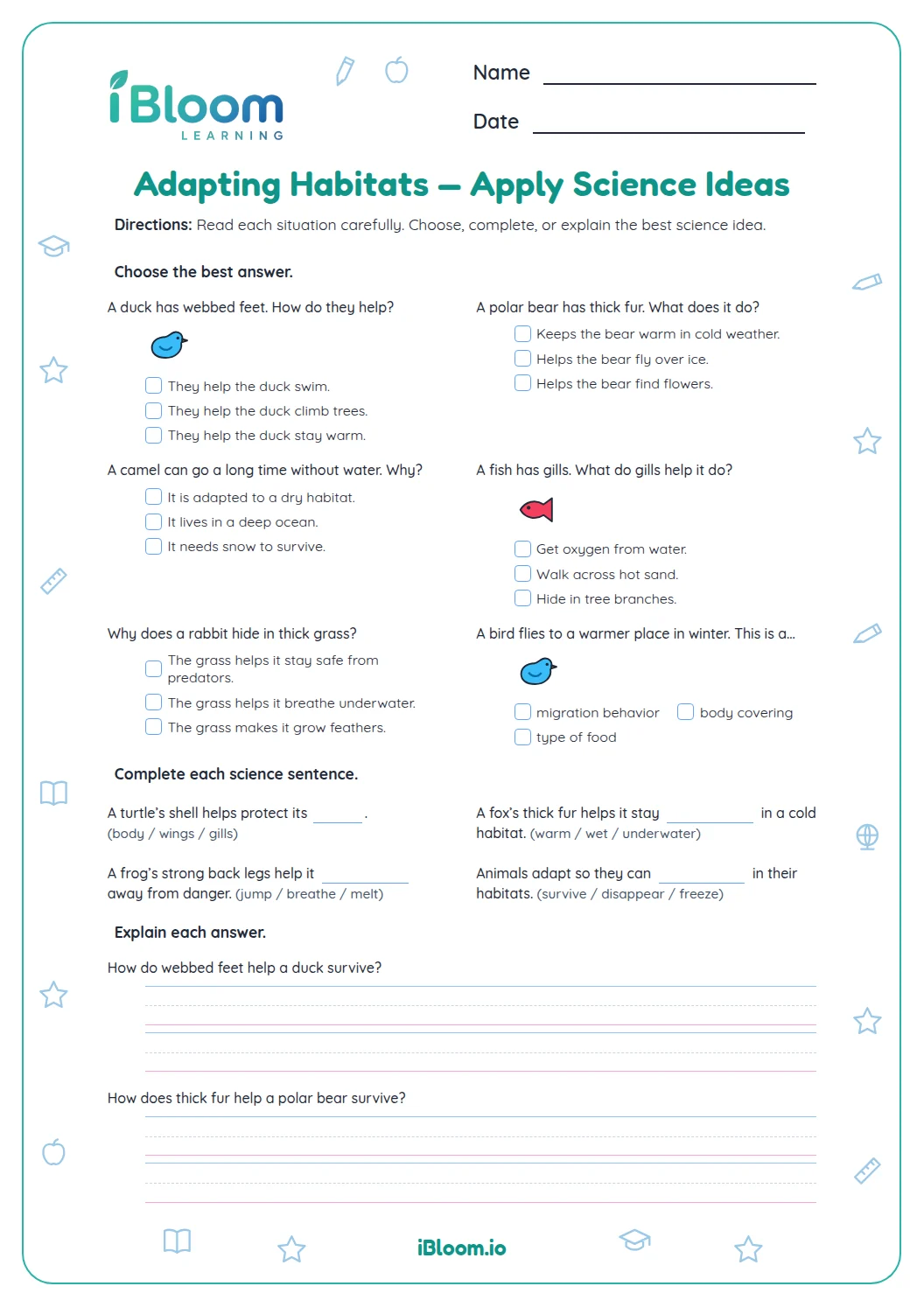
Use observations to compare the diversity of life in different habitats.
On this sheet: Learners reason from observations about plants, animals, and food relationships.
Show the official wordingHide the official wording
Make observations of plants and animals to compare the diversity of life in different habitats.
What to practice next
Make more practice
Further reading
Questions parents and teachers ask
What is a food chain?
A food chain is a simple model of which living things provide food for others. In this worksheet, examples such as grass, mouse, and owl help children trace the links. The arrows point from food to eater, showing the direction energy moves through the chain.
What does a food-chain arrow mean?
An arrow points from the organism being eaten toward the organism that eats it. For example, in grass → mouse → owl, the mouse gets energy from grass and the owl gets energy from the mouse. Following the arrow in that direction helps avoid reversing the relationship.
How many questions are on the worksheet?
There are 12 questions arranged in three parts across three worksheet pages, followed by a separate answer key. Children identify producers, interpret food links, and use the chain to reason about possible effects when an organism has less food. Adults can ask the learner to point to the prompt detail supporting each response.
What grade is this science page for?
It is labeled for Grade 2 and uses short chains with familiar organisms. Adults can read a chain aloud and have the child point from food to eater. Questions that ask what may happen invite a reasonable prediction, not a guaranteed outcome.
Why does the chain begin with a plant?
A plant can make its own food, and an animal may get energy by eating the plant or another animal. The worksheet asks children to recognize plants as producers and use simple examples to trace how food supports animals. Adults can ask the learner to point to the prompt detail or calculation that supports each response.