






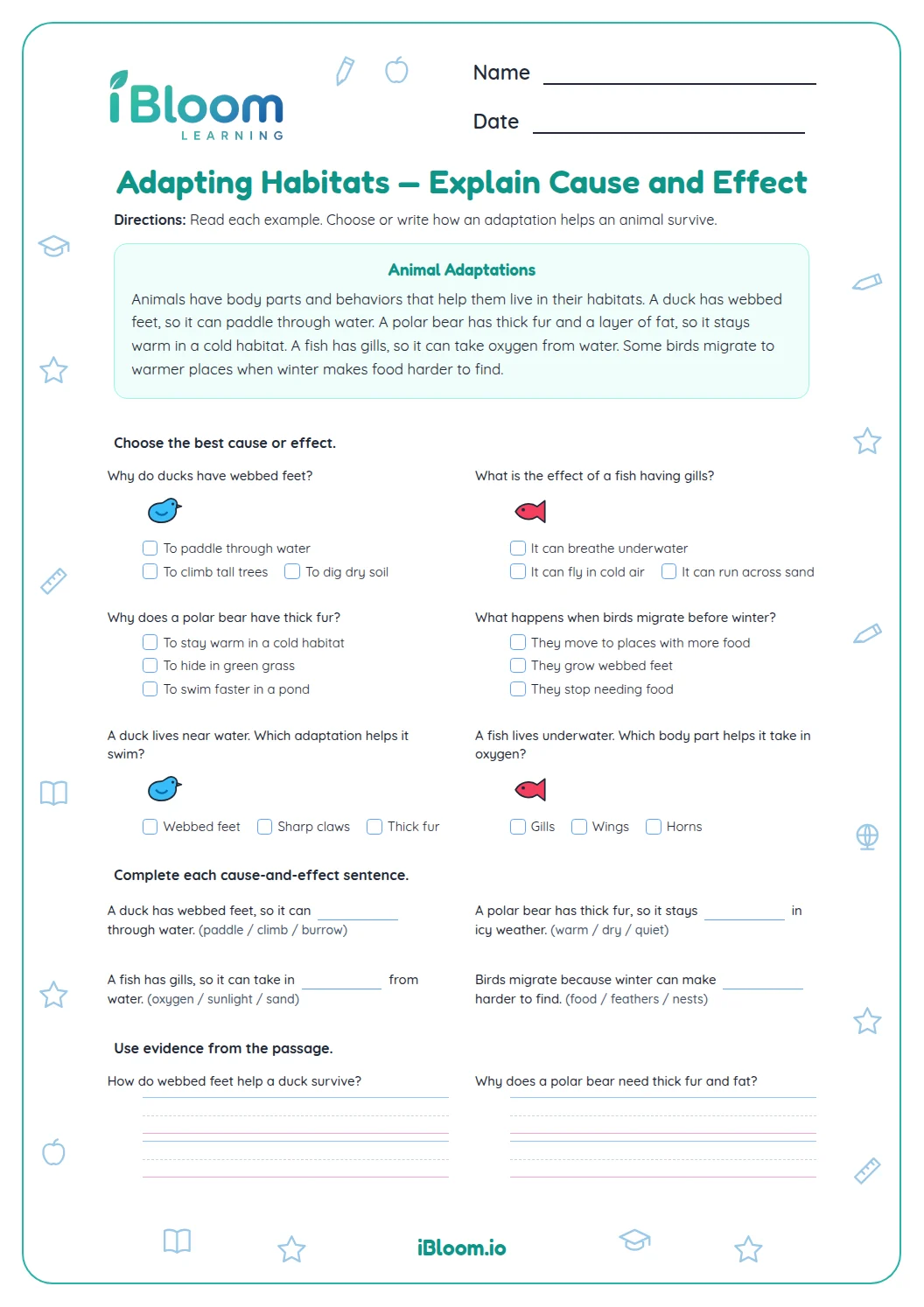
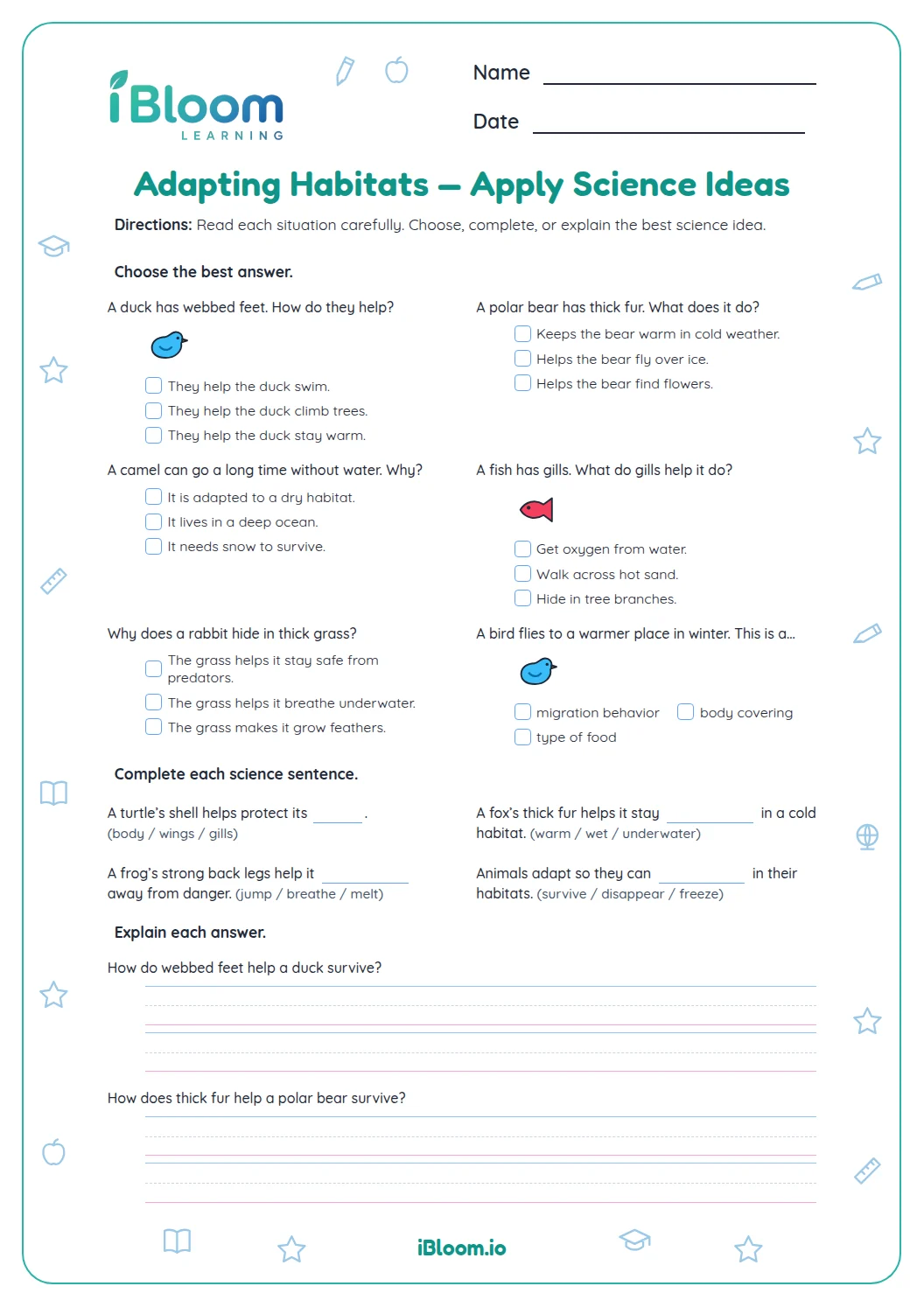
About this worksheet
This Grade 2 worksheet pairs an original pond-turtle passage with 14 questions about habitat features and cause and effect. Learners trace how muddy water changes where turtles feed and how grass roots help keep the pond clear, then support answers with passage details. It practices CCSS.ELA-Literacy.RI.2.3.
Aligned to CCSS.ELA-Literacy.RI.2.3
How can a habitat change affect an animal?
An animal depends on features of its habitat. In the passage, turtles use pond food, rocks, and plants.
- 1Plants along the bank give young turtles places to hide.
What is on the worksheet?
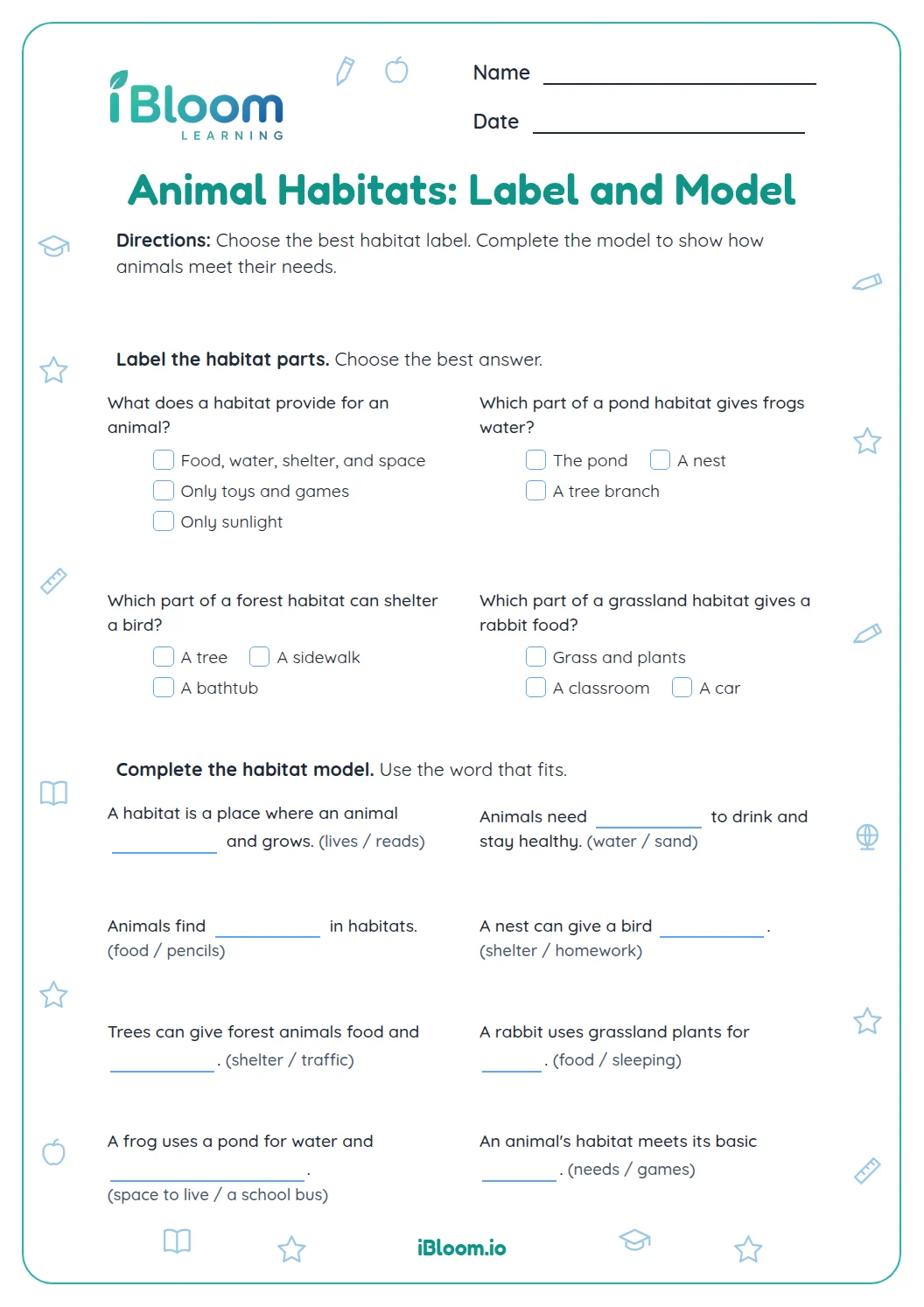
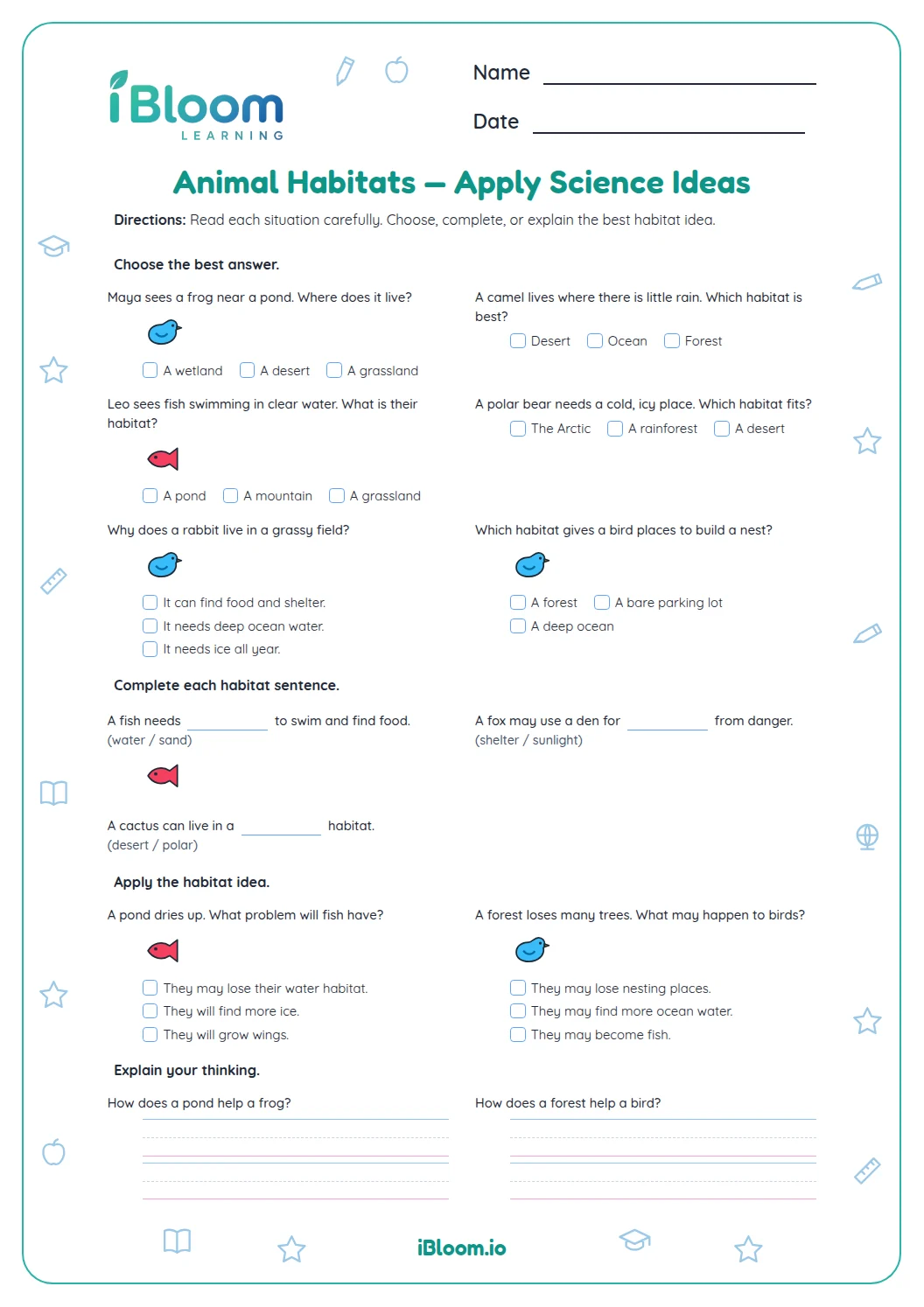
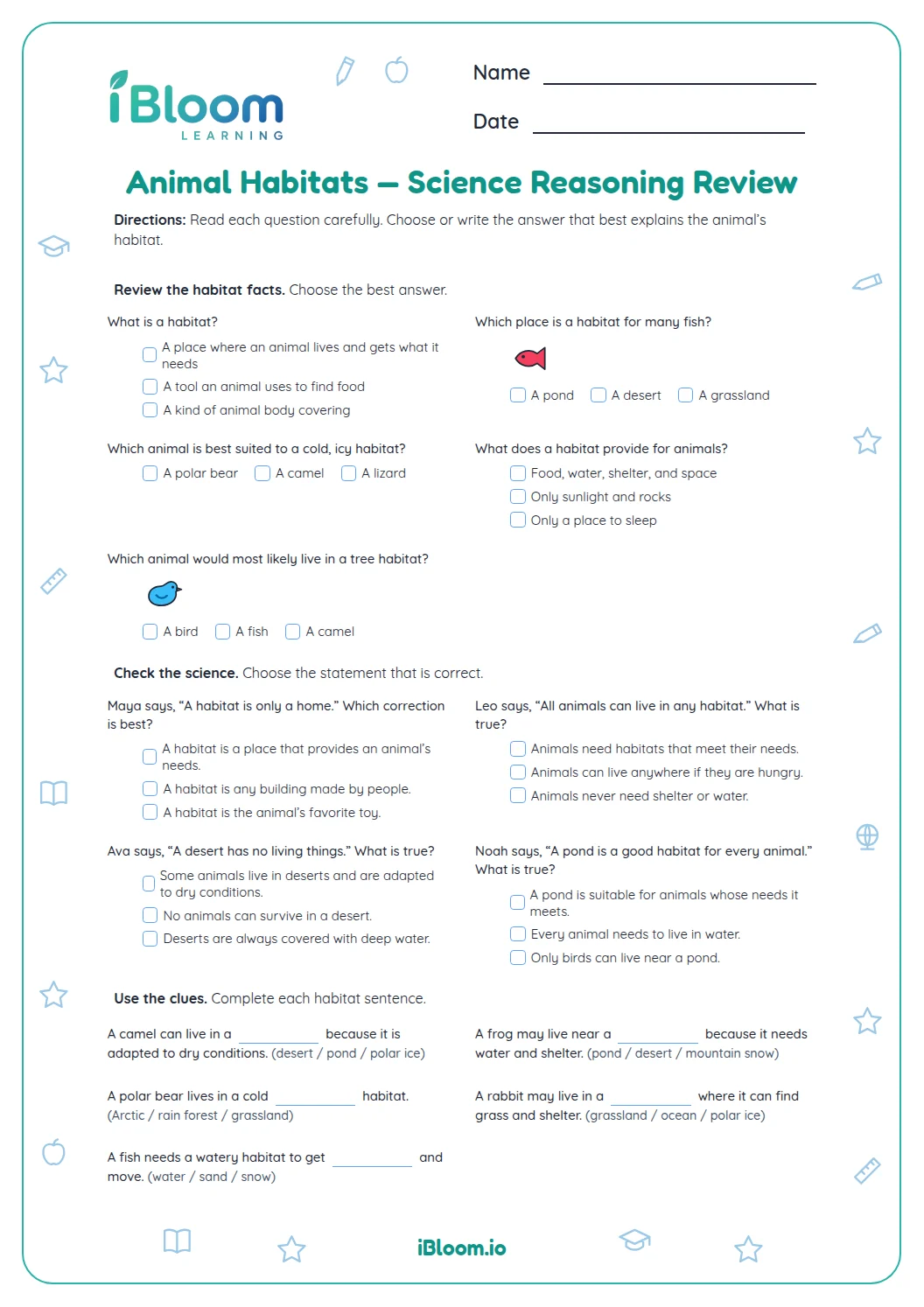
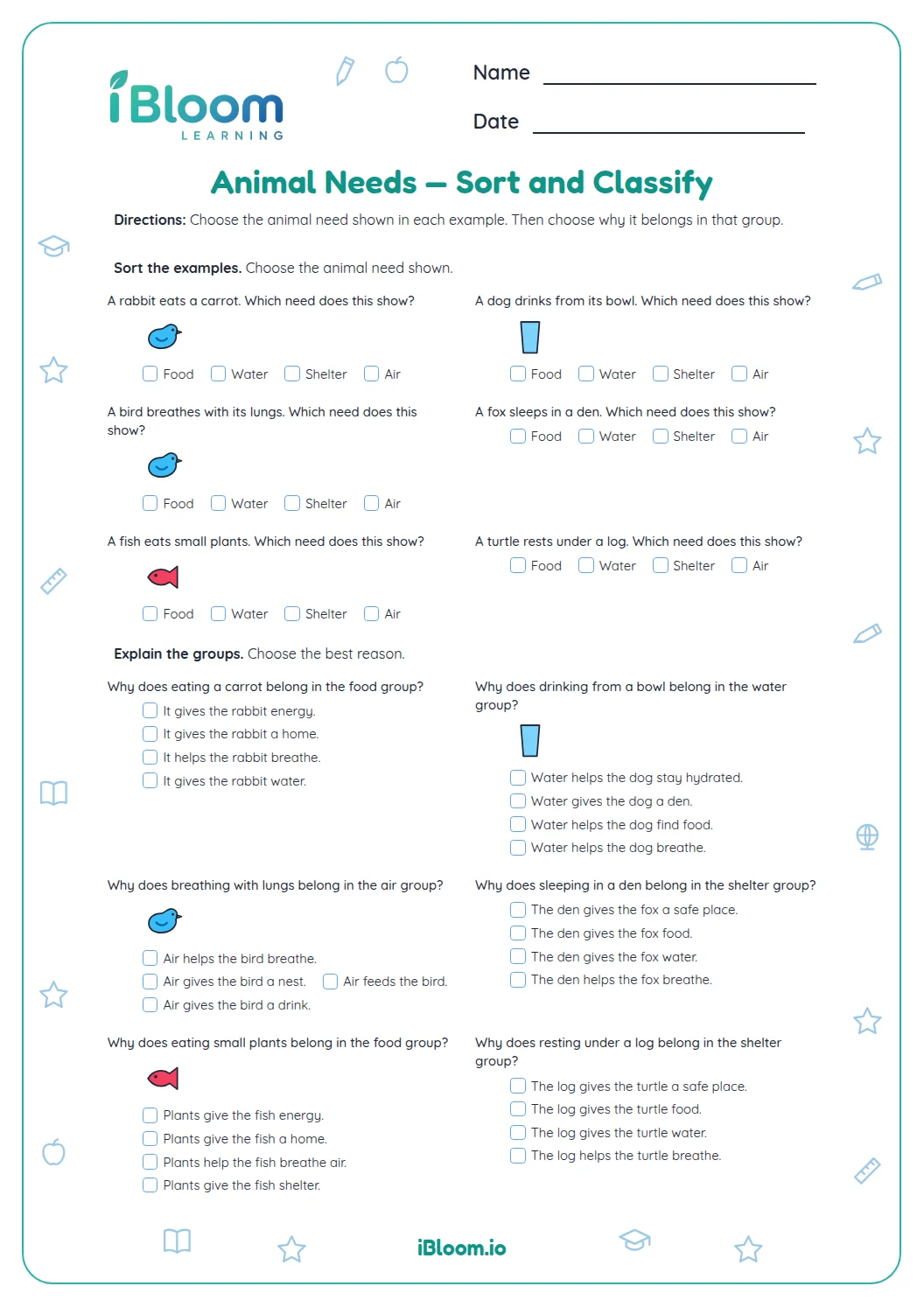
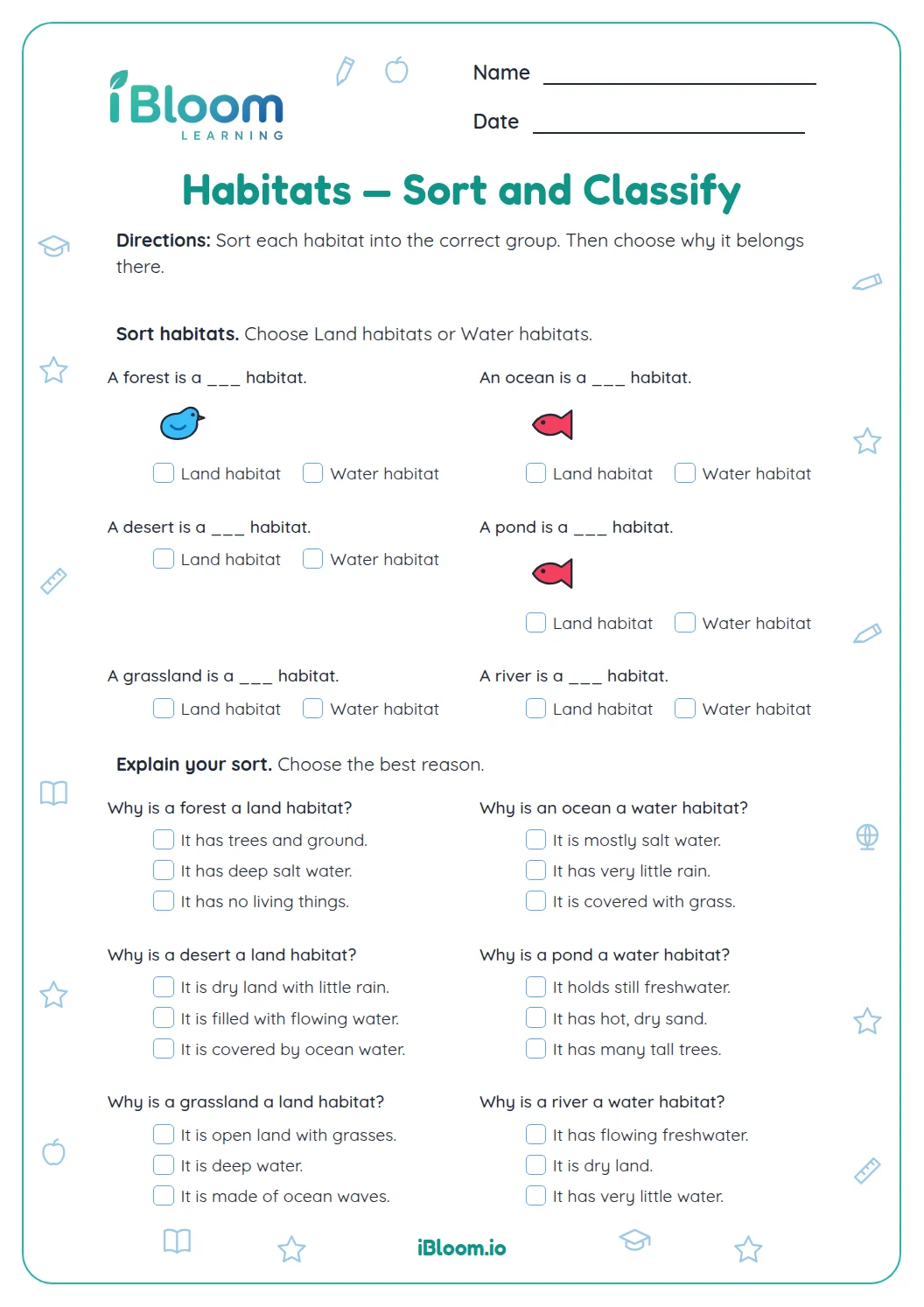
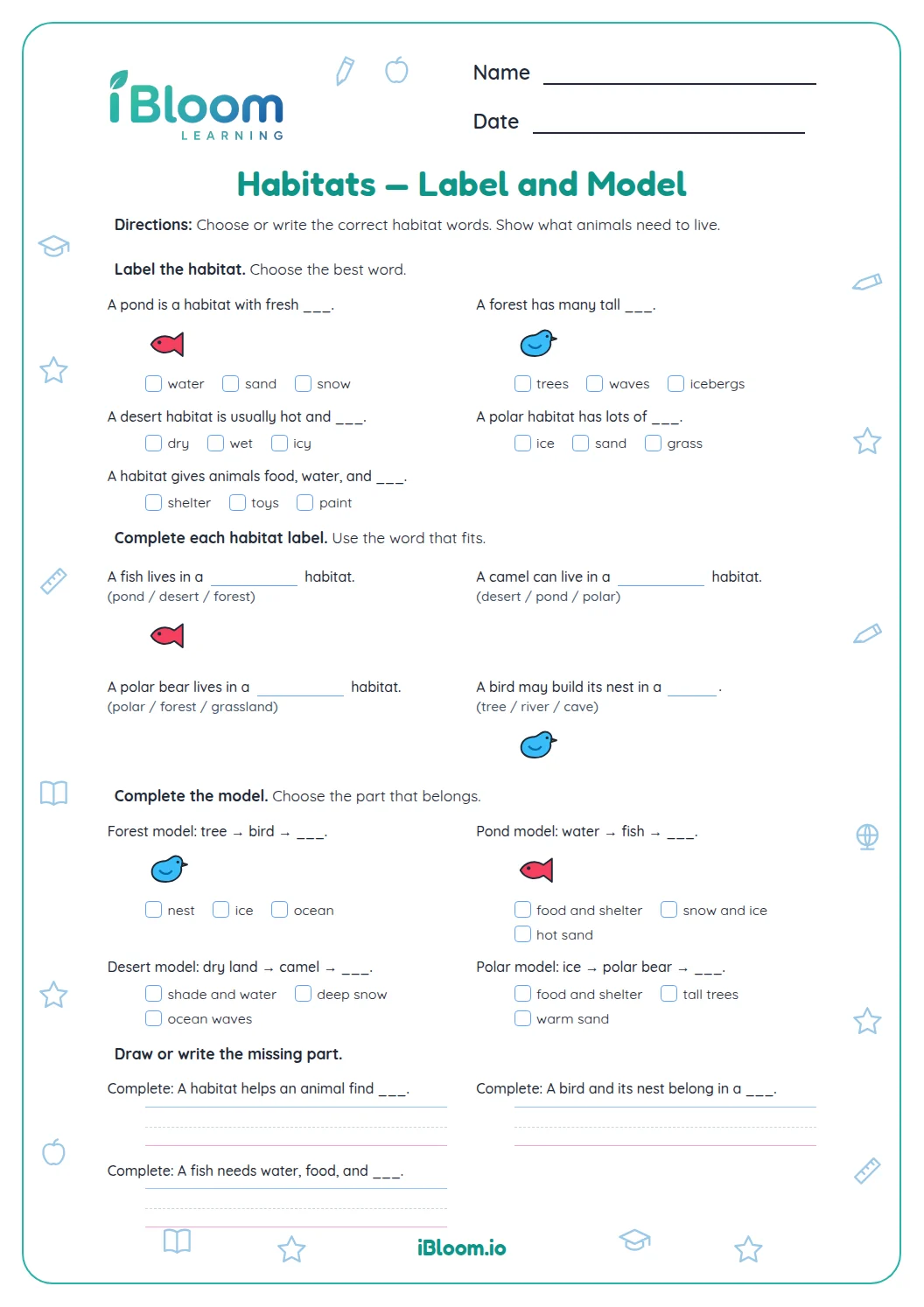
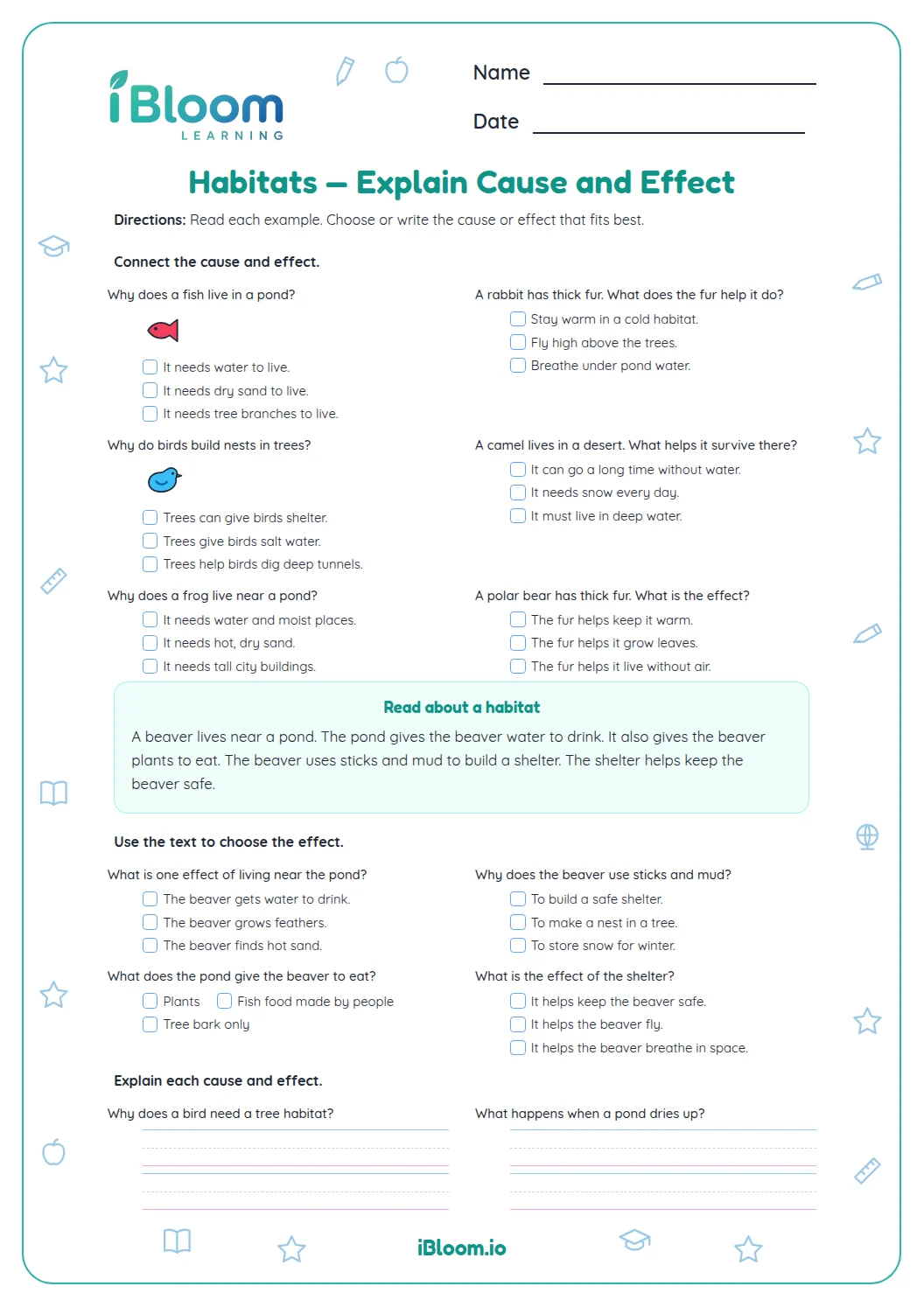
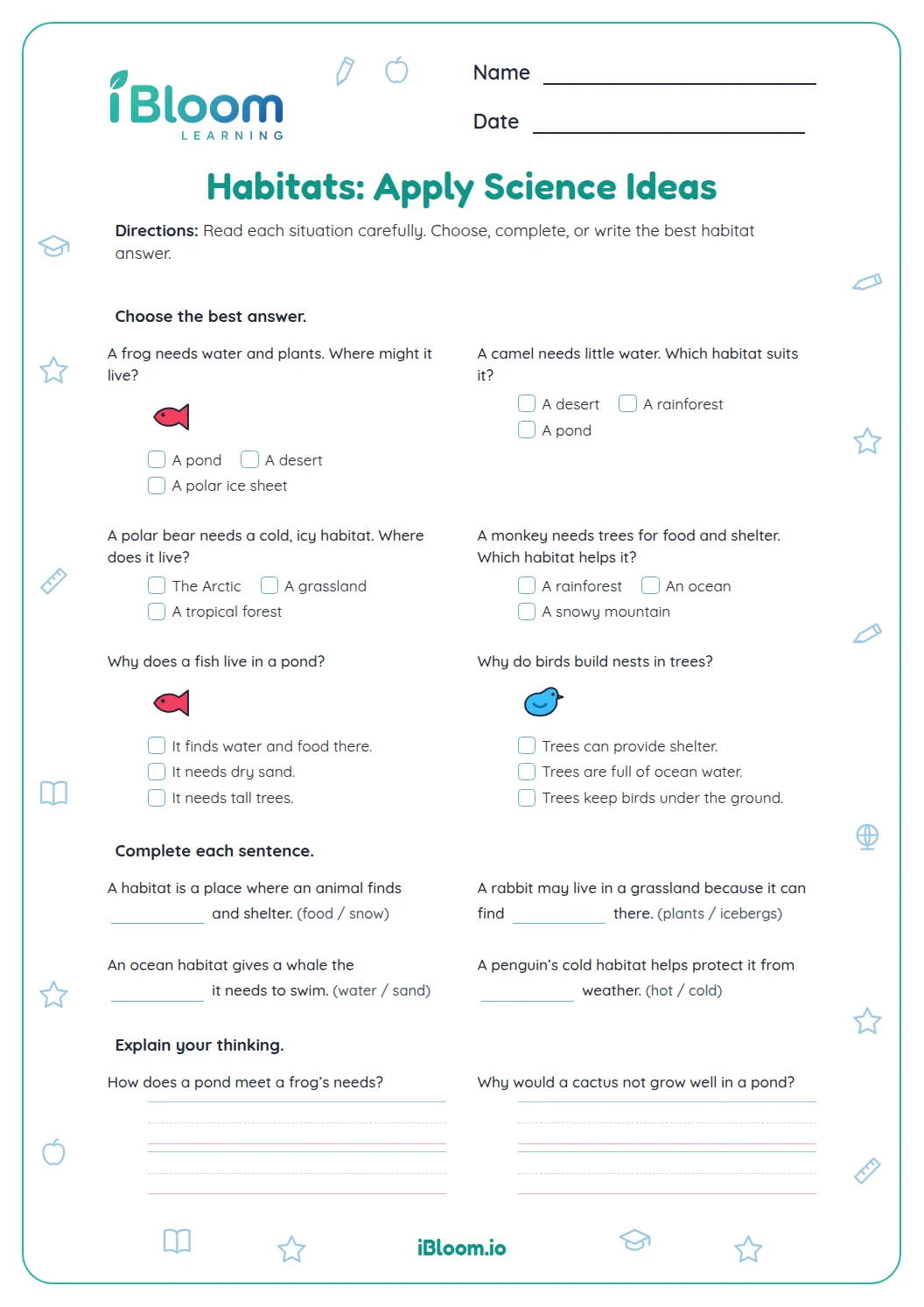
Five questions identify cause-and-effect details, four complete statements apply passage clues, and five written responses explain habitat connections.
How can a learner support an explanation?
Look for a cause or effect in the passage, then connect it to what an animal needs. Use a complete sentence for the written questions.
How to use this worksheet
- 1Read the passage once to learn about the turtles’ pond.
- 2Reread a paragraph when a question asks why or what happened.
- 3Choose or complete answers using details from the text.
- 4Use a full sentence for explanation questions.
- 5Check that each explanation names a cause, effect, or habitat need.
Mistakes to watch for
The mistake
Mixing up a cause and its effect.
The fix
Ask what happened first and what happened as a result.
The mistake
Giving an answer unrelated to the passage.
The fix
Point to a sentence that supports the answer.
The mistake
Naming a habitat feature without explaining it.
The fix
Add how that feature helps the animal.
Common Core alignment
Learners describe connections between events and science ideas in an informational passage.
Describe connections between events and ideas in the habitat passage.
On this sheet: Describe connections between events and science ideas in an informational text.
Show the official wordingHide the official wording
Describe the connection between a series of historical events, scientific ideas or concepts, or steps in technical procedures in a text.
What to practice next
Further reading
Questions parents and teachers ask
What habitat cause and effect does the passage explain?
The pond passage connects muddy water with turtles moving to a clearer feeding spot. It also explains how grass roots hold soil so less dirt washes into the pond. Questions ask learners to find these links, complete details, and explain how habitat features support turtles.
How can a child find the cause in a passage?
Look for what happened first or what made a change occur. In the turtle passage, mud covers the feeding place before the turtles move. Words such as “after,” “because,” and “so” can help readers notice a connection, then the passage details confirm it.
What does the answer key accept for written responses?
The key gives sample explanations rather than one required sentence. A response can use different wording if it correctly connects a habitat feature or change with an effect on the turtles. For example, it should explain how roots keep soil from washing into the pond.
Can this page be used for reading practice too?
Yes. Learners read a short informational passage and return to its details to answer questions. Ask them to point to the sentence that supports an answer before they write. This builds careful reading alongside the science ideas about food, shelter, water, plants, and animal needs.
What can learners study after habitats?
Animal-needs practice is a useful next step because it focuses on what living things require. A habitats page can broaden the comparison to other places, and adapting-habitats practice can extend the discussion to change. Each linked worksheet develops a related part of animal science.