Free printable practice
Habitats Practice Activities
Grade 2 science worksheets help children identify animal habitats and connect living things with the places that meet their needs.
Free printable worksheet PDFs
Preview every available page, then download the free worksheet PDF for home, homeschool, tutoring, or classroom practice.
Preview the exact activity before downloading it.
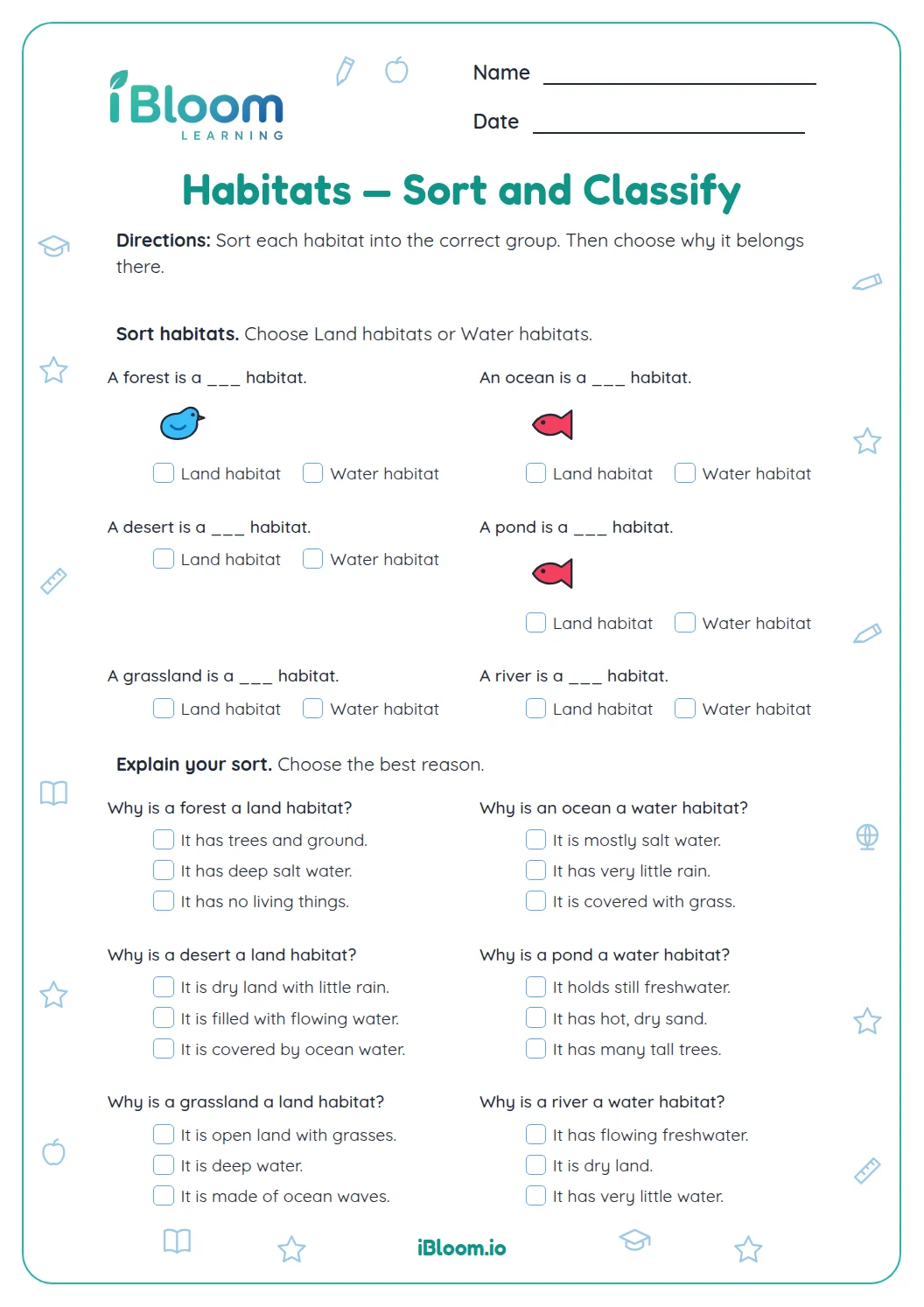 Habitats — Sort and ClassifyGrade 2 science worksheets help children identify animal habitats and connect living things with the places that meet their needs. This sort and classify worksheet provides a distinct, age-appropriate way to practise the same lesson.Grade 2Free PDF preview
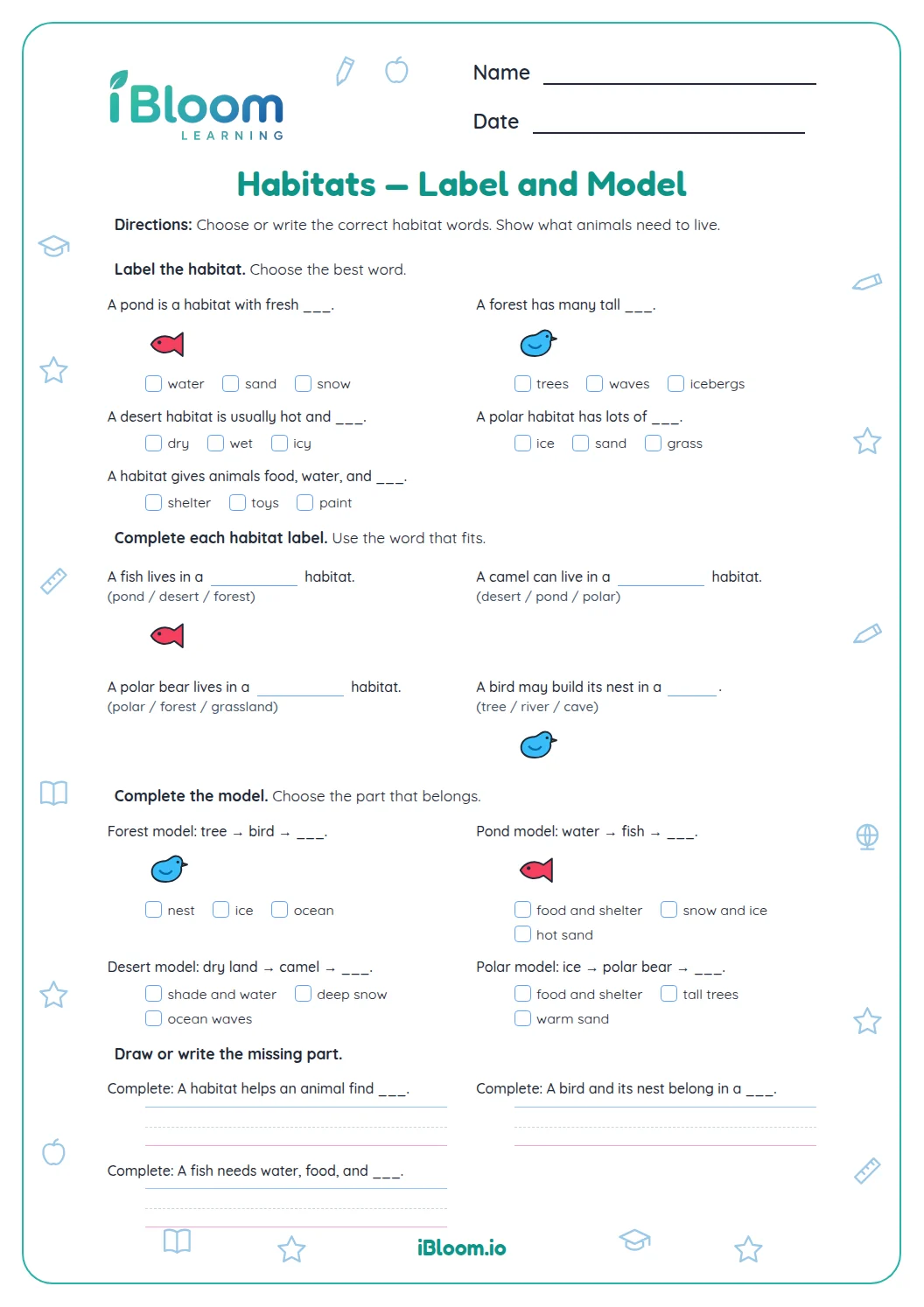 Habitats — Label and ModelGrade 2 science worksheets help children identify animal habitats and connect living things with the places that meet their needs. This label and model worksheet provides a distinct, age-appropriate way to practise the same lesson.Grade 2Free PDF preview
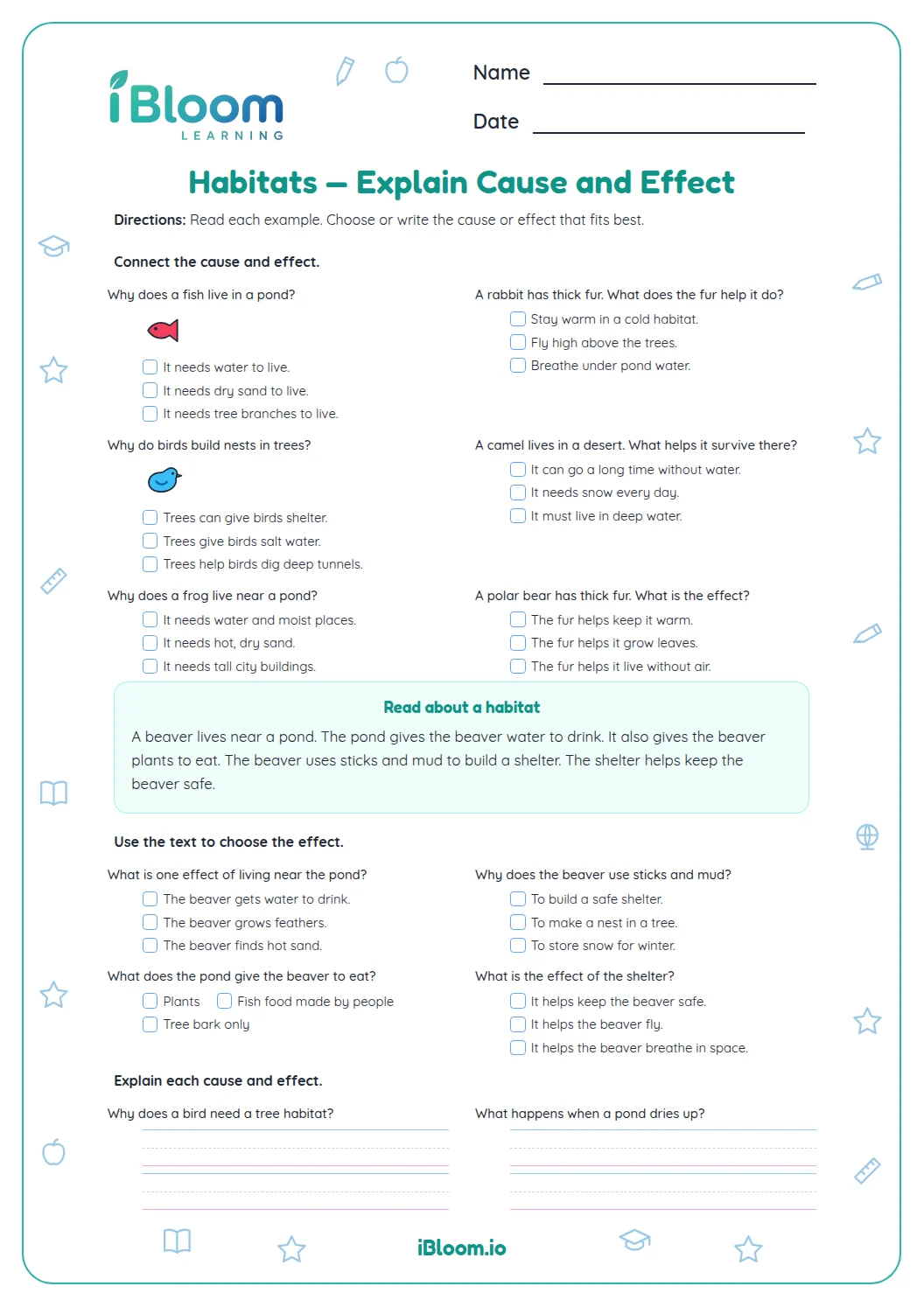 Habitats — Explain Cause and EffectGrade 2 science worksheets help children identify animal habitats and connect living things with the places that meet their needs. This explain cause and effect worksheet provides a distinct, age-appropriate way to practise the same lesson.Grade 2Free PDF preview
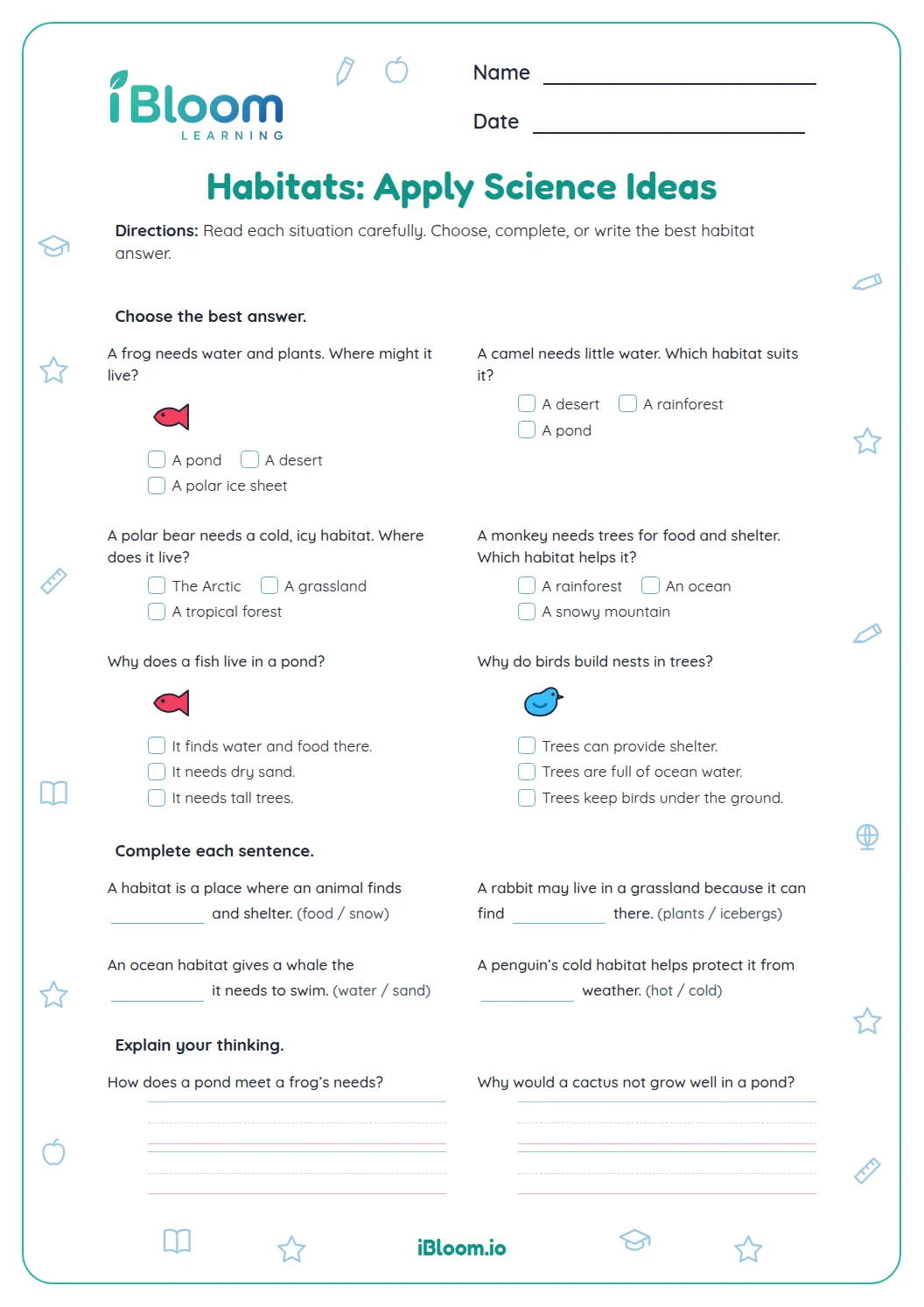 Habitats — Apply Science IdeasGrade 2 science worksheets help children identify animal habitats and connect living things with the places that meet their needs. This apply science ideas worksheet provides a distinct, age-appropriate way to practise the same lesson.Grade 2Free PDF preview
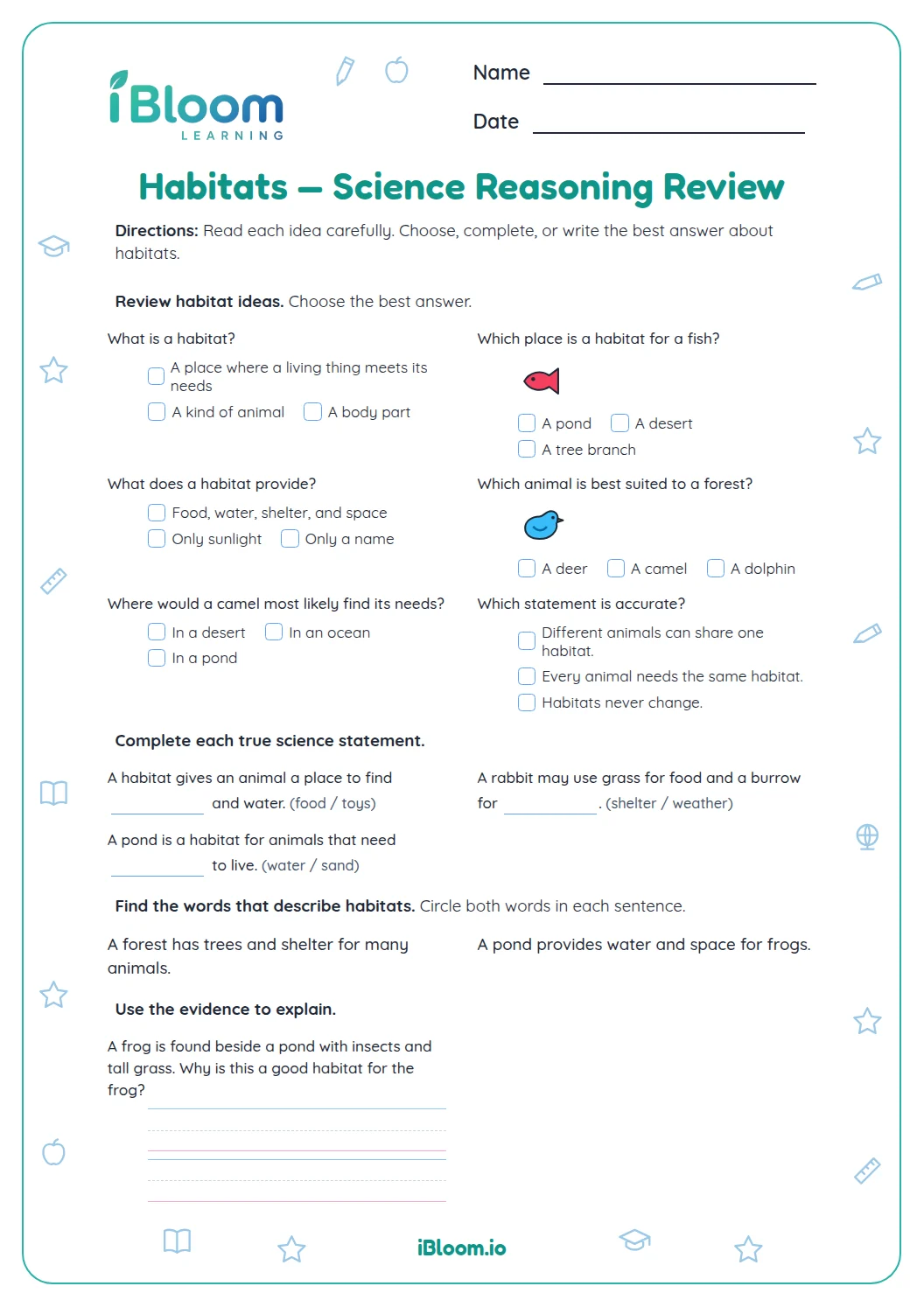 Habitats — Science Reasoning ReviewGrade 2 science worksheets help children identify animal habitats and connect living things with the places that meet their needs. This science reasoning review worksheet provides a distinct, age-appropriate way to practise the same lesson.Grade 2Free PDF preview
Practice that builds confidence
Understanding animal habitats
These Grade 2 habitats worksheets help children explore where animals live and why different places support different kinds of life. Students practise connecting animals to habitats such as forests, deserts, oceans, ponds, grasslands, and polar regions by thinking about food, water, shelter, space, and climate.
The printable activities include sorting, matching, labeling, picture-based questions, short explanations, and simple habitat comparisons. Children build science vocabulary while learning to use evidence from an animal’s body features, behaviour, and surroundings.
A habitat is the place where an animal gets what it needs to live. In Grade 2, children are ready to move beyond naming a place and begin explaining why it works for an animal. A camel can survive in a desert because it is suited to dry conditions, while a fish needs water to breathe and move. These worksheets encourage children to connect the animal, the environment, and the needs being met.

Building from pictures to explanations
The activities usually begin with familiar animals and clear habitat pictures. Children may match a frog to a pond, a polar bear to an icy region, or a monkey to a forest. As confidence grows, they compare habitats and answer prompts such as which animal belongs in a wet place or which habitat has very little water. This progression helps students shift from guessing by appearance to using science clues.
A simple routine for parents
At home, choose one worksheet and first talk through the pictures together. Ask, “What does this animal need?” and “Where could it find food, water, and shelter?” After your child completes the page, invite them to explain one answer aloud. For extra practice, look out a window, in a book, or during a walk and name a small habitat, such as a garden, tree, puddle, or patch of grass.

Classroom uses for teachers
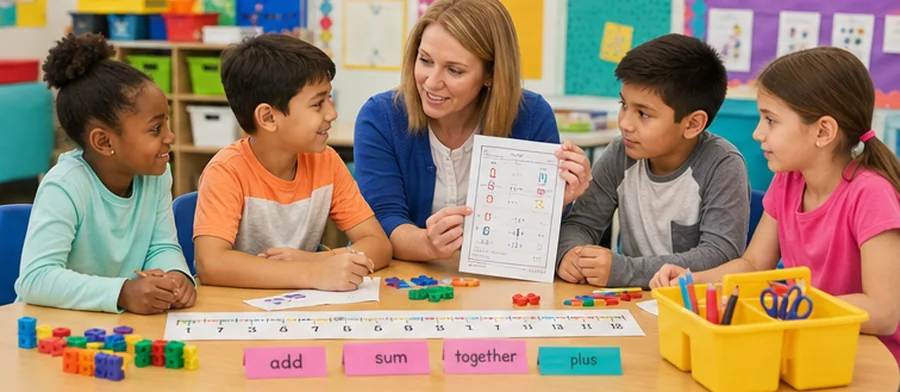
Teachers can use these printables during an animal unit, science centers, early finisher work, or small-group review. They also work well after a read-aloud about ecosystems or before a class discussion on how animals are suited to their surroundings. Sorting cards and matching pages can lead into partner talk using vocabulary such as habitat, shelter, survive, ocean, forest, desert, pond, and grassland.
Common errors to watch for
Some children match animals only by background color, such as placing every white animal in a polar habitat. Others think a habitat is simply a “home” like a nest or burrow, rather than the larger place that provides needs. Encourage students to give a reason for each choice: “The turtle can live near water because…” or “The cactus and camel belong in a dry habitat because…”
Free printable PDF download
Use this grade 2 habitats worksheet page to preview the activity, print it, or download it as a PDF for quick practice. It works well for homework, homeschool lessons, tutoring, morning work, revision, and classroom centers.
Answers and answer key support
After the child completes the worksheet independently, parents and teachers can use the answer support or answer key information to check the work, review mistakes, and choose the next practice step.
Why iBloom worksheets help
iBloom worksheets keep the focus on observation, reasoning, and clear Grade 2 language. Picture support helps children access the science, while short written prompts help them practise explaining ideas. A child-friendly strategy is: look at the animal, name what it needs, check the habitat clues, then choose and explain.
Helpful answers
Frequently asked questions
What do Grade 2 students learn in habitats worksheets?
They learn that a habitat is the place where an animal finds food, water, shelter, and space. They also practise matching animals to suitable environments and explaining why the match makes sense.
Which habitats are commonly included in these activities?
The worksheets may include familiar habitats such as forests, deserts, oceans, ponds, grasslands, and polar regions, using animals and pictures that are appropriate for Grade 2 learners.
How can I help my child explain habitat answers?
Ask your child to finish a sentence such as, “This animal belongs here because…” Encourage them to mention a need, such as water, shelter, food, or the kind of weather the animal can live in.
What mistakes are common when children study habitats?
Children may choose a habitat based only on a picture clue, such as color, or think a habitat means only a nest or den. Remind them to think about the larger environment and the animal’s needs.
Can these worksheets be used in science centers?
Yes. They are useful for science centers, partner sorting tasks, small-group review, or independent practice after a lesson about animals and their environments.
Is this grade 2 habitats worksheet free?
Yes. You can preview it for free and use the printable worksheet for home or classroom practice.
Can I download this grade 2 habitats worksheet as a PDF?
Yes. Use the worksheet download option to save a printable PDF, or print the worksheet directly from the page.
Does this grade 2 habitats worksheet include answers or an answer key?
When the activity has fixed answers, iBloom includes answer support so parents and teachers can check the completed worksheet.