








About this worksheet
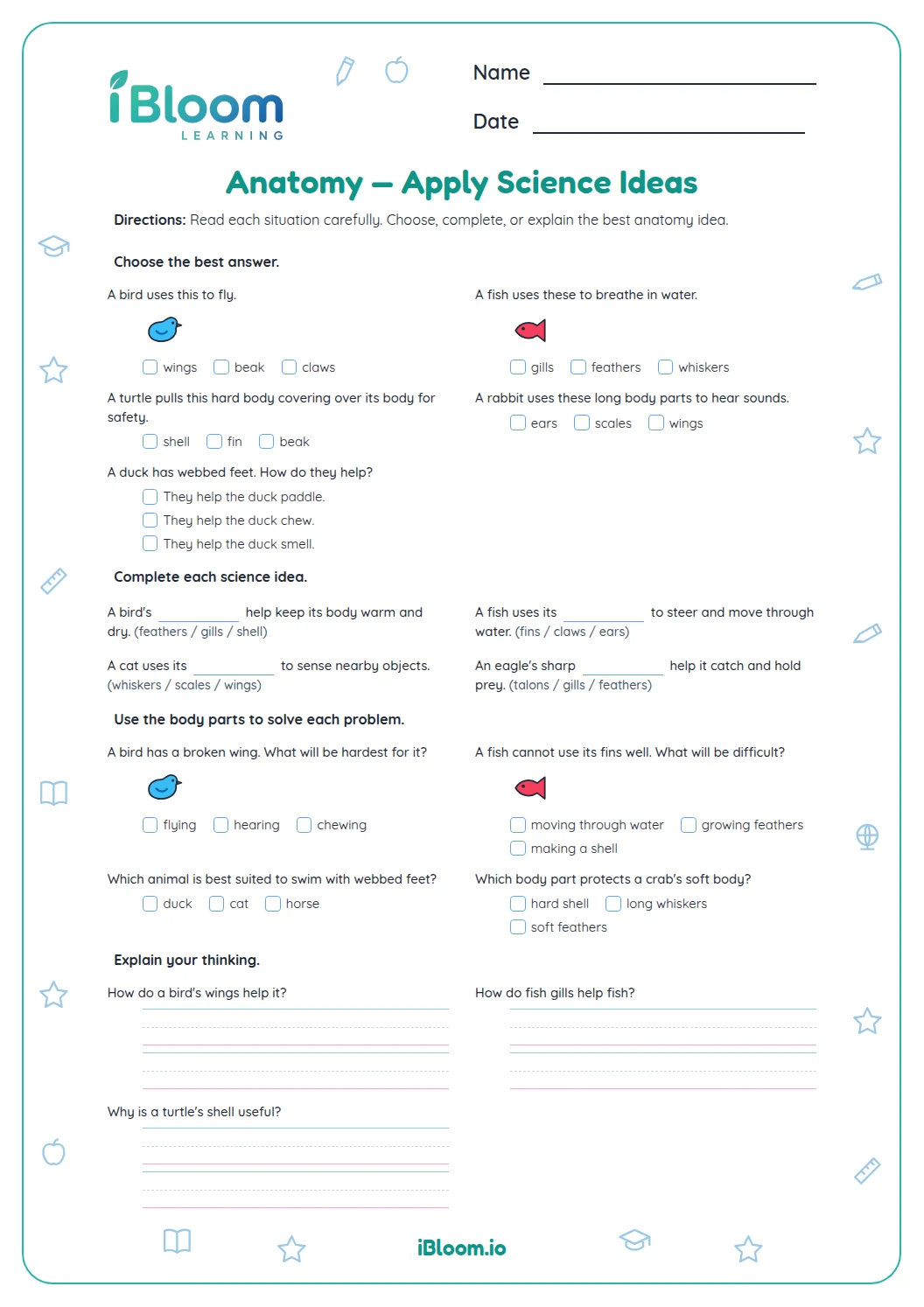
This free Grade 2 science worksheet asks children to connect an animal’s external body parts with what those structures help the animal do. Multiple-choice clues cover movement, sensing, feeding, oxygen, and protection. A drawing task applies the turtle-shell idea to a protective knee guard, followed by two short cause-and-effect explanations. The answer key includes the best choices and sample responses. The design connection practices NGSS 1-LS1-1 by using an animal structure as inspiration for a solution to a human problem.
Aligned to 1-LS1-1
How does a structure cause an effect?
A structure is a body part with a shape or material that supports a job. Webbed feet push against water, helping a duck paddle.
- 1Structure: webbed feet
- 2Action: push against water
- 3Effect: the duck can paddle
What clues connect the part to its job?
Use the specific clue in the question. Wide feet spread weight on sand; a hooked beak can tear food; a shell covers a turtle.
How can an animal structure inspire a design?
A protective guard can borrow the shell’s curved covering idea. The design should show how the shape could cover and protect a person’s knee.
How to use this worksheet
- 1Read the animal and body-part clue.
- 2Name the body part or action.
- 3Ask what need or job it supports.
- 4Choose the effect that matches the clue.
- 5For written answers, name the part and its effect; for the design, show the protective shape.
Common mistakes and quick fixes
The mistake
Naming a body part without its effect
The fix
Add what that part helps the animal do.
The mistake
Mixing up a need and a structure
The fix
Name the structure first, then say how it supports the need.
The mistake
Choosing an effect that is possible but not in the clue
The fix
Use the details given, such as water, sand, food, or danger.
Curriculum alignment
Connect animal body parts to the jobs they do and use those ideas in a design.
On this sheet: Students explain how external animal structures support needs and apply those ideas to a simple design.
Show the official wordingHide the official wording
Use materials to design a solution to a human problem by mimicking how plants and/or animals use their external parts to help them survive, grow, and meet their needs.*
What to practice next
Make more practice
Further reading
Questions parents and teachers ask
What is cause and effect in animal anatomy?
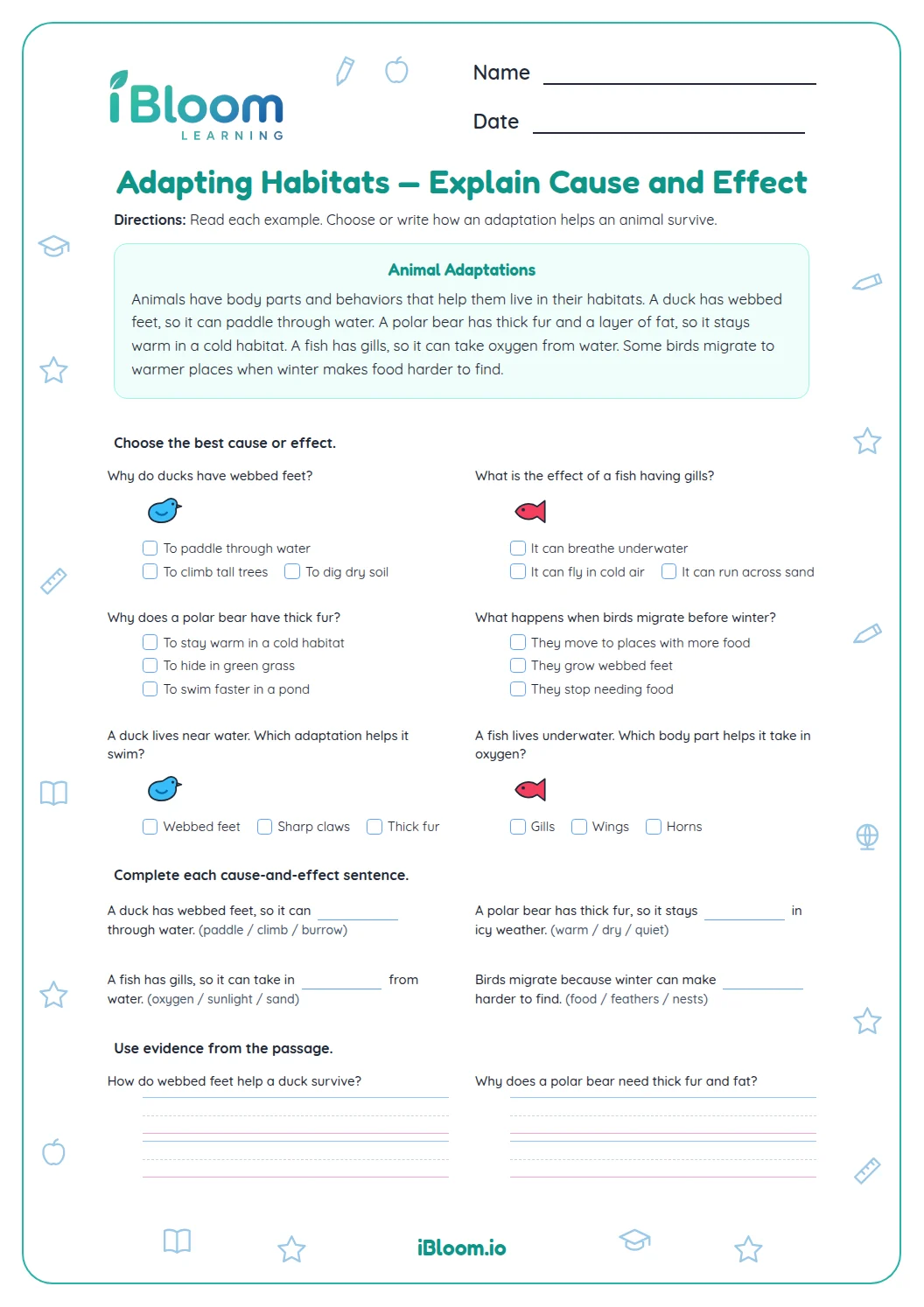
The body part or action is the cause, and what it helps the animal do is the effect. In one example, webbed feet push against water, which helps a duck paddle. The worksheet practices making that connection from a specific clue.
Why do animals have different body parts?
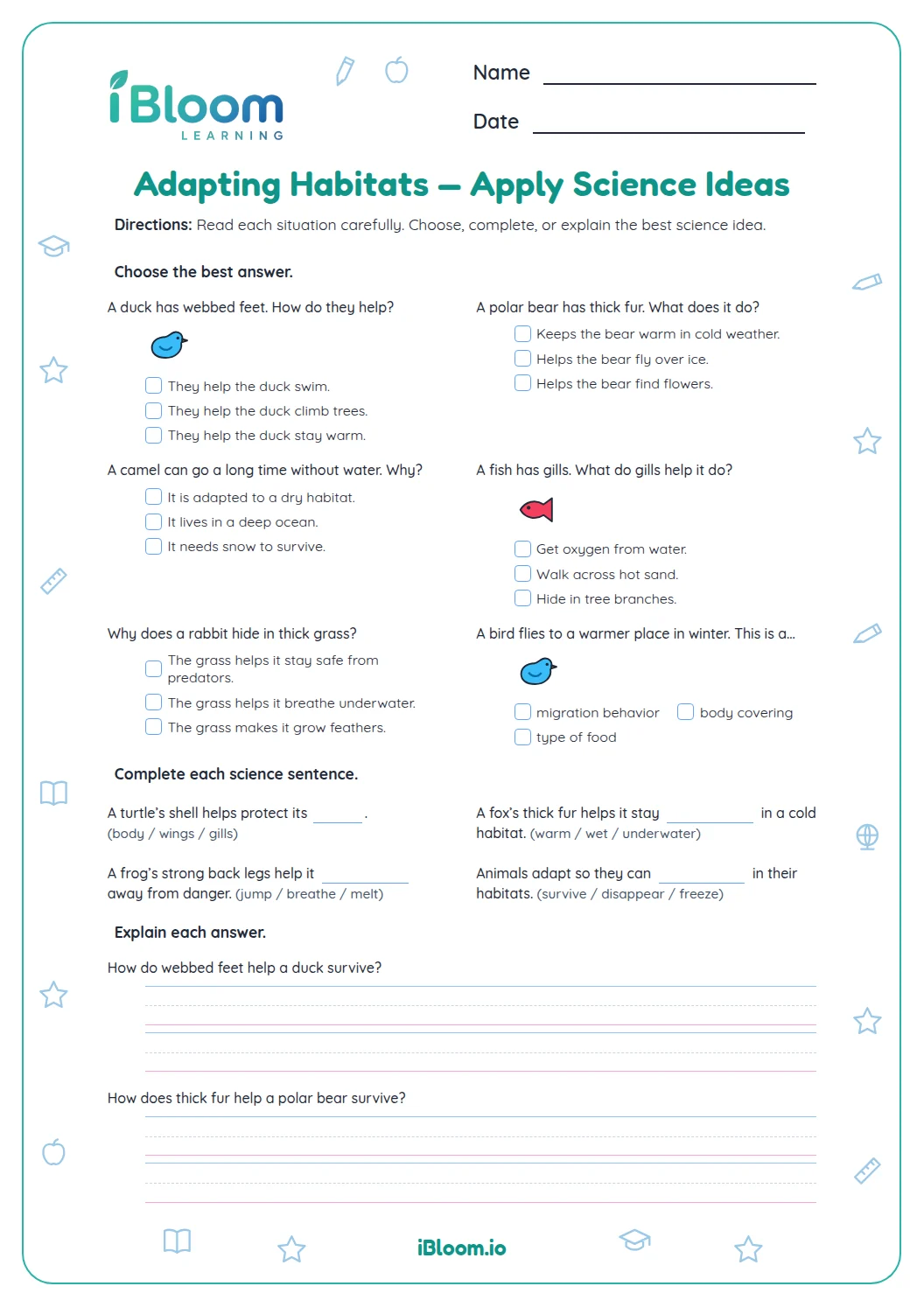
Animals have structures that support jobs such as moving, sensing, finding food, and staying safe. A fish uses gills to get oxygen from water, while a turtle’s shell helps protect its body. The questions connect each structure with a named effect.
What should a written answer include?
A clear response names the body part and describes its effect. “Webbed feet” names the structure; “webbed feet push against water and help a duck paddle” explains the connection. The answer key gives sample responses, so wording can vary while the cause and effect stay accurate.
How does the drawing question connect to animal anatomy?
The drawing asks children to design a knee guard inspired by a turtle shell. A good drawing shows a curved covering over the knee and explains that it protects the person. This applies the idea that an animal’s external part can inspire a solution to a human problem.
What does the answer key show?
The answer key lists the best choice for each multiple-choice question, a sample idea for the knee-guard design, and sample explanations for the final two items. A child’s drawing or sentence may look different while still showing a protective design or a correct structure-effect link.