





About this worksheet
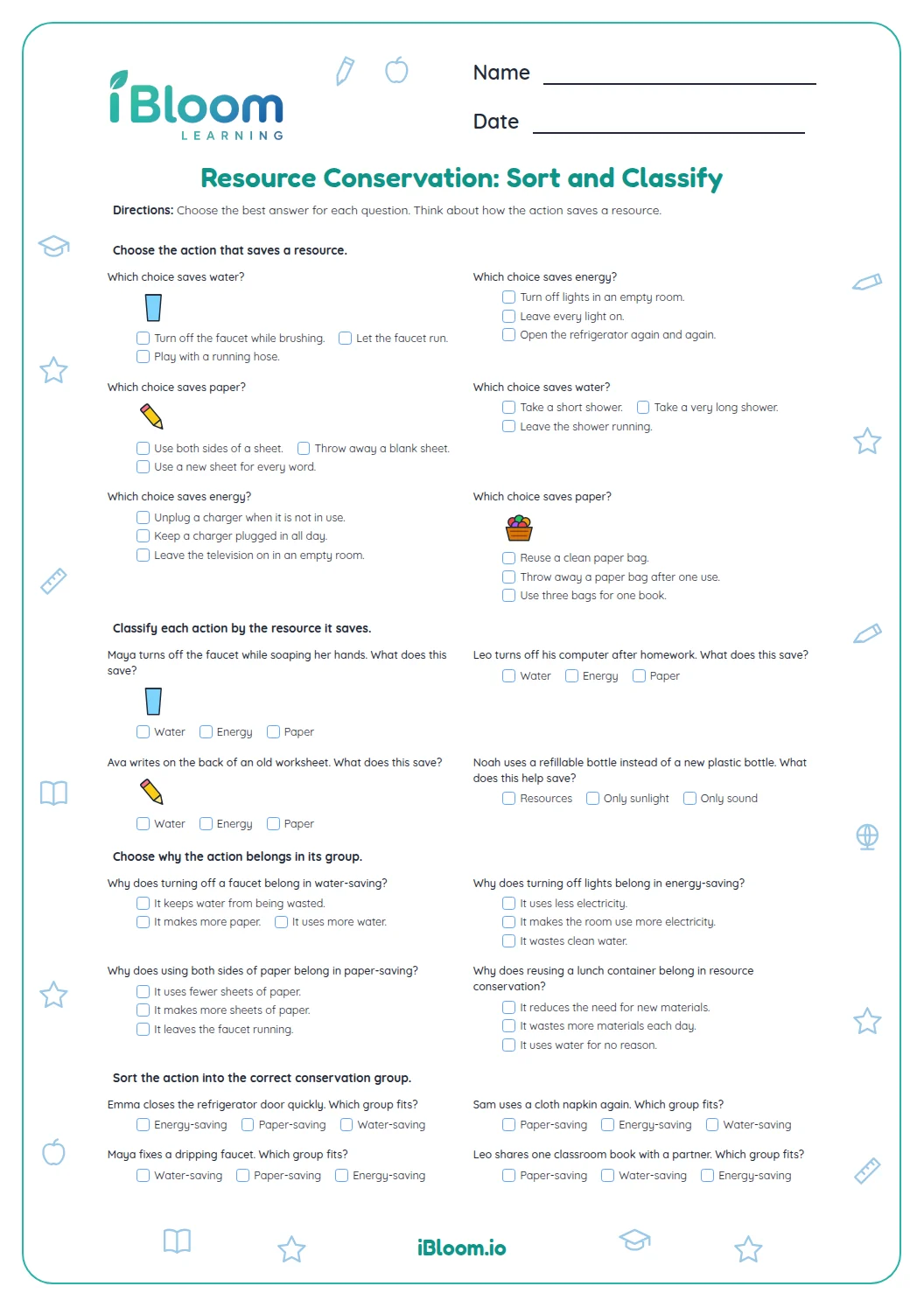
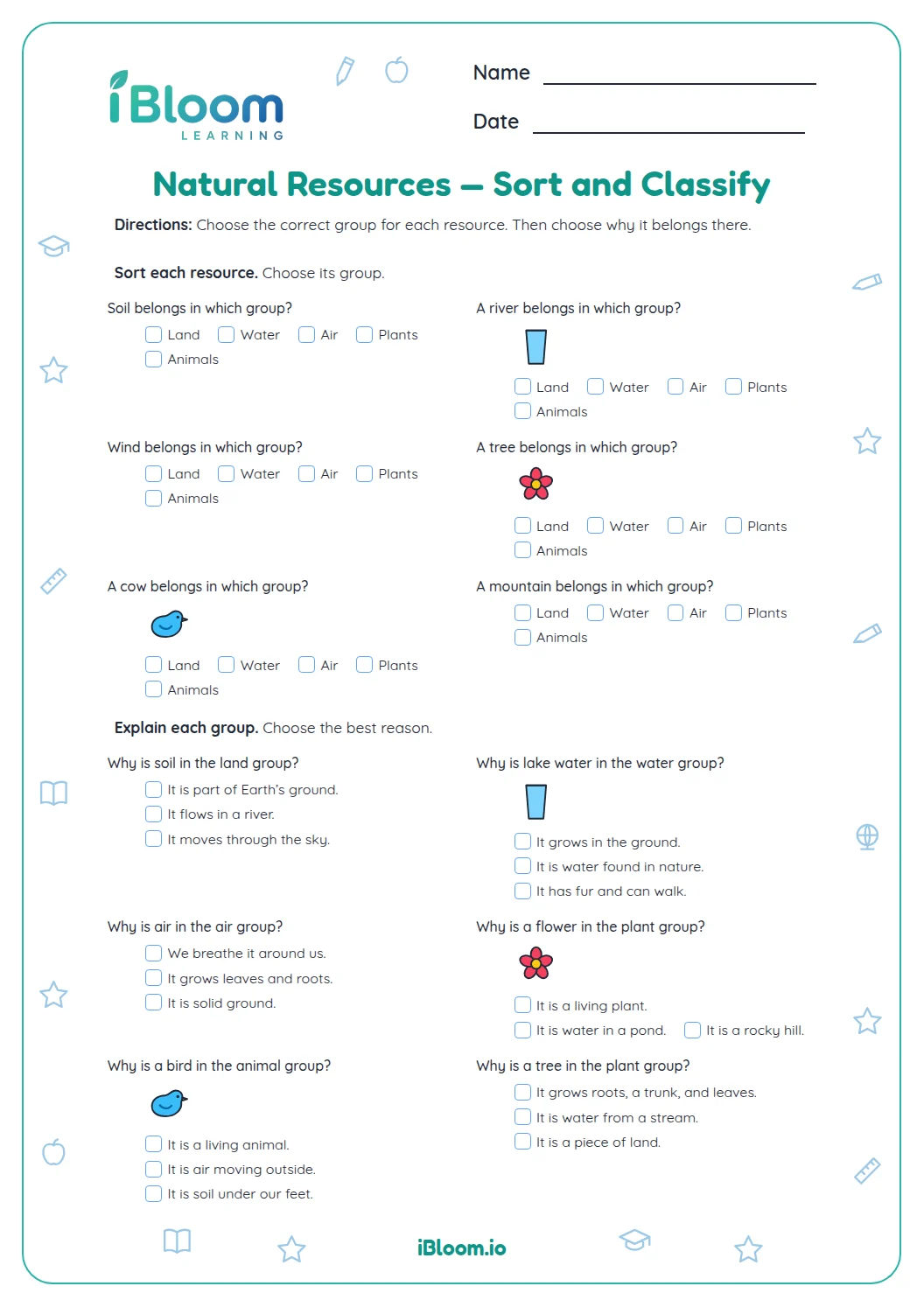
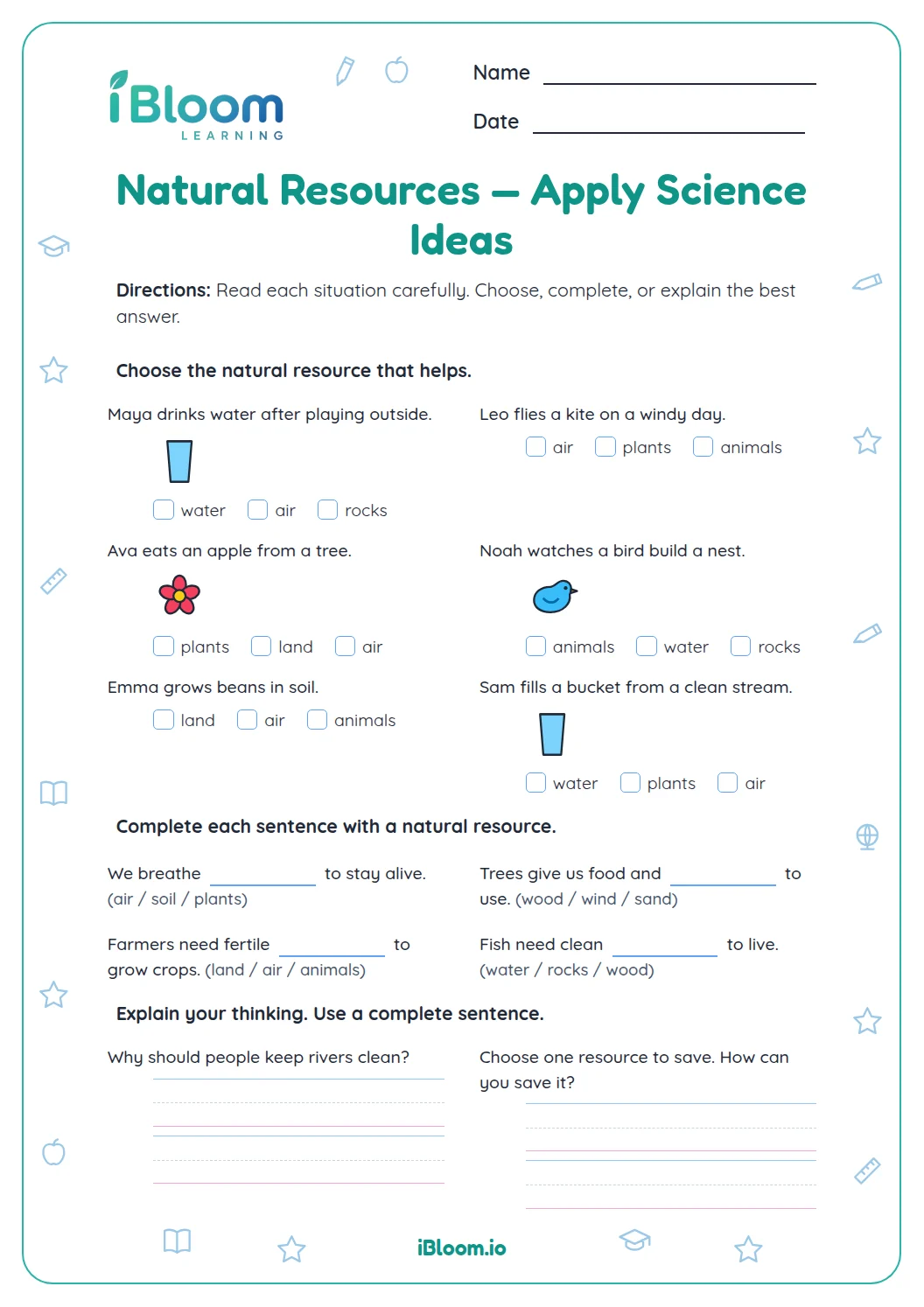
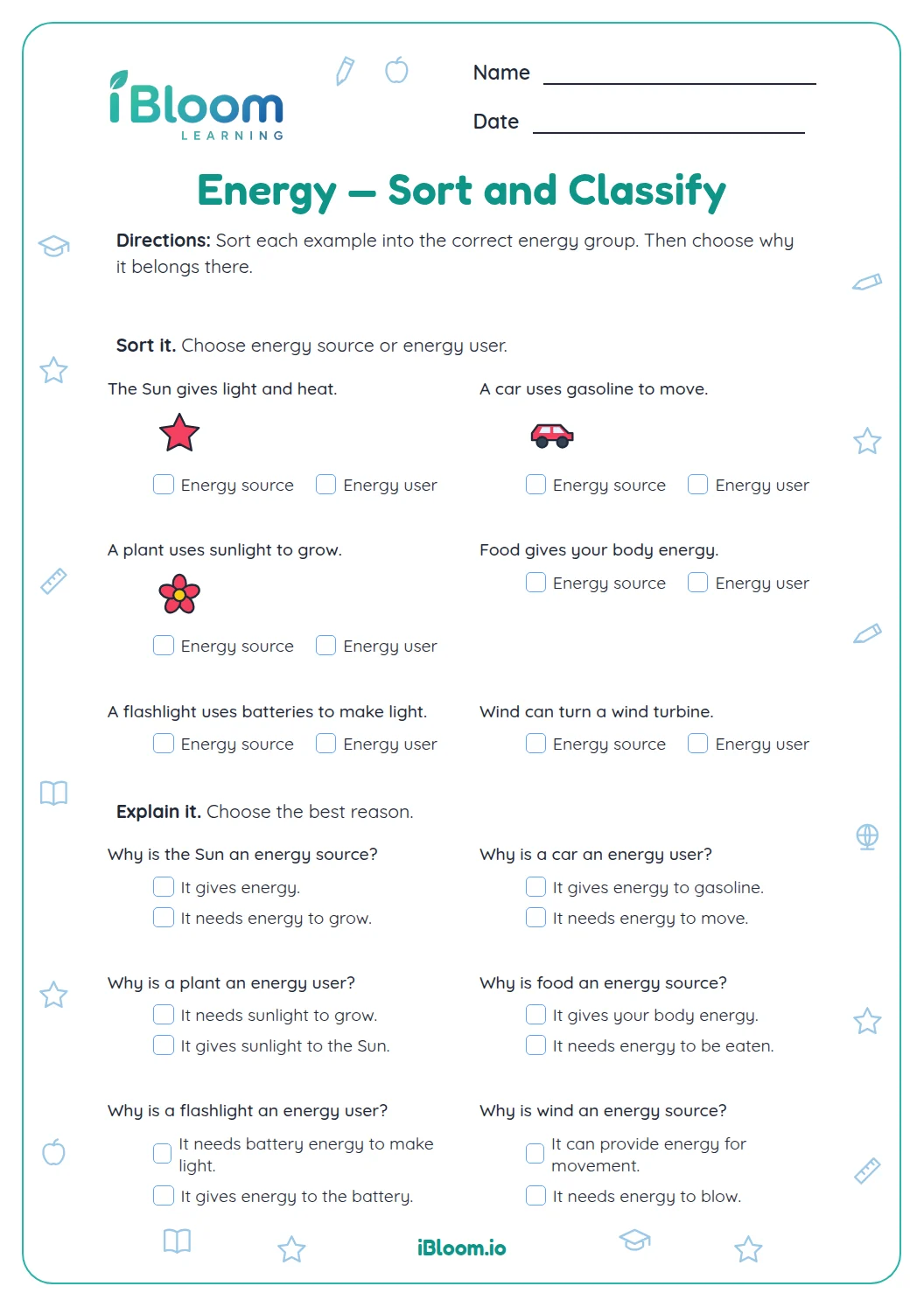
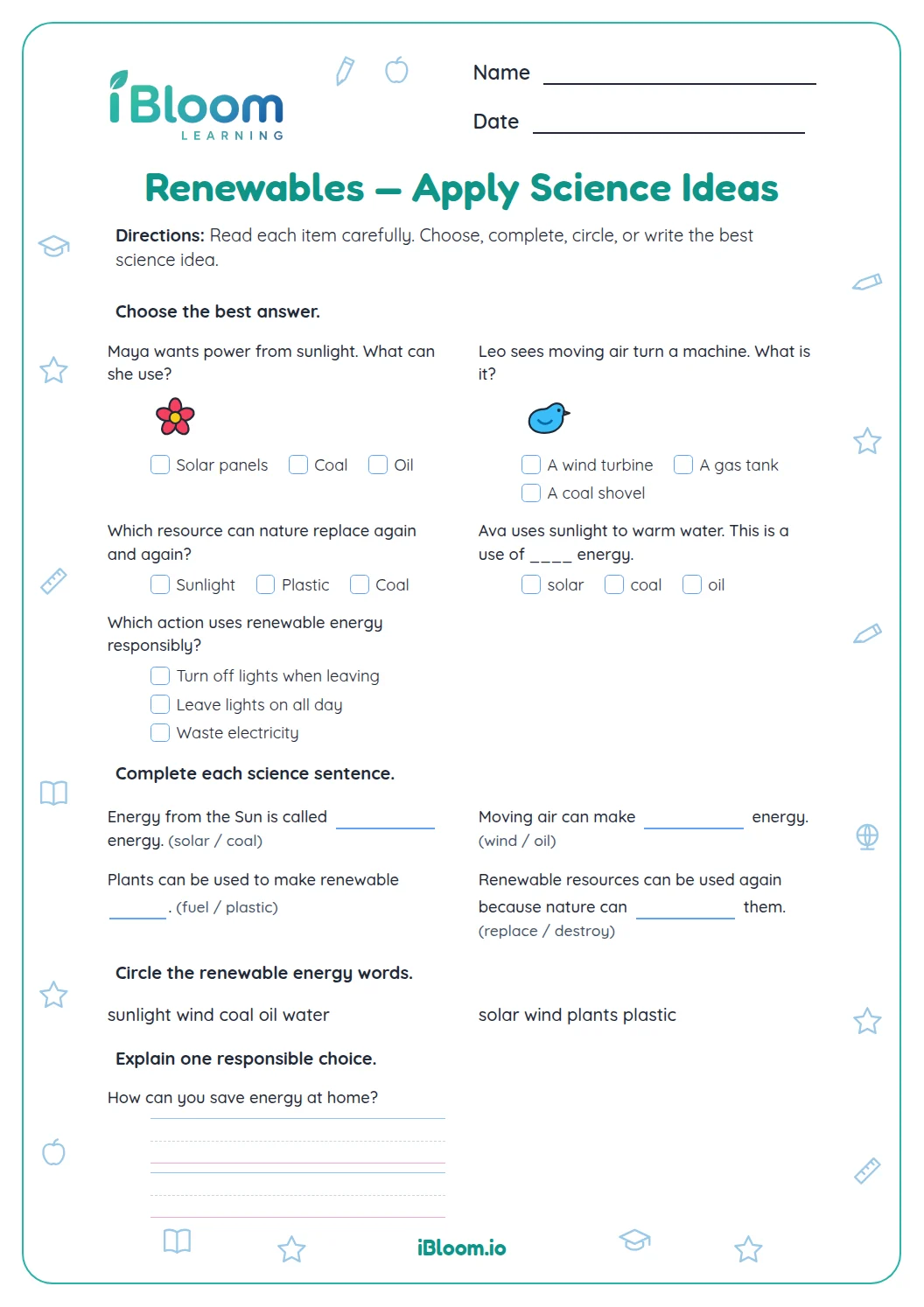
This Grade 2 science worksheet gives students 14 questions about conserving water, energy, paper, and useful materials while caring for living things. Students choose helpful actions and connect choices with their effects and consider the effects of those choices. A separate answer key lists the best response for each item.
What conservation choices appear on the page?
Fourteen situations cover saving water and paper, reducing electricity use, reusing containers, recycling materials, and keeping litter away from streams and ponds.
Students choose an action or reason that fits the situation. Each item focuses on one clear impact so children can connect a choice with a resource.
- 1Use both sides of scrap paper → save trees and paper resources.
- 2Using less paper reduces the need for new sheets.
How can children connect an action to its effect?
Ask what resource is involved, then predict what changes when someone takes the helpful action. Turning off a tap reduces water waste; putting a can in recycling keeps metal available for another use.
For habitat questions, think about how litter or pollution can affect animals and plants nearby.
How can families use the ideas safely?
Children can practice simple routines such as turning off a light when leaving a room or using both sides of a page. Ask an adult to handle repairs or any cleanup that may be unsafe.
A short conversation about the reason for each action helps turn a quiz answer into a useful habit.
How to use this worksheet
- 1Read the situation and name the resource or living thing involved.
- 2Choose the action that would reduce waste or harm.
- 3For a reason question, connect the action to its likely effect.
- 4Talk through any choice that needs an adult’s help.
- 5Use the key to check and explain the science idea.
Common mistakes and fixes
The mistake
Thinking recycling and reusing mean exactly the same action.
The fix
Reusing keeps an item in use; recycling processes material so it can become useful again.
The mistake
Choosing an action that moves litter instead of removing it.
The fix
Put litter in a proper bin and keep it away from water and wildlife.
The mistake
Assuming a resource is unlimited because it is found in nature.
The fix
Remember that people and living things depend on resources, so avoiding waste matters.
What to practice next
Questions parents and teachers ask
What does resource conservation mean?
Resource conservation means using materials and natural resources thoughtfully so less is wasted and the environment is cared for. This worksheet connects the idea to saving water, using less paper, reusing materials, and keeping litter away from habitats.
How many questions are included?
There are 14 multiple-choice questions in two parts. The first seven focus on helpful conservation actions, such as saving water or reusing a container. The next seven ask students to choose a reason or next step that protects resources and living things.
Why does the worksheet ask about recycling?
Recycling can keep useful materials such as metal, paper, and glass in use instead of sending them straight to waste. The questions also address reducing paper use, saving water and energy, and keeping litter away from streams and ponds.
Can children do these actions on their own?
Some choices, such as using both sides of paper, can be done at school with routine guidance. Other actions, such as fixing a leaky faucet or picking up litter, may need an adult. The worksheet models safe, helpful choices and asking an adult when needed.
What should students learn from the answer key?
The key identifies the best answer for each situation. Invite children to explain the connection: turning off a tap saves water, while removing litter helps keep a pond safer for animals. They can also name the resource involved in each choice.
How can we extend this science practice?
Choose one resource used at home or school and notice where it may be wasted. Together, pick a practical step, try it, and describe how it reduces waste or helps the local environment. For example, reuse a clean container or use both sides of a page.