


About this worksheet
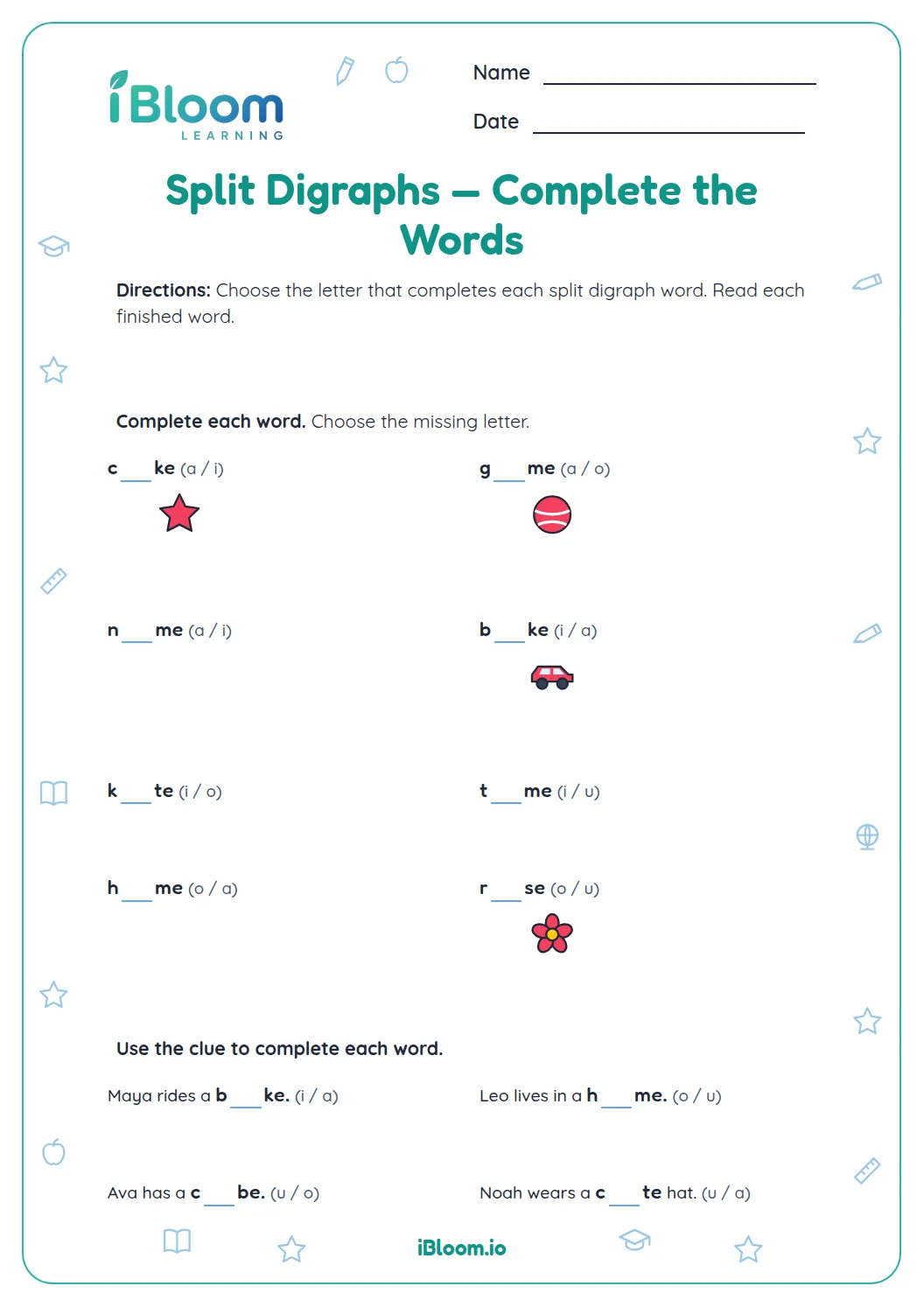
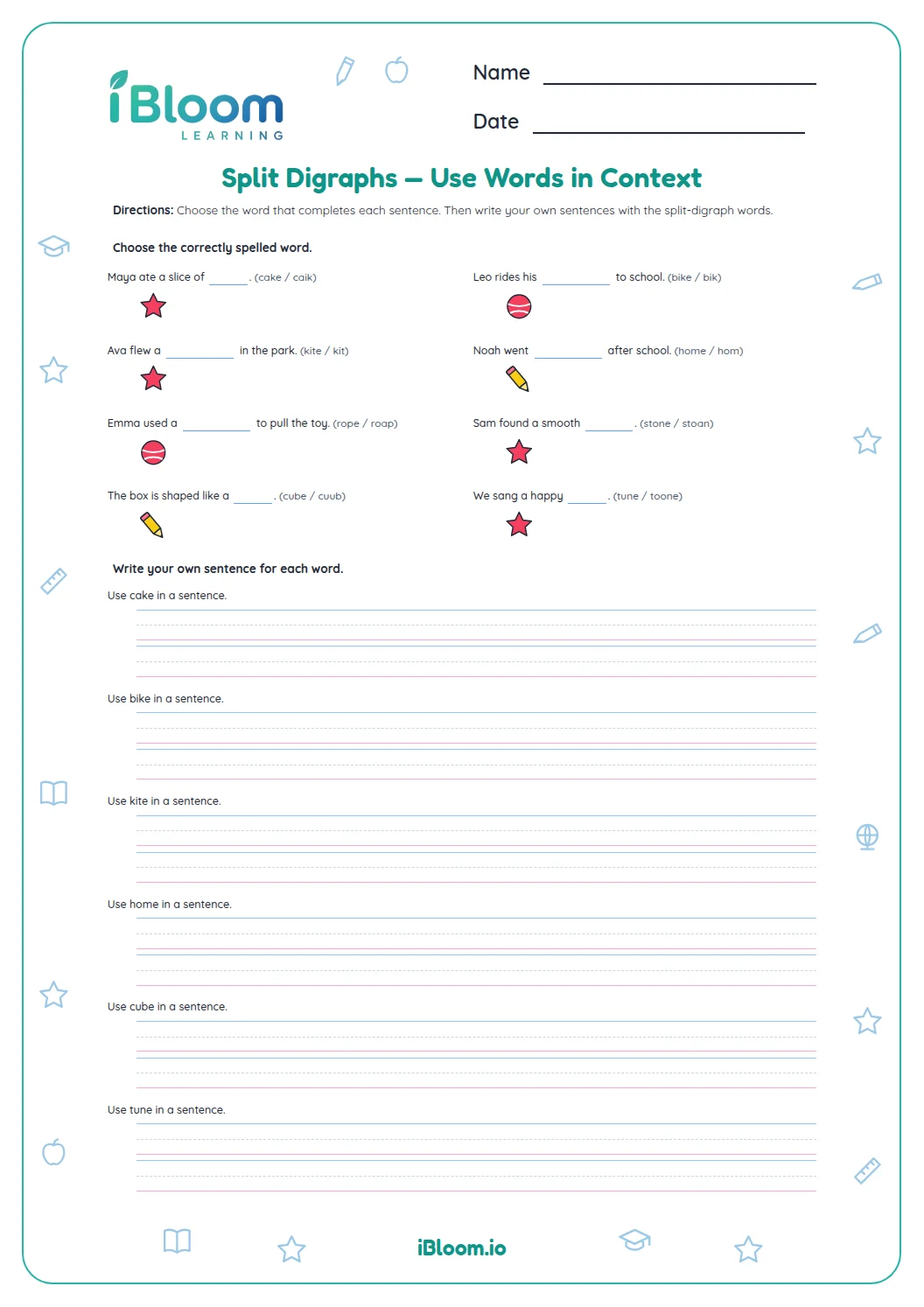
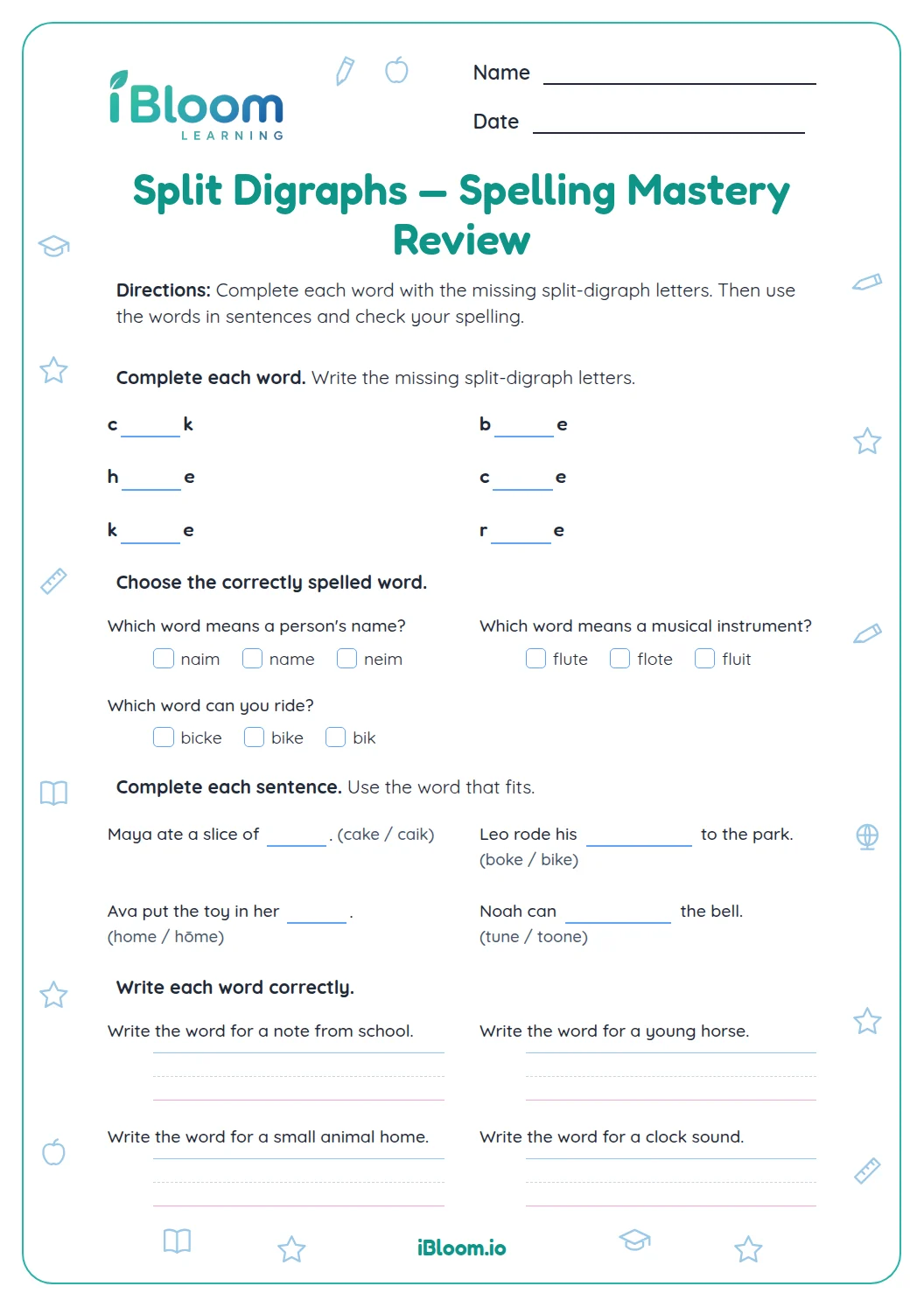
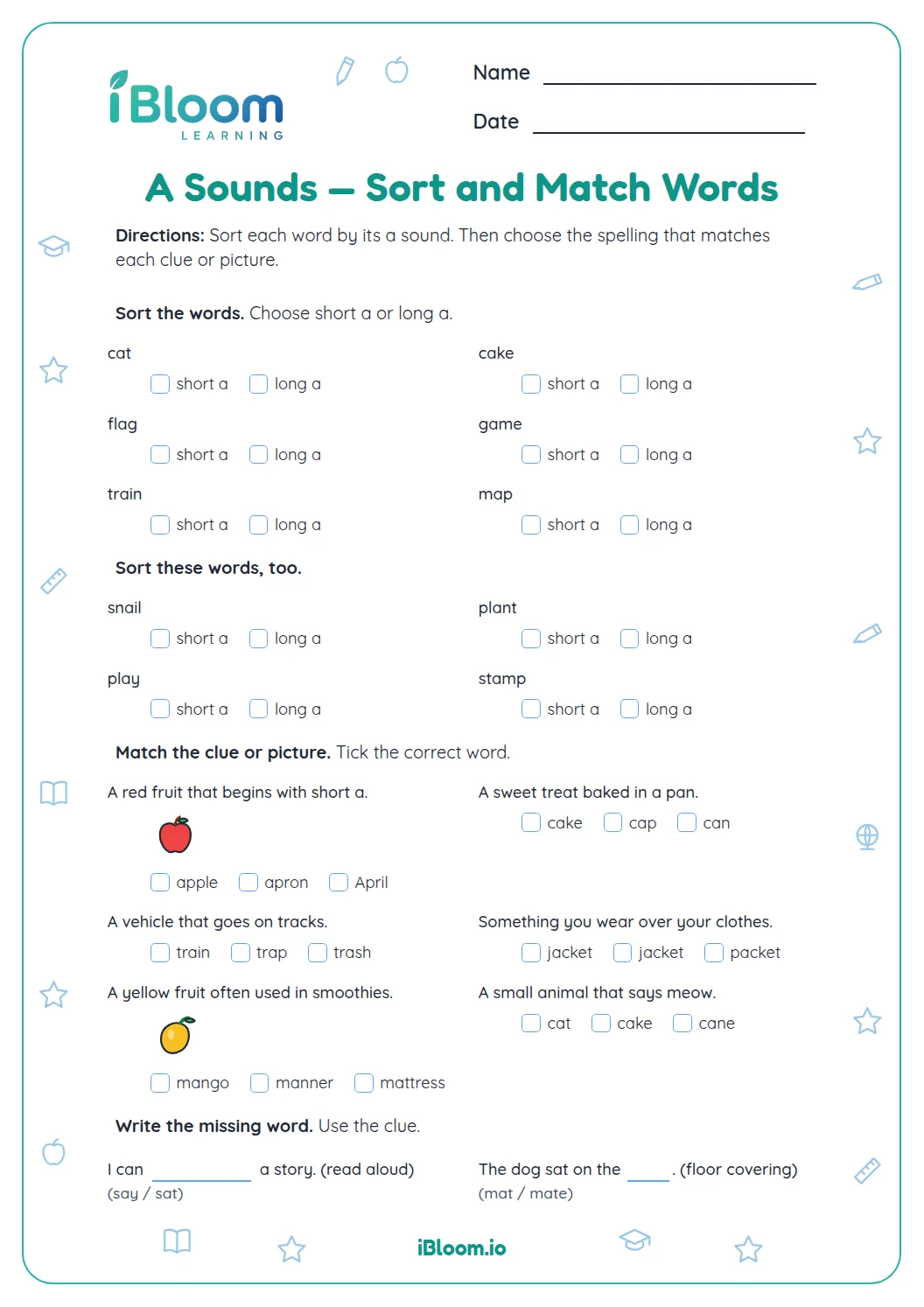
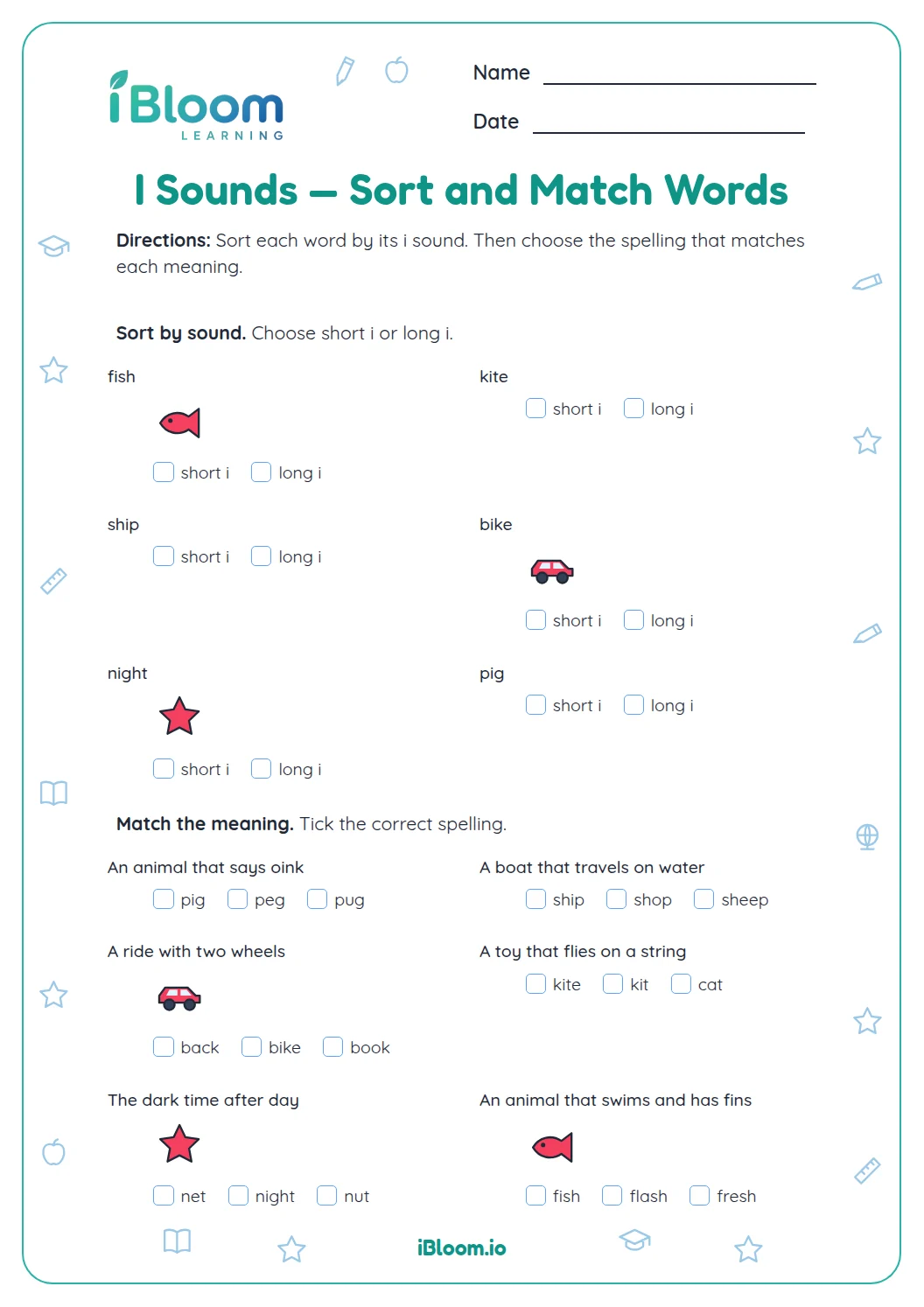
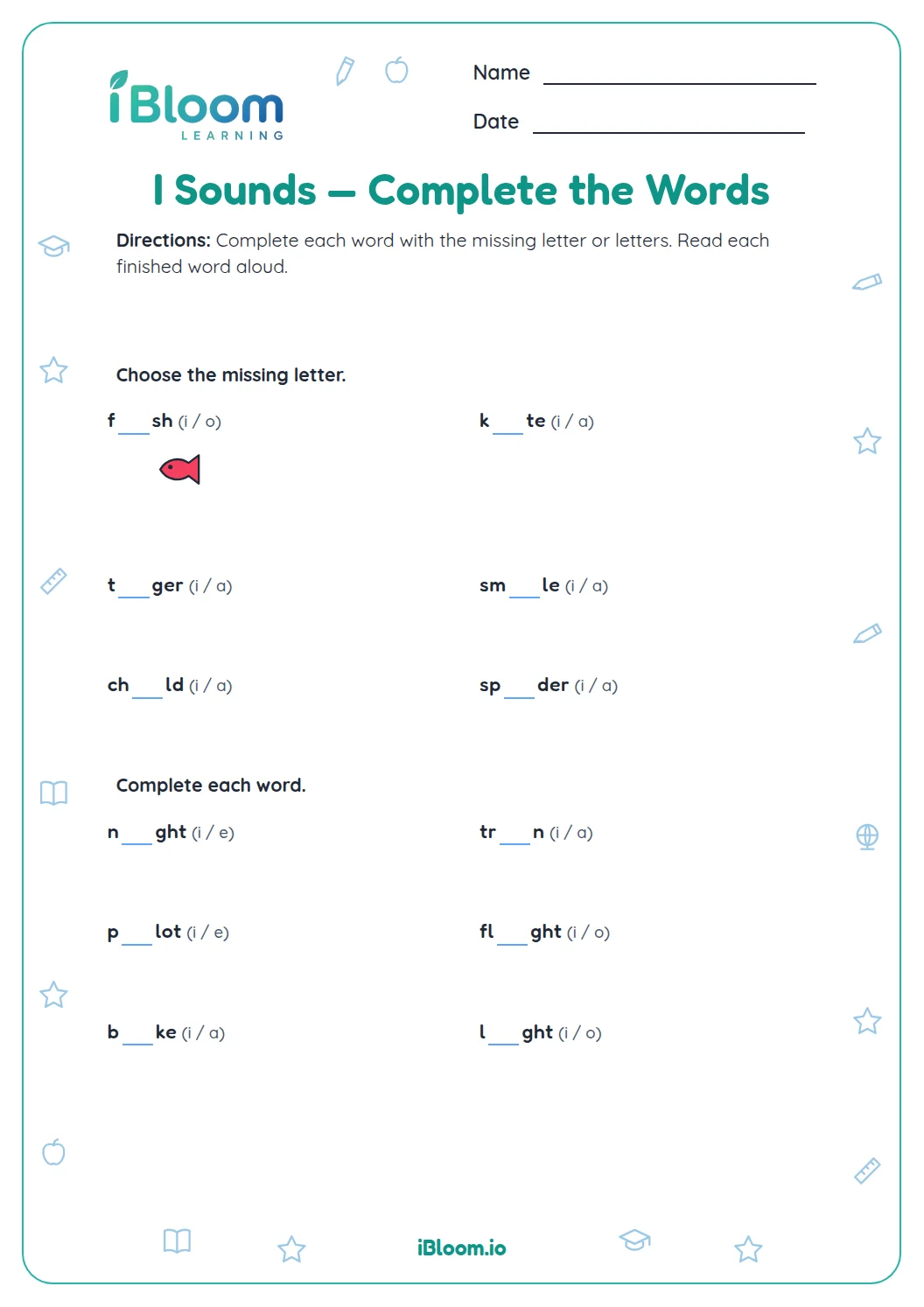
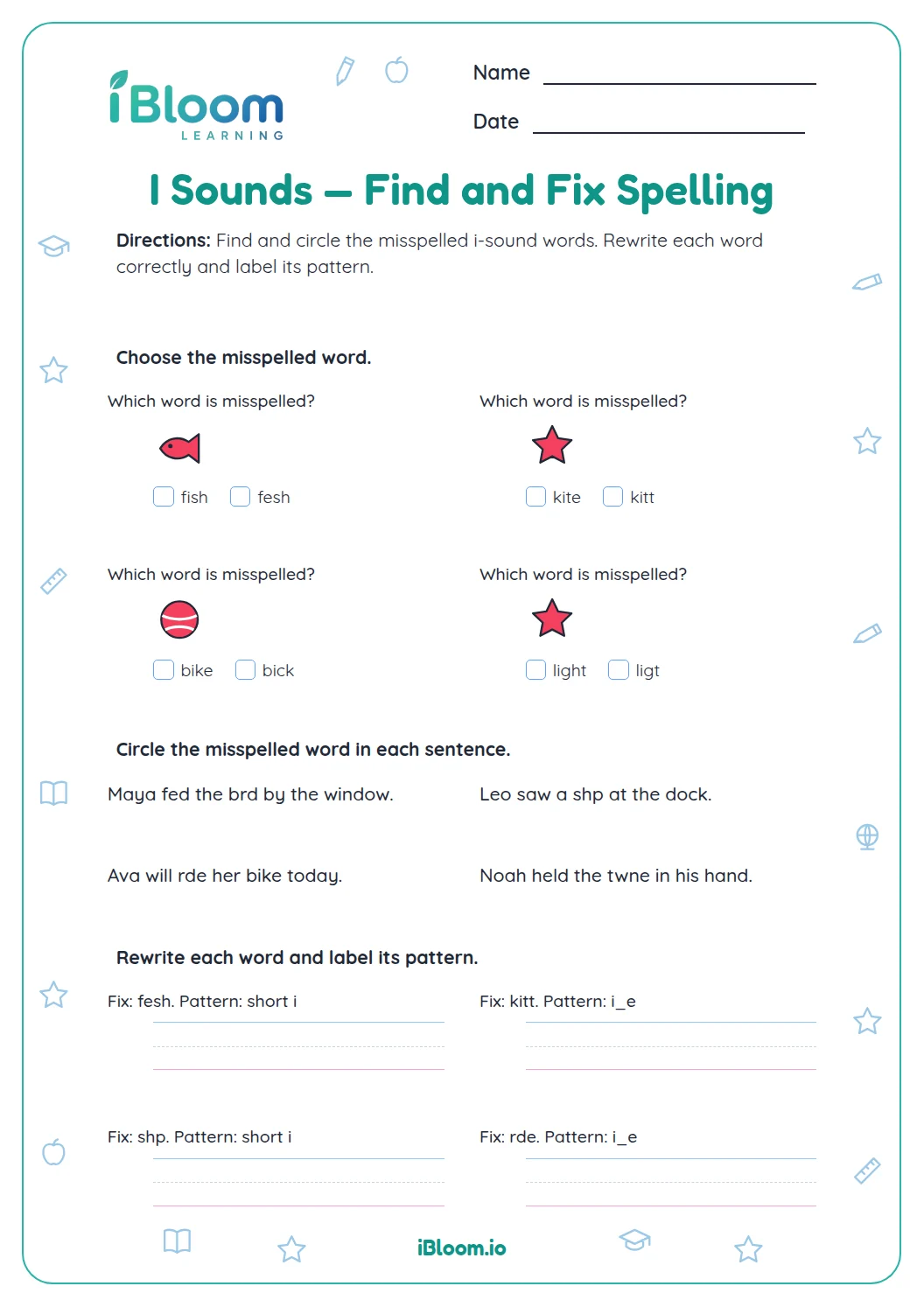
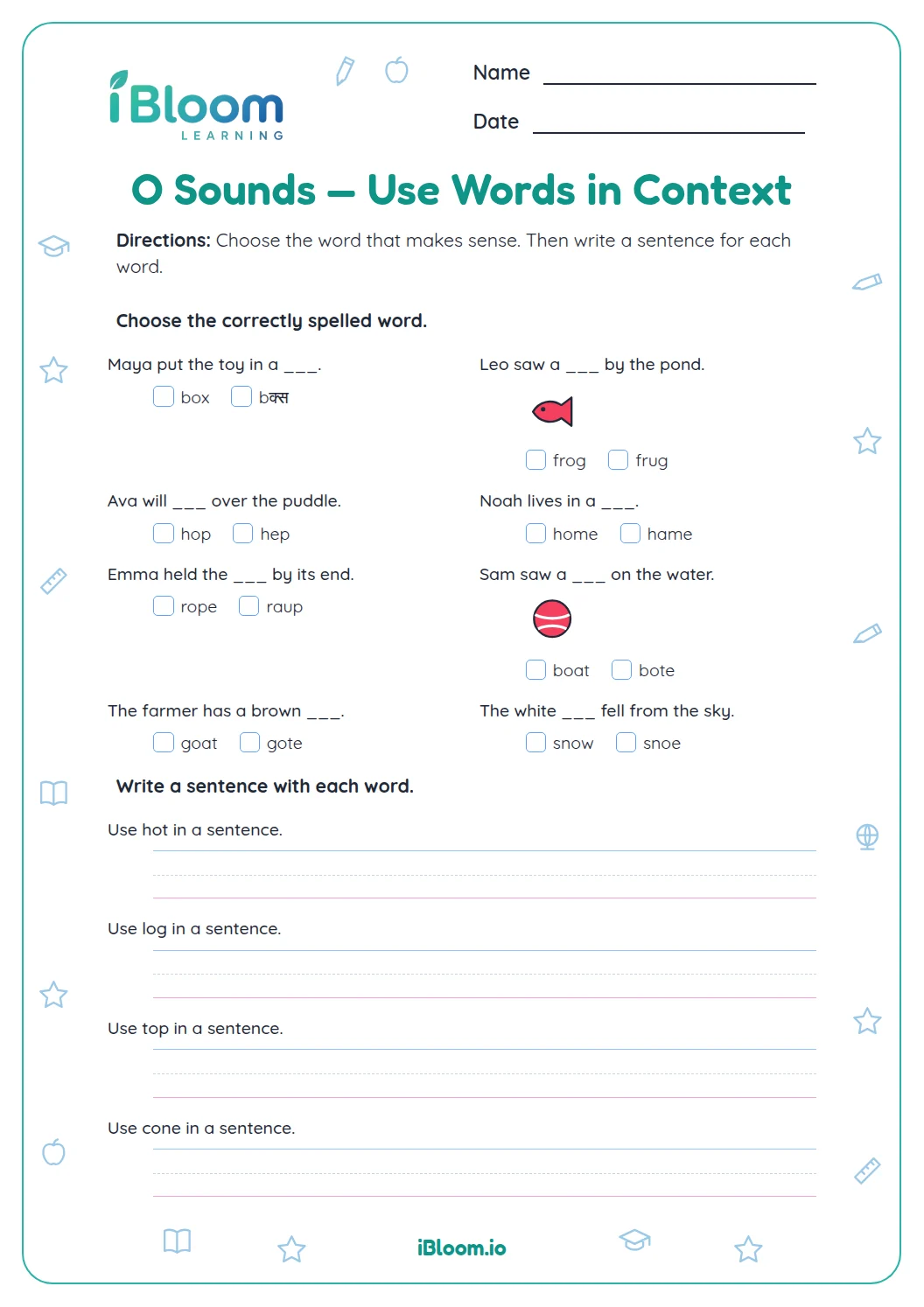
This Grade 1 spelling worksheet helps children recognize a split digraph: a vowel, a consonant, and a final e that work together to signal a long vowel sound. Part A identifies a_e words, Part B uses split-digraph words in short sentences, and Part C sorts words by a_e, i_e, o_e, or u_e. The answer key gives the correct choices for all 14 questions.
Aligned to RF.1.3c
What is a split digraph?
A split digraph is a vowel spelling in which a consonant separates the vowel from a final e. In cake, the a and e work together around k; in kite, i and e work around t. The final e is usually silent, and the first vowel has its long sound.
Children can compare a short-vowel word such as cap with cape to hear how the final e changes the vowel sound.
How does this worksheet practice split digraphs?
Part A asks children to spot a_e spellings among short-vowel choices. Part B puts words such as kite and bike into short sentences, so children check both the spelling and the meaning. Part C names a vowel pattern and asks the child to choose a matching word.
- 1Which word has the split digraph a_e?
- 2Choices: cap, cake, can
- 3In cake, a and e are separated by k.
- 4Answer: cake
How can children sort words by the vowel pattern?
Look at the first vowel and the final e, then notice the consonant between them. A word belongs in a_e, i_e, o_e, or u_e according to the vowel pair, not just because it ends in e. Reading the word aloud can confirm the long vowel sound.
How to use this worksheet at home or in class
- 1Read the vowel pattern named in the question.
- 2Look for the first vowel, a consonant, and final e.
- 3Say each choice and listen for the long vowel sound.
- 4For a sentence, check that the word makes sense as well as being spelled correctly.
- 5Review Part C by grouping words with the same vowel and final e.
Common mistakes and quick fixes
The mistake
Choosing a short-vowel word because it looks almost the same.
The fix
Compare the middle vowel sound in cap and cape; the final e changes the vowel sound.
The mistake
Treating every final e as a split digraph.
The fix
Check that the first vowel and final e are separated by one consonant in the target spelling.
The mistake
Choosing a word by sound without checking the sentence.
The fix
Read the whole sentence with the word inserted to make sure it fits.
Common Core alignment
The worksheet practices a Grade 1 phonics spelling pattern.
Recognize final-e spellings that represent long vowel sounds.
On this sheet: Children identify, sort, and read a_e, i_e, o_e, and u_e spellings in simple sentences.
Show the official wordingHide the official wording
Know final -e and common vowel team conventions for representing long vowel sounds.
What to practice next
Make more practice
Further reading
Questions parents and teachers ask
What does split digraph mean?
A split digraph has two letters working together for one vowel sound, with a consonant between them. In cake, a and e are split by k, and the a has its long sound. The final e is usually silent.
Why is the e at the end of cake called silent?
The final e is not pronounced as a separate sound in cake. It helps signal that the earlier vowel is long, so cake has a long a sound. Children can compare cap and cape to hear the difference.
Which patterns are on this worksheet?
The questions practice a_e, i_e, o_e, and u_e. Children first identify a_e words, then choose words that fit simple sentences, and finally select words that belong to one of the named patterns. The answer key lists all 14 choices.
How can I help a child who picks the short-vowel spelling?
Say the word pair slowly, such as cap and cape, and ask the child to listen for the vowel sound. Then point out the consonant between the vowel and final e. Re-reading the complete sentence can also help confirm the spelling.
Does the sheet include an answer key?
Yes. The answer key is a separate page and gives the correct option for each of the 14 questions. Ask the child to name the vowel and final e that form the target pattern, then read the completed word aloud. This reinforces how each spelling fits the category.