




About this worksheet
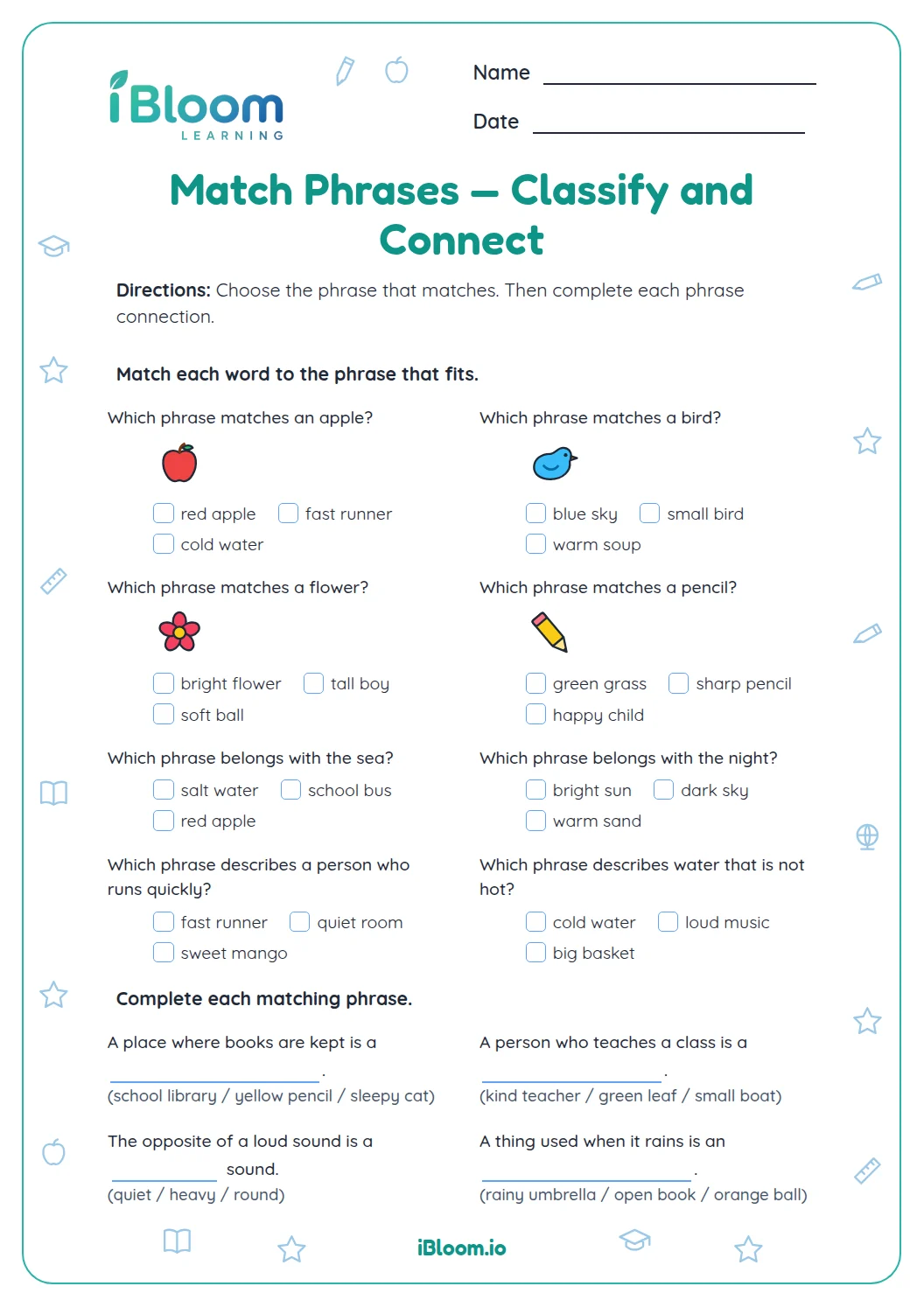
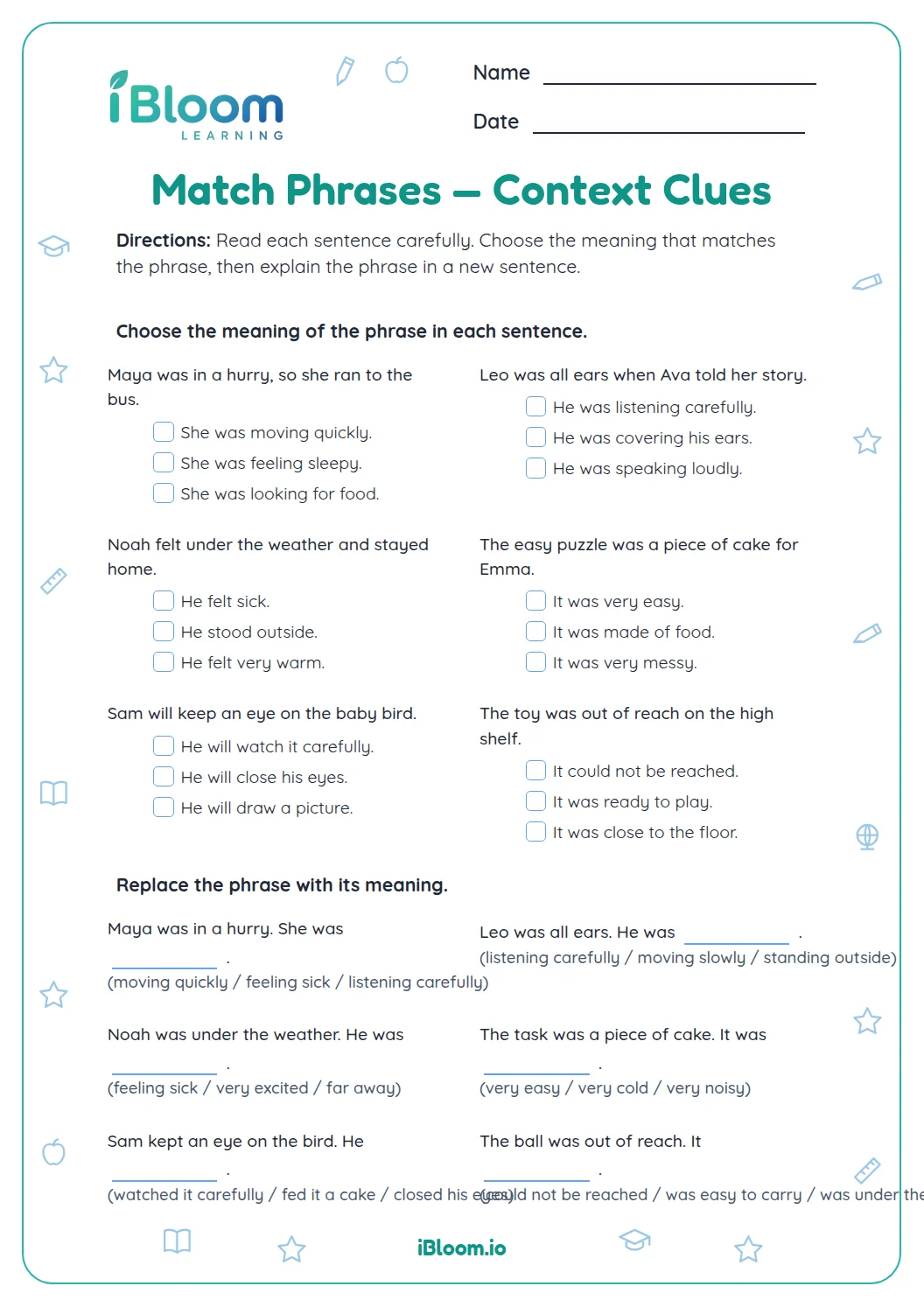
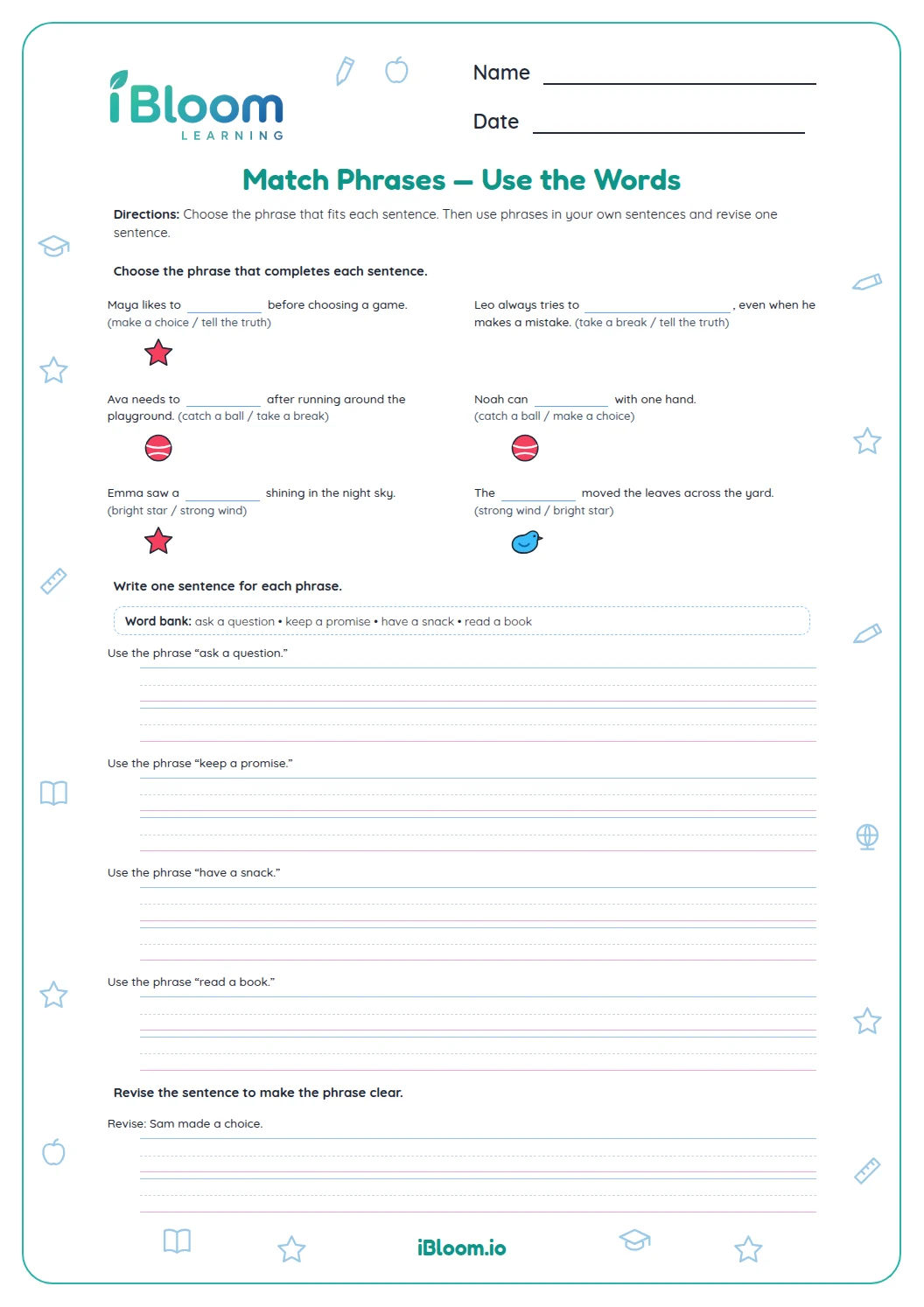
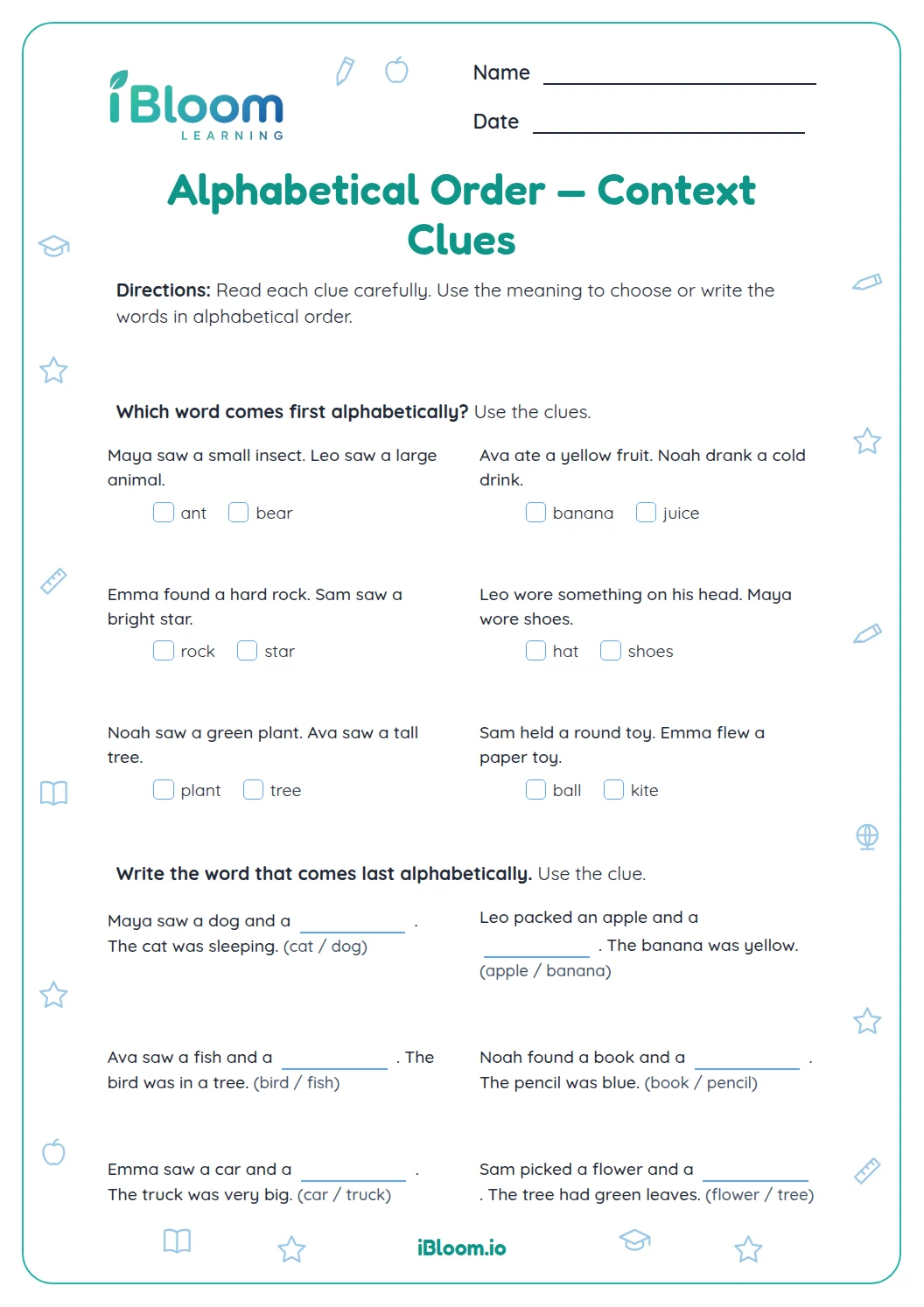
This free Grade 2 worksheet helps students connect familiar phrases with the ideas they express. Across 15 questions in two parts, students match phrase meanings, use sentence clues, and explain comparisons such as “a piece of cake.” A separate answer key supports review. It also practices connecting real-life words and phrases with how people use them.
Aligned to CCSS.ELA-LITERACY.L.2.5.A
How do students match a phrase to its meaning?
Students first connect each phrase to an idea, then apply the phrase in a sentence. For example, “a piece of cake” describes something easy; a simple puzzle finished quickly gives a clear context clue.
How to use this worksheet
- 1Read the whole phrase before choosing its meaning.
- 2In Part A, connect each comparison to the idea it expresses.
- 3In Part B, use the sentence details to complete or select a phrase.
- 4In Part C, explain a phrase using its context.
- 5Check that each answer fits the full sentence, not just one word.
Common phrase-reading slips
The mistake
Taking “a piece of cake” literally.
The fix
Use the sentence to decide whether it describes food or an easy task.
The mistake
Picking a phrase because one word sounds familiar.
The fix
Read the complete comparison and match its whole meaning.
The mistake
Confusing a fast phrase with a quiet or soft one.
The fix
Ask which quality the sentence describes before selecting.
Curriculum alignment
Students connect familiar comparisons to the meanings they express.
On this sheet:
Show the official wordingHide the official wording
Identify real-life connections between words and their use.
What to practice next
Further reading
Questions parents and teachers ask
Which phrases are practiced?
Students work with “as quiet as a mouse,” “like a bee,” “a piece of cake,” “quick as a flash,” “as bright as a lamp,” and “as cold as ice.” They match comparisons to meanings and choose phrases that fit short sentence situations.
How does context help with phrases?
A sentence supplies clues about the intended meaning. If a child finishes a simple puzzle quickly, that situation supports “a piece of cake” meaning easy. Students use details such as a sleeping baby or a runner to choose a phrase that fits.
How many questions are on the worksheet?
The printable has 15 questions in two parts. Students first match phrases with meanings, then write a phrase or meaning that fits each sentence clue. The answer key shows correct responses and supports review of each comparison. Families can discuss why each phrase fits its sentence.
Is there an answer key?
Yes. The key lists the right phrase or meaning for all 15 items. An adult can ask the student to explain which part of a sentence helped, such as the sleeping baby clue for “as quiet as a mouse.” The child can explain which phrase detail made the choice clear.
What grade is it for?
The vocabulary and short sentence clues are designed for Grade 2. Students work with familiar comparisons and connect everyday language to meaning, including ideas such as being quiet, busy, easy, fast, bright, or cold. The child can explain which phrase detail made the choice clear.