



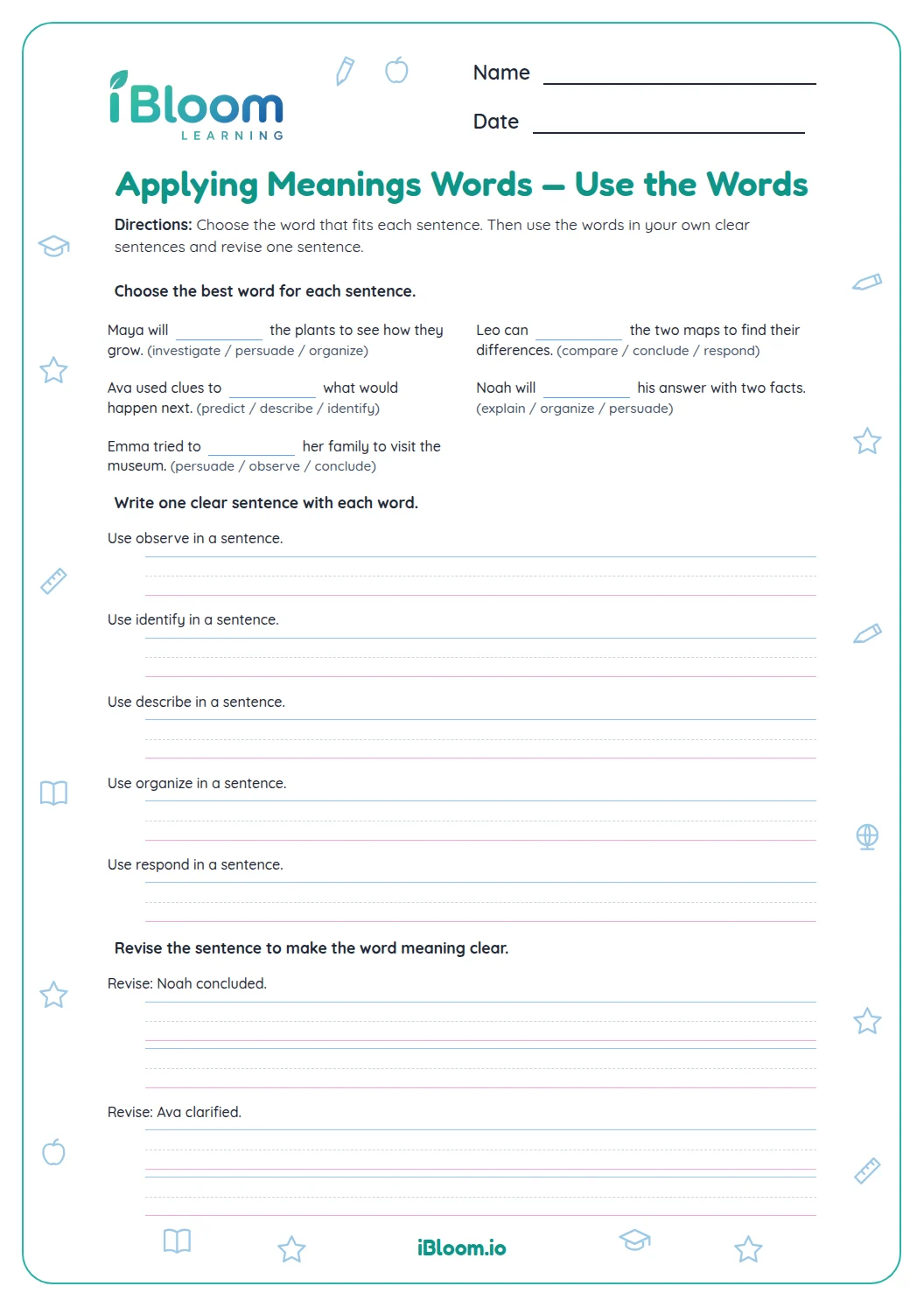
About this worksheet
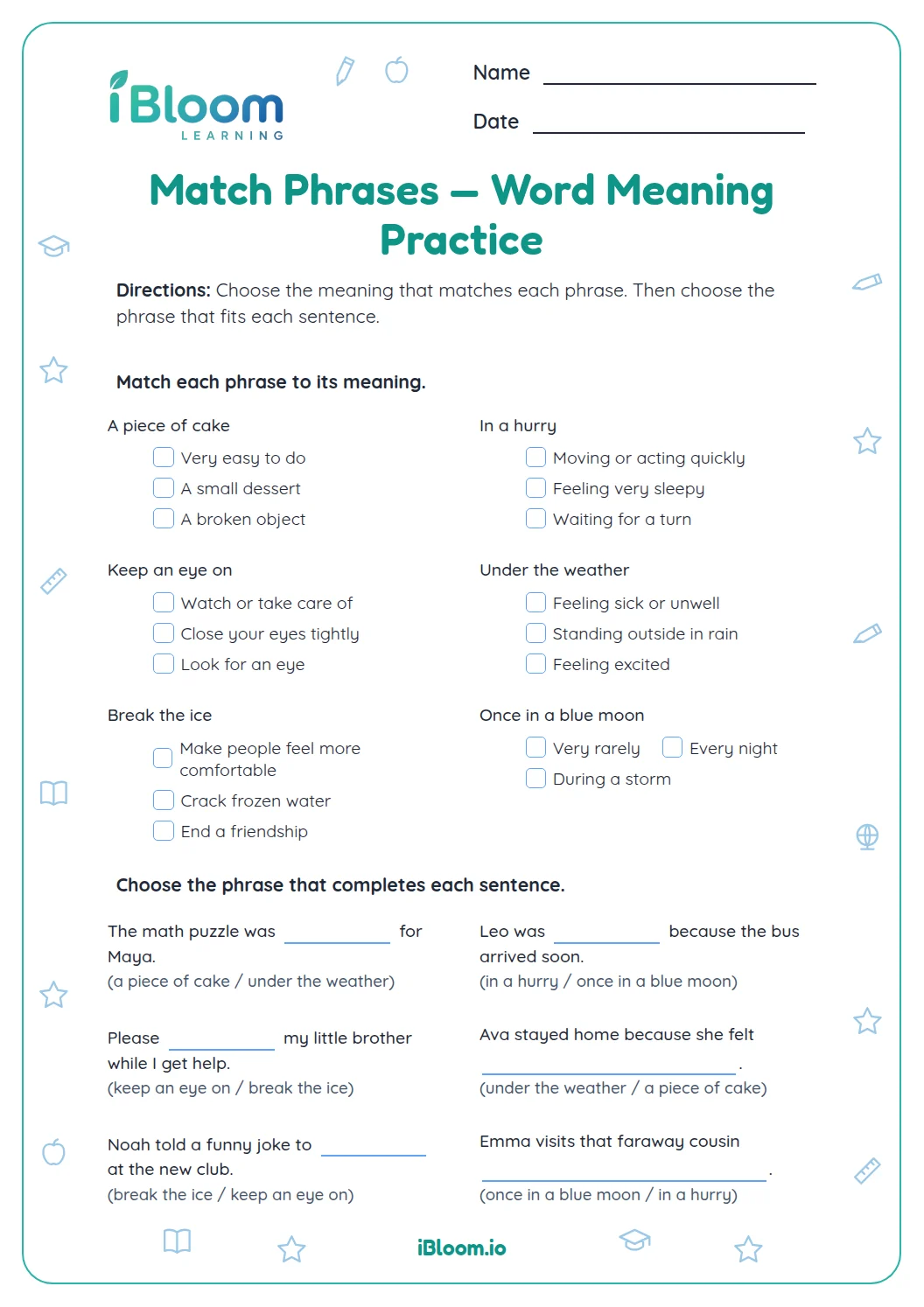
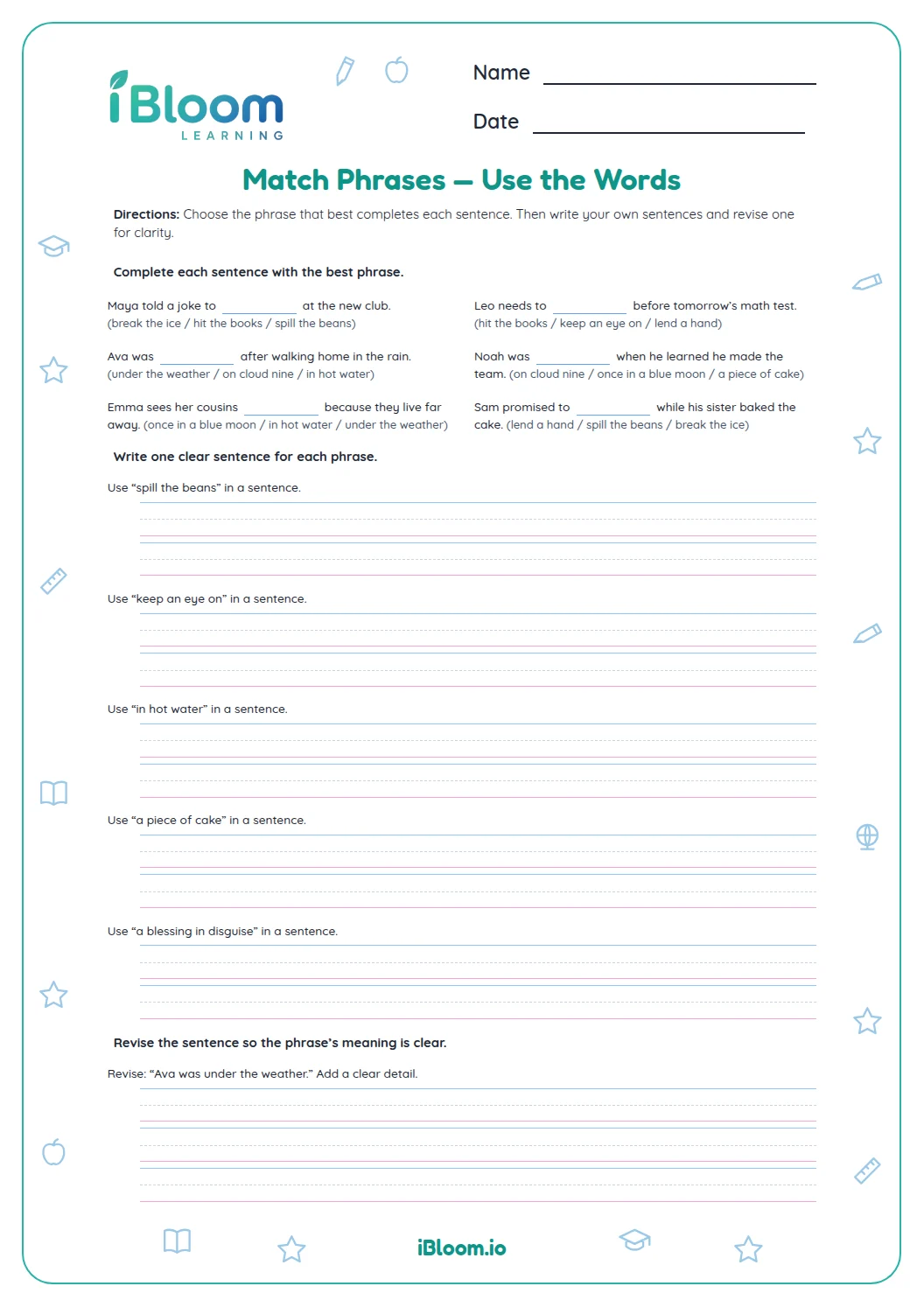
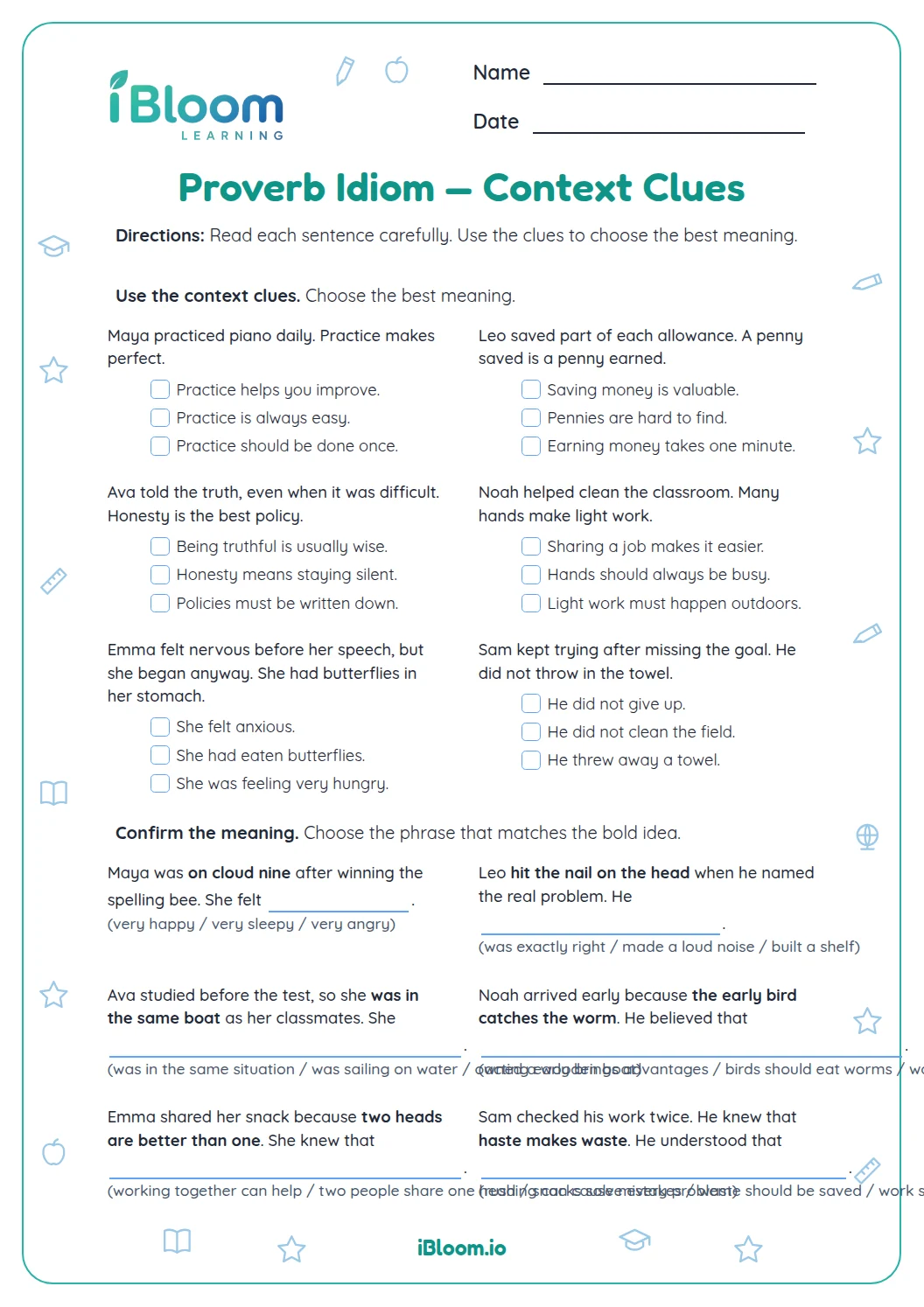
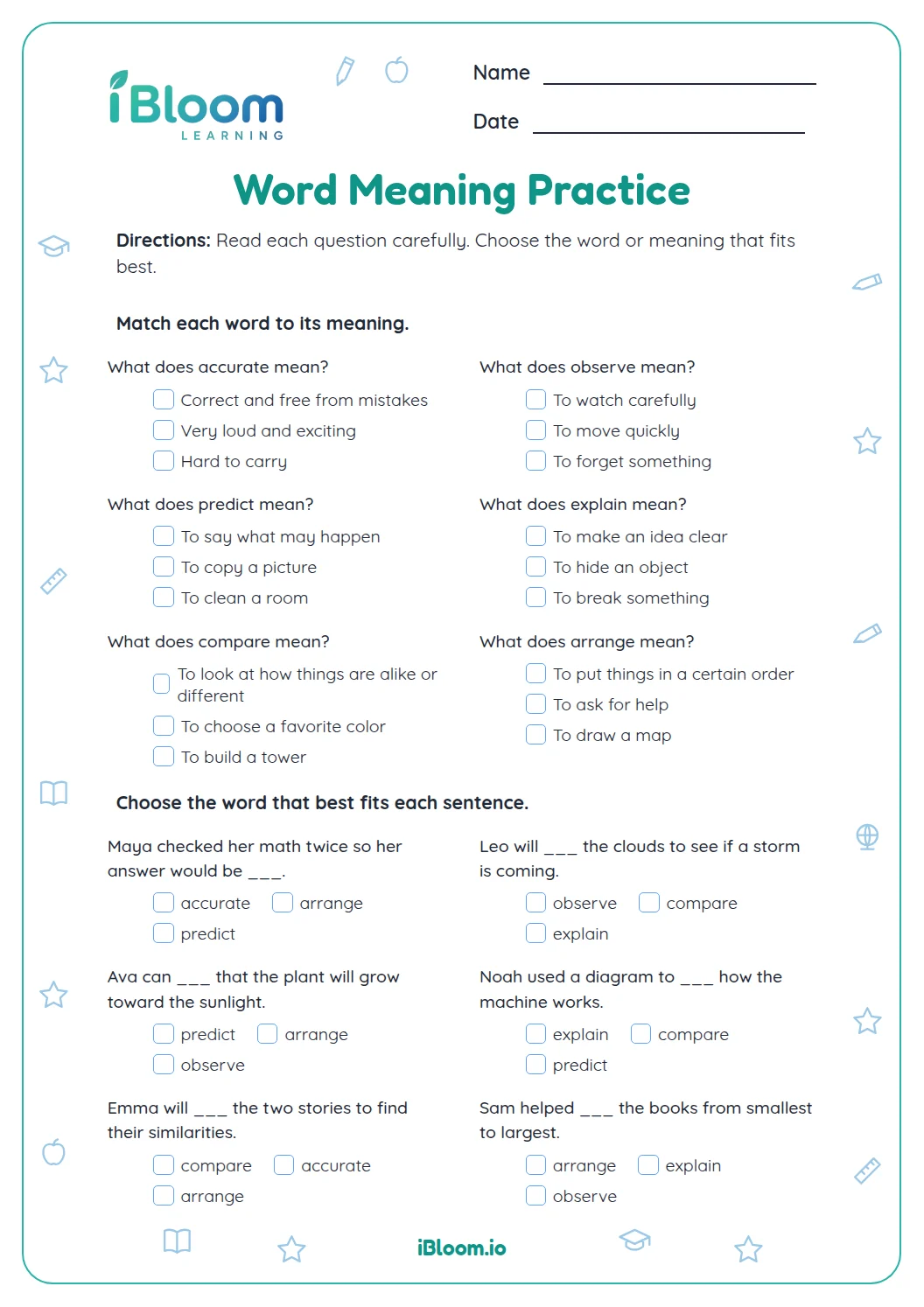
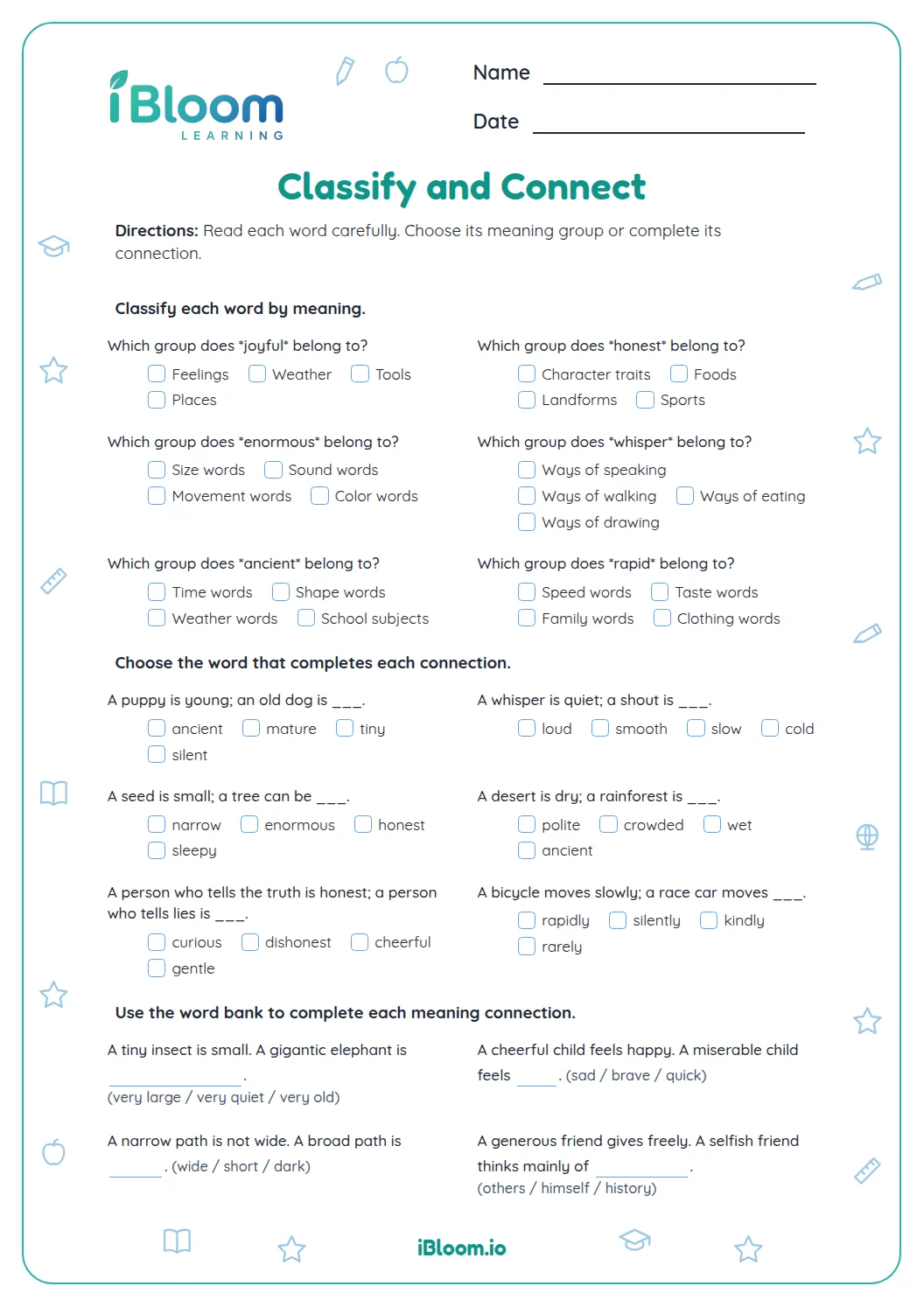
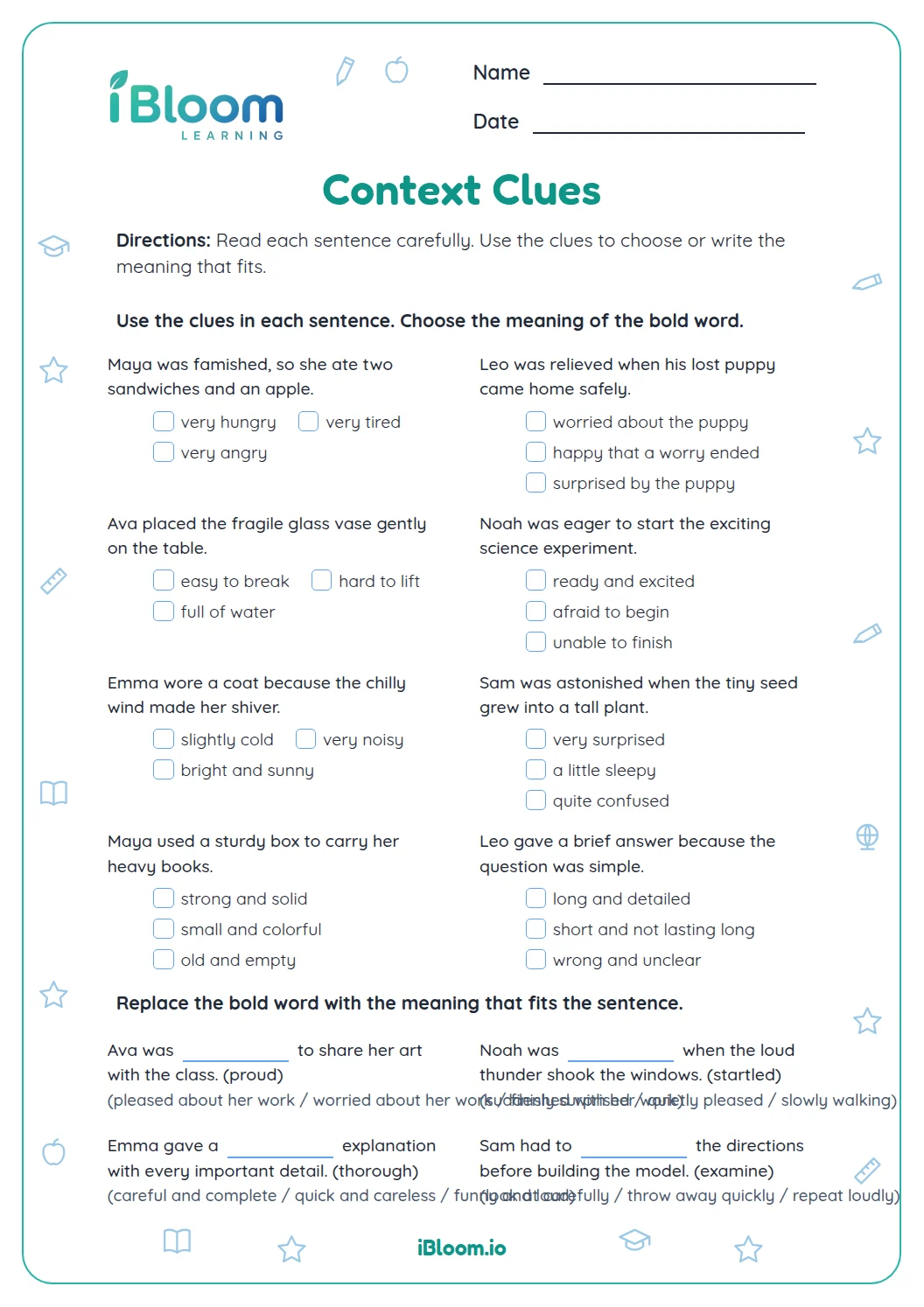
This Grade 4 vocabulary worksheet gives students 16 phrases to interpret in context. Part A uses multiple-choice meanings for expressions such as “worn out” and “hold your horses.” Part B asks students to explain phrases such as “break the ice” and “in hot water” using clues in each sentence. The answer key includes short explanations, and the activity practices interpreting common idioms.
How do I match a phrase to its meaning?
Read the entire sentence first. Literal clues around the phrase show what is happening, while the phrase itself may carry a nonliteral meaning. In Part A, “The class came up with a plan” means the students thought of a plan.
The multiple-choice distractors may sound possible for one word in the phrase, but only one meaning fits the sentence as a whole.
- 1“After the hike, Ben was worn out.” → very tired; the hike gives a clue about how Ben feels.
How can context help explain an idiom?
Look at the situation, then restate what the person did or felt in plain language. In Part B, “Nora had butterflies in her stomach” appears before a show, so nervous fits the context better than a literal description of an insect.
What should I do when two meanings seem possible?
Test each meaning in the sentence. If it makes the sentence describe a sensible event or feeling, it may fit; if it only explains one isolated word, look again at the surrounding clues.
How to use this worksheet
- 1Read the full sentence before interpreting its phrase.
- 2Name the situation or feeling described.
- 3Try the possible meaning in place of the phrase.
- 4For Part B, write a short plain-language explanation.
- 5Compare your explanation to the key’s meaning, not its exact wording.
Common mistakes and quick fixes
The mistake
Reading each word in an idiom literally.
The fix
Check whether that literal meaning makes sense in the sentence.
The mistake
Choosing an answer based on one word only.
The fix
Use clues from the full sentence.
The mistake
Giving a vague explanation such as “it is good.”
The fix
Say what happened or how the person felt.
What to practice next
Make more practice
Further reading
Questions parents and teachers ask
What does “match phrases” mean here?
Students read a sentence and connect a phrase to the meaning that fits its context. Part A offers choices, while Part B asks students to explain phrases in their own words. For example, being “worn out” after a hike means being very tired.
How many phrases are included?
There are 16 questions, each featuring a phrase in a sentence or short context. Eight questions ask students to select a meaning, and eight ask them to explain a phrase. The answer key gives the correct choices and sample explanations.
Are these phrases meant literally?
Many are idioms, so their meaning differs from a literal reading of the individual words. The sentence gives clues to the intended meaning, such as what a person did or felt. “Hold your horses,” for example, means wait.
How can I help if my student is stuck?
Ask the student to retell the sentence without the phrase, then try a possible meaning in its place. A meaning that fits the whole situation is more likely than one that explains just one word. For example, “lent a hand” means helped.
Do written answers need to match the key word for word?
No. The key gives concise sample meanings. Another response is correct if it clearly explains the phrase and fits the sentence, such as saying “nervous” or “worried” for Nora’s butterflies before the show. Encourage the student to use the surrounding context.