

About this worksheet
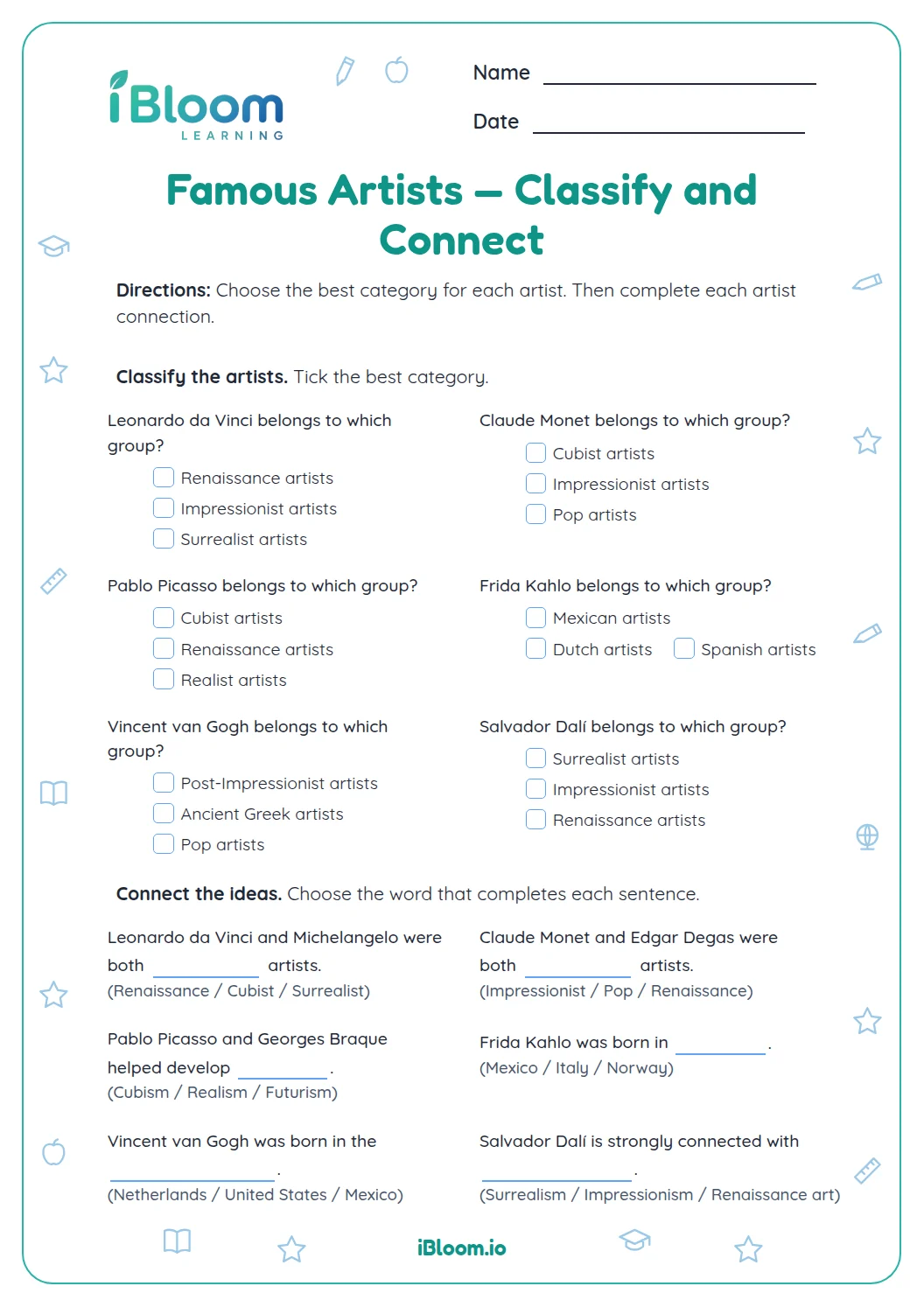
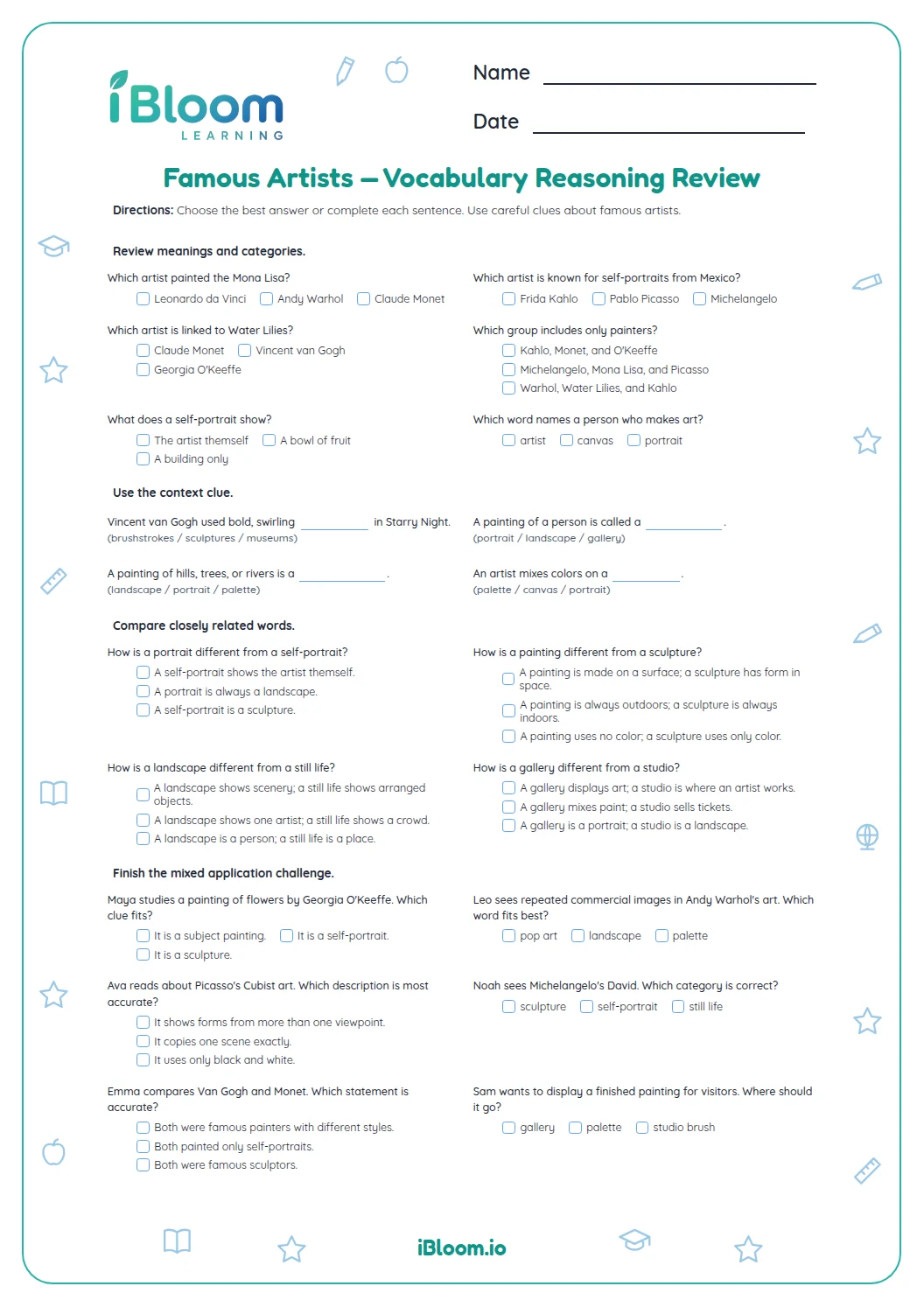
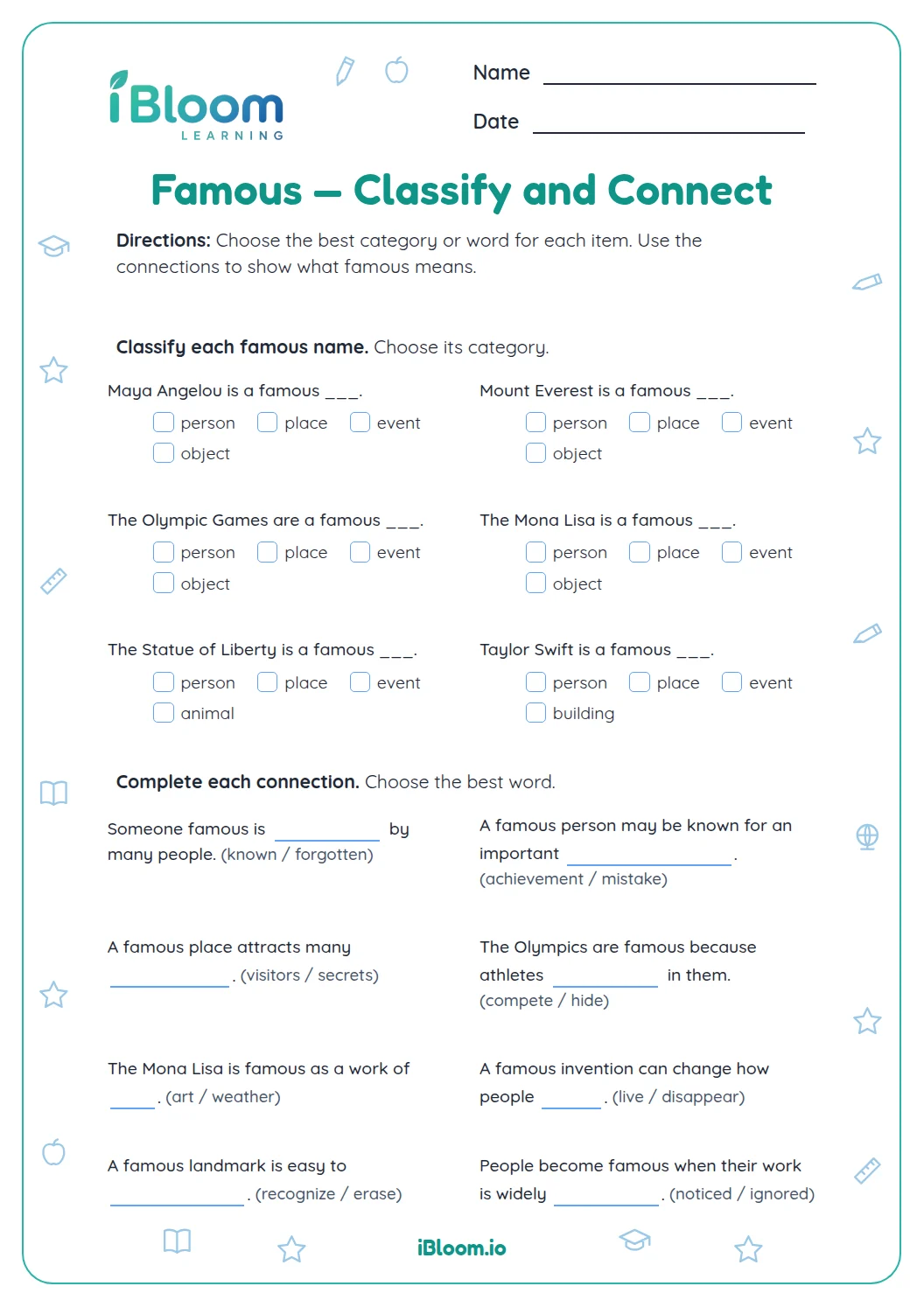
This Grade 5 worksheet connects familiar artists with specific works and art terms. Learners identify artists, match details such as Cubism and Pop Art, and use words including portrait and mural in context. Fourteen questions move from recognition to using precise descriptions, with a separate answer key.
Aligned to L.5.6
How does artist vocabulary practice work?
First, connect a name with a specific work or style. Then use that information in a complete sentence. A precise sentence gives the reader something to picture or verify.
What makes a description specific?
“Picasso made art” is true but vague. A stronger sentence names a contribution, such as developing Cubism. Avoid claiming every artist made the same kind of work.
What is on this worksheet?
Part A connects artists to well-known works and movements. Part B asks learners to write factual sentences about artists, revise vague statements with accurate details, and use art vocabulary in context.
Support the writing
- 1Ask the learner to point to the fact that supports each identification.
- 2For open responses, check that the artist and detail match.
- 3Encourage a specific noun or verb, such as portrait, mural, painted, or developed.
- 4Use the key as a model; accept other accurate sentences.
Common mix-ups
The mistake
Mixing up Monet’s water lilies and Van Gogh’s Starry Night.
The fix
Link each title to its artist before writing.
The mistake
Writing a true but uninformative sentence such as “Warhol was an artist.”
The fix
Add a recognizable subject, style, or contribution.
Curriculum alignment
This vocabulary and writing task supports Grade 5 language and composition skills.
Acquire and use grade-appropriate academic and domain-specific words.
On this sheet: Learners use grade-appropriate art and artist vocabulary to identify and describe works.
Show the official wordingHide the official wording
Acquire and use accurately grade-appropriate general academic and domain-specific words and phrases, including those that signal contrast, addition, and other logical relationships (e.g., however, although, nevertheless, similarly, moreover, in addition).
What to practice next
Make more practice
Questions parents and teachers ask
Which artists appear on this worksheet?
The questions include Leonardo da Vinci, Claude Monet, Frida Kahlo, Michelangelo, Pablo Picasso, Vincent van Gogh, Georgia O’Keeffe, Andy Warhol, Rembrandt, and Diego Rivera. Learners connect artists to works or art movements, then write accurate descriptions. The answer key provides sample sentences where responses may vary.
What art vocabulary does the worksheet practice?
The items use terms such as Cubism, Pop Art, portrait, and mural. Learners connect the terms to definitions or an artist’s work, then use portrait and mural in sentences. These words help make a description more specific than simply saying that someone “made art.”
Is this a word-search puzzle?
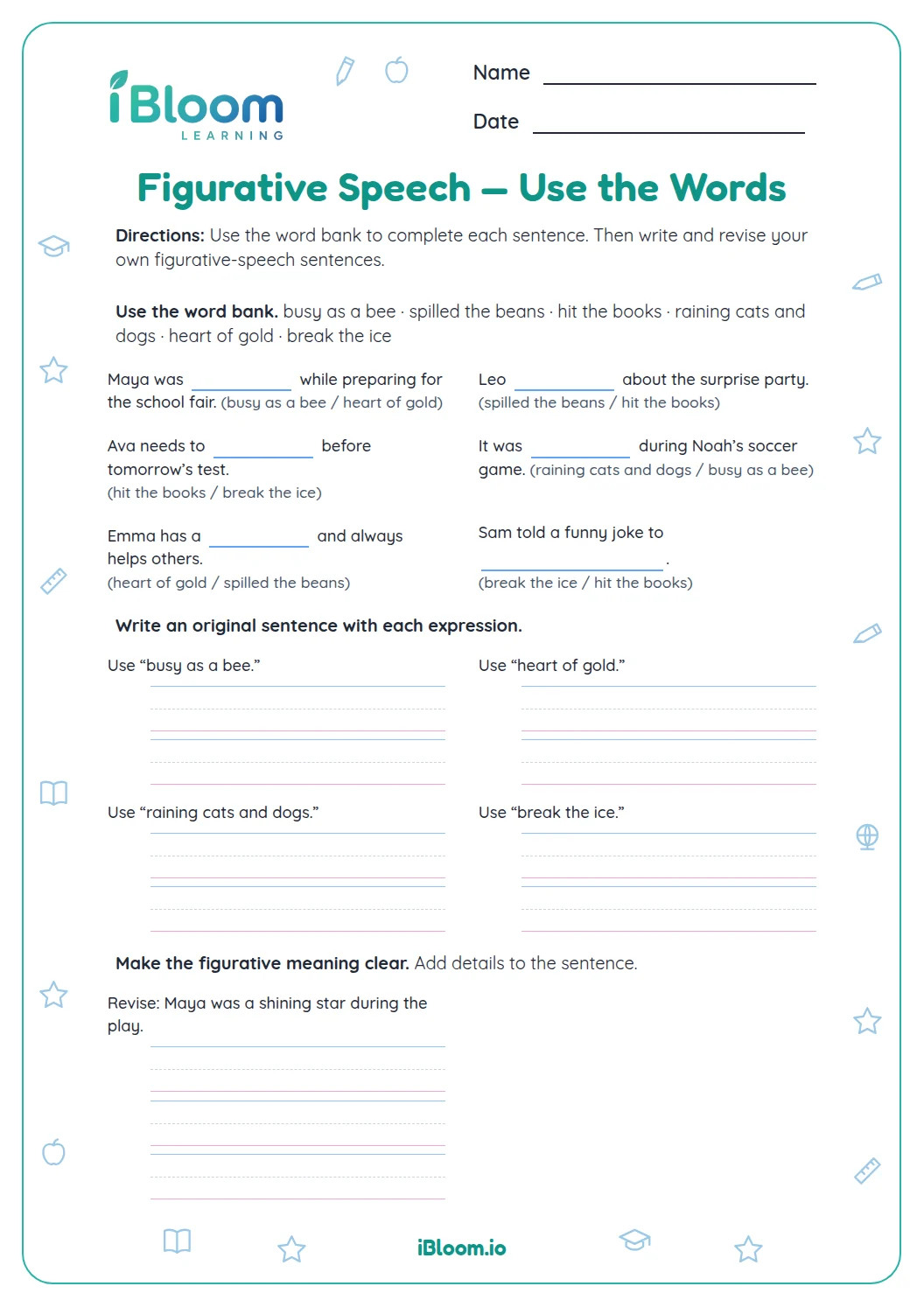
No. This page is a vocabulary worksheet called “Use the Words.” Learners answer artist questions, write factual descriptions, and use art terms in sentences rather than searching a letter grid. The activities focus on recognizing accurate details and choosing precise vocabulary in context.
How can I check a written response?
Compare the sentence with the sample in the answer key and check that the artist and detail match. A different sentence is also acceptable when it is accurate, complete, and specific. For example, a response about Georgia O’Keeffe should describe her paintings of flowers or landscapes.
How many items are included?
There are 14 questions in two parts. Part A connects artists with works and movements; Part B asks learners to write factual descriptions and use art vocabulary in context. The printable has three worksheet pages and a separate three-page answer key.