


About this worksheet
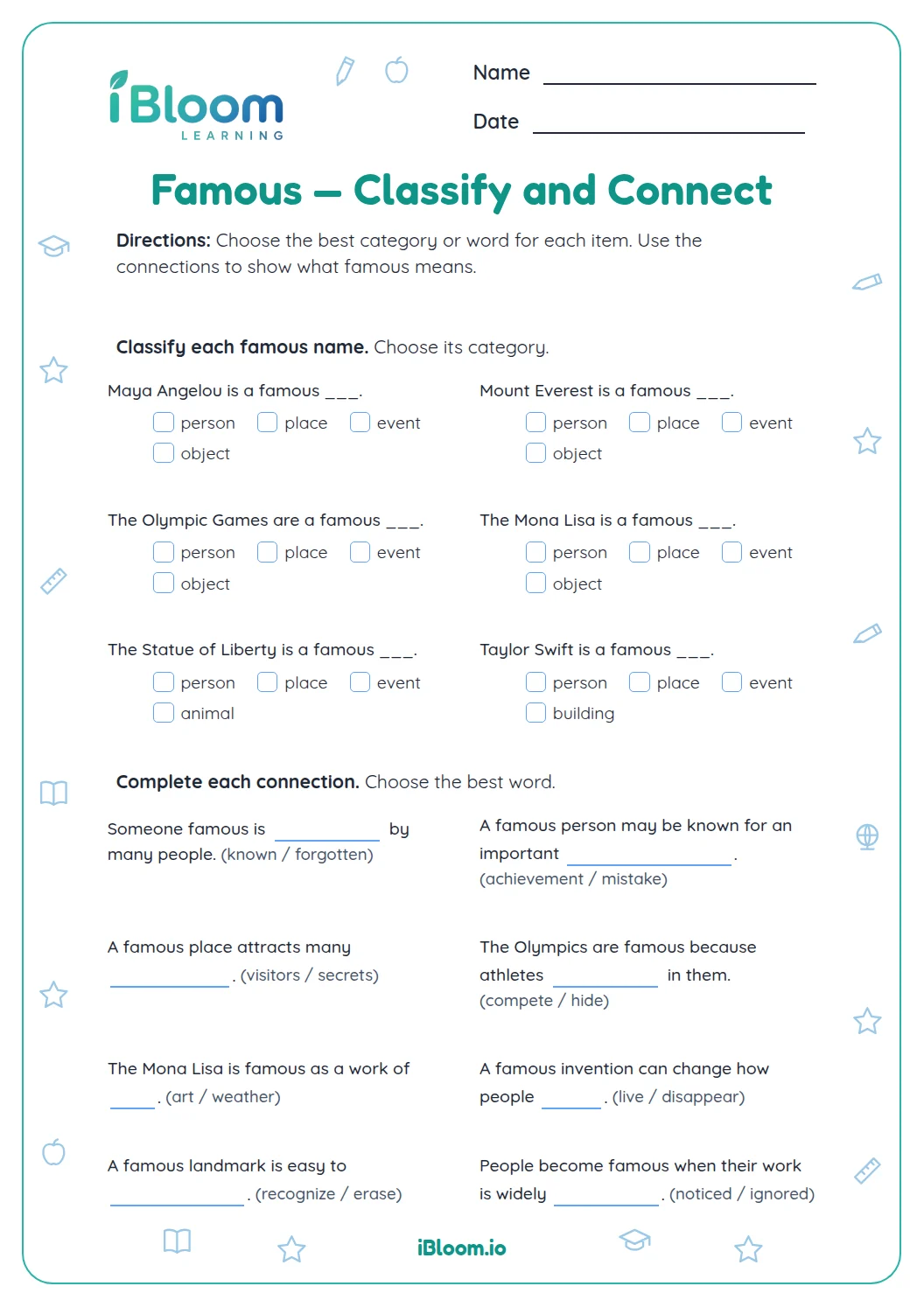
This Grade 5 vocabulary worksheet opens with a five-word search and follows with 17 questions about famous, renowned, notable, celebrated, and related words. Students use sentence details to infer meaning, select synonyms, and explain clues; a separate answer key includes sample responses.
Aligned to L.5.4.a
What does this page help students practice?
The five-word search warms up the vocabulary. The next 17 items use sentence context to choose meanings, find evidence, and supply synonyms for famous and related words.
Work through the parts in order, then use the answer key to review the reasoning behind each response.
How do sentence details point to meaning?
For “Maya became ___ after her invention won a national prize,” the prize suggests that many people learned about her. “Famous” fits the clue; “ordinary” and “hidden” do not.
- 1Maya became ___ after her invention won a national prize.
- 2Answer: famous
What can students do after checking the page?
Ask the learner to explain one answer aloud and point to the words or numbers that support it. Then try the next related worksheet linked below.
How to use this worksheet
- 1Find and circle the five vocabulary words in the grid.
- 2Read each whole sentence before choosing a meaning.
- 3Underline the detail that supports your answer.
- 4Write a synonym or explain the clue when asked.
- 5Check all 18 items with the answer key.
Common mistakes and quick fixes
The mistake
Rushing and answering from one word or number alone.
The fix
Read the entire prompt and use all the clues it gives.
The mistake
Changing an answer without checking the evidence in the item.
The fix
Point to the clue, number relationship or grammar pattern that supports the choice.
The mistake
Copying a key response without understanding it.
The fix
Explain the answer in your own words before moving on.
Common Core alignment
This page gives focused practice with the listed Common Core skill.
Use context to clarify an unknown word or phrase.
On this sheet: Students infer meanings of famous and related words from sentence clues.
Show the official wordingHide the official wording
Use context (e.g., cause/effect relationships and comparisons in text) as a clue to the meaning of a word or phrase.
What to practice next
Make more practice
Further reading
Questions parents and teachers ask
What does famous mean?
Famous describes someone or something known by many people. On this page, details such as awards, readers, recognition and public attention help students infer the meaning of famous and related words. Ask the learner to point to the exact words in the prompt that support the response, then restate the idea in a complete sentence.
Is the word search the only activity?
No. The short search is a warm-up. Most questions ask students to use sentence clues, select a synonym, identify a supporting detail or explain how a sentence reveals meaning. Ask the learner to point to the exact words in the prompt that support the response, then restate the idea in a complete sentence.
Are all the vocabulary words exact synonyms?
They are closely related, but not interchangeable in every sentence. Renowned and celebrated often suggest recognition for achievement; prominent can mean important or well-known in a particular setting. Ask the learner to point to the exact words in the prompt that support the response, then restate the idea in a complete sentence.
How should I use the answer key for written responses?
The key gives sample responses for questions with more than one reasonable answer. A student’s wording can differ if it correctly uses the clue and expresses the same meaning. Ask the learner to point to the exact words in the prompt that support the response, then restate the idea in a complete sentence.
What can students practice next?
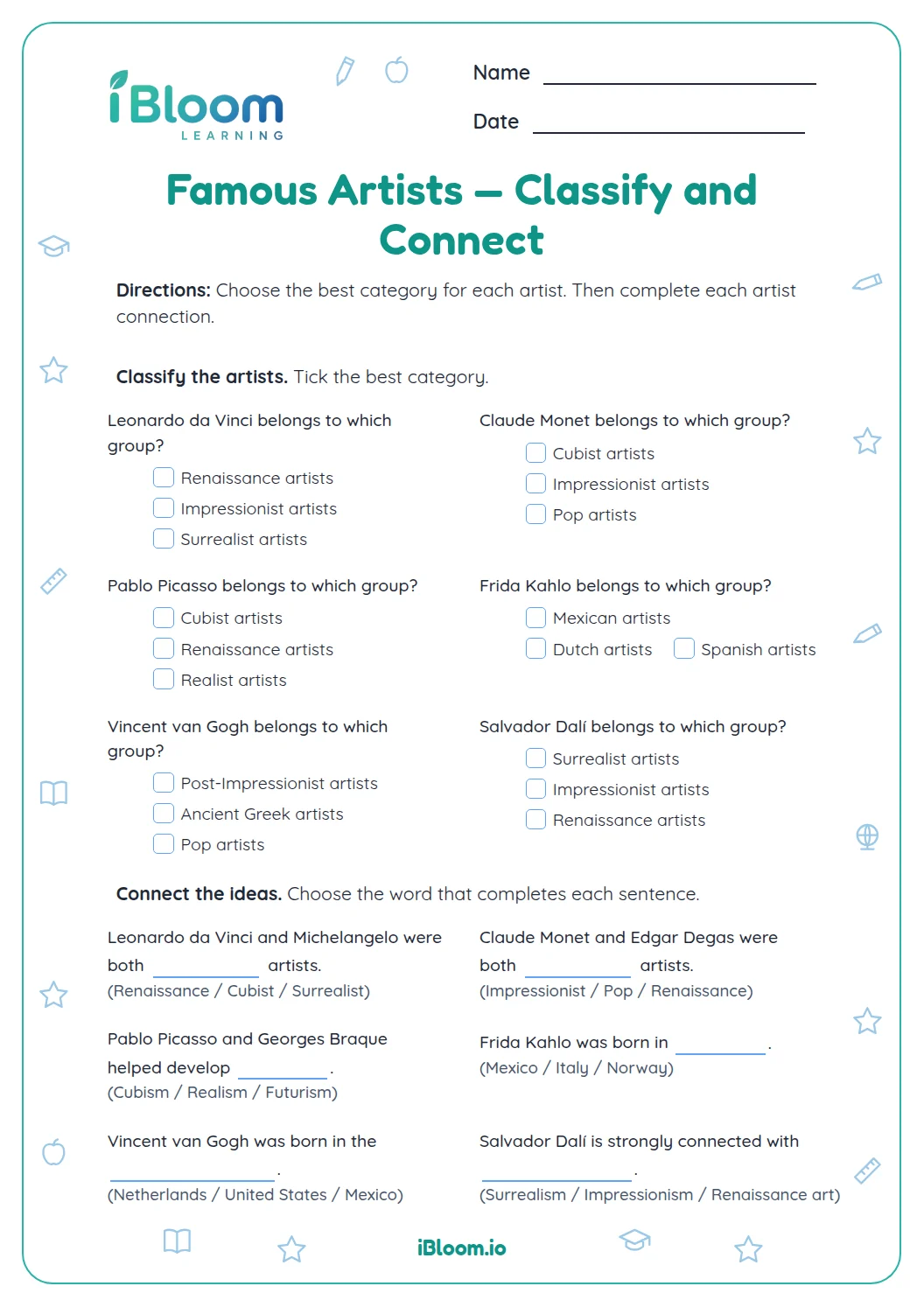
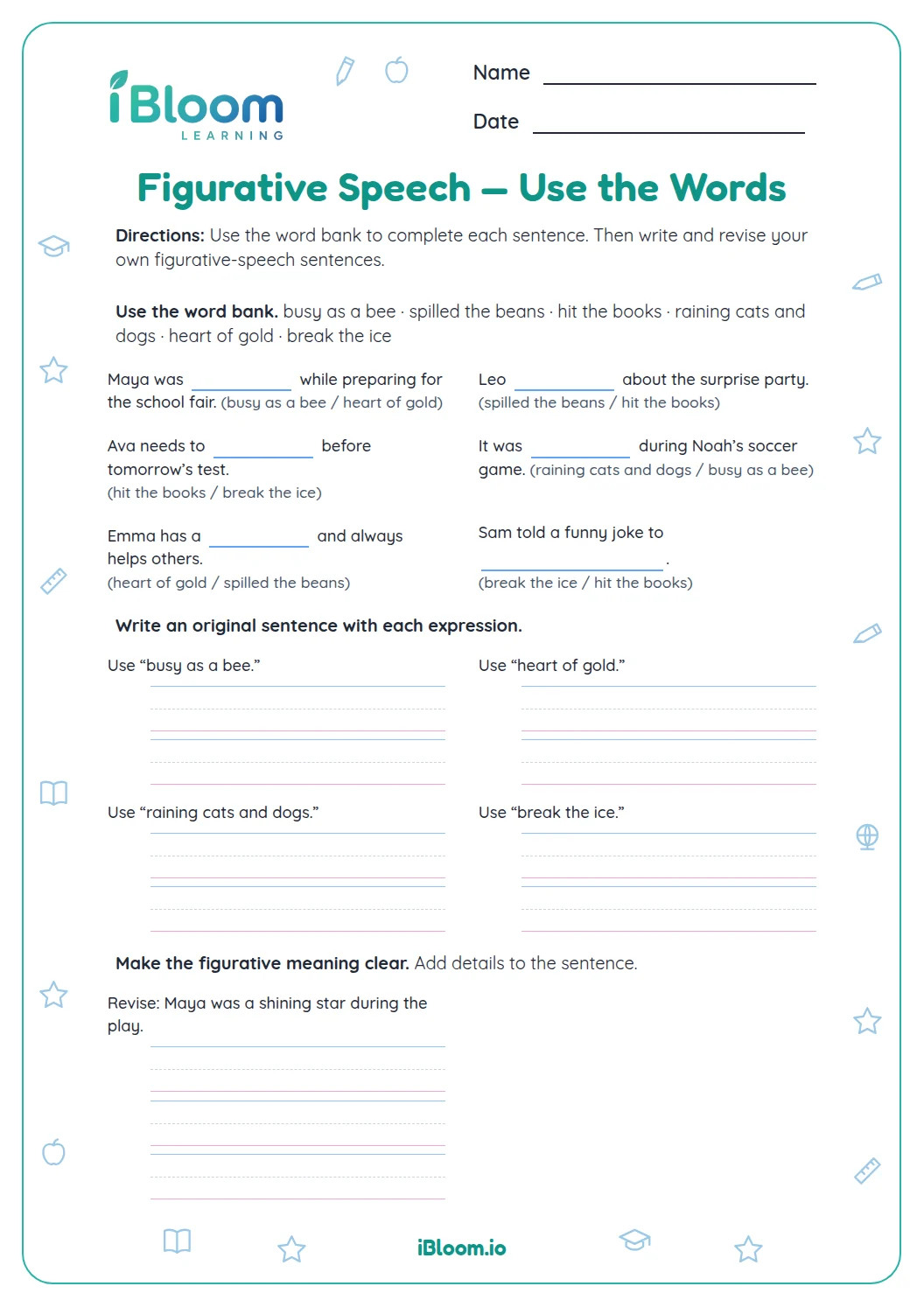
The Famous Artists and Figurative Speech pages offer related vocabulary work. Students can also try another Grade 5 context-clue activity to apply the same strategy with different words. Ask the learner to point to the exact words in the prompt that support the response, then restate the idea in a complete sentence.