




About this worksheet
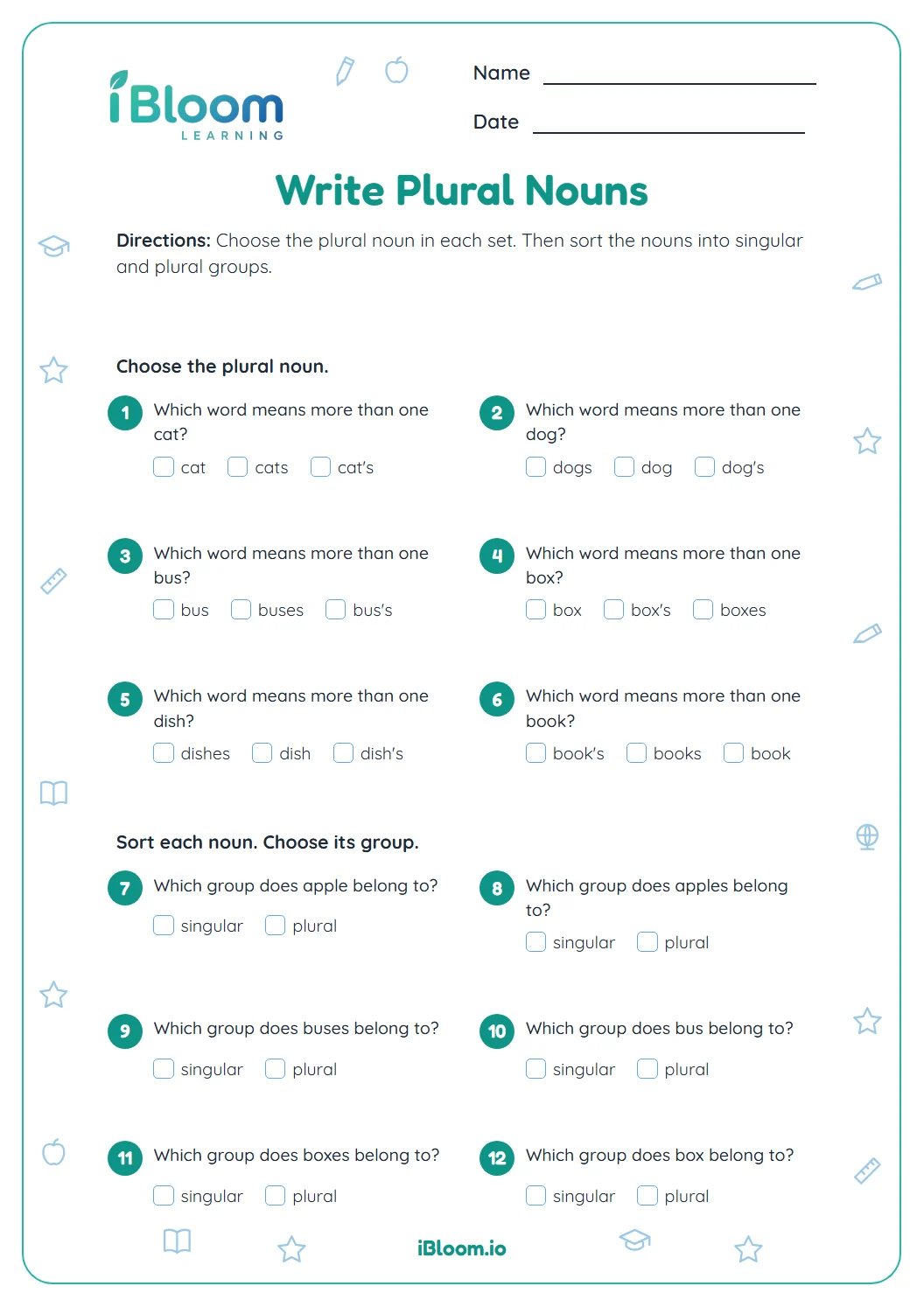
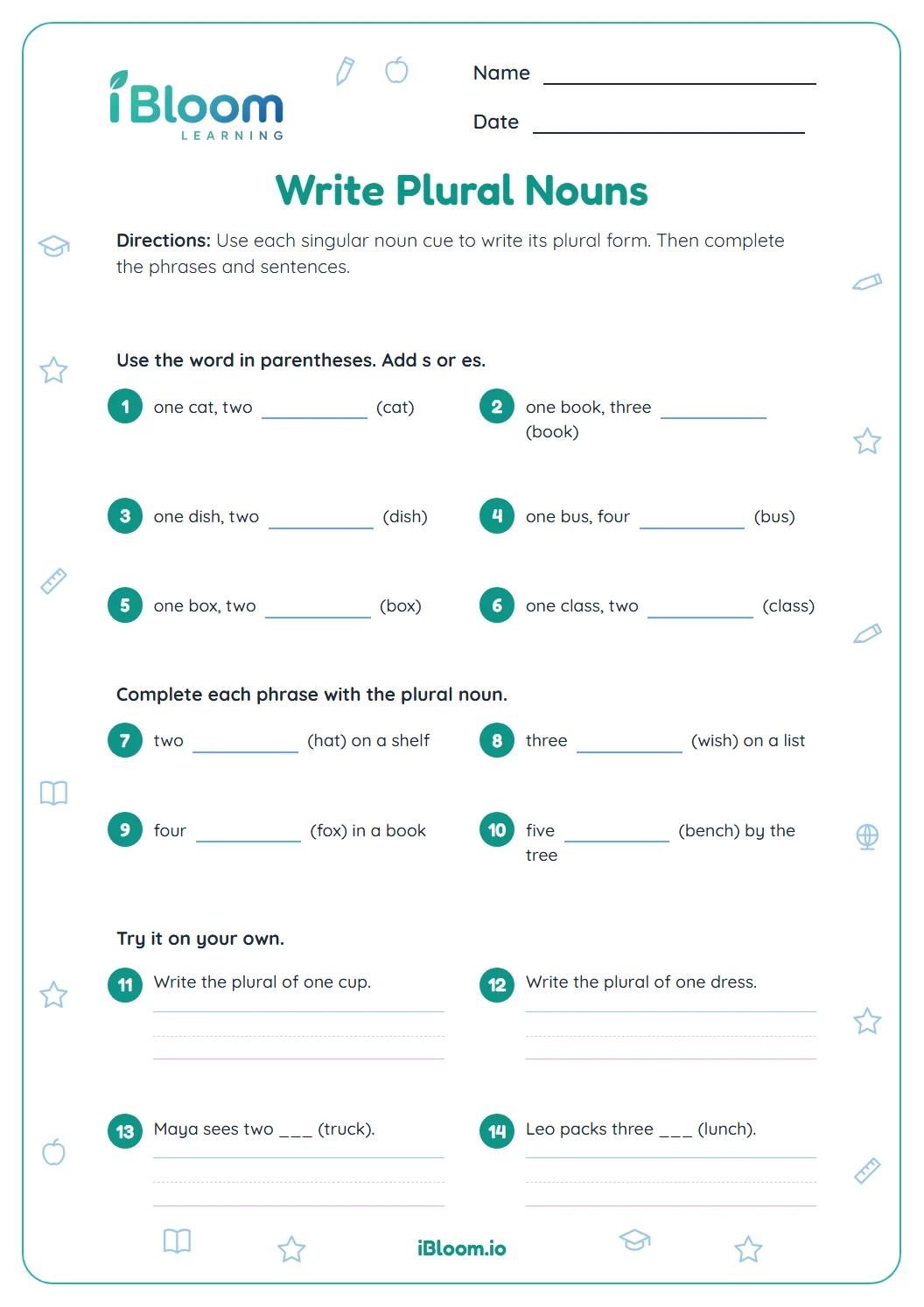
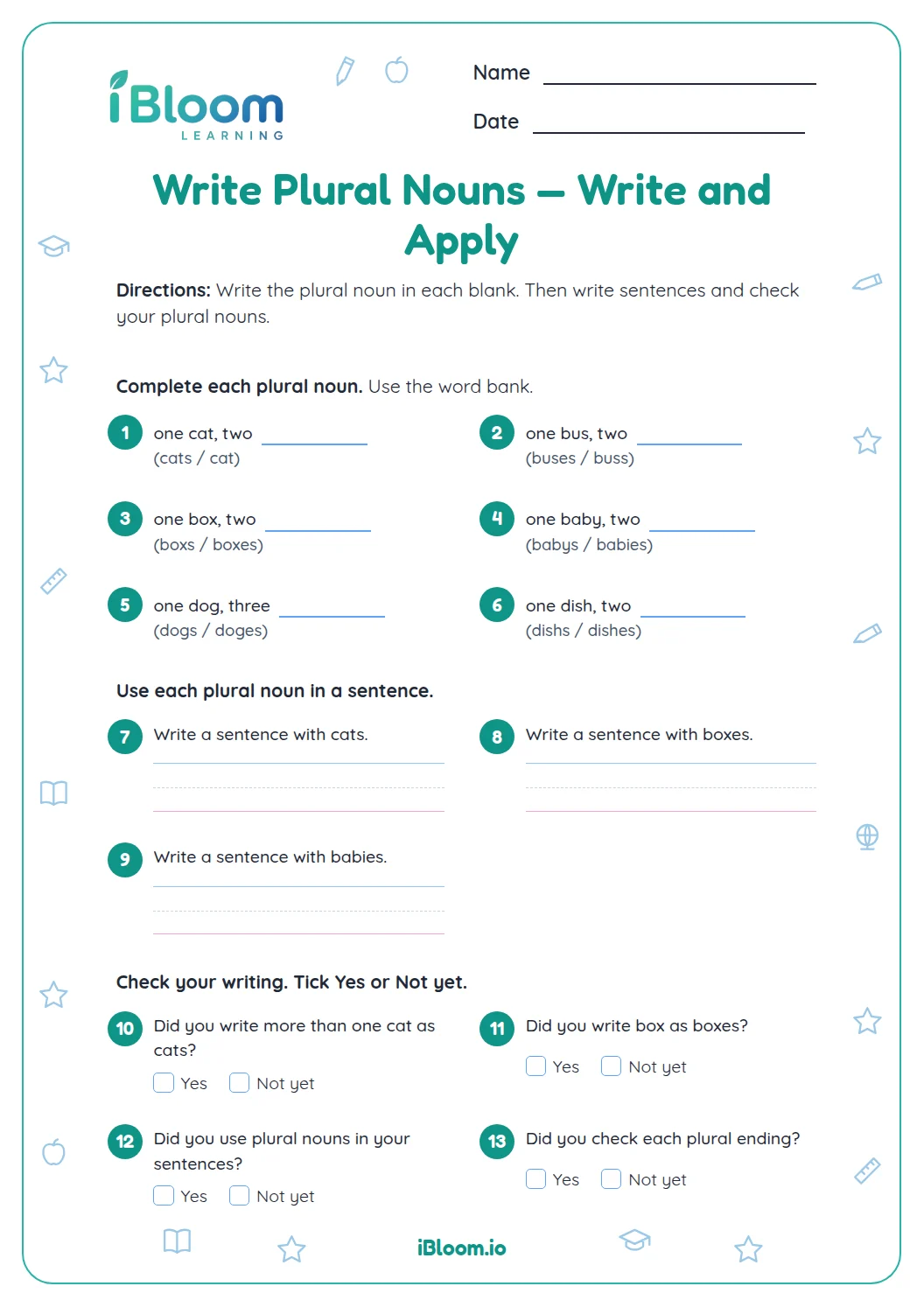
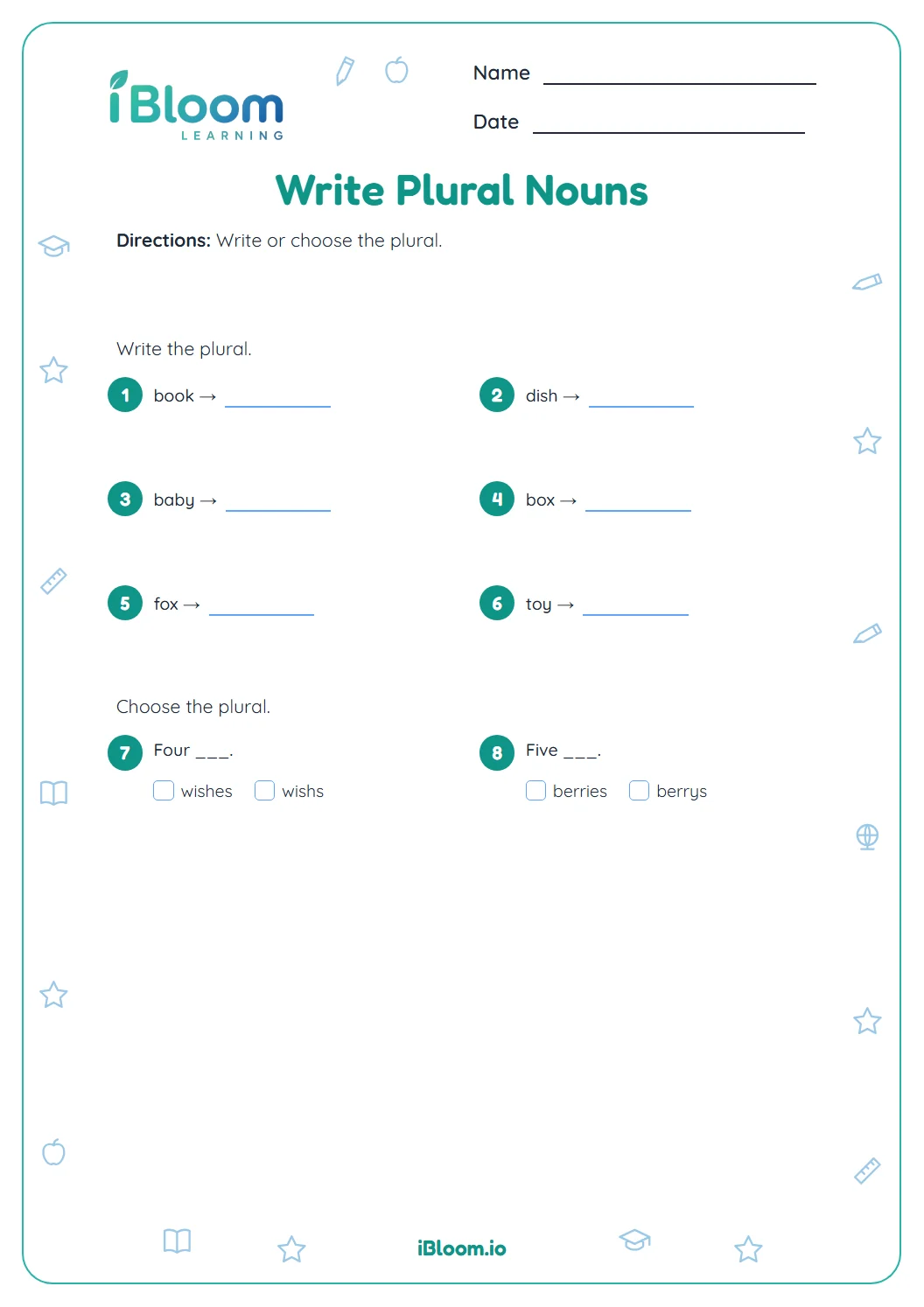
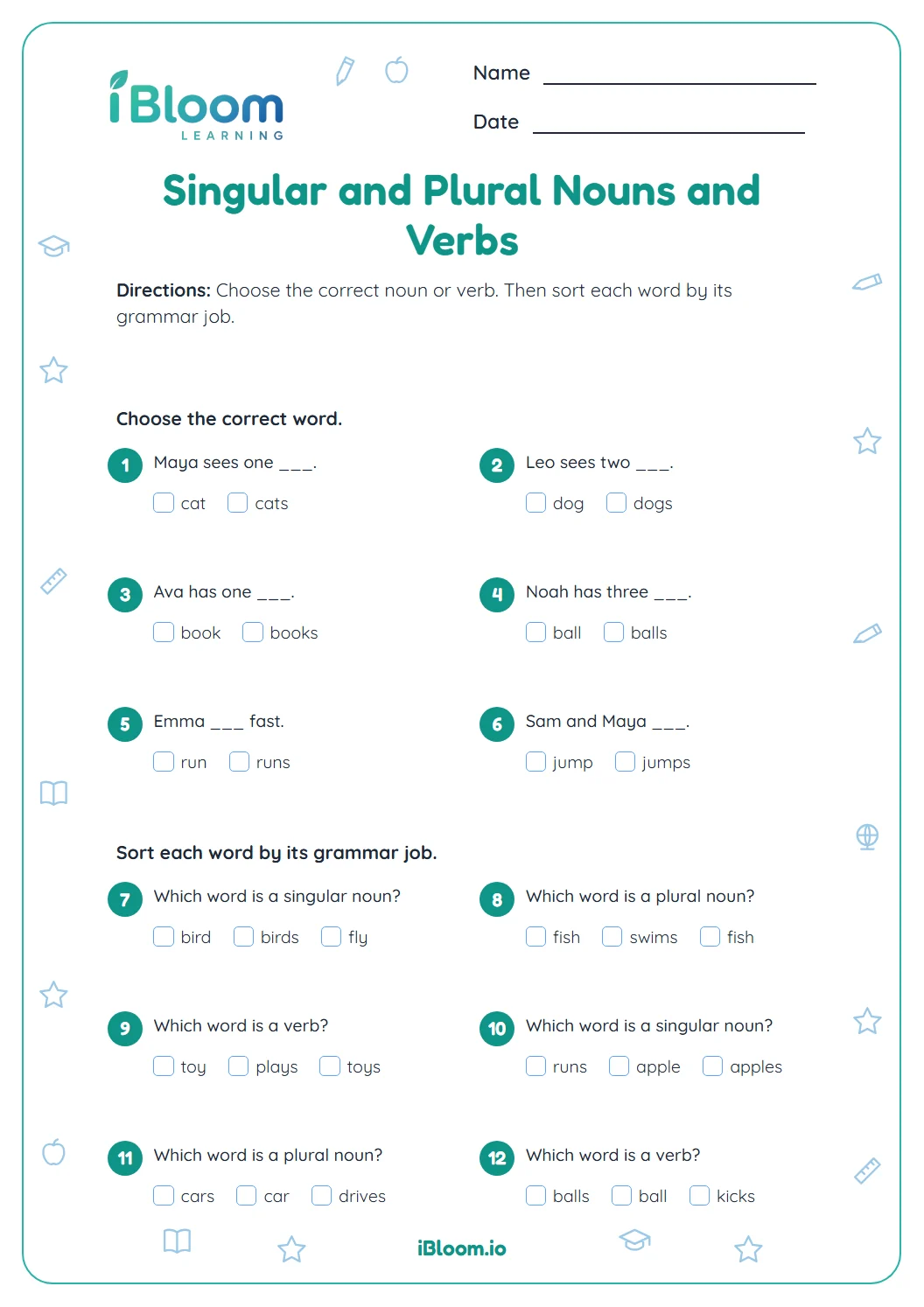
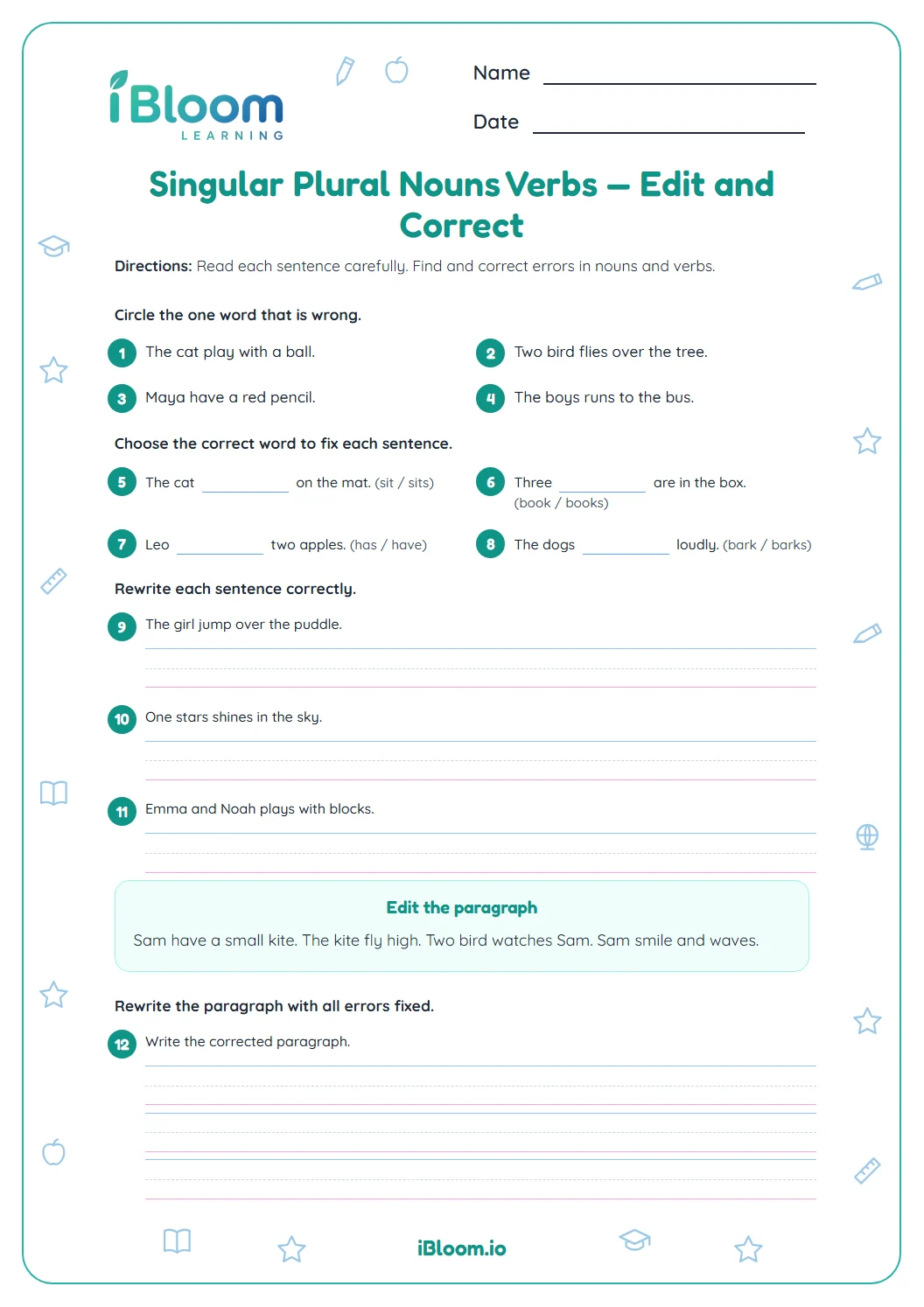
This Grade 1 worksheet practices writing plural nouns and checking how nouns work in a sentence. Children first use countable picture clues to write words such as cats, buses and babies. Then they edit short sentences so the noun form and verb agree: “The dogs run,” not “The dogs runs.” The picture clues keep the word task concrete, while the sentence edits connect plural nouns with matching verbs. This practice aligns with CCSS L.1.1.c, and the answer key supplies each corrected form.
Aligned to L.1.1.c
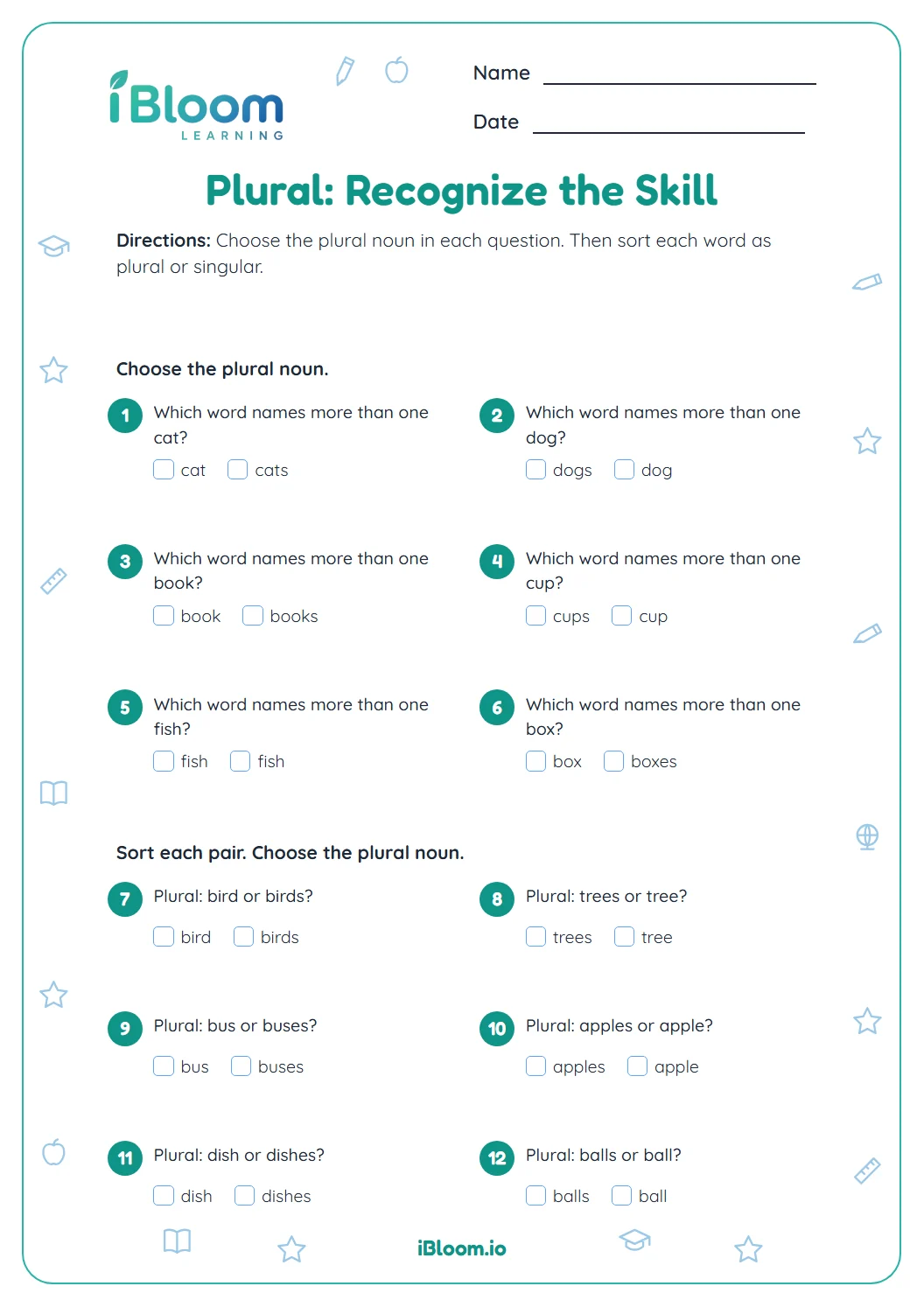
How do children write a noun for more than one?
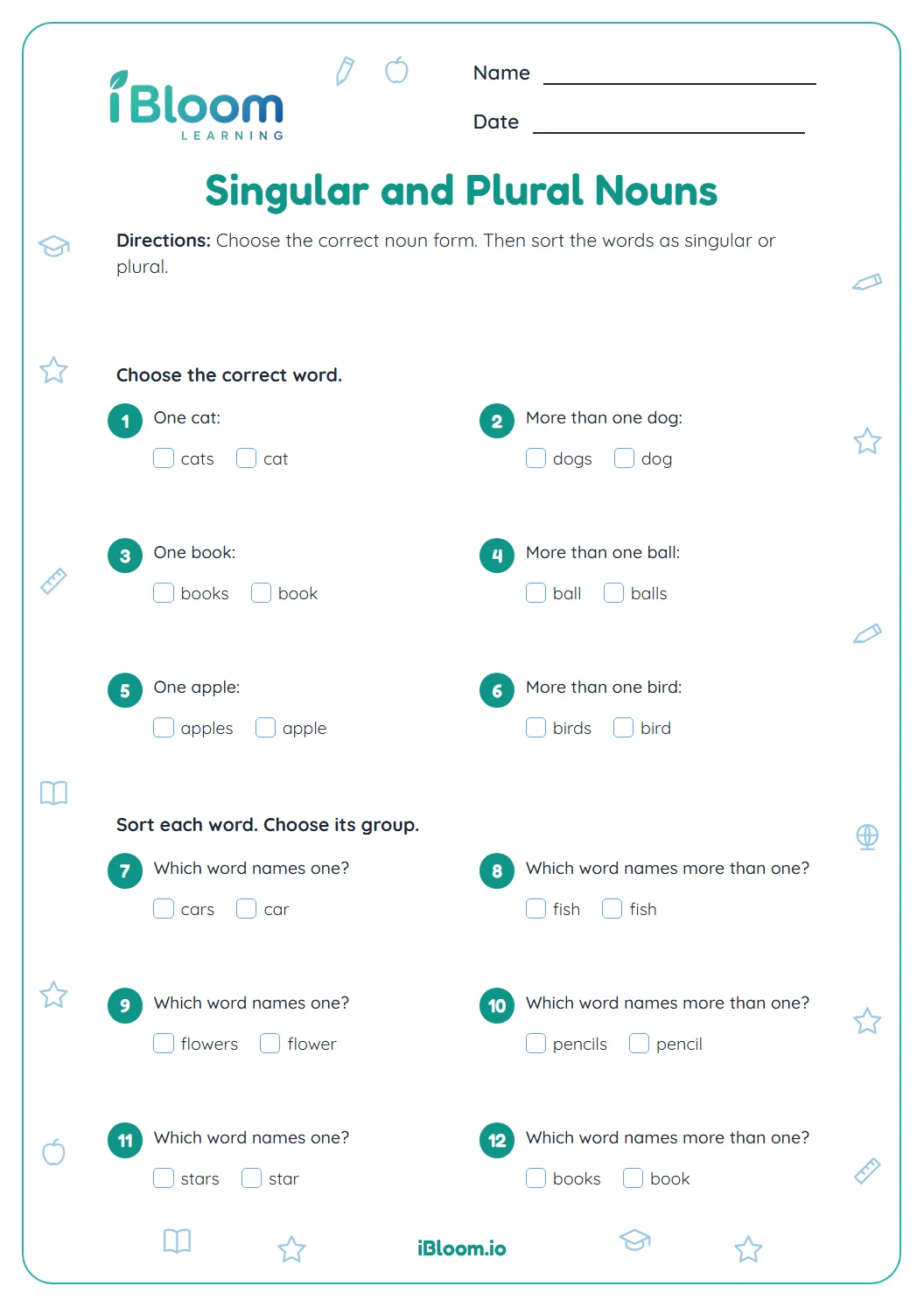
The first part shows a group of familiar objects and a sentence starter: “One cat, two ___.” Children name the object, notice that there is more than one, and write its plural form. Most words add s; words such as bus, fox and dish add es, and baby changes y to ies.
Picture clues support eight examples, including regular plurals and common spelling changes.
- Questions 1–2 and 6: add s
- Questions 3–5 and 8: add es
- Question 7: change y to ies
How can a student check whether a sentence is correct?
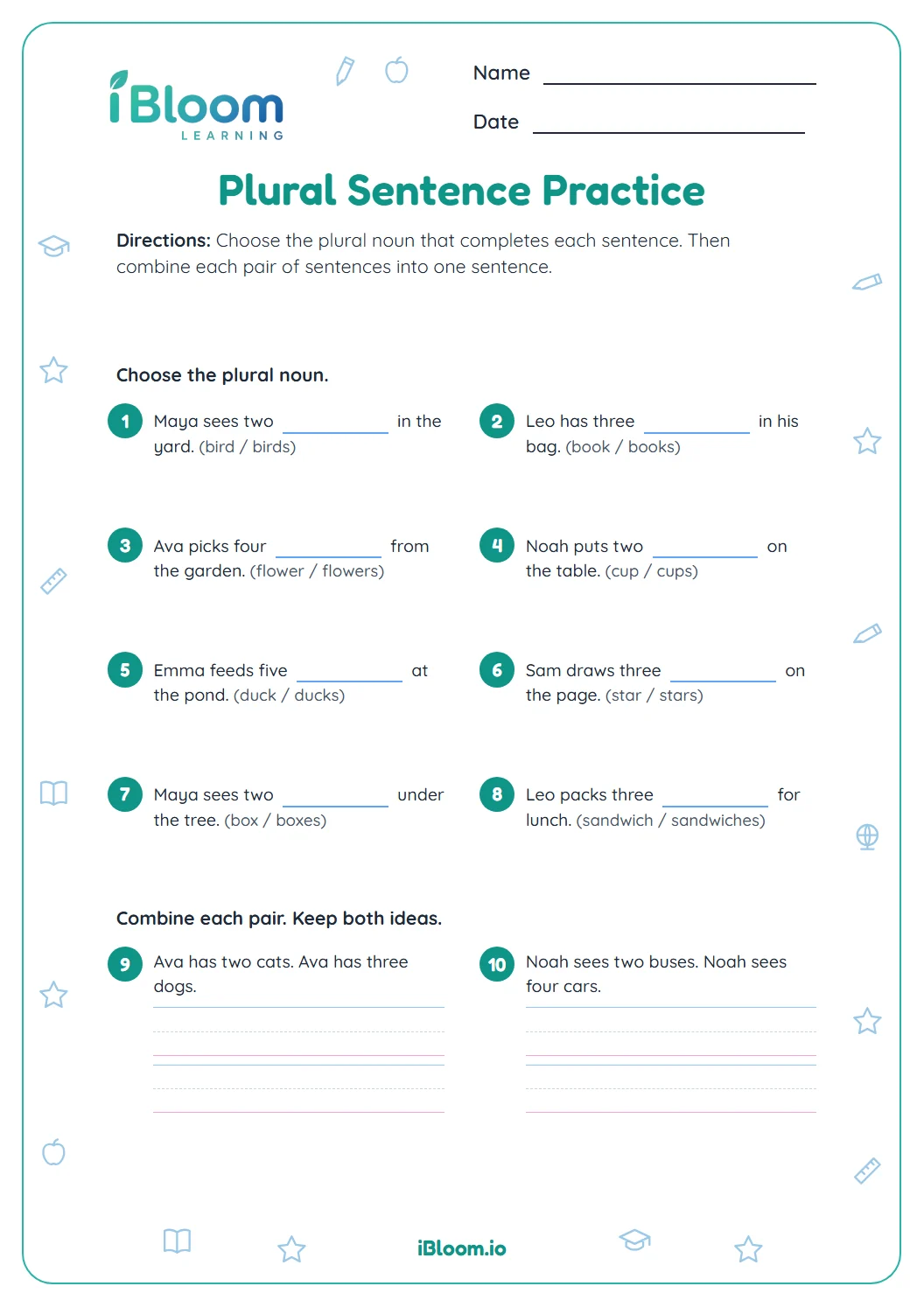
Read the sentence and find the noun first. One dog is singular, while two dogs is plural. Then check the verb: “One dog naps” and “Two dogs nap.”
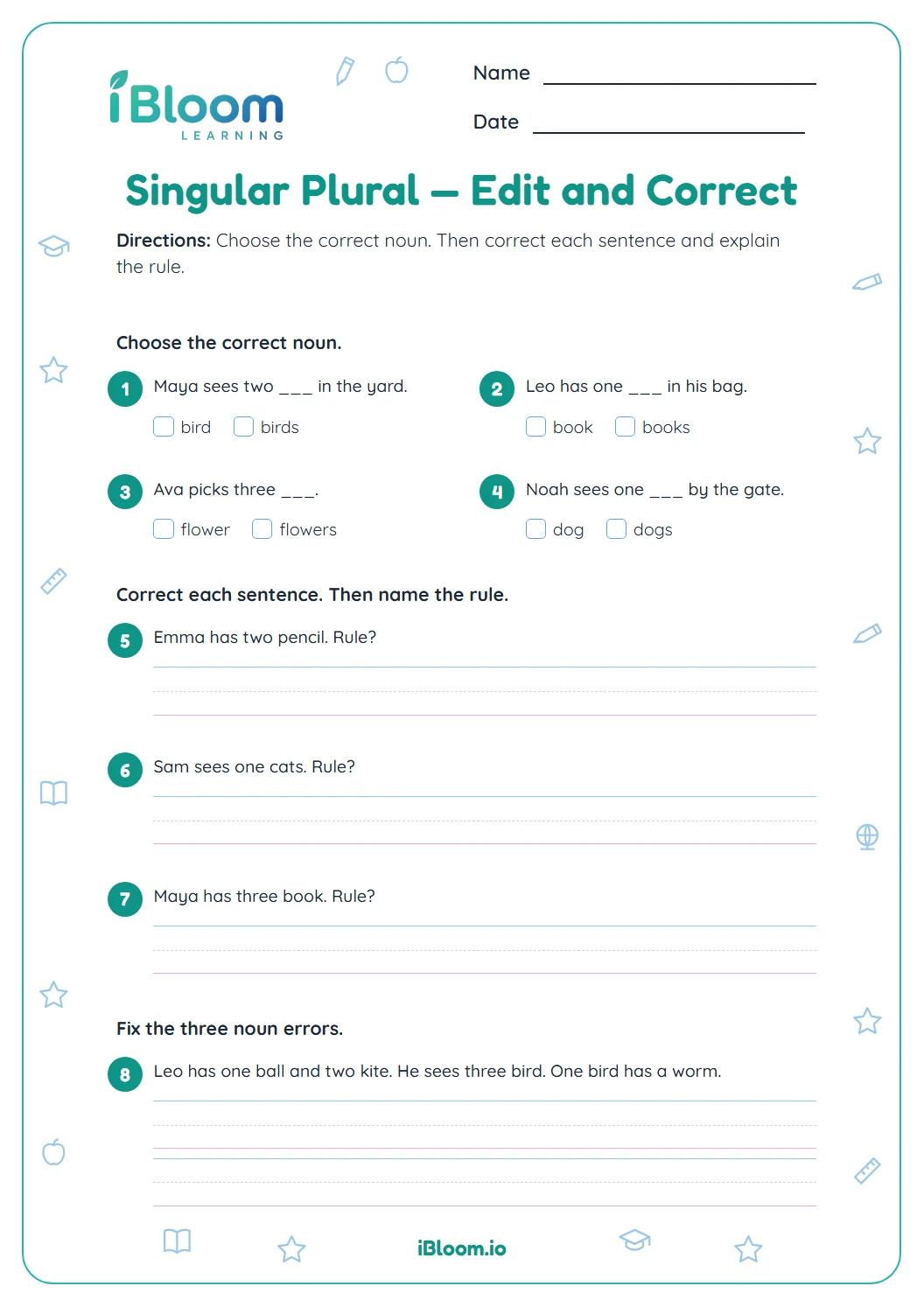
The second part asks students to correct a full sentence, so they must notice both the noun form and the verb that goes with it.
- 1Incorrect: “The dogs runs.”
- 2The noun dogs names more than one.
- 3Correct: “The dogs run.”
Which plural spelling changes appear here?
Many nouns form a plural by adding s: cup becomes cups. Some words ending in s, x or sh add es: bus becomes buses and dish becomes dishes. A consonant followed by y often changes to ies: baby becomes babies.
Say the singular and plural word aloud. Listening for the ending can help a child notice the spelling change.
How can families review the answers?
Use the answer key after the child has tried each item. For a missed sentence, ask the learner to point to the noun and say whether it means one or more than one before choosing the matching verb.
For extra practice, find two objects at home and say one, then more than one: one cup, two cups.
How to use the worksheet
- 1Name the pictures in the first part before writing each plural.
- 2Say the noun with one and with more than one.
- 3For each sentence edit, underline the noun in your mind or with a pencil.
- 4Check whether the verb matches one noun or more than one.
- 5Use the answer key to review spelling endings and sentence corrections.
Plural spelling and agreement slips
The mistake
Writing “buss” instead of “buses.”
The fix
For this word ending in s, add es to form buses.
The mistake
Keeping the y in “babys.”
The fix
Change the consonant-y ending to ies: baby becomes babies.
The mistake
Writing “The dogs runs.”
The fix
Dogs names more than one, so use the plural verb run.
Common Core alignment
The sentence edits connect plural noun forms with matching verbs in basic sentences.
Use plural nouns with verbs that match in simple sentences.
On this sheet: The editing items ask learners to correct plural nouns and matching verbs.
Show the official wordingHide the official wording
Use singular and plural nouns with matching verbs in basic sentences (e.g., He hops; We hop).
What to practice next
Make more practice
Further reading
Questions parents and teachers ask
How many questions are on this plural-noun worksheet?
There are 16 questions in two parts. The first eight use countable pictures to prompt plural nouns. The final eight ask children to correct a short sentence so its noun and verb form work together. The answer key lists every noun and corrected sentence.
Which plural spelling patterns appear?
Children practice adding s to words such as cat and cup, adding es to words such as bus, fox, dish and brush, and changing the y in baby to ies. The word forms appear with picture clues before they are used in edited sentences. Each edited sentence has one clear correction listed on the key.
Why does the worksheet ask children to fix sentences?
Changing a noun to plural can also change the verb in a sentence. Editing examples such as “The dogs runs” gives children practice checking both parts together and writing a complete corrected sentence. The answer key models the matching verb in a full sentence.
What is the answer to “One cat, two ___”?
The answer is cats. The picture shows two cats, and the sentence contrasts one cat with more than one cat. The first part uses the same pattern with several familiar nouns and spelling endings. This first item models the count-and-write routine used throughout Part A.
How should an adult help with a missed answer?
Ask the child to say the noun with one and with more than one, then listen for its ending. In a sentence, point out the noun and ask whether it names one or more than one before checking the verb.