







About this worksheet
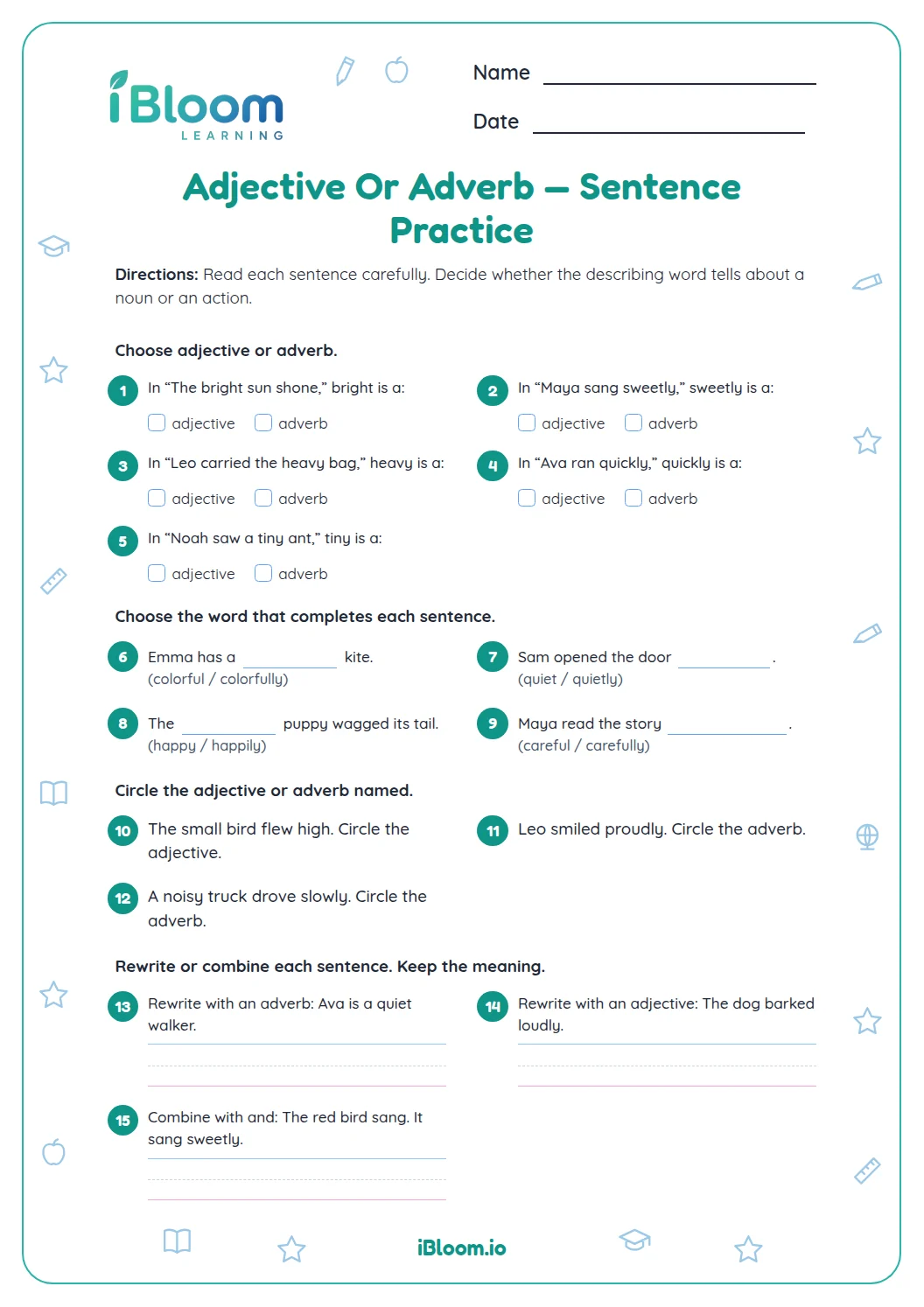
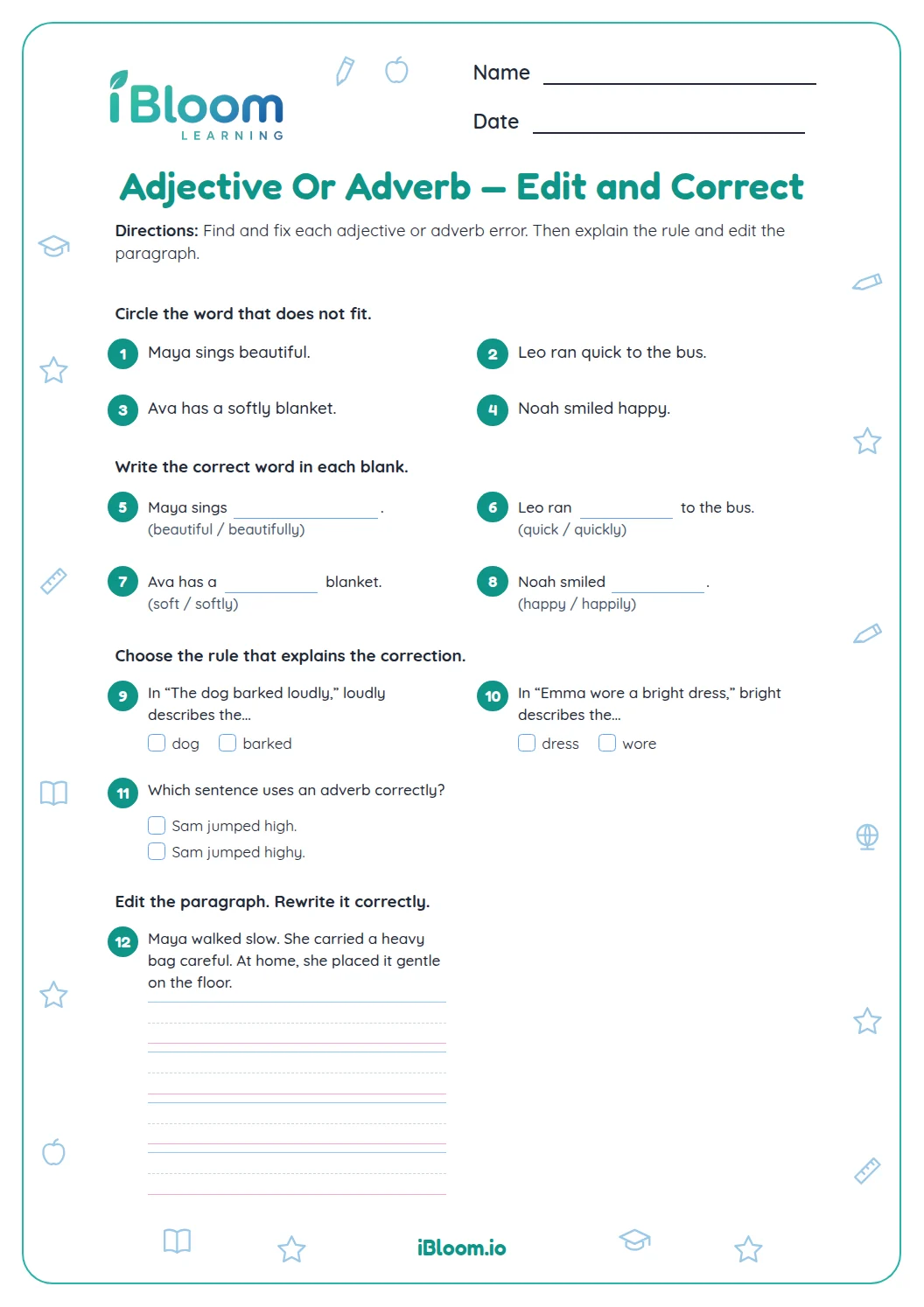
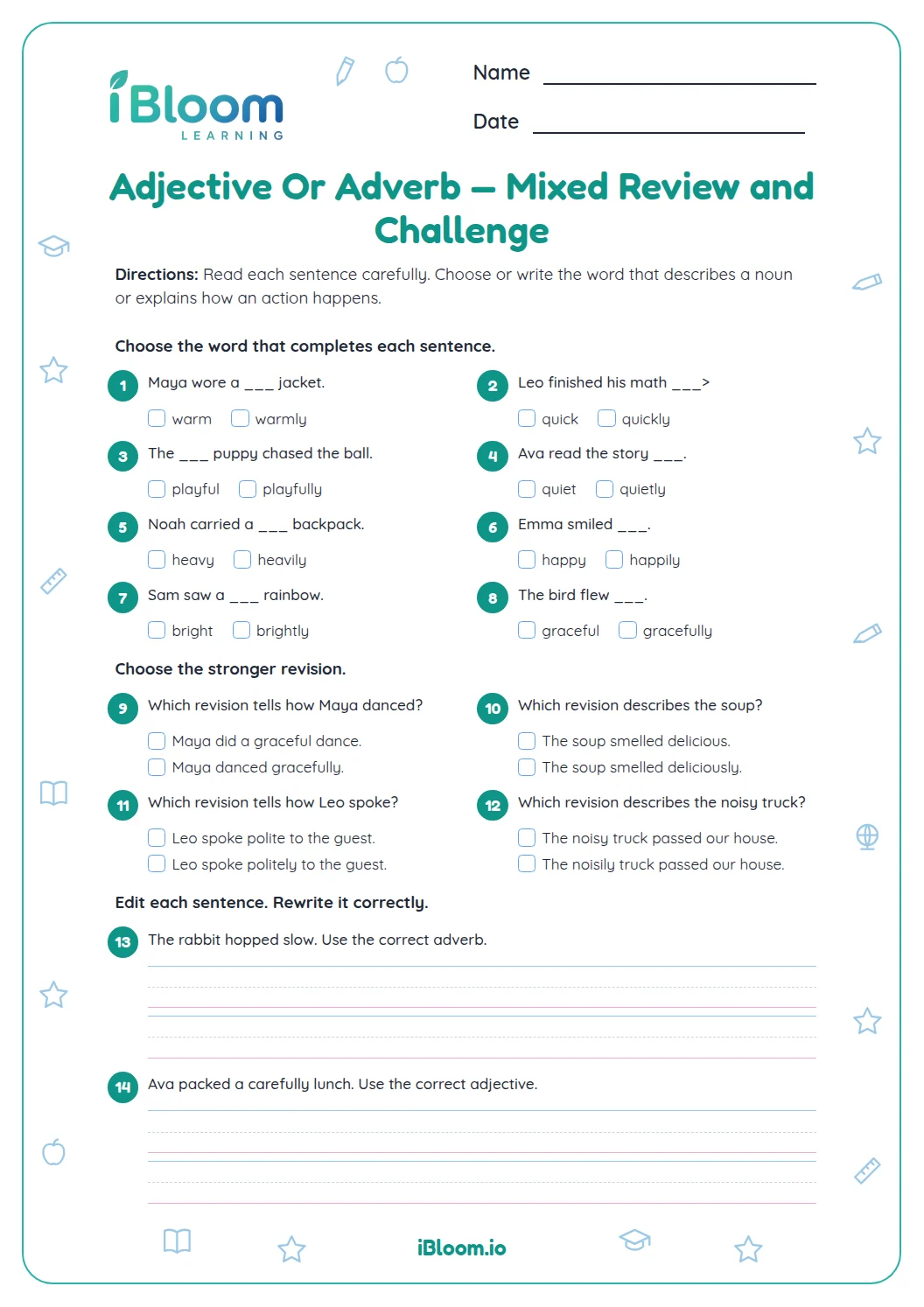
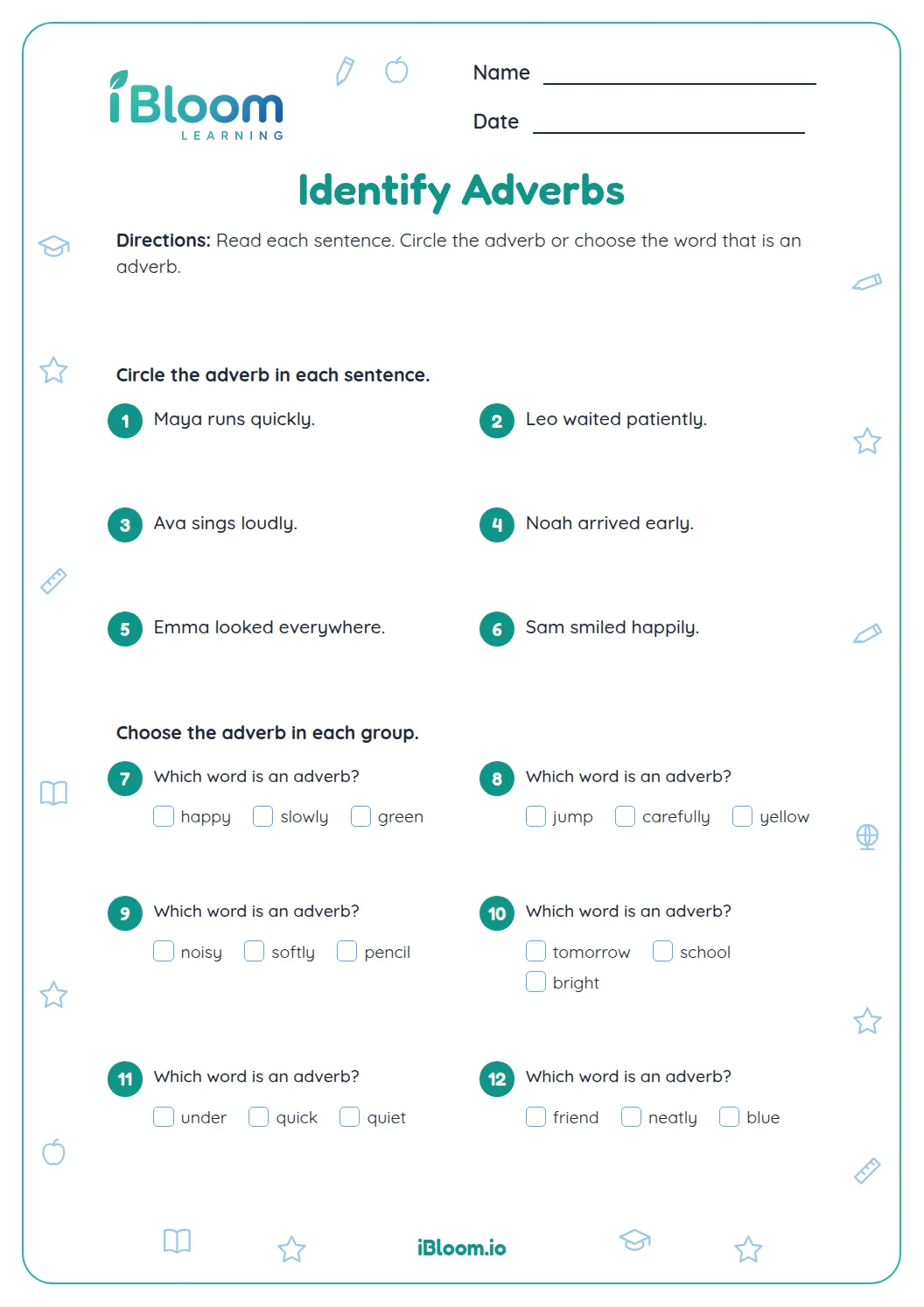
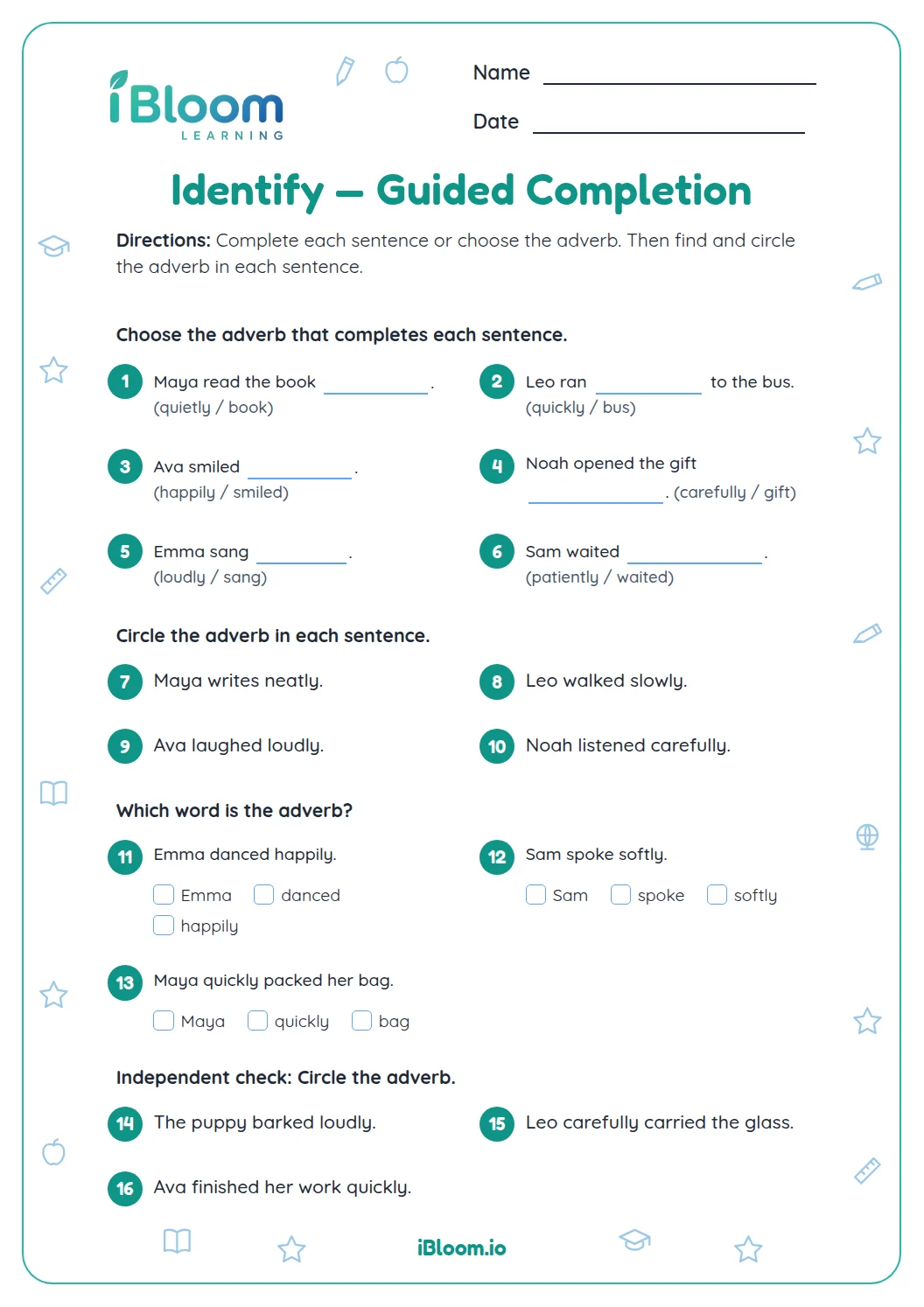
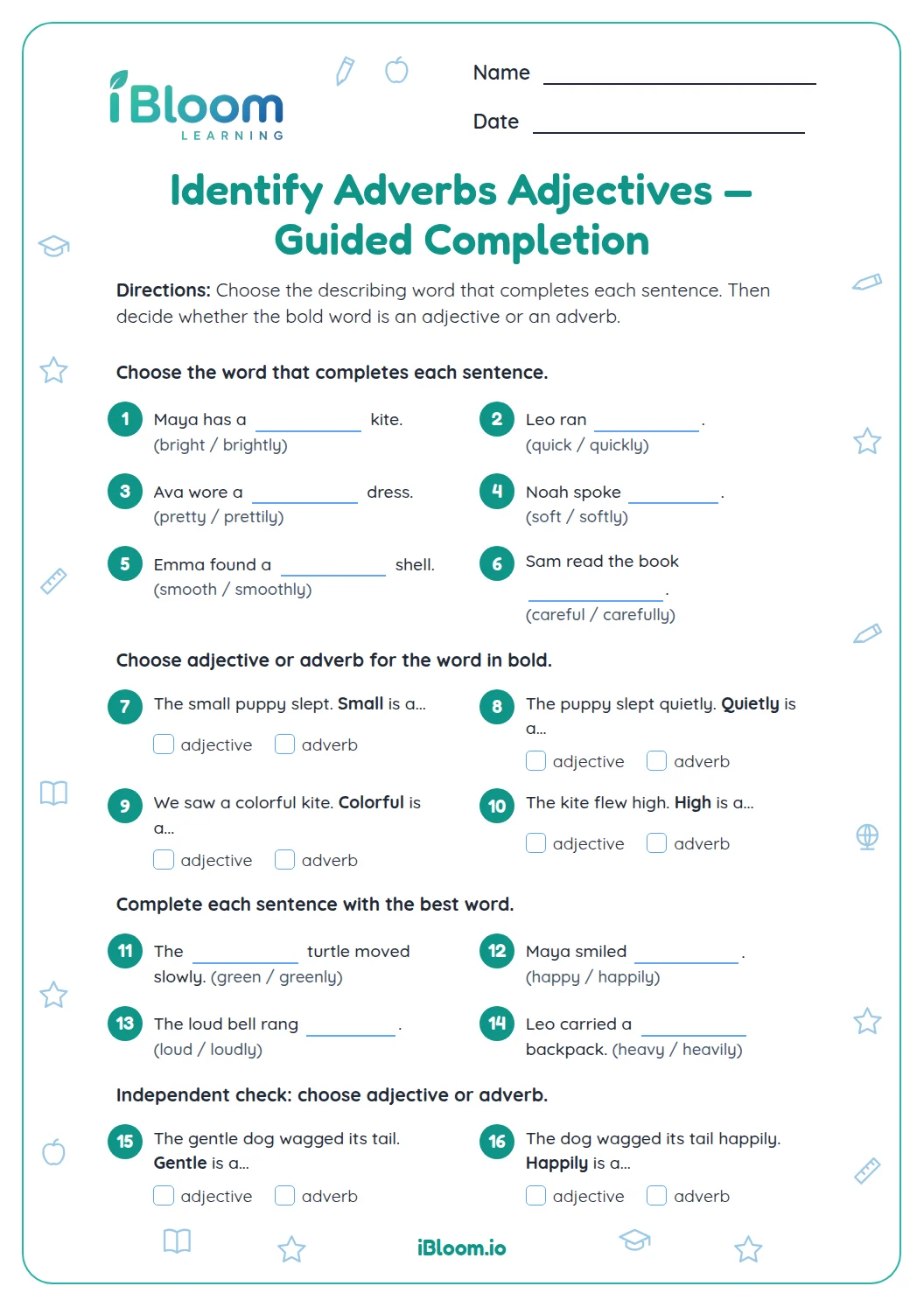
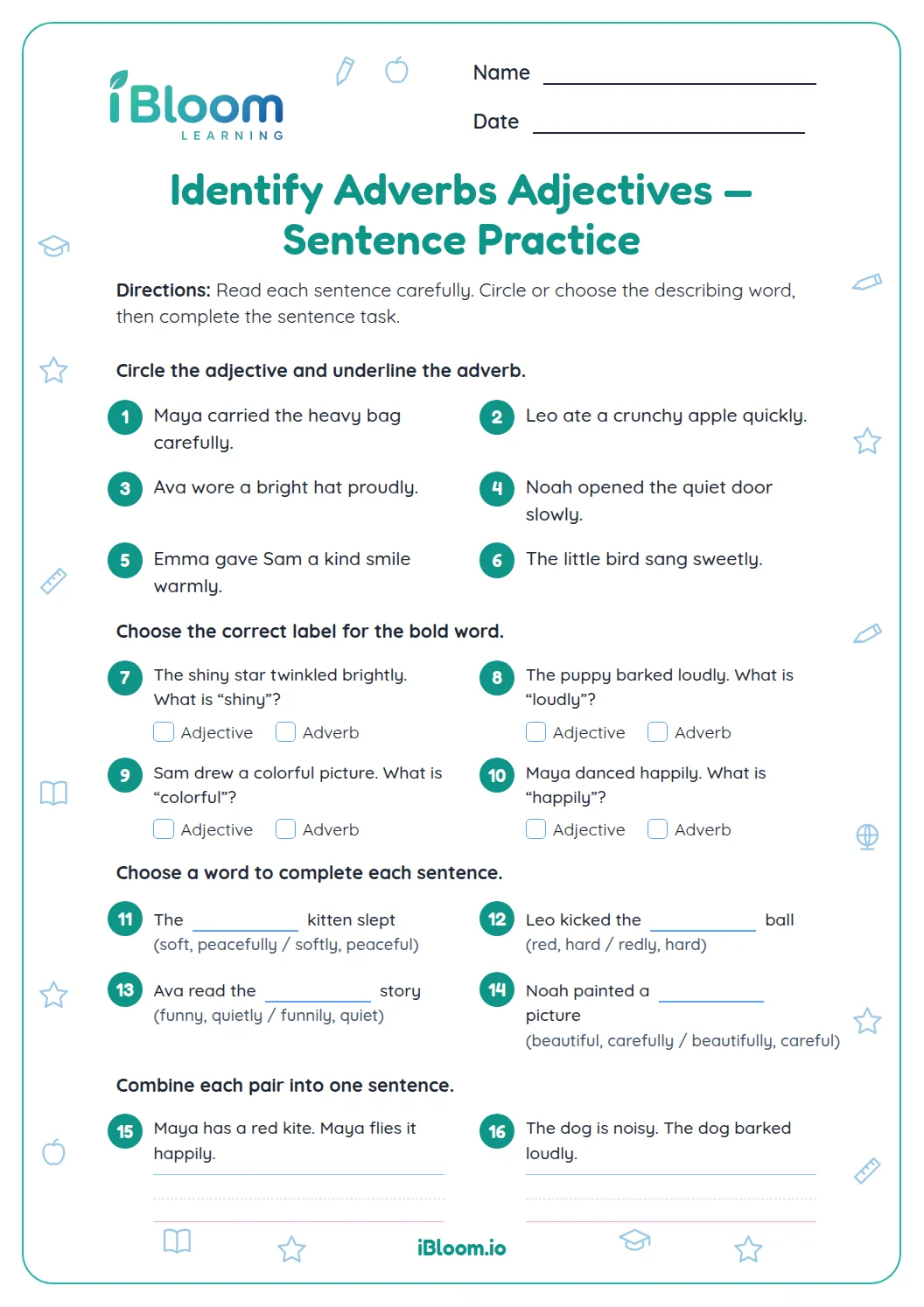
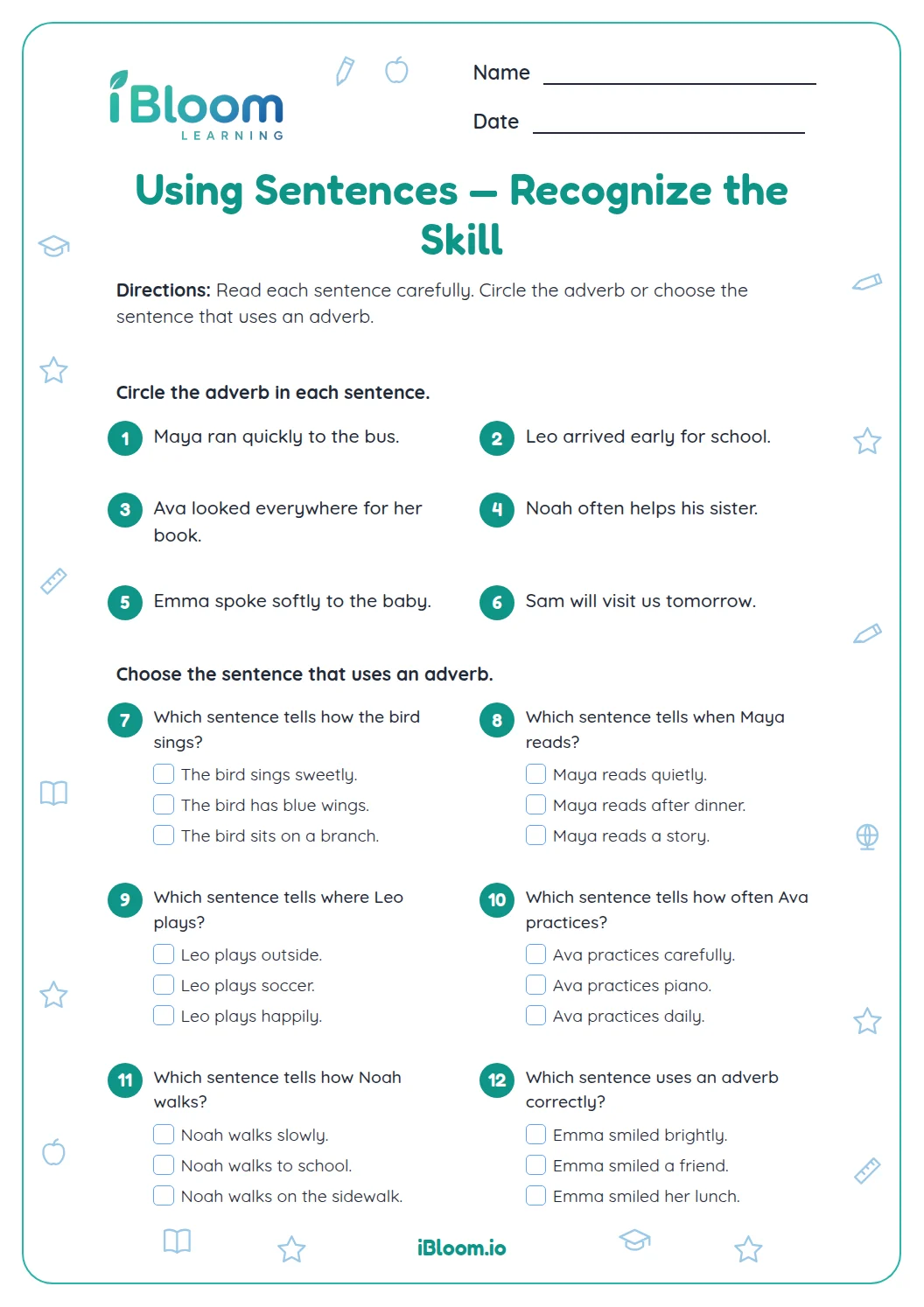
This free Grade 2 worksheet helps children recognize adjectives and adverbs in complete sentences. The 14 multiple-choice questions ask students to find a describing word, notice whether it describes a noun or an action, and distinguish familiar pairs such as careful and carefully. The separate answer key names the correct choice for every sentence.
Aligned to L.2.1.e
What does each part ask students to notice?
Part A asks students to find a describing word or a word that tells how an action happens. Part B gives more sentence contexts and asks them to identify the target word by its job.
- Find what noun an adjective describes
- Find the action an adverb explains
- Use the question wording to choose the requested word
How can a student find the adverb in a sentence?
First locate the action. Then ask which word tells how it happens. The adverb may end in -ly, but sentence meaning is the useful check.
- 1“Mia sang softly.” Which word tells how Mia sang? → softly; it describes the action sang.
Why does the worksheet ask about a word’s job?
Some sentences contain more than one adjective, and an adjective can appear after a linking verb. Follow the wording closely: this page may ask for an adjective before a noun, or for the word that tells how an action happens.
How to use this worksheet
- 1Read the whole sentence before choosing.
- 2For an adjective question, find the noun being described.
- 3For an adverb question, find the action and ask how it happens.
- 4Check that your selected word answers the exact question.
- 5Review the marked choices with the separate key.
Common mistakes and quick fixes
The mistake
Choosing the action word when asked how it happens.
The fix
Find the verb first, then choose the word that tells how: “sang softly.”
The mistake
Choosing a noun instead of its describing word.
The fix
Ask which word gives information about the noun, as tall describes tree.
The mistake
Assuming every adjective comes before a noun.
The fix
Use the prompt’s clue; this page specifies “before the noun” when it wants warm rather than good.
Common Core alignment
This worksheet connects its practice to a Common Core learning goal.
Use adjectives and adverbs and choose them to describe nouns or actions.
On this sheet: Every question distinguishes adjectives that describe nouns from adverbs that describe actions.
Show the official wordingHide the official wording
Use adjectives and adverbs, and choose between them depending on what is to be modified.
What to practice next
Make more practice
Further reading
Questions parents and teachers ask
What is an adjective in these questions?
An adjective describes a noun, such as tall in “The tall tree swayed” or warm before soup in question 13. Students choose the word named by the prompt. The answer key marks the intended word for each sentence. Ask which noun the describing word modifies.
What is an adverb in this worksheet?
The adverbs practiced here tell how an action happens. In “Mia sang softly,” softly describes how Mia sang. Students locate the action first, then select the word that gives more information about it. For example, quickly tells how someone runs.
Why does question 13 ask for the adjective before the noun?
The sentence “The warm soup smelled good” includes two adjectives: warm describes soup before the noun, while good describes soup after the linking verb smelled. The question narrows the task to warm, so students practice reading the full direction. The prompt’s position removes the ambiguity.
How many questions are on the printable?
The worksheet has 14 multiple-choice sentence questions in two parts. The first part focuses on recognizing the requested word in a sentence, and the second adds more examples for using the adjective or adverb label in context. The answer key is separate for checking.
How should I check a missed answer?
Ask the student to point to the noun or action connected to the target word. For softly, the action is sang; for fluffy, the noun is rabbit. This explanation checks the word’s job, not just whether the answer matches the key.