







About this worksheet
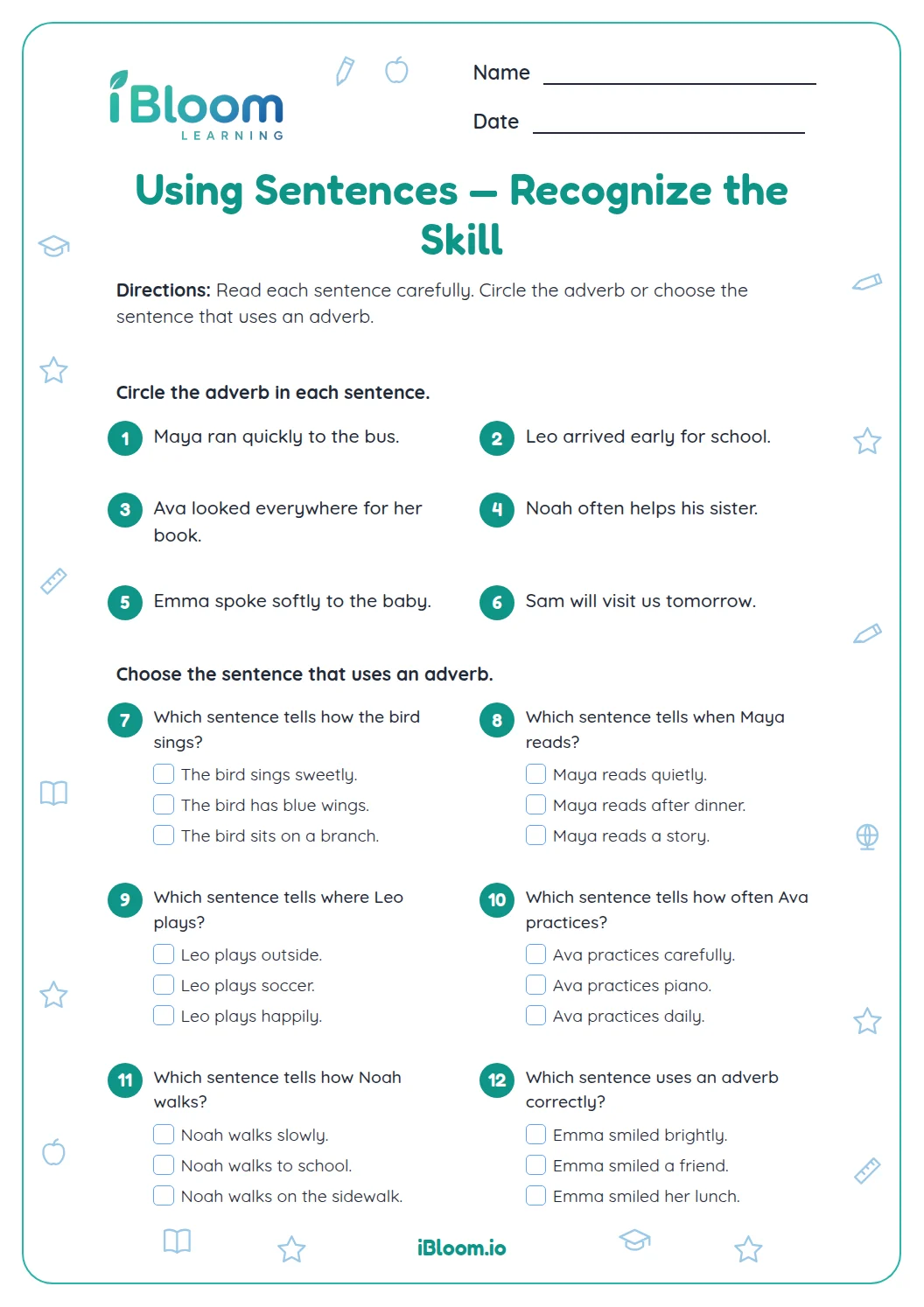
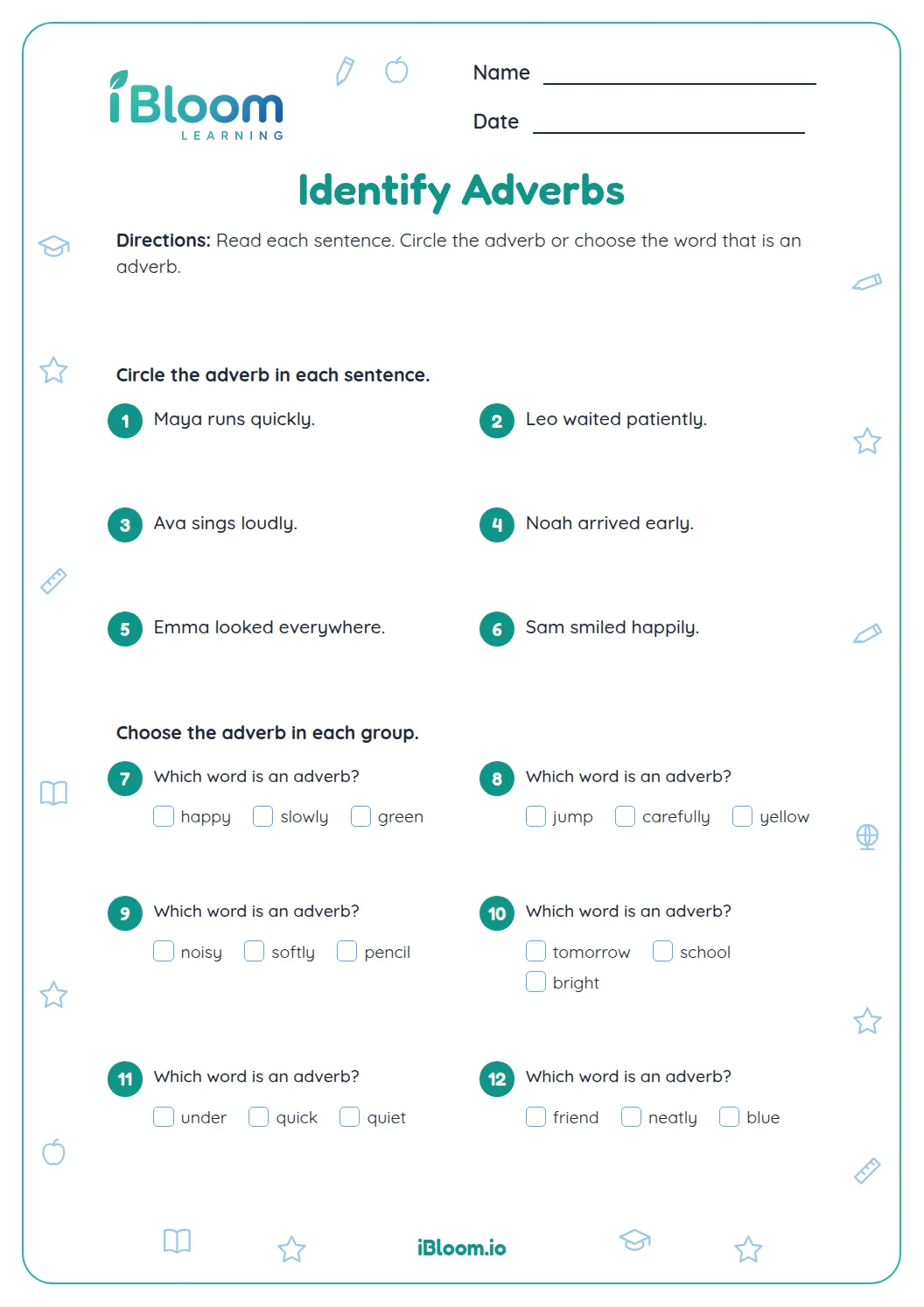
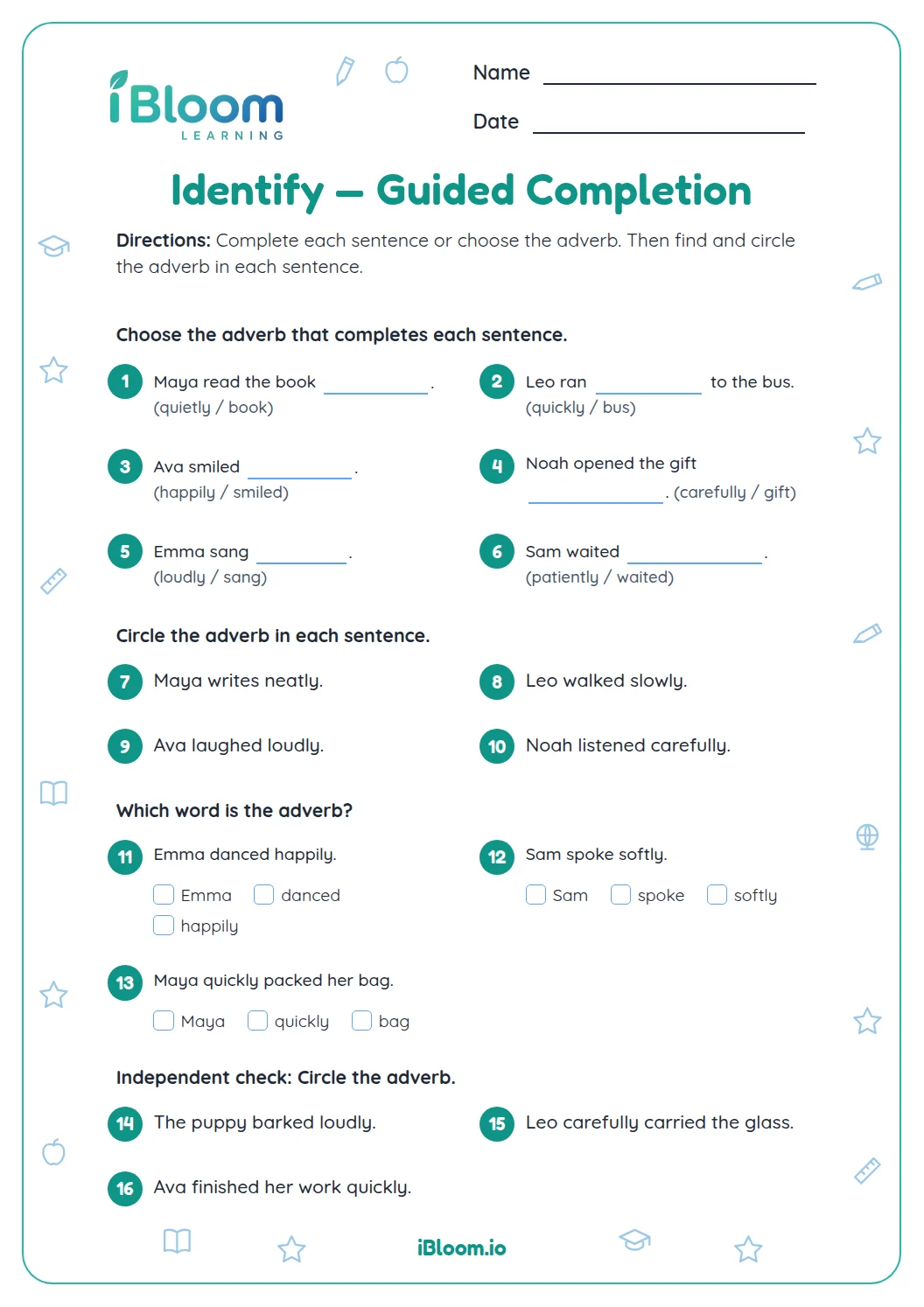
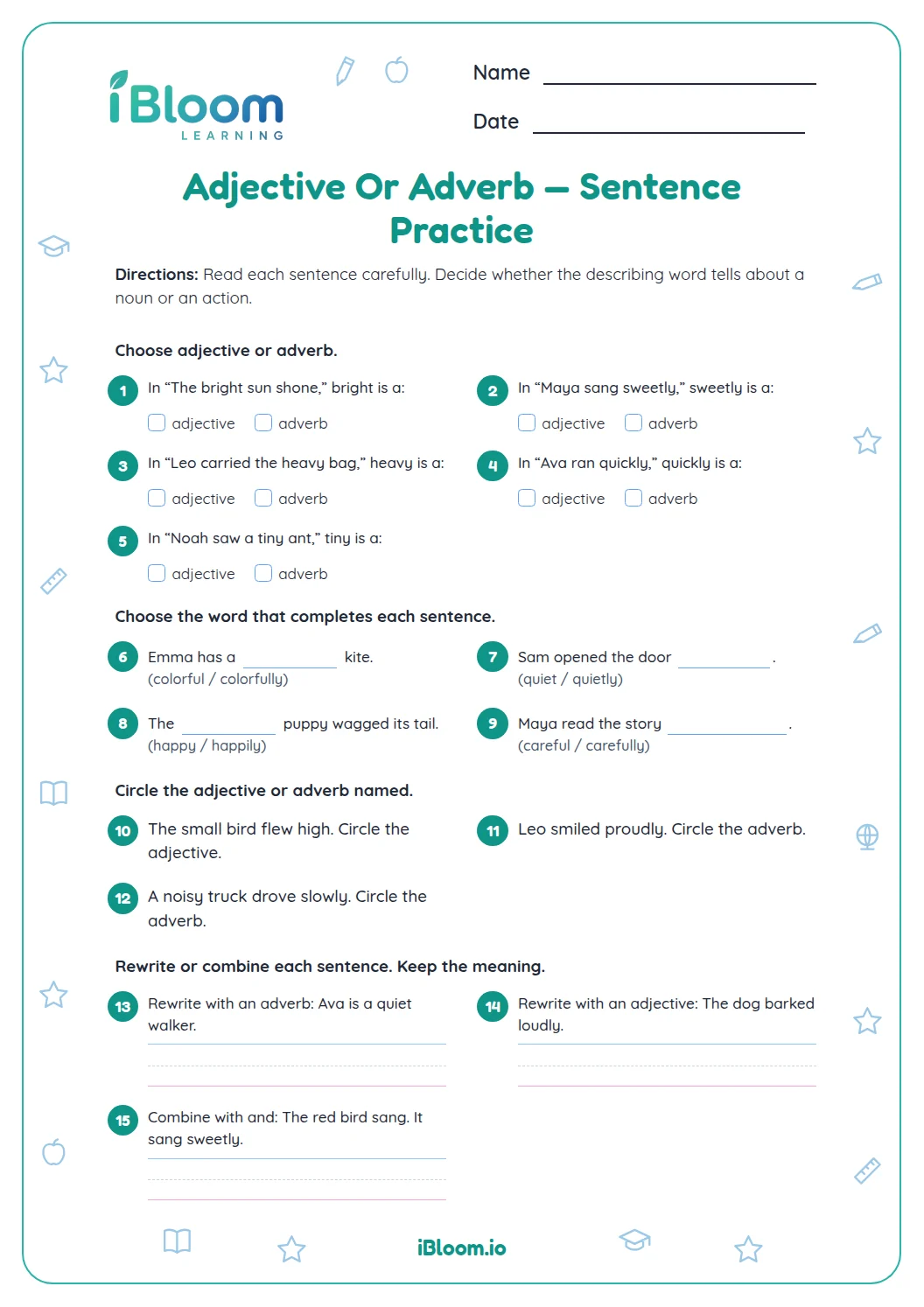
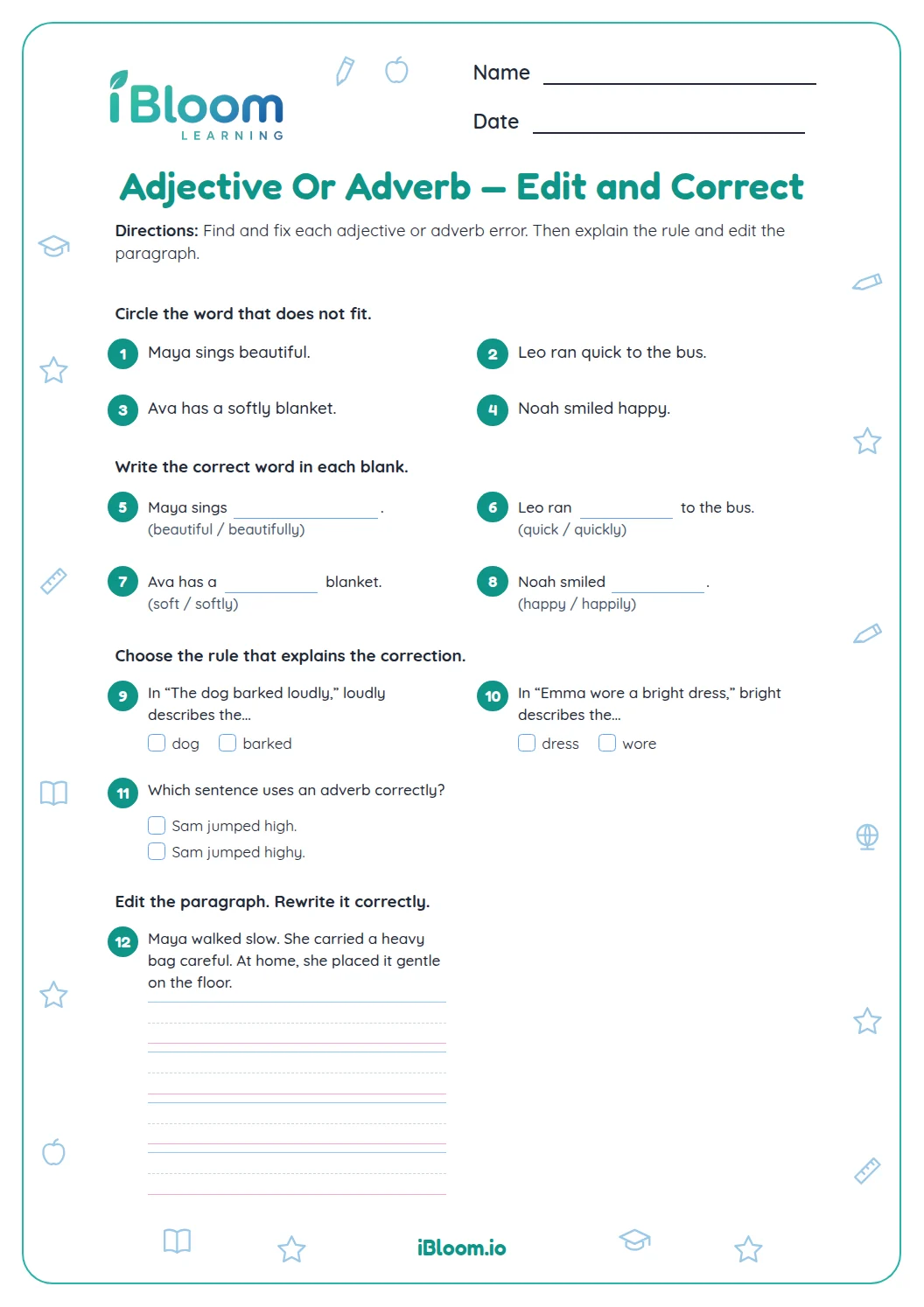
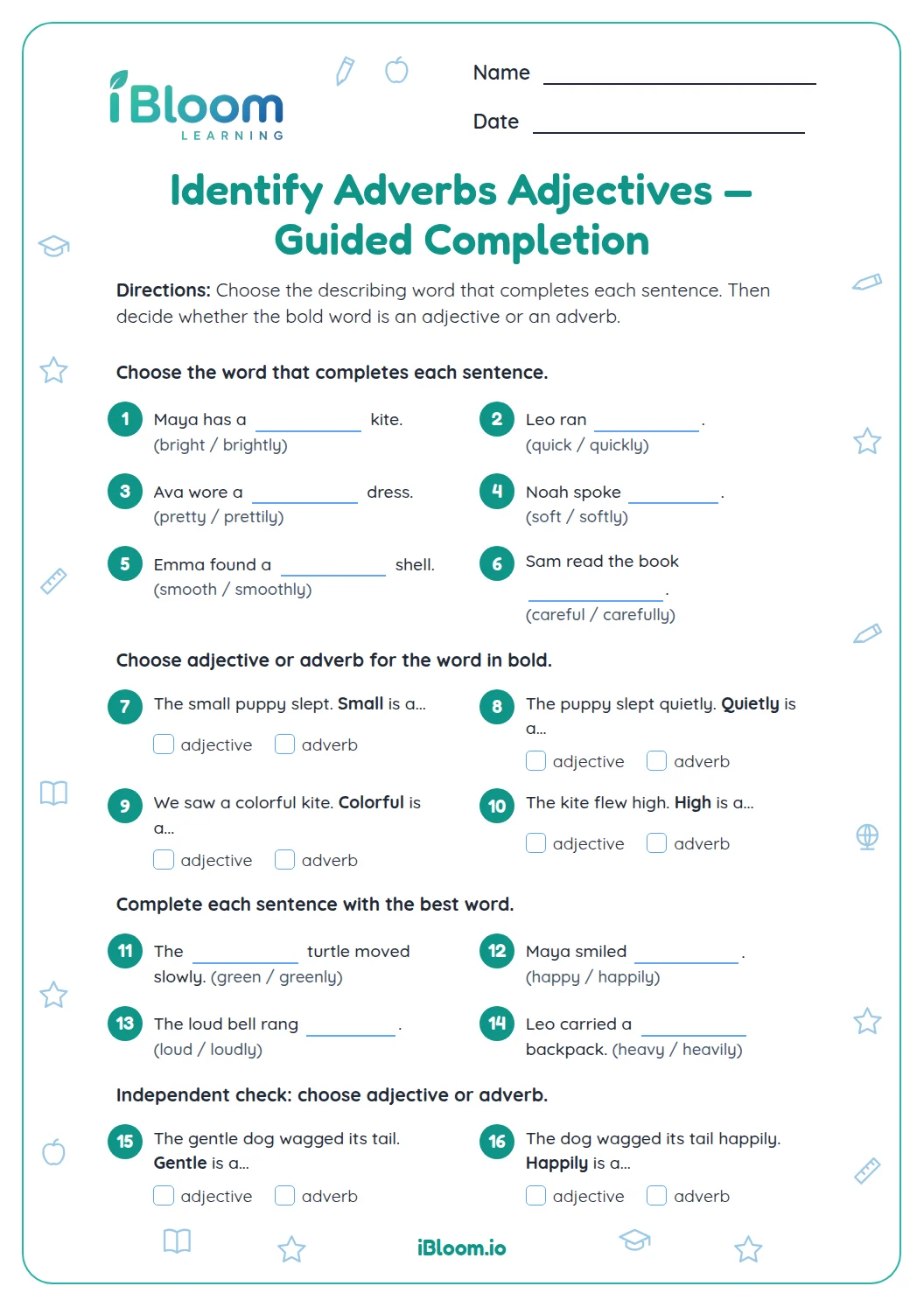
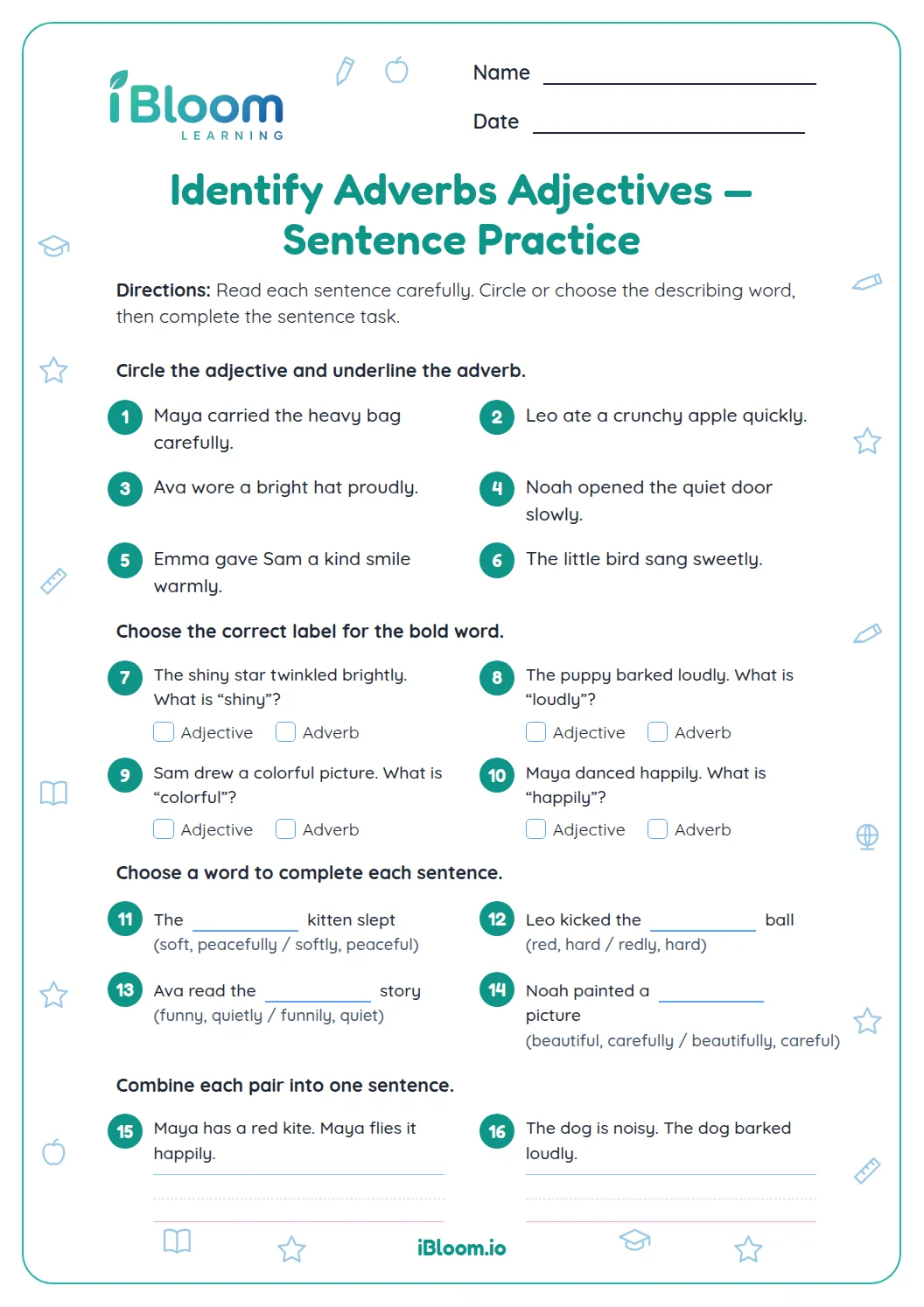
This free printable Grade 2 worksheet builds skill with adverbs in sentences. Children first circle adverbs that tell how, when, or where; then choose an adverb that fits an action; and finally edit five sentences to make the adverb form or placement work. It practices CCSS L.2.1e, choosing between adjectives and adverbs depending on what a word modifies. The separate answer key gives a model correction for each editing item.
Aligned to L.2.1e
What does this worksheet ask children to do?
Part A finds adverbs in short sentences. Part B uses context to choose an adverb, including words that tell how, when, and where. Part C edits a sentence so its adverb form and placement fit the action.
The 15 questions move from recognition to independent correction. The answer key gives a model sentence for each open response.
- Part A: circle five adverbs.
- Part B: choose among five pairs of adverbs and adjectives.
- Part C: rewrite five sentences with clear adverb use.
How do you find an adverb?
Look for the action first, then ask how, when, or where it happens. In “Mia sings softly,” sings is the action and softly tells how Mia sings.
Not every adverb ends in -ly. Soon and there are adverbs too, so use the sentence meaning rather than the ending alone.
How can you correct an adverb in a sentence?
Read the whole sentence and decide what the adverb describes. If it tells how an action happens, a form such as slowly or carefully may fit; if the sentence tells when, a word such as yesterday may fit.
- 1The turtle moved slow.
- 2Moved is an action, so use the adverb slowly.
- 3Corrected: The turtle moved slowly.
Where should an adverb go?
An adverb can come before or after the action it describes. “Jill carefully packed her bag” and “Jill packed her bag carefully” both place carefully beside the action clearly. Read the revised sentence aloud to check that the meaning stays clear.
How to use this worksheet
- 1Read each sentence once for meaning.
- 2In Part A, find the action and ask how, when, or where it happens.
- 3In Part B, try each choice in the sentence and keep the one that fits.
- 4In Part C, identify the action before changing an adverb form or moving it.
- 5Compare the edited sentence with the answer key; accept clear equivalent placement where it preserves the meaning.
Common slips and fixes
The mistake
Choosing an adjective after an action, such as “ran quick.”
The fix
Ask how the action happened; use quickly.
The mistake
Assuming every adverb ends in -ly.
The fix
Test whether the word tells how, when, or where; soon and there can be adverbs.
The mistake
Moving an adverb so far away that its meaning is unclear.
The fix
Place it near the action and reread the full sentence.
Common Core alignment
This worksheet practices a Grade 2 language standard through sentence-level choices and edits.
Choose an adverb that modifies the action in each sentence.
On this sheet: Parts A–C identify, select, and place adverbs that tell how, when, or where.
Show the official wordingHide the official wording
Use adjectives and adverbs, and choose between them depending on what is to be modified.
What to practice next
Make more practice
Further reading
Questions parents and teachers ask
What is an adverb?
An adverb tells more about an action, often by answering how, when, or where. In “The puppy ran quickly,” quickly tells how it ran. This worksheet asks children to identify adverbs, choose one that fits, and correct sentences where the form or placement needs attention.
Does every adverb end in -ly?
No. Many adverbs end in -ly, including softly and carefully, but words such as soon, yesterday, and there can also tell when or where. Part A includes different kinds of adverbs so children use the sentence meaning, not just a word ending.
How many questions are on the sheet?
There are 15 questions in three parts: five circle-the-adverb sentences, five multiple-choice items, and five sentence edits. The answer key is separate. Most children can work through the sections in about 20 minutes, with time to discuss the open-ended corrections.
Can an adverb move within a sentence?
Often it can, as long as the reader can tell which action it describes. “Jill carefully packed her bag” and “Jill packed her bag carefully” are both clear. The key accepts a reasonable placement when the corrected sentence keeps the intended meaning.
What does Part C practice?
Part C practices correcting an adverb in a full sentence. Children may need to change an adjective to an adverb, such as slow to slowly, or choose a time word that matches the verb tense. Rewriting the whole sentence helps them check grammar and meaning together.