






About this worksheet
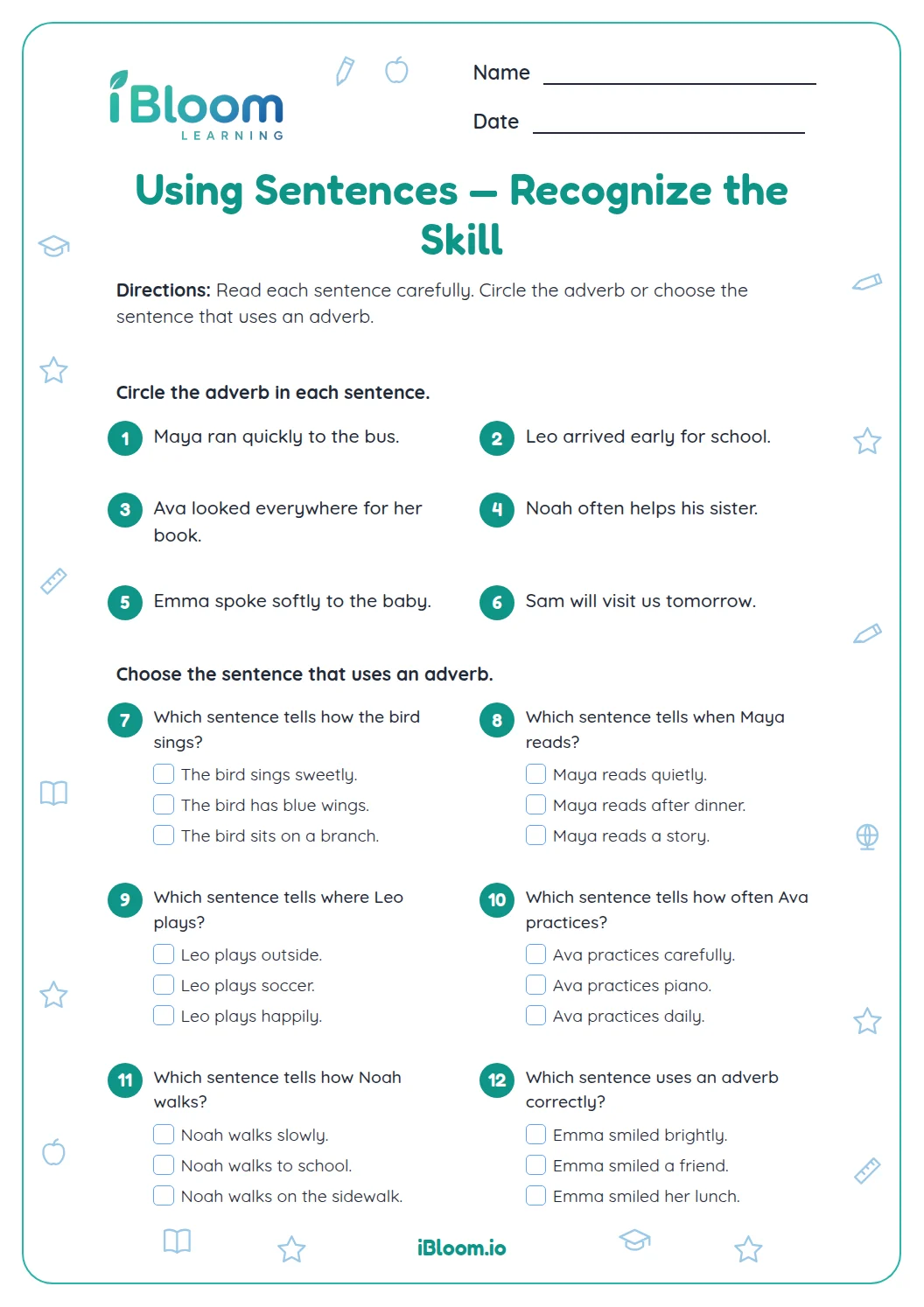
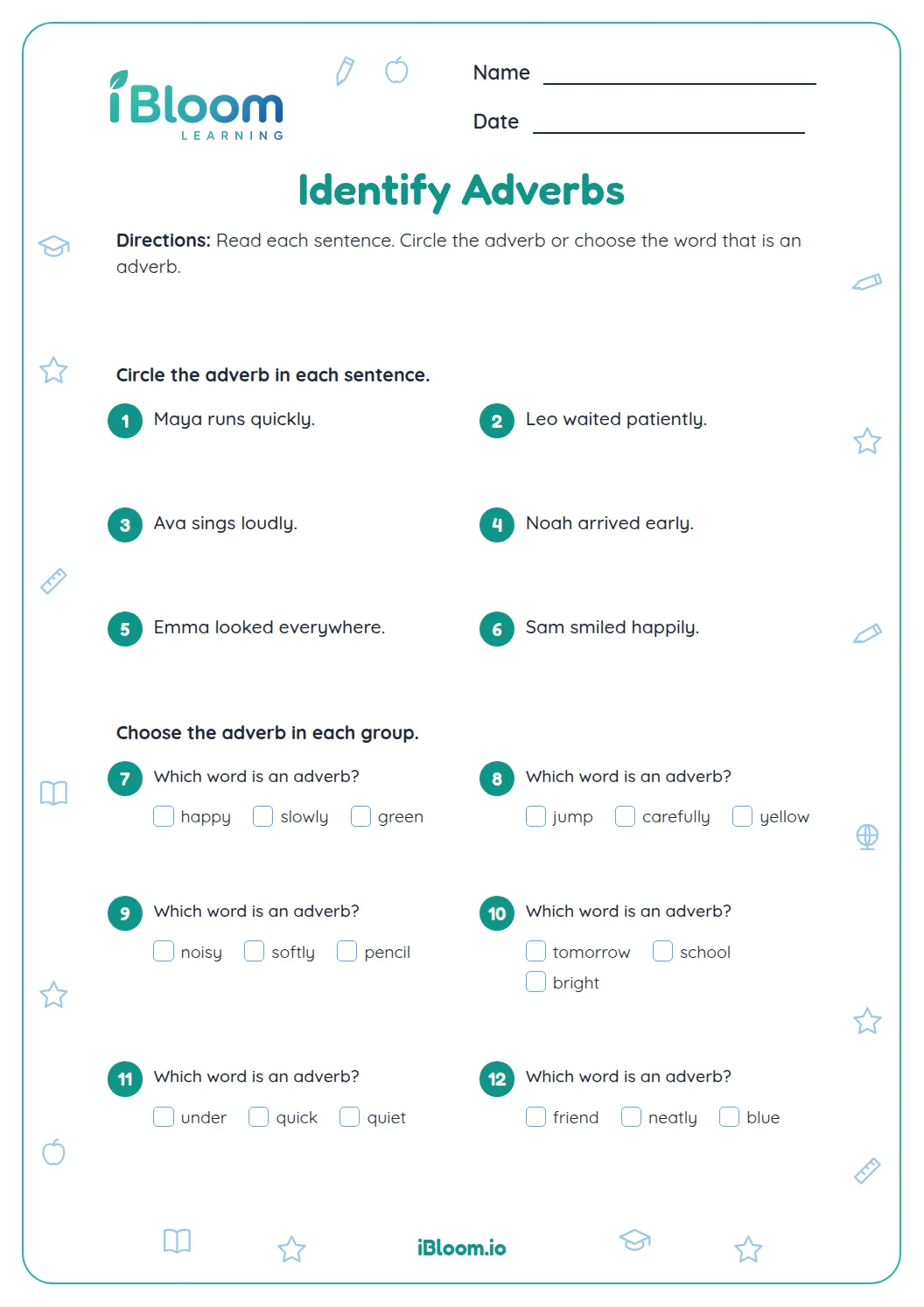
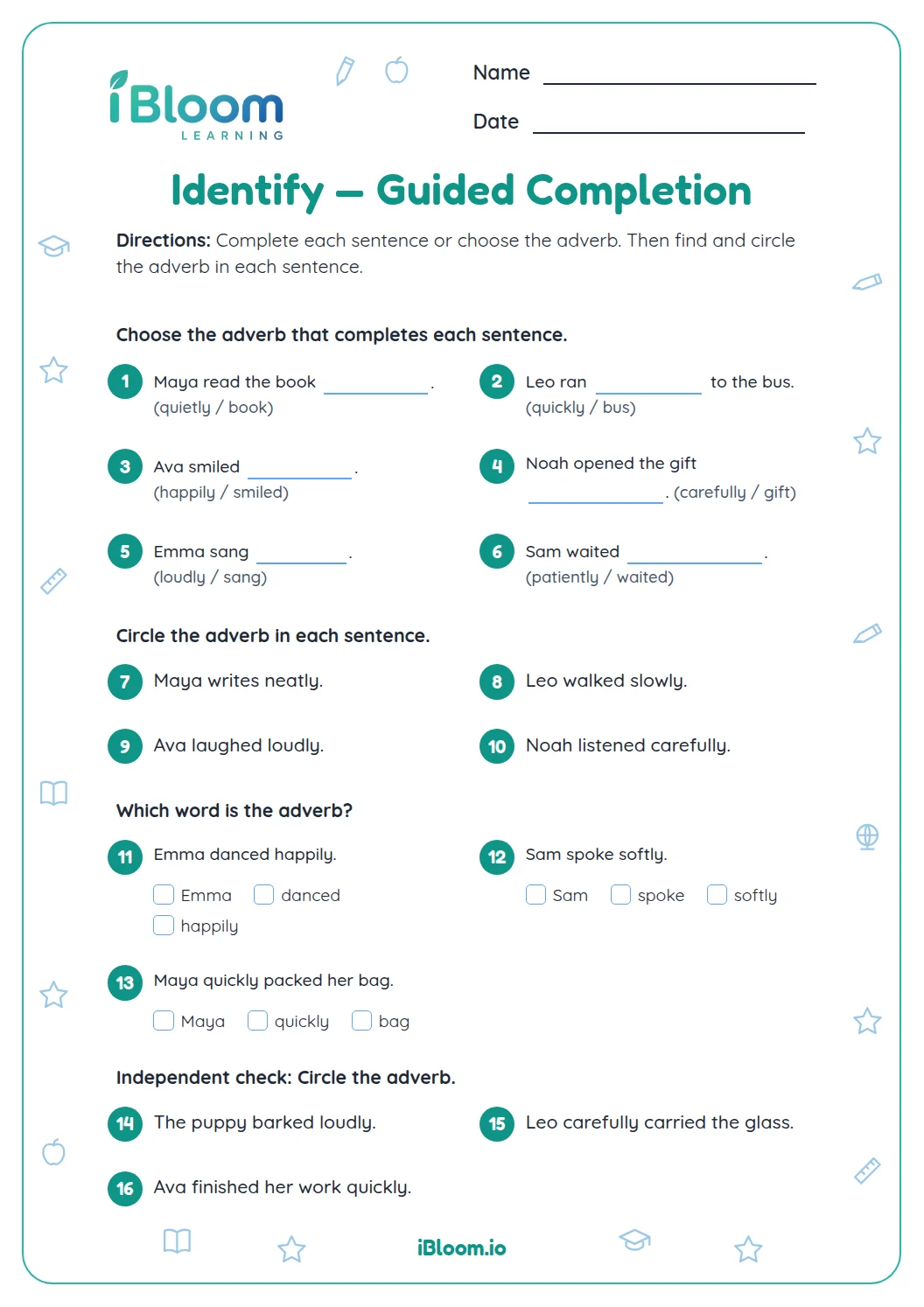
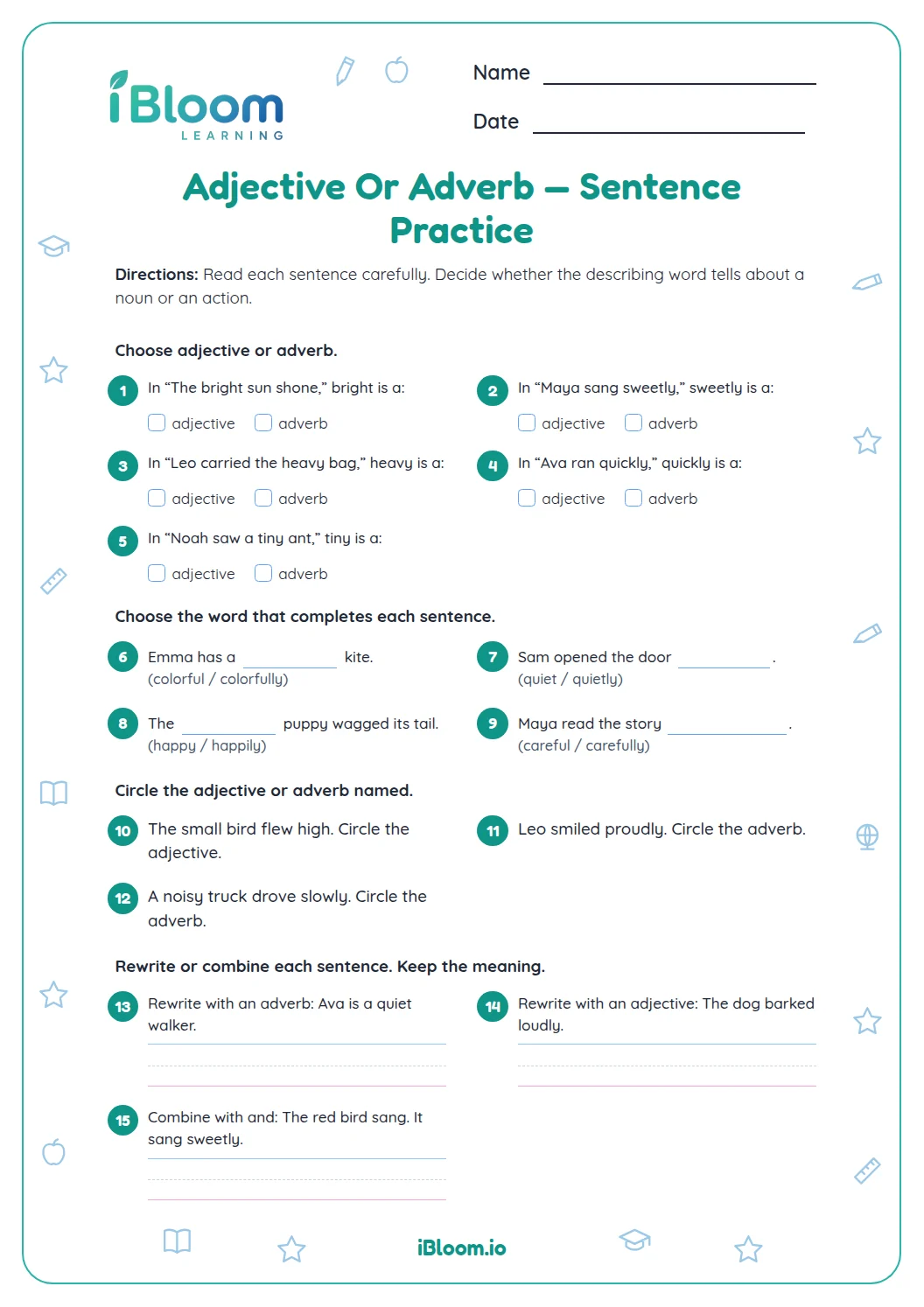
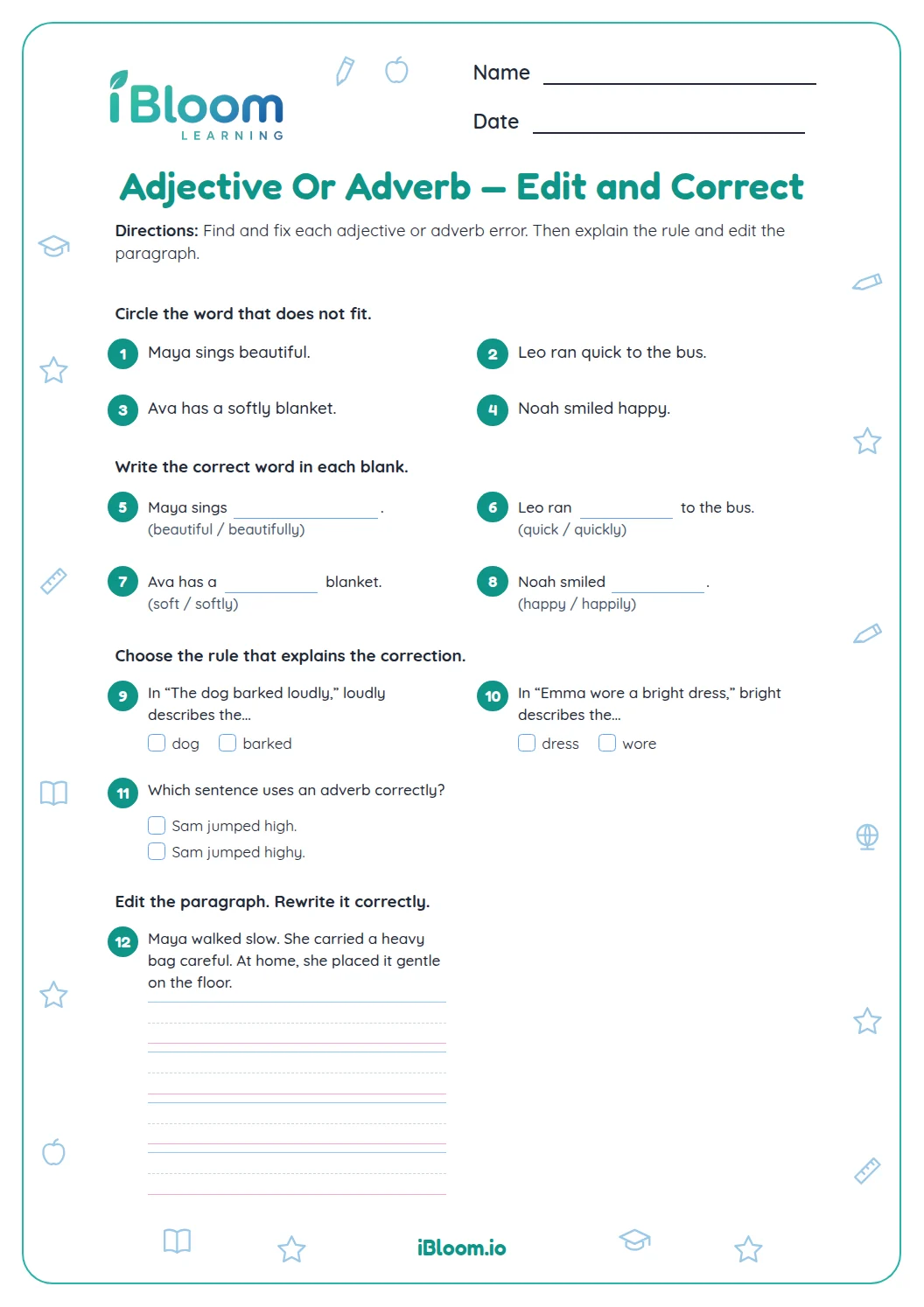
Find adverbs that tell how, when or where, then use them in complete sentences. This page includes 16 original questions in two parts, a printable worksheet and a separate answer key. It is written for US families and teachers practicing this skill.
Aligned to L.2.1.e
What does an adverb tell?
The first six items ask children to spot adverbs in complete sentences. Adverbs here tell how, when or where an action happens.
In question 1, happily tells how the puppy wagged its tail.
How can an adverb improve a sentence?
The later items ask children to choose a fitting adverb or add one of their own. A sentence such as “The turtle moved slowly” tells the reader how it moved.
How to use this worksheet
- 1Read each whole sentence before choosing a word.
- 2Ask how, when or where to identify the information the adverb gives.
- 3For open blanks, say the sentence aloud with your chosen word.
- 4Check that the sentence is complete and the adverb fits its meaning.
Common mistakes and quick fixes
The mistake
Choosing an adjective instead of an adverb
The fix
Ask whether the word describes a thing or tells about an action.
The mistake
Assuming every adverb ends in -ly
The fix
Use the sentence meaning; soon and outside can also be adverbs.
The mistake
Adding a word that does not fit the sentence
The fix
Read the sentence aloud and check the action and adverb together.
Common Core alignment
This worksheet practices the listed Common Core skill through its printed questions.
Use adjectives and adverbs to make sentences more precise.
On this sheet: Sentence items use adverbs to tell how, when or where an action happens.
Show the official wordingHide the official wording
Use adjectives and adverbs, and choose between them depending on what is to be modified.
What to practice next
Make more practice
Further reading
Questions parents and teachers ask
What is an adverb in this worksheet?
An adverb is a word that tells how, when or where an action happens. In “The puppy wagged its tail happily,” happily tells how the puppy wagged. Have the child point to the wording that supports the answer, explain the choice aloud, and compare it with the completed example on the key.
Do all adverbs end in -ly?
No. Soon, outside and overhead are adverbs in these questions, even though they do not end in -ly. Look at what the word tells about the action. Have the child point to the wording that supports the answer, explain the choice aloud, and compare it with the completed example on the key.
Can more than one answer work in the writing questions?
Yes. The answer key gives a sample for open responses. Accept another adverb if it fits the direction and makes a complete, sensible sentence. Have the child point to the wording that supports the answer, explain the choice aloud, and compare it with the completed example on the key.
How is this different from choosing an adjective?
An adjective describes a noun, while an adverb in this practice describes an action. “Fluffy” describes a rabbit; “quickly” tells how it hopped. Have the child point to the wording that supports the answer, explain the choice aloud, and compare it with the completed example on the key.
How can we check a written sentence?
Read it aloud and ask whether the adverb tells how, when or where the action happens. Then check that the sentence still makes sense and has a clear subject and action. Have the child point to the wording that supports the answer, explain the choice aloud, and compare it with the completed example on the key.