




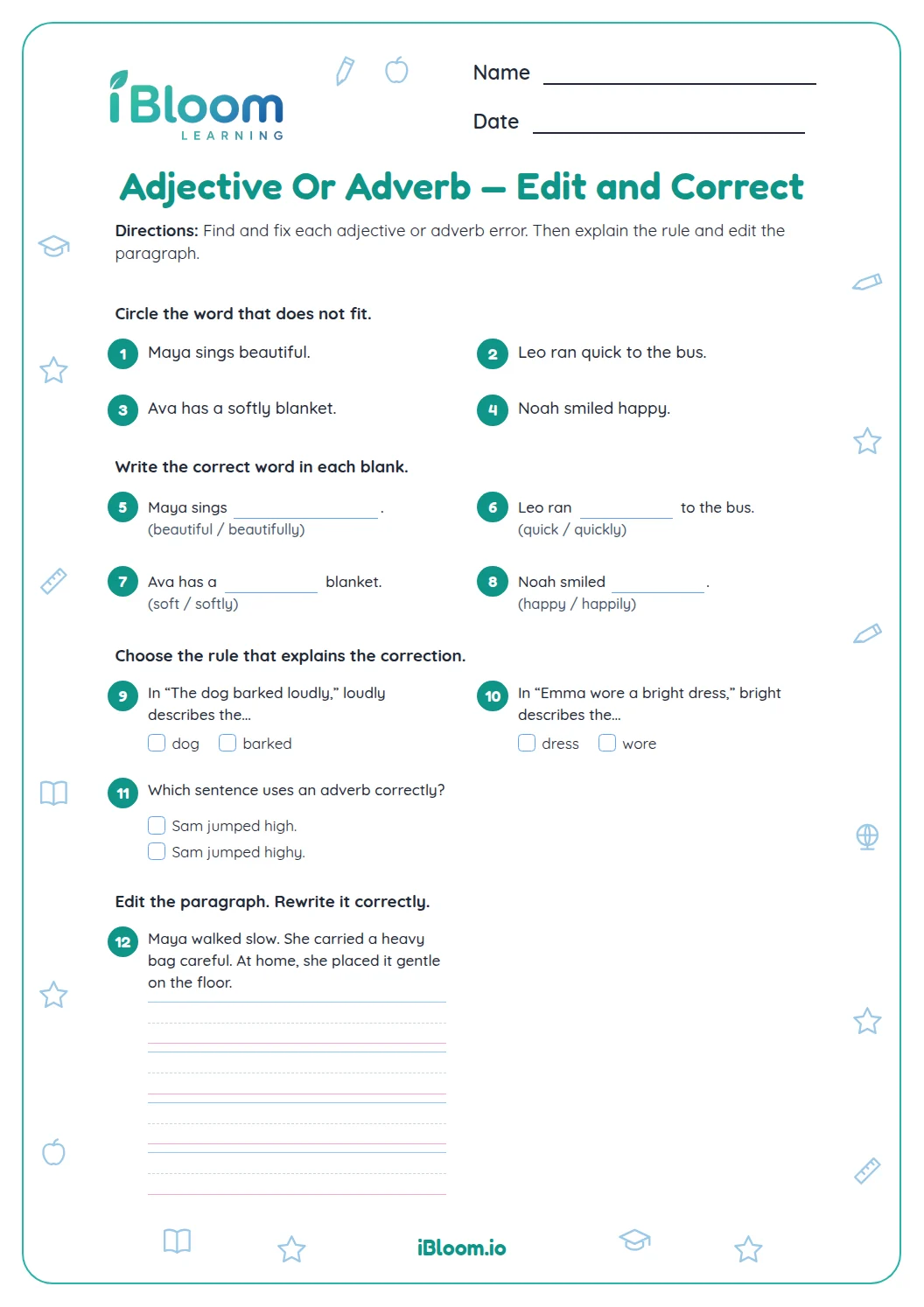


About this worksheet
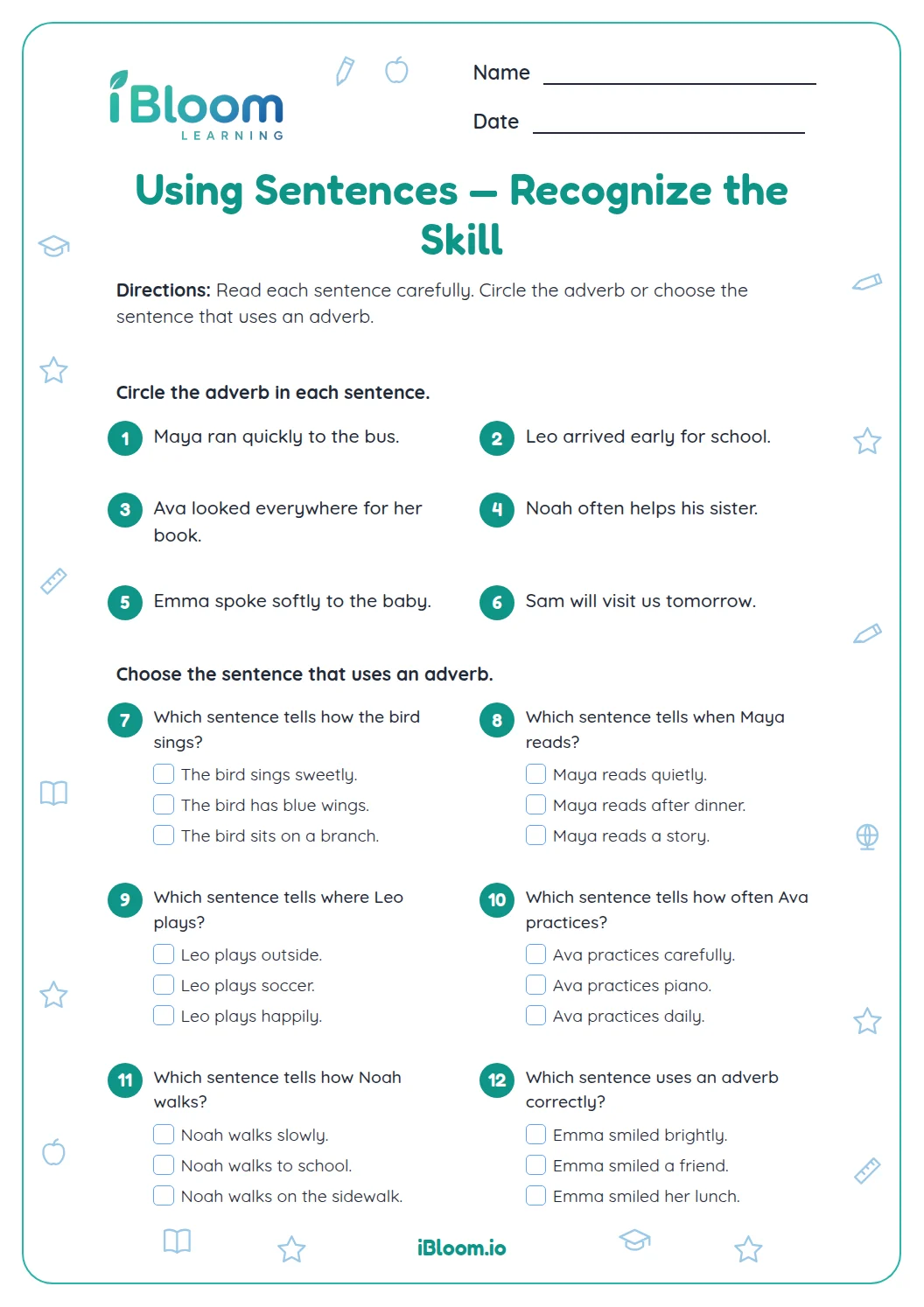
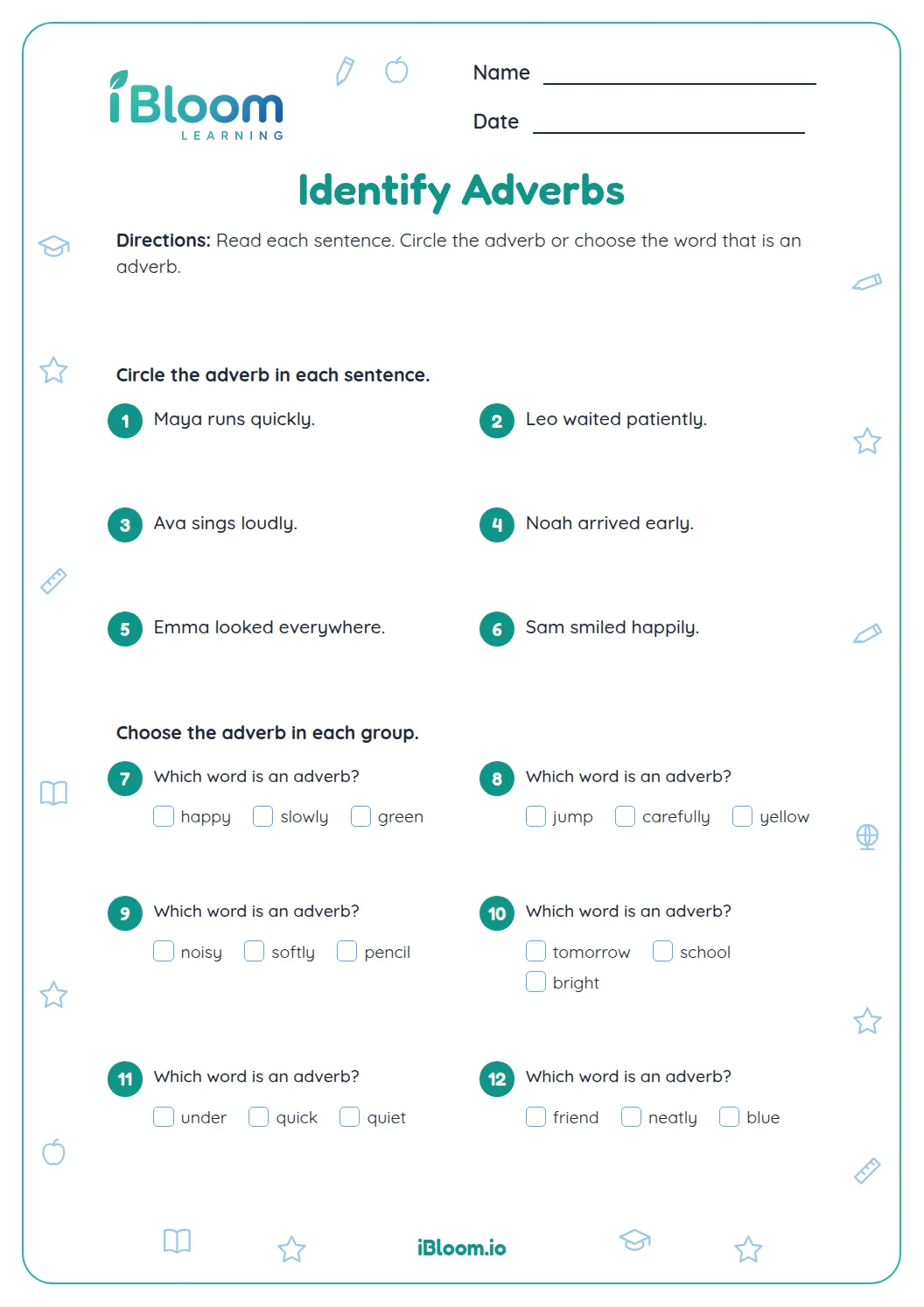
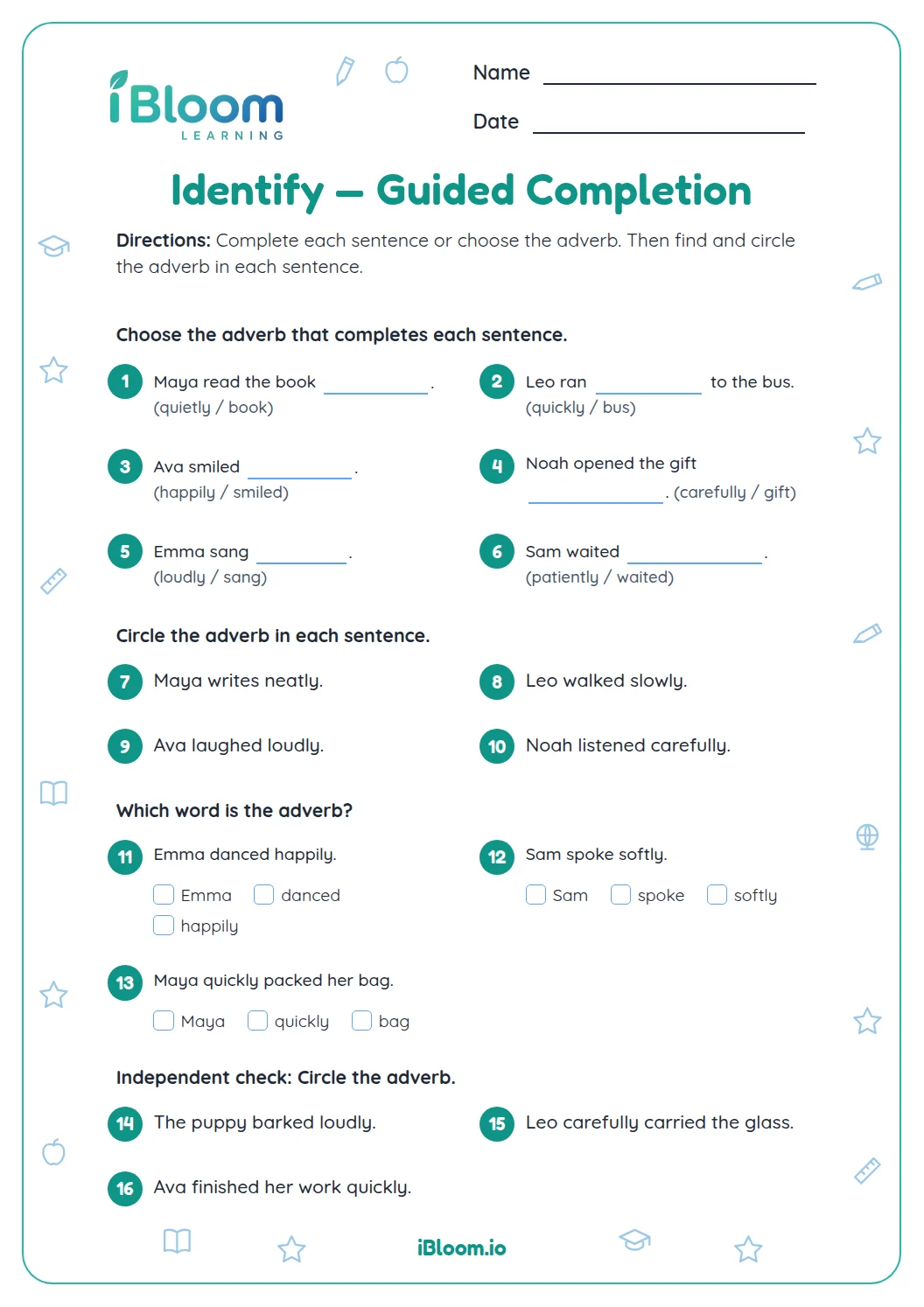
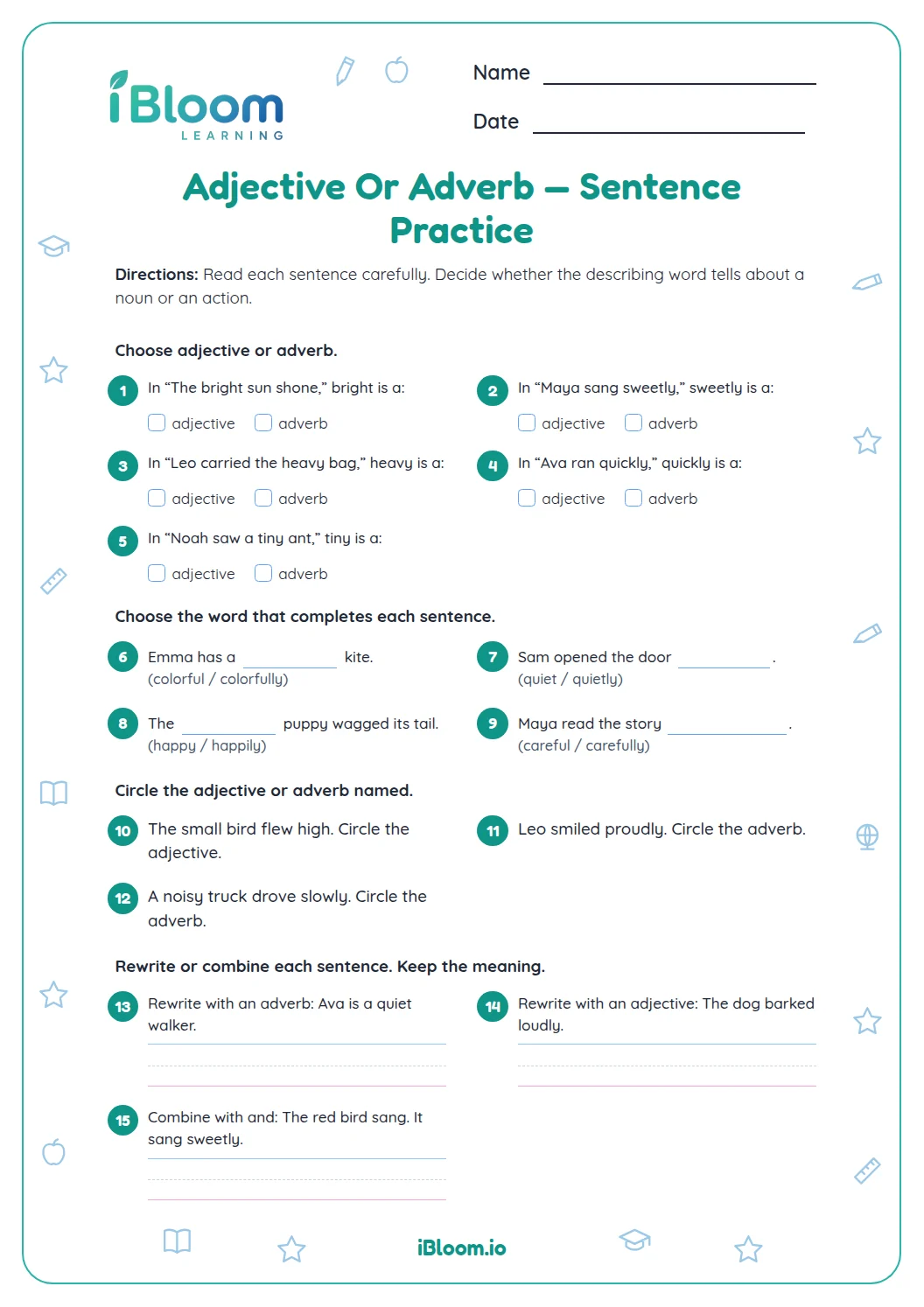
This three-page Grade 2 worksheet practices adverbs as words that can describe actions. In Part A, learners choose a word that tells how, such as softly or quickly. Part B gives an adverb and asks for a complete sentence; Part C asks learners to identify or supply an adverb. The work aligns with CCSS L.2.1.e, which asks students to use adjectives and adverbs and choose between them depending on what is modified. A separate three-page key includes intended choices and sample sentences.
Aligned to L.2.1.e
How can you spot an adverb that tells how?
Ask what word describes the action and how it happens. In “The puppy wagged its tail happily,” happily tells how the puppy wagged. Part A asks learners to choose the adverb that fits each sentence.
- 1The puppy wagged its tail ___.
- 2Choose happily: it tells how the puppy wagged.
- 3Happy describes a noun; happiness names a feeling.
How can you use a given adverb in a sentence?
Keep the adverb and write a complete sentence where it naturally describes an action. For example, “The child carefully carried the glass of water.” The action, carried, is modified by carefully. Several different sentences can work.
How can you check the sentence?
Find the action first, then ask whether the adverb describes how it happens. For a choice between beautiful and beautifully, the verb performed needs beautifully. Read the sentence aloud to check that its meaning is clear.
How to practice adverbs
- 1Read the whole sentence before choosing a word.
- 2Find the action verb and ask how it happens.
- 3Choose an adverb that fits both the grammar and meaning.
- 4For Part B, use the given adverb in a complete sentence.
- 5For Part C, identify the adverb or finish the sentence as directed.
- 6Check the intended choices and sample responses in the key.
Adverb choices to check
The mistake
Choosing happy in “The puppy wagged its tail ___.”
The fix
Choose happily; it tells how the puppy wagged.
The mistake
Using an adverb that does not fit the action.
The fix
Read the complete sentence and make sure the action makes sense with that adverb.
The mistake
Naming an adjective when asked which word tells how.
The fix
Find the action first; in “The driver stopped safely,” safely describes how the driver stopped.
Common Core alignment
This sheet practices choosing adverbs that modify actions.
Use adverbs and choose them to modify the intended word.
On this sheet: Children choose and write adverbs that describe actions in sentences.
Show the official wordingHide the official wording
Use adjectives and adverbs, and choose between them depending on what is to be modified.
What to practice next
Make more practice
Further reading
Questions parents and teachers ask
How can a child tell an adverb from an adjective here?
Ask what the describing word modifies. In “The puppy wagged its tail happily,” happily describes the action wagged. An adjective such as happy describes a person or thing, while happily tells how an action happens. The learner should be able to point to the action being described.
What does Part B ask learners to write?
Part B gives five adverbs and asks for a complete sentence using each one. For carefully, a sample is “The child carefully carried the glass of water.” Another clear sentence is fine if carefully describes its action. Read the sentence again to check that the adverb fits its meaning.
Can the writing answers be different from the key?
Yes. The key gives one sample sentence for each prompt, but learners can write other complete sentences. The given adverb should fit the meaning and describe an action in the sentence. A complete sentence needs an action that makes sense with the given word.
Why does “beautifully” fit “The singer performed ___”?
Performed is an action verb, so the sentence needs the adverb beautifully to describe how the singer performed. Beautiful is an adjective and would describe a person, place, or thing instead. The choices contrast an adverb with related adjective or noun forms.
How many questions and pages are included?
The worksheet has 16 questions in three parts and uses three pages. Its separate three-page key marks the intended choices and gives a sample for each written response. Use the key as one example of a correct response, not the only sentence.