




About this worksheet
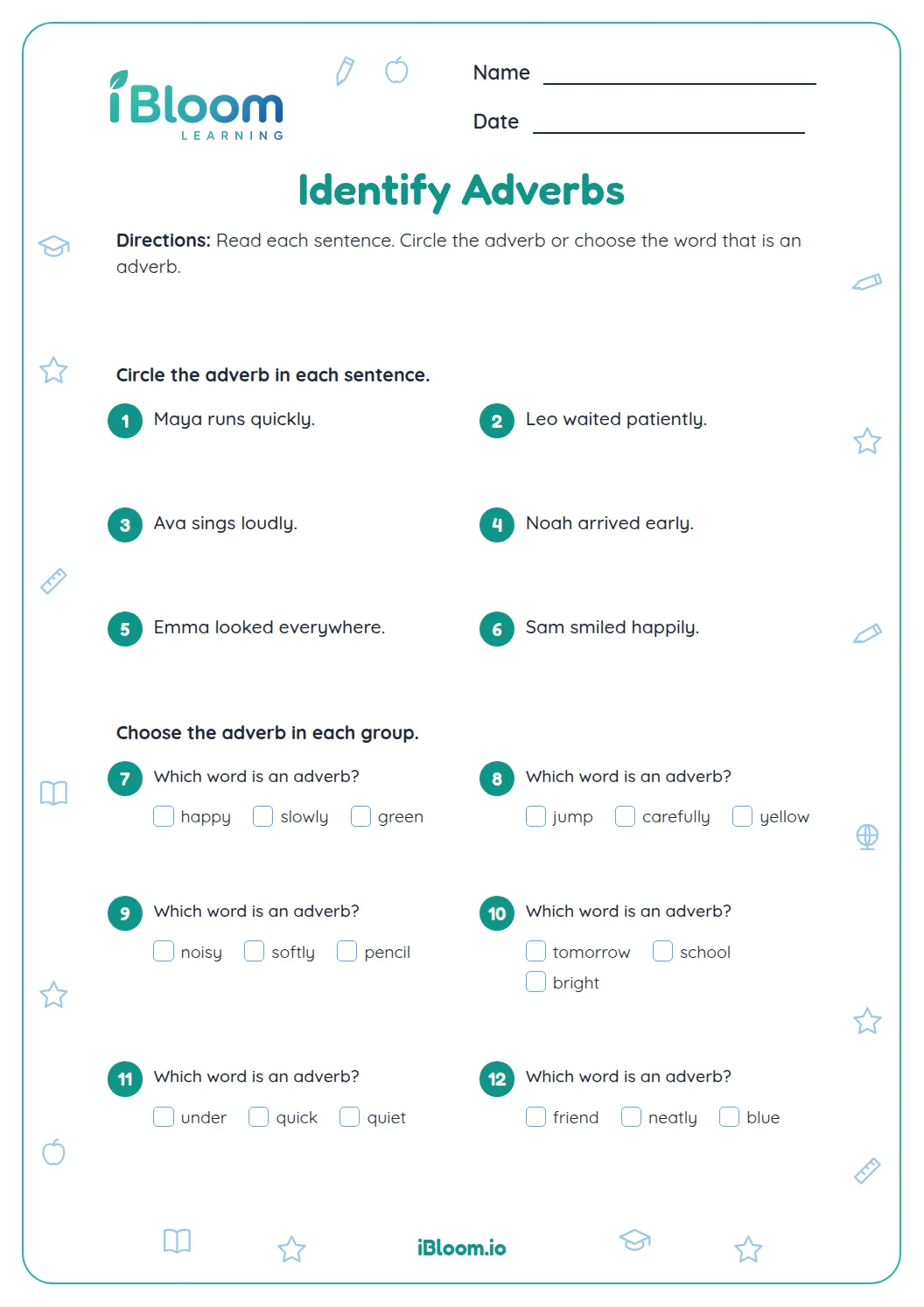
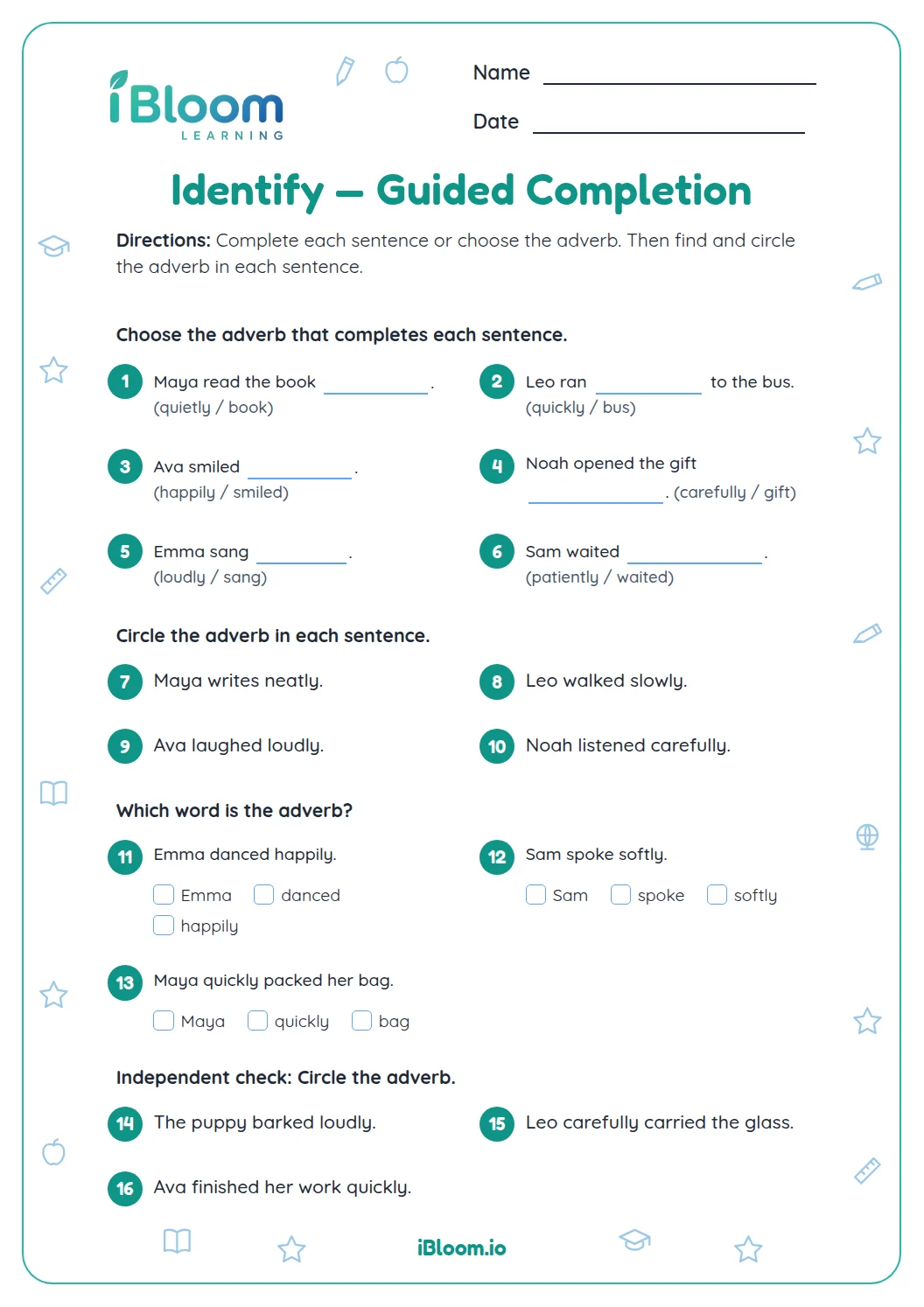
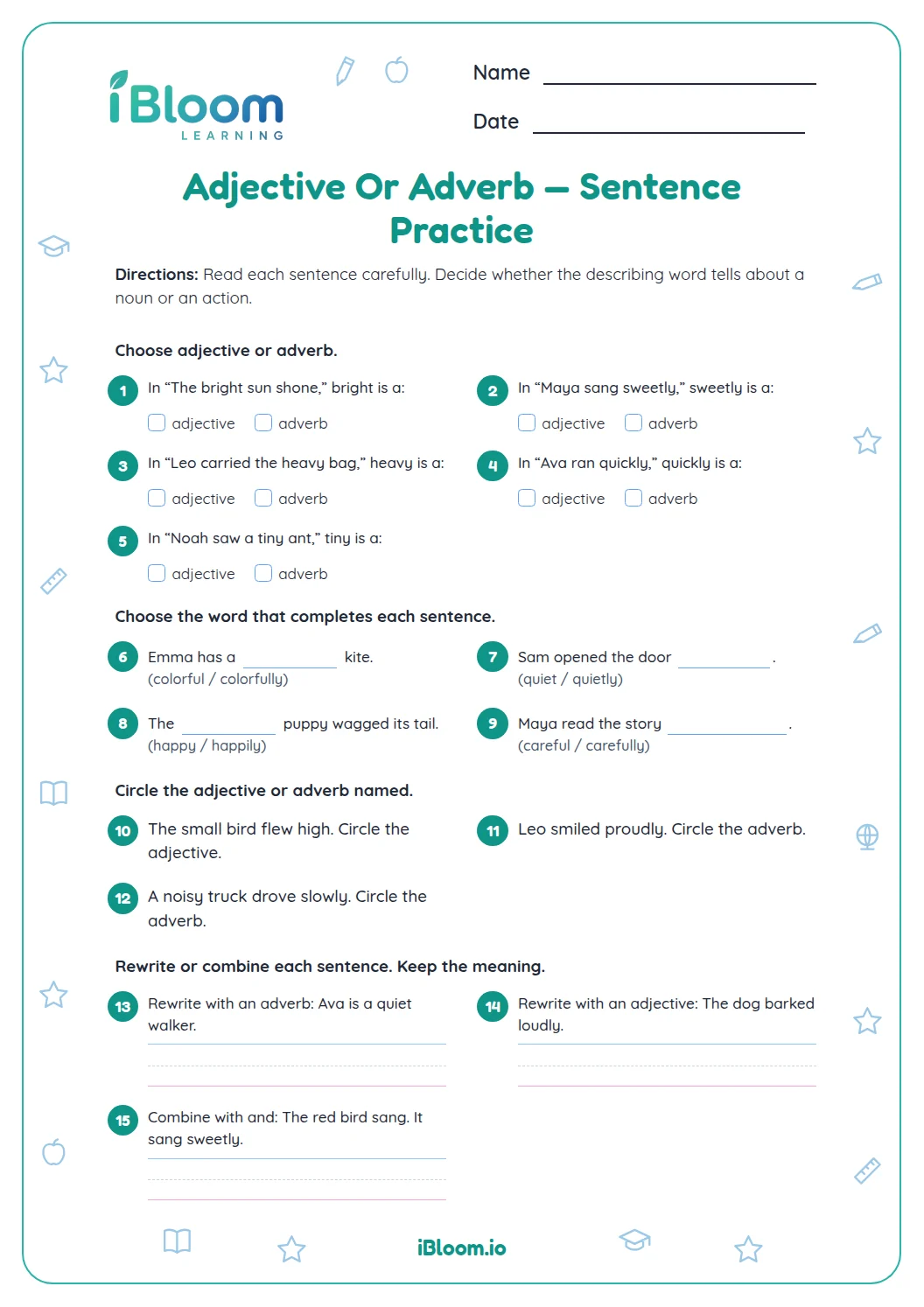
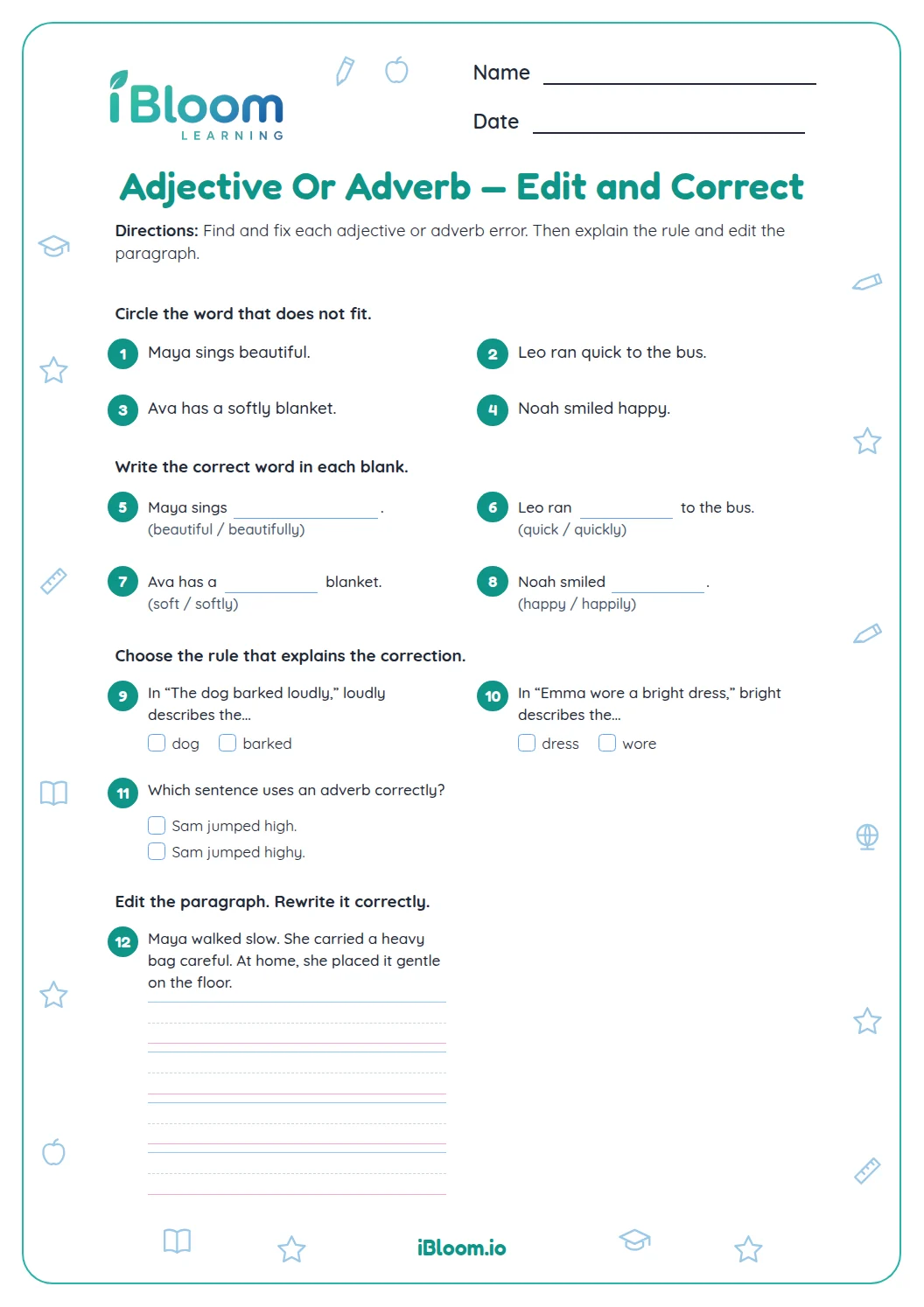
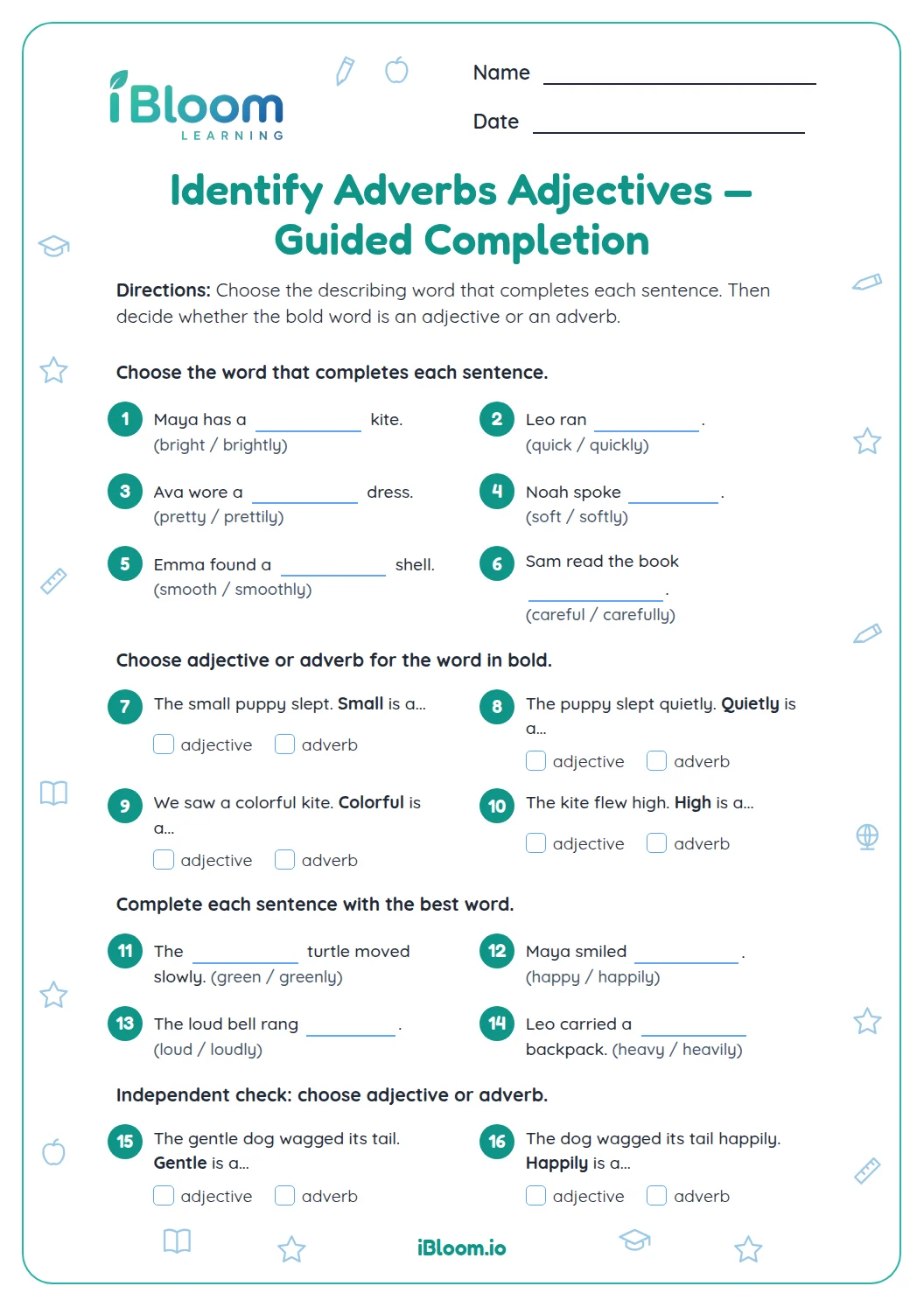
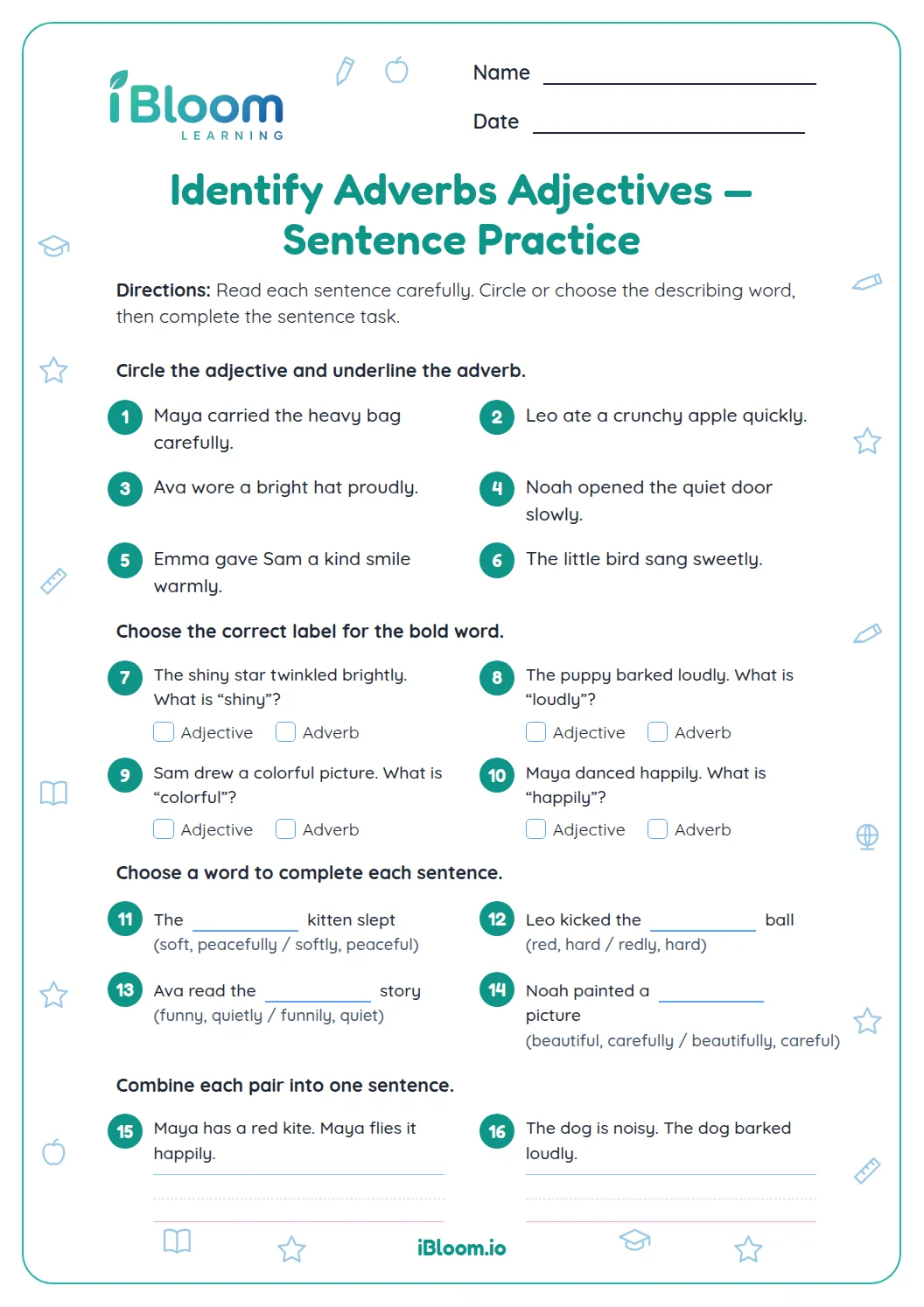
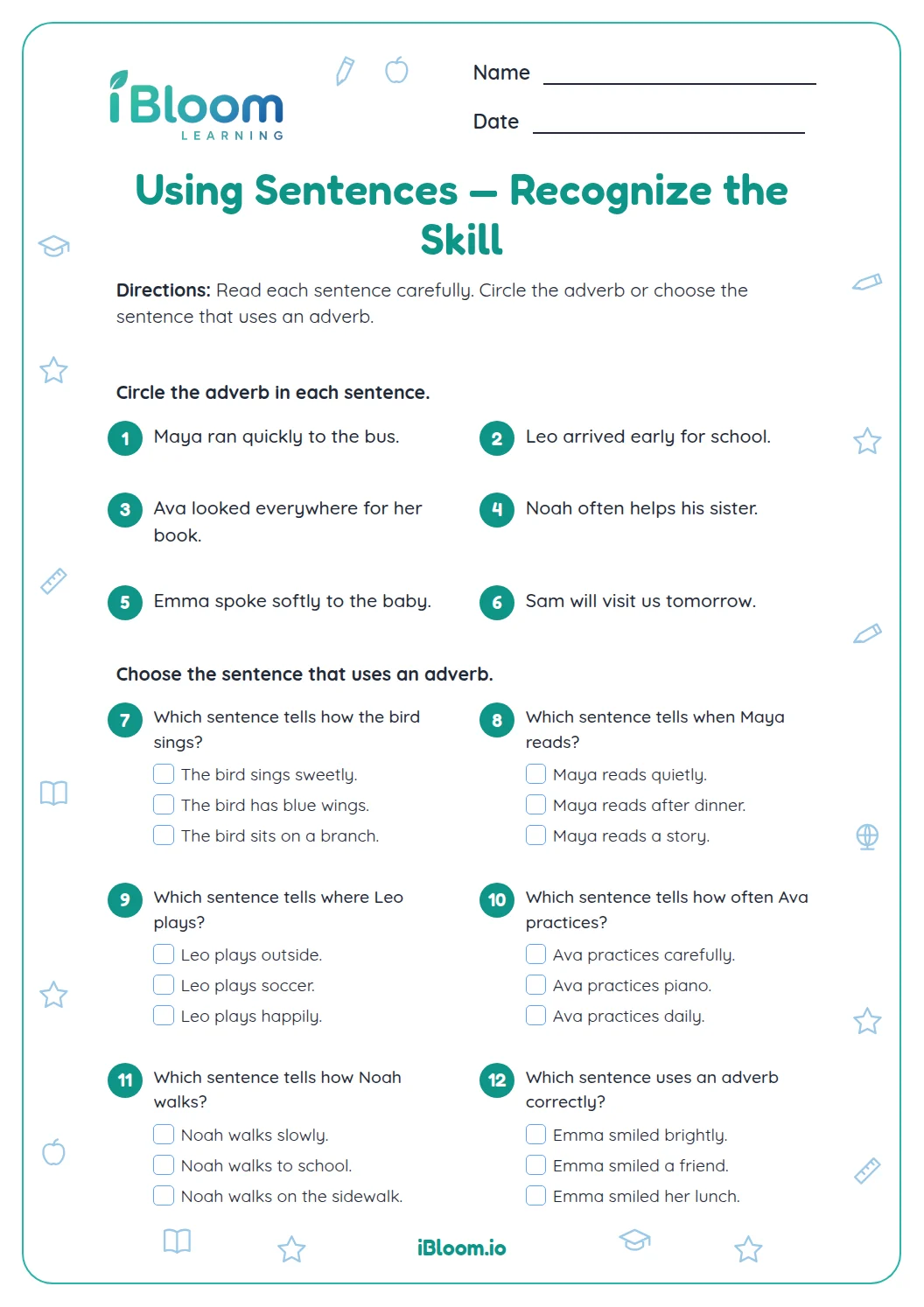
This Grade 2 printable worksheet gives students 14 short-answer sentence completions about adverbs. Children supply words such as quickly, tomorrow, and outside, then identify what information an adverb adds to an action. The separate answer key lists the expected word for each sentence. The grammar practice supports CCSS L.2.1, standard English grammar and usage.
Aligned to L.2.1.e
How can a child find an adverb?
First find the action word. Then ask how, when, or where it happens. In question 1, hopped is the action and quickly tells how the rabbit hopped.
Do adverbs always end in -ly?
No. Tomorrow, soon, outside, and nearby are adverbs without -ly endings. Look at what the word tells in its sentence rather than relying only on its spelling.
How does the adverb change the sentence?
Complete each sentence with a word that tells how, when, or where the action happens. For example, “The band played ___” can be completed with loudly.
How to use this worksheet
- 1Read the sentence once for meaning.
- 2Find the action word, or verb.
- 3Ask how, when, or where the action happens.
- 4Choose the word that answers one of those questions.
- 5For question 14, write both the adverb and the verb it describes.
Common mistakes and quick fixes
The mistake
Choosing an adjective that describes a person or thing.
The fix
Check whether the word tells about a noun or about an action.
The mistake
Skipping adverbs that do not end in -ly.
The fix
Use the sentence question: soon tells when even without an -ly ending.
The mistake
Naming the verb instead of the adverb.
The fix
Ask “How did it happen?” and choose the word that answers that question.
Common Core alignment
This page gives focused practice with the skills named in these standards.
Use adjectives and adverbs, and choose between them depending on what is described.
On this sheet: Students identify adverbs and connect them to the actions or verbs they describe.
Show the official wordingHide the official wording
Use adjectives and adverbs, and choose between them depending on what is to be modified.
What to practice next
Make more practice
Further reading
Questions parents and teachers ask
What kinds of adverbs appear here?
The sentences use adverbs that tell how, when, how often, or where an action happens. Examples include quickly, tomorrow, often, and outside. Students use the rest of the sentence to decide what each adverb tells. Read the full sentence, find its action, and check that the word adds the requested information without changing the meaning.
Does every adverb end in -ly?
No. Tomorrow, soon, and outside can function as adverbs too. Ask what the word tells about the action: when it happens, where it happens, how often, or how it happens. Read the full sentence, find its action, and check that the word adds the requested information without changing the meaning.
When should students name the verb too?
There are 14 short-answer sentence completions in three parts. Students fill in adverbs in short sentences, then connect each word with an action. The separate answer key lists the expected response for every item, so an adult can check the work quickly.
How many questions are included?
There are 14 questions in three parts. Students choose an adverb in sentences, write missing adverbs, and identify what an adverb tells about an action. Read the full sentence, find its action, and check that the word adds the requested information without changing the meaning.
How can I distinguish “sleepy” from “softly”?
Check which word describes the noun and which describes the action. In “The sleepy bear snored softly,” sleepy describes the bear, while softly tells how it snored. The prompt asks for the word that tells how. Read the full sentence, find its action, and check that the word adds the requested information without changing the meaning.