




About this worksheet
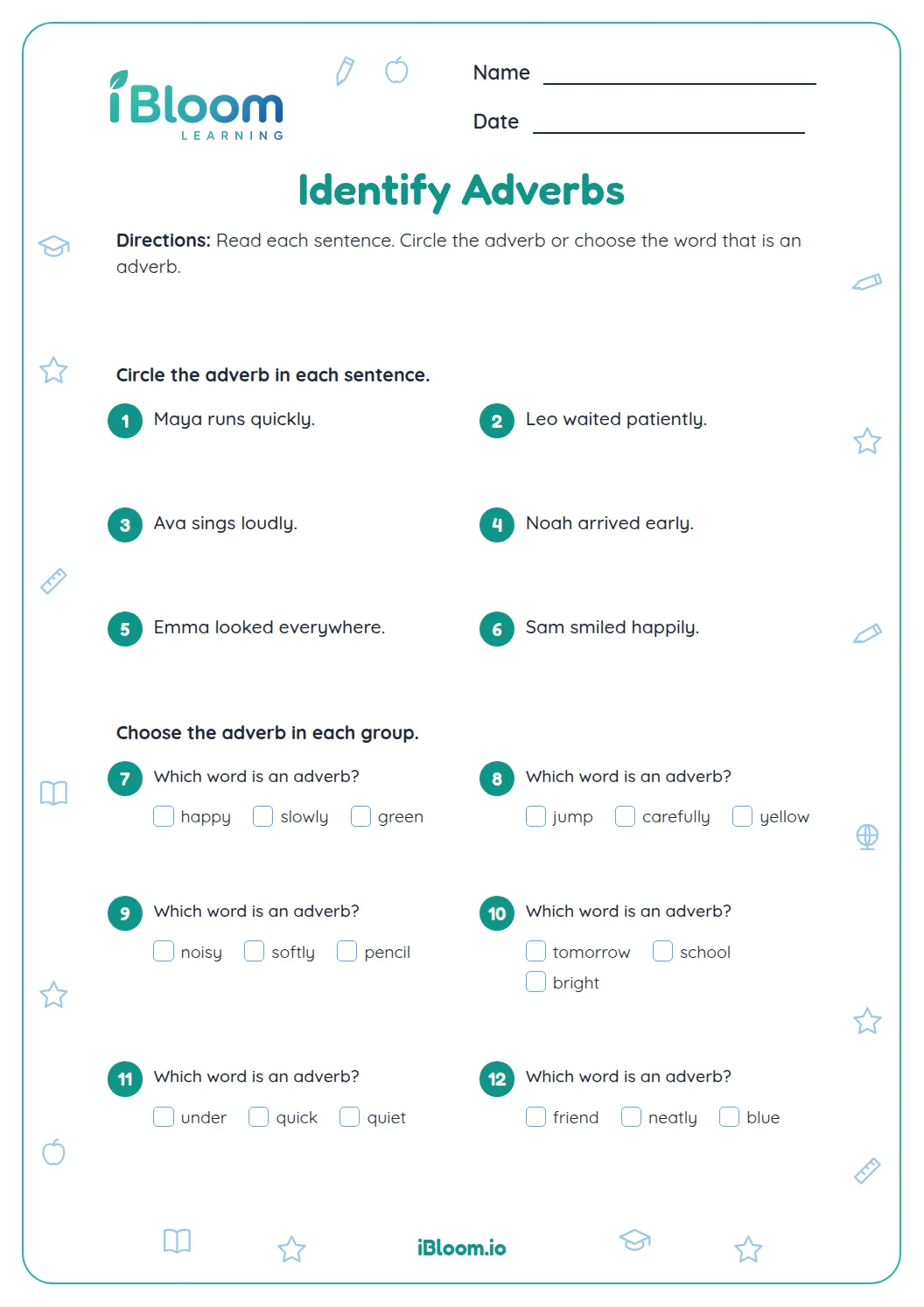
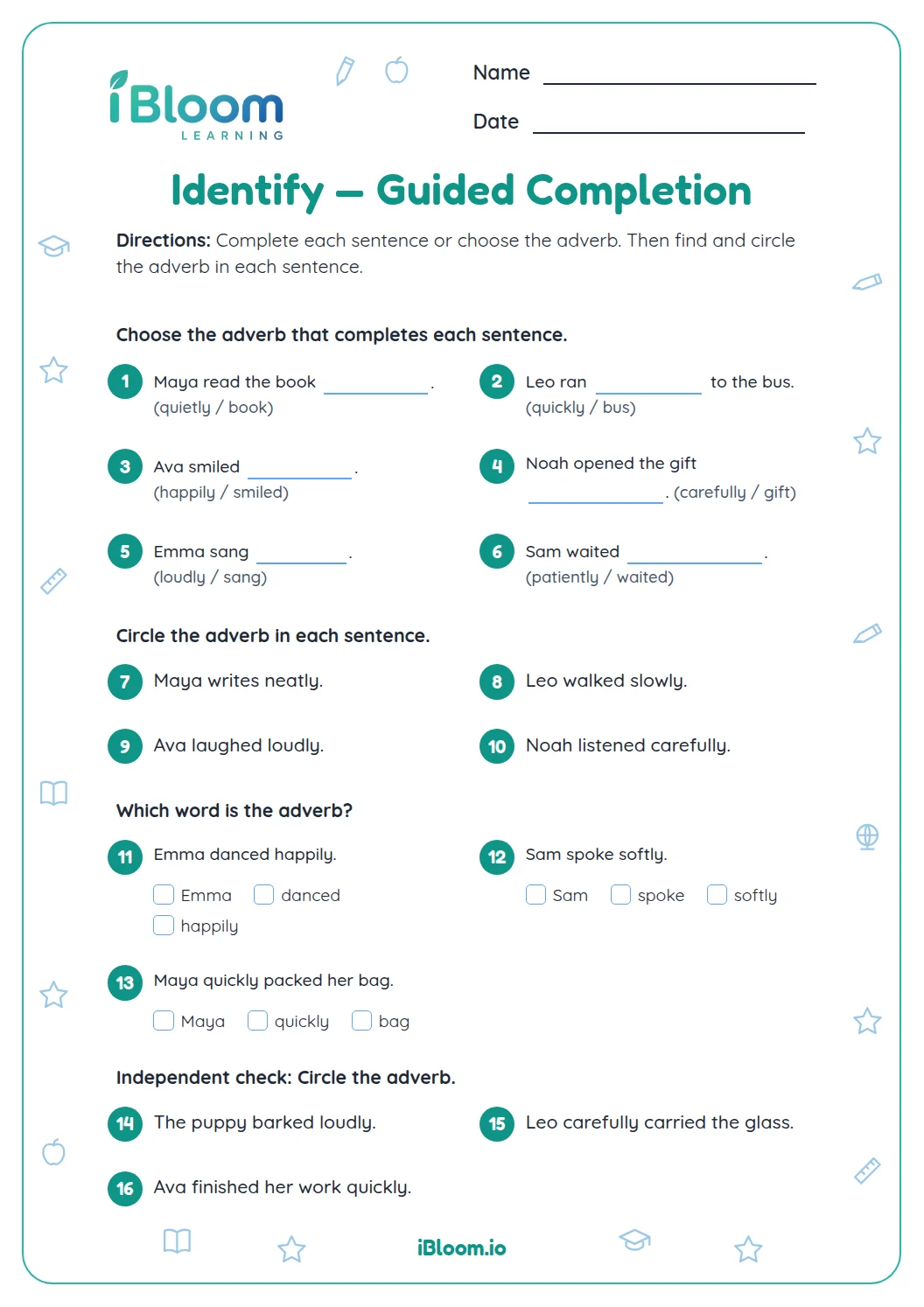
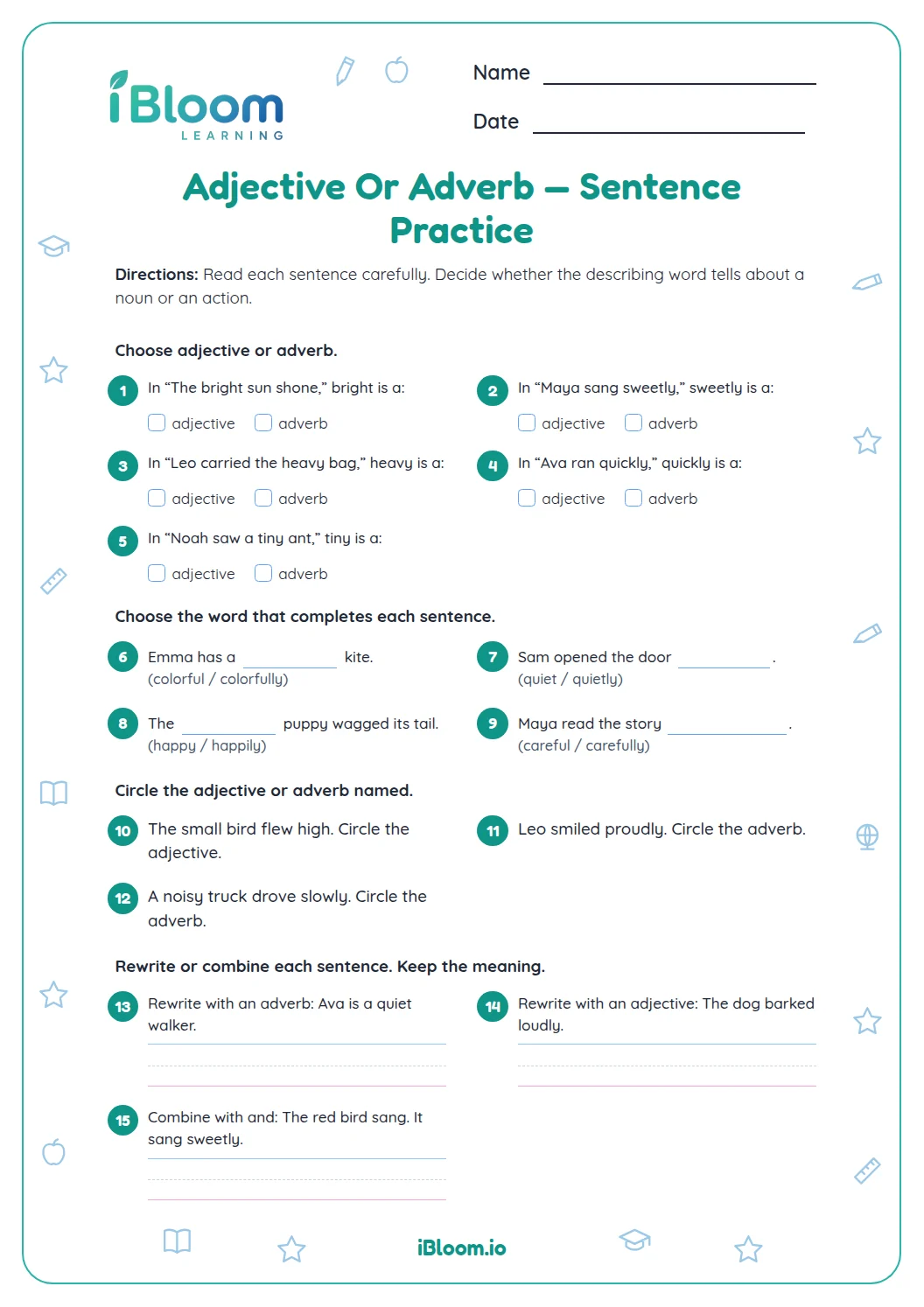
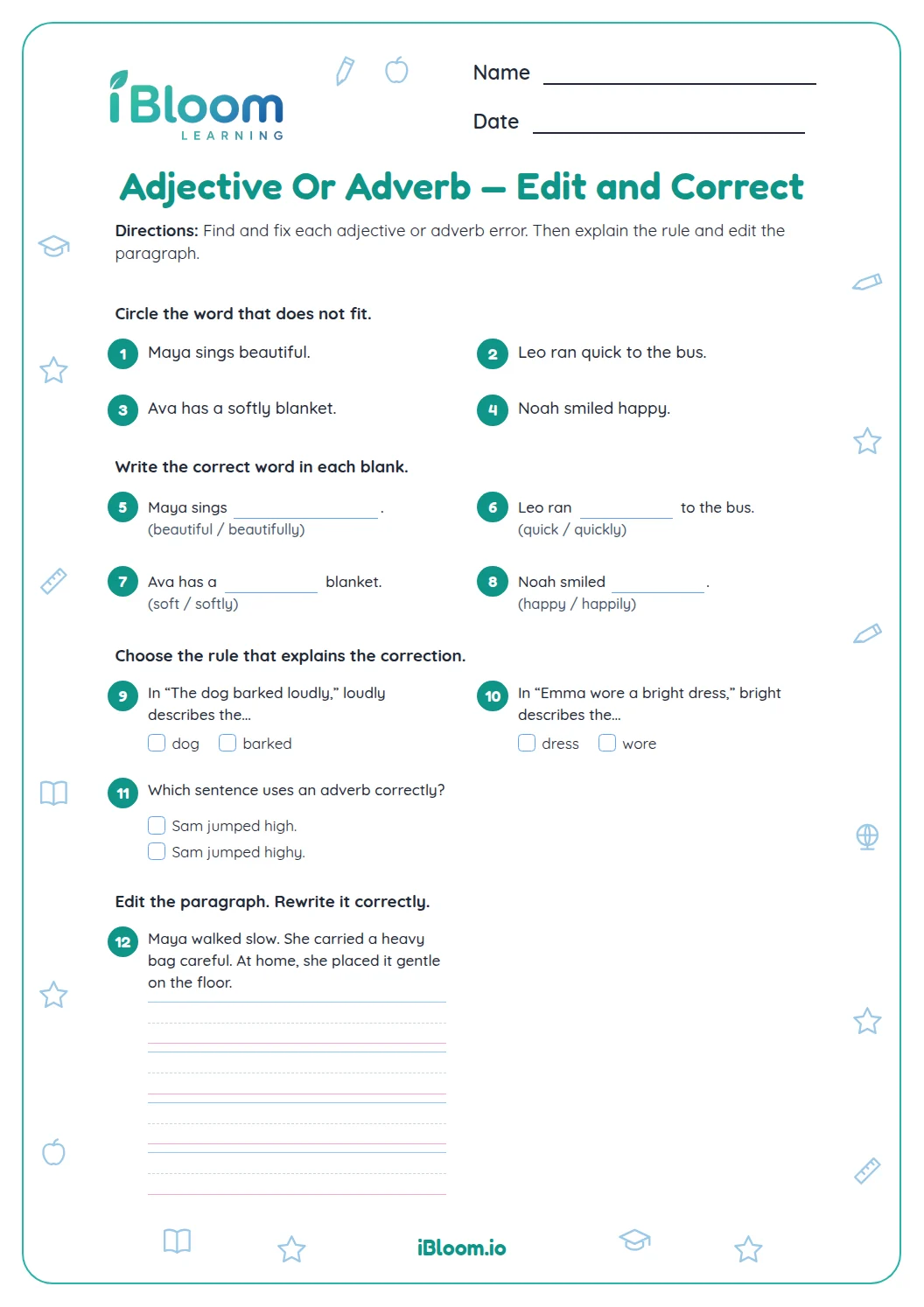
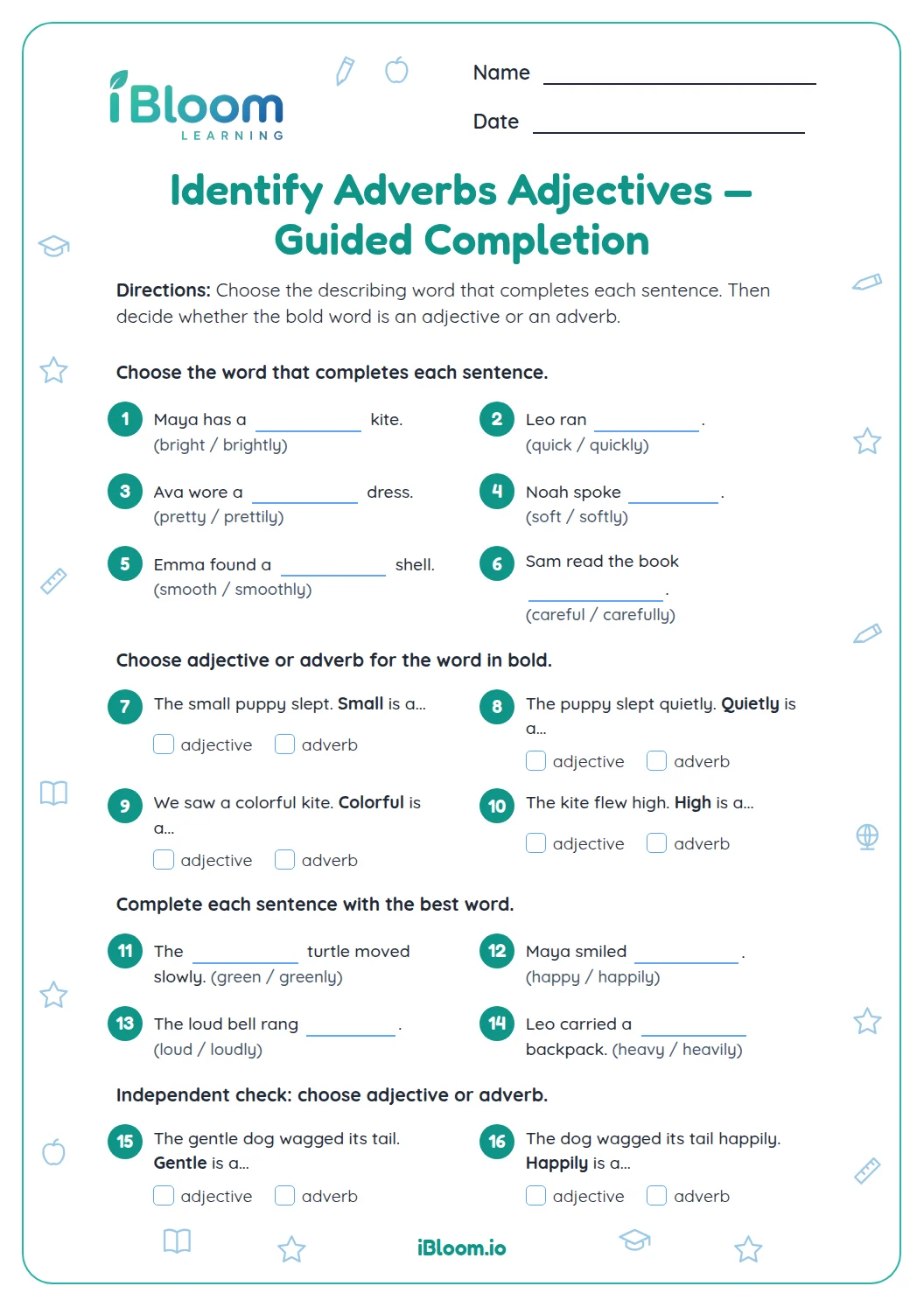
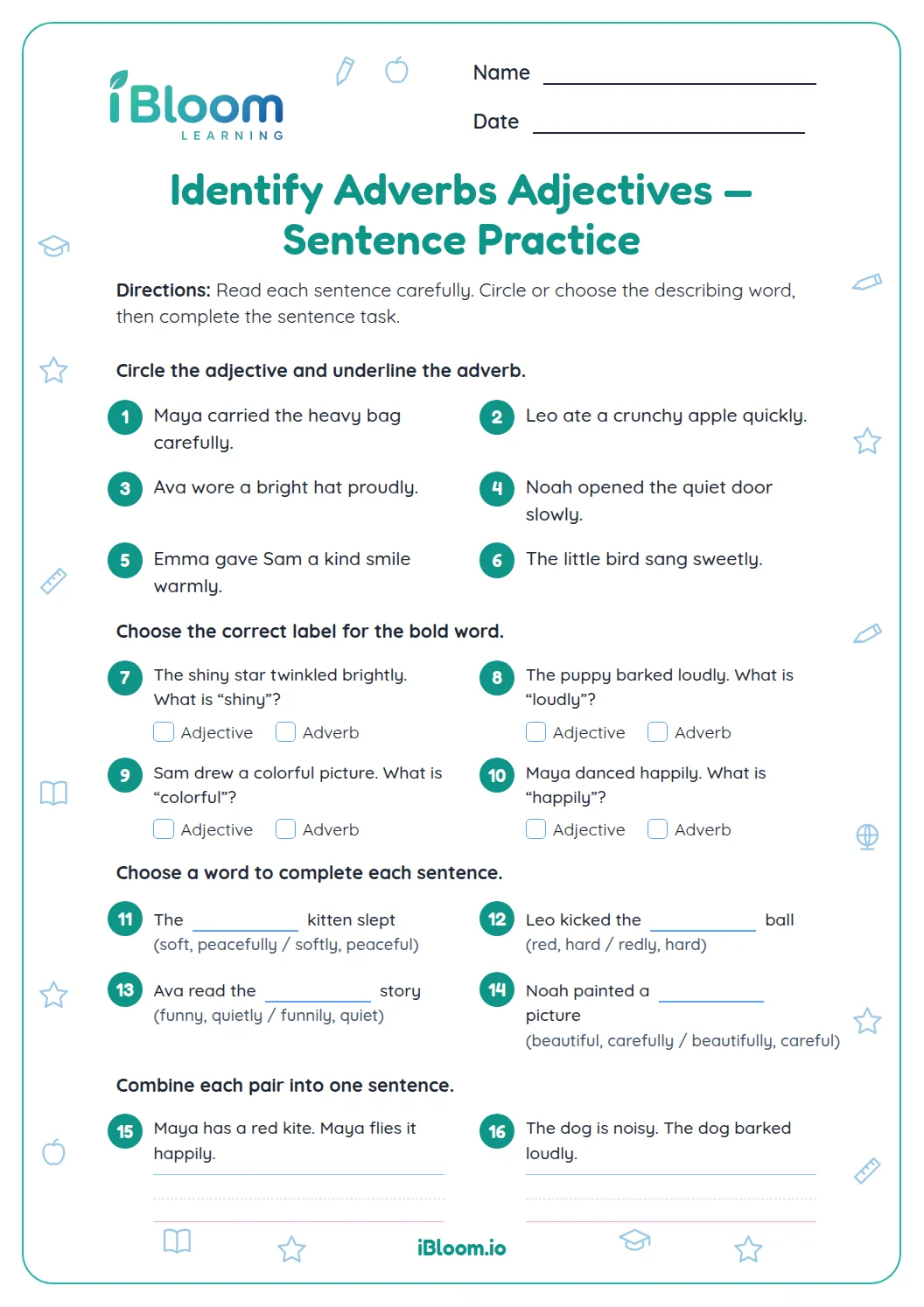
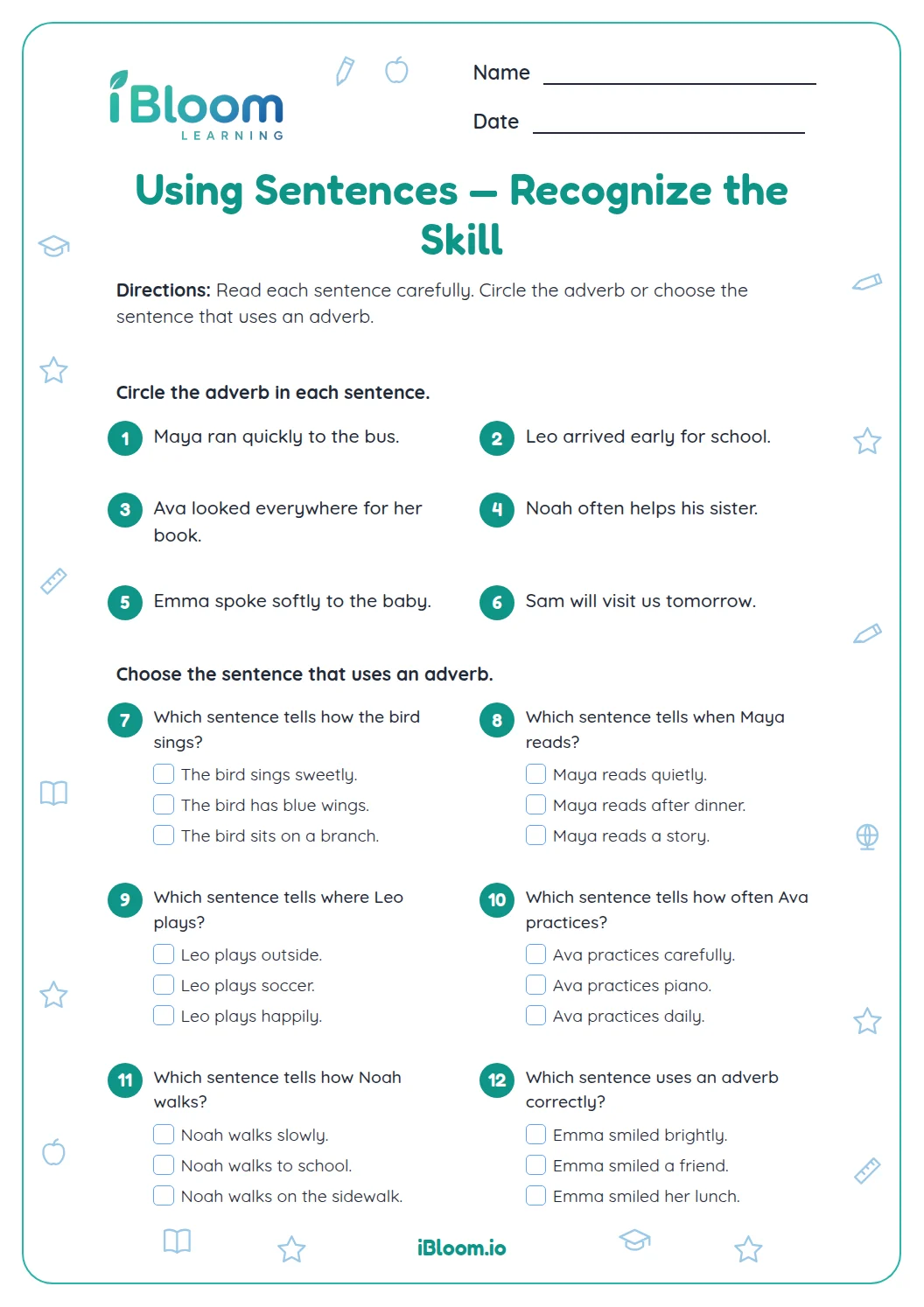
This Grade 2 adverb worksheet asks students to identify words that tell how, when, or where; distinguish adverbs from adjectives; and choose clear sentence revisions. The answer key marks each correct choice. The practice aligns with CCSS L.2.1.e, choosing adjectives and adverbs based on what each word modifies.
Aligned to L.2.1.e
How can you spot an adverb?
Ask whether a word tells how, when, or where an action happens. Then check that it gives information about the verb. In question 1, quickly tells how the rabbit hopped.
- 1The rabbit hopped quickly over the log.
- 2How did it hop?
- 3Answer: quickly
How is an adverb different from an adjective?
An adjective describes a noun, while an adverb can describe an action. In “The horse ran quickly,” quickly tells how the horse ran; quick could describe the horse.
How can an adverb make a sentence clearer?
An adverb adds information about an action. Students choose a revision that fits the sentence: “The class read quietly” tells how the class read.
How to use this worksheet
- 1Find the action word in the sentence.
- 2Ask how, when, or where the action happens.
- 3Test the likely adverb beside the action.
- 4Check whether an adjective is describing a noun instead.
- 5For writing prompts, choose an adverb that clearly answers one of the three questions.
Common mistakes and quick fixes
The mistake
Choosing an adjective that describes a person or thing.
The fix
Ask whether the word describes a noun or tells about the action.
The mistake
Assuming every word ending in -ly is an adverb.
The fix
Check the word’s job in the sentence and what it modifies.
The mistake
Writing an adverb that does not make sense with the action.
The fix
Read the full sentence and make sure the adverb answers how, when, or where.
Common Core alignment
The sentences give students practice choosing adjectives and adverbs based on what each word modifies.
Use adjectives and adverbs based on the word each one modifies.
On this sheet: Students identify and use adverbs that give details about actions.
Show the official wordingHide the official wording
Use adjectives and adverbs, and choose between them depending on what is to be modified.
What to practice next
Make more practice
Further reading
Questions parents and teachers ask
What can an adverb tell a reader?
An adverb can tell how, when, or where an action happens, or give information about its degree. In “The rabbit hopped quickly,” quickly tells how the rabbit hopped. Some adverbs do not end in -ly, such as away and tomorrow.
How is an adverb different from an adjective?
An adjective describes a noun, while an adverb can describe an action. Compare “a slow turtle” with “the turtle moved slowly.” The questions ask students to identify the word’s job in a sentence, including when an adjective or adverb form is offered.
What kinds of sentences appear?
Students find adverbs in short sentences, choose a word that completes a sentence, compare sentence choices, and revise sentences by adding words such as quietly, tomorrow, and outside. The contexts name the action so students can connect each adverb to the verb.
Does every adverb end in -ly?
No. Quickly and carefully end in -ly, but outside, away, tomorrow, and early do not. The worksheet includes these forms so students look at what the word tells about the action instead of relying only on a spelling pattern.
What is in the answer key?
The answer key marks the correct adverb or sentence choice for each item. In question 14, gently tells how the door closed. Students can use the key to review why the chosen word fits the action and whether a word describes a noun or a verb.
How many questions are on the printable?
The worksheet has 14 questions in four parts: identifying adverbs, choosing in context, revising sentences, and applying an adverb. It renders as two worksheet pages plus a separate two-page key. Students can use the key to check each selection and compare their sentence completions with its model.