






About this worksheet
This Grade 2 writing printable helps students practice short messages and letters to a teacher. Part A asks students to recognize useful greetings, closings, reasons and questions. Part B edits lines for punctuation and clarity. Part C offers four short writing tasks with model responses in the answer key.
Aligned to W.2.5
What belongs in a message to a teacher?
A short message usually names its purpose and includes enough detail for the teacher to respond. A greeting and a closing make the note courteous. A question should end with a question mark.
- 1“I am writing to ask about our class book.”
- 2This sentence gives the reason for writing.
How can students revise a draft?
Read the message once for meaning, then check punctuation and missing details. In a question about homework, naming the page or assignment makes it easier for the teacher to answer.
What makes a note sound polite?
Use a courteous request, such as “Could I please…” or “May I…?” Add a thank-you when it fits. Keep the message focused on one purpose so the important question is easy to find.
How can students work through the page?
- 1Decide why you are writing.
- 2Choose a greeting that fits the reader.
- 3Write the question or information in a complete sentence.
- 4Add a useful detail if it helps the reader respond.
- 5Check capitals and end marks.
- 6Close politely and sign your name.
Common mistakes and quick fixes
The mistake
Leaving out the question mark.
The fix
Read the sentence aloud; use ? when asking something.
The mistake
Writing a vague request such as “I need help.”
The fix
Name the subject, page, or item you need help with.
The mistake
Using a greeting as the closing.
The fix
Start with Dear… and end with Sincerely or Your student.
Students revise teacher messages for clarity, punctuation, and useful details.
On this sheet:
Show the official wordingHide the official wording
With guidance and support from adults and peers, focus on a topic and strengthen writing as needed by revising and editing.
What to practice next
Make more practice
Further reading
Questions parents and teachers ask
How many prompts require original writing?
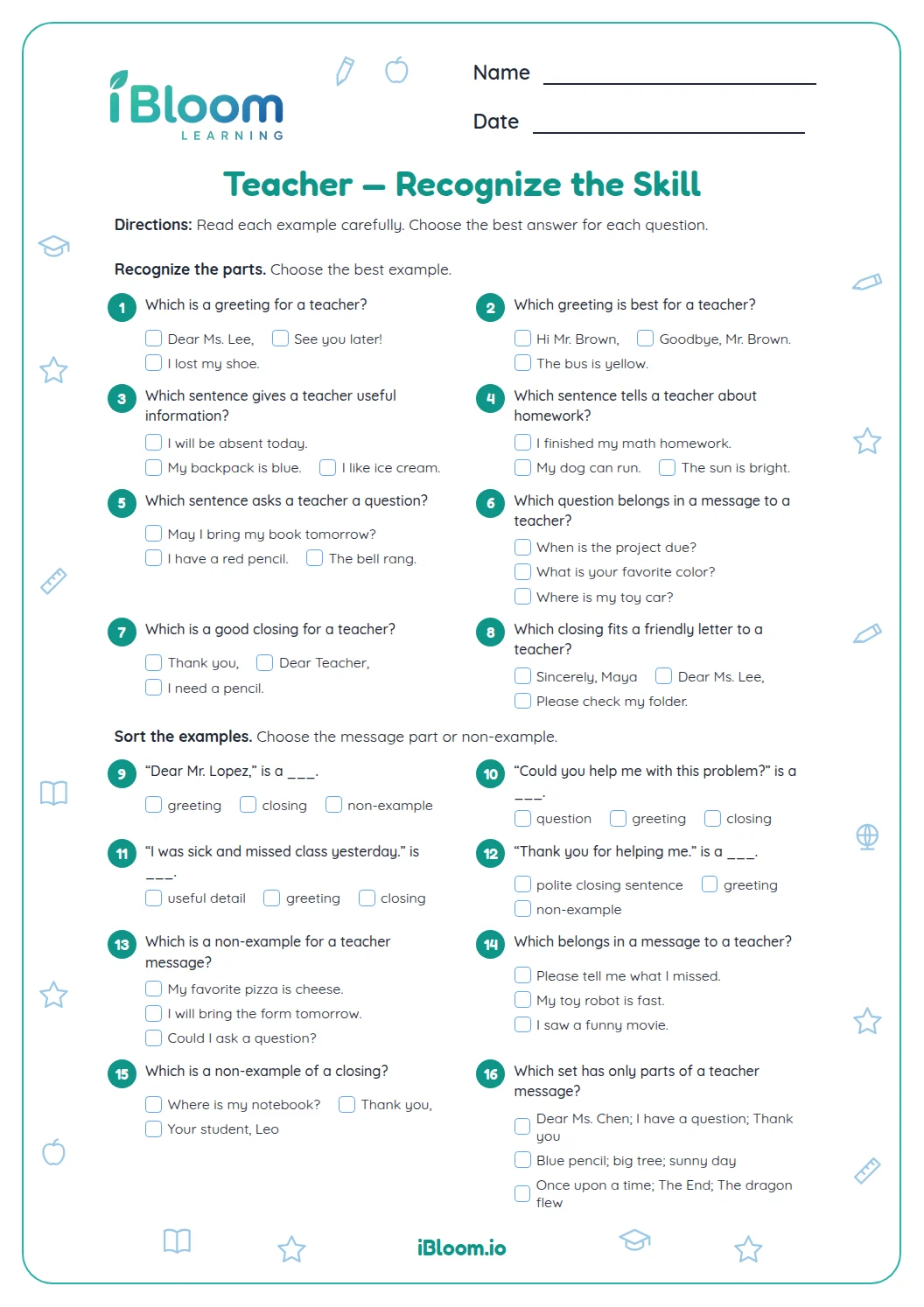
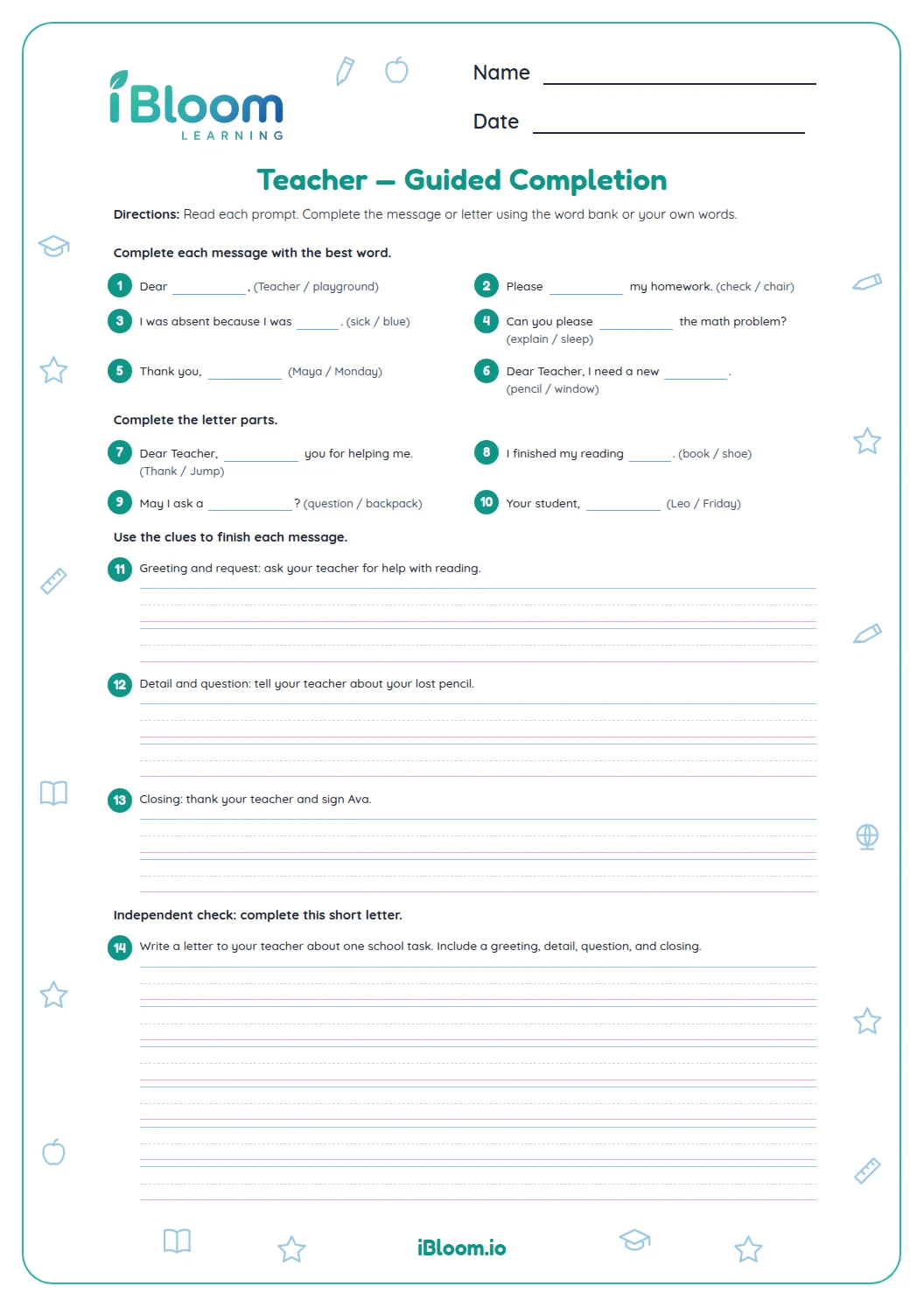
This printable helps Grade 2 students write clear, polite messages to a teacher. The 16 questions cover greetings, closings, punctuation, useful details, and short notes. The answer key gives sample messages; students may use different names or wording while keeping the requested parts.
Does the answer key give one required wording?
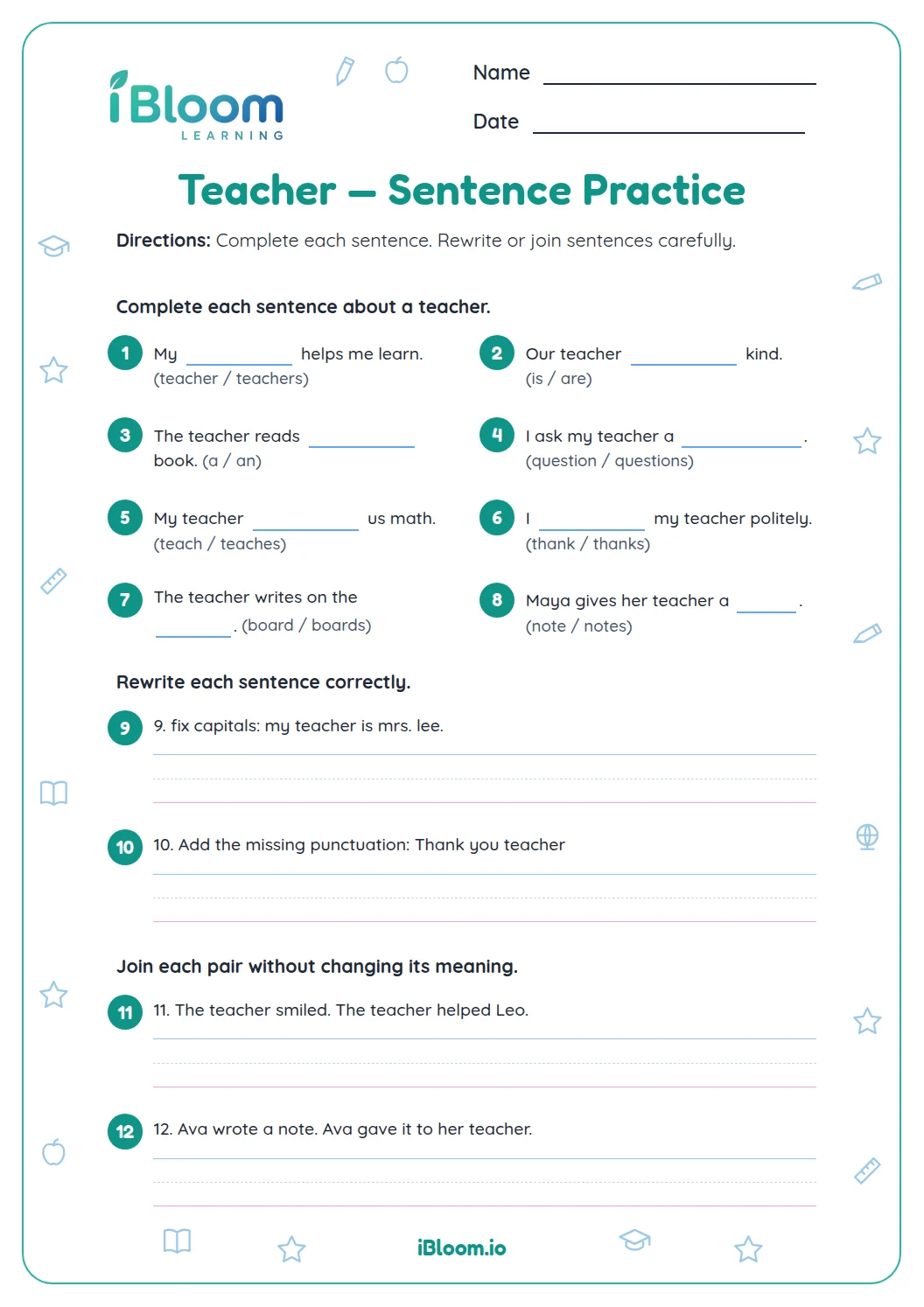
The printable has 16 questions across three worksheet pages, plus a separate answer key. Early questions identify useful parts of a teacher message; later questions revise lines and write short notes. The key provides models for open-ended responses, so wording may vary.
What parts should a short teacher note include?
A useful teacher message names its purpose and includes the detail needed for a reply. This sheet asks students to make requests politely, add a relevant detail, and arrange a greeting, message, and closing. The answer key accepts clear alternatives for open responses.
Should students use a formal letter format?
A question mark belongs after a direct question, while a statement takes a period. Students also add commas to greetings and closings. Read the line aloud and check whether it asks something or tells something before choosing an end mark.
How can a child make a request sound polite?
The writing prompts ask students to use a greeting, state a clear purpose, and include a closing or relevant detail. Encourage a complete sentence and reread each note to check whether a teacher could understand the request. The key provides sample messages.