



About this worksheet
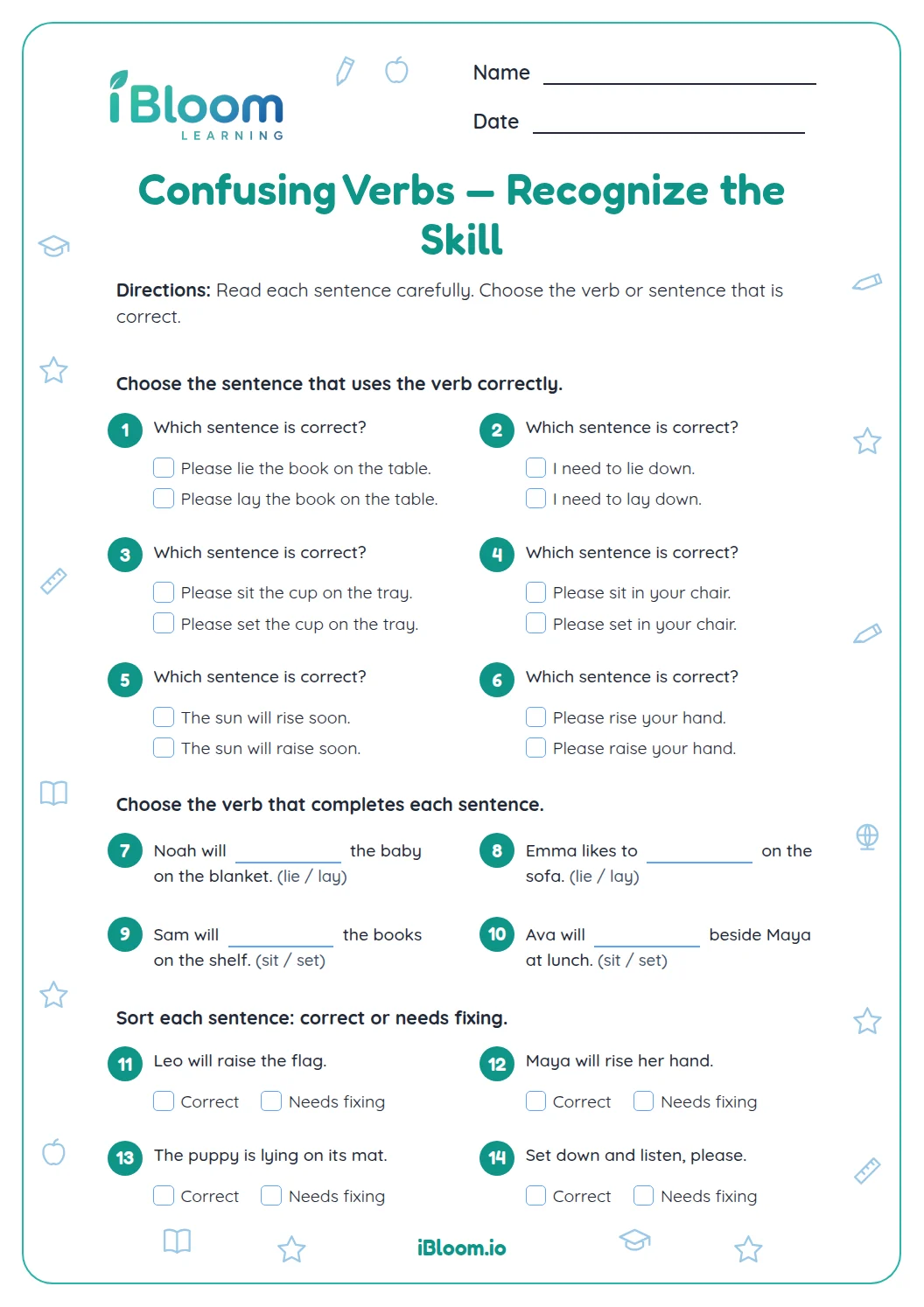
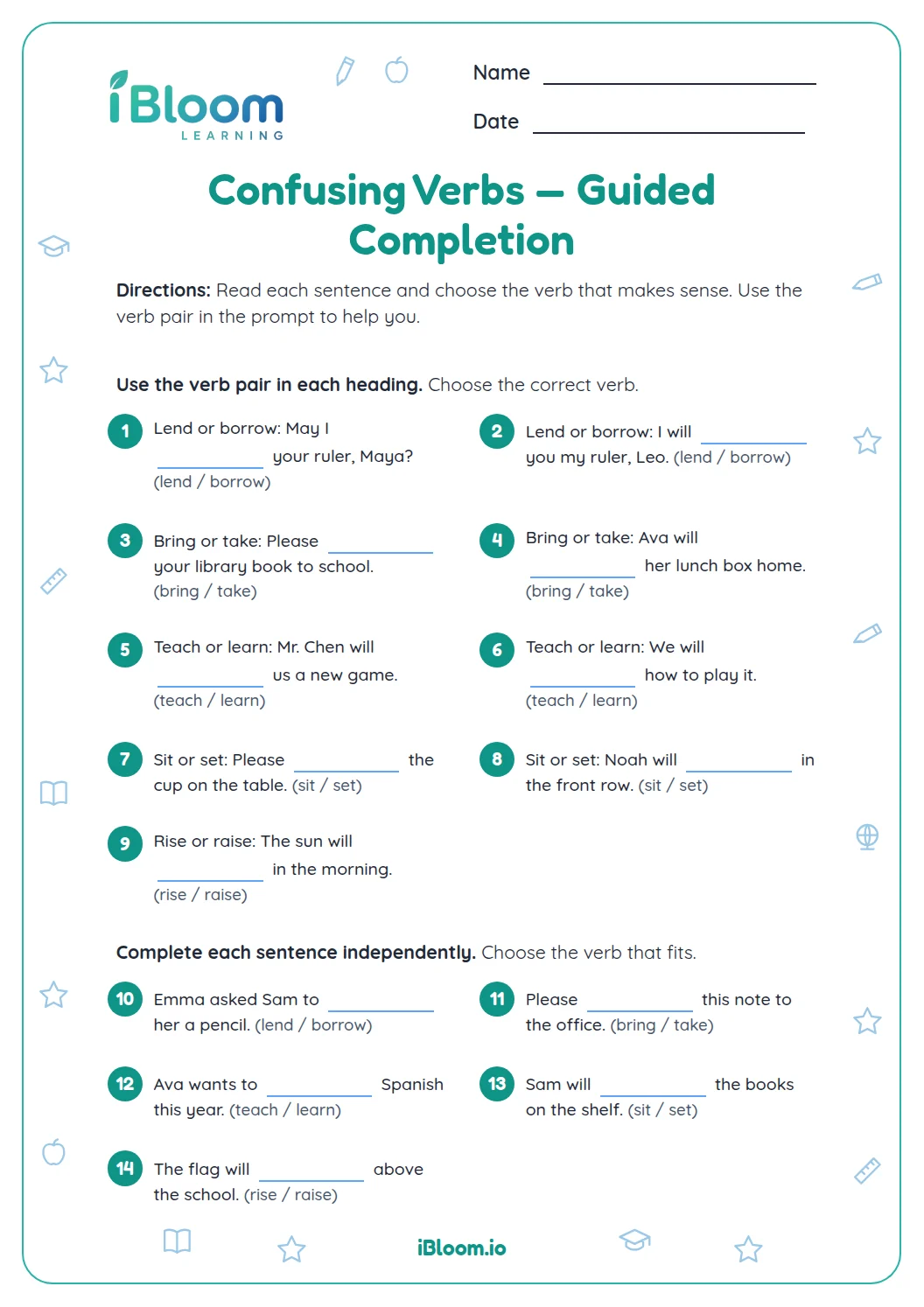
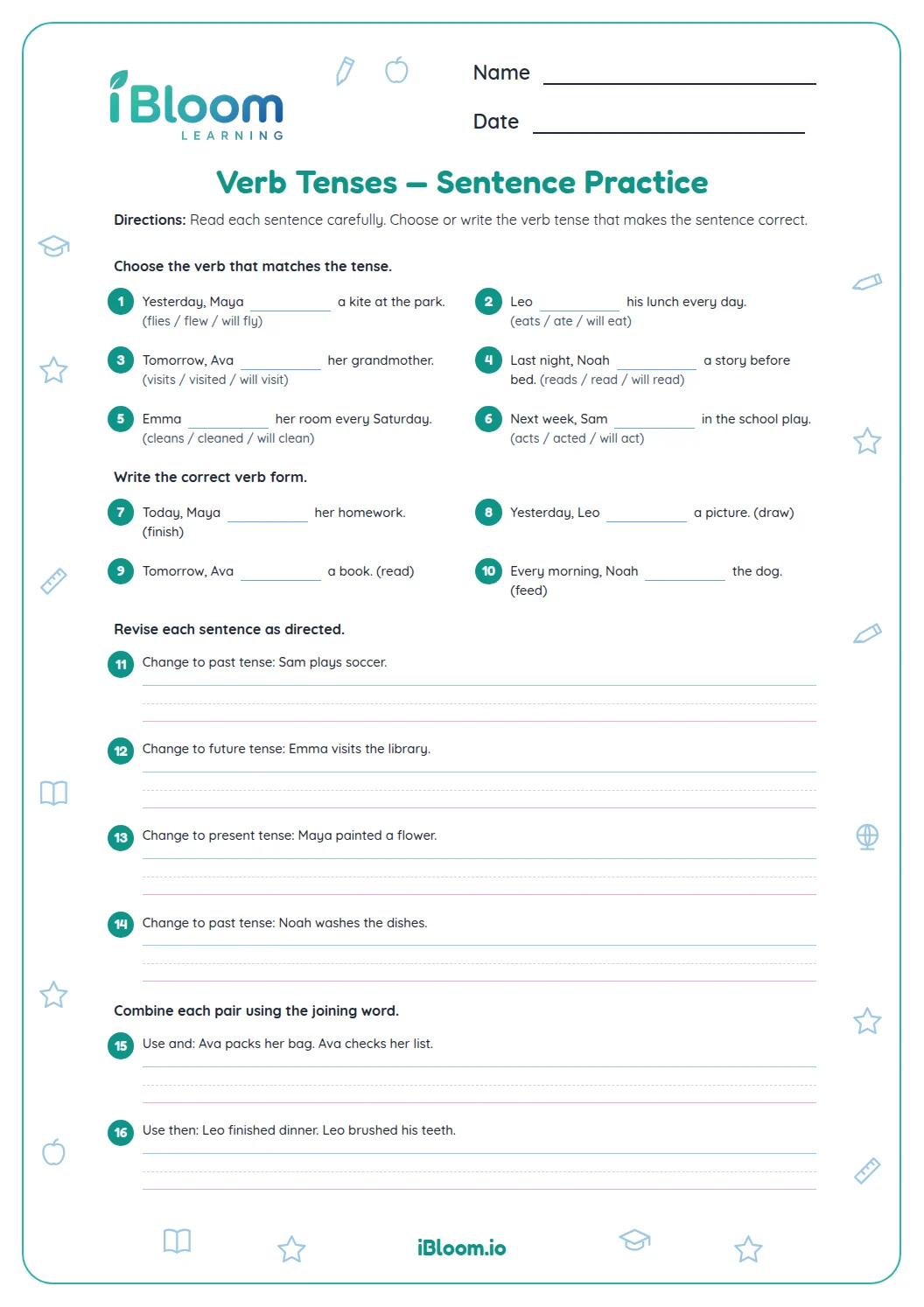
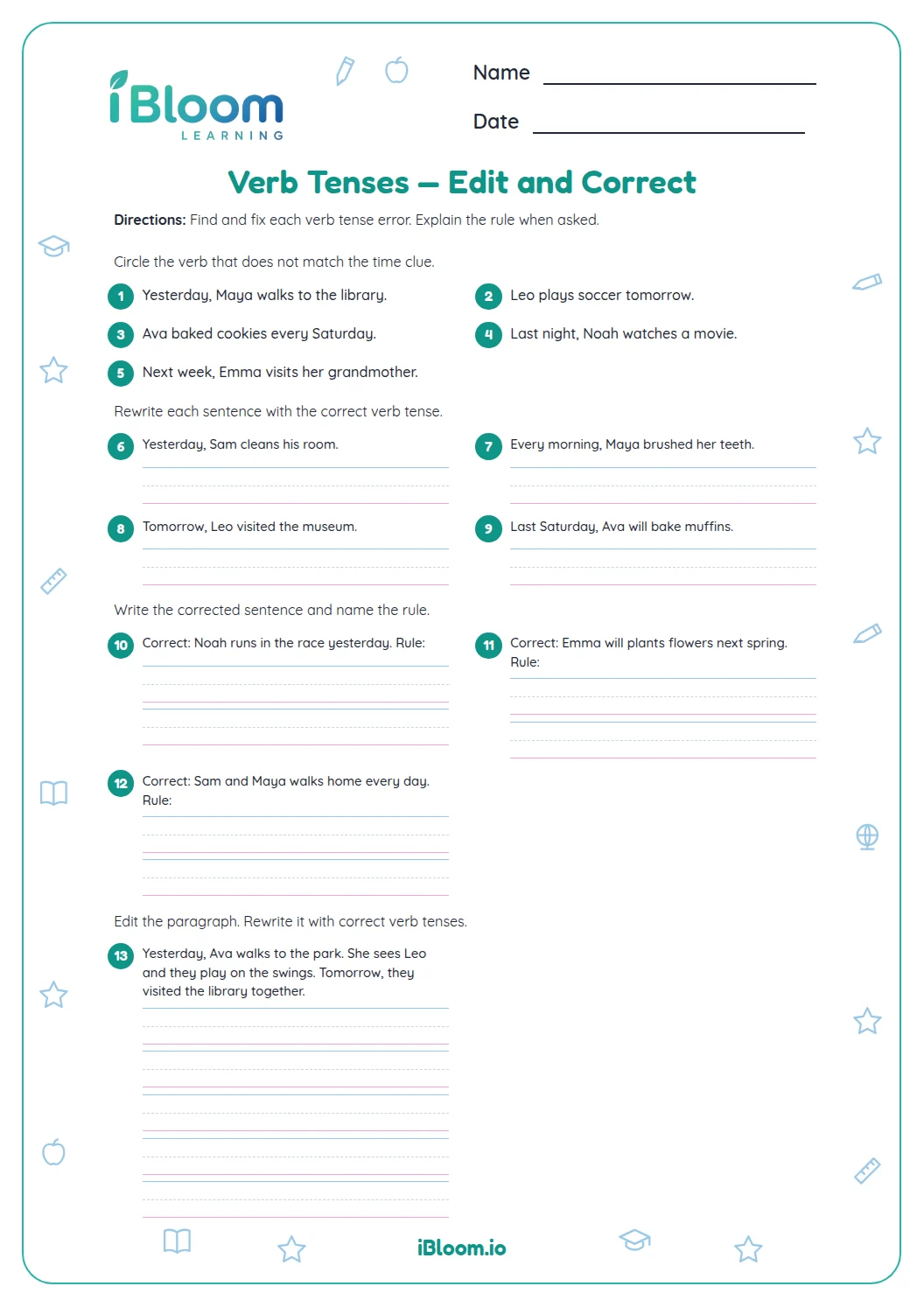
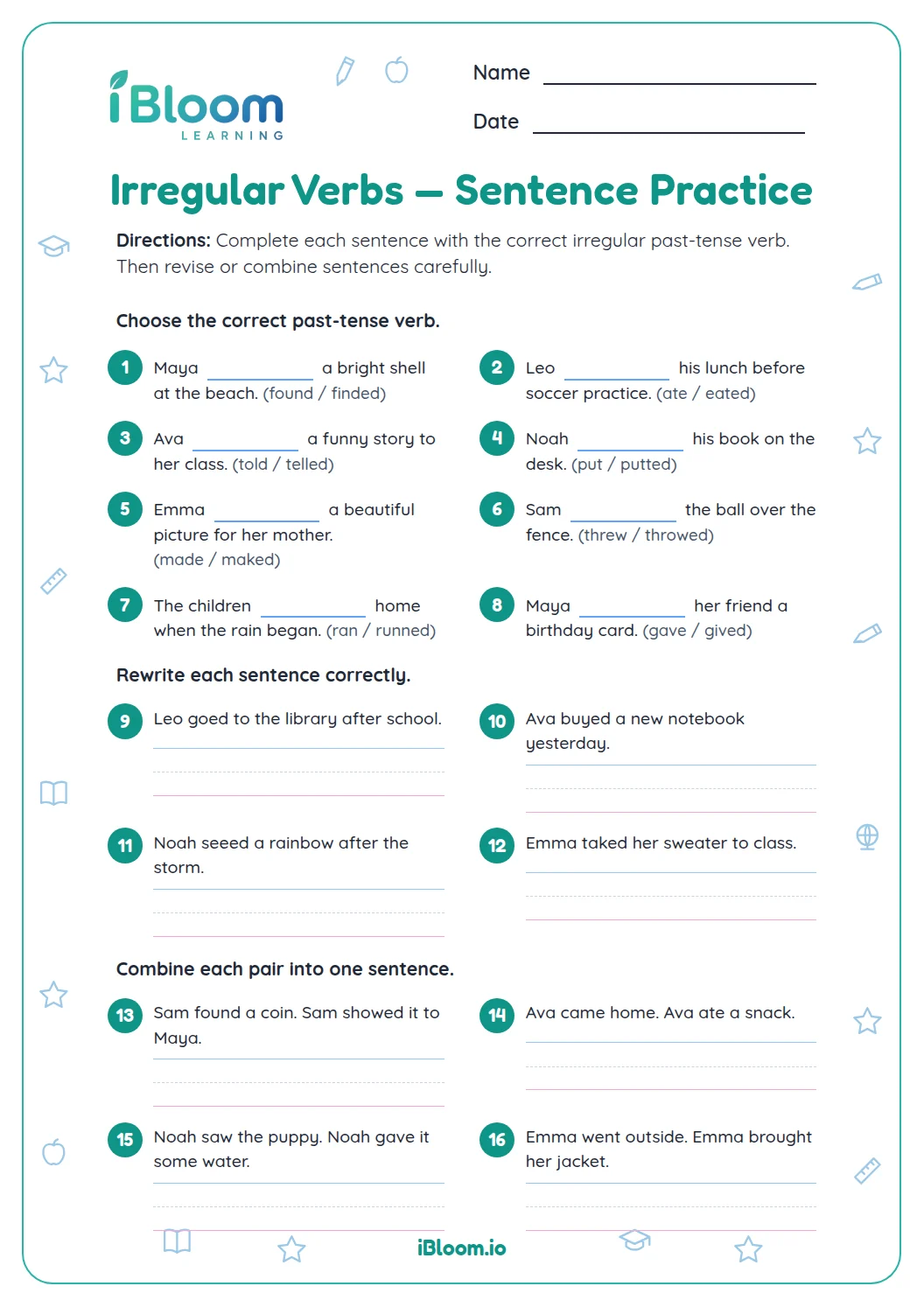
This Grade 3 printable gives learners 16 chances to tell apart confusing verbs and use the correct verb form. Part A asks them to select a word that fits the meaning of a sentence; Part B completes past-tense forms; Part C revises or writes a sentence. It practices CCSS L.3.1 by applying grammar and usage conventions in writing and speaking. The worksheet is followed by a separate answer key.
Aligned to L.3.1
How does the sentence help choose a verb?
A confusing verb pair can sound alike or have forms that are easy to mix up. Reading the whole sentence helps the learner decide what action or meaning is needed. In Part A, the clue may be a time word such as “yesterday” or the person receiving an idea.
- 1Lena ___ the ball to Max.
- 2A ball can be thrown to someone.
- 3Answer: throws
How do verb forms show when something happened?
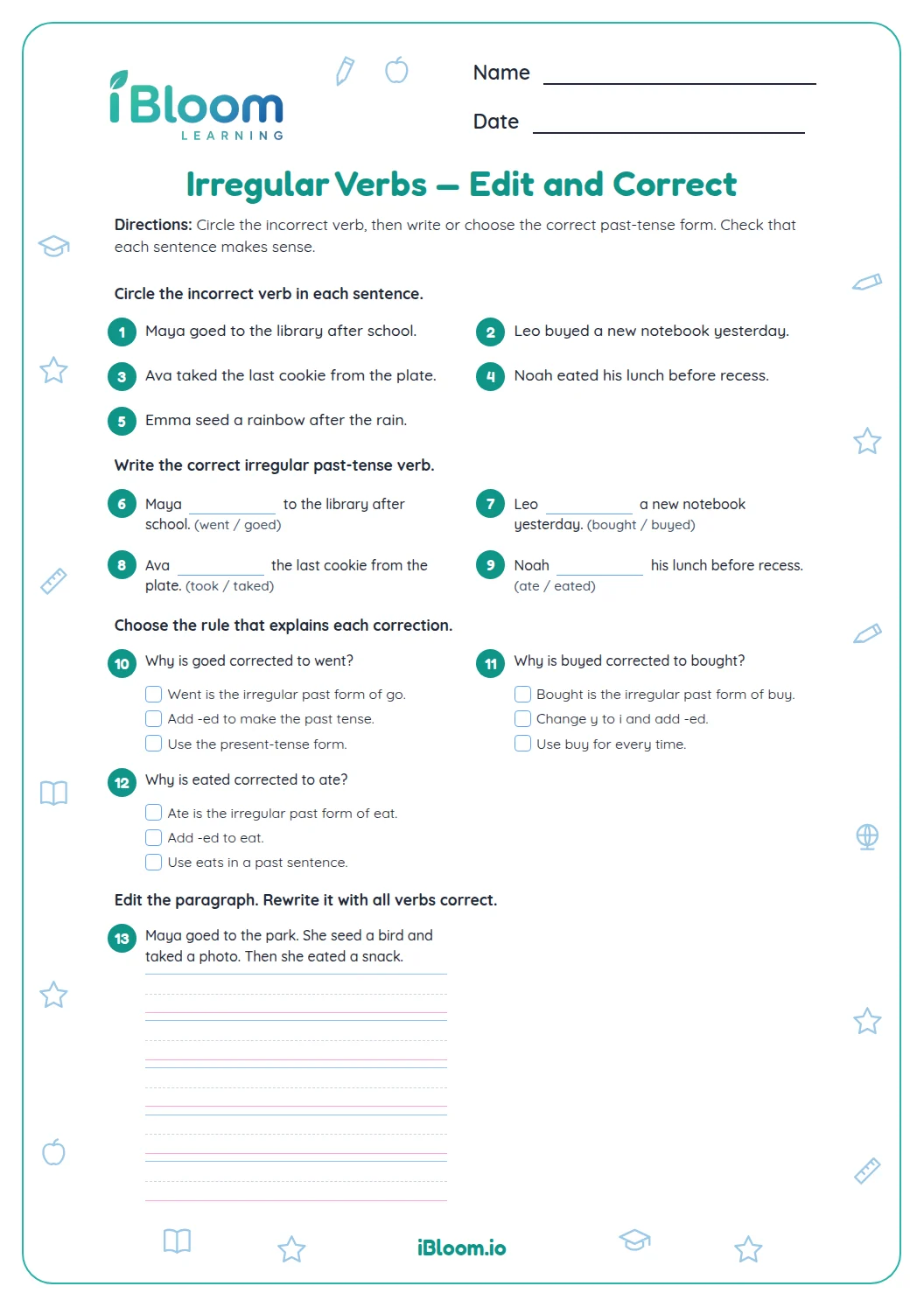
Past-tense verbs do not all follow the same pattern. The past form of see is saw, bring is brought, choose is chose, and go is went. Learners use the words in parentheses and the sentence clue to write the form that fits.
What will learners do in the final part?
Part C asks learners to correct a verb in a sentence and then write a sentence with saw. These tasks ask them to carry the same word knowledge into their own writing. The answer key gives a sample; a different sentence can be correct if it uses the verb accurately.
How to use this worksheet
- 1Read each sentence all the way through.
- 2In Part A, say what the subject is doing before choosing.
- 3In Part B, use the time clue and write the verb form.
- 4In Part C, replace the incorrect verb and reread the sentence.
- 5Check with the key; accept other accurate sentences for question 16.
Common mistakes and quick fixes
The mistake
Choosing by sound without checking meaning.
The fix
Ask what action the sentence describes, then try the verb.
The mistake
Using a present form after a past-time clue.
The fix
Look for words such as yesterday or last Friday.
The mistake
Changing a word but leaving the sentence unclear.
The fix
Read the whole revised sentence aloud to check its meaning.
Common Core alignment
Use verbs in the right form to make clear sentences.
On this sheet: Learners choose and use verbs accurately in sentences.
Show the official wordingHide the official wording
Demonstrate command of the conventions of standard English grammar and usage when writing or speaking.
What to practice next
Make more practice
Further reading
Questions parents and teachers ask
What does this confusing verbs worksheet practice?
It gives Grade 3 learners varied practice with choosing verbs by meaning and completing irregular past-tense forms. Each part builds on the idea introduced earlier, and the prompts use familiar contexts. The answer key follows the printable pages so an adult can review each response and discuss any answer that needs another look.
How many questions are on the worksheet?
There are 16 questions arranged in several parts, moving from recognition to application. The printable includes a separate answer key with answers and sample responses. A learner can complete one part at a time and check work after finishing the section.
How should I help if a learner gets stuck?
Ask the learner to reread the whole prompt and name the clue that matters. Then compare the answer with the key and talk through the step that led to it. For a missed item, try a similar example aloud before returning to the worksheet.
Can I use this in class or at home?
Yes. Print the worksheet pages and keep the answer key for checking. Learners can work independently or read the directions and questions with a teacher or family member. The short sections also make it easy to pause and review a strategy before moving on.
What is the best way to check answers?
Use the key after the learner completes a part. For written responses, look for the idea named in the sample answer; wording can vary when the meaning is clear. Ask the learner to point to the clue or step that supports the answer.