


About this worksheet
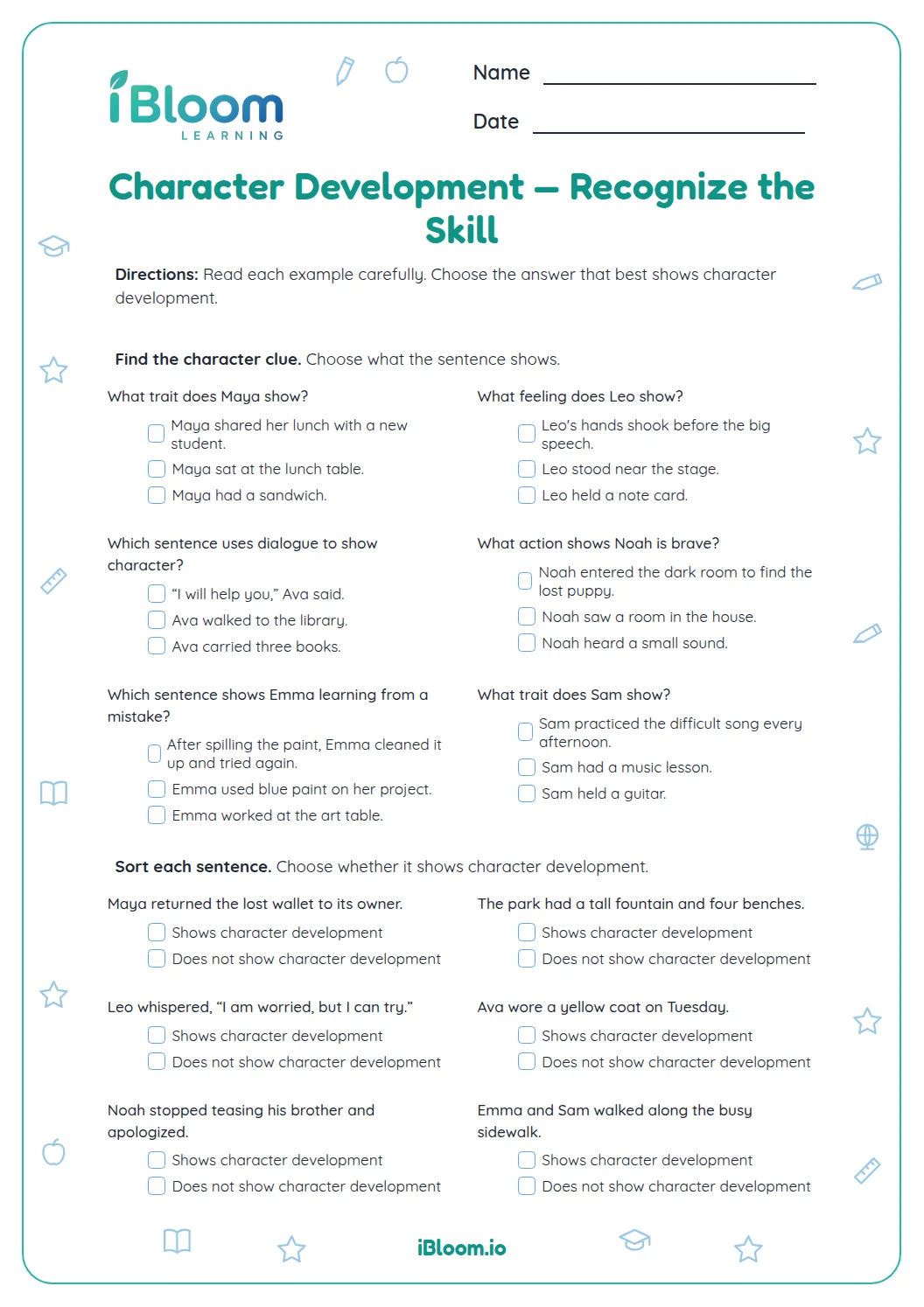
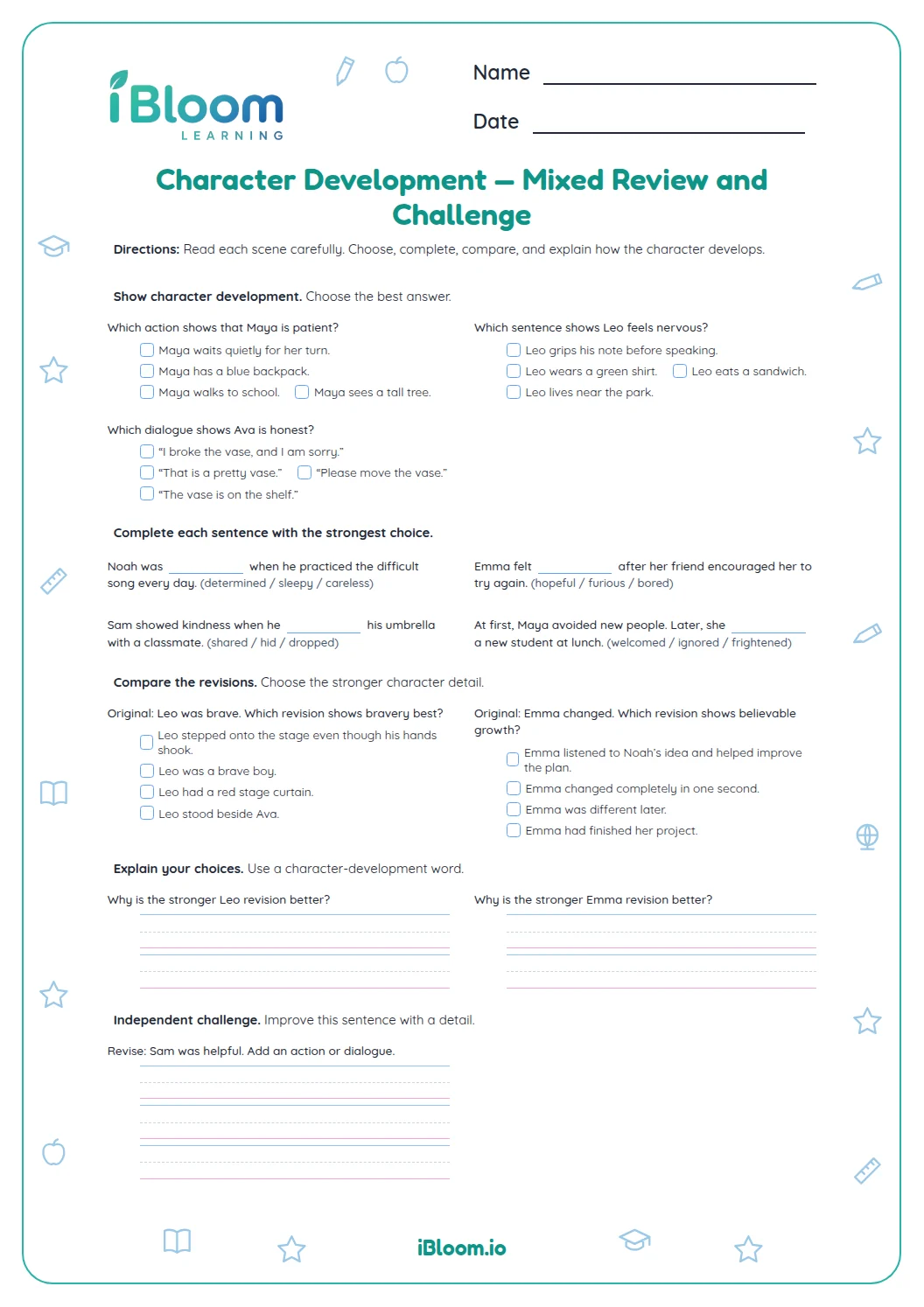
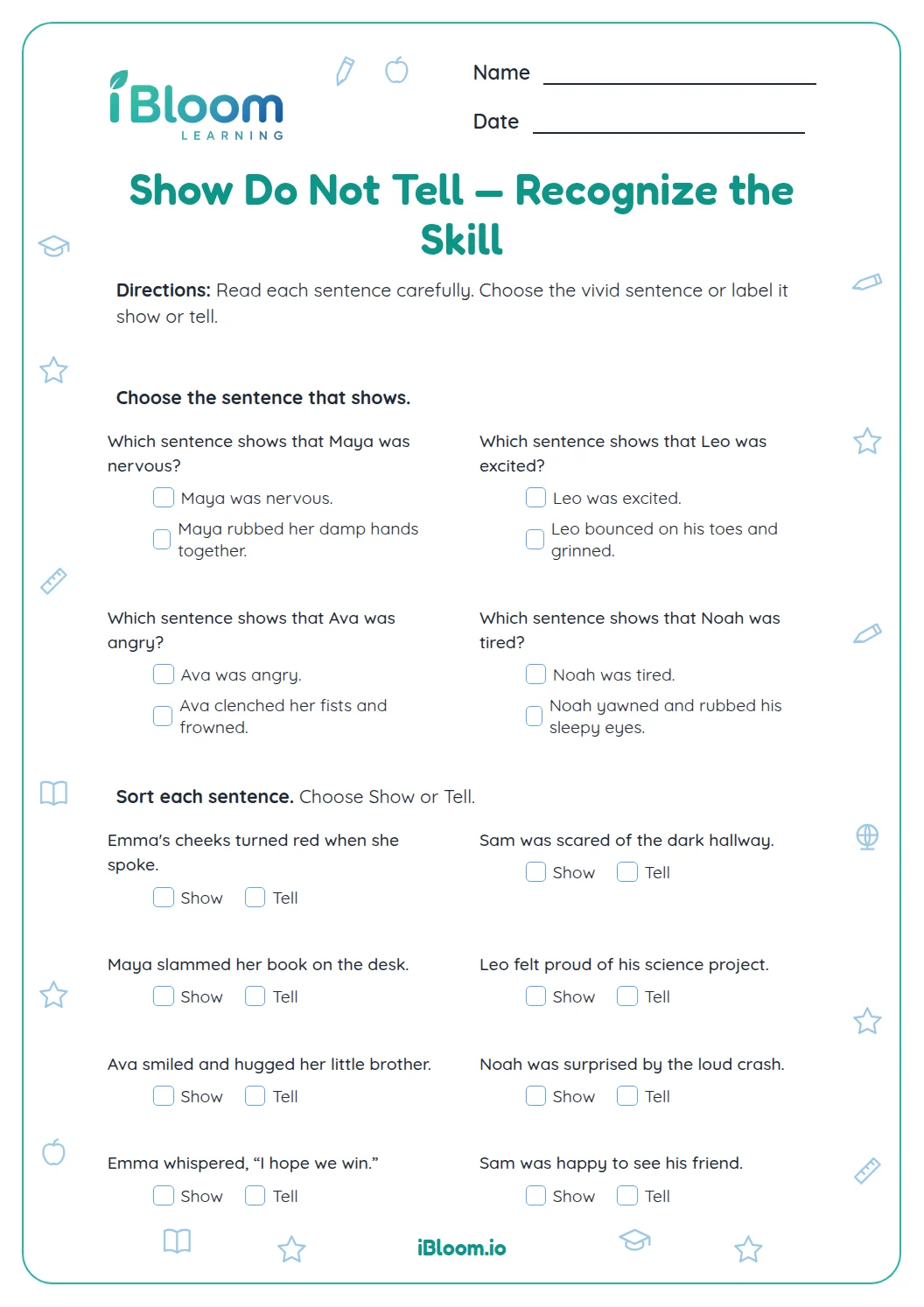
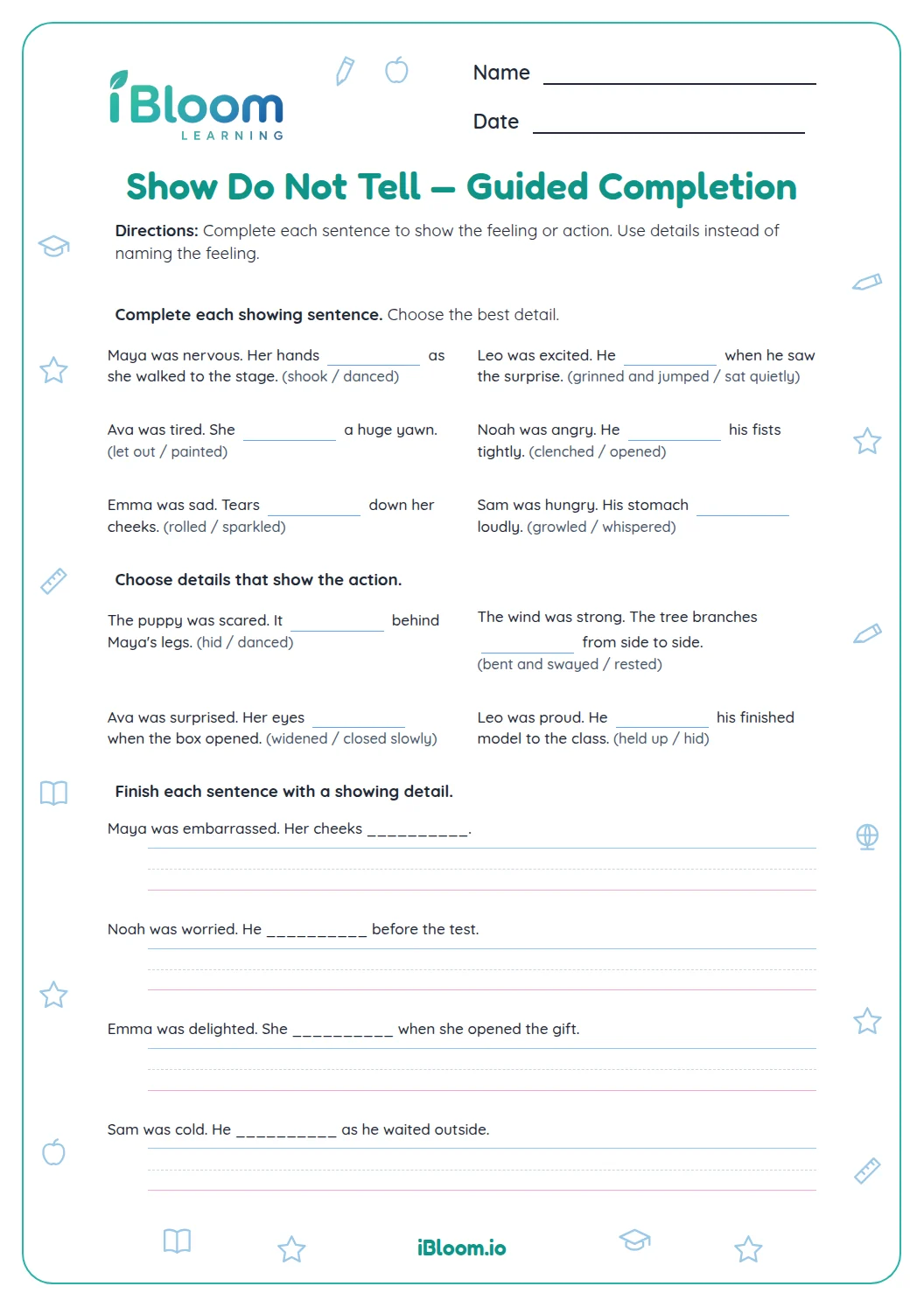
This Grade 4 narrative writing worksheet starts with character choices and traits, then asks learners to complete six details and write two short responses showing a character through action or dialogue. The prompts revisit the old sheet’s planning and paragraph-writing approach in a more guided sequence. A separate answer key includes fixed answers and sample responses.
How do actions reveal a character trait?
A writer can show a trait through what a character chooses to do. Returning a lost wallet suggests honesty because the person gives it back rather than keeping it. Readers infer the trait from the detail instead of being told the character is honest.
- 1A student returns a lost wallet. Which trait fits?
- 2The choice shows honesty.
- 3Answer: honest
How does the worksheet build toward writing?
Part A asks learners to choose a trait supported by a character detail. Part B completes six action or dialogue examples. The final two questions ask for short writing that shows a character through a mistake, a choice, or words.
How can a writer make a character feel clear?
Ask what the character wants, what the character does, and what that action suggests. In the open responses, one specific action or line of dialogue can reveal more than naming a trait alone.
How to use this worksheet
- 1Read the character detail carefully.
- 2Choose a trait that the action or words support.
- 3For a sentence blank, check that the completed detail makes sense.
- 4For the two writing prompts, choose one clear character and situation.
- 5Show a trait through an action or line of dialogue.
- 6Reread and check that the detail makes the intended trait clear.
Common mistakes and quick fixes
The mistake
Naming a trait that the detail does not support.
The fix
Point to the character’s specific choice and connect it to the trait.
The mistake
Using a trait label without showing evidence in writing.
The fix
Add an action, thought, or line of dialogue that demonstrates the trait.
The mistake
Writing a change without showing what caused it.
The fix
Include the mistake or challenge and the character’s response afterward.
What to practice next
Make more practice
Questions parents and teachers ask
How can a writer show a character trait?
A writer can show a trait through a choice, action, or line of dialogue. Returning a lost wallet suggests honesty because the character decides to return it. On the final prompts, students practice making a trait visible through a short written example.
What kinds of questions are included?
There are 14 questions: six multiple-choice trait inferences, six sentence completions, and two written responses. The sequence moves from noticing what a character does to creating a brief example of action, dialogue, or growth. The final responses let students apply the skill in their own writing.
What should students write for the last two questions?
Each final prompt asks for two sentences. One shows a character learning from a mistake; the other reveals a trait through dialogue or action. The key gives sample responses, but students may write different examples that make the character detail clear.
Are all answers fixed?
The first 12 items have a concise intended answer in the key. The last two are open responses, so use the samples as models: accept writing that follows the prompt and uses an action or words to make the character’s trait or change understandable.
How can an adult support the writing?
Ask the learner to name the trait first, then think of a small action that would let a reader infer it. For a growth scene, ask what the character learned and what the character does differently afterward. Keep the response focused on one moment.