






About this worksheet
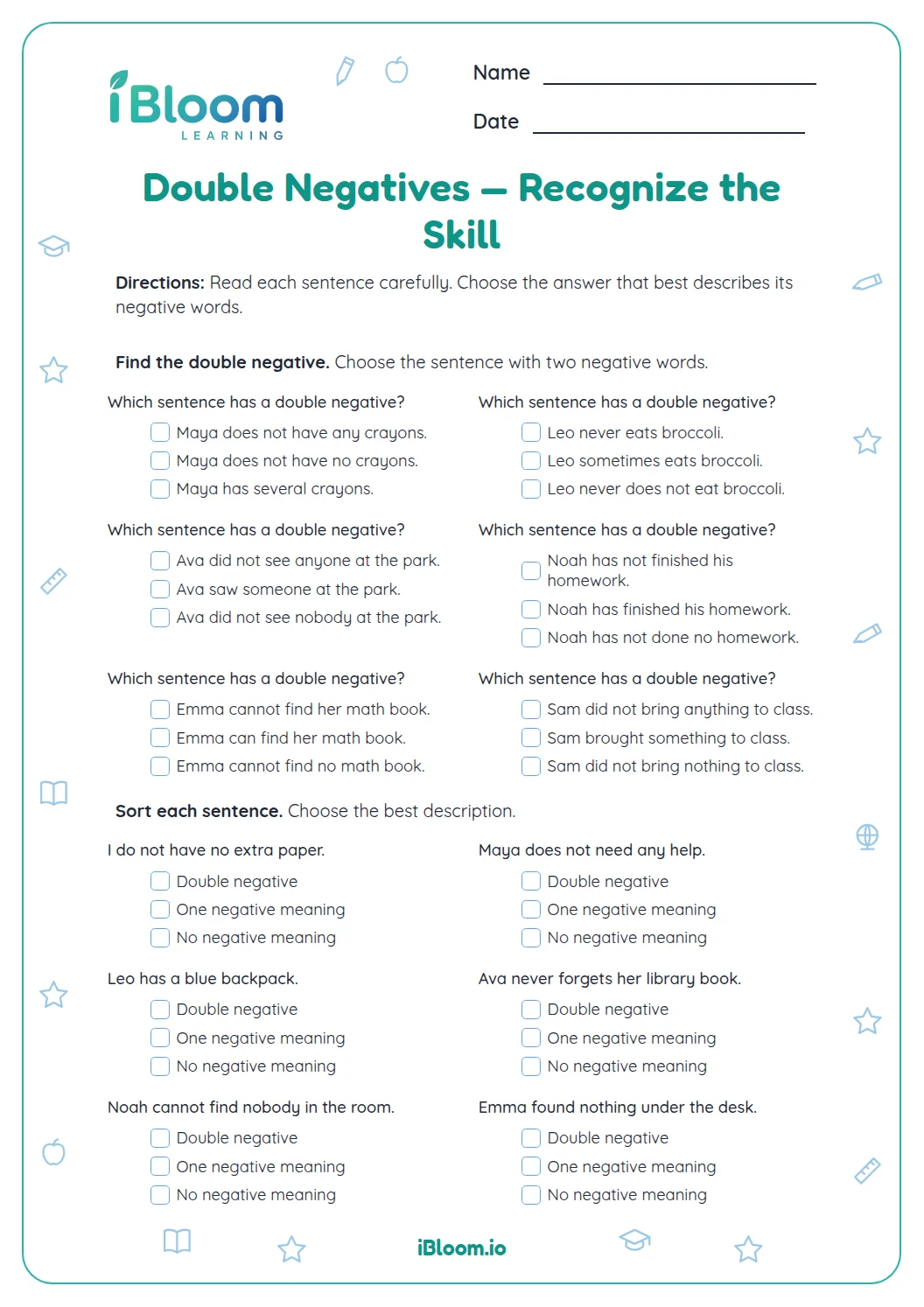
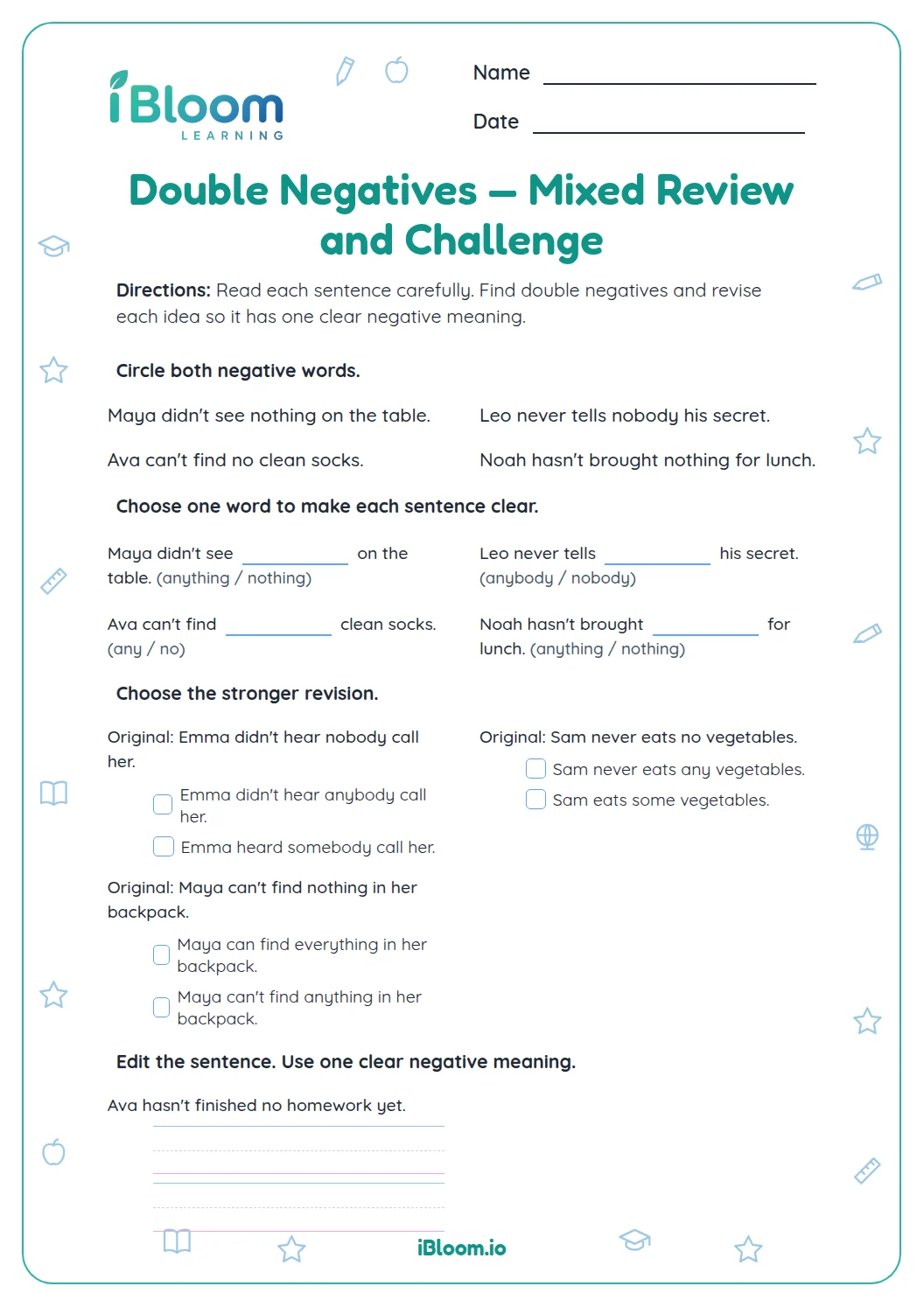
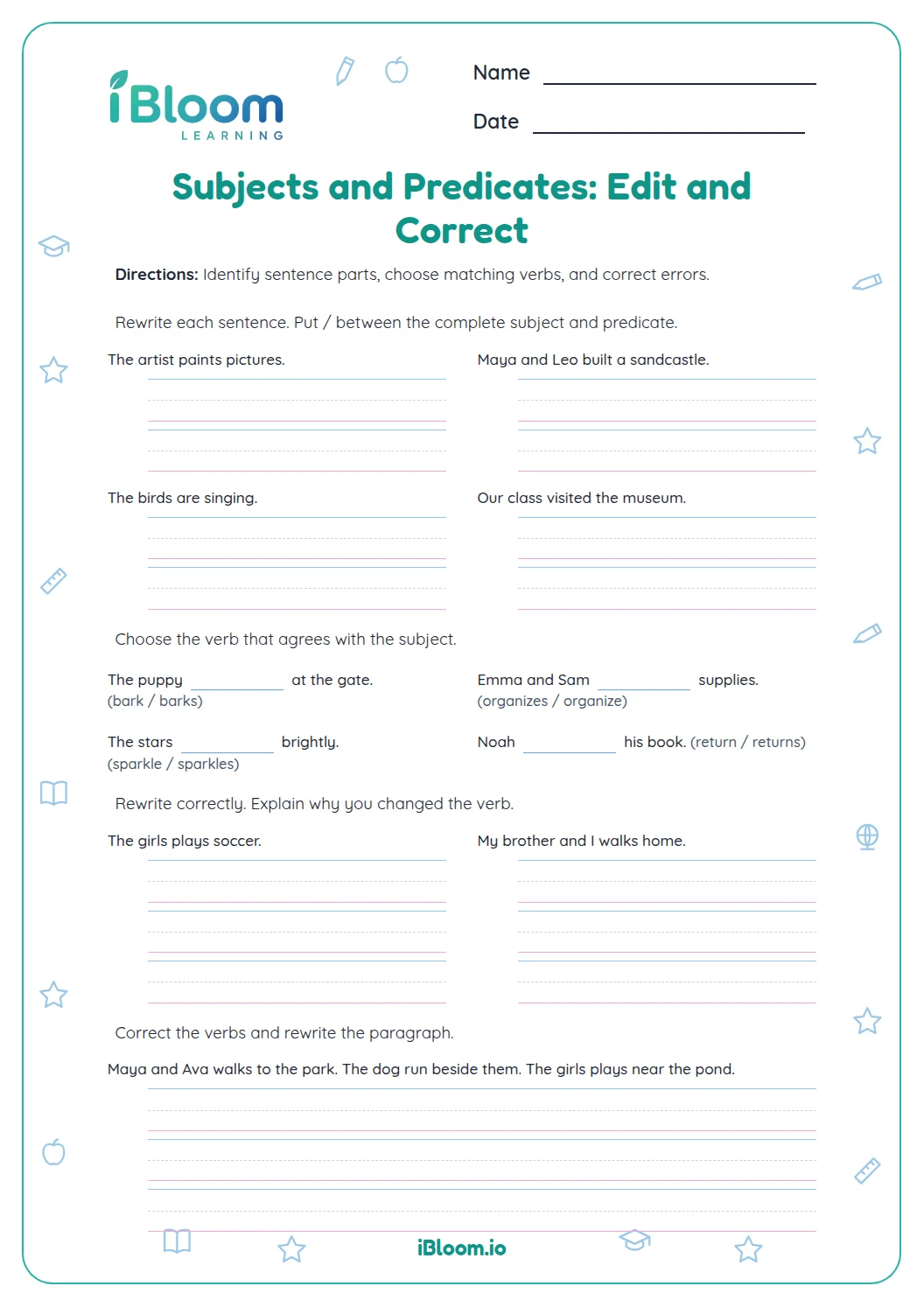
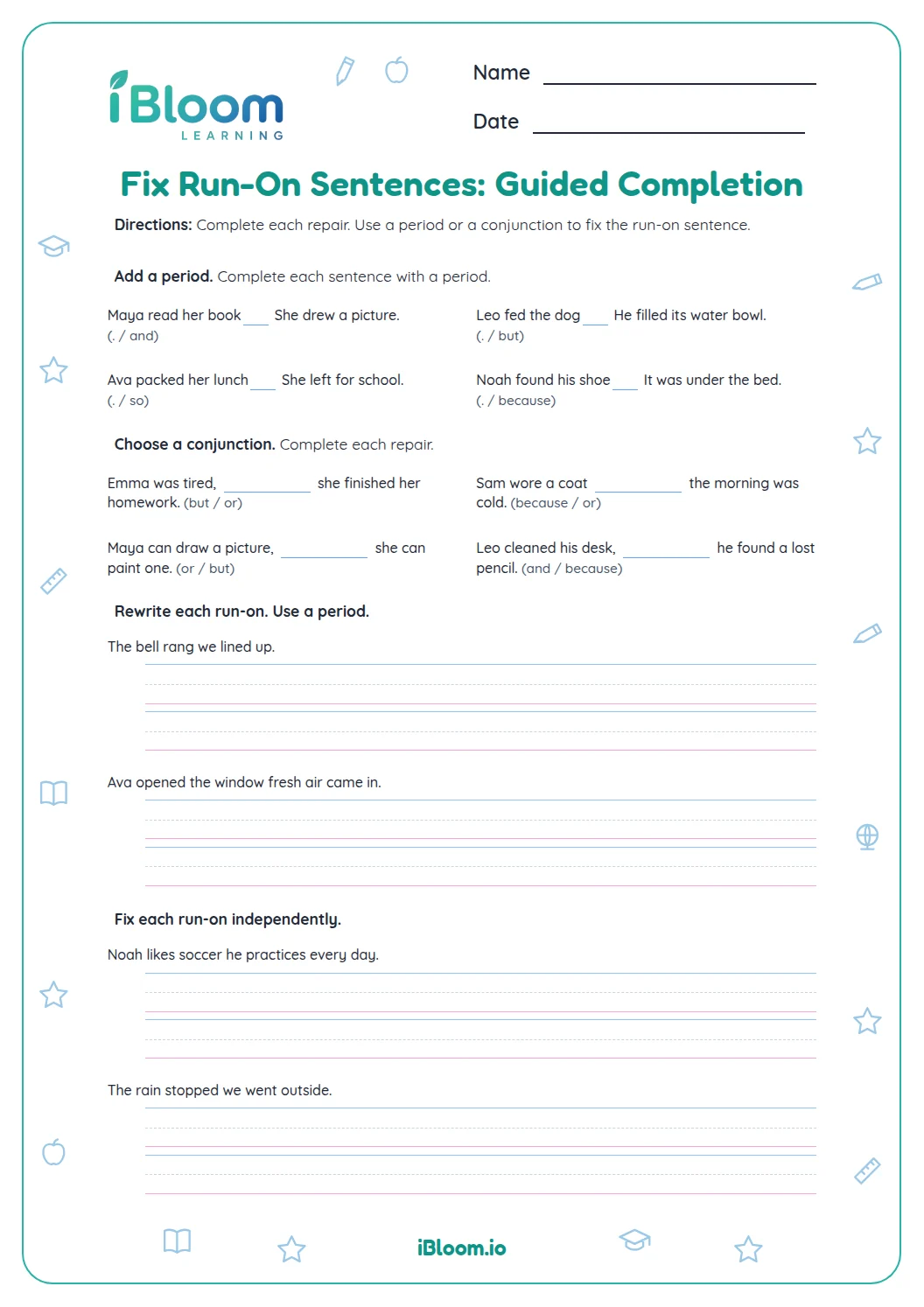
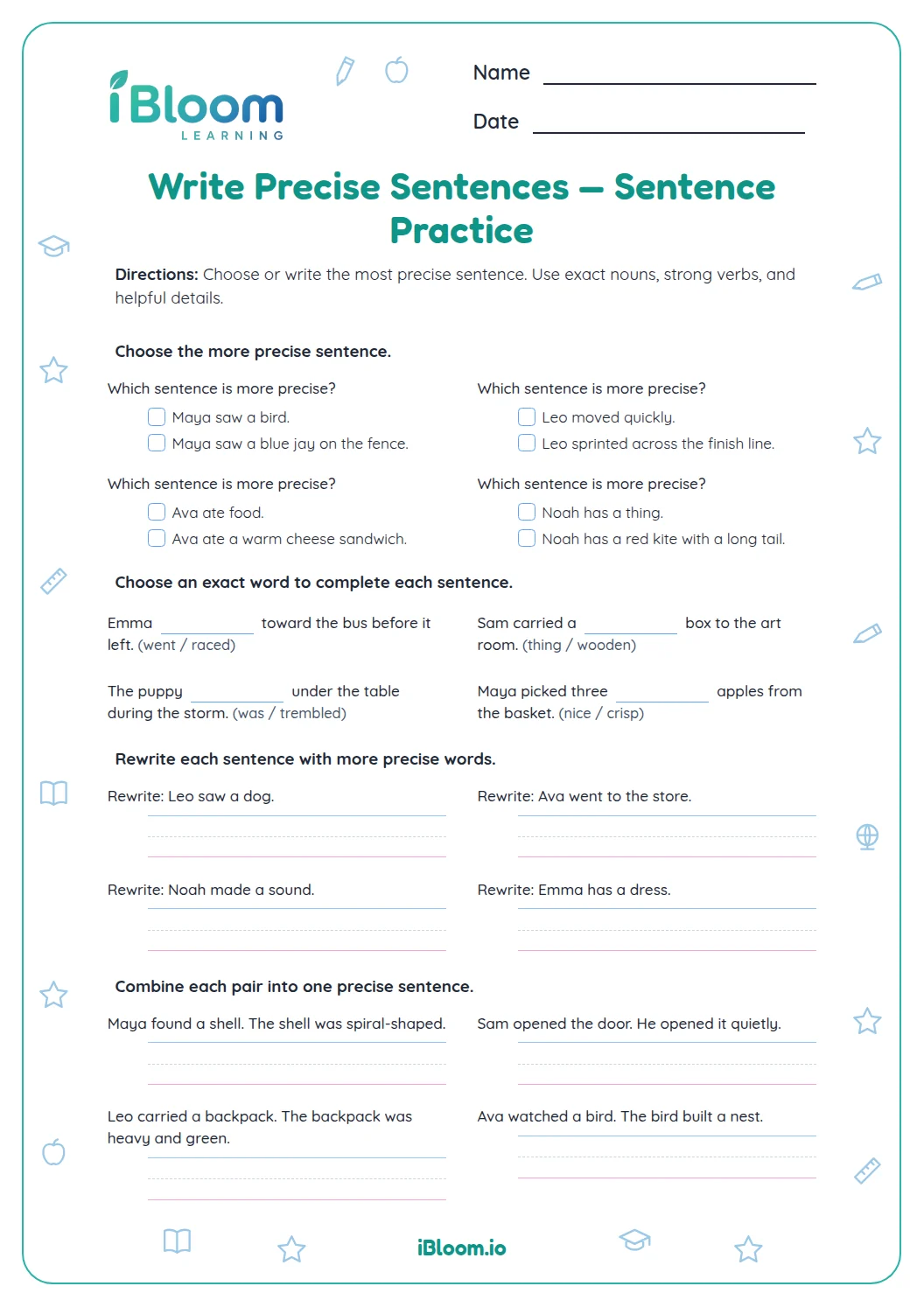
This free Grade 4 worksheet gives children 14 tasks in using negative sentences in standard written English. They circle both negatives in four sentences, complete four corrected sentences, rewrite four more and combine two pairs using neither ... nor. Each correction keeps the intended negative meaning. The final part shows how neither and nor work together to express one negative idea. The sheet practices Common Core L.4.1, applying standard English grammar and usage in writing. A separate answer key marks the negative words and gives completions and sample sentences.
Aligned to L.4.1
What does one negative do in a sentence?
A negative word can tell that something did not happen or is not present. Not, never, nobody and nothing are examples. Cannot is negative too, and a contraction such as didn’t contains not.
In Part A, circle both negatives. Part B returns to those sentences and replaces the second negative with anyone, anything or any sound. Part C asks children to make the same kind of repair in complete sentences.
How can children repair a sentence without changing its meaning?
Find both negative words before editing. Keep the negative that the directions name, then change the other word. Finally, reread the whole sentence and check that the intended idea is still negative.
- 1Original: I didn’t see nothing.
- 2Keep didn’t: it already includes not.
- 3Change nothing to anything.
- 4Rewrite: I didn’t see anything.
How do neither and nor work together?
Neither ... nor joins two things into one negative idea. “Leo did not see the coach. Leo did not see the team” becomes “Leo saw neither the coach nor the team.” The pair works together; do not add not or didn’t.
Part D gives two sentence pairs to combine this way. Changing did not see to saw or did not pack to packed keeps the verb grammatical when the negative meaning moves to neither ... nor.
How much sentence practice is on the sheet?
There are fourteen questions in four parts. Children first identify negatives, then complete corrections, rewrite sentences and combine pairs. The key gives sample wording for the last six tasks, so accept equivalent sentences that follow the directions and preserve the meaning.
A routine for checking negative sentences
- 1In Part A, circle both negative words in each sentence.
- 2Expand cannot or didn’t aloud to hear the negative meaning.
- 3Use the word pairs in Part B to complete the corrected sentences.
- 4In Part C, keep the named negative and replace the other one.
- 5In Part D, join both ideas with neither ... nor and remove not.
- 6Read each finished sentence aloud, then check meaning and punctuation with the key.
Mistakes to notice and how to fix them
The mistake
Overlooking cannot or didn’t as a negative.
The fix
Say can not or did not aloud before looking for the second negative.
The mistake
Keeping neither after hasn’t in question 10.
The fix
Keep hasn’t as directed and change neither to either: “He hasn’t finished either book.”
The mistake
Writing “Leo did not see neither the coach nor the team.”
The fix
Neither ... nor already gives the negative meaning. Write “Leo saw neither the coach nor the team.”
Common Core alignment
Use standard English grammar to complete and revise negative sentences.
On this sheet: Children complete and revise sentences so each expresses its intended negative meaning in standard written English.
Show the official wordingHide the official wording
Demonstrate command of the conventions of standard English grammar and usage when writing or speaking.
What to practice next
Make more practice
Further reading
Questions parents and teachers ask
Which words should children circle in Part A?
Circle not and nobody in question 1, never and nobody in question 2, cannot and nothing in question 3, and not and no in question 4. Each sentence has two negatives to find. The key marks both, and Part B revisits the same four sentences.
Does a contraction count as a negative?
Yes, a contraction containing not counts as a negative in these sentences. Didn’t means did not, and hasn’t means has not. In Part C, the prompt names the negative to keep, so children can focus on replacing the other negative without changing the intended meaning.
Why can neither and nor appear together?
Neither ... nor is a pair that expresses one negative idea about two things. In Part D, “Leo saw neither the coach nor the team” means he saw neither person or group. Do not add didn’t or not; the pair already supplies the negative meaning.
Can children use a different correct rewrite?
Yes, accept equivalent wording that follows the prompt and keeps the intended meaning. Part C names a negative to keep; Part D requires neither ... nor. The answer key gives sample sentences for those six tasks. Check capitalization, verb form and punctuation along with the negative wording.
How should I explain speech and school writing?
Explain that this worksheet practices standard written English for school assignments. Different communities use language in different ways, and a familiar spoken expression can communicate clearly in its own setting. Here, children revise sentences using the stated writing convention while preserving what the speaker intended to say.